Pakistan Storm Into the Hong Kong Sixes Plate Final — Oman Await on Sunday
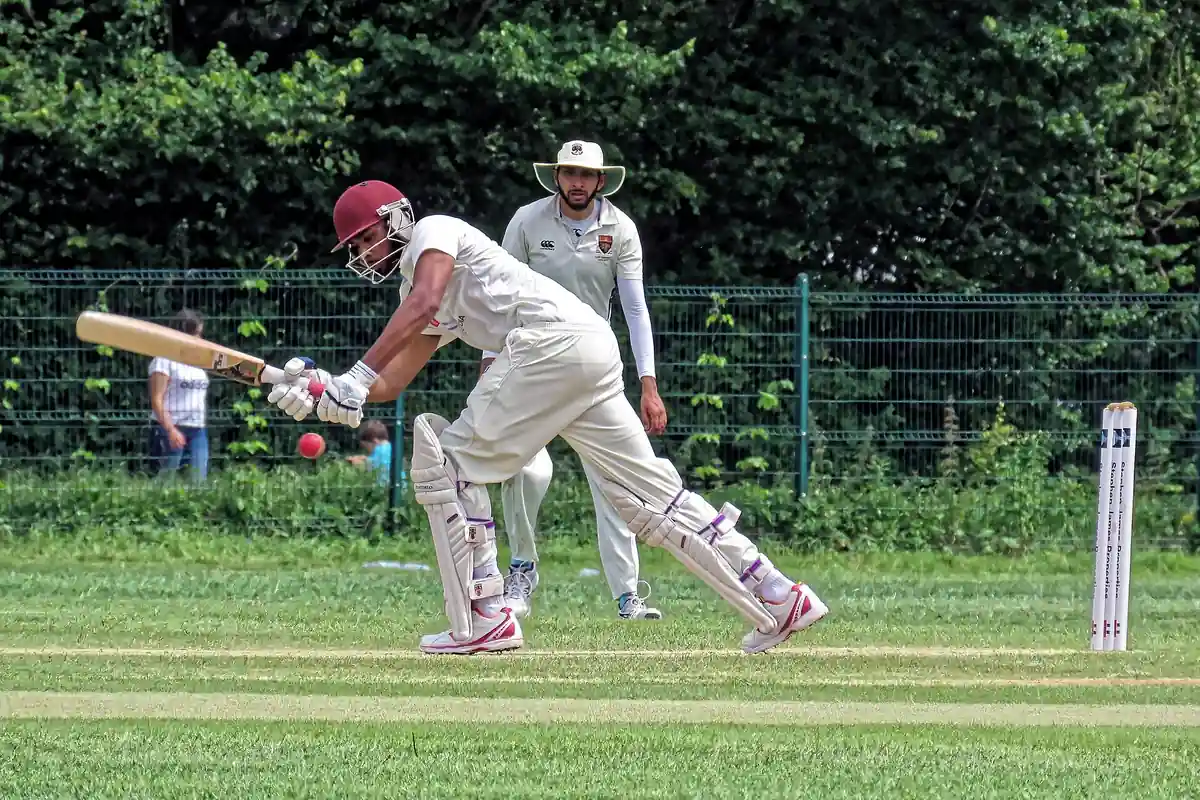
Pakistan are through to the Plate final of the Hong Kong Sixes 2026. At the Mission Road Ground in Mong Kok on Saturday, the defending champions beat hosts Hong Kong in the second Plate semi-final, chasing down Hong Kong's 106 for 3 in just 4.3 overs to set up a final against Oman on Sunday. Captain Abbas Afridi led the chase with a sensational 55 from 13 balls, retiring under the Sixes retirement rule after striking three fours and seven sixes, and Abdul Samad finished the job with a quickfire 17 from four balls as Pakistan kept their weekend alive in the Plate competition.
Hong Kong batted first after the Plate semi-final began on Saturday morning, and for five overs they made a game of it. Nizakat Khan top-scored for the hosts with a blistering 38 from just 10 deliveries, featuring one four and five sixes, while Anshuman Rath struck 37 from 15 balls, including four boundaries and three sixes. Nasrulla Rana provided a late flourish with an unbeaten-looking 16 from three deliveries, hitting one four and two sixes, and opening batter Babar Hayat contributed 12 from six balls, including three boundaries, while captain Yasim Murtaza was dismissed for a duck. The hosts closed on 106 for 3 in their allotted six overs — a total that, on a ground where Friday's matches had produced scores of 149, 135 and 129, looked competitive without ever looking safe against a Pakistan side that had already chased 88 in 3.5 overs against India a day earlier.
For Pakistan, Irfan Khan claimed two wickets despite conceding 16 runs in his solitary over, while Ahmed Daniyal picked up one wicket. The bowling figures tell the shape of a Sixes innings: with only six overs and six players a side, a single expensive over can undo two good ones, and Hong Kong's late hitting — 16 from three balls from Rana at the death — pushed a middling total into three figures. It was not enough. Pakistan's chase, as it has been all tournament, was a matter of overs, not of whether.
In reply, Pakistan chased down the 107-run target in just 4.3 overs. Captain Abbas Afridi once again led from the front with a sensational 55 from just 13 deliveries, smashing three fours and seven sixes, before retiring — the Sixes rule that sends a batter off on reaching fifty, with the option to return if wickets fall. Khawaja Nafay provided valuable support with 34 from 10 balls, including two fours and four sixes. Following Abbas's retirement, Abdul Samad contributed a quickfire 17 from four deliveries, striking one four and two sixes to complete the chase and secure Pakistan's place in the Plate final. Geo Super reported the win by five wickets; the CricTracker scorecard records Pakistan's 107 without a wicket falling, the difference explained by the retirement rule — Abbas's 55 counts as a retirement, not a dismissal, so the scorecard shows no wicket lost even though three batters had been to the crease. Either way the substance is the same: a chase completed with nine balls to spare, against a host side that had beaten England by 61 runs on Friday.

How Pakistan got here: a last-ball defeat and a demolition
Pakistan's route to the Plate is the story of a single ball. The defending champions and six-time winners of this tournament opened their Group C campaign on Friday against the United Arab Emirates, posted 106 for 3, and lost by one wicket off the very last ball, with UAE captain Khalid Shah's 71 from 20 balls chasing the target down. Hours later they demolished India, restricting their arch-rivals to 88 for 5 before completing the chase in just 3.5 overs, finishing at 91 for 2, with Khawaja Nafay's aggressive 41 and Abbas Afridi's rapid 35. One win, one defeat — and, under this tournament's format, that was enough to end their Cup hopes. Only group winners qualify for the main Cup semi-finals; runners-up go to the Plate semi-finals and third-placed teams to the Bowl semi-finals. When the UAE beat India on Saturday morning — India posted 94 for 6 and the UAE chased it without losing a wicket in 4.2 overs, Khalid Shah unbeaten on 52 from 14 balls — the group was settled: UAE first with two wins, Pakistan second with one, India third with none. There would be no India–Pakistan rematch in Hong Kong, and no Cup defence for the champions. The Plate became their tournament.
That context is what makes Saturday's semi-final more than a consolation. Pakistan did not arrive in the Plate by accident or by resting players; they arrived because a format that takes only group winners to the Cup punished a single last-ball defeat, and because the UAE, the tournament's surprise team, beat both Pakistan and India in Group C. The Plate semi-final against Hong Kong was therefore a test of whether the champions could reset after their Cup exit, and the answer, delivered in 4.3 overs, was emphatic. Hong Kong were no soft touch in this format either: on Friday they beat England by 61 runs, piling up 149 for 5 behind Anshuman Rath's 62 from 13 balls, and they finished second in Group A behind Australia. A side that scores 149 in six overs is a side that can beat anyone in a single innings. Pakistan beat them by chasing 107 before the fifth over was out.
Oman await in Sunday's Plate final
Pakistan's opponents in the final are Oman, who won the first Plate semi-final earlier on Saturday by beating Sri Lanka. Oman captained the toss and elected to bowl, restricting Sri Lanka to 92 for 5 from their six overs — Vishen Halambage struck 37 from 12 balls and Movin Subasingha contributed 28 from 10 — before chasing the 93-run target down with five wickets in hand, led by a blistering 46 from Usman Ali, with Muzahir Raza's 2 for 27 from his two overs the standout bowling performance of the first innings. Oman have been one of the tournament's most consistent sides: they beat South Africa by 49 runs on day one, lost to Afghanistan by four wickets on Saturday morning in a match that decided Group D, and have now beaten Sri Lanka to reach a final. Their path mirrors Pakistan's in one respect — a group-stage defeat that pushed them out of the Cup — and differs in another: Oman have won through batting depth rather than a single star, with Usman Ali's 46 the latest in a series of shared contributions.
The Plate final is scheduled for Sunday 1 November at 11:15 AM Pakistan time at the Mission Road Ground, between the Bowl final at 10:20 AM and the Cup final at 12:10 PM. For Pakistan, it is a chance to leave Hong Kong with a trophy even though the Cup defence ended on Friday. For Oman, it is a chance to beat the defending champions in a final after a tournament in which they have already beaten South Africa and Sri Lanka. The format guarantees a short, violent match: six overs a side, six players a side, every ball an event, and a single over — like the 31-run first over Abbas Afridi took off Krunal Pandya against India on Friday, with five consecutive sixes — capable of deciding the whole game.
Abbas Afridi's tournament, in numbers
No account of Pakistan's weekend is complete without the captain's numbers, because they explain why the chase on Saturday felt inevitable. Against the UAE on Friday, Abbas made 53 from 13 balls in a losing cause. Against India, he made 35 from 8 balls, including five consecutive sixes in a 31-run first over, and was named player of the match. Against Hong Kong on Saturday, he made 55 from 13 balls, with three fours and seven sixes, before retiring. Three innings, three strike rates above 300, and a captain who has now produced the decisive innings in every Pakistan match of the tournament — two in victory, one in a defeat decided on the last ball. Khawaja Nafay's contribution has been nearly as important: 41 from 12 balls against India, 34 from 10 against Hong Kong, the reliable second act to Abbas's opening explosions. Abdul Samad's finishing — 17 from four balls on Saturday, two wickets against India on Friday — has given the side its late-overs edge at both ends.
Hong Kong's own batting deserves its line too, because the Plate semi-final was not a mismatch. Nizakat Khan's 38 from 10 balls and Rath's 37 from 15 were the two best innings of the hosts' tournament, and Rana's 16 from three balls at the death showed why Hong Kong had scored 149 against England a day earlier. The difference between the sides was not talent but depth of firepower: Pakistan had three batters who could clear the ropes at will, Hong Kong had two, and in a six-over match that is usually the whole story.
What else is happening in Hong Kong — and in Lahore
Saturday's other semi-finals set up Sunday's finals day. In the Cup, Australia meet the UAE in the first semi-final and Scotland meet Afghanistan in the second — the UAE's reward for topping Group C, and Scotland's and Afghanistan's for topping Groups B and D on Saturday morning, Scotland beating Sri Lanka by 26 runs and Afghanistan chasing Oman's 120 for 4 with four balls to spare. In the Bowl, the third-placed teams play for the consolation trophy, with India — beaten twice in Group C — among them. The full Sunday schedule at the Mission Road Ground is the Bowl final at 10:20 AM, the Plate final between Pakistan and Oman at 11:15 AM, and the Cup final at 12:10 PM, all Pakistan time.
And away from Hong Kong, the match most Pakistani fans will watch today is being played in Lahore, where Pakistan meet Sri Lanka in the ODI tri-series final at the Gaddafi Stadium — the final of a week in which Pakistan beat England, lost to Sri Lanka, and now meet the same opposition with a trophy on the line, after winning the toss and choosing to bowl. Two finals races, two cities, one afternoon: Hong Kong decides Pakistan's Sixes fate, Lahore decides the tri-series. TaazaPulse is covering both, and the Plate final report will follow on Sunday once Pakistan and Oman have played.
What the Plate final is worth
It is fair to ask what a Plate final is worth, and the honest answer is that it is worth less than the Cup and more than nothing. The Hong Kong Sixes has always run its consolation competitions seriously: the Plate has its own semi-finals and final, its own trophy, and its own place in the tournament record, and the teams that reach it are not there by invitation but by finishing second in groups of three. For Pakistan, six-time champions and defending title-holders, the Plate final is also a matter of record: a defeat on Sunday would make this the first Hong Kong Sixes since their title defence began in which they leave without a trophy of any kind, while a win would at least preserve the habit of winning in Hong Kong. For Oman, a side that has never won a Sixes trophy, the final is the biggest match in their history in this format — bigger, in its way, than the group matches that got them here, because finals are what tournaments are remembered by. Neither side will treat Sunday as an exhibition, and the six-over format, which punishes a single bad over more ruthlessly than any other form of cricket, makes complacency impossible anyway.
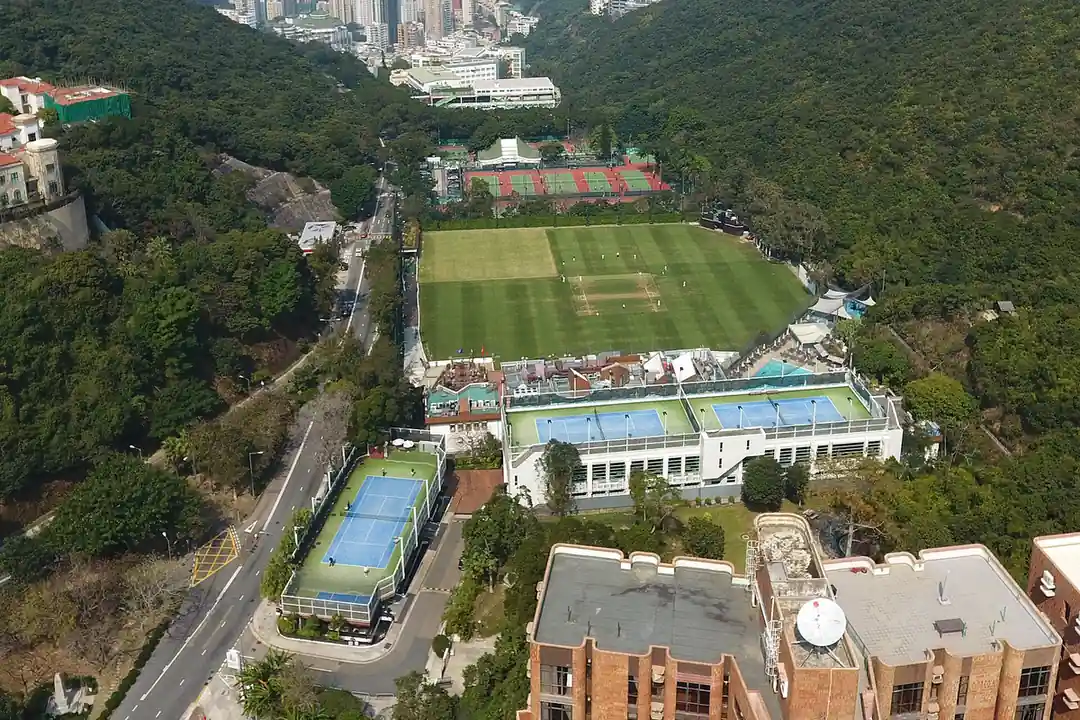
Image note: the photographs in this article are Wikimedia Commons file photos — club cricket action at the Walker Cricket Ground, Southgate, London (Acabashi, CC BY-SA 4.0), a Mong Kok street in Hong Kong (Mk2010, CC BY-SA 3.0), the Hong Kong Cricket Club ground (Wpcpey, CC BY-SA 4.0), and an Australian batsman playing a shot (Pulkit Sinha, CC BY-SA 2.0). They are not photographs of Saturday's Plate semi-final at the Mission Road Ground.
Sources
This report is based on reporting, official statements and documents from:
- Geo Super — Pakistan beat Hong Kong to secure Plate final berth against Oman (31 Oct 2026; Hong Kong 106/3; Abbas Afridi 55 off 13; Nafay 34 off 10; Samad 17 off 4; chase in 4.3 overs)
- ARY News — Hong Kong Sixes: Pakistan set up Plate final against Oman (31 Oct 2026 headline)
- CricTracker — HK XI vs PAK XI, Plate Semi Final 2 live scorecard: Hong Kong 106/3 (6 ov), Pakistan 107/0 (4.3 ov)
- Sports Now — Usman Ali powers Oman to clinical Plate semi-final win over Sri Lanka (31 Oct 2026; Sri Lanka 92/5, Oman chased 93)
- Wikimedia Commons — club cricket action, Walker Cricket Ground, Southgate; Mong Kok street; Hong Kong Cricket Club ground; Australian batsman playing a shot (image credits)
Frequently Asked Questions
What was the score in Pakistan vs Hong Kong, Plate semi-final?
Hong Kong made 106 for 3 in six overs at the Mission Road Ground, Mong Kok, on Saturday 31 October 2026 — Nizakat Khan 38 from 10 balls, Anshuman Rath 37 from 15, Nasrulla Rana 16 from three balls. Pakistan chased the 107-run target in 4.3 overs: captain Abbas Afridi 55 from 13 balls (three fours, seven sixes) before retiring under the Sixes retirement rule, Khawaja Nafay 34 from 10, and Abdul Samad 17 from four balls to finish the chase.
Why do reports differ on the winning margin?
Geo Super reported the win by five wickets, while the CricTracker scorecard records Pakistan's 107 without a wicket falling. The difference is the Sixes retirement rule: a batter who reaches fifty retires, which is not a dismissal, so Abbas Afridi's 55 does not count as a wicket lost even though three batters had been to the crease. The substance is not in dispute — Pakistan completed the chase with nine balls to spare.
Who do Pakistan play in the Plate final, and when?
Oman, on Sunday 1 November at 11:15 AM Pakistan time at the Mission Road Ground. Oman won the first Plate semi-final earlier on Saturday, restricting Sri Lanka to 92 for 5 and chasing 93 with five wickets in hand, led by Usman Ali's 46. The Bowl final is at 10:20 AM and the Cup final at 12:10 PM the same day.
Why are Pakistan in the Plate and not the Cup?
Only group winners reach the Cup semi-finals; runners-up go to the Plate and third-placed teams to the Bowl. Pakistan finished second in Group C — they lost to the UAE by one wicket off the last ball on Friday, then beat India by four wickets — and the UAE topped the group by beating both Pakistan and India, so the UAE took the group's only Cup semi-final place.
Who has been Pakistan's best player at the Sixes?
Captain Abbas Afridi, by a distance. He made 53 from 13 balls against the UAE, 35 from eight balls against India including five consecutive sixes in a 31-run first over off Krunal Pandya, and 55 from 13 balls against Hong Kong. Khawaja Nafay (41 against India, 34 against Hong Kong) and finisher Abdul Samad have been the key support acts.
What is the Hong Kong Sixes format?
Six-a-side, six-over cricket: 12 teams in four groups of three, each group winner going to the Cup semi-finals, each runner-up to the Plate semi-finals and each third-placed team to the Bowl semi-finals. Batters retire on reaching fifty and may return later. Pakistan are the defending champions and six-time winners of the tournament.