Rashid Khan Becomes the First Bowler in History to Take 200 Men's T20I Wickets
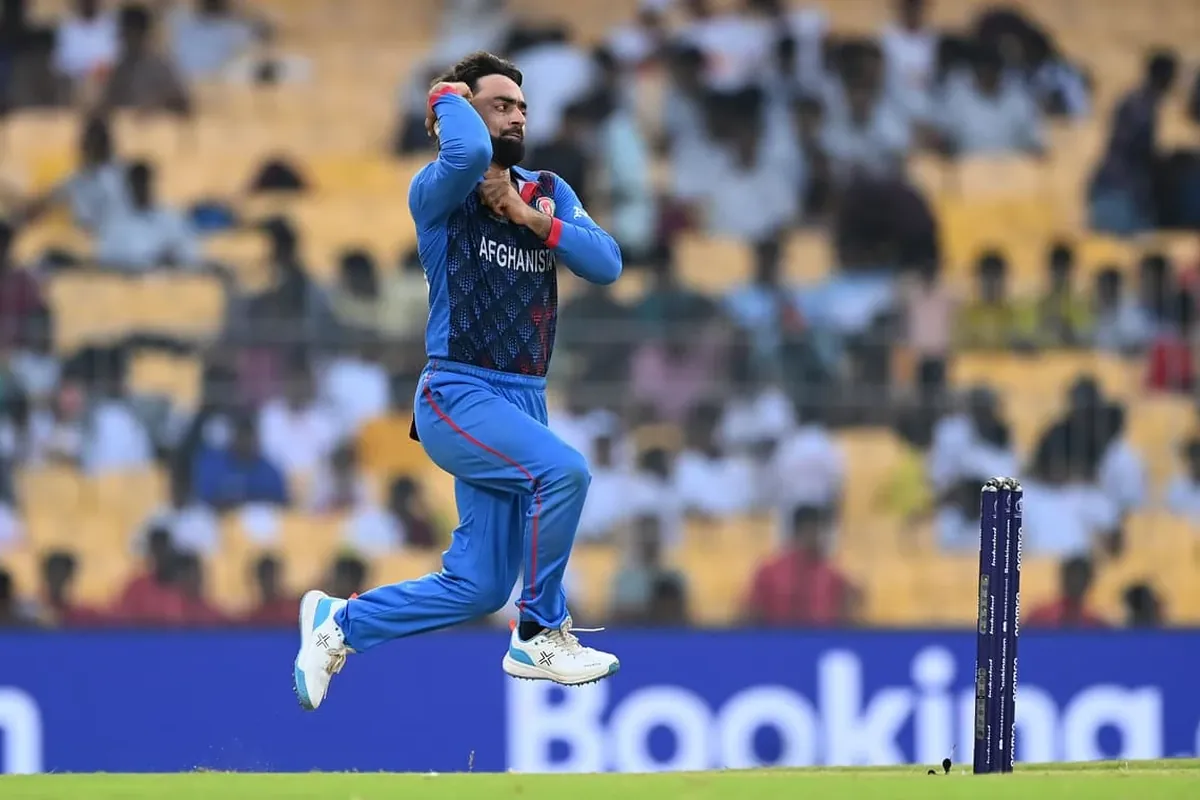
Rashid Khan became the first bowler in the history of men's Twenty20 international cricket to take 200 wickets on Thursday, reaching the landmark during Afghanistan's second T20I against Zimbabwe at Sharjah Cricket Stadium. The leg-spinner trapped Zimbabwe wicketkeeper-batter Tadiwanashe Marumani lbw for two in the ninth over of the chase, in his 120th T20 international, and finished the night with Afghanistan celebrating a 19-run win that sealed the three-match series with a game to spare.
This is a record story, not a second match report. TaazaPulse already covered Thursday's match itself — the 19-run win, Azmatullah Omarzai's rescue century and Sikandar Raza's hundred in a losing cause — in its series-clinching report. What follows is the milestone behind that result: how Rashid reached a number no man had reached before, where it puts him among the great T20 bowlers, and why a wicket taken in the ninth over of a chase in Sharjah belongs in the record books rather than merely in the scorebook.
The numbers, as reported by Reuters and Geo Super, are stark. Rashid reached 200 wickets in 120 matches at an average of 13.96 and an economy rate of 6.13 runs per over. His record includes two five-wicket hauls, with best figures of 5 for 3. He now sits 29 wickets clear of the next man on the all-time men's T20I list, England's Adil Rashid, who has 171. Behind them come Hong Kong's Ehsan Khan and New Zealand's Ish Sodhi on 165 each, New Zealand's Tim Southee on 164 and Sri Lanka's Wanindu Hasaranga on 163. No other bowler is within 35 wickets of the new mark, and the gap to second place is itself larger than most bowlers' career hauls in the format.
That economy rate deserves a pause, because it is what separates Rashid from every other wicket-taker in the list. T20 cricket is designed to punish bowlers: sixes are currency, and a leg-spinner bowling in the middle overs is expected to go for runs while hunting wickets. Rashid has done the opposite for more than a decade. An average under 14 means he takes a wicket roughly every two overs; an economy of 6.13 means he does it while conceding barely a run a ball. It is the combination — volume and control at the same time — that made 200 inevitable rather than merely possible, and it is why captains have built entire bowling plans around his four overs for most of his career.
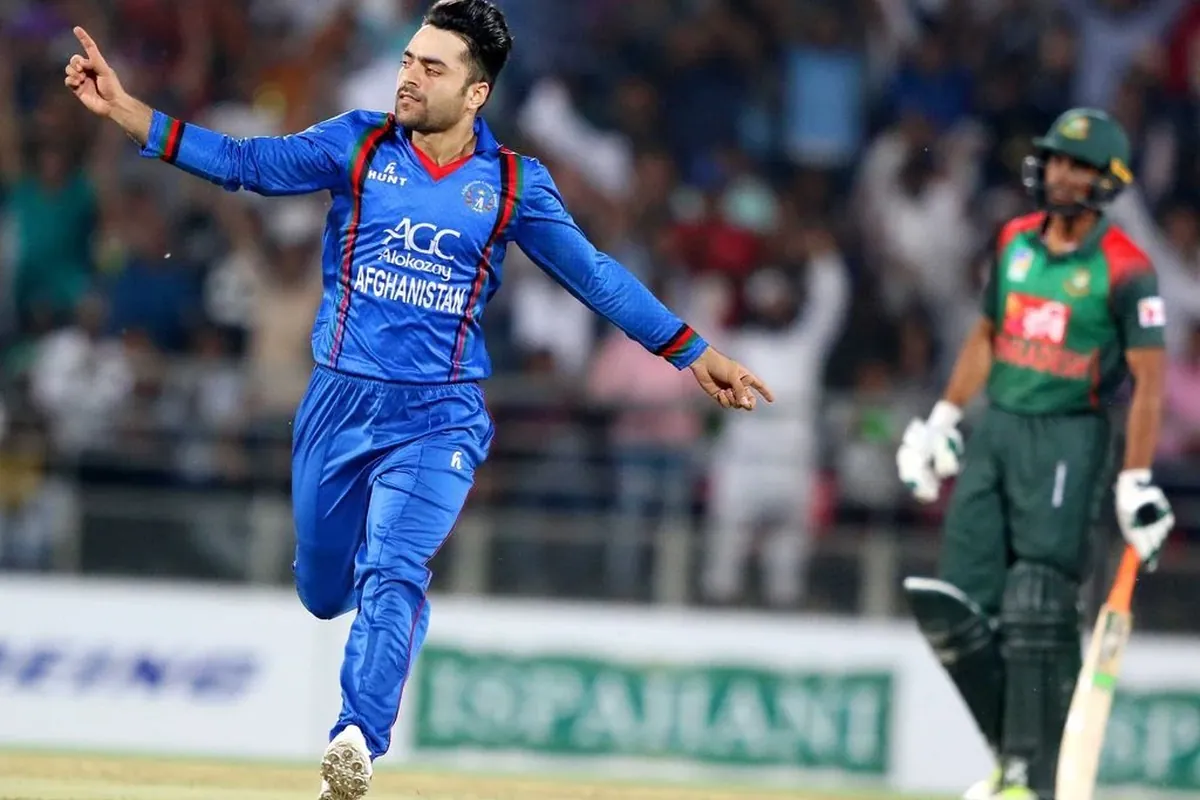
The night itself nearly stole the milestone's thunder. Zimbabwe won the toss and chose to bowl, and within four overs Afghanistan were 5 for 4 — Rahmanullah Gurbaz and Mohammad Akram Zazai gone without scoring in the opening over, Ibrahim Zadran bowled for 1, Shahidullah Kamal caught behind. At 38 for 5 after eight overs, the innings looked finished. Then Azmatullah Omarzai played the innings of his life: a maiden T20I century, 116 from 50 balls with five fours and 12 sixes, reaching his hundred from 44 deliveries, and a 142-run sixth-wicket partnership with Ijaz Ahmadzai that stands as the highest partnership for the sixth wicket or lower in men's T20Is. Afghanistan finished on 221 for 7 — the first time any team has posted more than 200 in a men's T20I after losing its first four wickets for fewer than 20 runs.
Rashid's own contribution with the bat helped set up the total he would later defend. He struck an unbeaten 25 from just six balls, including four sixes, in an unbroken eighth-wicket partnership of 26 with Mujeeb Ur Rahman. It was a reminder of the second string to his game: the lower-order hitting that has won Afghanistan matches on its own, and that turned a competitive total into an imposing one in the final overs. When Zimbabwe replied, captain Sikandar Raza answered with an unbeaten 106 from 56 balls, five fours and nine sixes, but the chase never got ahead of the asking rate for long enough, and Zimbabwe closed on 202 for 5.
Marumani's wicket, when it came, was almost quiet. In the ninth over of the chase, with Zimbabwe still believing, Rashid's leg-break struck the pad and the finger went up. Two runs, one lbw, and a number that had never existed before in men's T20I cricket. Rashid finished with 1 for 29 from his four overs — not a headline spell on its own, but exactly the kind of controlled return that built the 200. Abdullah Ahmadzai took 2 for 34, and Omarzai, who had already made the century, conceded only 17 from his two overs. Omarzai was named player of the match, rightly, for the century that rescued the side from 5 for 4; the record belonged to the night as a whole.
The series context makes the milestone heavier, not lighter. Afghanistan had already won the first T20I at the same ground on 27 October, defending 177 by bowling Zimbabwe out for 140, a 37-run win. Thursday's victory gave them an unassailable 2-0 lead and their eighth successive T20I series win over Zimbabwe. The third match is scheduled for 1 November at Sharjah. Rashid's record, in other words, arrived inside a winning run, not as consolation for a defeat — the way great individual marks usually prefer to arrive.

Rashid's road to 200 began against the same opposition. He made his T20I debut against Zimbabwe in Bulawayo in 2015, and he has been Afghanistan's first name on the team sheet in the format ever since. He became the format's leading wicket-taker in September 2025, overtaking Southee during a tri-series match against the United Arab Emirates in Sharjah, and he has stretched that lead ever since. The 200th wicket is the latest line in a career that has already crossed another frontier: in October last year he became the first Afghanistan bowler to reach 200 ODI wickets, during a match against Bangladesh in Abu Dhabi. He is now the first man to 200 in both white-ball formats' shortest form and, in T20Is, the only man at 200 at all.
Zoom out from internationals and the scale grows further. Geo Super reports that Rashid has taken 742 wickets in 551 matches across all T20 cricket — domestic leagues and internationals combined — making him the only bowler past 700 in the format, well ahead of West Indies spinner Sunil Narine on 658 from 617 appearances. That figure explains why the 200 matters beyond Afghanistan: Rashid is not merely the most prolific T20I bowler, but the most prolific T20 bowler, period, in the format's history. Franchise leagues from the IPL to the Big Bash and The Hundred have all been built, in part, around the value of four overs from him.
What makes the record durable is how it was built. Rashid did not reach 200 by bowling against weak opposition in one-sided games, nor by longevity alone. His average and economy have held across conditions — Sharjah's slow turn, Australian bounce, English seam-friendly evenings — and across eras of the format, from the days when 160 was a winning score to nights like Thursday when 221 was chased to the final over. The leg-break, the googly and the quicker ball have remained his weapons throughout, delivered with a run-up so short it barely qualifies as one, and a release point that has troubled batters who have faced him for a decade without solving him.
There is also a national dimension that should not be lost in the statistics. Afghanistan's rise in world cricket is the sport's great modern story: from refugee camps and associate status to a team that defends totals, wins series and produces the format's record wicket-taker. Rashid, who was 17 when he debuted and is now 28, has been the face of that rise for its entire second half. For young Afghan cricketers, and for the large Afghan and Pakistani audiences who follow his career, 200 is not an abstract number — it is proof, in the record books, that a bowler from Afghanistan sets the standard the rest of the world chases.
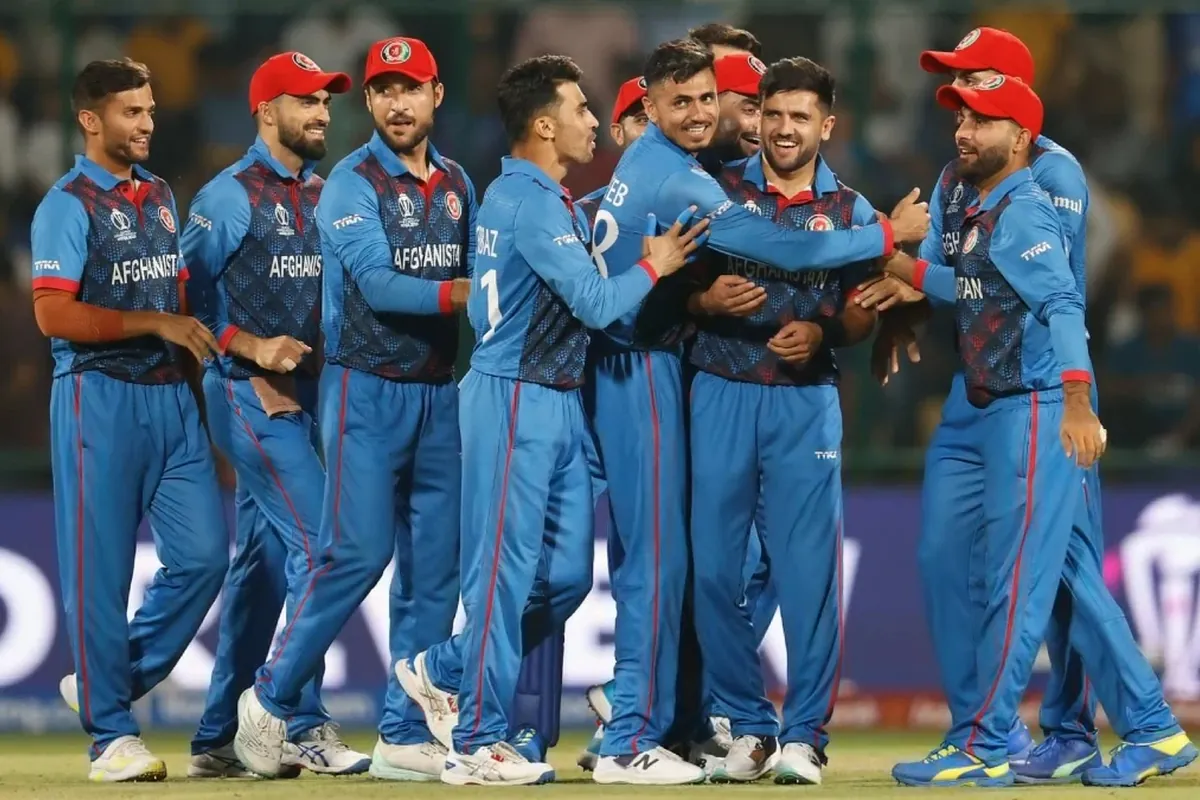
The chase for 200, such as it is, now starts a long way back. Adil Rashid, at 171 from 153 matches, would need a remarkable late-career run to threaten the mark, and the next generation — Hasaranga, and the young spinners coming through franchise cricket — would need to match both Rashid's durability and his control for the best part of a decade. Records in T20I bowling have tended to fall in clusters as the format expanded; this one, built on an economy rate under 6.2 across 120 matches, looks more like a wall than a milestone. That is the nature of the number: it rewards not one great night, but eleven years of never having a bad one.
What comes next is straightforward. The third T20I against Zimbabwe, on 1 November at Sharjah, gives Rashid his first match as a 200-wicket bowler, and Afghanistan a chance to complete a 3-0 sweep. Beyond that, the calendar turns toward the next global tournament cycle, where his record will be measured against the best batters in the world rather than against history. He has already shown, on Thursday night, that he can take the record wicket and still finish his spell at less than eight runs an over while his team defends a total. The record is safe. The bowler, on this evidence, is not finished adding to it.
For Pakistan's cricket followers, the milestone lands close to home in more than one sense. Rashid's record was set in Sharjah, a ground Pakistan teams have called a second home for decades, against a Zimbabwe side Pakistan knows well, in a week when Pakistan's own T20I rankings story — Sahibzada Farhan's rise to No. 2 among batters — was also making news. The region's T20 cricket, from Lahore to Sharjah, is having a record-breaking week. Rashid's 200 is its biggest number so far.
Sources
This report is based on reporting, official statements and documents from:
- Reuters — Afghanistan's Rashid becomes first men's player to claim 200 T20I wickets (29 Oct 2026)
- Geo Super — Rashid Khan becomes first-ever bowler to claim 200 T20I wickets (30 Oct 2026)
- ANI via Latestly — Rashid Khan becomes first bowler to claim 200 wickets in men's T20Is (29 Oct 2026)
- MyKhel — Rashid Khan becomes first spinner to achieve this remarkable T20I feat (30 Oct 2026)
- Photos: SportsBoom (featured), Mans World India, Gulf News, Latestly
Frequently Asked Questions
How did Rashid Khan reach 200 T20I wickets?
In the ninth over of Zimbabwe's chase in the second T20I at Sharjah on Thursday 29 October 2026, Rashid trapped wicketkeeper-batter Tadiwanashe Marumani lbw for two. It was his 200th wicket in men's T20 internationals, in his 120th T20I appearance, and no man had reached the mark before.
What are Rashid Khan's T20I bowling figures?
200 wickets in 120 matches at an average of 13.96 and an economy rate of 6.13 runs per over, including two five-wicket hauls with best figures of 5 for 3. The combination of volume and control — a wicket roughly every two overs while conceding barely a run a ball — is what makes the record stand out.
Who is second on the all-time men's T20I wicket list?
England's Adil Rashid on 171, a full 29 wickets behind. Next come Hong Kong's Ehsan Khan and New Zealand's Ish Sodhi on 165 each, then New Zealand's Tim Southee on 164 and Sri Lanka's Wanindu Hasaranga on 163.
What happened in the match in which Rashid reached 200?
Afghanistan recovered from 5 for 4 to post 221 for 7 — Azmatullah Omarzai made 116 from 50 balls in a record 142-run sixth-wicket stand with Ijaz Ahmadzai — and then held Zimbabwe to 202 for 5 despite captain Sikandar Raza's unbeaten 106 from 56 balls, winning by 19 runs to take an unassailable 2-0 series lead.
Has Rashid Khan reached 200 wickets in any other format?
Yes: in October 2025 he became the first Afghanistan bowler to reach 200 ODI wickets, against Bangladesh in Abu Dhabi. Across all T20 cricket, domestic leagues included, he has 742 wickets in 551 matches — the only bowler past 700, ahead of Sunil Narine on 658.
When does Afghanistan play next?
The third and final T20I against Zimbabwe is scheduled for 1 November at Sharjah, with Afghanistan chasing a 3-0 series sweep and Rashid playing his first match as a 200-wicket bowler.