Haris Rauf Fined 20% of Match Fee and Handed One Demerit Point for Jacks Flashpoint
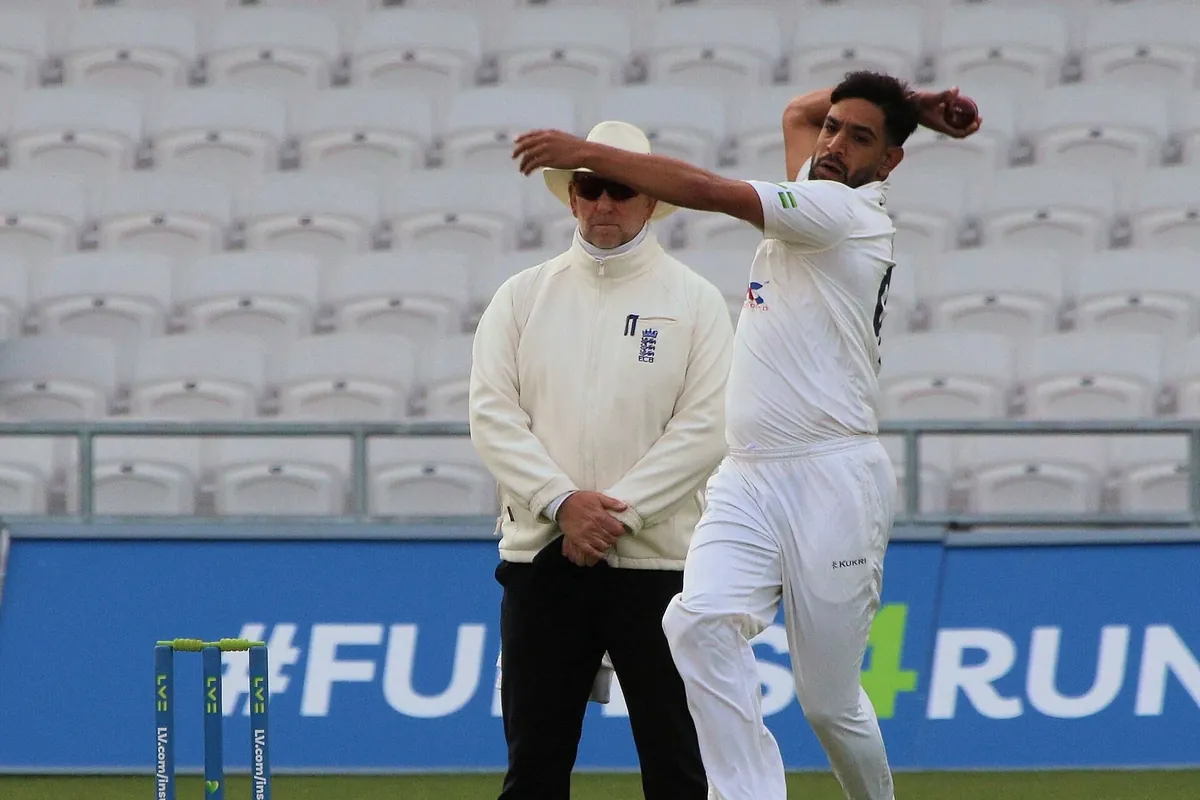
Pakistan fast bowler Haris Rauf has been fined 20 per cent of his match fee and handed one demerit point for breaching the ICC Code of Conduct during Sunday's tri-series match against England in Lahore, the International Cricket Council announced on Wednesday. The sanction — for conduct contrary to the spirit of the game — relates to the flashpoint at the end of the 46th over of Pakistan's run chase, when Rauf, batting at the non-striker's end, appealed for a wide, raised his bat towards England's Will Jacks and continued arguing as he brushed past the umpire. It is Rauf's third offence in a 24-month period and takes his tally of demerit points to five.
The ICC said Rauf had breached Article 2.20 of the ICC Code of Conduct for Players and Player Support Personnel, which covers "displaying conduct that is contrary to the spirit of the game", a Level 1 offence. The charges were levelled by on-field umpires Rashid Riaz and Sharfuddoula Ibne Shahid, third umpire Wayne Knights and fourth umpire Nassir Hussain. Rauf admitted the offence and accepted the sanction proposed by Jeff Crowe of the Emirates ICC Elite Panel of Match Referees, so no formal hearing was required. Neither Rauf nor the Pakistan Cricket Board issued a public statement on the sanction; the fast bowler's acceptance of the charge closed the matter.
What happened in the 46th over
To understand the incident, you have to understand the match. Pakistan, chasing 242, had collapsed to 154 for 9, and their last pair — Shadab Khan and Rauf — were in the middle of the unbeaten 89-run stand that would win the game by one wicket. At the end of the 46th over, Sam Curran bowled a short ball to Shadab that Rauf, watching from the non-striker's end, believed should have been called wide. Umpire Sharfuddoula did not signal it.
Rauf's reaction is recorded in the ICC's own statement. He appealed for the wide and then argued with Jacks, who was fielding at mid-on. He raised his bat and, despite a warning from Sharfuddoula, continued arguing as he brushed past the umpire and walked towards Jacks. England's Joe Root intervened to calm him down. Play resumed, the stand continued, and Rauf himself hit the winning boundary off debutant Henry Crocombe to seal the victory with 17 balls to spare. The two players were later seen talking again as the teams shook hands after the match — a conversation, this time, rather than a confrontation.
The sanction, and England's fine
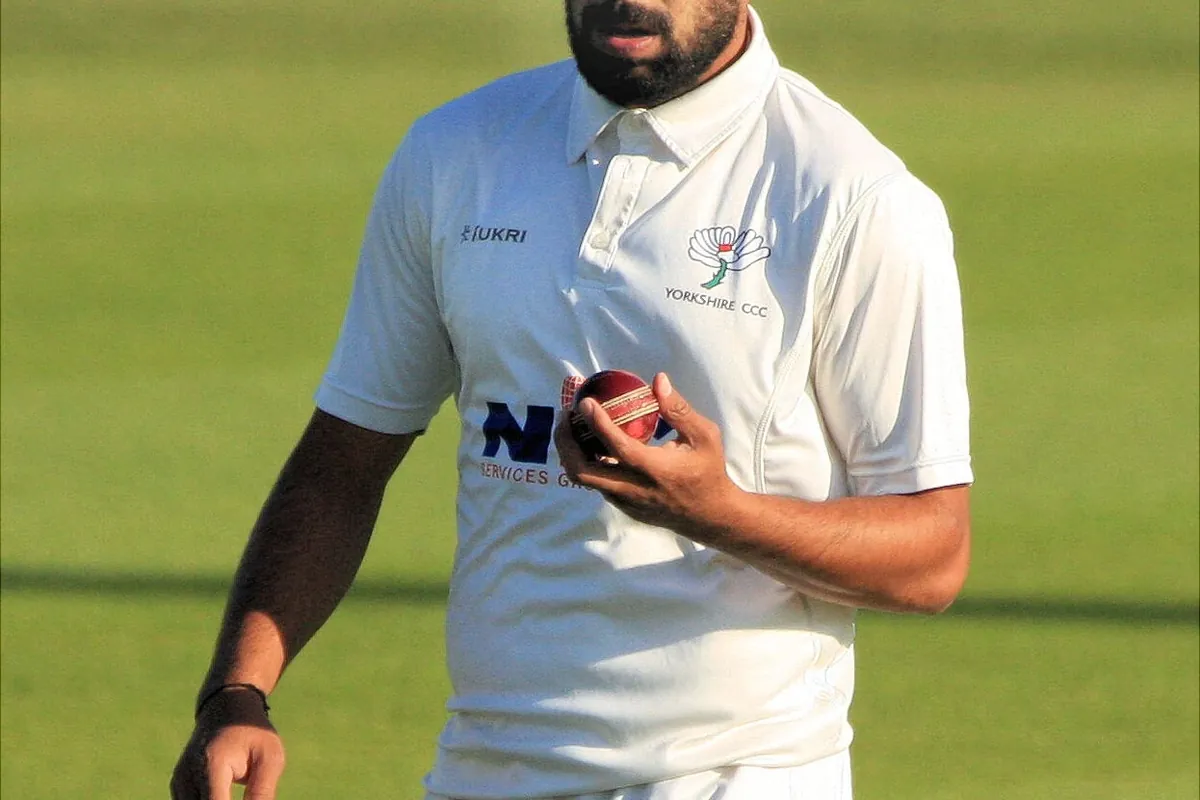
The punishment has two parts: a fine of 20 per cent of Rauf's match fee, and one demerit point on his disciplinary record. Demerit points stay on a player's record for 24 months. England were punished from the same match for a different offence: the whole team was fined 15 per cent of their match fees after being ruled three overs short of their target, under Article 2.22, which fines players five per cent for every over their side fails to bowl in the allotted time. Captain Harry Brook admitted that offence and accepted the sanction, so no hearing was needed there either.
No suspension was announced with Rauf's sanction. But the arithmetic of his record is why the story matters, and why "Haris Rauf ICC code breach" was among Pakistan's most searched cricket terms this week. This was his third offence inside 24 months, and his demerit-point tally now stands at five.
His record: the Asia Cup offences and the two-match ban
Rauf's previous offences came during Pakistan's matches against India at the 2025 Asia Cup, where two separate breaches brought him four demerit points and a two-match ban, which he served. Under the ICC system, when a player reaches four or more demerit points within a 24-month period, they are converted into suspension points — and suspension points equate to a ban from one Test, or two ODIs, or two T20Is, whichever applies. That is the machinery that produced Rauf's Asia Cup suspension, and it is the machinery now hanging over the rest of his disciplinary window: further points in the months ahead would bring suspension points into play again, at the business end of Pakistan's season.

There is an irony in the timing that Pakistan's supporters will not miss. The same week Rauf was fined for the 46th-over confrontation, he was also the man who stayed with Shadab to win the match — an unbeaten 7 off 19 balls that looks small on the scorecard and enormous in the match's story — and then saw his action in the series rewarded in the worst way in the rankings: in the ICC's updated ODI bowling list on Wednesday, Rauf fell nine places to 29th. Pakistan's week, in miniature: a one-wicket win for the ages, a place in Saturday's final, and their fastest bowler collecting a fine, a demerit point and a rankings slide.
What it means for Saturday's final
The practical consequences for the final against Sri Lanka on Saturday are limited but real. Rauf is available — a fine and a point do not remove him — and Pakistan's attack has leaned on his pace in this series. But he now plays the final, and every match after it in the window, knowing that one more Level 1 offence adds another demerit point to a record already in suspension-point territory, and that the officials in this series have shown they will charge what they see. Shadab's century won Sunday's game; the discipline of the man who partnered him will be one of the quiet subplots of Saturday's.
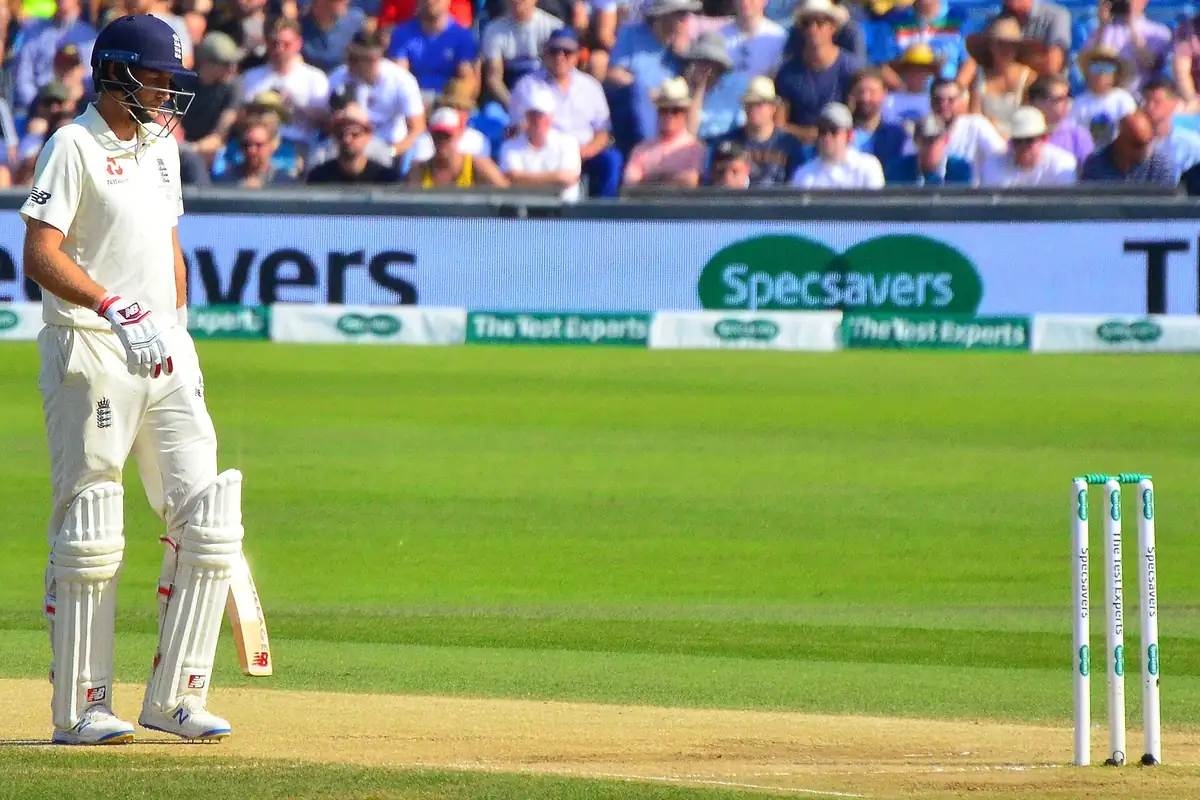
For the ICC, the statement was routine: offence, article, sanction, acceptance, no hearing. For Pakistan's fans, the search numbers tell the real story — a flare-up in the 46th over of a one-wicket classic has followed their fastest bowler into the final week of the series, and the line between the aggression Pakistan love from Rauf and the conduct the code punishes is now precisely one demerit point wide.
How the demerit system actually works
The ICC's disciplinary ladder is worth spelling out, because the numbers in Rauf's file are what turn a routine fine into a career story. Offences are graded from Level 1 to Level 4. Level 1 — the lowest — covers things like offensive gestures, dissent and, under Article 2.20, conduct contrary to the spirit of the game; it carries a fine of up to 50 per cent of the match fee and one or two demerit points. Points remain on a player's record for 24 months from the offence. When a player accumulates four or more in that window, they convert into suspension points, and suspension points are served as bans: one Test, or two ODIs, or two T20Is per suspension point, depending on the schedule. Rauf crossed that conversion line during the Asia Cup, which is why his Asia Cup offences produced a two-match ban rather than just fines. The new point from Lahore does not itself trigger a ban — the ICC announced none — but it extends and deepens the window in which he is one bad afternoon away from suspension points again, and it does so at the start of a stretch of Pakistan's calendar in which his captain needs him most.
Why Pakistan cannot simply shrug this off
Rauf is not a fringe player collecting a fine on the edge of the squad; he is the pace spearhead of the ODI side that Shaheen Afridi captains, the bowler Pakistan turn to when an innings needs breaking open, and — as Sunday proved — a good enough lower-order batter to finish a one-wicket classic with the bat. A suspension in a major series would remove the attack's point of difference entirely. There is also the pattern the officials will see: three offences in 24 months, all in high-voltage matches against major rivals, all arising from confrontations rather than from the ball-tampering or dissent categories. Match referees do not punish patterns formally — each offence is judged on its own facts — but players with Rauf's file know, and are told, that the margin for the benefit of the doubt narrows with every charge.
The context that makes Pakistani supporters defend him is real, too. Sunday's incident happened in the 46th over of a chase his team was losing by one wicket's width, over a wide call that would have changed the arithmetic of the finish, in a match Pakistan went on to win with his bat in his hands. The aggression that crossed the line against Jacks is the same fuel that makes Rauf bowl 145 kph in the 48th over. Pakistan's management problem — and it is now an explicit one, with five points on the record — is to keep the fuel and lose the flare-ups: the appeals can be loud, the celebrations fierce, but the walk towards an opponent with a raised bat is the precise thing Article 2.20 exists to catch.
The quiet ending
There is a footnote that suggests the lesson may land. After the match, as the teams shook hands, Rauf and Jacks were seen talking again — by every account a conversation, not a continuation. Jacks took no public issue with the episode, England's camp made no complaint beyond the officials' process, and Rauf's acceptance of the charge — no denial, no hearing, no appeal — closed the file within three days of the match. What remains is arithmetic: five demerit points, a 20 per cent fine paid, and a fast bowler running in on Saturday for a final, knowing the whole ground — and both umpires — will be watching what happens the first time a wide is not given.
Sources
This report is based on reporting, official statements and documents from:
- ICC media release
- ESPNcricinfo
- A Sports
- Pakistan TV
Frequently Asked Questions
Why was Haris Rauf fined by the ICC?
Rauf breached Article 2.20 of the ICC Code of Conduct — displaying conduct contrary to the spirit of the game, a Level 1 offence — during Sunday's tri-series match against England in Lahore. At the end of the 46th over of Pakistan's chase he appealed for a wide, raised his bat towards Will Jacks and continued arguing as he brushed past the umpire despite a warning.
What is Haris Rauf's ICC punishment?
A fine of 20 per cent of his match fee and one demerit point. The charges were levelled by on-field umpires Rashid Riaz and Sharfuddoula Ibne Shahid, third umpire Wayne Knights and fourth umpire Nassir Hussain. Rauf admitted the offence and accepted the sanction proposed by match referee Jeff Crowe, so no formal hearing was required.
How many demerit points does Haris Rauf have now?
Five. This was his third offence in a 24-month period. His previous offences came during Pakistan's matches against India at the 2025 Asia Cup, where two breaches brought him four demerit points and a two-match ban, which he served.
Is Haris Rauf suspended for the tri-series final?
No. A fine and a demerit point do not remove him, so he is available for Saturday's final against Sri Lanka. But he now plays knowing one more Level 1 offence adds another point to a record already in suspension-point territory, and that the officials in this series have shown they will charge what they see.
What happened in the 46th over against England?
Pakistan, chasing 242, had collapsed to 154 for 9, and Rauf and Shadab Khan were in the middle of the unbeaten 89-run stand that won the game by one wicket. Sam Curran bowled a short ball to Shadab that Rauf believed should have been called wide; umpire Sharfuddoula did not signal it, and Rauf argued with Jacks, who was fielding at mid-on. Rauf later hit the winning boundary off Henry Crocombe.
Why was England also fined in the same match?
England were fined 15 per cent of their match fees for a slow over rate — ruled three overs short of their target under Article 2.22, which fines players five per cent per over. Captain Harry Brook admitted that offence and accepted the sanction, so no hearing was needed there either.