New Zealand Beat India by 87 Runs in 4th T20I at Eden Park as Phillips' Century Ends Whitewash Hopes

New Zealand have finally got on the board in the five-match T20I series against India, and they did it in spectacular fashion. At Eden Park in Auckland on Friday 30 October 2026, Glenn Phillips smashed 107 off just 49 balls and Michael Bracewell hammered 65 off 25 as the hosts posted a mammoth 259 for 7, before Jacob Duffy ripped through India's top order with four wickets for 23 runs and restricted the visitors to 172 for 9. New Zealand won by 87 runs, ending India's hopes of a 5-0 whitewash and cutting the series lead to 3-1 with one match still to play. India had already sealed the series in Wellington by winning the first three matches, so the result changes the scoreline rather than the outcome, but the manner of it matters: this was New Zealand's biggest statement of the tour, made at a ground famous for favouring the chasing side, against a team that had swept everything before it.
The story of the match is the story of one partnership. New Zealand were 112 for 4 in the 11th over when Phillips walked in, after India, who had chosen to bowl first, had taken early wickets and looked in control of the contest. What followed was a 115-run stand between Phillips and Bracewell that turned a promising platform into a total India never seriously threatened. Phillips reached his century off just 46 balls, the fastest part of an innings built on clean hitting rather than slogging, and Bracewell, batting at a strike rate of 260, hit four fours and six sixes in his 25-ball assault. Between them they scored 172 runs in barely eleven overs of batting, and by the time Bracewell was dismissed leg before wicket to Prince Yadav at 227 for 5 in the 18th over, the game had already moved beyond India's reach. New Zealand finished on 259 for 7, the highest T20 total ever recorded at Eden Park, including domestic matches, according to ESPNcricinfo's match report.
Phillips' innings deserves to be understood in full, because it was not simply a big score but a match-winning intervention at a moment when the game was still in the balance. Finn Allen had given New Zealand a quick start with 31 off 17 balls, but Axar Patel removed him at the end of the eighth over, Bevon Jacobs fell to Mayank Yadav for 7, and at 112 for 4 the innings needed rebuilding. Phillips rebuilt it by attacking the very bowlers India had trusted to control the middle overs. He took on the left-arm spin of Axar Patel, who finished with one wicket for 43 runs from three overs, and he punished Nitish Kumar Reddy, whose 16th over went for 32 runs including four consecutive sixes from Phillips. Captain Mitchell Santner, who had made just 5 off 6 balls with the bat, watched from the other end as his side's total climbed past 200 and then past 250. When Phillips was finally caught by Abhishek Sharma off Nitish Kumar Reddy for 107, the damage was complete: New Zealand had turned a competitive total into a record one.
India's chase never recovered from its first over. Jacob Duffy, bowling with the new ball, removed Sanju Samson and Ishan Kishan in the opening over, and when Abhishek Sharma fell for 27 off 15 balls and captain Shreyas Iyer for 22 off 11, India were already chasing a game that had slipped away. The decisive passage came in the ninth over, when Santner removed Nitish Kumar Reddy and Axar Patel in quick succession, Axar falling for 7 off 9 balls, and left India at 89 for 6. Naman Dhir briefly counter-attacked with 28 off 13 balls, but Duffy returned to dismiss him and then Arshdeep Singh on consecutive deliveries, and at 121 for 8 after 11.3 overs the chase had become a matter of batting out the overs rather than challenging the target. Tilak Varma, who top-scored for India with 35 off 35 balls, was left alone with the tail, and he found boundaries late but with the required rate already near 25 runs an over before the death overs. He was dismissed in the penultimate over by Matthew Fisher, who finished with two wickets for 40 runs, and Prince Yadav remained unbeaten on 18 as India closed on 172 for 9.
For Tilak Varma and Axar Patel, the two Indian names trending in Pakistan alongside this match, the evening was a study in contrasting fortunes within a heavy defeat. Tilak's 35 off 35 balls was India's highest score on a night when no Indian batter passed 35, and it continued a series in which he has repeatedly been India's man under pressure: in the second T20I at Christchurch he finished unbeaten on 51 off 26 balls to take India home, and in the same match he completed the most catches by a fielder in a calendar year in T20I cricket, with 26 catches in 2026. Axar's evening was harder. With the ball he took one wicket for 43 runs, and Bracewell hit him for four, four, six and four in a single over during the 14th over of New Zealand's innings, an over that helped turn a good total into a record one. With the bat he made 7 off 9 balls before Santner removed him in that decisive ninth over. Neither performance defines either player, but both explain why their names were being searched across Pakistan on Friday evening: Tilak as India's last man standing in a collapse, Axar as the bowler at the centre of the storm that decided the match.
One Indian milestone survived the defeat, and it belongs to Arshdeep Singh. The left-arm fast bowler took one wicket for 38 runs in this match, dismissing New Zealand captain Mitchell Santner for 5, and in doing so completed 150 wickets in men's T20I cricket, becoming the first Indian bowler ever to reach the mark. It is a landmark that puts his longevity into perspective: Arshdeep has been India's most trusted death bowler through two T20 World Cup cycles, and he arrived in Auckland already the leading Indian wicket-taker in the format in a calendar year, with 38 wickets in 2026 after passing Bhuvneshwar Kumar's record of 37 from 2022 during the second T20I at Christchurch. That he reached 150 in a match India lost by 87 runs is a reminder of how individual milestones and team results can diverge in this format. The record will be remembered; the defeat, for India, is already a footnote to a series they have won.

The bowling figures tell the rest of the story plainly. For New Zealand, Duffy's four wickets for 23 runs were the best of the match, Santner took two for 24, and Fisher two for 40, while the rest of the attack shared the remaining wickets as India subsided. For India, Mayank Yadav was the pick of the bowlers with three wickets for 48 runs on his return, removing Tim Seifert, Daryl Mitchell and Bevon Jacobs, while Arshdeep, Prince Yadav and Nitish Kumar Reddy took one wicket each. Nitish's one for 64, including that 32-run 16th over, was the most expensive spell of the match, and it captured India's evening in miniature: a bowler trusted with a key over, punished by a batter in the form of his life, with no way back once the momentum had turned. India reached 61 runs in the powerplay, only six fewer than New Zealand had managed in the same period, which makes the collapse that followed all the more striking: from a competitive start to 89 for 6 in nine overs, the innings fell apart in a single passage of play.
Series context is essential to judging this result fairly. India lead 3-1 with one match remaining, and they won the series in Wellington by taking the first three matches, including a thrilling four-wicket win in the second T20I at Christchurch sealed by Tilak and Nitish with a ball to spare. New Zealand's win at Eden Park therefore does not reopen the series, but it does change its final chapter. The fifth and final match takes place in Hamilton on Sunday 1 November, and it now decides whether India finish 4-1 or 3-2, a difference that matters for rankings, for momentum heading into the next assignment, and for the story New Zealand can tell about a tour that began with three straight defeats. For New Zealand, Friday's win also ends a run of frustration in a series where they had competed in passages without ever putting a complete performance together. At Eden Park, finally, they did: a record total, a disciplined defence, and a win by a margin that left no argument.
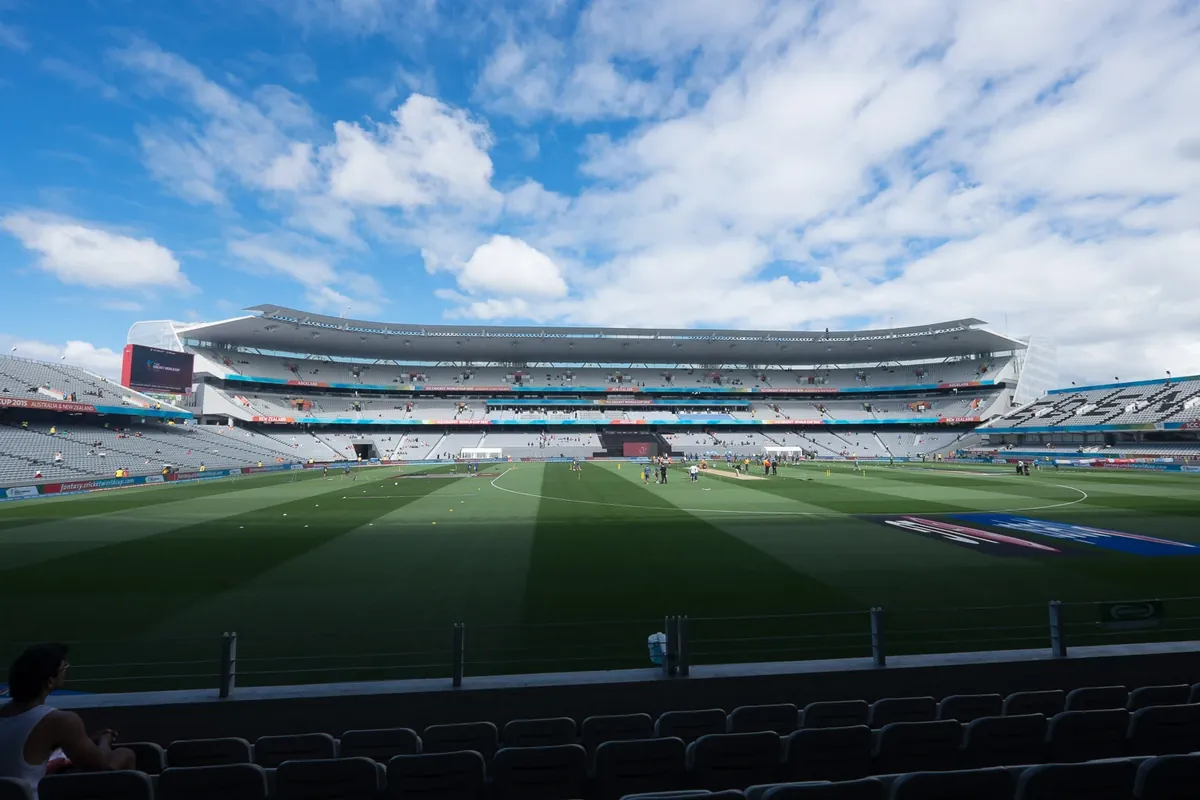
There is a wider lesson in this match about Eden Park itself. The ground is famously chase-friendly, with short straight boundaries and a history of huge totals being chased down, which is why India's decision to bowl first after winning the toss looked reasonable at the time. New Zealand's response was to bat as though the toss did not matter: they attacked from the start, refused to let India's spinners settle, and posted a total so large that even Eden Park's dimensions could not bring it back within reach. Phillips and Bracewell's stand was the difference between a total of around 200, which India might have chased, and a total of 259, which no team has chased in a T20I at this ground. That is the margin between a good innings and a match-winning one, and on Friday it belonged entirely to New Zealand.

What happens next is straightforward. India will look to close out the series 4-1 in Hamilton, with questions to answer about their middle order's fragility when the top order fails and about their death bowling after an evening in which 84 runs were scored behind the wicket alone, according to ESPNcricinfo's report. New Zealand will look to finish 3-2 and carry Friday's momentum into their next series, with Phillips' century as proof that their batting can still produce innings of the highest class. For Pakistan's cricket fans, who searched for this match in large numbers on Friday evening, the result is a reminder of how quickly a series can change its shape: three days ago India looked untouchable, and on Friday they were beaten by 87 runs. That is T20 cricket, and that is why the final match on Sunday, even with the series decided, is still worth watching.
Sources
This report is based on reporting, official statements and documents from:
- ESPNcricinfo — Phillips' century, Duffy's four-for topple India (4th T20I match report, 30 Oct 2026)
- CricTracker — NZ vs IND 2026, 4th T20I: reactions and quotes (30 Oct 2026)
- IANS via IANS Live — 4th T20I: Phillips, Duffy guide NZ to 87-run win over India (30 Oct 2026)
- CricCatch — New Zealand v India, 4th T20I: Phillips leads 87-run win (30 Oct 2026)
- Photos: featured photo of Glenn Phillips raising his bat after his century (CricTracker 4th T20I article image); other real file photographs (Wikimedia Commons) — Eden Park Auckland, Arshdeep Singh portrait, Tilak Varma portrait; none is a photograph of the 30 Oct match itself
Frequently Asked Questions
What was the result of the India vs New Zealand 4th T20I?
New Zealand beat India by 87 runs at Eden Park, Auckland, on Friday 30 October 2026. New Zealand posted 259 for 7 in 20 overs and bowled India out for 172 for 9 in reply. Glenn Phillips was named player of the match for his 107 off 49 balls.
Who were the star performers in the match?
Glenn Phillips smashed 107 off 49 balls, reaching his century off 46 balls, and Michael Bracewell hammered 65 off 25 balls in a 115-run stand that turned the match. With the ball, Jacob Duffy took four wickets for 23 runs, Mitchell Santner took two for 24 and Matthew Fisher took two for 40.
How did Tilak Varma and Axar Patel perform?
Tilak Varma top-scored for India with 35 off 35 balls, the only Indian batter to pass 35 on a night when the chase collapsed from a competitive start to 89 for 6 in nine overs. Axar Patel had a harder evening: he took one wicket for 43 runs, was hit for four, four, six and four in one over by Bracewell, and was dismissed for 7 off 9 balls by Santner.
What milestone did Arshdeep Singh reach in this match?
Arshdeep Singh became the first Indian bowler to take 150 wickets in men's T20I cricket. His one wicket for 38 runs in this match — the wicket of New Zealand captain Mitchell Santner for 5 — took him to the mark. He had already set the Indian calendar-year record with 38 wickets in 2026 during the second T20I at Christchurch.
What is the state of the series now?
India lead the five-match series 3-1 and have already won it, having sealed the series in Wellington by winning the first three matches. The fifth and final match, in Hamilton on Sunday 1 November, decides whether India finish 4-1 or 3-2.
Was this match an ODI, as some searches suggest?
No — the match played at Eden Park on 30 October 2026 was the fourth T20I of India's five-match T20I tour of New Zealand, not an ODI. Some Pakistan search traffic used the label 'ind vs nz odi', but the verified scorecard, the 20-over totals and every match report confirm a T20I. This article covers the T20I result; no ODI was played on this date in this series.