Pakistan vs Sri Lanka in the Perfect Finale to an Entertaining Tri-Series
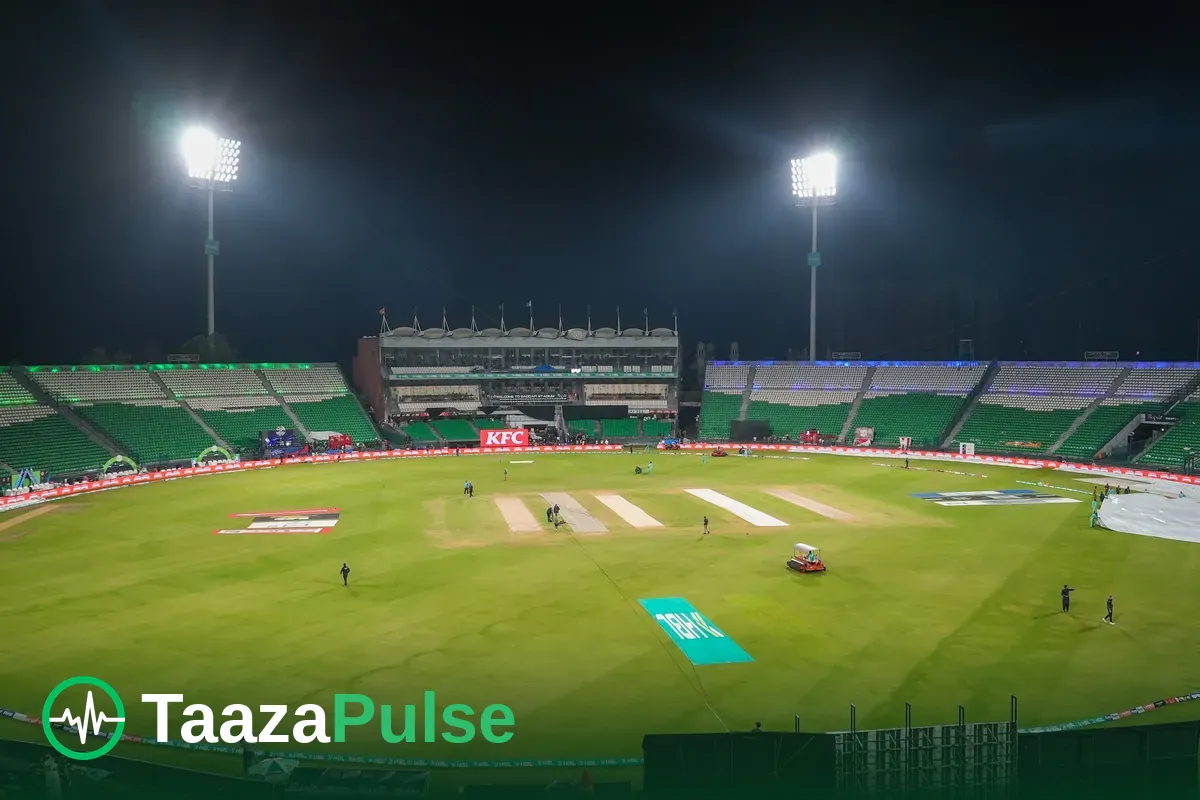
Pakistan meet Sri Lanka in the final of the ODI tri-series at Gaddafi Stadium, Lahore, on Saturday 31 October — a rematch of the match that stunned the hosts four days earlier, when Sri Lanka bowled Pakistan out for 110 and won by eight wickets at the same venue. The final starts at 1:00 PM PKT, with the toss at 12:30 PM PKT, and it closes a series that has already produced a 430-run chase, a one-wicket thriller and one of the great collapses in Pakistan's home history.
It is, as the series was billed in the build-up to the final, the perfect finale to an entertaining tri-series — and it is a genuine contest, not a coronation. Pakistan finished top of the table with three wins from four matches, but their one defeat was the heaviest of the series. Sri Lanka finished second with two wins from four, and their two wins were the two most emphatic statements of the tournament: the record chase in Rawalpindi and the demolition in Lahore. England, who beat Sri Lanka by 55 runs in Thursday's dead rubber, finished third with one win and go home.
The final is a day-night, 50-over international. There is no reserve day in the reporting around the fixture, no second chance for the losers, and a trophy that will be decided by which version of each side turns up: the Pakistan that won three matches in a row, or the Pakistan that lasted 25.3 overs on Tuesday; the Sri Lanka that chased 430 and bowled out the hosts for 110, or the Sri Lanka that conceded 386 to England two days later.
The road to the final: Rawalpindi set the tone
The series opened in Rawalpindi, and the first two matches there announced exactly what kind of tournament this would be. Pakistan beat Sri Lanka by 37 runs in the opener, built on Salman Ali Agha's 107 and three wickets from Shaheen Shah Afridi. It looked, at that stage, like a normal home series: Pakistan in control, Sri Lanka chasing the game.
Then Sri Lanka produced the chase of the series. Against England in Rawalpindi, they hunted down 429 for 4 with 430 for 8 and one ball to spare — a two-wicket win that was reported as the second-highest successful run chase in ODI history. Whatever the final table says about England, that match alone made the series: a target of 430, chased, at a ground where totals had previously felt safe.
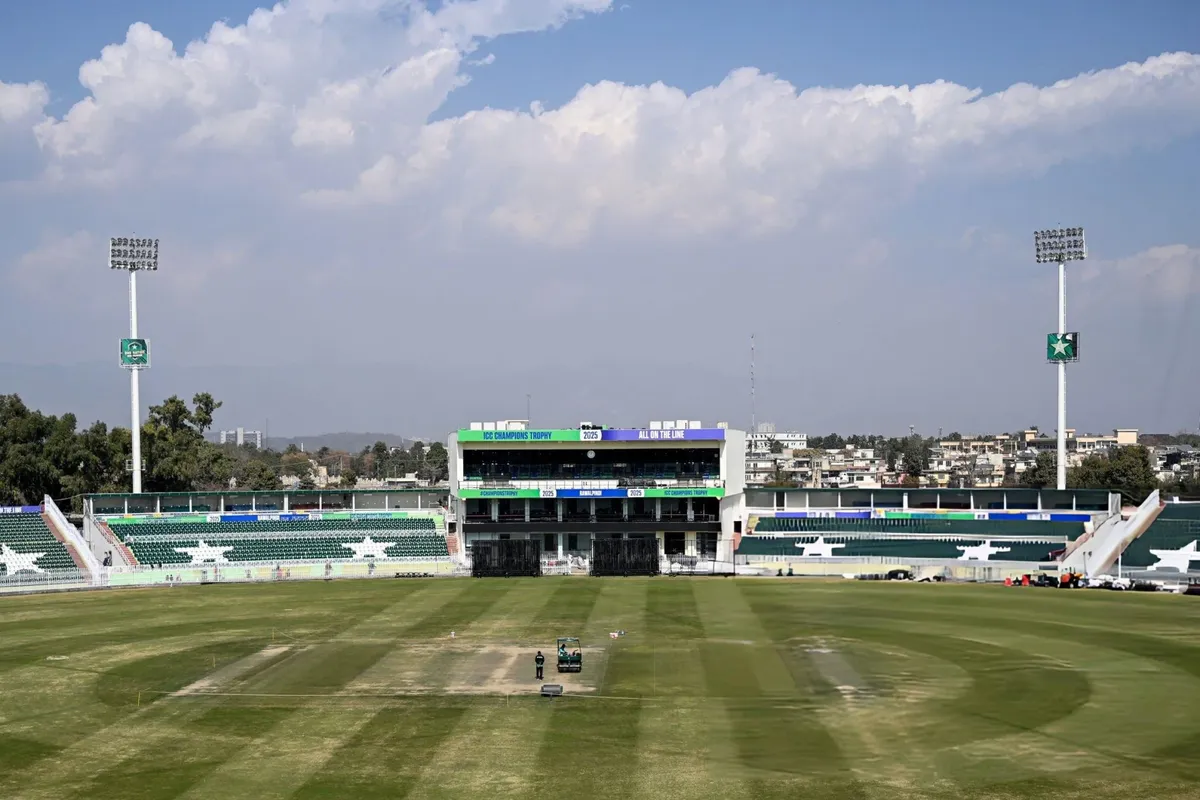
The tournament then moved to Lahore, and the drama followed it. On Sunday 25 October, England set Pakistan 242 — Ben Duckett made 105 — and Pakistan collapsed to 154 for 9. What happened next decided the finalists. Shadab Khan, batting at No. 8, made an unbeaten 113 off 96 balls, and with Haris Rauf unbeaten on 7 at the other end, the last-wicket pair added 89 runs and carried Pakistan to 243 for 9 in 47.1 overs — a one-wicket win with 17 balls to spare. That win took Pakistan to six points and booked their place in the final with a match still to play. It also gave the series its defining individual innings: a maiden ODI century, from No. 8, in a chase that had looked lost.
For Sri Lanka, the equation after that Sunday was simple and brutal: beat Pakistan on Tuesday, or watch England stay alive. They did not just beat Pakistan. They dismantled them.
Tuesday's rout: 110 all out, and why the final is not a formality
The fifth match of the series, at Gaddafi Stadium on Tuesday 27 October, is the reason this final carries real tension. Sri Lanka captain Kusal Mendis won the toss and chose to bowl, and Pakistan never recovered from the first half-hour. Fakhar Zaman went for 5, Maaz Sadaqat for 8, Saad Baig for 5, and by the time the scoreboard read 61 for 5 after 13.1 overs, the only questions were how far past 100 the lower order could drag Pakistan and how quickly Sri Lanka would finish the chase.
The answers were swift and unsparing. Pakistan lasted 25.3 overs for 110 — reported as their second-lowest ODI total on home soil. Babar Azam top-scored with 29 off 33 balls. Hasan Nawaz made 17 and Shaheen Shah Afridi 15, including two sixes, and only an 18-run last-wicket partnership carried Pakistan from 92 for 9 into three figures. Sri Lanka needed 18.1 overs to reply, reaching 114 for 2 with 191 balls to spare. Kamindu Mendis finished unbeaten on 62 off 60 balls, with eight fours and two sixes, and Pavan Rathnayake was unbeaten on 23, striking the winning boundary.
The bowling figures explain the rout better than any summary. Dilshan Madushanka took 5 for 34 in 8.3 overs — his career-best ODI figures and his second five-wicket haul in the format, after his 5 for 80 against India in Mumbai during the 2023 World Cup. He took the first wicket, Fakhar Zaman, and the third, Saad Baig, then returned to remove Arafat Minhas, Haris Rauf and finally Shaheen, the last wicket to fall. Sahan Arachchige took 2 for 24, removing Salman Ali Agha and Shadab Khan around the collapse from 61 to 64. Eshan Malinga claimed Babar, Asitha Fernando removed Maaz Sadaqat early, and Dunith Wellalage removed Hasan Nawaz. Every Sri Lanka bowler used took a wicket.
That match also settled the tournament. Pakistan had already qualified, so their place in the final was never in doubt — but Sri Lanka's win put them into the final alongside Pakistan and eliminated England before Thursday's match had even been played. The final, then, is a repeat of a fixture played four days earlier, at the same ground, against the same attack — with, Pakistan will hope, a rather different batting performance.
Thursday's dead rubber: 386, a century, and a warning
Thursday's sixth match, between England and Sri Lanka, was a dead rubber in the table and anything but in the cricket. England, winless until then, posted 386 for 5 — Ben Duckett making 167 off 132 balls with 24 fours, supported by Tom Banton's 74, Harry Brook's 44 and Jordan Cox's 43. It was England's first and only win of the series, by 55 runs, and it showed what this Gaddafi Stadium surface does to bowling attacks that miss their lengths: even 386 did not feel entirely safe.
Sri Lanka's reply was a warning of its own. They were bowled out for 331 in 45.1 overs, but Pavan Rathnayake made 118 off 77 balls and Kusal Mendis 89 off 71 — the captain leading from the front two days before he must do it again. Rathnayake's century, in a losing cause, confirmed him as the form batter of the series' second half: 23 not out in the rout on Tuesday, 118 in the dead rubber on Thursday. Sri Lanka lost that match and still left Lahore with momentum in the two departments that matter most: a captain in runs and a young batter who has now scored heavily twice in four days.
For Pakistan's bowlers, Thursday was also a useful reminder. England's 386 was the highest total of the series, and it came at the ground where the final will be played. The surface is, by every match of this series, a batting surface first — and the side that bats first on Saturday will be thinking in terms of 300-plus, not survival.
Pakistan's questions: the top order, and one captain's milestone
Pakistan's selection and batting questions all point the same way: to the top of the order. Fakhar Zaman's series reads 16 in the Rawalpindi opener, 10 against England on 25 October and 5 against Sri Lanka on 27 October — three starts, no score of substance, and a dismissal to Madushanka in two of the three matches. Maaz Sadaqat, who opened alongside him on Tuesday, made 8. The opener's slot is therefore the live selection debate before the final, and it is the one area where Pakistan could plausibly change the side that was bowled out for 110.
The middle order has its own repair work to do. Salman Ali Agha's 107 won the opener, but he made 9 on Tuesday. Shadab Khan's unbeaten 113 won the England match, but he made 2 on Tuesday. Babar Azam, who has dropped to ninth in the ICC ODI batting rankings during this series, top-scored on Tuesday with 29 — a figure that describes a start, not a top score, and a measure of the failure around him. The pattern of the series for Pakistan is not that individuals cannot score; it is that the side has not yet put two batting performances together in the same week.
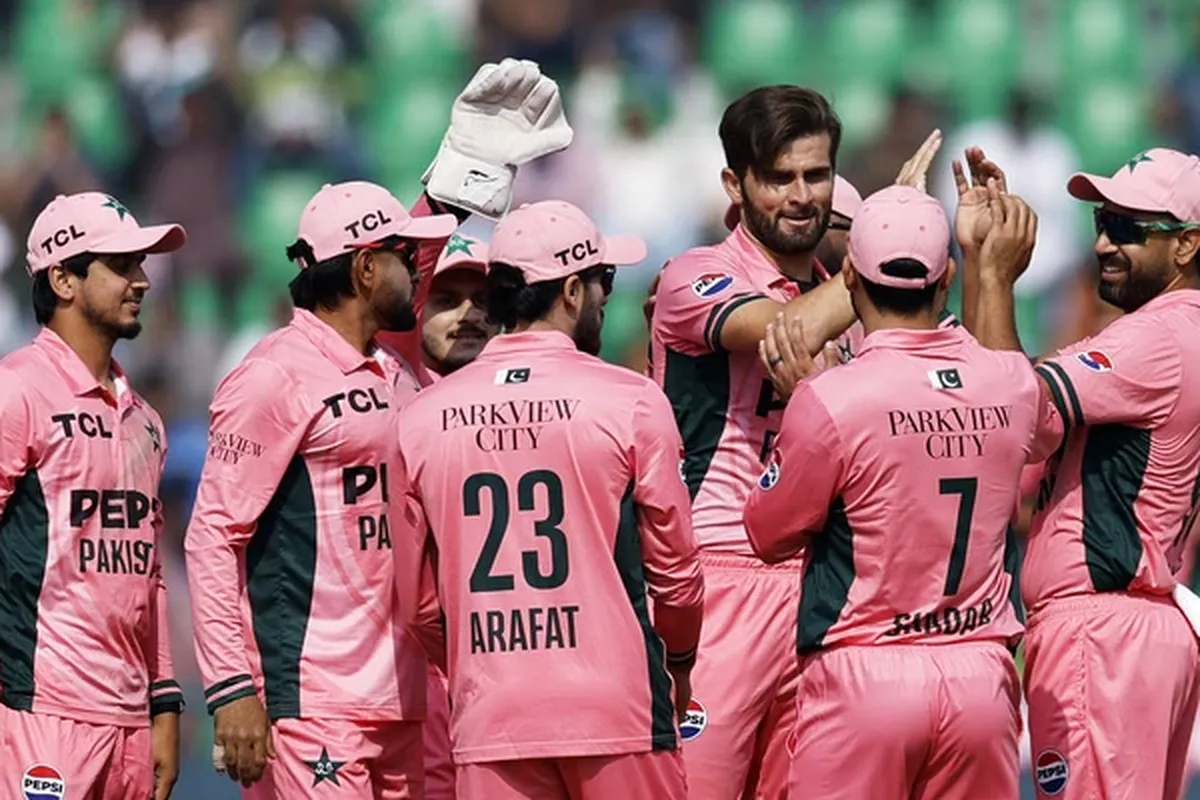
With the ball, Pakistan's story is led by their captain. Shaheen Shah Afridi took 4 for 46 against England on 25 October, removing Tom Banton and Joe Root in his opening spell, and in that match he claimed his 150th ODI wicket — Banton's — to become the fastest Pakistani fast bowler to the milestone and the second-fastest Pakistani bowler overall, in his 80th ODI. Only Saqlain Mushtaq, with 150 wickets in 78 matches, reached it faster among Pakistan bowlers; Waqar Younis and Shoaib Akhtar both needed 91, Saeed Ajmal 93 and Umar Gul 104. Shaheen also took 1 for 29 in six overs on Tuesday, when there was almost nothing to defend, and his new-ball spell on Saturday — against a Sri Lanka top order that has already seen him at this ground twice — is where the final may be decided in its first ten overs.
He will not be alone. Haris Rauf's unbeaten 7 on Sunday was a small score with a large consequence, and Naseem Shah's pace, Arafat Minhas's control and the spin options around Shadab Khan give Pakistan a varied attack. The question is not whether Pakistan can take wickets — Madushanka's spell aside, they have taken them all series — but whether their batters give their bowlers a total to defend.
Sri Lanka's threats: the left-armer, the captain, and the young batter
Sri Lanka arrive with the clearer form lines. Madushanka is the bowler of the series: his 5 for 34 on Tuesday was not only a career best but the best figures by a Sri Lanka bowler in an ODI in Lahore, and it levelled him with Lasith Malinga for the joint-third best figures by a Sri Lanka fast bowler against Pakistan in ODIs — behind only Rumesh Ratnayake's 5 for 32 at Sharjah in 1990. He dismissed Fakhar Zaman in the fourth over on Tuesday and returned to finish the innings; on Saturday he will open against the same batters, at the same ground, with the same short-ball plan that unsettled them.
Behind him, the supporting cast has already proved itself. Arachchige's 2 for 24 on Tuesday broke the middle order at its most fragile moment. Wellalage and Malinga took a wicket each. Asitha Fernando struck early. And in the field, Kusal Mendis kept wicket and captained the side that produced the rout — then made 89 off 71 two days later, the innings that kept Thursday's chase alive long after it should have ended.
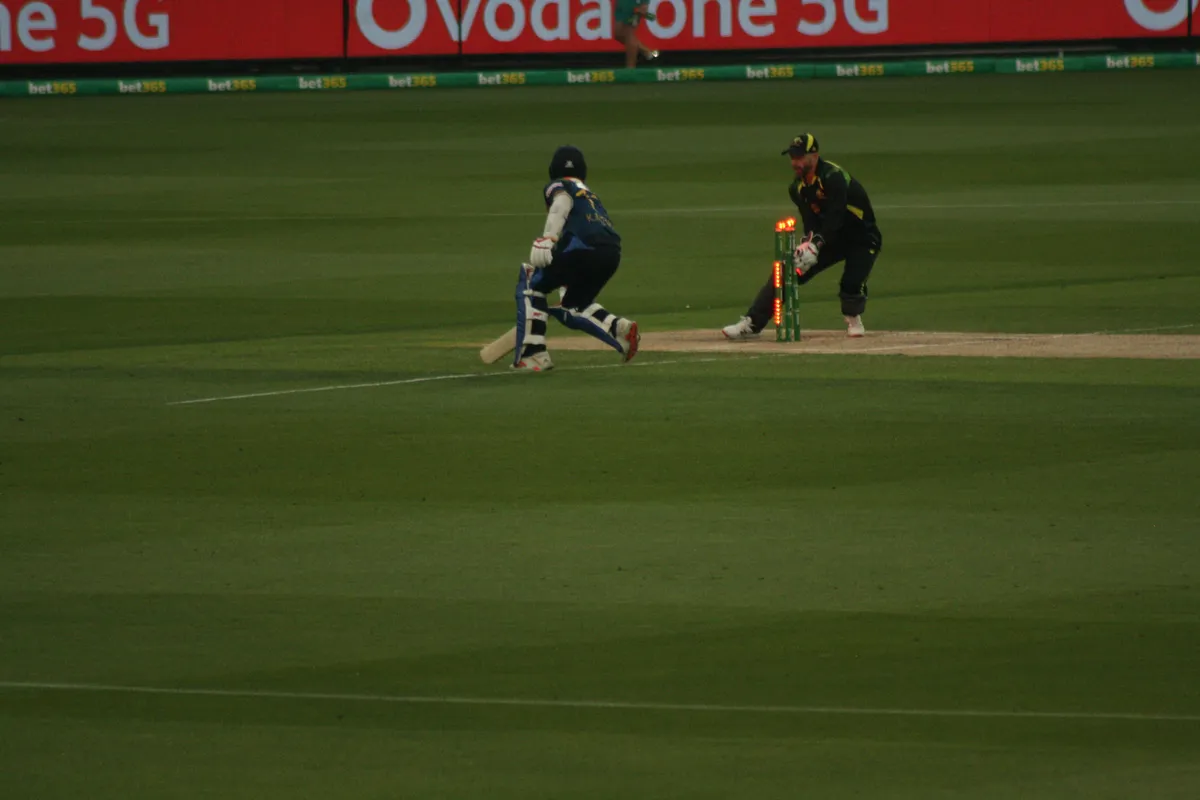
The batting threat, though, is now Rathnayake-shaped. His 118 off 77 against England was the second-highest score of the series after Duckett's 167, and it followed his unbeaten 23 in the rout — a finisher's innings in one match, a century in the next. Kamindu Mendis, unbeaten on 62 on Tuesday, reached his fifth ODI half-century with a six off Shaheen, and the pair's unbroken stand in the chase was the calmest passage of batting in the series. Add Avishka Fernando, Janith Liyanage and Dasun Shanaka, and Sri Lanka's batting has depth that Pakistan's Tuesday performance did not test at all.
Sri Lanka's one vulnerability is visible in Thursday's scorecard: they conceded 386 and lost by 55 runs when an opposition top order fired. Their bowling, for all its Tuesday brilliance, can be scored against when the batters survive the new ball. That is the opening Pakistan must exploit — and the reason the first ten overs on Saturday matter more than any other passage of the match.
Pitch, weather and the toss at Gaddafi Stadium
Gaddafi Stadium has produced three very different matches in this series, and that variety is the best pitch report available. On 25 October, England's 241 was chased down with one wicket in hand. On 27 October, Pakistan were bowled out for 110 and Sri Lanka cruised home. On 29 October, England posted 386 for 5 and still won by only 55 runs. The surface is generally good for batting, the boundaries are not huge, and dew under lights in the evening tends to help the chasing side. A first-innings total around 280 to 300 should be competitive, but as the 430 chase at Rawalpindi proved, no total in this series has felt safe.
The weather for Saturday in Lahore is expected to be clear, around 23 degrees, with no rain in the forecast — a full match, under lights, with dew likely to be a factor in the second innings. That makes the toss a genuine decision rather than a formality: bat first and set a target on a true surface, or chase under lights with dew around. The captain who wins it will have to weigh Pakistan's Tuesday collapse against Sri Lanka's Thursday concession of 386 — and against the fact that the side batting second has won two of the three Lahore matches in this series.
| Match details — Pakistan vs Sri Lanka, tri-series final | |
|---|---|
| Date | Saturday, 31 October 2026 |
| Venue | Gaddafi Stadium, Lahore |
| Start | 1:00 PM PKT (toss 12:30 PM PKT) |
| Format | One-day international, 50 overs, day-night |
| Pakistan TV/streaming | PTV Sports, Tapmad, Tamasha, PCB Live |
| Other broadcasters | Sony Sports Network (India), Sky Sports (UK), Willow TV (North America), Peo TV, Siyatha TV and Dialog (Sri Lanka) |
| Points table | Pakistan 6 pts (4 played, 3 won, 1 lost); Sri Lanka 4 pts (4 played, 2 won, 2 lost); England 2 pts (4 played, 1 won, 3 lost) |
Predicted XIs and the calls that matter
The official XIs are confirmed only at the toss, and preview coverage has converged on two largely settled sides — with one genuine question in each camp. For Pakistan, the predicted XI in circulation is Fakhar Zaman, Maaz Sadaqat, Babar Azam, Saad Baig (wicketkeeper), Salman Ali Agha, Hasan Nawaz, Arafat Minhas, Faheem Ashraf, Shaheen Shah Afridi (captain), Naseem Shah and Haris Rauf. The debate is whether the side that was bowled out for 110 keeps faith with the same top order, or whether the opener's slot changes after three lean matches for Fakhar Zaman. Saim Ayub, it should be noted, was released from the Pakistan ODI squad during the series, so the alternative opener must come from within the remaining squad.
For Sri Lanka, the predicted XI is Kamindu Mendis, Avishka Fernando, Kusal Mendis (captain and wicketkeeper), Pavan Rathnayake, Sahan Arachchige, Janith Liyanage, Dasun Shanaka, Dunith Wellalage, Eshan Malinga, Dilshan Madushanka and Asitha Fernando — essentially the side that bowled Pakistan out for 110, with the same new-ball pair and the same middle order. Sri Lanka are unlikely to change a winning combination, and their one selection question is in the spin department, where the balance between Wellalage's control and an extra seamer depends on how dry the surface looks at the toss.
The key battles write themselves. Fakhar Zaman against Madushanka, after two dismissals to him already in the series. Babar Azam against the left-armer's short ball and Wellalage's spin. Kamindu Mendis and Rathnayake against Shaheen's new ball. And, above all, Pakistan's top order against the first ten overs — the passage that decided Tuesday's match before it had properly begun.
What the final means
For Pakistan, this is a home final with a point to prove. They have already won the table, already beaten both opponents in the series, and already shown — against England on Sunday — that they can win a match from 154 for 9. What they have not shown, since Tuesday, is that they can bat against this Sri Lanka attack at this ground. A trophy won after a 110 all out would be a story of response; a defeat would make Tuesday look less like an aberration and more like a measure.
For Sri Lanka, the prize is a tournament win built on the two most memorable performances of the series: the 430 chase and the 110 rout. They have already beaten the hosts, already eliminated England, and already proved they can win at this ground under lights. A win on Saturday would make them tri-series champions as the side that peaked at the right time — and it would confirm Rathnayake and Madushanka as the breakout names of the tournament.
Either way, the series has already delivered what its billing promised: entertainment, in every sense. The final, under lights at Gaddafi Stadium, with a trophy attached and a four-day-old rout hanging over it, is the right ending — and the only honest preview is that neither side can be sure which version of itself will arrive.
Frequently Asked Questions
When and where is the Pakistan vs Sri Lanka tri-series final?
The final is on Saturday, 31 October 2026, at Gaddafi Stadium in Lahore. It is a day-night, 50-over international starting at 1:00 PM PKT, with the toss at 12:30 PM PKT. It is the last match of the Pakistan ODI Tri-Series 2026, which also featured England in a double round-robin league stage.
How did Pakistan and Sri Lanka reach the final?
Pakistan finished top of the points table with six points from four matches — three wins and one defeat. Sri Lanka finished second with four points — two wins and two defeats. England finished third with two points from one win and were eliminated, despite beating Sri Lanka by 55 runs in the last league match on Thursday 29 October, because that match was a dead rubber: Sri Lanka had already sealed the second final spot by beating Pakistan on Tuesday.
What happened the last time Pakistan and Sri Lanka met?
On Tuesday 27 October at the same ground, Sri Lanka bowled Pakistan out for 110 in 25.3 overs and chased 114 for 2 in 18.1 overs to win by eight wickets with 191 balls to spare. Dilshan Madushanka took a career-best 5 for 34, Babar Azam top-scored for Pakistan with 29, and Kamindu Mendis finished unbeaten on 62 off 60 balls. That result put Sri Lanka into the final and eliminated England — which is why Saturday is a rematch, not a fresh fixture.
Who are the form players going into the final?
For Sri Lanka: Dilshan Madushanka (5 for 34 on Tuesday, the best figures by a Sri Lanka bowler in an ODI in Lahore), Pavan Rathnayake (23 not out on Tuesday, then 118 off 77 against England on Thursday) and captain Kusal Mendis (89 off 71 on Thursday). For Pakistan: captain Shaheen Shah Afridi, who took 4 for 46 against England on 25 October and claimed his 150th ODI wicket in that match — the fastest Pakistani fast bowler to the milestone — and Shadab Khan, whose unbeaten 113 off 96 balls from No. 8 won the one-wicket thriller against England.
What are the predicted XIs, and what is the big selection question?
The predicted XIs in preview coverage are, for Pakistan: Fakhar Zaman, Maaz Sadaqat, Babar Azam, Saad Baig (wicketkeeper), Salman Ali Agha, Hasan Nawaz, Arafat Minhas, Faheem Ashraf, Shaheen Shah Afridi (captain), Naseem Shah and Haris Rauf; for Sri Lanka: Kamindu Mendis, Avishka Fernando, Kusal Mendis (captain and wicketkeeper), Pavan Rathnayake, Sahan Arachchige, Janith Liyanage, Dasun Shanaka, Dunith Wellalage, Eshan Malinga, Dilshan Madushanka and Asitha Fernando. These are predictions, not official teams — the confirmed XIs are announced at the toss. Pakistan's big question is the opener's slot after Fakhar Zaman scored 16, 10 and 5 in his three series innings; Saim Ayub was released from the squad during the series.
Where can I watch the final live?
In Pakistan, the match is listed on PTV Sports, Tapmad, Tamasha and PCB Live. In India it is on the Sony Sports Network; in the United Kingdom on Sky Sports; in North America on Willow TV; and in Sri Lanka on Peo TV, Siyatha TV and Dialog. The match starts at 1:00 PM PKT (1:30 PM IST), with the toss at 12:30 PM PKT, and the weather in Lahore is expected to be clear at around 23 degrees with no rain forecast.