Petrol Up Rs1.85 to Rs377.91, Diesel Nears Rs400 in Latest Daily Revision
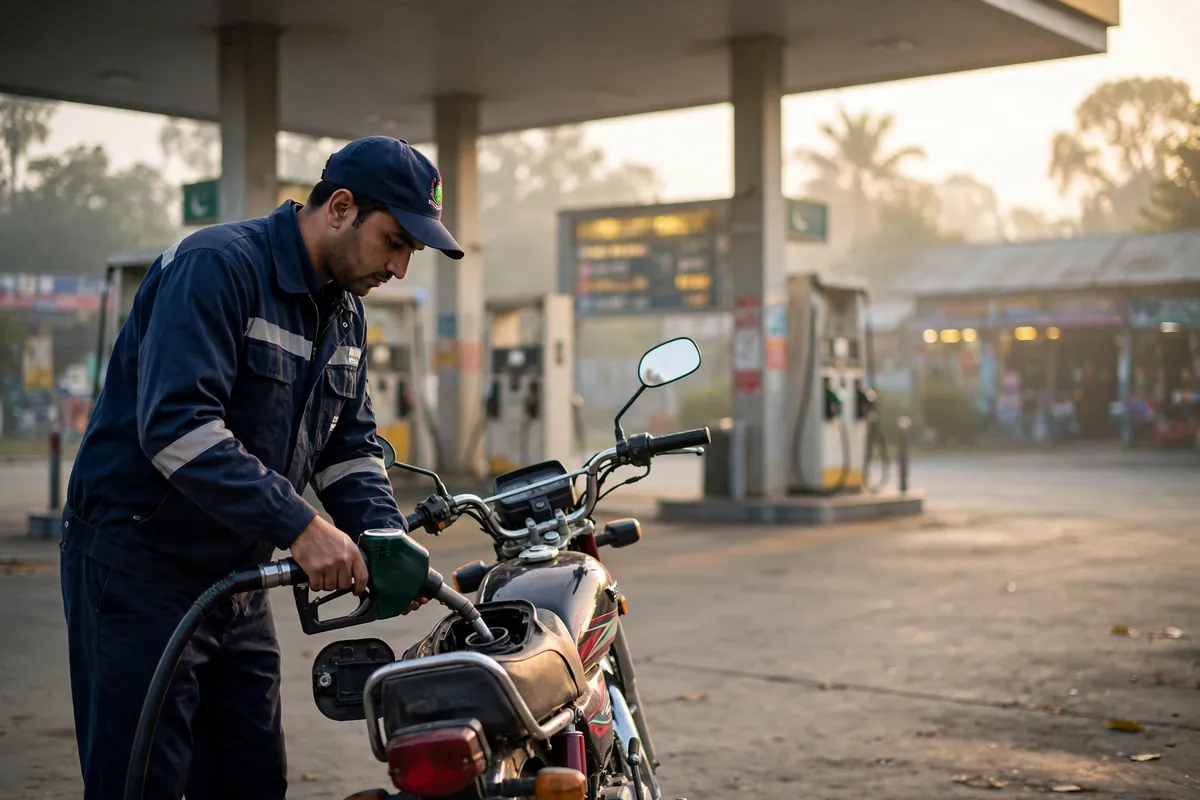
Petrol and high-speed diesel became more expensive again on Thursday, as the government raised the price of petrol by Rs1.85 to Rs377.91 per litre and diesel by Rs1.75 to Rs399.82 per litre for 29 October, according to a Petroleum Division notification. The increase, the second daily revision in two days, underlines how quickly pump prices now move under Pakistan's daily pricing system.
What changed today
The latest revision reversed part of the relief given to petrol consumers a day earlier. On 28 October, petrol was cut by Rs3.19 to Rs376.06 per litre, while diesel was raised by Rs2.25 to Rs398.07 per litre. Before that revision, petrol stood at Rs379.25 per litre and diesel at Rs395.82 per litre.
Taken together, the two revisions leave petrol Rs1.34 per litre cheaper than it was before 28 October, while diesel is Rs4 per litre more expensive over the same two days. For consumers, the pattern illustrates a central feature of the new system: petrol and diesel do not necessarily move in the same direction, and a cut on one day can be partly or fully reversed on the next.
| Date | Petrol (Rs per litre) | Change | High-speed diesel (Rs per litre) | Change |
|---|---|---|---|---|
| Before 28 October | 379.25 | — | 395.82 | — |
| 28 October | 376.06 | -3.19 | 398.07 | +2.25 |
| 29 October | 377.91 | +1.85 | 399.82 | +1.75 |
The new diesel price, at Rs399.82 per litre, sits just below the Rs400 mark. Petrol, at Rs377.91, remains well below the peak recorded earlier this year, but the direction of travel over the past two days has been mixed — relief for petrol users on one day, a fresh increase the next, and a steady rise for diesel on both days.
How the daily mechanism works
Pakistan now runs daily petroleum price reviews. The Oil and Gas Regulatory Authority (Ogra) publishes daily ex-depot prices on its website, and prices are calculated from a rolling seven-day average of international prices, based on Platts Arab Gulf rates.
Under the arrangement, prices announced on Fridays remain unchanged over the weekend. Ogra is authorised, under the cabinet-approved framework, to announce daily prices without seeking the prime minister's approval each time.
From fortnightly to daily
The daily system replaced weekly reviews, which had themselves replaced the old fortnightly cycle, under which prices were revised on the 1st and 16th of each month. According to Dawn, daily revisions began in July, on 17 July.
Petroleum Minister Ali Pervaiz Malik has said the daily prices are calculated using a seven-day average of international market rates, in line with international practice. The use of a seven-day average, rather than a single day's international price, is intended to smooth out sharp daily swings in global markets while still passing changes through to consumers more quickly than the old fortnightly system did.
In practical terms, the change means there is no longer a single, widely anticipated price announcement twice a month. Instead, smaller adjustments can arrive on any working day, and consumers, transporters and businesses have to follow the daily notifications to know the prevailing rate.
Anatomy of today's increase
The breakup published by Ogra for 29 October shows that the increase was driven mainly by a rise in international prices. The Platts Arab Gulf mean for petrol rose from $120.21 to $121.28 a barrel, while the corresponding mean for diesel rose from $113.13 to $114.15 a barrel.
For petrol, premium and freight held at $19.88. Customs duty was Rs20.56 per litre, the inland freight equalisation margin was Rs7.91 per litre, the oil marketing company margin was Rs7.87 per litre and the dealer margin was Rs9.98 per litre. The rupee averaged about Rs276.97 to the dollar in the calculation.
For diesel, customs duty was Rs15.68 per litre. The fixed charges were unchanged: the petroleum levy remained at Rs80 per litre and the climate support levy at Rs5 per litre.
Taxes form a large share of the price
Dawn reported that total duties and taxes amount to about Rs114 per litre on petrol and about Rs100 per litre on diesel. That figure, set against a pump price of Rs377.91 for petrol and Rs399.82 for diesel, shows why debate over fuel prices in Pakistan is as much about taxation as it is about international oil markets.
When international prices rise, the effect at the pump reflects both the higher import cost and the structure of duties, margins and levies built into the final price. When international prices fall, the same structure determines how much of that fall reaches the consumer. The margins for oil marketing companies and dealers, the inland freight equalisation margin and customs duty are all separate components of the final ex-depot price.
The scale of consumption underlines the fiscal importance of these charges. Monthly sales of petrol and diesel run between 700,000 and 800,000 tonnes, so even small per-litre charges translate into large overall amounts.
The levy debate and the subsidy
The petroleum levy, fixed at Rs80 per litre, has become a central point of political contention. Alongside it sits the targeted relief programme announced by the government in September.
On 13 September, Prime Minister Shehbaz Sharif announced a fuel subsidy of Rs100 per litre for motorcycles, rickshaws and other two- and three-wheelers, up to 20 litres a month, and for cars up to 800cc, up to 30 litres a month, with registration via SMS. The government says it allocated Rs75 billion for the scheme and that more than 10 million people are benefiting from it.
IMF direction, prime minister's position
The International Monetary Fund has directed the government to phase the scheme out "promptly". The prime minister, however, has said it will continue. That difference of position leaves the future of the subsidy uncertain, even as the government presents it as a key source of relief for lower-income fuel users.
The design of the scheme reflects where the burden of petrol prices falls most directly. Motorcycles, rickshaws and small cars are the vehicles of commuters and of the middle and lower-middle classes, for whom petrol is a daily necessity rather than a discretionary purchase.
Jamaat-i-Islami pressure
Jamaat-i-Islami chief Hafiz Naeemur Rehman met Prime Minister Shehbaz Sharif and demanded abolition of the petroleum levy. The two sides agreed to form a joint committee to review expanding the existing relief programme.
Rehman said his party would march on Islamabad in mid-November if significant relief is not provided. The warning sets a political deadline alongside the economic debate: the government now faces pressure both from the IMF, which wants the subsidy phased out, and from opposition political pressure demanding the opposite — less taxation on fuel and more relief for consumers.
For the government, the joint committee offers a forum to discuss expansion of the relief programme without, at this stage, committing to abolition of the levy. Whether that process produces significant relief, in the terms demanded by the Jamaat-i-Islami, remains to be seen.
What it means for households and transport
The immediate impact differs by fuel. Petrol hits commuters and the middle and lower-middle class directly, through the cost of motorcycles and cars used for work, school and daily travel. Even a change of less than Rs2 per litre, as on Thursday, adds up across repeated fill-ups over a month.
Diesel is the more inflationary of the two fuels, because it moves freight and food prices. When diesel rises — as it has on both 28 and 29 October, by a combined Rs4 per litre — the cost of transporting goods across the country rises with it, and that cost can feed through into the prices of food and other essentials.
The context, however, is that current prices remain below the year's peak. Earlier this year, on 3 April, prices peaked at Rs458.41 per litre for petrol and Rs520.35 per litre for diesel. Compared with those levels, Thursday's prices are substantially lower, though the daily system means they can change again quickly.
Austerity measures have also been reported alongside the price situation, including markets to close by 9pm and fuel for official vehicles cut by 50 per cent for three months. Those measures point to official concern about energy use and costs beyond the forecourt alone.
What to watch next
The next daily revisions will show whether Thursday's increase was a one-day movement in the seven-day average of international prices or the start of a longer run. Because prices are now set daily — with Friday's prices holding over the weekend — consumers no longer wait until the 1st or 16th of the month for clarity.
Three wider questions will also shape the debate in the coming weeks: whether the Rs100-per-litre subsidy continues in its present form despite the IMF's direction to phase it out promptly; whether the joint committee agreed with the Jamaat-i-Islami leads to an expansion of the relief programme; and whether the mid-November march warned of by Hafiz Naeemur Rehman goes ahead if significant relief is not provided.
For now, the notified prices for 29 October are Rs377.91 per litre for petrol and Rs399.82 per litre for diesel, according to the Petroleum Division — and under the daily system, they may not stay at those levels for long.
Frequently Asked Questions
What are the petrol and diesel prices in Pakistan today?
For 29 October 2026, petrol is Rs377.91 per litre (up Rs1.85) and high-speed diesel is Rs399.82 per litre (up Rs1.75), according to the Petroleum Division's notification. Prices now change daily under the new system, so always check the latest OGRA publication for the current day's rate.
Why do petrol prices change every day in Pakistan now?
Pakistan has moved to daily petroleum price reviews. OGRA publishes daily ex-depot prices calculated from a rolling seven-day average of international Platts prices, so global movements reach the pump gradually instead of in fortnightly jumps. Prices announced on Fridays remain unchanged over the weekend.
How much tax is charged on a litre of petrol?
The fixed charges include the petroleum levy of Rs80 per litre and a climate support levy of Rs5. Dawn has reported total duties and taxes of about Rs114 per litre on petrol and Rs100 per litre on diesel, once customs duty and other charges are counted.
What is the government's fuel subsidy and will it end?
Since September, owners of motorcycles, rickshaws and other two/three-wheelers can claim Rs100 per litre relief on up to 20 litres a month, and cars up to 800cc on up to 30 litres; the government says it allocated Rs75 billion and that more than 10 million people benefit. The IMF has directed the government to phase the scheme out promptly, but the prime minister has said it will continue.
Why did petrol fall but diesel rise on 28 October?
Because the two fuels are priced off different international benchmarks. On 28 October the calculation cut petrol by Rs3.19 to Rs376.06 while raising high-speed diesel by Rs2.25 to Rs398.07; on 29 October both rose. Opposite movements on the same day are a normal feature of the daily system.
Where can I check the official fuel price before filling up?
OGRA publishes the daily ex-depot prices on its official website, and the Petroleum Division issues the notification each revision follows. Pumps may not charge above the notified price for petrol and diesel.