Pakistan Urges Restraint on Iran Nuclear File at UN Security Council
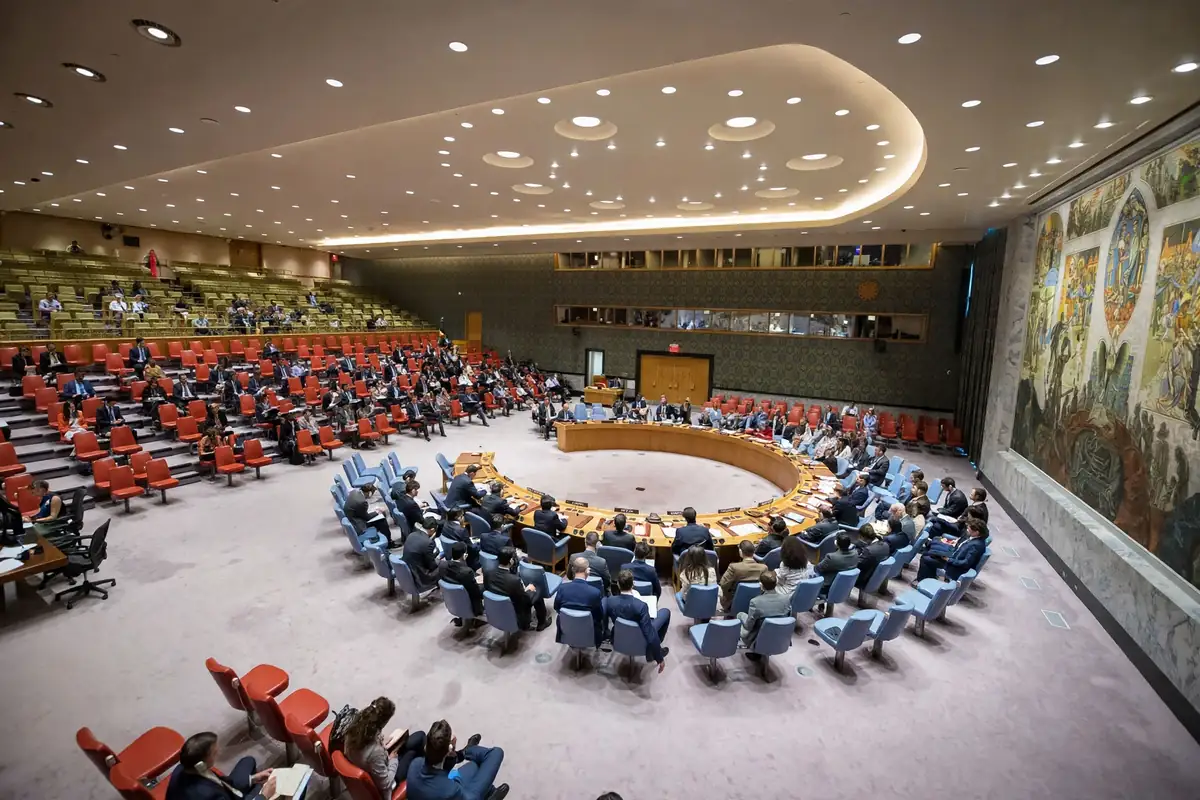
Pakistan told the UN Security Council on Tuesday that the situation surrounding the Iran nuclear file has sharply deteriorated, urging all sides to exercise restraint and return to diplomacy at a briefing where deep divisions among Council members were again on display. Islamabad called for the issue to be addressed through technical bodies rather than politicisation, and pointed to the Islamabad MoU signed in June as evidence that negotiated approaches can still produce results.
A deteriorating file, a divided Council
Speaking at the Security Council briefing on the Iran nuclear file on Tuesday, 27 October 2026, Pakistan's acting permanent representative to the United Nations, Ambassador Usman Jadoon, set out a position built on concern about the direction the issue has taken, both on the ground and inside the Council chamber itself.
"Pakistan remains concerned that the situation regarding the Iran nuclear file has sharply deteriorated, negatively impacting the consideration of the issue, including in the Security Council." Ambassador Jadoon told the Council.
The briefing was addressed by International Atomic Energy Agency (IAEA) Director General Rafael Grossi, who briefed the Council on the nuclear file. Pakistan's intervention came against a background that Ambassador Jadoon described as being marked by deep tensions and continued hostilities, in which a diplomatic settlement has become more critical than ever.
A central theme of the statement was the state of the Council itself. According to the Pakistani envoy, profound mistrust and difference of opinion has led to a breakdown of consensus within the Council. That breakdown, he suggested, was not separate from the wider deterioration but part of it, making it harder for the Council to consider the issue in a manner that could move it towards a settlement.
Ambassador Jadoon said members should revive the spirit of cooperative multilateralism and mutual understanding to break the deadlock. The appeal was framed not as a procedural suggestion but as a necessary step if the Council is to recover a shared basis for dealing with a file on which its members have increasingly spoken past one another.
Pakistan reaffirmed its support for a negotiated settlement of the Iranian nuclear issue that upholds the non-proliferation regime and respects the rights and obligations of the parties.
Non-compliance belongs with technical bodies, Pakistan says
Much of Pakistan's argument rested on where, and how, questions about Iran's nuclear programme should be examined. Ambassador Jadoon argued that such questions should not be settled through political contestation in the Council when a competent technical mechanism already exists for that purpose.
He said: "We have consistently maintained that any issues of non-compliance must be addressed through competent technical bodies like the IAEA, without politicization."
The point was developed into a direct appeal regarding the Agency's own room to operate. The IAEA, Ambassador Jadoon said, "must be enabled to carry out its work without any hindrance and within its technical mandate."
Why the IAEA point matters
By emphasising the Agency's technical mandate, Pakistan drew a distinction between verification and technical assessment, the work assigned to the IAEA, and the political judgements and competing legal readings that have divided Council members and made consensus more difficult to reach.
Islamabad's position, as presented on Tuesday, was that the second should not displace the first. If questions of non-compliance are handled outside competent technical bodies, or in a politicised manner, the statement implied, the prospect of a negotiated outcome itself becomes weaker.
Restraint, and the Islamabad MoU
From the condition of the file, Ambassador Jadoon turned to the conduct of the parties around it. His call was addressed to all sides, without exception.
He said: "Pakistan urges all sides to exercise restraint, refrain from irresponsible and destabilizing rhetoric, actions, and postures that could escalate tensions and increase the risk of conflict."
The warning linked language to consequence. Rhetoric, actions and postures were presented together as factors that could escalate tensions, at a time when the ground situation is already marked by deep tensions and continued hostilities.
Ambassador Jadoon also pointed to a concrete example of the approach Pakistan was advocating. Referring to the Islamabad MoU signed in June, he described it as a product of cooperative engagement rather than confrontation.
He said: "The Islamabad MoU signed in June is a successful manifestation of this approach."
The reference gave Pakistan's statement a dimension beyond commentary on the actions of others. By citing an agreement associated with Islamabad, the envoy presented Pakistan as a country that had itself been involved in efforts to lower tensions, and whose preference for diplomacy rested on a recent, practical experience rather than on principle alone.
That self-image was reinforced by the closing passages of the intervention. Pakistan acknowledged the support of partners including Qatar, Saudi Arabia, Türkiye, Egypt and China in de-escalation efforts. The acknowledgement placed Islamabad's role within a wider group of countries that it credited with supporting de-escalation, rather than presenting de-escalation as the work of any single capital.
"We believe that diplomacy can once again deliver results in paving the way for settling contentious issues peacefully." Ambassador Jadoon said.
The phrase "once again" carried much of the statement's argument in miniature. It suggested that diplomacy on this file had delivered before, that its present difficulties did not prove it unworkable, and that a return to it remained both possible and necessary.

Iran tells Council its consideration has ended
Iran's response at the briefing rested on a sharply different reading of the Council's role. Iran's deputy permanent representative, Gholamhossein Darzi, maintained that the Council's consideration of the issue came to a "definitive end" on 18 October 2025, when Security Council Resolution 2231 (2015) expired.
The contrast between the two interventions illustrated the deadlock Ambassador Jadoon had described. Where Pakistan spoke of reviving cooperative multilateralism to break an impasse within the Council, Iran maintained that the Council's consideration itself had already ended on a defined date, with the expiry of the resolution that had underpinned it.
That difference goes to whether the Council remains seized of the file and on what basis its members can act. On those questions, as Tuesday's briefing showed, there is no shared position.
How the file reached deadlock
The present impasse has its roots in the long and troubled history of the 2015 nuclear deal, known as the Joint Comprehensive Plan of Action, or JCPOA. Under that agreement, Iran was offered sanctions relief in return for limits on its nuclear programme.
The arrangement did not hold. The United States withdrew from the deal in 2018, and efforts to revive it subsequently failed.
A further turn came in September 2025, when France, Germany and the United Kingdom argued that Iran's violations had triggered the "snapback" mechanism. On that basis, sanctions were reimposed and the 1737 sanctions committee was reinstated.
A contested snapback
The snapback itself remains contested. Russia and China disputed that reading, and the Council has been unable to agree the committee's status, including the appointment of a chair and a Panel of Experts.
- The JCPOA of 2015 offered Iran sanctions relief for limits on its programme.
- The United States withdrew in 2018, and revival efforts failed.
- In September 2025, France, Germany and the United Kingdom argued that the snapback mechanism had been triggered, reimposing sanctions and reinstating the 1737 sanctions committee.
- Russia and China disputed that reading, and the Council has been unable to agree the committee's status, including a chair and a Panel of Experts.
- Resolution 2231 (2015) expired on 18 October 2025, which Iran says brought the Council's consideration to a definitive end.
Military developments then made a difficult diplomatic situation worse. Military strikes by the United States and Israel against Iran in February 2026, followed by Iranian counterattacks against neighbouring countries, further worsened the situation.
What happens next
No breakthrough emerged from Tuesday's briefing, and none of the positions stated there suggested that the underlying disagreements have narrowed. The Council remains divided over the status of the snapback, the 1737 committee and the consequences of the expiry of Resolution 2231, while Iran maintains that the Council's consideration ended more than a year ago.
For Pakistan, the importance of the file is both principled and regional. Its statement combined support for the non-proliferation regime with insistence on a negotiated settlement that respects the rights and obligations of the parties, a call for the IAEA to be allowed to work within its technical mandate, and a warning that irresponsible rhetoric, actions and postures could increase the risk of conflict in a region already marked by continued hostilities.
Islamabad's emphasis on de-escalation, and its acknowledgement of Qatar, Saudi Arabia, Türkiye, Egypt and China in that effort, also reflected its presentation of itself as part of a wider diplomatic effort rather than a distant observer. The Islamabad MoU was cited in that spirit: as evidence, in Pakistan's account, that the cooperative approach it is urging on others can produce an agreement.
Whether that approach can be revived at the level of the Council is the question the briefing left open. Ambassador Jadoon's closing proposition was a statement of belief rather than a prediction, and it was worded accordingly. Diplomacy, Pakistan argued, can once again deliver results in paving the way for settling contentious issues peacefully. After a session that displayed mistrust, a breakdown of consensus and fundamentally different readings of the Council's own role, that proposition now has to be tested against a deadlock that, on Tuesday's evidence, remains firmly in place.
Frequently Asked Questions
What did Pakistan say at the UN Security Council on Iran?
Pakistan's acting permanent representative, Ambassador Usman Jadoon, told the Council on 27 October that the situation regarding the Iran nuclear file 'has sharply deteriorated', that a diplomatic settlement has become more critical than ever, and that all sides should exercise restraint and avoid rhetoric and actions that could escalate tensions.
What is Pakistan's position on the IAEA's role?
Pakistan says issues of non-compliance must be addressed through competent technical bodies like the IAEA, without politicisation, and that the agency must be enabled to carry out its work without hindrance and within its technical mandate.
What is the Islamabad MoU that Pakistan cited?
An agreement signed in Islamabad in June, which Ambassador Jadoon held up at the Council as 'a successful manifestation' of the diplomatic approach Pakistan is advocating on the Iran file — evidence, in his words, that 'diplomacy can once again deliver results'.
Who represented Pakistan at the Security Council?
Ambassador Usman Jadoon, Pakistan's acting permanent representative to the United Nations. The session was a briefing on Iran and nuclear non-proliferation at which IAEA Director General Rafael Grossi also briefed the Council.
What did Iran say in response?
Iran's deputy permanent representative Gholamhossein Darzi maintained that the Security Council's consideration of Iran's nuclear issue came to a 'definitive end' on 18 October 2025, when Security Council Resolution 2231 (2015) expired.
Why is the Security Council deadlocked on Iran?
France, Germany and the United Kingdom argued in September 2025 that Iran's violations triggered the snapback mechanism, reimposing sanctions and reinstating the 1737 sanctions committee; Russia and China dispute that reading. The impasse has prevented the appointment of a committee chair and a Panel of Experts, and followed military strikes on Iran earlier in 2026.