iPhone 11 Price in Pakistan 2026
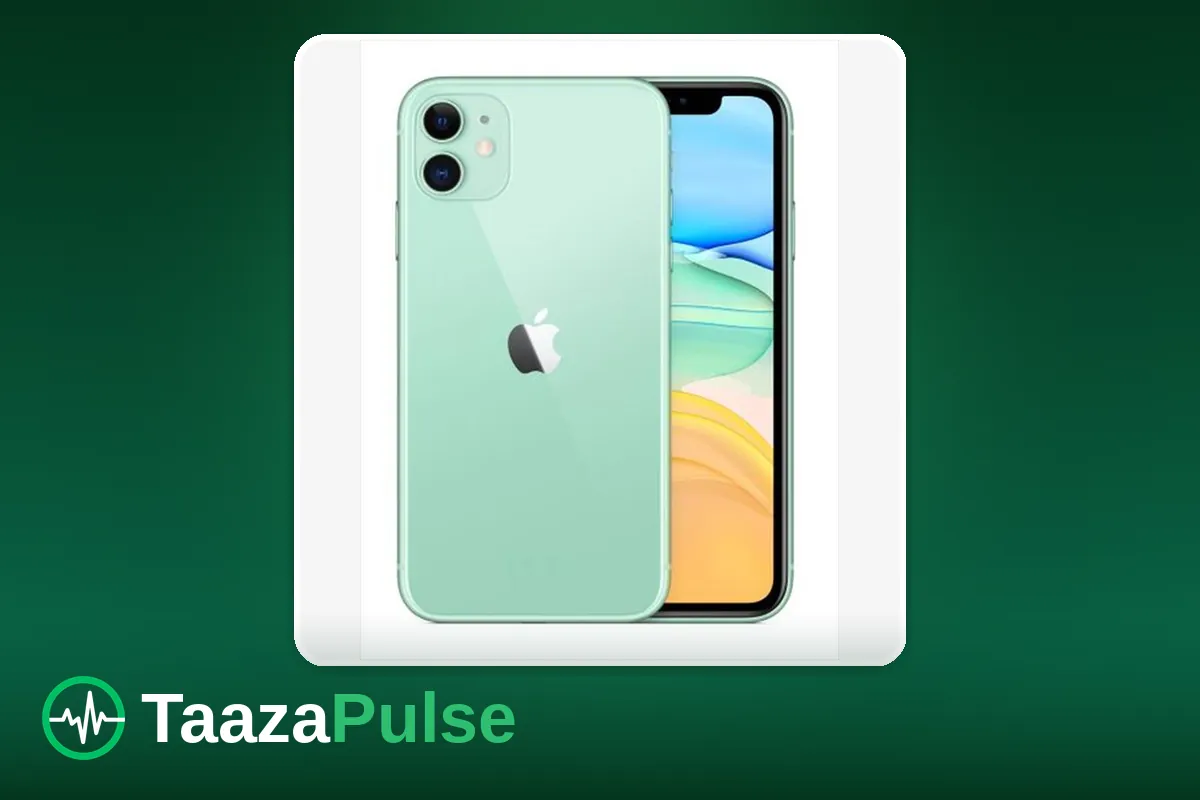
The first thing any honest iPhone 11 price in Pakistan guide must say in November 2026 is that the phone you are shopping for is not a new phone any more. The iPhone 11 launched in September 2019, Apple discontinued it years ago, and there is no verified new, sealed, officially sold stock left in Pakistan. Every price you will actually be offered today is a used or refurbished phone's price, and it moves with three things the big price lists never show you: whether the phone is PTA approved, how healthy its battery is, and whether its parts are original. A guide that prints one clean number for this phone is either quoting a seven-year-old launch price or hiding the condition behind the price.
That is exactly what the competitor pages do. WhatMobile still shows Rs 144,899, Mobileinto shows Rs 159,999 for 64GB and Rs 163,999 for 128GB, and Hamariweb shows Rs 182,299 for the 128GB model — figures that read like official prices but buy you nothing, because the same phone is flagged out of stock at Pinpack and discontinued at Mega.pk, and PriceOye has no live iPhone 11 product page at all, only an old discontinued list entry at Rs 135,500. StarCity's listings tell the same story from the other side: its PTA 256GB page quotes Rs 104,999 to Rs 114,999 and is out of stock, and its non-PTA 128GB page quotes Rs 87,999 to Rs 91,999 and is also out of stock. If a shop quotes you any of these numbers for a phone it can actually hand you, ask to see the phone first — the number almost certainly belongs to a different listing, a different condition, or a different year.
The real market, verified live on 3 November 2026, is narrower and much more useful. A used, PTA-approved iPhone 11 64GB sells for around Rs 58,000 at one live in-stock listing and typically Rs 64,500 at a specialist used-iPhone seller whose last three months of actual sales ran Rs 60,000 to Rs 68,500. The same phone without PTA approval starts around Rs 35,000 and typically trades near Rs 40,500. The gap between those two numbers is not a discount — it is the unpaid PTA tax plus the risk you carry until it is paid, and this guide works through that maths honestly below, because it is the single most expensive misunderstanding in the Pakistani used-iPhone market.
iPhone 11 Price in Pakistan — Verified Table (3 November 2026)
Every figure below is a used or refurbished price, because that is the only iPhone 11 market that exists in Pakistan today. Where a price comes from dated sales rather than a live listing, the table says so — and where no live price exists, it says that too, instead of inventing one.
| Variant (used) | PTA status | Price seen 3 Nov 2026 | Source / condition |
|---|---|---|---|
| 64GB | PTA approved | Rs 58,000 (was Rs 62,000) | iPhoneinPakistan, InStock on 3 Nov 2026; 10/10 condition, battery health 85-95%, sealed, all original parts, 7-day checking warranty, delivery Rs 500 |
| 64GB | PTA approved | Rs 60,000-68,500 (typical Rs 64,500) | Walker Wireless, actual PTA sales 23 Jul-22 Oct 2026 (page last updated 23 Oct 2026, re-checked 3 Nov 2026); 8 units sold, price set by battery health |
| 64GB | Non-PTA | Rs 35,500-45,500 (typical Rs 40,500) | Walker Wireless non-PTA sales Jul-Oct 2026, below-90% battery units; plus MobileTrade starting price Rs 35,000 for 64GB non-PTA |
| 128GB | Non-PTA | Rs 40,000 (starting price) | MobileTrade, non-PTA 128GB starting figure; page 29 days old, re-checked 3 Nov 2026 — confirm today's unit price before paying |
| 128GB | PTA approved | No verified live listing found today | No PTA-approved 128GB iPhone 11 listing with a live buyable price could be verified on 3 Nov 2026 — do not trust a quoted figure without a listing behind it |
| 256GB | Any status | No verified live price today | StarCity's 256GB PTA listing (Rs 104,999-114,999) is flagged out of stock; no other live 256GB price verified 3 Nov 2026 |
| Any (refurbished) | PTA approved (Like New) | Rs 74,999 | Daraz Like New phones guide (iPhone 11 listed at Rs 74,999; guide page crawled 7 days before 3 Nov 2026) — refurbished channel, check the individual seller listing |
Why there is no new iPhone 11 price any more
Apple's own timeline settles this. The iPhone 11 went on sale on 20 September 2019 at $699 for 64GB, and it was replaced in Apple's line-up long ago — by the iPhone 12 in 2020, then the 13, 14, 15, 16, 17 and now the iPhone 18 family. No authorised channel in Pakistan sells it new, no brand warranty attaches to it any more, and no retailer can offer you a sealed box with a factory warranty at any price. Anyone advertising a brand-new iPhone 11 in 2026 is selling either old stock of unknown provenance, a refurbished phone re-boxed to look new, or a listing that was never updated since 2021. The honest question is therefore never what a new iPhone 11 costs — it is what a good used one costs, and how to tell a good one from a bad one.
This matters because the stale numbers actively mislead buyers in both directions. A buyer who believes the Rs 144,899 WhatMobile figure may walk past a genuine PTA-approved used phone at Rs 58,000 thinking it must be fake, while a buyer who believes a Rs 35,000 non-PTA listing is the whole price may discover the PTA tax bill later and end up paying more than the PTA phone would have cost. The price lists are not lying on purpose — they are simply never updated for a discontinued phone, and their disclaimers say as much. But a price you cannot pay is not a price, and this guide refuses to print one as if it were.
One more stale-number trap deserves naming: model confusion. The iPhone 11, iPhone 11 Pro and iPhone 11 Pro Max are three different phones, and marketplace ads mix them freely — WhatMobile's own user-opinion pages carry ads for an iPhone 11 Pro Max 256GB PTA at Rs 72,000 alongside iPhone 11 ads, and sellers list JV units, kit phones and battery-changed phones under the plain iPhone 11 name. Before you compare any two prices, confirm the exact model (Settings, then General, then About, then Model Name), the storage, the PTA status of both IMEIs, and the battery health figure. Two ads both saying iPhone 11 can describe phones Rs 30,000 apart in real value.
PTA approved vs non-PTA vs JV: the warning that decides the real price
PTA approved means the phone's IMEIs are registered on PTA's DIRBS system and the duty is paid, so it works on Pakistani SIMs permanently. Non-PTA means that duty is still owed: the phone works on a local SIM for a 60-day grace period from first use, with SMS warnings first, and then it is blocked and becomes Wi-Fi only until the tax is paid. JV is the word sellers use for imported units whose IMEI situation is engineered rather than properly registered — StarCity itself labels its Rs 49,999 64GB unit as non-PTA (JV) — and patched or CPID phones are a related category where software has been altered to report a different identity. PTA treats the sale and use of JV, cloned and patched devices as a punishable offence, and in practice these phones can stop working after a software update or a SIM change, and can break banking apps. If a deal depends on the letters JV, patched or CPID, it is not a bargain — it is a phone with a built-in expiry date.
Now the maths that no price list shows you. A non-PTA 64GB iPhone 11 at the typical Rs 40,500 plus the 2026 used-device PTA tax — approximately Rs 15,000 on CNIC or Rs 13,500 on passport, after the FBR's January 2026 reduction in customs values for used iPhones — lands at roughly Rs 54,000 to Rs 55,500, before any shop charges for doing the registration. That is within a few thousand rupees of the verified PTA-approved price of Rs 58,000, and it buys you none of the PTA phone's advantages: no seller verification, no checking warranty, and the risk that the tax figure changes or the registration hits a snag. The often-quoted older tax figures of Rs 67,000 to Rs 86,000 belong to new-device rates from 2025 and do not apply to a used iPhone 11 in 2026 — but the exact figure for your phone still comes only from the DIRBS Payment Slip ID for its own IMEI, so treat Rs 15,000 as a planning figure, not a promise.
The check itself takes two minutes and must be run on the handset you are buying, not on a screenshot the seller sends you. Dial *#06# on the phone, note both IMEIs — an iPhone 11 has two, one per SIM line, and approval on one only is not fully approved — then SMS each IMEI to 8484 or check it on the DIRBS portal. Both replies must say Compliant. Walker Wireless, the specialist seller behind the Rs 64,500 typical price, sends buyers the IMEIs after a booking token so they can run this check themselves, and that is the standard you should demand from any seller. A seller who will not let you check, or who asks you to pay in full before the check, is giving you your answer. Keep the receipt with the IMEI printed on it: PTA approval follows the device, so a genuinely approved used phone stays approved when it changes hands, provided its IMEI has not been tampered with.
iOS support in 2026: still updated, but at the very edge
Here is the second thing competitor pages get wrong, and it cuts in the buyer's favour — once. Most Pakistani iPhone 11 pages still say the phone runs iOS 13, or that it is upgradable to the latest iOS version, as if that were a permanent promise. The real position in November 2026 is more precise and more useful: the iPhone 11 runs iOS 27, released in September 2026, and it is the oldest iPhone on Apple's current software branch. Security releases from October 2026 — iOS 26.7.2 and iOS 27.2 — both list iPhone 11 and later as supported. Older guides that said support would end at iOS 18, or in 2025, were wrong, and buyers who believed them undervalued the phone.
But do not mistake still-supported for safely-supported. The iPhone 11 is simultaneously on Apple's vintage list — the list of products Apple stopped distributing more than five and less than seven years ago — which means parts and service are subject to availability rather than guaranteed. Apple has not promised how many more major iOS releases the iPhone 11 will receive, and it is already seven years old, at or beyond the typical six-to-seven-year support window for iPhones. Apple Intelligence, the AI feature set including the new Siri, needs an iPhone 15 Pro or newer and will never come to the iPhone 11, whatever iOS version it runs. Buy this phone assuming you get current security fixes and app compatibility for roughly another year, not assuming five more years of updates. If you plan to keep your next phone for four or five years, a used iPhone 12 or 13 — the natural next steps, with 5G, OLED screens and MagSafe — is the better spend, even at a higher price.
There is also a practical software check before you pay. A used iPhone 11 should be on a current iOS version or updating cleanly to one; a phone stuck on an old iOS version, or one that cannot update, may have a modified or blocked identity. Check Settings, then General, then Software Update on the handset itself, and check that the phone is signed out of the previous owner's iCloud account — an Activation Locked phone is a brick no discount fixes. Walker Wireless states its phones are iCloud-clean at sale, and that is another standard worth demanding from any seller.
Battery health: the number that sets the price of every used iPhone 11
If PTA status decides whether the phone works, battery health decides what it is worth. Apple designed the iPhone 11's battery to hold 80% capacity at 500 charge cycles, and a phone first sold in 2019 has had seven years to reach that mark. The sales data proves the point: Walker Wireless's PTA units with 100% battery sold at a typical Rs 67,000, units at 90 to 99% at Rs 64,250, and units below 90% at Rs 63,500 — and the non-PTA units below 90% traded far lower, at a typical Rs 40,500. iPhoneinPakistan's live Rs 58,000 listing specifies battery health between 85% and 95%, which is the honest band for a good used unit. Treat any seller who will not state the exact battery health figure as a seller hiding the phone's real condition.
The marketplace ads show you what happens when buyers ignore this. WhatMobile's user-opinion pages are full of real seller ads that price the phone by its battery: a 64GB non-PTA unit at 83% health offered at Rs 40,000, another at 74% health at Rs 43,000, a JV unit at 79% genuine battery at Rs 40,000, a JV unit at 80% at Rs 53,000, and a 97% battery unit in Gujranwala at Rs 60,000. Notice the pattern: the asking price barely moves while the battery health swings from 74% to 97%, which means the battery figure, not the headline price, is where the value lives. Below 80% capacity, expect noticeably shorter days and the risk of unexpected shutdowns under load — that is a battery-replacement bill waiting to happen, and it should be negotiated into the price or walked away from. Above 85% with original parts, the phone is a fair daily device.
Your used-buying checklist, in order, before money changes hands: first, the DIRBS check on both IMEIs as described above. Second, Settings, then Battery, then Battery Health and Charging — read the maximum capacity percentage and whether it says Service. Third, check for non-original parts: a phone that has been opened before should be disclosed, and a battery that reads 100% on a seven-year-old phone is a red flag for a boosted or replaced battery unless the seller can show the replacement receipt — Walker Wireless explicitly refuses boosted batteries and replaces the phone if a boost strip is found, which tells you how common the trick is. Fourth, test Face ID, both cameras, the speakers, the microphones and the charging port on the spot, and make a test call on a Pakistani SIM. Fifth, confirm the phone is iCloud-clean and the seller gives you at least a checking warranty — seven days at iPhoneinPakistan, ten days at Walker Wireless — because a fault that appears on day three should be the seller's problem, not yours.
Camera and battery in real use: still good, with honest limits
The iPhone 11's dual 12MP camera — wide with optical stabilisation plus a 120-degree ultra-wide — remains a genuinely good everyday camera in 2026, and this is the phone's strongest argument at Rs 58,000. Daylight photos are sharp and well-judged, Night Mode rescues low-light shots that budget Android phones at this price simply cannot take, and 4K video up to 60 frames per second with extended dynamic range still looks professional on a timeline. The ultra-wide is the feature that separates this phone from every new Android phone near this price: group photos, rooms and landscapes fit in the frame without stepping backwards. Portrait mode works on people and pets, and the 12MP front camera shoots 4K video and slow-motion selfies that remain rare in this bracket.
The limits are equally real. There is no telephoto lens, so zooming is digital and soft beyond 2x. Night Mode helps but cannot rescue a very dark scene the way a modern sensor can, and the ultra-wide has no stabilisation and no Night Mode as strong as the main lens. The display is the other honest compromise: a 6.1-inch LCD at 1792 by 828 pixels, not OLED, not high-refresh — fine for messages, video and browsing, visibly less punchy than the OLED screen on an iPhone 12 or a mid-range Samsung, and the notch is large by 2026 standards. If screen quality is your top priority, this is not your phone; if camera quality and iOS are, it still earns its price.
On battery, expect a full day of light to moderate use from a healthy unit — calls, WhatsApp, YouTube, maps and browsing — and roughly four to five hours of screen-on time on a typical aged battery, less if you game or shoot a lot of video. The 3,110mAh cell charges to about 50% in 30 minutes with a 20W or higher USB-C Power Delivery adapter, and wireless charging works at 7.5W. Two warnings from real ownership: first, used sales rarely include an original Apple charger, so budget for a genuine 20W adapter and a USB-C to Lightning cable — Walker's own store sells the original cable at Rs 3,350, which is a useful anchor for what a real one costs, against the fake cables that flood mobile markets. Second, the IP68 rating dates from manufacture; on a seven-year-old phone with unknown history, treat water resistance as gone and keep the phone away from water regardless of what the rating once said.
Who should buy it, who should not, and what to buy instead
Buy a used PTA-approved iPhone 11 64GB at Rs 58,000 to Rs 64,500 if you want the cheapest honest way into iOS, you mainly need calls, WhatsApp, banking apps, social media and a good camera, and you accept that you are buying at the edge of Apple's support window. Buy the 128GB non-PTA only if you are going to register it yourself immediately and the total — phone plus roughly Rs 15,000 tax — still beats the PTA price, and only from a seller who states the battery health and gives a checking warranty. Students, first-time iPhone buyers and anyone moving from an old Android phone who values camera and software smoothness over 5G and screen technology are the right buyers.
Do not buy it if you need 5G, an OLED or high-refresh screen, MagSafe accessories, Apple Intelligence, or a phone you plan to keep for five years — every one of those needs a newer iPhone, and the iPhone 12 is the natural next step on all four counts. Do not buy a JV or patched phone at any price, do not buy a phone below 80% battery health without pricing in a battery replacement, and do not buy any unit whose seller will not let you run the DIRBS check and the battery-health check on the handset before payment. And do not pay a stale-list price: if a shop quotes Rs 144,899, Rs 159,999 or Rs 182,299 for an iPhone 11, you are being quoted a dead listing, and you should shop elsewhere.
If the used-iPhone market puts you off entirely, the honest alternatives at or near this budget are a new Android phone with a warranty — the Samsung Galaxy A06 at Rs 27,999 official or the Redmi 14C at Rs 26,999 to Rs 29,999, both covered in our under-30000 guide — or saving towards a used iPhone 12 or 13. What you should not do is stretch to a non-PTA iPhone 11 at a price that, once the tax is paid, costs more than the PTA phone you could have bought first. The cheapest iPhone is the one you only pay for once.
What competitors miss — the gap this guide was built to close
No competitor page for the iPhone 11 price in Pakistan gives you the three things that actually decide whether you get value: a buyable used price separated by PTA status, a battery-health price ladder, and the current iOS support position. WhatMobile and Hamariweb print a single launch-era figure with no PTA split, no condition note and no update date you can trust. Mobileinto's Rs 159,999 and Rs 163,999 figures are labelled expected unofficial prices and its own disclaimer says it cannot guarantee the specifications are correct. TechMobiles contradicts itself on the same page — its FAQ says non-PTA starts around Rs 72,000 while its product data spans Rs 36,000 to Rs 60,000 — and its 77-day-old page still calls the phone one of the best iPhones under Rs 80,000 in 2025. PriceOye, the source most guides cite first, has no live iPhone 11 product price at all.
The user questions are missing too. Real buyers ask whether a non-PTA iPhone 11 will be blocked, what battery health is acceptable, whether the phone still gets updates, whether 64GB is enough, and whether a JV phone is safe — and the competitor FAQs answer none of these with specifics. They answer what the phone launched with, which is the one thing a 2026 buyer does not need to know. This guide's sections above — the PTA versus JV warning with the tax maths, the battery-health ladder from actual sales, the iOS 27 position with the vintage-list caveat, and the used-buying checklist — are the answers those pages omit, and they are the reason to trust the Rs 58,000 to Rs 64,500 range here over any single number elsewhere.
Specifications at a Glance
| Spec | iPhone 11 |
|---|---|
| Display | 6.1-inch Liquid Retina IPS LCD, 1792 x 828 (326 ppi), 625 nits typical, notch with Face ID — no 90Hz, no OLED |
| Chip / RAM | Apple A13 Bionic, 4GB RAM; storage 64GB / 128GB / 256GB, no microSD slot |
| Rear camera | Dual 12MP: wide f/1.8 with OIS + ultra-wide f/2.4 (120-degree field of view), Night Mode, 4K video up to 60 fps |
| Front camera | 12MP TrueDepth, f/2.2, 4K video, slow-motion selfies, Face ID |
| Battery | 3,110mAh; 18W wired fast charging (50% in about 30 minutes with a 20W adapter), 7.5W wireless charging |
| Build / resistance | Glass front and back, aluminium frame, 194g, IP68 (2 metres for 30 minutes) — on a 2019 phone, treat seals as aged |
| Connectivity | 4G LTE only — NO 5G; Wi-Fi 6, Bluetooth 5.0, NFC, Lightning port (no USB-C, no 3.5mm jack) |
| Software (Nov 2026) | Runs iOS 27 (September 2026); the oldest iPhone on Apple's current branch — and already on Apple's vintage list |
Frequently Asked Questions
What is the iPhone 11 price in Pakistan in November 2026?
There is no new iPhone 11 price — the phone is discontinued and no verified new stock exists. The buyable market is used phones: a PTA-approved 64GB unit costs around Rs 58,000 (live in-stock listing, 3 November 2026) to a typical Rs 64,500 (specialist seller's recent sales), while a non-PTA 64GB unit starts around Rs 35,000 and typically trades near Rs 40,500. Ignore the Rs 144,899 to Rs 182,299 figures on price lists — those are stale launch-era numbers for stock that is out of stock or discontinued.
Is a non-PTA or JV iPhone 11 safe to buy in Pakistan?
A non-PTA phone works on a Pakistani SIM for 60 days from first use, then it is blocked until the PTA tax is paid — about Rs 15,000 on CNIC for a used iPhone 11 in 2026, which usually wipes out the saving against a PTA phone. A JV or patched phone is worse: its IMEI situation is engineered, PTA treats its sale and use as a punishable offence, and it can stop working after an update or SIM change and break banking apps. Never buy a JV or patched phone; if you buy non-PTA, register it immediately and only after running the DIRBS check.
What battery health should a used iPhone 11 have before I buy it?
Aim for 85% or higher, which is the band of the live Rs 58,000 listing (85-95%) and the range where the phone still gives a full day of normal use. Below 80% means noticeably shorter battery life and possible unexpected shutdowns — negotiate a battery replacement into the price or walk away. Be suspicious of a 100% reading on a seven-year-old phone unless the seller shows a replacement receipt, since boosted batteries are a known trick in this market.
Will the iPhone 11 still get iOS updates in 2026 and 2027?
Yes, for now: the iPhone 11 runs iOS 27, released in September 2026, and it is the oldest iPhone on Apple's current software branch, with security releases iOS 26.7.2 and iOS 27.2 listing it as supported in October 2026. But it is also on Apple's vintage list, Apple has promised no further major releases, and it will never get Apple Intelligence or 5G. Buy it expecting roughly another year of current support, not five more years.
Is 64GB enough on an iPhone 11, or should I pay more for 128GB?
64GB is enough if you mainly use WhatsApp, browsing, streaming and a modest photo library, and you back photos up to iCloud or Google Photos — but it fills fast once 4K video and large apps pile up, and there is no microSD slot to rescue you. If you shoot a lot of video or keep years of photos on the phone, 128GB is worth the premium. Note that no PTA-approved 128GB iPhone 11 price could be verified live on 3 November 2026, while a non-PTA 128GB unit starts around Rs 40,000 — verify the exact unit before paying.
Should I buy an iPhone 11 or save for an iPhone 12 in 2026?
Buy the 11 if your budget stops near Rs 60,000, you want iOS and a strong camera now, and you accept 4G, an LCD screen and a short remaining support runway. Save for a used iPhone 12 if you want 5G, an OLED screen, MagSafe and a longer support window — it is the natural next step on every count where the 11 falls short. Do not stretch to a non-PTA 11 that costs more than a PTA 11 once the tax is paid.