Vivo Y04 Price in Pakistan 2026
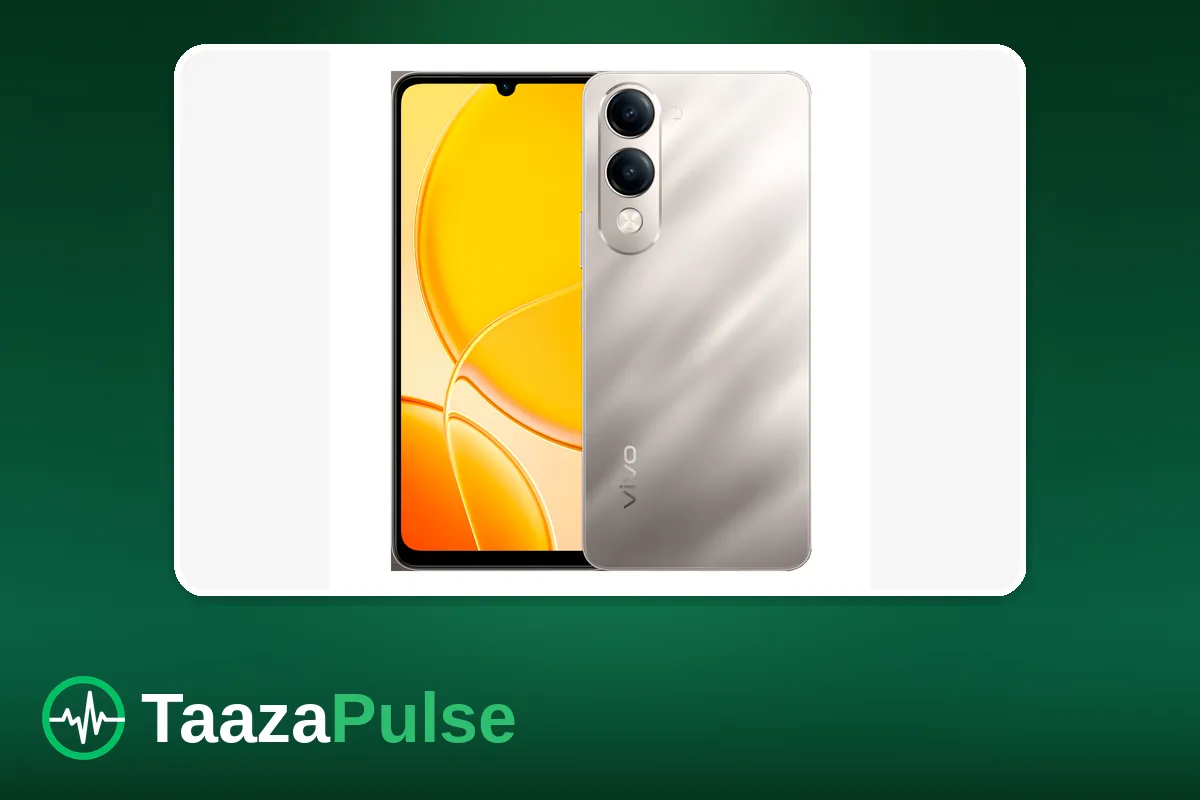
If you search for the vivo y04 price in pakistan, the first page of results looks reassuringly consistent — until you read the pages properly. One popular page prints Rs 30,999 in its headline table and then, a few paragraphs down, tells you the 64GB variant costs around Rs 28,999 and the 128GB around Rs 31,999. Another still carries an expected price from before launch. A third tracks retailer listings and, as of 3 November 2026, reports no tracked store with the phone in stock at all, while its own history shows the same variant swinging from Rs 28,999 to Rs 49,999 within weeks. None of that means the phone is unavailable — it means the price pages are doing a worse job than the shops, and a buyer who trusts a single headline number can walk into a shop prepared for the wrong price, the wrong variant, or even the wrong phone.
This article fixes that by doing the boring work first. Every price below was checked on 3 November 2026 against live sources: Hamariweb's three variant pages, WhatMobile's 128GB page, Mobileinto's November 2026 page, and Vivo Pakistan's own online store. Where those sources disagree, the disagreement is printed in the table instead of being averaged into a neat-looking number that no shop actually charges. Where a source is out of stock, that is stated too, because an out-of-stock official price is not a price you can pay today — it is a reference point for judging the shop price in front of you. And because the Y04's biggest real-world problem is not its price but its reputation, this article also faces the user feedback head-on: Pakistani buyers praise the battery and then complain, loudly and repeatedly, about slow performance, a weak speaker, a dim-feeling display and a camera that does not match the box. A buyer who knows those complaints before paying is making an informed choice; a buyer who discovers them after paying is writing the next angry review.
The short version for the impatient: the Y04 is a simple, durable, long-battery phone for calls, WhatsApp, YouTube and light social media, and it is fairly priced at Rs 30,999 for the base model. It is not a gaming phone, not a night-photography phone, not a 5G phone, and not a phone whose 4GB of RAM will feel generous in a year. If any of those things matter to you, the extra money for a stronger phone — or the step up to the Vivo Y28 at Rs 42,999 — is better spent than the saving on this phone. If none of them matter, and you buy the right variant after the checks at the end of this article, the Y04 does its job honestly.
Vivo Y04 Price in Pakistan — Verified Variants
All three variants below are official Pakistan stock with PTA approval and official warranty. Colours in Pakistan are Titanium Gold and Dark Green (listed as Jade Green on some retailer pages — same phone, different name for the green). The 6GB row carries a conflict flag: read it before paying.
| Variant | Price verified 3 Nov 2026 | Source / flag |
|---|---|---|
| 4GB / 64GB | Rs 30,999 | Hamariweb base page + WhatMobile base page + Mobileinto (Nov 2026) + Vivo Pakistan online store (Rs 30,999, shown out of stock) — four sources agree |
| 4GB / 128GB | Rs 35,999 | Hamariweb 128GB page + WhatMobile 128GB page (Rs 35,999) + Vivo Pakistan online store (Rs 35,999, shown out of stock) |
| 6GB / 128GB | Rs 39,999 | Hamariweb 6GB page, updated 2 Nov 2026 — CONFLICT: Vivo Pakistan's own store lists the 6GB variant at Rs 35,999 but out of stock. Confirm the 6GB price and the RAM on the box before paying; do not accept a 4GB phone at a 6GB price |
| Any variant, Daraz marketplace | Rs 41,980–54,999 (do not use as the price) | Qeemat-tracked Daraz listings, 3 Nov 2026 — marketplace sellers far above official prices; Qeemat also reports no tracked store in stock for its Y04 listings on 3 Nov 2026, so treat shop stock as a same-day check, not an assumption |
What competitors get wrong — the gaps this article closes
The first gap is internal contradiction. Hamariweb's own Y04 article is the clearest example: its variant pages headline Rs 30,999, Rs 35,999 and Rs 39,999, while the prose inside the base article still quotes around Rs 28,999 for 64GB and around Rs 31,999 for 128GB — figures from an older check that were never updated when the prices moved. A reader who skims the prose and a reader who reads the table leave with prices Rs 2,000–4,000 apart, and neither is warned. This article uses only the variant-page figures, verified on 3 November 2026, and names the stale prose figures here so you can recognise them when you meet them elsewhere.
The second gap is the missing variant ladder. Most competitor pages headline one price — usually Rs 30,999 or Rs 28,999 — and leave you to discover the 128GB and 6GB prices, or the fact that 6GB even exists, somewhere else. That matters more on this phone than on most, because the three variants are not three versions of the same experience: 64GB of storage fills fast once WhatsApp media and app updates accumulate, and 4GB of RAM is the phone's tightest constraint. The variant you buy decides how long the phone stays usable, so a price article that hides two of the three variants is hiding the buying decision itself.
The third gap is stock honesty. Qeemat's tracked listings for the Y04 report, as of 3 November 2026, that no store it tracks has the phone in stock, while its own price history shows Daraz marketplace listings at Rs 34,980–54,999 and smaller retailers at Rs 28,999–35,699 at various points. Competitor articles that simply print a price without a stock note imply you can walk in and buy at that price today. You may well be able to — Vivo's official channel and authorised retailers do carry the phone — but the honest statement is that availability varies by shop and by variant on the day, and the Daraz marketplace figure is not the market price. Pay the official price at an authorised seller, not a marketplace markup.
The fourth gap, and the one that costs buyers the most money in confusion, is the Y04s. Competitor spec pages and comparison tools mix the Y04 and Y04s freely, and some listings even carry the wrong battery or chip for the model named. The two phones look almost identical and share a 6.74-inch 90Hz screen, a 13MP camera and IP64 sealing — but the Y04s runs the weaker Unisoc T612, carries a 6,000mAh battery instead of 5,500mAh, and was launched in other markets at a lower price. If a shop offers you a suspiciously cheap Y04, check the box and the settings for the model name and the T7225 chip before you pay; a Y04s sold as a Y04 is not a bargain, it is the wrong phone. The full comparison is in the section below.
The fifth gap is the absence of real user experience. Competitor pages list the spec sheet and stop. They do not tell you that WhatMobile's own user reviews for this phone are dominated by complaints about slowness, a poor speaker and a disappointing display, with battery life the one consistent praise — or that GSMArena's long-term user notes report slow gallery opening, slow USB transfers, keyboard lag and fast heating under demanding apps. Those are not reasons to automatically reject the phone; they are the exact trade-offs a budget buyer needs to weigh, and a price article that omits them is selling, not informing.
Real-world camera: good daylight, honest limits
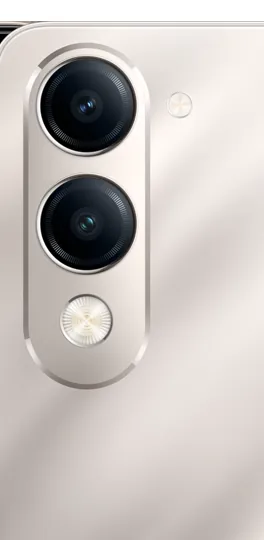
The camera hardware is modest and should be judged as such: a 13MP main sensor with autofocus and an f/2.2 lens, plus a 0.08MP auxiliary lens that contributes almost nothing to the photo, and a 5MP front camera in a waterdrop notch. Video tops out at 1080p at 30 frames per second. There is no ultrawide camera, no optical stabilisation and no high-resolution mode to rescue a cropped shot, and competitors that describe this as a dual-camera setup without explaining the second sensor are overselling it.
In bright daylight, the reality is better than the spec sheet suggests, and this is where the phone earns its keep. User reports consistently say daylight photos look bright, colours pop, and group photos and outdoor shots come out shareable without editing. One detailed user review describes afternoon picnic photos where blue skies and green trees rendered vividly, and evening street-art shots that held up better than expected. That matches the hardware: a 13MP sensor with decent light has enough to work with, and Vivo's processing leans vivid rather than accurate, which flatters casual photos.
The limits arrive exactly where you would expect. Low light is where the small sensor and the absence of stabilisation show: expect soft detail, visible noise and slow shutter behaviour, and do not trust night-mode marketing to turn this into a night camera. Selfies from the 5MP front camera are serviceable for video calls and ordinary social posts — users call them normal rather than good — but they will not survive heavy cropping or low light. If photography is a priority rather than an occasional extra, this is the phone's second reason to look one tier up; if photos are mostly daylight memories for WhatsApp and Facebook, the camera is adequate and the battery, not the camera, is why you buy this phone.
Two practical camera notes competitors skip. First, the camera app itself has reported glitches — occasional freezing on the capture screen — and the standard fix users report is clearing the camera app's cache and data, then updating the phone's software; if the app freezes on the shop's demo unit, say so before paying rather than discovering it at home. Second, the second rear lens is decorative in practice: judge every camera claim on the 13MP main sensor alone, and ignore any listing that adds the two megapixel figures together or implies two usable cameras.
Real-world battery and charging: the phone's best argument, with one catch
The 5,500mAh battery is the Y04's strongest feature and the one thing almost every user agrees on: for calls, WhatsApp, YouTube and browsing, it comfortably lasts a full day and often stretches into a second day with light use. That is the honest headline, and it is why the phone suits students, second-phone buyers and anyone who charges overnight and forgets about the charger during the day. The large battery also pairs with a genuinely useful durability story — IP64 dust and splash resistance, an anti-drop design and military-standard shock testing on Vivo's spec sheet — which matters for a phone that will be carried, dropped and used outdoors.
The catch is charging: 15W wired charging over USB-C, with no fast-charging story to tell. A full charge takes a long time by modern standards, and users who binge video for two hours straight report the battery dropping much faster than the standby numbers suggest — one review describes scrambling for a charger before lunch after a morning of heavy use, and another notes that the phone simply does not survive more than about five hours of screen-on time under sustained load. Both things are true at once: the battery is big, and heavy use still drains it, because the screen, the chip and the speaker are all working hard. Budget buyers should read the battery as a full day of normal use, not two days of heavy use, and should keep the original Vivo charger — users report faster drain and inconsistent charging with third-party chargers.
One more battery reality that spec pages omit: there is no wireless charging, no reverse charging and no charger-speed shortcut. If you buy this phone, charge it overnight, carry no power-bank anxiety for a normal day, and do not expect a ten-minute top-up before going out to rescue you. That routine suits the phone's audience; it frustrates anyone coming from a 33W or faster phone, so factor your previous phone's charging speed into the decision, not just its battery size.
Performance, gaming and heat: where the complaints concentrate
The Unisoc T7225 is a 12nm octa-core chip with two faster cores at 2.0GHz and six efficiency cores at 1.8GHz, paired with a Mali-G52 MP1 GPU and — critically — eMMC 5.1 storage rather than the faster UFS storage used in pricier phones. In plain terms: the chip is efficient and adequate for calls, messaging, YouTube, Facebook and light browsing, and the storage is the slower kind, which is why app installs, gallery opening and file transfers feel sluggish even when the chip is not busy. Competitors that call this a smooth multitasking chip without mentioning eMMC are describing only half the phone.
RAM is where the buying decision lives. The base models have 4GB of physical RAM plus up to 4GB of extended RAM borrowed from storage, and the 6GB model adds up to 6GB of extended RAM. Extended RAM is not real memory: it helps keep a few more apps in the background, but it does not make the phone behave like a 6GB or 8GB phone, and it does nothing for the slow storage. Long-term users report exactly what that predicts — slow gallery opening from day one, keyboard lag, delayed app launches, and a phone that feels slower after months as apps and media accumulate. If you keep phones for two years, the 6GB/128GB variant is the only one of the three that makes sense, and even it should be bought with modest expectations.
Gaming deserves a blunt paragraph because it generates the angriest reviews. This is not a gaming phone. Light games run; demanding titles run at low settings, heat the phone quickly — users describe it heating fast, even like an oven, under demanding apps — and stutter when the action gets busy. There is also no gyroscope, which some games use for aiming and which spec pages rarely mention; if a game you play relies on gyro controls, check before buying. The 90Hz screen does not mean 90 frames per second in games — the chip cannot sustain it — and the single speaker, repeatedly criticised as flat and weak, means games and videos sound thin without earphones or a Bluetooth speaker. None of this makes the Y04 a bad phone; it makes it the wrong phone for a buyer whose main use is gaming, and that buyer should look at the Redmi comparison users themselves keep raising in the reviews.
Software is a smaller but real consideration. The phone ships with Android 14 and Funtouch OS 14, and some units have since received Android 15 with Funtouch OS 15 — but update timing varies, and WhatMobile's own spec table lists Android 15 while Vivo's store still lists Funtouch OS 14, so do not buy on the promise of a specific version; check the demo unit's settings. The software is also where one fix lives: if the phone feels slow after months, the useful steps are the unglamorous ones — clear app caches, remove unused apps, keep storage at least a fifth free, and restart regularly — rather than any booster app, which will only add to the load.
PTA status and the IMEI check: two minutes that save the purchase
The Y04 sold through official Pakistani channels is PTA-approved, and Qeemat's variant listings mark it PTA-approved as well — but a listing's claim is not proof, and this is a phone where the check matters because grey and marketplace stock circulates at very different prices. Before money changes hands, dial *#06# on the handset itself (not on a display model, not on a photo of the box) and note both IMEI numbers on a dual-SIM phone. SMS each IMEI separately to 8484, or check it on PTA's DIRBS portal or app, and read the reply literally: compliant means approved and safe to buy, non-compliant means the tax is still owed and the phone will stop working on local SIMs after the grace period, and blocked means the device is already barred.
Three related checks belong in the same two minutes. First, the IMEI on the box, in the phone's settings and in the DIRBS reply must all match; a mismatch means the box, the phone or the approval belongs to something else. Second, keep the receipt with the IMEI printed on it and the warranty card — approval follows the device, so a genuinely approved used Y04 stays approved when resold, but only a paper trail proves it to the next buyer. Third, be suspicious of any deal that depends on the words JV, patched or CPID: those are engineered-IMEI phones, not PTA-approved phones at a discount, and they can stop working after a software update or a SIM change. The Y04's official price is low enough that no JV saving is worth that risk.
One more PTA note for buyers comparing prices across borders: the Y04 is a 4G-only phone with no 5G modem, no NFC, and LTE bands covering the Pakistani operators' common bands. It will not gain 5G with an update, and the absence of NFC means no tap-to-pay. Neither is a defect — both are normal at this price — but both are routinely omitted from price pages, and both have surprised buyers who assumed a 2025 phone must include them.
Vivo Y04 vs Y04s vs Y28 vs Y29: ending the confusion
The confusion between these four names is the single most avoidable buying mistake in Vivo's budget range, so here it is plainly. The Vivo Y04 is this article's phone: Unisoc T7225, 5,500mAh, 13MP camera, 4G, Rs 30,999–39,999 in Pakistan. The Vivo Y04s is the lookalike: same 6.74-inch 90Hz screen, same 13MP camera, same IP64 rating, but a weaker Unisoc T612 chip, a larger 6,000mAh battery, and a lower launch price in the markets where it was sold (around Rs 24,000 equivalent in Indonesia). It is not a better Y04 and not a newer Y04; it is a cheaper sibling with a slower chip, and any listing that gives the Y04 a 6,000mAh battery or a T612 chip has mixed the two phones up.
The step-ups inside Vivo's own range are clearer. The Vivo Y28, covered in our separate guide, costs Rs 42,999 for 6GB/128GB and adds a 6,000mAh battery with much faster 44W charging, a similar 50MP camera story and a sturdier-feeling package — the natural upgrade if the Y04's slow 15W charging or weak camera bothers you. The Vivo Y29, also covered separately, sits higher again with a bigger battery and faster charging and a different design language. The practical rule: if a shop's Y04 price is close to the Y28's Rs 42,999, stop comparing Y04 variants and compare the Y04 against the Y28 instead — at that point the extra money buys faster charging and a better camera, not just a bigger number on the box.
Outside Vivo, the comparison users raise most often in the Y04's own review threads is Xiaomi's Redmi 15C, recommended by dissatisfied Y04 owners as the better buy at a similar price. That recommendation is worth taking seriously as a prompt to compare, not as a verdict: check the Redmi's current verified price, its PTA status and its own reviews before switching, because the same traps — variant confusion, marketplace markups and stale price pages — apply to every budget phone. The point of this section is not to push you to another brand; it is to make sure the phone you pay for is the phone you think you are buying.
What to check before you pay: the shop checklist
First, confirm the variant on the box and in Settings: RAM, storage and model name should read Vivo Y04 with the T7225 chip, not Y04s and not a different Y-series model. Second, confirm the price against the table above and, for the 6GB model, against the conflict note: if the shop charges Rs 39,999 for 6GB, that matches Hamariweb's current figure; if it offers 6GB at Rs 35,999, that matches Vivo's store figure but the store shows it out of stock, so verify the RAM in Settings before celebrating. Third, run the DIRBS check on the handset's own IMEI and match box, settings and reply, as described above.
Fourth, inspect the phone itself: run the camera app and take a photo, play a video to judge the speaker honestly, open the gallery and a heavy app to feel the speed, and check the display in daylight — the areas users complain about are exactly the areas a two-minute demo reveals. Fifth, ask about the warranty in writing: official warranty, its duration, and which service centre honours it. Sixth, keep the receipt with the IMEI on it, the box and the charger that came with the phone. Seventh, ignore Daraz marketplace prices in the Rs 41,980–54,999 range for this phone: they are seller markups, not the market, and paying them forfeits the one advantage this phone has, which is its low official price.
Finally, a word on used Y04s, which flood the classifieds in the review threads — one-day-old, two-month-old and six-month-old units with warranty remaining, often priced around Rs 20,000–25,000. A used Y04 can be a fair buy, but only with the same checks plus two more: verify the IMEI on DIRBS, confirm the remaining warranty with Vivo rather than the seller, and test battery behaviour over more than a glance, because a phone whose main virtue is battery life is also the phone where a worn battery hurts most. A used phone with a blocked IMEI, a tampered IMEI or no bill is not a bargain at any price.
Who should buy it — and who should not
Buy the Y04 if your use is calls, WhatsApp, YouTube, Facebook, light browsing and daylight photos; if you value a big battery, a large screen and a durable, splash-resistant body over speed; and if you are buying the 6GB/128GB variant for a longer ownership period or the 4GB/128GB variant as a second phone, a first phone for a younger user, or a work phone. At Rs 30,999 the base model is also a defensible choice for a buyer who will keep storage light, use a microSD card (the phone has a dedicated slot, so storage can grow without sacrificing a SIM), and charge overnight.
Do not buy it if gaming is a main use, if night photography matters, if you need 5G or NFC, if you keep dozens of apps open and expect them to stay instantly responsive, or if the shop price has drifted toward Rs 43,000 — at that point the Y28 is the better Vivo, and the budget Xiaomi and Samsung alternatives deserve a fresh comparison. Do not buy it from a marketplace listing at Rs 50,000-plus, do not buy a Y04s thinking it is a Y04, and do not buy any variant without the DIRBS check. Those four refusals cost nothing and prevent nearly every bad Y04 purchase described in its own user reviews.
The fair summary is this: the Vivo Y04 is a phone whose price is honest, whose battery is genuinely good, and whose weaknesses are well documented by its own users — slow storage, modest cameras, a weak speaker and no 5G. Competitor price pages do buyers a disservice by printing the price and hiding the rest. This guide has printed the price, shown where it conflicts, and put the rest where a buyer can use it: before paying, not after.
Specifications at a Glance
| Feature | Vivo Y04 |
|---|---|
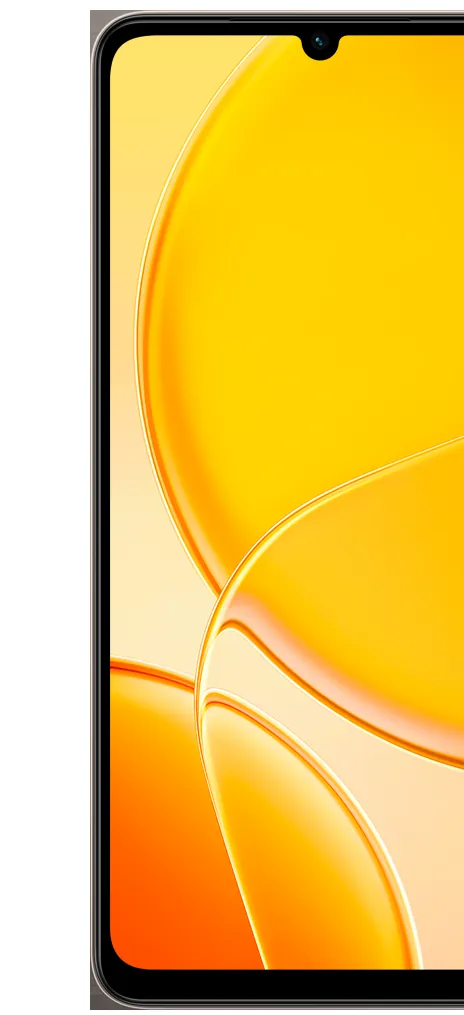
| Display | 6.74-inch IPS LCD, 720 x 1600 (HD+), 90Hz, ~570 nits high-brightness mode, waterdrop notch |
| Chip / RAM / storage | Unisoc T7225 (12nm), octa-core; 4GB or 6GB RAM (+ extended RAM from storage); 64GB / 128GB, eMMC 5.1; dedicated microSD slot |
| Rear camera | 13MP main, f/2.2, PDAF + 0.08MP auxiliary lens, LED flash; 1080p video at 30fps |
| Front camera | 5MP, f/2.2 |
| Battery / charging | 5,500mAh, 15W wired over USB-C; no wireless charging |
| Build / durability | 167.3 x 77 x 8.2 mm, 199g; glass front, plastic frame and back; IP64 dust and splash resistance; side-mounted fingerprint sensor |
| Software | Android 14, Funtouch OS 14 (some units updated to Android 15 / Funtouch OS 15 — check the unit) |
| Connectivity | 4G LTE only (no 5G), dual nano-SIM + microSD, dual-band Wi-Fi, Bluetooth 5.2, FM radio, 3.5mm jack; no NFC; no gyroscope |
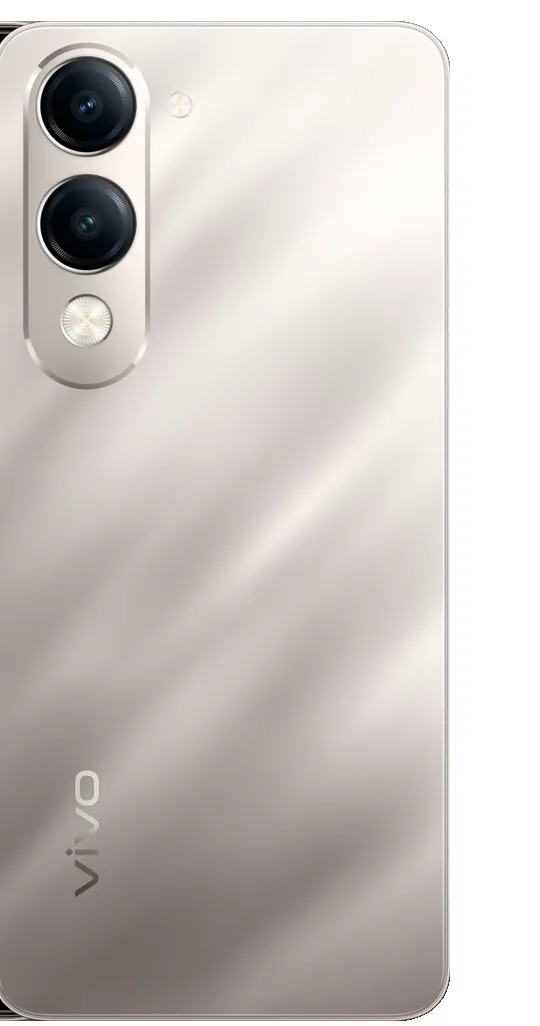
| Colours (Pakistan) | Titanium Gold, Dark Green (Jade Green on some retailer pages) |
| In the box check | Confirm charger, cable and warranty card in the shop; keep the receipt with the IMEI printed on it |
Frequently Asked Questions
What is the Vivo Y04 price in Pakistan today?
On 3 November 2026 the verified official prices are Rs 30,999 for 4GB/64GB, Rs 35,999 for 4GB/128GB and Rs 39,999 for 6GB/128GB. The 6GB figure carries a conflict flag: Vivo's own online store lists the 6GB variant at Rs 35,999 but shows it out of stock, so confirm the RAM and the price in the shop before paying. Ignore Daraz marketplace listings at Rs 41,980–54,999 — those are seller markups, not the market price.
Is the Vivo Y04 PTA approved, and how do I check it?
Official Pakistani stock is PTA-approved, but verify it yourself on the handset: dial *#06#, note both IMEIs, and SMS each to 8484 or check PTA's DIRBS portal. Compliant means safe to buy; non-compliant means tax is still owed; blocked means already barred. Make sure the box IMEI, the settings IMEI and the DIRBS reply all match, and keep the receipt with the IMEI printed on it.
How long does the Vivo Y04 battery last, and how long does charging take?
The 5,500mAh battery lasts a full day of normal use — calls, WhatsApp, YouTube and browsing — and often into a second day with light use. Heavy video use drains it much faster, with users reporting around five hours of screen-on time under sustained load. Charging is slow at 15W wired, so charge overnight; there is no fast top-up and no wireless charging.
Is the Vivo Y04 camera good?
In bright daylight, yes for the price: the 13MP main camera produces bright, vivid, shareable photos. In low light it struggles, with soft detail and noise, and the 5MP front camera is serviceable for calls and ordinary posts rather than good. There is no ultrawide camera and the second rear lens adds almost nothing — judge the camera on the 13MP sensor alone.
Can I play PUBG or Free Fire on the Vivo Y04?
Light games run, but demanding games only at low settings, with heating and stuttering reported by long-term users, and there is no gyroscope for gyro aiming. The 90Hz screen does not mean 90 frames per second in games, and the single speaker sounds flat. If gaming is a main use, this is the wrong phone — compare stronger budget phones before buying.
What is the difference between the Vivo Y04 and the Vivo Y04s?
They look almost identical and share the screen, camera and IP64 rating, but the Y04s has the weaker Unisoc T612 chip and a larger 6,000mAh battery, and it launched cheaper in other markets. The Y04 has the faster Unisoc T7225 and a 5,500mAh battery. Check the model name and chip on the box and in Settings: a Y04s sold as a Y04 is the wrong phone, not a bargain. Neither phone has 5G.