Islamabad High Court: An Acquitted Case Must Not Follow You on Your Character Certificate
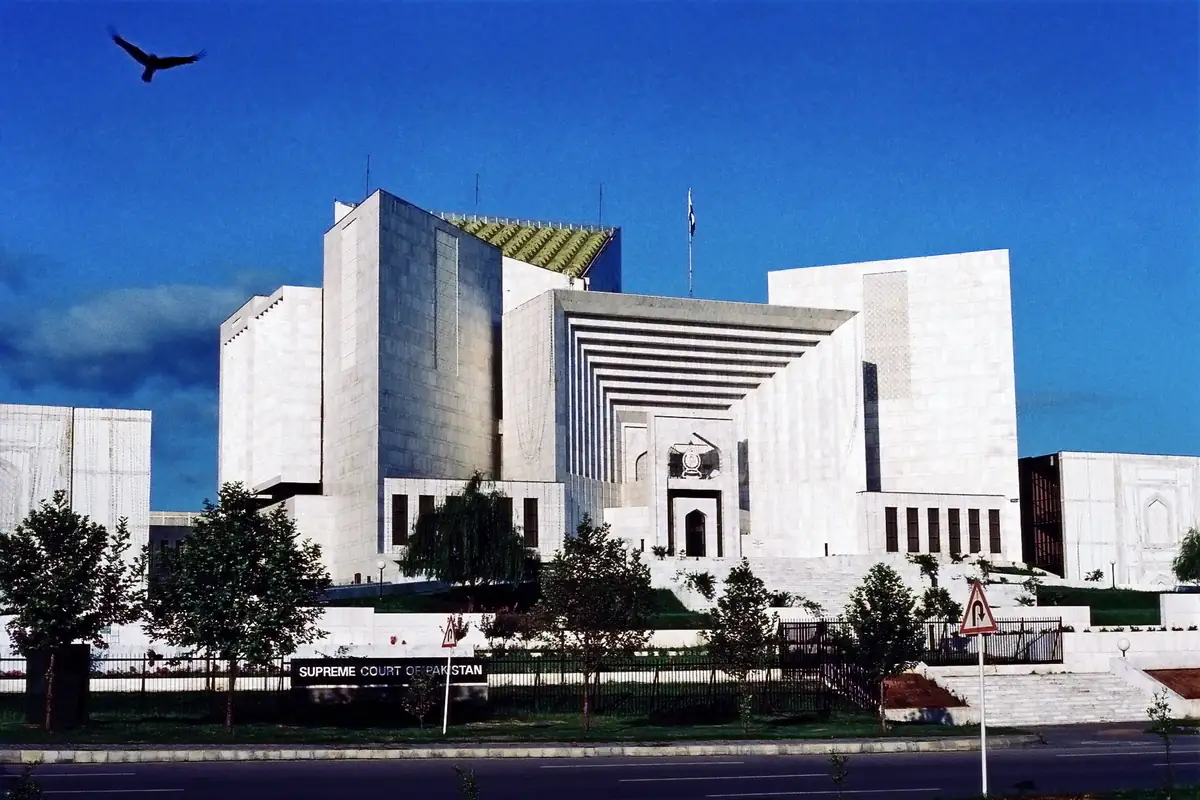
The Islamabad High Court has ruled that a police character certificate must not mention a criminal case that ended in a final acquittal, in a decision reported on Saturday 31 October 2026 that will matter to every Pakistani who has ever been asked to produce a clean record for a job, a visa or a move abroad. Justice Ayaz Shaukat issued the ruling while allowing a citizen's petition against a certificate that carried a reference to a case registered at Islamabad's Shalimar police station. The court declared the certificate initially issued to the petitioner unlawful, ordered the reference to the first information report (FIR) removed, and directed the Inspector General of Islamabad Police to devise a procedure so that citizens in the same position do not have to go to court one by one to obtain a right the law already recognises.
The ruling turns on a distinction the court drew carefully, and it is worth stating it exactly, because it is the part most likely to be misunderstood. The police may keep the record of an FIR for lawful internal purposes. What they may not do, the court held, is carry that FIR into a character certificate issued to a citizen once the proceedings have ended in an acquittal that has attained finality — that is, an acquittal that has not been challenged and can no longer be reopened. There was, the court said, no legal justification for continuing to reflect an acquitted case in such a certificate. A person acquitted by a competent court, the court observed, cannot continue to be presented as someone carrying criminal liability.
The certificate in this case had a second problem, and the court took exception to its wording as well. According to the case details reported, the certificate stated that the petitioner had been discharged during the investigation and that the court had agreed with that outcome. The Islamabad High Court found that description incorrect, because it did not accurately reflect the petitioner's acquittal. Describing the petitioner as merely discharged, the court held, diminished the legal effect of the acquittal. A discharge during investigation and an acquittal after trial are different legal events, and a certificate that blurs them misstates the citizen's legal status to whoever reads it — an employer, an embassy, an immigration officer.
The court linked the continued inclusion of the acquitted case in the certificate to violations of constitutional protections under Articles 4, 9, 14 and 15 of the Constitution: treatment in accordance with law, security of person, human dignity, and freedom of movement. The dignity point is the thread that runs through this whole line of cases. An acquittal is supposed to end the matter. A certificate that keeps naming the case keeps the stigma alive, in the one document the citizen is required to hand to strangers, and it does so without any fresh allegation, charge or conviction to justify it.
What the ruling actually orders — and what it does not
Three things follow from the decision, and each has a different weight. First, the petitioner's own certificate must be corrected: the Shalimar police station FIR reference comes off. Second, the Islamabad police chief must devise a procedure addressing such cases generally, so that the remedy does not depend on each affected citizen filing a constitutional petition. Third, and most important for readers, the ruling states the governing principle: once an acquittal has attained finality, there is no legal basis for mentioning that case on a police character certificate.
What the ruling does not do matters just as much. It does not order the deletion of the underlying FIR from internal police records. The FIR stays on the books for lawful official purposes; it simply stops travelling on the citizen's certificate. It does not help a person whose case is still pending, whose acquittal is under appeal, or who was convicted — the principle is tied to a final acquittal. And it does not, by itself, publish the new police procedure: the direction to the Inspector General is to devise one, and until that procedure appears, citizens whose certificates still carry an acquitted case will still need to apply, object in writing, and, if refused, seek legal advice about a petition. Readers should not expect a counter clerk to hand over a corrected certificate on the strength of a news report alone.

Why this keeps reaching the courts
The Islamabad ruling is the third time in two years that a high court in Pakistan has had to say this in substance, and the repetition is itself the story. The same problem — a certificate that mentions an acquitted case, and a citizen who discovers the damage only when an employer or an embassy reads it — has already produced reported judgments in Peshawar and Lahore, and a similar petition in Karachi. The pattern suggests an administrative habit, not a series of accidents: record-keeping rules written for internal police use are being copied onto public-facing certificates without anyone asking whether the law allows it.
The Peshawar High Court's decision, reported as Waqas Khan and two others v. The State (PLD 2025 Peshawar 67), is the fullest statement of the principle. A two-member bench of Justice Sahibzada Asadullah Khan and Justice Kamran Hayat, hearing a constitutional petition filed by advocate Abbas Khan Sangin, ruled that cases in which an accused person has been acquitted by a competent court cannot be mentioned in police clearance or character certificates, terming the practice unlawful and a violation of fundamental rights. Once an accused has been formally acquitted and the acquittal has attained finality, the court held, the individual must be considered completely free of the allegations in the eyes of law, and mentioning the FIR or case in official documents would be unnecessary, unlawful and mala fide. The bench added that such a practice violates the right to dignity under Article 14 of the Constitution, because it attaches a lasting stigma to a person already declared innocent through due judicial process. The Peshawar bench went one step further than the facts before it required: individuals who had admitted guilt in minor cases and paid nominal fines should also be issued police clearance certificates in accordance with the law.
The Lahore High Court reached the same destination on different facts in Abdul Rehman Faryad v. Government of Punjab and others (PLD 2026 Lahore 84). Faryad had been implicated in FIR No. 1254 of 2024, registered at Police Station Nawan Kot, Lahore, under Sections 3 and 4 of the Punjab Prohibition of Kite Flying Ordinance, 2001. The trial ended in his acquittal under Section 249-A of the Code of Criminal Procedure, 1898, by an order dated 20 December 2024 of the Magistrate Section 30, Lahore. A certificate was issued to him on 13 March 2025 by the Superintendent of Police (Security), Lahore, but it reflected the case. When he asked for a clean certificate, the Punjab Home Secretary declined by a letter dated 3 June 2025, relying on Rule 24.5 of the Police Rules, 1934 — the rule that an FIR and its index are a perpetual record, preserved for 60 years, so no person's FIR record can be deleted. Justice Abher Gul Khan allowed the petition and directed the Home Secretary to ensure the issuance of a police character certificate accurately reflecting Faryad's present legal status. The judge noted that the allegations did not involve moral turpitude or an offence against the state, and that once a person is acquitted and the order attains finality, any act by public authorities that continues to associate that individual with a criminal allegation undermines not only the acquittal itself but the foundational principles of fairness, dignity and the presumption of innocence. The retention argument, the court effectively held, answers a different question: records may be kept, but keeping them does not entitle the state to keep publishing them on a citizen's certificate.

The Karachi petition, and the line of authority taking shape
The Sindh High Court has seen the same plea. In Taha Muzzammil v. Province of Sindh and others (Constitutional Petition No. D-3938 of 2026), heard on 9 September 2026 by Justice Muhammad Saleem Jessar and Justice Abdul Hamid Bhurgri, the petitioner sought a clean police character certificate without any reference to FIR No. 241 of 2025, after his acquittal on 25 September 2025 under Section 249-A of the Criminal Procedure Code had attained finality. The petitioner's counsel relied on an unreported judgment dated 21 May 2026 of a Division Bench of the Sindh High Court's Circuit Court at Hyderabad (C.P. No. D-421 of 2026), as well as the Lahore and Peshawar decisions, and the Additional Advocate General Sindh did not dispute the acquittal or its finality and did not oppose the prayer for a fresh certificate. The order sheet records the court proceeding on the footing that continued reflection of the FIR in the certificate, despite an acquittal that had attained finality, carries an unwarranted adverse implication about the citizen's character and defeats the effect of the acquittal.
Taken together, the four high courts are converging on a single rule, and the Islamabad decision of 31 October extends it in the one respect the earlier cases left open: system. The Peshawar, Lahore and Karachi cases each fixed one citizen's certificate. The Islamabad High Court has now told the police to build a procedure, so that the next citizen does not need a constitutional petition at all. If the Islamabad police follow through, the practical effect will be larger than any single judgment: a standing administrative route for acquitted citizens to get clean certificates, rather than a courtroom route that only the determined and the well-advised ever take.
Who this helps, in practice
A police character certificate is not an everyday document for most Pakistanis, which is exactly why its defects hurt so much when they surface. It is demanded by foreign employers, by embassies processing work and family visas, by immigration authorities, and by some government and private employers at home. For overseas Pakistanis — the workers whose remittances run into billions of dollars a year — a certificate that names an old, acquitted case can stall a visa, cost a job offer, or trigger questions at an embassy window that the citizen cannot answer on the spot, because the answer is a court order from years ago that the certificate itself contradicts.
The ruling helps, first, anyone whose case ended in a final acquittal and whose certificate still names it: that reference, on the Islamabad High Court's reasoning, has no legal justification and should come off. Second, it helps people in the Peshawar category — minor cases resolved with an admission of guilt and a nominal fine — where the Peshawar bench said certificates should still issue in accordance with the law. Third, it clarifies the position for the police themselves: the judgment draws the line between retention and disclosure, so a police officer who keeps the internal record intact while issuing a clean certificate is following the law, not breaking it. The old fear — that removing a mention from a certificate means destroying a record — is answered directly by the ruling. Nothing is deleted; only the disclosure stops.
What to do if your certificate still names an acquitted case
Until the Islamabad police publish the procedure the court has directed them to devise, the honest advice is procedural, not triumphal. First, check what your certificate actually says: does it name the FIR, describe you as discharged when you were acquitted, or attach an acquittal order as though it were a qualification on your character? The Islamabad case shows that wording matters — a certificate that says "discharged during investigation" when the truth is "acquitted by the court" misstates your status even if it looks less severe. Second, apply in writing for a corrected certificate, citing the acquittal order and its finality, and keep a copy of the application and any refusal. Third, if the refusal relies on record-retention rules — the Police Rules argument rejected in substance at Lahore — the answer in the case law is that retention for internal purposes is not a licence for disclosure on a public certificate. Fourth, if the department still refuses, the route the courts have repeatedly accepted is a constitutional petition; the Islamabad ruling's direction for a standing procedure is meant to make that route unnecessary, but it is not yet a substitute for it.
Two cautions belong in any report of this decision. One: an acquittal that is still under appeal, or a case that is still pending, is not covered — the principle requires finality, and a citizen in that position should not claim the benefit of this ruling prematurely. Two: this ruling binds the Islamabad police machinery it was addressed to. Its reasoning is now the strongest statement of the principle anywhere in the country, and the Peshawar and Lahore judgments point the same way for their provinces, but a citizen in another province will still be dealing with that province's police and home department, and should cite the judgment of their own high court first. The direction of travel is clear; the paperwork in each province still has to catch up.
For Pakistanis abroad, the timing is the point. Character certificates are usually requested at the worst possible moment — a job offer with a deadline, a visa appointment already booked — and a stale FIR reference discovered at that moment can cost weeks. The Islamabad High Court's decision does not rewrite anyone's past, and it does not erase any record. It says something narrower and more useful: that once a court has acquitted you, and that acquittal is final, the state may not keep introducing you to the world as the accused in that case. The certificate must finally say what the law already says — that you are, in the eyes of law, free of those allegations.
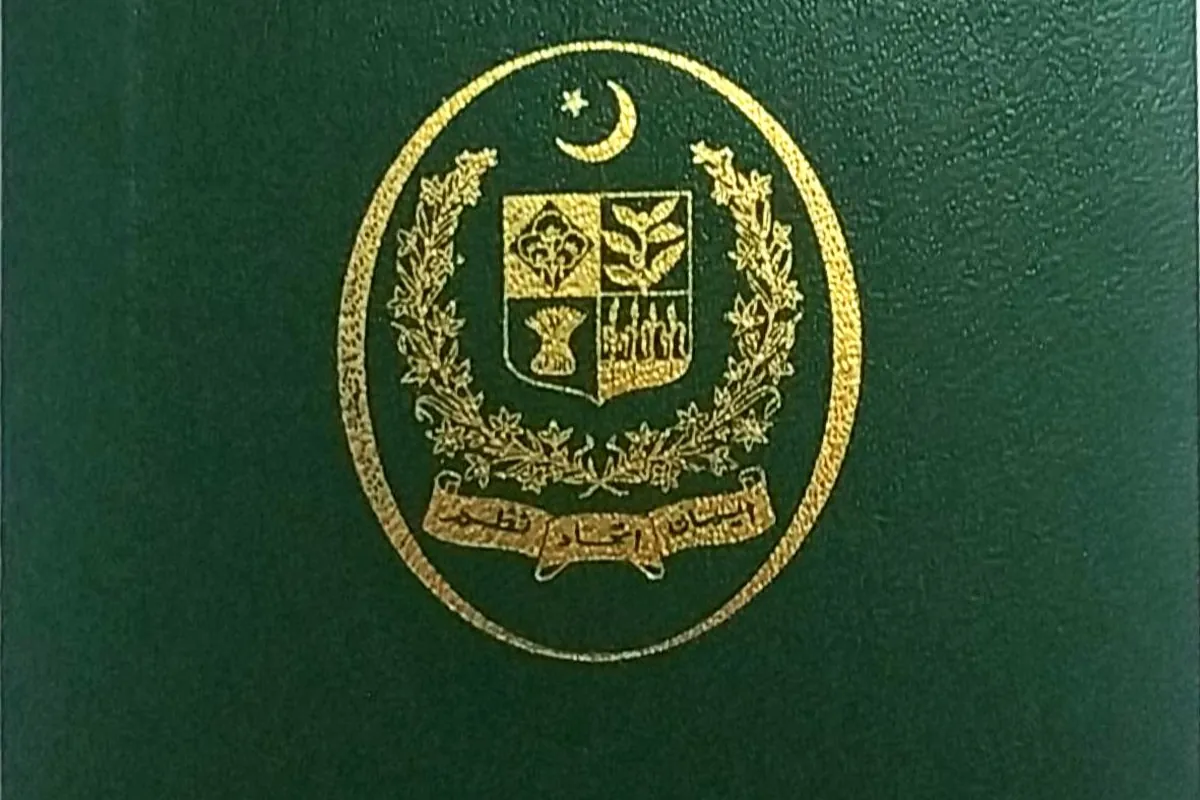
Image note: the photographs in this article are Wikimedia Commons file photos — the Supreme Court of Pakistan building in Islamabad (Usman Ghani, CC BY-SA 3.0), the Lahore High Court building (MariyamAftab, CC BY-SA 4.0), a courtroom gavel (Joe Gratz, CC0), and a Pakistani passport (Mike35741, CC BY-SA 3.0). They are not photographs of the Islamabad High Court, the petitioner, or the proceedings in this case.
Sources
This report is based on reporting, official statements and documents from:
- Islamabad Tribune — Acquitted Citizens Should Not Carry an FIR on Their Character Certificate, IHC Rules (31 Oct 2026; Justice Ayaz Shaukat; Shalimar police station case; IG Islamabad directed to devise a procedure; Articles 4, 9, 14, 15)
- Daily Pakistan — Relief for Pakistanis as court bans Mention of Acquitted Cases in Character Certificates (31 Oct 2026 headline; article body policy-blocked, not used for facts)
- Peshawar High Court, Waqas Khan and 2 others v. The State (PLD 2025 Peshawar 67) via Balochistan Times / Free Library — acquitted cases cannot be mentioned in police clearance or character certificates (6 Mar 2026 report)
- Lahore High Court, Abdul Rehman Faryad v. Government of Punjab (PLD 2026 Lahore 84) — writ petition No. 40844 of 2025; FIR 1254/2024 Nawan Kot; acquittal 20 Dec 2024 under s. 249-A CrPC; Home Secretary refusal letter 3 Jun 2025 under Police Rules 1934 Rule 24.5
- Dawn via Free Library — Home dept told to issue document: Past FIR no excuse for denying character certificate: LHC (9 Aug 2025)
- Sindh High Court — Taha Muzzammil v. Province of Sindh, C.P. No. D-3938 of 2026, order sheet 9 Sep 2026 (FIR 241/2025; acquittal 25 Sep 2025 under s. 249-A; finality undisputed)
- Wikimedia Commons — Supreme Court of Pakistan building, Islamabad; Lahore High Court building; courtroom gavel; Pakistani passport (image credits)
Frequently Asked Questions
What did the Islamabad High Court actually decide?
The court ruled that a police character certificate must not mention an FIR relating to a case that ended in a final acquittal. Justice Ayaz Shaukat, allowing a citizen's petition against a certificate carrying a Shalimar police station case reference, declared the certificate initially issued unlawful, ordered the FIR reference removed, and directed the Inspector General of Islamabad Police to devise a procedure so citizens do not have to seek individual court orders for the same relief.
Does the ruling delete the FIR from police records?
No. The court expressly distinguished between retaining information in internal police records and disclosing it on a certificate issued to a citizen. Police may preserve records for lawful internal purposes; what they may not do is continue to reflect an acquitted case in a character certificate once the acquittal has attained finality. Nothing is deleted — only the disclosure stops.
Why did the court object to the certificate's wording?
The certificate stated that the petitioner had been discharged during the investigation and that the court had agreed with that outcome. The court found that description incorrect because it did not accurately reflect the petitioner's acquittal. A discharge during investigation and an acquittal after trial are different legal events, and describing an acquitted person as merely discharged diminishes the legal effect of the acquittal.
Which constitutional rights did the court cite?
Articles 4, 9, 14 and 15 of the Constitution — treatment in accordance with law, security of person, human dignity, and freedom of movement. The dignity point runs through the whole line of cases: the Peshawar High Court (PLD 2025 Peshawar 67) held that mentioning an acquitted case violates the right to dignity under Article 14 because it attaches a lasting stigma to a person already declared innocent through due judicial process.
Have other courts decided the same thing?
Yes. The Peshawar High Court (Waqas Khan v. The State, PLD 2025 Peshawar 67) held that acquitted cases cannot be mentioned in police clearance or character certificates and that minor admitted-guilt cases with nominal fines should also get certificates. The Lahore High Court (Abdul Rehman Faryad, PLD 2026 Lahore 84) directed a clean certificate despite the Home Secretary's reliance on Police Rules 1934 Rule 24.5, the perpetual-record rule. The Sindh High Court heard the same plea in Taha Muzzammil's case (C.P. No. D-3938 of 2026, 9 September 2026), where the state did not oppose a fresh certificate.
My certificate still names an acquitted case — what should I do?
Apply in writing for a corrected certificate, citing your acquittal order and its finality, and keep a copy of the application and any refusal. The Islamabad ruling directs the police to devise a standing procedure, but until that procedure is published, a refusal may still need to be challenged, including by constitutional petition if necessary. Note the limits: the principle requires a final acquittal — it does not cover pending cases, acquittals under appeal, or convictions — and this ruling was addressed to the Islamabad police, so citizens elsewhere should cite their own high court's judgment first.