Pakistan Announces $10m Clean-Air Startup Fund as Lahore Tops Global Pollution List
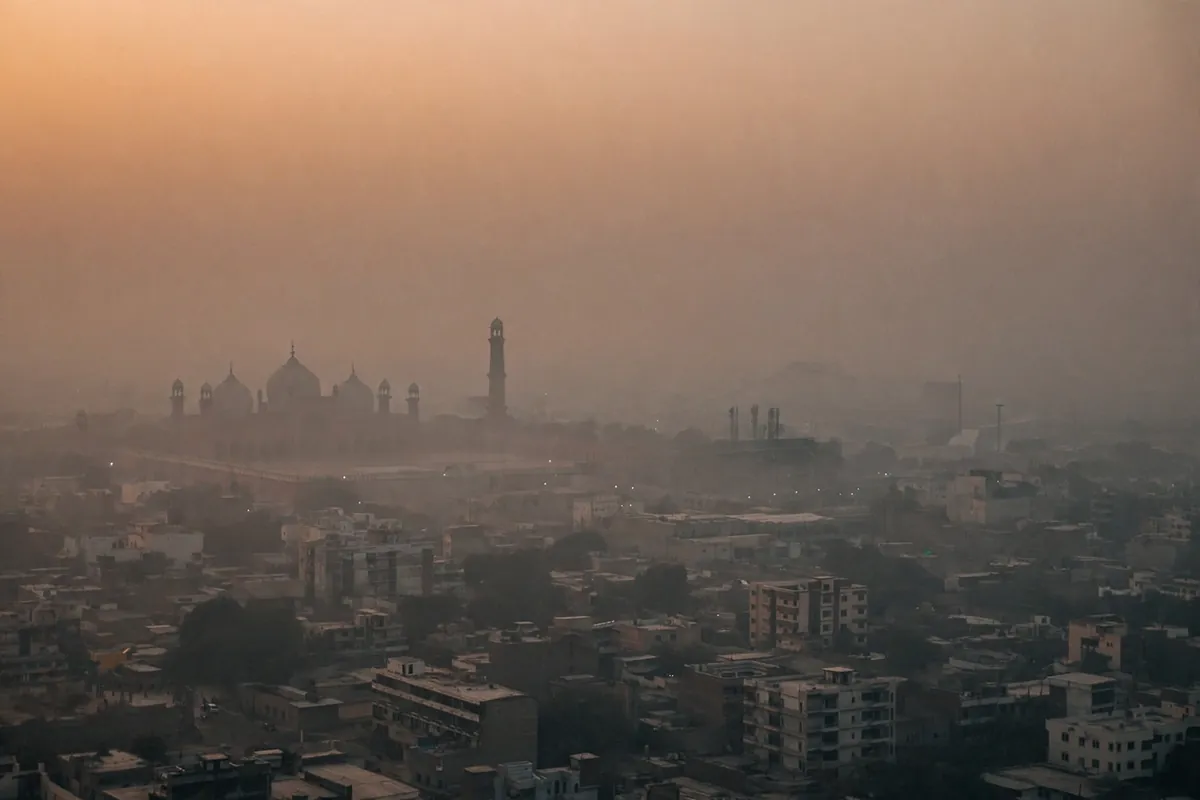
The federal government has announced a planned $10 million fund to back startups working on Pakistan's air quality crisis, unveiling the initiative at the Pakistan National Clean Air Conference 2026 in Islamabad on Wednesday — on a day when Lahore had, hours earlier, been ranked the most polluted major city in the world. Climate Change Minister Dr Musadik Malik framed the announcement around a simple question: who pays for dirty air? His answer — an estimated 6.5 per cent of the country's GDP, paid in illness, hospital bills and damaged childhoods — is the case for the fund. What the fund will actually do, and what it will take to matter, is the rest of the story.
The announcement: $10 million for clean-air startups
Speaking at the conference in Islamabad on 28 October, Dr Musadik Malik announced the planned fund to support startups developing solutions to the air quality crisis. The News International reported that the government would finance the initiative from its own limited resources while seeking support from development partners, and Pakistan Today reported that approval by the fund's board was expected the following day. The minister acknowledged the work of the World Bank, the Asian Development Bank, UNICEF and the German development agency GIZ in the field — the partners whose support the government will be counting on as the fund takes shape.
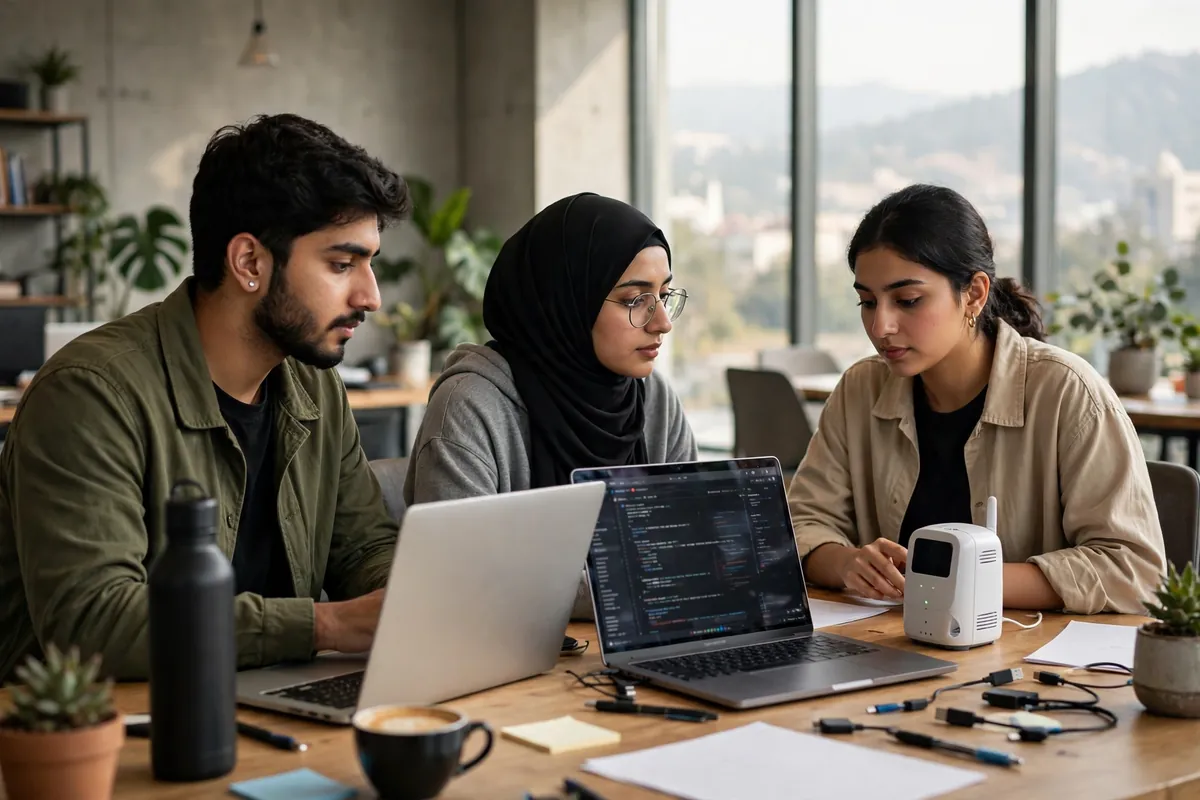
The design matters as much as the headline number. A startup fund is not a smog-control programme: it does not shut a brick kiln, retrofit a bus fleet or stop a single crop fire. What it can do — if it is run well — is put money and credibility behind the Pakistani engineers and companies building the tools the crisis needs: cheap air-quality sensors that can blanket a city with real data, cleaner kiln and industrial technology, forecasting and alert systems, filtration and clean-air products for schools and hospitals, and the data platforms that let regulators enforce rules they currently cannot measure. Pakistan's startup ecosystem has raised far larger sums for far smaller problems; the test of this fund will be whether it reaches genuine air-quality technology rather than dissolving into conference-season paperwork.
Who pays for dirty air: the 6.5 per cent figure
Malik built his announcement around the economics of breathing. He estimated that poor air quality costs Pakistan 6.5 per cent of gross domestic product — a burden that does not arrive as a single bill but shows up, household by household, as illness, hospitalisation and financial pressure on families. Referring to a UNICEF report, he said dirty air was damaging children's lung health and physical growth, and he described patients with chronic obstructive pulmonary disease who depend on oxygen and medication simply to breathe through the smog season.
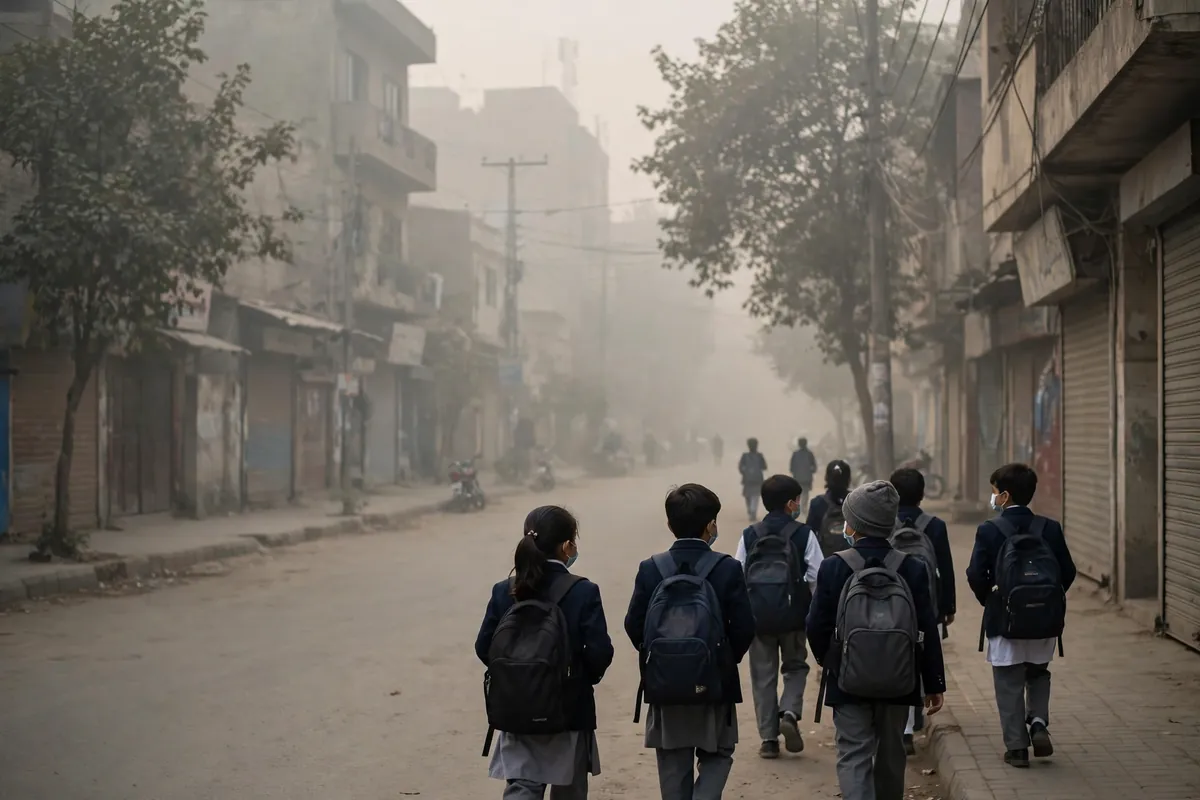
The minister's sharpest point was about distribution. The cost of dirty air is not shared equally: poor communities, schoolchildren, street vendors, farmers and other outdoor workers carry a heavier share of the damage than households able to afford air purifiers. "Some will adapt, some will install purifiers," he observed — a sentence that captures the emerging divide of the smog era, in which clean air inside one's home is becoming a purchasable commodity while the air of the street, the field and the bazaar remains everyone's problem. A street vendor in Lahore cannot purify the air of the road he works on; a rickshaw driver buys his lungs' exposure by the hour. That is why the minister called air pollution a policy challenge rather than an unavoidable natural disaster.
The health ledger: children, lungs and the oxygen cylinder
The UNICEF findings the minister cited point at the cruellest part of the crisis: it is not evenly distributed across a lifetime. Children's lungs are still growing, and children breathe faster than adults relative to their size, which means the fine particles that define smog — the microscopic PM2.5 fraction that penetrates deep into the lungs and from there into the bloodstream — do their worst damage in the smallest bodies. A childhood spent breathing hazardous air through every winter is a childhood of stunted lung growth, repeated infections and missed school, compounding quietly into the adult burden of asthma, chronic bronchitis and the obstructive lung disease whose patients the minister described, tethered to oxygen and medication.
For households, the economics are as grinding as the medicine. A respiratory illness in a daily-wage family is not an inconvenience; it is a lost wage, a pharmacy bill, a hospital queue and, in bad weeks, a debt. That is the mechanism inside the minister's 6.5 per cent figure — millions of small, unrecorded transactions of illness and expense, spread across the population least able to absorb them, adding up to a measurable share of everything the country produces. It is also why clean air sits awkwardly between ministries: it is filed as an environment problem, but it is paid for as a health problem, an education problem and an income problem simultaneously.
Not a natural disaster: the policy argument
That framing — policy challenge, not act of God — is the intellectual heart of the announcement. Smog in Punjab's cities is a manufactured phenomenon: industrial emissions, vehicle exhaust, brick kilns, construction dust, waste burning and seasonal crop-residue fires combine with winter weather that traps the mixture over the plains. Every one of those sources is, in principle, governable — by fuel standards, by kiln technology rules, by enforcement, by transport choices. Malik argued that industrial activity and other human interventions play a major role in creating the crisis, and that addressing it requires "engineering solutions, sound policymaking and financial commitments rather than slogans".
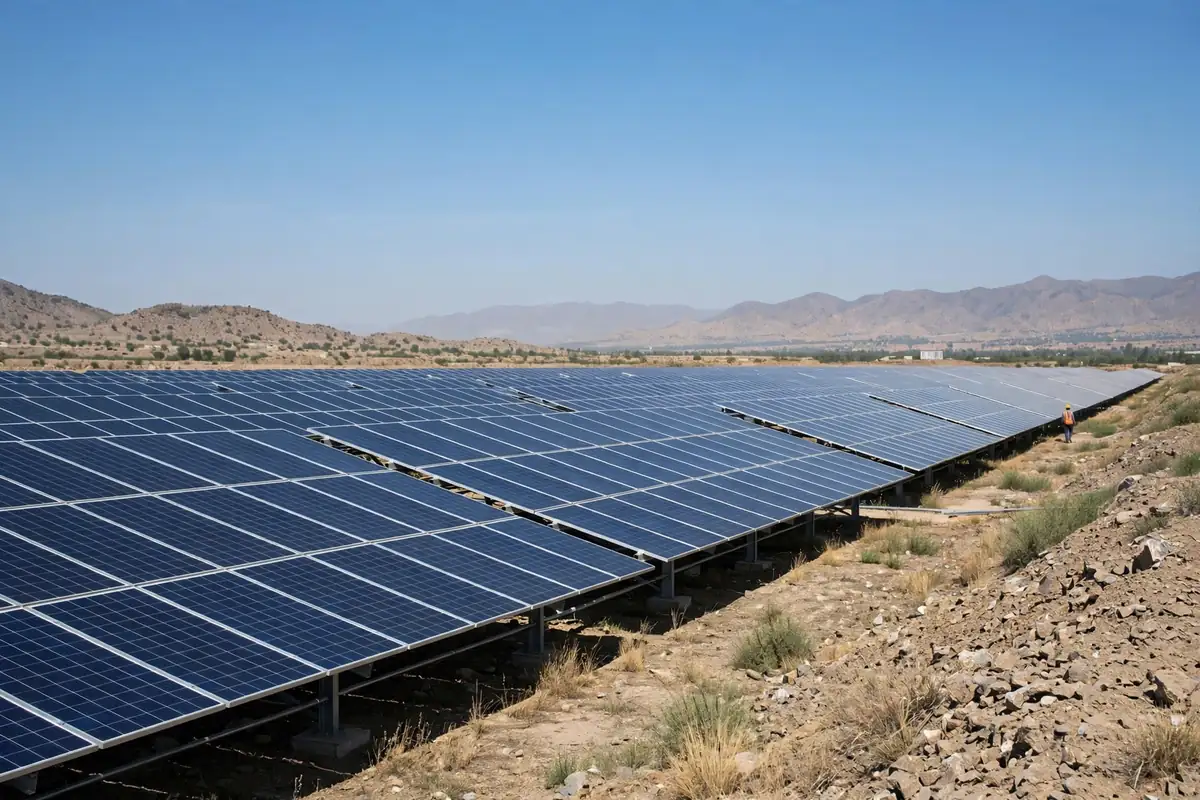
He pointed to China as the argument that it can be done. Beijing and Shanghai, he noted, have made real progress on air quality while China simultaneously became a major exporter of solar technology — an example, in his telling, that Pakistan can follow the same path with sound policy, innovation and cooperation with development partners. The comparison is deliberately double-edged: China's clean-air turn was driven by exactly the combination the minister named — engineering, enforcement and money — and it took a decade of sustained pressure. A $10 million startup fund is a beginning of that road, not the road itself.
The Lahore backdrop: world's most polluted major city
The timing gave the announcement its force. Hours before the minister spoke, Lahore had been ranked the world's most polluted major city — a position the city has occupied repeatedly in recent smog seasons, when its air quality index has crossed into ranges classified as hazardous and schools, flights and outdoor life have all bent around the grey. Lahore's smog is now a fixed season in the calendar of Pakistan's largest province: it arrives with the cooling weather of late October, thickens through the winter, and lifts only with the spring. For the millions who live in it, the ranking is not news; the news would be a year in which it does not happen.
It is against that backdrop that a clean-air fund will be judged. The metrics are unforgiving and publicly visible: the number of hazardous days each winter, hospital admissions for respiratory illness, school closure days, and whether the monitors — official and citizen-run alike — record a trend rather than another record. Startups funded under this initiative will be working on the most measured environmental problem in the country, which is precisely what makes the experiment interesting: success or failure will show up in the data.
Where a startup fund fits — and where it does not
It is worth being precise about the place of an initiative like this in the larger fight. The heavy machinery of clean air remains governmental: fuel quality standards and their enforcement, the conversion of brick kilns to cleaner technology, vehicle inspection that actually inspects, industrial emissions monitoring with consequences, and the agricultural economics that make crop-residue burning the rational choice for a farmer working against the sowing calendar. In past smog seasons, provincial authorities have reached for emergency instruments — school closures, restrictions on kilns and construction, health advisories — that treat the symptom for a few weeks without touching the sources. None of that changes because a startup fund exists.
What startups can change is the instrumentation and the options. A city cannot manage what it cannot measure, and Pakistan's official monitoring network is thin compared with the scale of its cities; dense, cheap sensor networks are a classic startup contribution. Cleaner kiln designs, industrial filtration retrofits, indoor air solutions cheap enough for a government school, forecasting that lets a health department warn hospitals before the surge rather than after — each is a product-shaped problem of the kind small companies solve faster than ministries. The fund's real promise is that it treats clean air as an industry Pakistan can build, with the export logic the minister drew from China's solar story, rather than solely as a cost it must bear.
What happens next
The immediate steps are procedural: approval by the fund's board, which Pakistan Today reported was expected the day after the announcement, and the work of assembling the financing — the government's own contribution from limited resources, alongside the development-partner support the minister said Pakistan is seeking. Beyond that, the questions that will define the fund are the ones startup ecosystems always face: who decides which companies qualify, whether the money arrives as grants, equity or prizes, how quickly it is deployed, and whether it is still operating when the smog returns next October.
TaazaPulse will track the fund's board approval, its first investments and — when the season turns — the air itself. The minister's standard is the right one to hold him to: engineering, policymaking and financial commitments, rather than slogans. The cities of Punjab will supply the verdict, one winter at a time.
Frequently Asked Questions
What is Pakistan's $10 million clean-air fund?
It is a planned fund, announced by Federal Minister for Climate Change Dr Musadik Malik at the Pakistan National Clean Air Conference 2026 in Islamabad on 28 October, to support startups developing solutions to the air quality crisis. The News International reported the government would finance it from its own limited resources while seeking support from development partners.
How much does dirty air cost Pakistan?
The minister estimated that poor air quality costs Pakistan 6.5 per cent of gross domestic product. The burden shows up as illness, hospitalisation and financial pressure on families — carried most heavily, he said, by poor communities, schoolchildren, street vendors, farmers and other outdoor workers.
What did the UNICEF report say about children?
As cited by the minister, the UNICEF report found that dirty air is damaging children's lung health and physical growth. He also described patients with chronic obstructive pulmonary disease who depend on oxygen and medication.
Why was Lahore in the headlines the same day?
Hours before the announcement, Lahore was ranked the world's most polluted major city — a position it has occupied repeatedly in recent smog seasons, when its air quality has crossed into ranges classified as hazardous.
Will the fund clean the air by itself?
No — and the minister did not claim it would. A startup fund backs technology and measurement: sensors, cleaner kiln and industrial technology, filtration and alert systems. The heavy work of standards and enforcement remains governmental, which is why Malik framed the crisis as needing engineering solutions, sound policymaking and financial commitments rather than slogans.
What are the next steps for the clean-air fund?
Approval by the fund's board was expected the day after the announcement, according to Pakistan Today. The government will finance the initiative from its own resources and is seeking development-partner support; the minister acknowledged the World Bank, the Asian Development Bank, UNICEF and the German agency GIZ.