Supreme Court Breaks Ground on Public Facilitation Centre in Islamabad
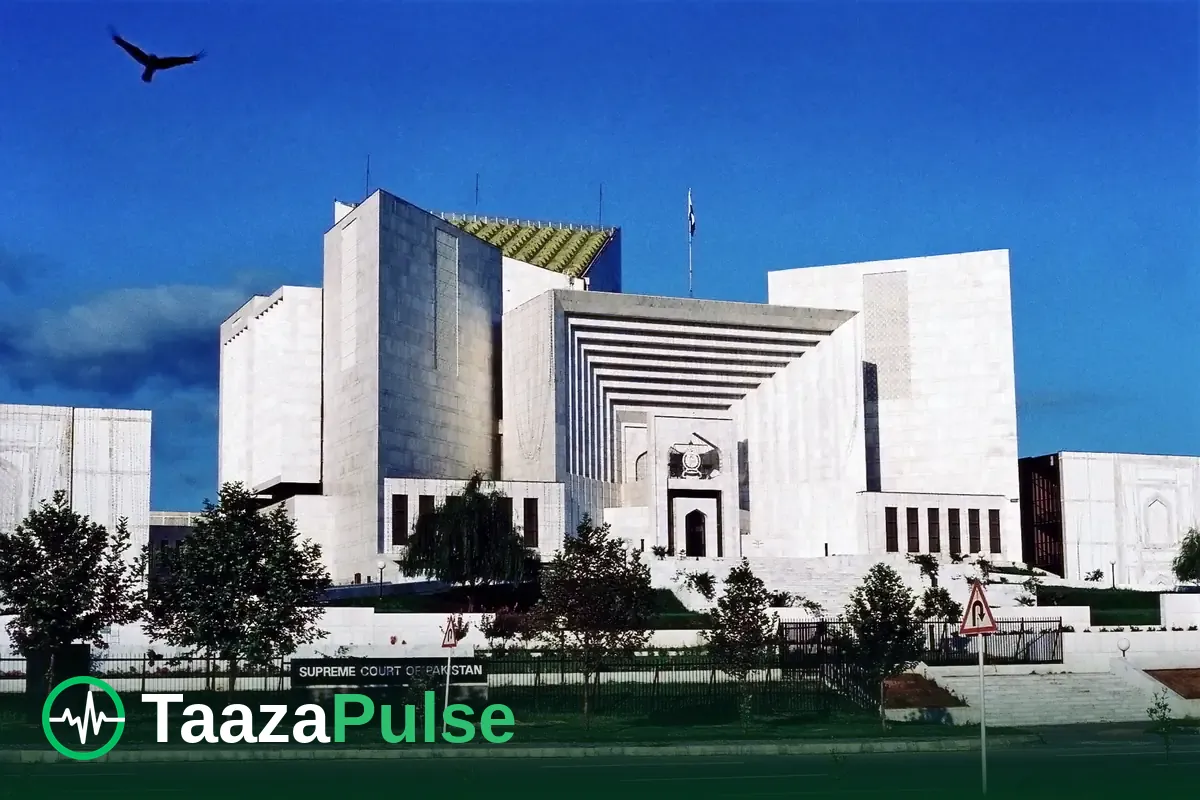
The Supreme Court of Pakistan has broken ground on a dedicated Public Facilitation Centre designed to place litigants and citizens at the very heart of judicial service delivery, the Press Information Department reported on Friday, 30 October 2026. The groundbreaking ceremony was performed by Justice Jamal Khan Mandokhel, Chairman of the Court's Building Committee, in the presence of the Chief Justice of Pakistan, fellow Justices, the Attorney General for Pakistan, representatives of the Supreme Court Bar Association, and officers from the Capital Development Authority (CDA), NESPAK, and the Supreme Court administration. The Centre will consolidate filing counters, certified-copy desks, information kiosks and facilitation booths into a single, citizen-centric hall, supported by modern technology including biometric queue management, self-service e-kiosks and real-time case-status displays. It is scheduled to be completed within two months — described by the Court as one of the fastest civil-works turnarounds in its history — with construction beginning immediately and services migrating in phases to minimise disruption to ongoing court business.
For most Pakistanis, the Supreme Court is a building seen on television and a name in headlines; for the litigants who actually travel to Islamabad to file a case, collect a certified copy, or check on a hearing, it is a maze of counters, offices and waiting areas spread across a large and formal complex. The Public Facilitation Centre is the Court's answer to that experience. Instead of sending a visitor from one counter to another across the building, the Centre brings the services a citizen most commonly needs into one hall, with a queue system that tells them where to stand, a kiosk that lets them serve themselves, and a display that tells them the status of their case without needing to ask anyone. It is, in the Court's own framing, an attempt to remove physical hurdles between the public and the judiciary — and it is the physical counterpart of a digital programme the Court has been building all year.
What the Centre will contain
The details released with the groundbreaking describe a single hall that gathers the Court's public-facing services in one place. Filing counters, where petitions and applications are received, will sit alongside certified-copy desks, where litigants obtain official copies of orders and judgments, and information kiosks and facilitation booths, where visitors can ask questions and get directions. Around those counters, the Centre adds the technology layer that distinguishes a modern service hall from a row of windows: biometric queue management, so that a visitor's place in line is recorded and called fairly rather than negotiated in a crowd; self-service e-kiosks, so that routine queries and forms can be handled without waiting for a clerk; and real-time case-status displays, so that a litigant can see where their case stands without filing a separate inquiry.
The design, presented at the ceremony by NESPAK's architects, adds two features that matter as much as the technology. The first is barrier-free access, so that elderly litigants, persons with disabilities, and visitors with limited mobility can enter, move through and use the Centre without assistance — a point the Registrar, Muhammad Salim Khan, tied directly to the project's origin in Justice Mandokhel's vision of removing physical hurdles and creating an accessible interface between the public and the Court. The second is a comfortable waiting lounge, an acknowledgement that a court visit is often a long day: litigants travel from across the country, wait for hours, and currently do so with limited seating and facilities. A waiting lounge, a digital helpdesk, and a hall where every service is in one place together describe a building designed around the visitor's day, not the institution's org chart.

Getting there: a bus stop and a shuttle
One of the smallest announcements at the ceremony may matter most to the people the Centre is meant to serve. The Capital Development Authority has committed to establishing a dedicated bus stop and shuttle connection for the Centre, ensuring smoother transit for visitors arriving from across the capital. That detail recognises a reality that court reformers often overlook: for a litigant from Rawalpindi, from a village in Punjab, or from a low-income neighbourhood of Islamabad itself, the hardest part of a court visit is often not the filing but the journey — finding the right gate, the right building, the right counter, after an unfamiliar bus ride. A dedicated stop and shuttle does not change the law, but it changes the morning of the person who needs the law, and it is the kind of practical measure that separates a facilitation centre from a plaque on a wall.
The two-month completion schedule is equally striking, and it deserves to be read carefully. The Registrar announced that the Centre is scheduled to be completed within two months, marking one of the fastest civil-works turnarounds in the Court's history, with construction beginning immediately and phased service migration planned to minimise disruption. Two months for a dedicated public building is fast by any standard of public construction in Pakistan, and it raises an obvious question: is this a new building, or a refit of existing space? The official announcement describes a groundbreaking and a construction schedule, and this article reports it as such, but readers should note that the Court has not, in the material released, published floor plans, a site plan, or a construction budget. The test of the two-month promise will be simple and public: whether, by the end of December 2026, litigants are actually being served from the new hall. TaazaPulse will check.
The digital programme behind the building
The Centre does not arrive in isolation. It is the physical home of a public-facilitation programme the Supreme Court has been assembling through 2026, and the building makes most sense when seen alongside it. In September 2026, at the opening of the new judicial year, the Chief Justice reviewed an institutional reform agenda built around five pillars — technology-enabled service delivery, access and transparency, strengthening the legal and regulatory framework, leveraging national and international resources, and revitalising justice-sector institutions — and highlighted the establishment and strengthening of the Public Facilitation Centre, digital communication mechanisms, structured feedback systems and improved facilities for litigants, overseas Pakistanis and the media. A Public Facilitation Centre at the Lahore Registry was targeted for completion by mid-November 2026 in that same address, a separate project from the Islamabad groundbreaking reported here, and the two should not be confused.
The digital side of the programme is already live. The Court's Public Facilitation Portal on its official website offers, according to the Court's own reporting, nearly twenty online services, allowing citizens to search case details by name, case number or petition type, track applications such as early hearing requests, general adjournments and video-link petitions in real time, and lodge complaints and inquiries through a dedicated module. An Overseas Litigants Portal extends the same access to Pakistanis abroad, and an anti-corruption reporting mechanism offers a confidential route to report misconduct. In October 2026 the Court formally launched its 1818 Legal Call Centre, through which citizens can obtain free legal guidance and information about cases, hearing dates, cause lists and court procedures from home, with applications for free legal assistance forwarded to the Law and Justice Commission. And on 19 October 2026, the Court established a Legal Aid Cell at its Public Facilitation Centre, with a dedicated legal assistant to guide deserving litigants towards appropriate legal assistance.
What this means for an ordinary litigant
Put together, the building and the digital programme describe a single idea: that access to the Supreme Court should not depend on knowing someone inside it, living in Islamabad, or being able to spend a day navigating its corridors. A litigant who today must travel to the Court to ask a procedural question will, in the Court's design, be able to call 1818 from home, check the portal for their case status, or visit the Centre's helpdesk and be directed in one hall. A litigant who needs a certified copy will queue biometrically rather than by persistence. An overseas Pakistani, who previously faced the choice between an expensive trip home and letting a case drift, can use the overseas portal and, since September 2026, the dedicated Overseas Litigants Facilitation Cell established on the Chief Justice's orders.
That idea, if it works, addresses a real and long-standing criticism of Pakistan's justice system: that it is formally open to all but practically navigable only by those with lawyers, connections, or time. The Supreme Court is the apex of the system, and its own procedures set the tone for the high courts and district judiciary below it. A Court that visibly invests in making itself accessible — a hall, a helpline, a portal, a legal aid desk — sends a signal down the system that citizen experience is part of judicial performance, not an administrative afterthought. It is also, it should be said, the kind of reform that is easy to announce and hard to sustain: a helpdesk is only as good as the staff behind it, a queue system only as fair as its enforcement, and a portal only as useful as the data it carries. The two-month building schedule will be the first test; the staffing, maintenance and updating of the services inside it will be the longer one.
Questions the groundbreaking leaves open
Several questions remain unanswered in the material released with the groundbreaking, and honest reporting should name them. First, the cost: no construction budget or funding source was announced, and the public cannot judge value for money without it. Second, the precise site and scale: whether the Centre is a new structure or a conversion of existing space, and how large the hall will be, were not detailed in the announcement. Third, the staffing model: how many facilitation officers, legal assistants and technical staff will run the hall, and in which languages, was not specified. Fourth, the relationship with the existing facilitation services: whether the Centre replaces, absorbs or sits alongside the current counters and the 1818 call centre, and how the phased migration will work in practice, will only become clear as services move. None of these gaps undermines the announcement itself, but each of them is a question the Court will need to answer as the two-month schedule runs — and each is a question this story will follow.
The broader context is worth keeping in view. The Supreme Court's facilitation programme sits within a judiciary that is, by its own account in the September judicial year address, trying to reduce pendency and modernise case management, digitisation, e-filing, video-link hearings, prison reform and alternative dispute resolution, with the Attorney General and the Bar leadership both publicly commending progress on those fronts. The Public Facilitation Centre is the citizen-facing end of that programme: the part a litigant can walk into. If the Centre opens on schedule and works as described, it will be a small but tangible improvement in the daily experience of justice in Pakistan — a shorter queue, a clearer answer, a bus stop that actually stops at the court. If it slips, or opens as a handsome hall with the same old counters behind it, the public will notice that too, and quickly. Either way, the groundbreaking on 30 October 2026 is the moment the promise became a construction schedule, and the schedule now has a deadline.
What litigants should do in the meantime
Until the new hall opens, nothing about the Court's existing services changes, and litigants should continue to use the channels that already exist rather than waiting for the Centre. Case status and cause lists remain available through the Court's Public Facilitation Portal, procedural questions can be put to the 1818 Legal Call Centre free of charge, and visitors to the Court should continue to use the existing counters and facilitation desks. The practical advice is the same as it would be for any public building project: do not postpone a filing, a certified-copy request, or a hearing because a new hall is coming, and do not assume that a service has moved until the Court announces the migration. When the phased migration begins, the Court has said it will be designed to minimise disruption — but the announcement of each phase, not this article, will be the authority on where a particular counter has gone.

What is confirmed in this article is limited to what the 30 October 2026 official announcement establishes, as reported by the Press Information Department and Arab News Pakistan: the groundbreaking, the persons present, the services to be consolidated, the technology features, the NESPAK design elements, the CDA bus stop and shuttle commitment, and the two-month completion schedule. The September 2026 judicial year address, the 1818 helpline launch, the 19 October Legal Aid Cell, and the portal's online services are dated background from the Court's own prior announcements. No construction budget, site plan, or staffing figure is claimed, because none was announced.
Sources
This report is based on reporting, official statements and documents from:
- Press Information Department — Supreme Court breaks ground on dedicated Public Facilitation Centre (30 Oct 2026, queue b266520f245a2d87)
- Arab News Pakistan — Pakistan top court streamlines public services with facilitation center (30 Oct 2026, queue b266520f245a2d87)
- SABAH News — SC opens Judicial Year 2026-27 with renewed focus on improved service delivery (14 Sep 2026 background: Lahore Registry PFC, five-pillar reform agenda)
- Bloom Pakistan — Supreme Court Launches Legal Aid Cell for Deserving Litigants (19 Oct 2026 background)
- Capital News Point — Supreme Court Launches 1818 Helpline (Oct 2026 background)
- Photos: real file photographs (Wikimedia Commons) — Supreme Court of Pakistan building Islamabad, courtroom gavel, court building, Faisal Mosque and Islamabad skyline; file photos, not the ceremony
Frequently Asked Questions
What happened at the Supreme Court on 30 October 2026?
The Supreme Court broke ground on a dedicated Public Facilitation Centre, according to the Press Information Department. Justice Jamal Khan Mandokhel, Chairman of the Court's Building Committee, performed the groundbreaking ceremony in the presence of the Chief Justice of Pakistan, fellow Justices, the Attorney General for Pakistan, representatives of the Supreme Court Bar Association, and officers from the Capital Development Authority, NESPAK and the Supreme Court administration.
What services will the Public Facilitation Centre bring together?
Filing counters, certified-copy desks, information kiosks and facilitation booths, consolidated into a single citizen-centric hall. The technology layer includes biometric queue management, self-service e-kiosks and real-time case-status displays. The NESPAK design also features barrier-free access, a digital helpdesk and a comfortable waiting lounge.
When will the Centre open?
The Registrar, Muhammad Salim Khan, announced that the Centre is scheduled to be completed within two months, described as one of the fastest civil-works turnarounds in the Court's history. Construction begins immediately, with phased service migration planned to minimise disruption to ongoing court business. The test will be whether litigants are actually being served from the new hall by the end of December 2026.
Is this the same as the Lahore Registry facilitation centre?
No. At the opening of the new judicial year in September 2026, the Chief Justice said a Public Facilitation Centre at the Lahore Registry was targeted for completion by mid-November 2026. That is a separate project. The 30 October groundbreaking is the dedicated Centre at the Supreme Court's principal seat in Islamabad.
What digital services already exist alongside the Centre?
The Court's Public Facilitation Portal offers nearly twenty online services, including case searches by name, case number or petition type and real-time tracking of applications such as early hearing requests and video-link petitions. The 1818 Legal Call Centre, launched in October 2026, gives free legal guidance and case information by phone, and a Legal Aid Cell was established at the Public Facilitation Centre on 19 October 2026 with a dedicated legal assistant for deserving litigants.
What is not yet known about the Centre?
No construction budget or funding source was announced, no site plan or floor area was published, and the staffing model — how many facilitation officers and legal assistants will run the hall, and in which languages — was not specified. How the phased migration of existing counters will work in practice is also yet to be announced. This article claims none of those details, and will follow them as the two-month schedule runs.