Gold Price Falls by Rs10,800 Per Tola in Pakistan on Saturday, 31 October
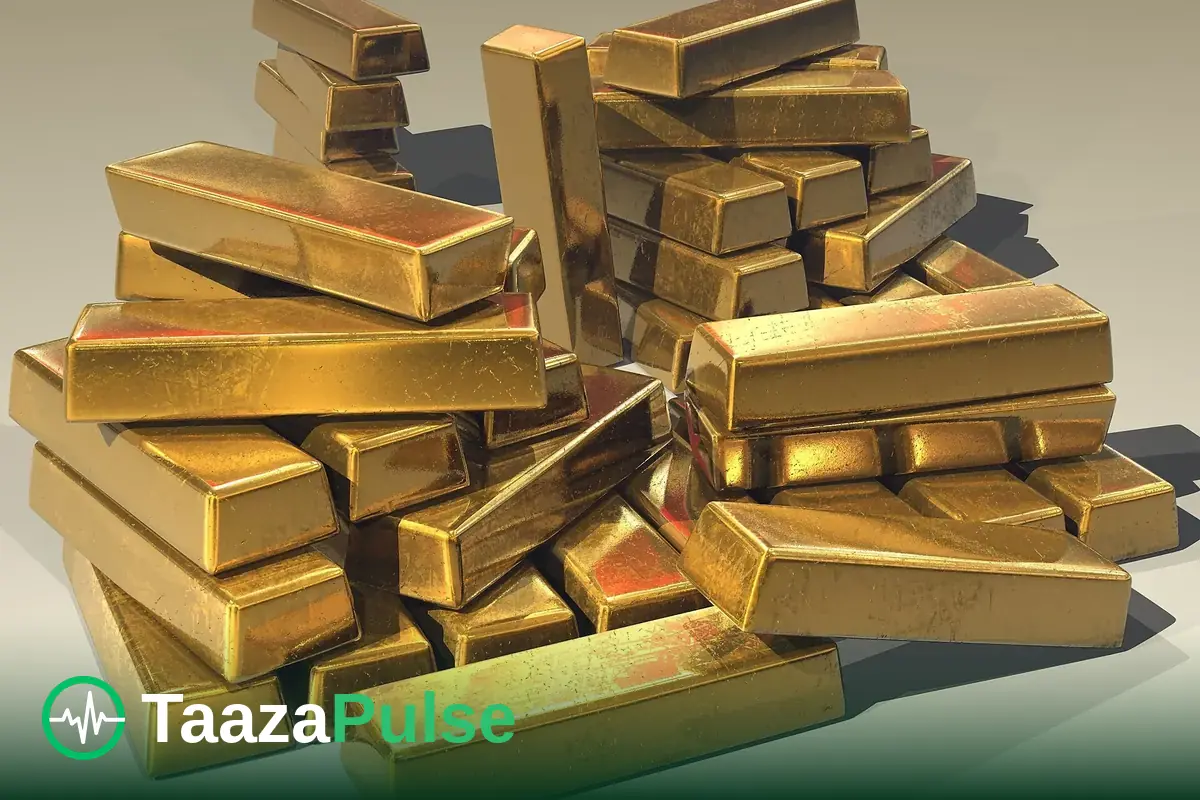
Gold prices in Pakistan fell sharply again on Saturday, 31 October 2026, dropping by Rs10,800 per tola during the day and closing below Rs410,000 for the first time in this run of declines. The reported Saturday close is Rs409,736 per tola for 24-karat gold, down from Friday's close of Rs420,536. The move is the second large fall in two days and takes the market to its lowest association level of the week, just as trading closes for the weekend. For buyers who waited through Friday's afternoon fall, Saturday's move changes the price again — by more than twice Friday's fall — and it sets the level that shops will quote until the next association announcement.
Readers who followed Friday's coverage may see several different Saturday figures, so the sequence must be stated plainly at the start. Gold opened on Saturday at Rs420,536 per tola, the same level at which it closed on Friday, as Pakistan Observer's Saturday morning report recorded. The Rs10,800 fall reported by Investify and headlined by Daily Pakistan — whose headline puts the new level below Rs410,000 — is the move during Saturday itself, not a correction of Friday's figure. Treasure Magazine independently reports the same Saturday close of Rs409,736 per tola. All three reports therefore agree on the two numbers that matter: the size of Saturday's fall and the level at which the day closed. This article is a follow-up to Friday's afternoon fall, not a replacement for it, and the three articles together now record a complete three-day sequence: Thursday unchanged, Friday down, Saturday down much further.
The arithmetic of Saturday's fall is straightforward, and it is worth showing in full because the converted figures that follow are derived from the reported per-tola numbers rather than announced separately. Friday's close was Rs420,536 per tola. Subtract Saturday's reported fall of Rs10,800 per tola and the resulting close is Rs409,736 per tola, a fall of about 2.6 percent on the day. Expressed in smaller weights, the same close is about Rs35,129 per gram and about Rs351,289 per 10 grams by transparent arithmetic from the per-tola figure, labelled here as derived. The association's own Saturday 10-gram and 22-karat figures have not been separately published in the coverage available for this article, and this article does not invent them. The two hard reported facts are the Rs10,800 fall and the Rs409,736 close; everything else in this paragraph follows from them by division and multiplication, and is marked as derived wherever it appears.
The two-day picture is now the more important one, because Saturday's fall is the second half of a single slide. On Thursday, 30 October's opening rate stood at Rs425,636 per tola, unchanged from the previous day. On Friday afternoon the association rate fell by Rs5,100 per tola to Rs420,536, as Business Recorder reported. On Saturday it fell by a further Rs10,800 to Rs409,736. The combined two-day fall is therefore Rs15,900 per tola, or about 3.7 percent from Thursday's level. That is a larger two-day decline than any single week of trading earlier in October had produced, and it reverses not only Wednesday's Rs3,500 rise but the whole of the recovery from Tuesday's low. A buyer who purchased on Wednesday at Rs425,636 paid Rs15,900 per tola more than a buyer who waited until Saturday's close, before making charges in either case. A buyer who purchased on Friday afternoon, after the first fall, still paid Rs10,800 per tola more than Saturday's closing buyer. That comparison, repeated across two days, is the simplest measure of what waiting was worth this week — and also a warning, because a market that falls this fast can recover just as fast.
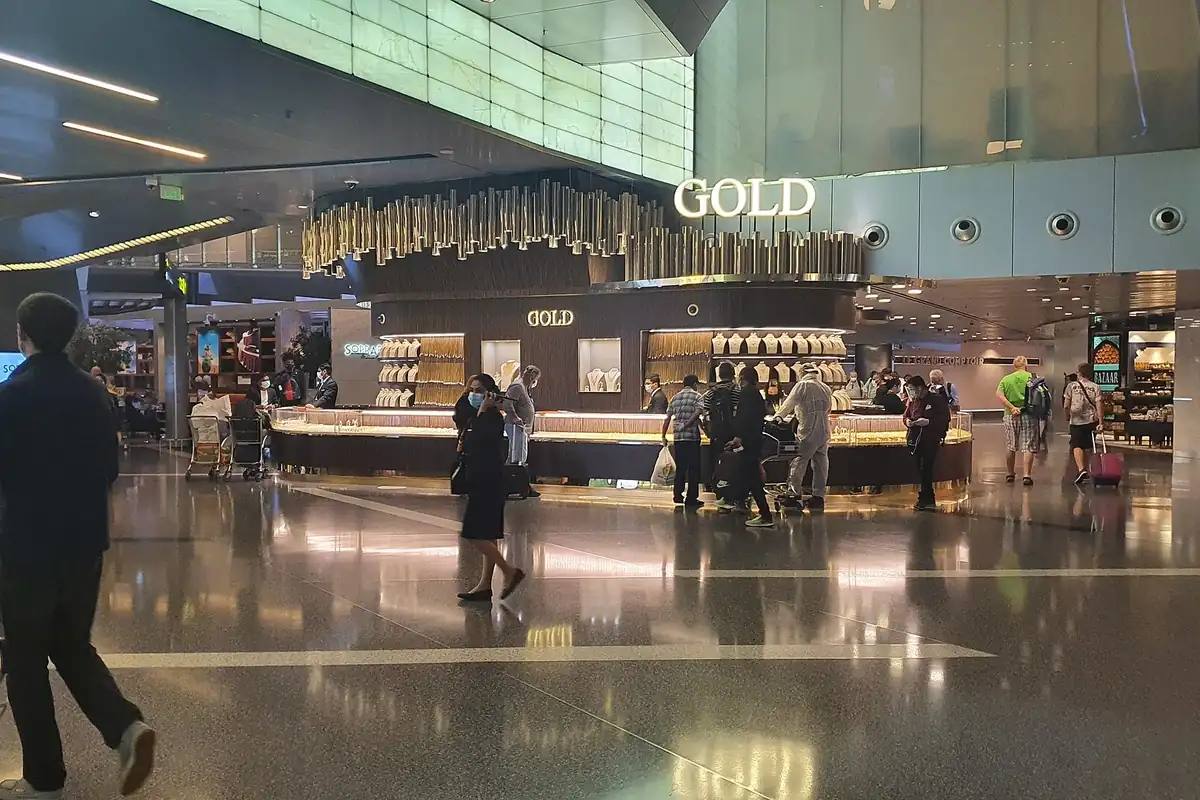
The immediate cause of Saturday's fall sits in the international market, where the slide that began on Friday continued into the United States trading session. Treasure Magazine, citing Trading Economics and Reuters, reports that spot gold closed down 3.6 percent at $3,875.84 per ounce on Friday, its lowest level since October 2025, after a sharp sell-off in technology shares spread across global financial markets. TechJuice's weekend-close report puts the international price at essentially the same level, $3,876.02 per ounce. The same Treasure report notes that gold has now lost approximately 30 percent from its January 2026 record high of $5,595 per ounce. The international decline matters directly for Pakistan because the association's rupee rate is built from the dollar price of gold converted at the rupee-dollar rate. When the dollar price falls by more than 3 percent in a session, as it did on Friday, the rupee price has to follow unless the rupee weakens enough to offset it, and on Saturday it did not. Saturday's local fall is therefore best understood as Pakistan's market catching up with an international move that was already complete by the time local trading opened.
Behind the international fall, traders cited a market-wide sell-off rather than a single gold-specific event. According to the Treasure and Reuters accounts, a sharp downturn in technology shares triggered broader concerns across financial markets, and precious metals extended their losses alongside equities, with silver, platinum and palladium falling as well. That is a different mix of drivers from Friday's earlier session, when Reuters reporting had stressed stronger United States inflation data — personal consumption expenditures prices up 0.5 percent in September from the previous month — and higher oil prices, both of which strengthened expectations of tighter Federal Reserve policy. Both stories point in the same direction for gold: higher expected rates and a broad risk sell-off reduce the appeal of an asset that pays no interest, even though geopolitical tension would normally support it. None of this is a forecast of the next move. It is the market's own stated reasoning for the session, reported by the outlets cited here, and it can reverse as quickly as it arrived if the next data release or the next trading session points the other way.
Saturday's session also explains why readers will have seen a scatter of different Pakistan figures during the day, lower than the reported close. Live-rate websites and city benchmarks seen on Saturday showed figures roughly between Rs402,000 and Rs408,400 per tola — TechJuice's weekend report put Pakistan gold at Rs402,109, goldratesdaily at Rs408,393, goldrateupdate at Rs407,500 in its afternoon refresh, and city pages for Karachi and Gujranwala around Rs404,000 to Rs405,700. Those websites do not publish the association benchmark; they recalculate continuously from the moving international spot price and the current exchange rate, so their figures move all day and differ from each other depending on when they were last refreshed and which spot feed they use. During a falling session they tend to show lower figures than the association's announced level, because they are already pricing in the next move, while the association's figure only changes when it announces. The gap is not evidence that any one source is wrong; it is evidence that they measure different things at different times. The price a shop will actually charge is anchored to the association benchmark, plus making charges, and that remains the figure buyers should confirm before paying — which is why this article leads with the reported Rs409,736 close rather than any converter figure.
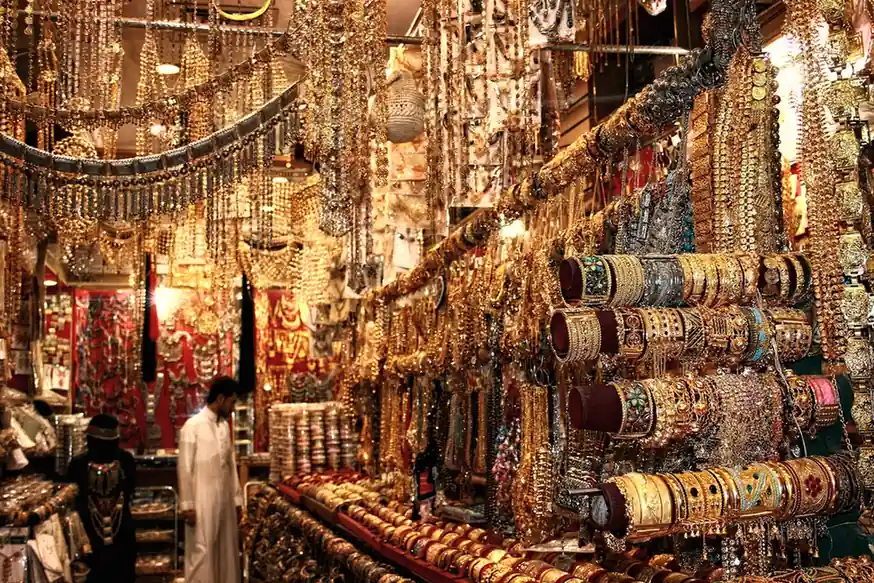
That brings the discussion back to the most practical point, which Friday's articles also stressed and which Saturday's larger fall does not change: the per-tola rate is the price of the metal only. Making charges, the labour cost of turning bullion into jewellery, are added by the shop and vary by design, by weight and by retailer. A Rs10,800 fall in the metal rate therefore reduces the final bill by Rs10,800 per tola only if the shop passes the new metal rate through in full and does not change its making charge at the same time. Most reputable shops will reprice from the new benchmark, but the bill is the proof. Ask for weight, purity, the per-gram metal rate applied and the making charge as separate lines. If a shop quotes only a single total, or refuses to show the metal rate it used, the buyer cannot tell whether Saturday's fall has been passed on at all. Keep the bill in either case: it determines the buyback value if the piece is ever sold, and reputable shops buy back against their own bills at the prevailing rate less a stated deduction.
Purity deserves the same care as price, because the Rs10,800 figure is quoted for 24-karat gold and most jewellery sold in Pakistan is 22-karat. Twenty-four karat is fine gold, effectively pure. Twenty-two karat is 91.6 percent gold, with alloy metals making up the balance and giving the piece its strength. Because the 22-karat price is derived from the 24-karat price by purity, a Rs10,800 fall in the 24-karat rate implies a proportionally smaller fall in the 22-karat rate, roughly Rs9,893 per tola on the same purity arithmetic, and a derived 22-karat level of about Rs375,318 per tola — both labelled here as derived, not separately announced. The association's own 22-karat Saturday figure has not been separately confirmed in the coverage available here. The practical consequence is simple: a buyer of a 22-karat set should expect a real saving from Saturday's fall, but should not expect it to be exactly Rs10,800 per tola, and should check the shop's 22-karat quotation against the converted figure rather than against the 24-karat headline.
Silver, which readers often ask about alongside gold, is reported this time with a clear attribution and a clear limit. Treasure Magazine reports that silver closed on Saturday at Rs5,300 per tola, down from Friday's association figure of Rs5,530 per tola — a fall of Rs230 on that report. That Saturday silver figure rests on a single secondary report, not on a separately confirmed association announcement, and this article presents it as Treasure's report rather than as an association headline. Friday's silver figure, by contrast, was reported by The News as Rs5,530 per tola after a fall of Rs238. Readers who need a silver rate for a transaction should still confirm it with their local sarafa market before dealing, because silver moves faster than gold in percentage terms and a single report can go stale within a session. The same discipline applies to every figure in this article: a number is either a published rate, a figure reported by an outlet from that rate, or arithmetic derived transparently from those figures and labelled as derived. Where coverage ends, this article says so.
The rupee-dollar rate is the quiet second input in every gold price, and it is worth stating plainly even though no new rupee figure is claimed in this article. Gold is priced internationally in dollars, so a weaker rupee pushes the rupee price of gold up even when the dollar price does not move, and a stronger rupee pulls it down. The interbank dollar rate reported for 29 October stood at Rs276.77, and that conversion is part of why the association's rupee rate can move on a day when the international gold price is flat, or stay flat on a day when the international price moves. Saturday's fall happened despite that mechanism, not because of it: the international decline was large enough to dominate whatever the currency conversion did during the session. Buyers who follow only the dollar price of gold, or only the rupee price, are following half the equation. The association's daily rate is, in effect, the market's combined verdict on both.
There is also a seasonal consideration that regular buyers will recognise, and it cuts both ways this weekend. Autumn is a period when many households buy gold for weddings and year-end occasions, and demand from that buying can firm up retail premiums even when the benchmark rate falls. That does not change the association rate, but it can change what a shop charges above it, which is another reason to separate the metal price from the making charge on the bill. A final price that falls by less than Rs10,800 per tola after Saturday's move is not necessarily a shop overcharging on the metal; it may be a higher charge for labour, design or a busy-season premium. Asking which of those it is will usually produce a straighter answer, and walking away from a shop that will not answer is always an option. The benchmark rate is public, the arithmetic in this article is shown in full, and any buyer can therefore check a quotation against it before money changes hands. Because Saturday is the weekend close, that Saturday level is also the reference shops will carry into the next trading session until the association announces again.
For households deciding whether to buy now or wait, the honest answer is that Saturday's fall improves the price but does not settle the direction. Gold has now fallen about 3.7 percent in two days after standing still for two sessions, and the international price is sitting at a one-year low near $3,876 per ounce, roughly 30 percent below its January peak. If that low holds, the local rate may stabilise near the new level; if the international price breaks lower, the association rate can fall further at its next announcement; if sentiment reverses, the rate can recover just as quickly as it fell this week. No rates article can honestly call the next move. What buyers can control is the quality of the purchase: confirm the day's association rate from a published source and note whether it is the opening, an intraday update or the close; buy from a shop that states weight, purity and making charges separately; compare bars and coins against jewellery of the same weight if the purpose is investment rather than wearing, because bars and coins carry far lower making charges and track the metal price more closely; and treat any "today only" pressure with scepticism, because the metal does not spoil and a genuine shop has no reason to rush a buyer who wants to verify a weight.
What should readers watch next? Four things, in order. First, the association's next daily announcement, which will show whether Saturday's close of Rs409,736 per tola holds, falls further or recovers. Second, the international spot price around $3,876 per ounce, which remains the largest single input into the rupee rate and which spent Friday falling to a one-year low. Third, the rupee-dollar rate, which can move the local price even on a quiet day for bullion. Fourth, the gap between the association benchmark and the live spot converters, which narrows when markets are calm and widens when the international price moves sharply during the day, as it did on Friday and Saturday. TaazaPulse's rates desk will carry the next confirmed association figure when it is announced, and will say plainly when a figure is carried over from a previous session rather than newly announced, as this article has done for its derived conversions.
In summary, Saturday 31 October 2026 in Pakistan's gold market had one chapter, and it was a steep one. The market opened at Rs420,536 per tola for 24-karat gold, the same level at which Friday had closed, with Friday's session having already fallen Rs5,100 from Thursday's Rs425,636. During Saturday the rate fell by a further Rs10,800 per tola, as reported by Investify and headlined by Daily Pakistan, taking the reported close to Rs409,736 per tola — about Rs35,129 per gram and about Rs351,289 per 10 grams by transparent arithmetic, with a derived 22-karat level of about Rs375,318 per tola. The two-day fall from Thursday is Rs15,900 per tola. The fall tracked an international slide to about $3,876 per ounce, a one-year low, driven by a broad market sell-off that followed a sharp downturn in technology shares. It does not include making charges, it does not by itself set the 22-karat shop price, and its silver companion figure — Rs5,300 per tola — rests on a single secondary report and is presented as such. Those limits are stated here deliberately: a rates article earns trust not by having a number for everything, but by showing exactly which numbers are reported, which are derived, and which are not yet known.
Sources
This report is based on reporting, official statements and documents from:
- Daily Pakistan — Big Drop in Gold Prices as Per Tola Rate sinks below Rs410,000 in Pakistan (31 Oct 2026, queue 8342fab7839fbcbb; article body policy-blocked, not bypassed — headline figure only)
- Investify via Google News — Gold prices plunge in Pakistan as per tola rate drops by Rs10,800 (31 Oct 2026, queue e87d14e1f39e2e27)
- Investify via Google News — Gold rate in Pakistan today, Saturday 31 October: Rs409,736 per tola (31 Oct 2026, queue a85cec84b15d7688)
- Treasure Magazine — Gold Hits One-Year Low as Precious Metals Slide (31 Oct 2026: Saturday close Rs409,736 per tola, silver Rs5,300; spot $3,875.84/oz via Trading Economics/Reuters)
- Pakistan Observer via Scoop — Gold prices in Pakistan today, 31 October 2026 (opened Saturday at Rs420,536 per tola)
- The News — Gold prices down Rs5,100 per tola (30 Oct 2026: Friday close Rs420,536, 10g Rs360,541, silver Rs5,530, spot $3,980)
- TechJuice — Gold & Silver Prices Massively Fall As Market Closes for Weekend (31 Oct 2026: international $3,876.02/oz; Pakistan converter Rs402,109, reported as converter range only)
- Wikimedia Commons — Gold bullion bars; gold jewellery shop; Jeddah jewellery market; gold coins (image credits, goldfall30 file-photo set reused)
Frequently Asked Questions
What is the gold rate in Pakistan after Saturday's Rs10,800 fall?
The reported Saturday close is Rs409,736 per tola for 24-karat gold, down Rs10,800 from Friday's close of Rs420,536. By transparent arithmetic that close is about Rs35,129 per gram and about Rs351,289 per 10 grams — derived figures, labelled as such, because no separate Saturday association 10-gram figure was published in the coverage available. The Rs10,800 fall and the Rs409,736 close are the reported facts, agreed by Daily Pakistan, Investify and Treasure Magazine; the smaller-weight figures are calculated from them.
How does Saturday's fall compare with Friday's, and what is the two-day total?
Saturday's fall is more than twice Friday's. On Friday afternoon gold fell Rs5,100 per tola, from Thursday's Rs425,636 to Rs420,536. On Saturday it fell a further Rs10,800 to Rs409,736. The combined two-day fall is therefore Rs15,900 per tola, about 3.7 percent from Thursday's level — a derived total from the two reported daily falls. It wipes out Wednesday's Rs3,500 rise and takes the market below Tuesday's close of Rs422,136, so Saturday's close is the lowest association level of the week.
Why do Saturday's live websites show gold below Rs409,736?
Because they are live spot converters and city benchmarks, not the association benchmark, and they were sampled at different times during a falling day. The samples seen on Saturday ranged roughly from Rs402,109 (TechJuice) to Rs408,393 (goldratesdaily), with afternoon refreshes around Rs404,000 to Rs407,500. Converters recalculate continuously from the moving international spot price and the rupee-dollar rate, so during a falling session they price in the next move before the association announces it. The association close of Rs409,736 is the benchmark shops quote; a converter figure is useful for direction, not for settling a bill.
What happened to silver on Saturday?
Treasure Magazine reports that silver closed on Saturday at Rs5,300 per tola, down from Friday's association figure of Rs5,530 per tola — a fall of Rs230 on that report. That Saturday silver figure is presented as Treasure's report, not as a separately confirmed association announcement, because no association silver release for Saturday was available in the coverage for this article. Friday's Rs5,530 figure was reported by The News after a fall of Rs238. Anyone dealing in silver should confirm the current rate with their local sarafa market before transacting.
What does Saturday's fall mean for a 22-karat jewellery buyer?
A real saving, but smaller than Rs10,800 per tola, because the headline fall is for 24-karat gold and most jewellery is 22-karat (91.6 percent gold). On purity arithmetic, a Rs10,800 fall in the 24-karat rate implies a fall of roughly Rs9,893 per tola for 22-karat gold, giving a derived 22-karat level of about Rs375,318 per tola — derived figures, not a separately announced 22-karat rate. The saving on a finished piece also depends on the shop's making charge, which is added on top of the metal price and can move independently. Check the shop's 22-karat quotation and its making charge as separate lines on the bill.
Is Saturday's close the price shops will use until the next announcement?
Yes, in practice. Because Saturday is the weekend close, the reported Rs409,736 close is the reference level shops carry into the next trading session until the association announces a new figure. That is why the distinction between opening, intraday and close matters: Saturday opened at Rs420,536, fell during the day, and closed at Rs409,736, and it is the close that carries forward. The next association announcement will show whether that level holds, falls further or recovers, and TaazaPulse's rates desk will carry it when it is confirmed rather than carrying a converter figure forward as if it were the benchmark.