Diesel Crosses Rs400 to Rs400.67, Petrol Unchanged at Rs377.91 in Friday Revision
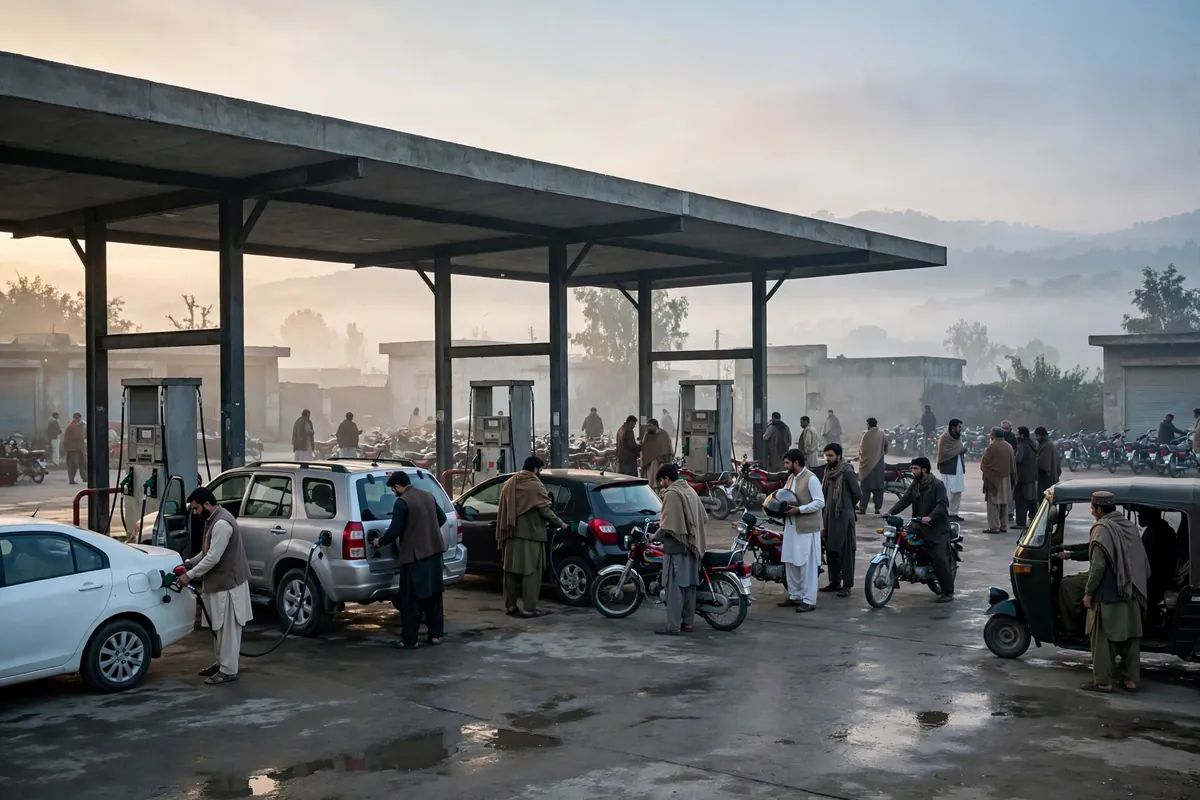
High-speed diesel has moved back above Rs400 a litre in Pakistan, while petrol stands still. Under the Petroleum Division notification for Friday 30 October 2026, diesel rises by Re0.85 to Rs400.67 per litre and petrol remains unchanged at Rs377.91 per litre, according to The News and Dawn's reporting of the notification and the Oil and Gas Regulatory Authority's (Ogra) daily ex-depot prices.
The split decision — one fuel up, one flat — is the daily pricing system working exactly as designed. Petrol and diesel are priced from separate international benchmarks, so they do not have to move together. On Thursday they both rose; on Friday only diesel did. For motorists the headline is simple: filling a car or motorcycle costs the same as it did on Thursday, while anything moved by truck, bus or tractor just got a little more expensive.
What changed for 30 October
The revision is small in absolute terms — 85 paisas on a litre of diesel — but it carries symbolic weight because it takes diesel back across the Rs400 line. Diesel had been sitting just below that mark at Rs399.82 since Thursday, after two consecutive daily rises. The new rate, Rs400.67, is the highest diesel price of this week, though it remains well below the levels seen earlier in the year, when diesel traded above Rs420 a litre in September.
| Date | Petrol (Rs per litre) | Change | High-speed diesel (Rs per litre) | Change |
|---|---|---|---|---|
| 27 October | 379.25 | — | 395.82 | — |
| 28 October | 376.06 | -3.19 | 398.07 | +2.25 |
| 29 October | 377.91 | +1.85 | 399.82 | +1.75 |
| 30 October | 377.91 | 0.00 | 400.67 | +0.85 |
Read across the four days, the picture is a week of churn rather than a one-way surge. Petrol is Rs1.34 a litre cheaper than it was before Tuesday's revision, despite Thursday's increase, because Tuesday's Rs3.19 cut was larger than the Rs1.85 rise that followed. Diesel, by contrast, has risen on three consecutive days — by Rs2.25, then Rs1.75, then Re0.85 — a cumulative Rs4.85 a litre since Monday. That asymmetry is the story of the week: relief for petrol users, a steady climb for diesel users.
Because 30 October is a Friday, these rates also carry into the weekend. Under the daily system, prices announced on Fridays remain unchanged over Saturday and Sunday, so Rs377.91 for petrol and Rs400.67 for diesel are the rates motorists and transporters will pay until the next working-day revision. Anyone planning a long journey or a bulk purchase over the weekend can therefore plan around today's figures with confidence.
How the daily system sets the price
Pakistan now reviews petroleum prices every working day. Ogra publishes daily ex-depot prices on its website, calculated from a rolling seven-day average of international prices, so a single day's spike or dip in global markets does not translate directly into the pump price. Petroleum Minister Ali Pervaiz Malik has said the seven-day average approach follows international practice and is meant to pass global movements through to consumers more quickly than the old system, while smoothing out the sharpest daily swings.
The daily system is itself new. Prices were previously revised fortnightly, on the 1st and 16th of each month, and then weekly after the Middle East conflict that began in February, when Israel and the United States attacked Iran and Tehran shut the Strait of Hormuz — the route through which around a fifth of the world's petroleum supplies travelled. The cabinet-approved framework for daily pricing authorises Ogra to announce the prices without seeking the prime minister's approval on each occasion, which is why the notifications now arrive as a matter of routine rather than as a political event.
Why petrol and diesel diverge
The two fuels have different international markets, different import costs and different duty structures, so their prices are calculated separately. A week in which petrol's benchmark softens while diesel's firms up will produce exactly what happened on Friday: petrol flat, diesel up. The same logic explains Tuesday, when petrol fell sharply and diesel rose. Consumers who watch only the petrol price therefore miss half the story — and for the economy as a whole, the diesel half matters more.
The ex-depot price is only the starting point. On top of the import or refinery cost sit customs duty, the inland freight equalisation margin, the oil marketing company margin and the dealer margin, and then the government's own charges. Dawn has reported that total duties and taxes amount to about Rs114 per litre on petrol and about Rs100 per litre on diesel, once customs duty and other charges are counted. The two fixed levies inside those totals are the petroleum levy of Rs80 per litre and the climate support levy of Rs5 per litre.
Why a diesel rise travels further than a petrol rise
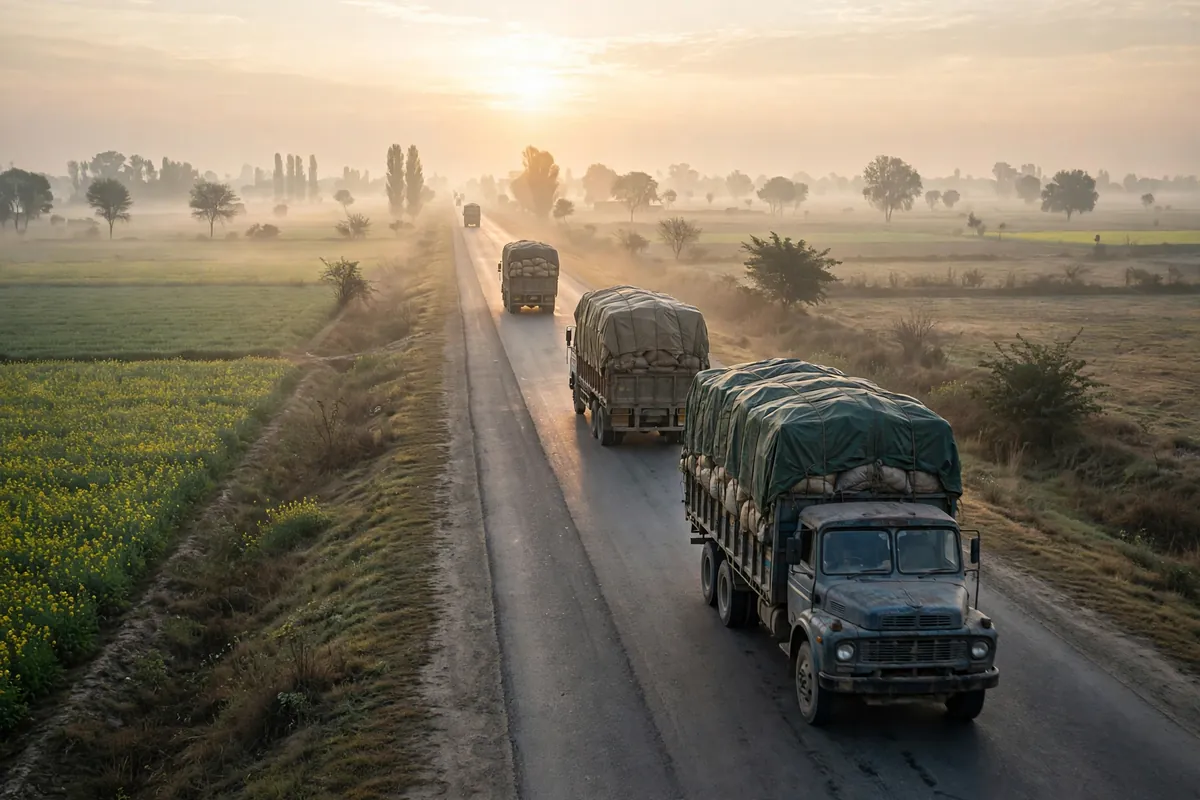
Diesel is the workhorse fuel of the Pakistani economy. It powers the trucks that carry wheat from the fields of Punjab to the markets of Karachi, the buses that move workers between cities, the tractors that plough and harvest, and the generators that keep small factories running through power cuts. When diesel rises by 85 paisas, the cost does not stop at the pump: it is spread, in small increments, across every sack of flour, crate of vegetables and carton of goods that travels by road.
That pass-through is rarely immediate or uniform. A transporter with a full load and a fixed contract may absorb a small rise for a few days; a small operator running a single truck on daily hire may pass it on the same evening. Over weeks, however, repeated diesel rises accumulate in freight rates, and freight rates accumulate in wholesale and retail prices. This is why economists treat diesel as the more inflationary of the two fuels, and why a Rs4.85 rise over three days deserves more attention than its modest daily increments suggest.
For households, the immediate effect of Friday's revision is uneven. A family that runs a motorcycle or a small car on petrol sees no change at all this weekend — a welcome pause after Thursday's Rs1.85 increase. A family that depends on bus fares, or buys food transported over long distances, is more exposed to the diesel rise, even if the effect arrives gradually rather than at once. Farmers face a double exposure: diesel for tractors and tube wells, and freight for getting produce to market.
The context tempers the alarm. At Rs400.67, diesel is still far below the Rs520.35 peak recorded in April, and petrol at Rs377.91 is far below its April peak of Rs458.41. The daily system has also removed the old pattern of large, sudden fortnightly jumps, replacing it with smaller, more frequent adjustments that businesses can plan around. The risk is not one day's 85 paisas; it is a run of daily rises that compounds, which is what the last three days have begun to look like for diesel.
The levy debate behind the price
Behind every daily notification sits a political argument about the Rs80 petroleum levy. Jamaat-i-Islami chief Hafiz Naeemur Rehman met Prime Minister Shehbaz Sharif on Tuesday and demanded the levy be abolished. The two sides agreed to form a joint committee to review expanding the existing relief programme, and Rehman warned that his party would march on Islamabad in mid-November if significant relief is not provided. The committee is the government's way of keeping that conversation open without, at this stage, committing to abolish a levy that raises substantial revenue.
The relief programme itself remains a live argument. Since September, owners of motorcycles, rickshaws and other two- and three-wheelers have been able to claim Rs100 per litre relief on up to 20 litres a month, and cars up to 800cc on up to 30 litres, with the government saying it allocated Rs75 billion and that more than 10 million people benefit. The International Monetary Fund has directed the government to phase the scheme out promptly, while the prime minister has said it will continue. That unresolved tension — between a lender demanding fiscal consolidation and a government defending relief for small vehicle owners — will shape the fuel debate long after Friday's 85 paisas are forgotten.
Alongside the price debate, the government has reported austerity measures including markets closing by 9pm and fuel allocations for official vehicles cut by 50 per cent for three months. Senators have also raised questions about fuel availability, and the minister of state for finance, Bilal Azhar Kayani, has assured them there are no supply disruptions, while the Pakistan Petroleum Dealers Association has urged the public not to panic-buy. None of that changes the notified price, but it shows an official concern that goes beyond the forecourt: energy costs, supply confidence and public behaviour are being managed together.
What to watch next
Three things will decide whether Friday's diesel rise is a blip or the start of a longer climb. First, the next working-day revision: if the seven-day average of international prices keeps rising, diesel will keep edging up in small daily steps, and the Rs400 line will become a floor rather than a ceiling. Second, the joint committee with Jamaat-i-Islami: if it produces a genuine expansion of relief, small vehicle owners will feel less of whatever comes next; if it stalls, the mid-November march warning will gain force. Third, the subsidy question: whether the Rs100-per-litre relief survives the IMF's direction to phase it out will matter more to low-income motorists than any single daily revision.
For this weekend, the facts are settled and simple. Petrol is Rs377.91 per litre, unchanged. High-speed diesel is Rs400.67 per litre, up Re0.85. Both rates are notified by the Petroleum Division, published by Ogra, and in force from Friday 30 October — and under the daily system they will not change again until the next working day. Check the next notification before assuming Monday's price, because under this system, yesterday's price is no longer a promise about tomorrow's.
Sources
This report is based on reporting, official statements and documents from:
Frequently Asked Questions
What are the petrol and diesel prices in Pakistan for 30 October 2026?
Petrol is Rs377.91 per litre, unchanged from 29 October, and high-speed diesel is Rs400.67 per litre, up Re0.85, under the Petroleum Division notification for Friday 30 October 2026, as reported by The News and Dawn and published by Ogra. Because 30 October is a Friday, these rates hold over the weekend until the next working-day revision.
Why did diesel rise while petrol stayed the same?
Petrol and diesel are priced from separate international benchmarks with different import costs and duty structures, so they do not have to move together. On 30 October diesel's benchmark firmed while petrol's did not — the reverse of the pattern on 28 October, when petrol fell Rs3.19 while diesel rose Rs2.25.
How much has diesel risen this week?
Diesel has risen on three consecutive days: by Rs2.25 on 28 October (to Rs398.07), by Rs1.75 on 29 October (to Rs399.82) and by Re0.85 on 30 October (to Rs400.67) — a cumulative Rs4.85 a litre since 27 October, when it stood at Rs395.82. Petrol over the same period is Rs1.34 cheaper than it was before 28 October.
How are daily fuel prices calculated in Pakistan?
Ogra publishes daily ex-depot prices calculated from a rolling seven-day average of international prices, under a cabinet-approved framework. Petroleum Minister Ali Pervaiz Malik has said the seven-day average follows international practice. Prices announced on Fridays remain unchanged over the weekend.
How much tax is included in the pump price?
Dawn has reported total duties and taxes of about Rs114 per litre on petrol and about Rs100 per litre on diesel, once customs duty and other charges are counted. Inside those totals sit two fixed levies: the petroleum levy of Rs80 per litre and the climate support levy of Rs5 per litre.
Does the Rs100-per-litre fuel subsidy still apply?
The government says owners of motorcycles, rickshaws and other two- and three-wheelers can claim Rs100 per litre relief on up to 20 litres a month, and cars up to 800cc on up to 30 litres, with Rs75 billion allocated and more than 10 million people benefiting. The IMF has directed the government to phase the scheme out promptly, while the prime minister has said it will continue — so its future is unresolved.