LPG Pricing Formula Changes From 1 November: PSO Import Cost Becomes the Benchmark
From 1 November 2026, the way Pakistan prices liquefied petroleum gas (LPG) for local producers changes, and households that cook and heat with LPG cylinders could feel the difference in their monthly fuel bill. The Ministry of Petroleum has decided to replace the existing pricing benchmark — a cap linked to the Saudi Aramco Contract Price (SACP) — with a new formula under which Pakistan State Oil's (PSO) landed import cost becomes the benchmark for what local producers may charge, The News reported on 28 October. The federal minister for petroleum verbally informed industry stakeholders of the change at a meeting on Tuesday, attended by representatives of the LPG sector, and the new formula is to take effect from 1 November, within days of that meeting. Industry stakeholders estimate that, if implemented as described, the change could raise prices charged by local producers by up to 40 percent, and that the effect on retail prices for consumers could be a 20 to 25 percent increase.
To understand what is changing, it helps to know how the current system works. LPG sold in Pakistan comes from two sources: gas produced locally, and gas imported by ship. Under the existing mechanism, the price local producers can charge has been capped by reference to the Saudi Aramco Contract Price, the monthly contract price set by Saudi Arabia's state oil company and widely used as a regional benchmark for LPG. The new formula replaces that cap with PSO's landed import cost — what it actually costs PSO to bring an imported cargo into Pakistan, including the purchase price, freight and associated charges. In other words, the ceiling on local producer prices will no longer track a published Saudi contract price; it will track what Pakistan's state oil company pays to import LPG. The News reported that the minister disclosed the decision verbally at the meeting, and that the change is to be implemented within days. No written notification setting out the new formula had appeared in the coverage checked for this article, and The News said it contacted Federal Minister for Petroleum Ali Pervaiz Malik for comment but he was unavailable.
The arithmetic of the stakeholder estimate is straightforward, and it is worth stating plainly so readers can judge it. Local production accounts for about 35 percent of Pakistan's LPG market, while imports make up the remaining 65 percent, according to the breakdown cited by The News. If local producer prices rise by up to 40 percent and only that 35 percent share of supply is affected, the blended effect on the overall market works out to roughly a fifth to a quarter — hence the industry estimate of a 20 to 25 percent increase in retail prices. Applied to the currently notified official price purely as an illustration, a 20 percent rise on Rs279.34 per kilogram would take the figure to about Rs335 per kilogram, and a 25 percent rise to about Rs349 per kilogram; for the standard 11.8-kilogram domestic cylinder, that would mean roughly Rs3,956 to Rs4,120 against the currently notified Rs3,296. These are not announced prices. They are arithmetic on the stakeholder estimate, shown so readers can see what the estimate would mean if it passed through in full. The actual November price will depend on the official notification and on what dealers actually charge.
That distinction — between the notified price and the price people actually pay — is the most important context for this story, because the two have already drifted far apart. The Oil and Gas Regulatory Authority (OGRA) notified the maximum consumer price of LPG at Rs279.34 per kilogram, or Rs3,296.23 for an 11.8-kilogram cylinder, with effect from 1 October 2026, under the LPG Policy 2016. That price is a ceiling: producers, marketing companies and distributors may sell below it. In practice, consumers in many markets have been paying far above it for weeks. The Express Tribune reported on 23 October that prices had reached Rs750 per kilogram in parts of Khyber Pakhtunkhwa, with cylinder costs crossing Rs10,000, while consumers in several markets were paying between Rs550 and Rs600 per kilogram and around Rs600 in Peshawar, against the official Rs279.34. TechJuice reported on 21 October that consumers had paid more than Rs1.4 billion above the official rate in just five days, with LPG selling at Rs600 to Rs625 per kilogram, and quoted LPG Distributors Association chairman Irfan Khokhar as saying buyers were paying Rs320 more per kilogram than the notified rate, while shopkeepers said they were being supplied at Rs550 per kilogram and could not sell at Rs280. A separate market report put the going rate for a domestic cylinder at about Rs5,000 against the notified Rs3,296 — roughly 50 percent above the official price.
The supply squeeze behind those market prices has a specific cause that officials themselves have named. The Tribune's reporting linked the shortage to the closure of the Taftan border crossing following tensions between Iran and the United States, and quoted a senior OGRA official as saying Pakistan relies on imports for nearly 70 percent of its LPG requirements, with domestic production covering the remaining 30 percent. That import share differs slightly from the 65 percent figure in The News' account of the pricing meeting; both figures are reported here as their sources gave them, and the difference reflects different counting or different moments rather than a contradiction that can be resolved from the published record. The Petroleum Division, meanwhile, has told OGRA to act against alleged hoarding ahead of winter, writing that importers appeared to be bringing in volumes in line with domestic demand yet those cargoes were not being lifted regularly from import terminals, and asking the regulator to push provincial governments and port and clearance authorities to keep product moving to demand centres and enforce availability at notified prices, particularly in hilly, remote and off-grid areas where households depend heavily on LPG for cooking and heating.
Industry representatives at the minister's meeting did not accept the new formula quietly. According to The News, they questioned the legality of the proposal and its implications for market participants and end consumers, argued that the risk of inflated import costs could make the LPG market volatile to the detriment of local stakeholders including consumers, and pointed to past controversies surrounding LPG imports by Sui Southern Gas Company (SSGC), alleging that previous managements had faced action over suspected over-invoicing. They also argued that the move would undermine competition, asking what would happen if a private company could import LPG at a price lower than PSO's, and instead of linking prices to import parity they called for complete deregulation of the sector, allowing prices to be determined through negotiations between buyers and sellers and enabling competition to establish market rates. Those objections matter because they go to the heart of the new benchmark: a formula tied to one importer's landed cost only produces a fair ceiling if that importer's costs are themselves competitive and transparently reported.
The timing of the change, days before winter, is what makes it a household story rather than a trade story. LPG demand rises in winter as households in areas without piped gas rely on cylinders for cooking and heating, and the official data already shows how heavy that burden has become. The Pakistan Bureau of Statistics' Sensitive Price Indicator for the week ended 29 October 2026, released on 30 October, recorded LPG prices 106.86 percent higher than a year earlier — more than double in twelve months — even though the weekly movement that week was a small fall of 0.73 percent. Against that background, the government has also promised relief: it told the National Assembly on 26 October that an LPG relief policy for low-income households would be finalised within days, while disclosing Rs11.047 trillion in tax exemptions granted over the past five years in the Finance Ministry's reply to the house. Members who moved the calling-attention notice told the house that LPG was selling at Rs700 to Rs800 per kilogram in remote and northern areas against the official rate of Rs280 per kilogram, and the petroleum minister accepted that the official price was Rs280 per kilogram while acknowledging that the gas was nowhere being sold at the government rate even during surplus supply. As of the coverage checked for this article, the relief policy itself — its size, who qualifies, and whether relief would come through OGRA's monthly notification or another channel — had not been published as a text, and readers should treat it as a promise awaiting detail rather than a benefit they can claim.
Two other gas stories in the news this week are easy to confuse with this one, and they should not be merged. The first is the bill proposing quarterly gas pricing that landed in the Senate, already covered by TaazaPulse: that bill concerns the frequency of natural gas price determinations by OGRA — moving from twice a year to four times a year — and it changes no price by itself until it is passed and notified. The second is the Petroleum Division's anti-hoarding drive described above, which is an enforcement action about supply reaching markets, not a price formula. The LPG formula change is distinct from both: it is a change to the benchmark that caps what local LPG producers may charge, it was disclosed by the petroleum minister to industry stakeholders, and it takes effect from 1 November. Readers following any of the three should keep them separate, because each moves on its own timetable and each affects a different part of the gas bill.
What should households watch in the coming days? First, OGRA's November notification, which is the document that will show whether the new formula appears in the official price and what the notified per-kilogram and per-cylinder figures actually are. The October notification was issued on 30 September for effect from 1 October; the November notification is the first test of whether the PSO-benchmark formula is implemented as described, delayed, or modified after the industry's objections. Second, the relief policy text promised to the National Assembly: until it is published, no household can know whether it qualifies or how much help it would receive. Third, the street price in your own market, which is the figure that actually determines the household bill. If the notified price rises by the estimated 20 to 25 percent but street prices are already Rs550 to Rs750 per kilogram in many areas, the immediate effect on what a family pays may be smaller than the headline suggests — or dealers may use the higher notified ceiling to justify prices that are already above it. Either way, the gap between the notified price and the market price, not the notified price alone, is the number to track.
For households buying a cylinder this week, the practical steps are unchanged and worth repeating. Buy from a licensed dealer and ask for a bill that shows the weight, the price per kilogram and the total separately, so the charge can be compared with the notified rate. Check the cylinder's seal and weight on delivery, and keep the bill: it is the record that supports a complaint if a dealer charges far above the notified price, and the Petroleum Division's own anti-hoarding directive rests on enforcement of notified prices in the harder-to-serve districts. If a dealer quotes a price far above the notified rate, the gap itself is information — it may reflect genuine supply costs in a remote market, or it may reflect the hoarding and slow terminal lifting that the Petroleum Division has flagged — and reporting it to the district administration or OGRA's complaint channel is how enforcement begins. Households should also avoid panic buying: LPG does not spoil, winter demand is predictable, and a rush to stock cylinders only tightens the local market further.
The LPG story of the last month has been a story of two prices: the official price on paper, and the market price at the shop. From 1 November, the paper price itself changes its anchor, from a Saudi contract price to PSO's landed import cost. Whether that makes the market price fairer or simply raises the ceiling under which high street prices shelter will be decided by three things the public can watch: the written November notification, the published relief policy, and the price actually charged for a cylinder in the reader's own street. TaazaPulse's rates desk will carry the next confirmed OGRA figure when it is announced, and will say plainly when a figure is an estimate, a stakeholder claim, or arithmetic on those claims rather than an announced price. Until then, the honest summary is this: a new formula takes effect tomorrow, industry estimates it could lift retail prices by a fifth to a quarter, the government has promised relief it has not yet published, and the market is already charging far above the official rate in much of the country.
Sources
This report is based on reporting, official statements and documents from:
- The News — LPG pricing control shifted to public sector; price hike likely (28 Oct 2026)
- Energy Update — LPG Price Hike Likely as Government Plans New Pricing Formula (28 Oct 2026)
- Mettis Global — OGRA sets LPG maximum consumer price at Rs279.34 per kg (1 Oct 2026 notification)
- Devdiscourse (Express Tribune) — Pakistan's LPG crisis deepens as prices hit Rs750 per kg (23 Oct 2026)
- TechJuice — LPG Consumers Pay Over Rs1.4 Billion Above Official Rates in Five Days (21 Oct 2026)
- Zaviya — Govt directs agencies to curb LPG hoarding for winter (Petroleum Division letter to OGRA)
- KhabarWire — Pakistan LPG relief policy after NA's Rs11.047tn disclosure (NA, 26 Oct 2026)
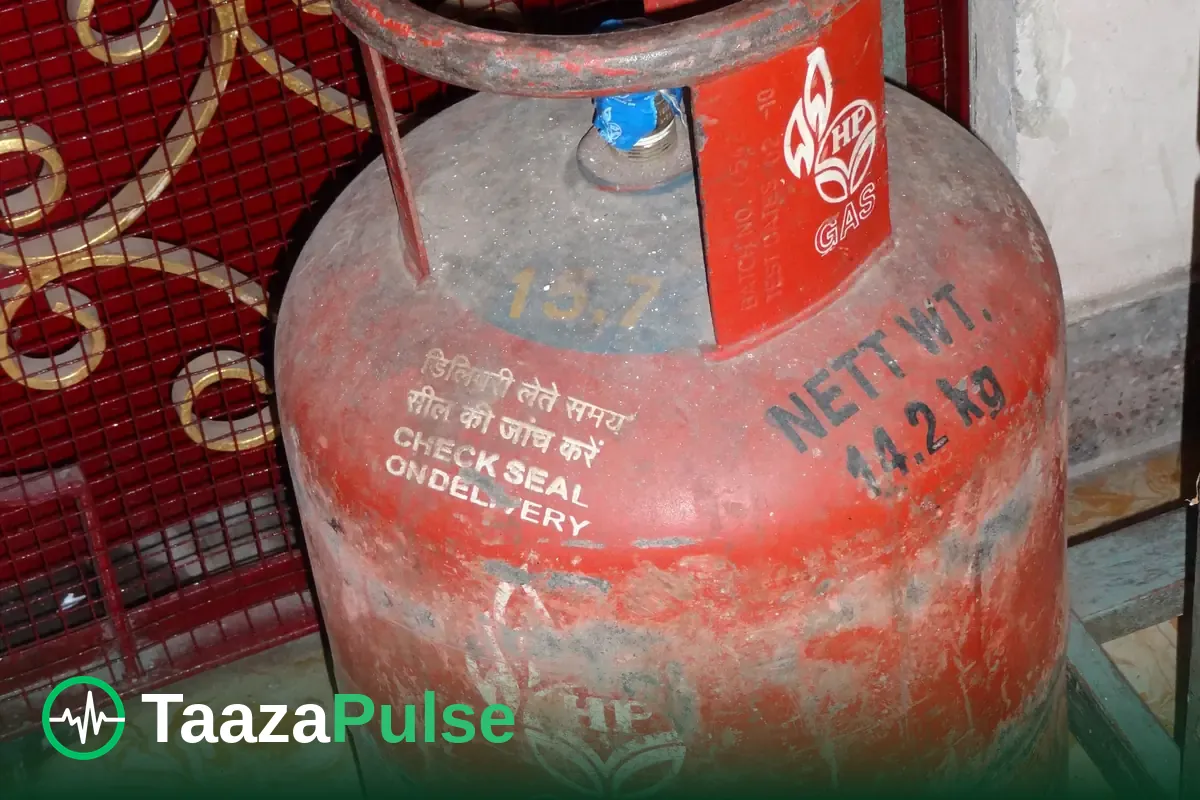
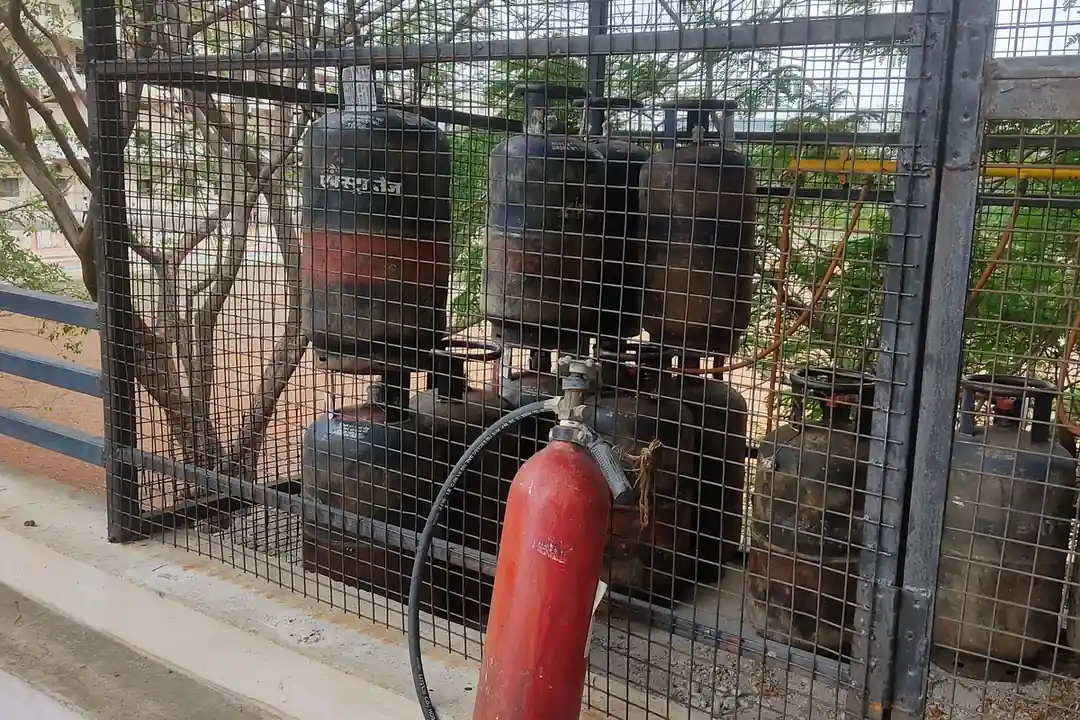
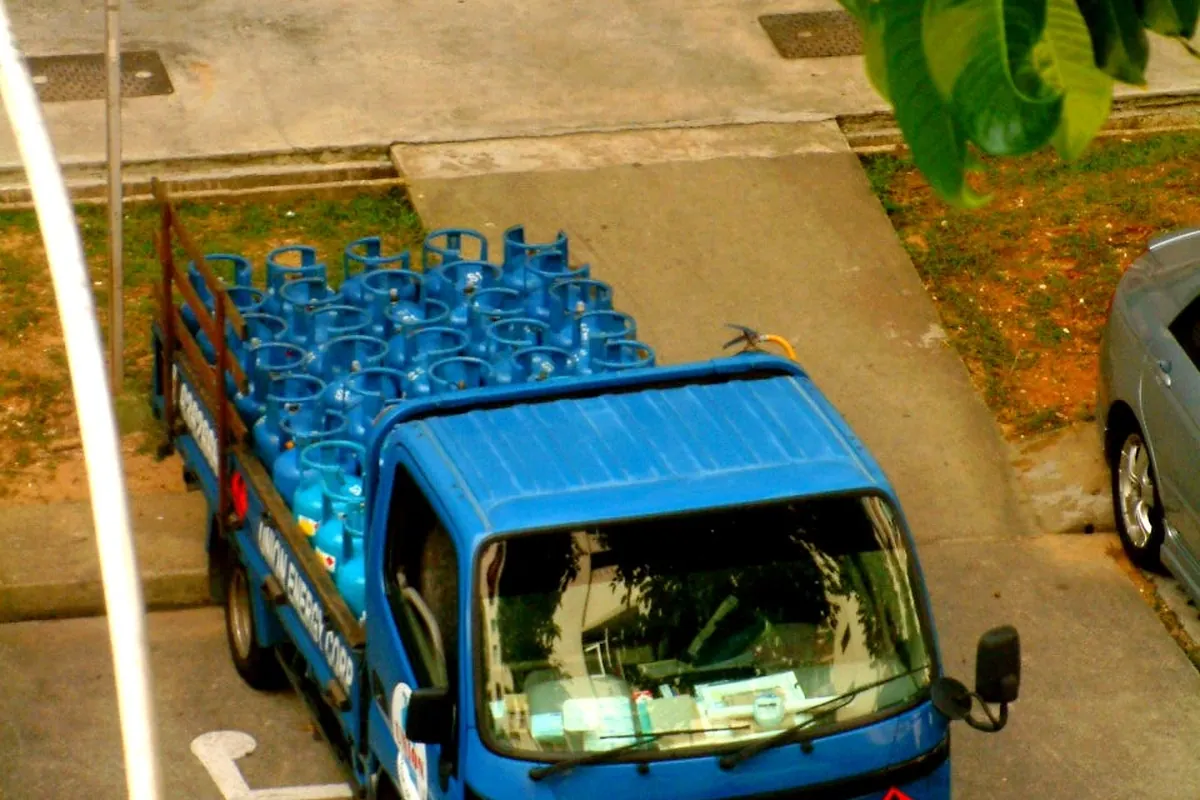
- Photos: real file photographs (Wikimedia Commons) — domestic LPG cylinder, cylinders in storage cage (orientation corrected), LPG delivery truck, gas stove burner; file photos, not Pakistan photographs
Frequently Asked Questions
What exactly changes on 1 November 2026?
The benchmark that caps what local LPG producers may charge changes. Until now the cap was linked to the Saudi Aramco Contract Price (SACP), the monthly contract price set by Saudi Arabia's state oil company. From 1 November, under the formula reported by The News on 28 October, the cap will be PSO's landed import cost — what Pakistan State Oil actually pays to bring an imported cargo into Pakistan, including purchase price, freight and associated charges. The petroleum minister verbally informed industry stakeholders of the change at a meeting on Tuesday; no written notification setting out the new formula had appeared in the coverage checked for this article.
Why do stakeholders say retail prices could rise by 20 to 25 percent?
Because only part of the market is affected, and the maths follows from the market shares. Local production accounts for about 35 percent of Pakistan's LPG market and imports the remaining 65 percent, according to the breakdown cited by The News. If local producer prices rise by up to 40 percent, as stakeholders estimate, and only that 35 percent share moves, the blended effect on the overall market is roughly a fifth to a quarter — hence the 20 to 25 percent retail estimate. It is an industry estimate, not a government announcement, and the actual November price will depend on the official notification and on what dealers charge.
What is the current official LPG price in Pakistan?
The Oil and Gas Regulatory Authority (OGRA) notified the maximum consumer price of LPG at Rs279.34 per kilogram, or Rs3,296.23 for the standard 11.8-kilogram domestic cylinder, with effect from 1 October 2026. That price is a ceiling under the LPG Policy 2016: producers, marketing companies and distributors may sell below it. It is the price against which the 20 to 25 percent estimate can be illustrated — 20 percent on Rs279.34 is about Rs335 per kilogram and 25 percent about Rs349, or roughly Rs3,956 to Rs4,120 for a cylinder — but those figures are arithmetic on the estimate, not announced prices.
Why are shops already charging far more than the official price?
Because the market price and the notified price have drifted far apart during a supply squeeze. The Express Tribune reported on 23 October that prices had reached Rs750 per kilogram in parts of Khyber Pakhtunkhwa, with cylinders over Rs10,000, while several markets charged Rs550 to Rs600 and Peshawar around Rs600. TechJuice reported on 21 October that consumers had paid more than Rs1.4 billion above the official rate in five days, with LPG at Rs600 to Rs625 per kilogram. The Tribune linked the shortage to the closure of the Taftan border crossing, and the Petroleum Division has told OGRA to act against alleged hoarding, saying import cargoes were not being lifted regularly from terminals even though import volumes matched demand.
What did the industry object to, and what did it propose instead?
Industry representatives at the minister's meeting questioned the legality of the proposal and its implications for consumers, argued that inflated import costs could make the market volatile, and pointed to past controversies over LPG imports by Sui Southern Gas Company, alleging previous managements had faced action over suspected over-invoicing. They argued the move would undermine competition — asking what happens if a private company can import cheaper than PSO — and called instead for complete deregulation, with prices set by negotiation between buyers and sellers and competition establishing market rates.
What is the promised relief policy, and what should households watch next?
The government told the National Assembly on 26 October that an LPG relief policy for low-income households would be finalised within days, after members reported LPG selling at Rs700 to Rs800 per kilogram in remote and northern areas against the official Rs280 rate. As of the coverage checked for this article, the policy text — its size, who qualifies, and how relief would be delivered — had not been published, so it should be treated as a promise awaiting detail. Households should watch three things: OGRA's November notification, which will show whether the new formula appears in the official price; the published relief policy text; and the price actually charged for a cylinder in their own market.