Pakistan, Saudi Arabia Agree to Strengthen Energy and Petroleum Cooperation
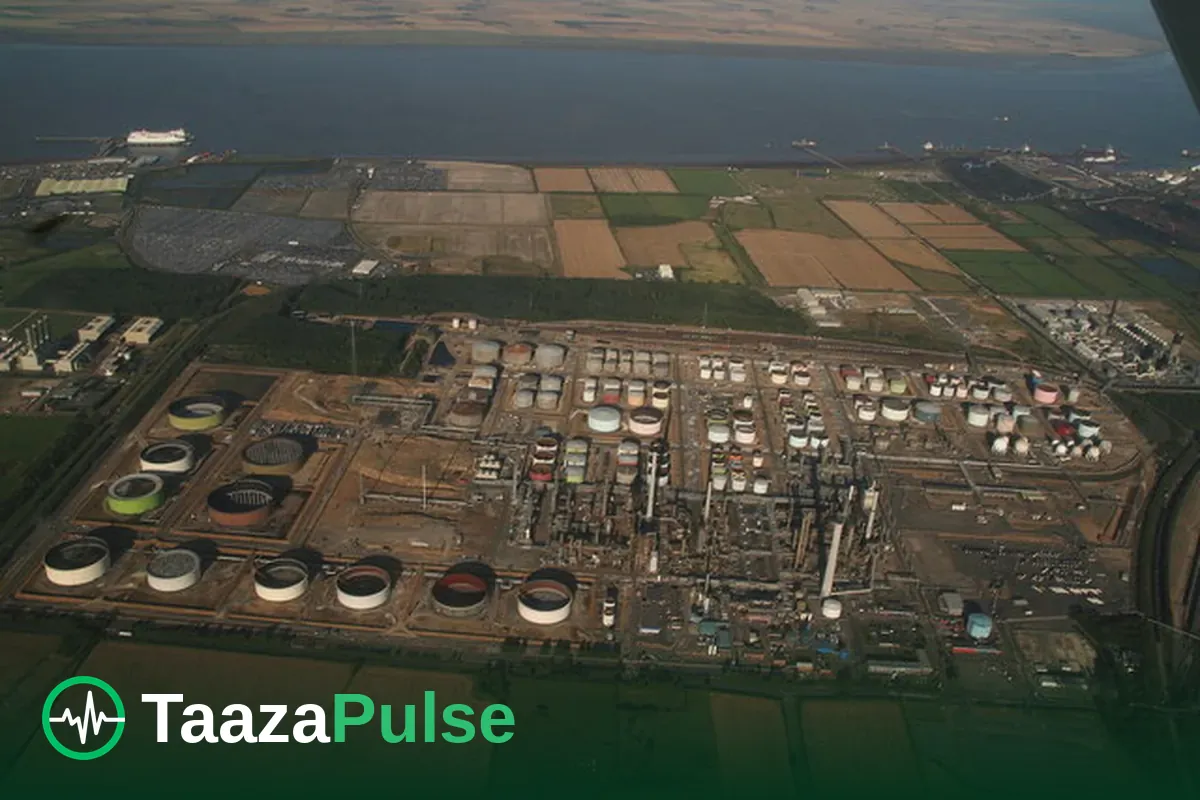
Pakistan and Saudi Arabia have agreed to strengthen cooperation in energy and petroleum, with Islamabad offering Saudi companies the chance to build commercial oil storage facilities in Pakistan under a newly approved tax-neutral bonded storage policy. The agreement came during a meeting in Islamabad on Friday, 30 October 2026, between Federal Minister for Petroleum Ali Pervaiz Malik and Saudi Arabia's new Ambassador to Pakistan, Dr Rajeh bin Tami Al-Baqami, according to an official statement reported by the Associated Press of Pakistan and carried by multiple Pakistani outlets the same day. The two sides discussed expanding bilateral cooperation across the minerals, petroleum and energy sectors, with strategic oil storage, refinery upgrades and liquefied petroleum gas (LPG) supplies at the top of the agenda. No investment figure, storage capacity, or signed contract was announced — and this article claims none. What was announced is a policy offer, a framework, and a direction of travel, and the difference between those things and a done deal matters for anyone trying to judge what Friday's meeting will actually change.
The centrepiece of the meeting is the tax-neutral bonded storage policy. Under it, Saudi companies would be able to establish commercial oil reserves in Pakistan without paying local taxes on the stored oil, on a model the Petroleum Division says is benchmarked against international energy hubs such as Fujairah and Singapore. The logic, as explained in the official statement, is straightforward: storage in Pakistan would give Saudi Arabia greater flexibility in managing supply routes and reaching regional markets, while diversifying the maritime transit risks linked to the Strait of Hormuz and the Bab al-Mandab strait — the two narrow chokepoints through which much of the world's seaborne oil must pass. For Pakistan, the attraction is equally clear: becoming a storage and transit point for Gulf crude would turn geography into revenue, create infrastructure, and deepen a strategic relationship that already spans defence, energy and the millions of Pakistanis working in the Kingdom.
Why storage in Pakistan, and why now
The timing is not accidental. Pakistan, as one report of the meeting noted, has no strategic petroleum reserves of its own, and has been exposed to supply shocks from the US-Iran war, which has choked supplies through the Strait of Hormuz. In July 2026, Prime Minister Shehbaz Sharif directed the authorities to increase the country's strategic petroleum reserves, and a cabinet committee approved amendments to the oil refining policy. Friday's offer sits in that sequence: first the direction to build reserves, then the policy change to the refining framework, and now a tax-neutral framework designed to attract a partner with the world's largest spare crude capacity to store oil on Pakistani soil. The offer is, in that sense, both a commercial proposition to Saudi Arabia and a piece of Pakistan's own energy-security planning — the same storage tanks, in principle, could serve both a Saudi commercial operation and Pakistan's resilience against the next supply disruption.
There is also a regional geography argument that runs through the official statement. Pakistan's coastline sits at the mouth of the Gulf's exit route: crude leaving the Gulf passes Pakistan on its way to Asia, and a storage hub on Pakistani soil would let cargoes be held, blended, re-routed or delivered onward without returning to the Gulf. The statement explicitly frames the policy as a way to diversify transit risk — if Hormuz or Bab al-Mandab is disrupted, oil already stored in Pakistan is oil that does not need to pass through the strait at the moment of crisis. That is the same logic that made Fujairah, on the UAE's Gulf of Oman coast outside Hormuz, into a major storage hub, and Singapore, at the Malacca Strait's eastern end, into Asia's largest oil-trading centre. Pakistan is pitching itself as the next link in that chain, and the tax-neutral bonded model is borrowed directly from those hubs' playbook: bonded storage means oil held in a customs-bonded facility is not treated as an import for tax purposes until it enters the domestic market, which is what makes large-scale transit storage commercially viable.
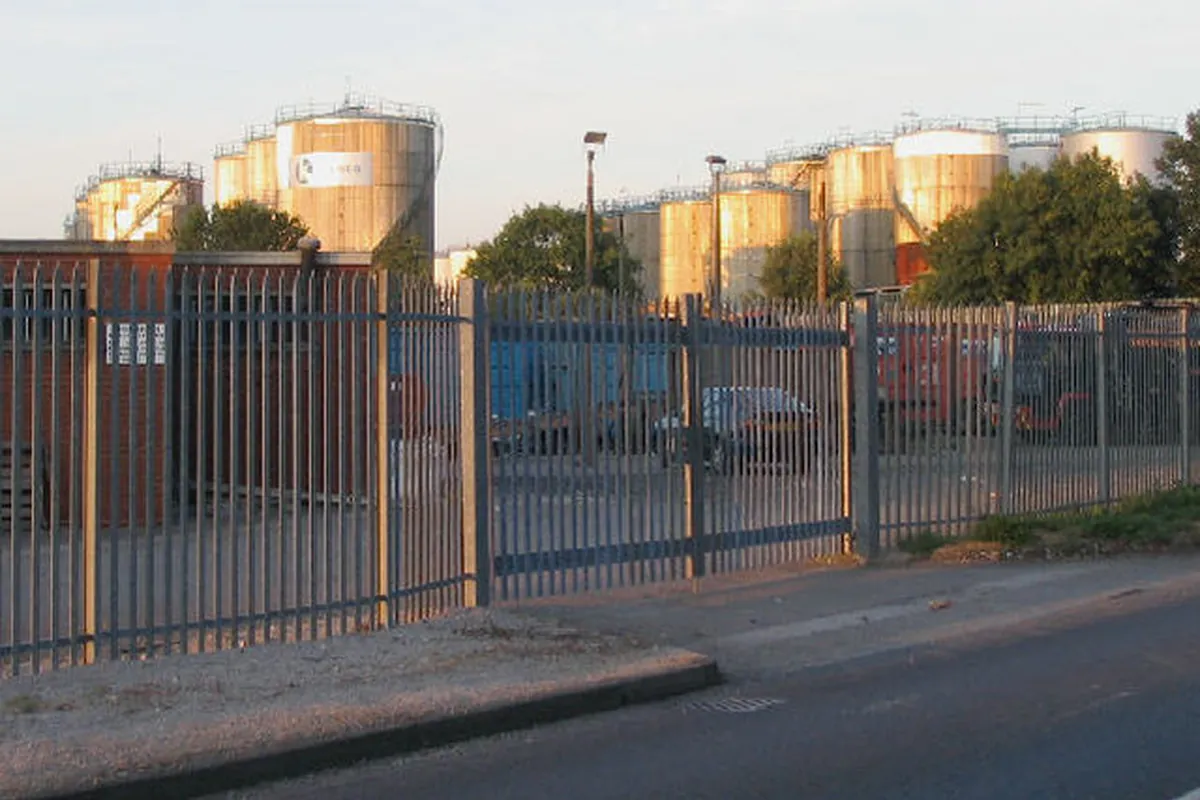
The Hub complex: a refinery and storage hub in Balochistan
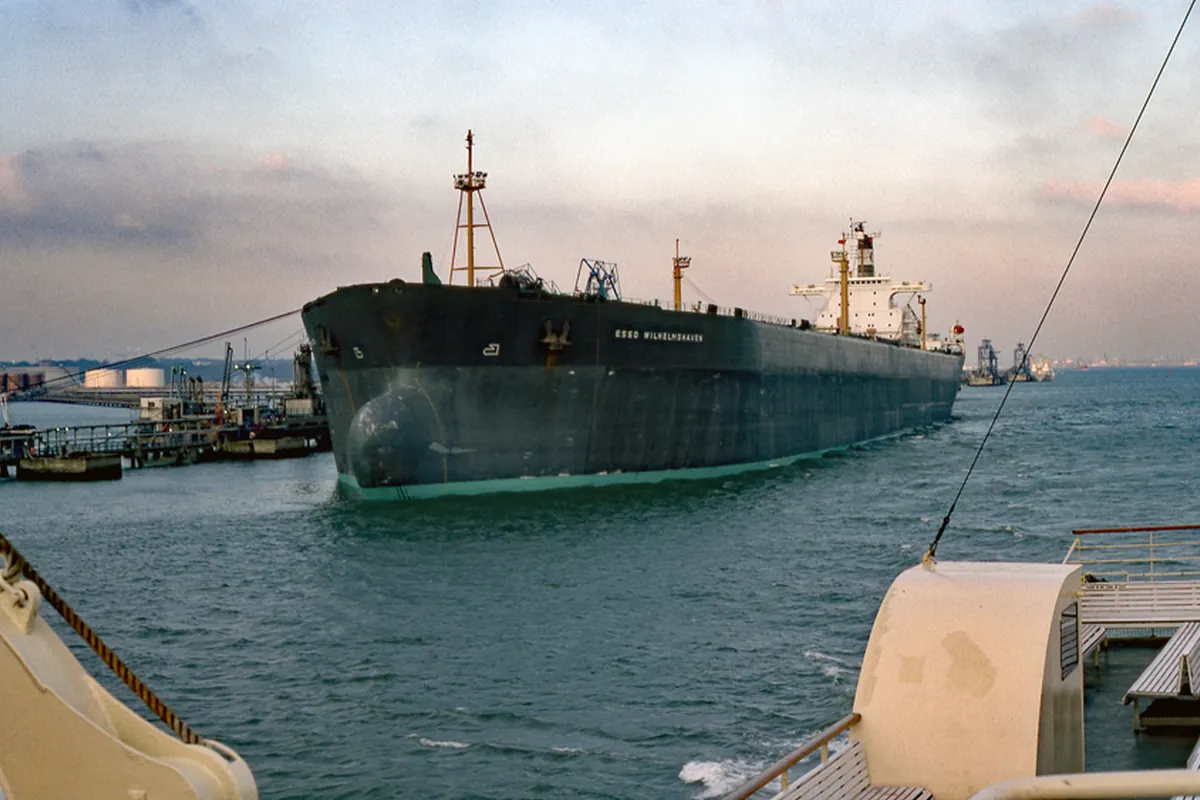
Beyond the policy itself, the minister outlined a concrete project: a major petroleum storage and refining complex at Hub in Balochistan, to be developed under the guidance of Technip Energies UK. The proposed facility, supported by the Prime Minister and the Chief of Defence Forces, would have the capacity to accommodate Very Large Crude Carriers — the largest class of oil tanker, carrying around two million barrels each — and is intended to strengthen Pakistan's potential as a regional energy corridor serving Central Asian and Chinese markets. Hub's location matters: it sits just west of Karachi, close to the existing refining and port infrastructure of Pakistan's commercial capital, and on the corridor that leads toward Gwadar and, beyond it, the China-Pakistan Economic Corridor routes into western China. A storage and refining complex there would, if built, put Pakistan on the map as a place where Gulf crude is not merely received for domestic use but processed and forwarded.
It is important to be precise about the status of the Hub complex. What Friday's reporting establishes is that the minister presented the plan to the Saudi ambassador and that the project is under the guidance of Technip Energies UK, with high-level political and military backing. It does not establish a construction start date, a cost, a capacity figure, or a Saudi commitment to invest in it. Those details were not in the official statement as reported, and this article does not supply them. The complex should be read, for now, as the flagship project around which the storage policy is being marketed — the physical asset that makes the tax-neutral framework tangible — rather than as a project already under construction. The same caution applies to the wider claim that Pakistan could become a regional energy corridor: it is a stated ambition, supported by geography and by the Hub plan, but it will be judged by whether storage tanks and refinery units are actually built, not by whether the ambition was stated.
Refinery upgrades and the Euro 5 transition
The second pillar of Friday's discussion is Pakistan's ongoing refinery upgradation programme, which the minister presented as a major investment opportunity for Saudi participation. The programme aims to modernise the country's domestic refining infrastructure, improve operational efficiency, and transition production towards Euro 5 fuel standards — the cleaner fuel specification that reduces sulphur and other pollutants in petrol and diesel. Pakistan's refineries are old, and the shift to Euro 5 has been a long-standing policy goal, repeatedly delayed by the question of who pays for the upgrades. Saudi investment, if it materialises, would address the financing question directly, and the official statement frames the programme as offering significant opportunities for Saudi investment and participation in Pakistan's refining sector.
The refinery angle also connects to the storage offer. A modernised refinery sector needs reliable crude supply, and a storage hub needs a refinery outlet for at least part of its throughput; the two projects reinforce each other. For Saudi Aramco, the world's largest oil exporter, a stake in upgraded Pakistani refining capacity would also be a downstream foothold in a large and growing market of more than 240 million people — the same logic that has driven Aramco's refinery investments across Asia. Again, though, Friday's meeting produced an invitation and a discussion, not a refinery deal. No refinery was named, no stake size was given, and no timeline was announced. Readers should treat any claim of a signed Saudi refinery investment as unconfirmed unless and until the Petroleum Division or Aramco says so itself.
Crude, LPG and the winter question
The third strand of the meeting is the most immediate for Pakistani households: crude oil and LPG supplies. The minister thanked the Saudi authorities at the Red Sea port of Yanbu for prioritising crude oil shipments to Pakistan during recent disruptions in global energy markets, and the two sides discussed coordination with Saudi Aramco to explore expanded procurement of crude oil cargoes and dedicated LPG shipments to support Pakistan's energy requirements, particularly in view of the anticipated increase in domestic gas demand during the winter season. Winter is when Pakistan's gas system is under the most strain: domestic gas demand rises sharply for heating, while the shortfall between demand and indigenous supply is met with imported LNG and LPG, and every winter brings the same cycle of low pressure, load management and public complaint. A dedicated LPG supply line from Saudi Arabia, if arranged, would be aimed squarely at that seasonal pinch.
Here too, the language of the reporting deserves care. The two sides "discussed" coordination with Aramco and "explored" the possibility of additional crude supplies and dedicated LPG shipments. That is the language of negotiation, not of a concluded supply agreement. The one concrete, already-delivered item in this strand is the thanks for Yanbu's prioritisation of shipments during recent disruptions — a recognition of help already received, and a reminder that the Saudi-Pakistan energy relationship is not starting from zero. Pakistan is already one of the Kingdom's crude customers, and the Kingdom's ports already matter to Pakistan's supply security. Friday's discussion is about expanding and formalising that relationship, with storage and refining as the long-term structure and crude and LPG volumes as the near-term content.
The wider relationship: defence, visas and the minerals forum
Friday's meeting also carried two items that sit outside energy but say something about the state of the relationship. The first is the defence and strategic partnership: the Saudi ambassador said the two countries' defence and energy cooperation framework was aimed at promoting regional peace, stability and economic development, and the statement notes that the strong defence and strategic partnership provides a foundation for broader cooperation. That framing is not incidental. Pakistan and Saudi Arabia signed a strategic mutual defence agreement in 2025, and the energy discussion is explicitly being built on that strategic foundation — energy cooperation as the economic content of a security relationship, rather than a standalone commercial negotiation.
The second is a people-to-people measure with immediate practical effect: the Saudi ambassador announced that the Saudi Embassy in Islamabad has introduced same-day processing of visa applications for Pakistani citizens, a step presented as facilitating travel and strengthening business, cultural and people-to-people exchanges. For the millions of Pakistanis who travel to the Kingdom for work, pilgrimage and business, same-day processing removes a real friction, and it is the one item from Friday's meeting that a reader can act on immediately — though the embassy's own instructions, not this article, are the authority on eligibility and procedure. Finally, the minister invited Saudi Arabia's Deputy Minister for Mining Affairs, Khalid Al-Mudaifer, to attend the Pakistan Minerals Investment Forum, scheduled to be held in Islamabad on 12-13 November 2026, tying the energy discussion to the minerals agenda that has been a second pillar of Pakistan's Gulf outreach.
What to watch next
Friday's meeting will be judged by what follows it, and the milestones are specific. The first is whether any Saudi company actually announces a storage investment under the tax-neutral bonded policy, and on what scale — a single terminal, a phased hub, or nothing yet. The second is movement on the Hub complex: a feasibility milestone, a financing announcement, or a construction date from Technip Energies UK or the Petroleum Division. The third is the refinery programme: whether a Saudi participant is named for a specific refinery upgrade, and on what terms. The fourth is the winter test: whether dedicated LPG shipments actually arrive as domestic gas demand rises in December and January, and whether crude cargoes from Aramco increase in volume. The fifth is the Pakistan Minerals Investment Forum on 12-13 November, where the Saudi mining delegation's attendance — or absence — will signal how seriously Riyadh is treating the wider economic agenda.
Until one of those milestones arrives, the honest summary of Friday is this: Pakistan has approved a tax-neutral bonded storage policy, offered it to Saudi Arabia as the framework for commercial oil storage on Pakistani soil, presented the Hub storage-and-refining complex and the refinery upgrade programme as investment opportunities, discussed expanded crude and dedicated LPG supplies for the winter, and received a same-day visa processing announcement in return. That is a substantial day's diplomacy, and it is also, deliberately, an opening rather than a conclusion. The storage tanks, the refinery units and the LPG cargoes will be the evidence; the meeting was the invitation. TaazaPulse will update this story when any of the milestones above is confirmed by the Petroleum Division, the Saudi Embassy, or Saudi Aramco itself.
What is confirmed in this article is limited to what the 30 October 2026 reporting establishes: the APP-based official statement of the Malik–Al-Baqami meeting, as carried by Tez Khabar, Bloom Pakistan, TechJuice, Abb Takk and The Standard on 30 October 2026. No investment figure, storage capacity, construction date, refinery stake, or supply volume is claimed, because none was announced. The July 2026 strategic-reserves direction and the Hub project's Technip Energies UK guidance are reported as stated in that same coverage. The visa announcement is attributed to the Saudi ambassador as reported.
Sources
This report is based on reporting, official statements and documents from:
- ARY News — Pakistan, Saudi Arabia agree to strengthen energy and petroleum cooperation (30 Oct 2026, queue 7a6f0fee2d174abb)
- APP via Tez Khabar — Pakistan, Saudi Arabia pledge to cement strategic cooperation in oil storage, refinery upgradation (30 Oct 2026)
- Bloom Pakistan — Pakistan Approves Tax-Free Oil Storage Policy to Secure Saudi Investment (30 Oct 2026)
- TechJuice — Pakistan Offers Saudi Firms Tax-Free Oil Storage, Plans Refining Hub (30 Oct 2026)
- Abb Takk — Saudi Arabia introduces same-day visa processing for Pakistani citizens (30 Oct 2026)
- The Standard — Pakistan, Saudi Arabia Agree to Strengthen Ties in Energy Security (30 Oct 2026)
- Photos: real file photographs (Wikimedia Commons) — aerial oil refinery, oil storage tanks, VLCC crude tanker, Riyadh skyline; file photos, not the meeting
Frequently Asked Questions
What exactly did Pakistan and Saudi Arabia agree on 30 October 2026?
Federal Minister for Petroleum Ali Pervaiz Malik met Saudi Arabia's new Ambassador to Pakistan, Dr Rajeh bin Tami Al-Baqami, in Islamabad on Friday, 30 October 2026, and the two sides agreed to strengthen cooperation in the minerals, petroleum and energy sectors. The concrete items were: Pakistan's newly approved tax-neutral bonded storage policy, under which Saudi companies can establish commercial oil reserves in Pakistan without local tax liabilities; the planned petroleum storage and refining complex at Hub, Balochistan; investment opportunities in Pakistan's refinery upgradation programme; and discussions on expanded crude supplies through Saudi Aramco and dedicated LPG shipments ahead of winter. No signed contract, investment figure or supply volume was announced.
What is the tax-neutral bonded storage policy?
It is a framework, approved by Pakistan, under which Saudi companies can store commercial oil reserves in Pakistan without paying local taxes on the stored oil. It is modelled on international energy hubs such as Fujairah and Singapore: oil held in a customs-bonded facility is not treated as an import for tax purposes until it enters the domestic market. The stated purpose is to give Saudi Arabia greater flexibility in managing supply routes and reaching regional markets, and to diversify maritime transit risks linked to the Strait of Hormuz and the Bab al-Mandab strait.
What is the Hub complex in Balochistan?
A major petroleum storage and refining complex planned at Hub in Balochistan, to be developed under the guidance of Technip Energies UK. The proposed facility, supported by the Prime Minister and the Chief of Defence Forces, would accommodate Very Large Crude Carriers and is intended to strengthen Pakistan's potential as a regional energy corridor serving Central Asian and Chinese markets. No construction date, cost or capacity figure has been announced, and no Saudi investment in it has been confirmed — it is, for now, the flagship project around which the storage policy is being presented.
Will this change petrol, diesel or LPG prices in Pakistan?
Not directly, and not on the basis of Friday's meeting. The meeting discussed crude and LPG supplies, including dedicated LPG shipments ahead of higher winter gas demand, but it announced no supply agreement, no volume and no price. Petrol and diesel prices in Pakistan are revised daily under the current mechanism, and LPG prices follow their own benchmark — from 1 November 2026, PSO's landed import cost replaces the Saudi Aramco Contract Price for local producers. Friday's discussion could affect future supply security, but it sets no pump price.
What does the refinery upgrade programme involve?
Pakistan's ongoing refinery upgradation programme aims to modernise domestic refining infrastructure, improve operational efficiency and shift production towards Euro 5 fuel standards, which reduce sulphur and other pollutants in petrol and diesel. The minister presented it as a significant investment opportunity for Saudi participation. No refinery was named, no stake size was given and no timeline was announced, so any claim of a signed Saudi refinery deal is unconfirmed.
What else came out of the meeting?
Two non-energy items. The Saudi ambassador announced same-day processing of visa applications for Pakistani citizens at the Saudi Embassy in Islamabad, to facilitate travel and business, cultural and people-to-people exchanges. And the minister invited Saudi Deputy Minister for Mining Affairs Khalid Al-Mudaifer to the Pakistan Minerals Investment Forum in Islamabad on 12-13 November 2026. The ambassador also said the two countries' defence and energy cooperation framework aims to promote regional peace, stability and economic development.