Oil Set for Fourth Monthly Gain After Hormuz Tanker Attack

Oil prices rose on Friday, 30 October 2026, and were set for a fourth consecutive monthly gain, after an attack on a tanker in the Strait of Hormuz highlighted the continuing supply risks from the war involving the United States, Israel and Iran, which Reuters notes has entered its eighth month. Brent crude futures for December, which expire on Friday, advanced $1.20, or 1.04 percent, to $116.08 a barrel in early trading, and later stood at $117.15, up $2.27 or 1.98 percent. The more active January contract gained to $112.99. United States West Texas Intermediate crude climbed to $103.79, up $1.79 or 1.75 percent. For the month, Brent was on course to finish about 13 percent higher, and WTI about 15 percent higher, in the later Reuters update, after earlier readings put the monthly gains at nearly 11 percent and 14 percent respectively.
The immediate trigger on Friday was a new incident in the world's most important oil chokepoint. The United Kingdom Maritime Trade Operations office, UKMTO, said a tanker in the Strait of Hormuz was hit by explosive devices attached by a small boat. It was not immediately clear who was behind the attack, Reuters reported, and the tanker was not named in the reporting available at publication. That restraint is important: the strait has seen several reported incidents in recent days, and Friday's attack should not automatically be merged with Thursday's separate reports, which involved different claims, different vessels and different sourcing. TaazaPulse covered Thursday's Hormuz reports separately, including the Iranian Revolutionary Guard Corps Navy's claim, carried by Tasnim, that three tankers had struck naval mines, and the United States Central Command's rejection of the mine claims. Friday's UKMTO report of explosive devices attached by a small boat is a distinct incident with its own, still incomplete, factual record.
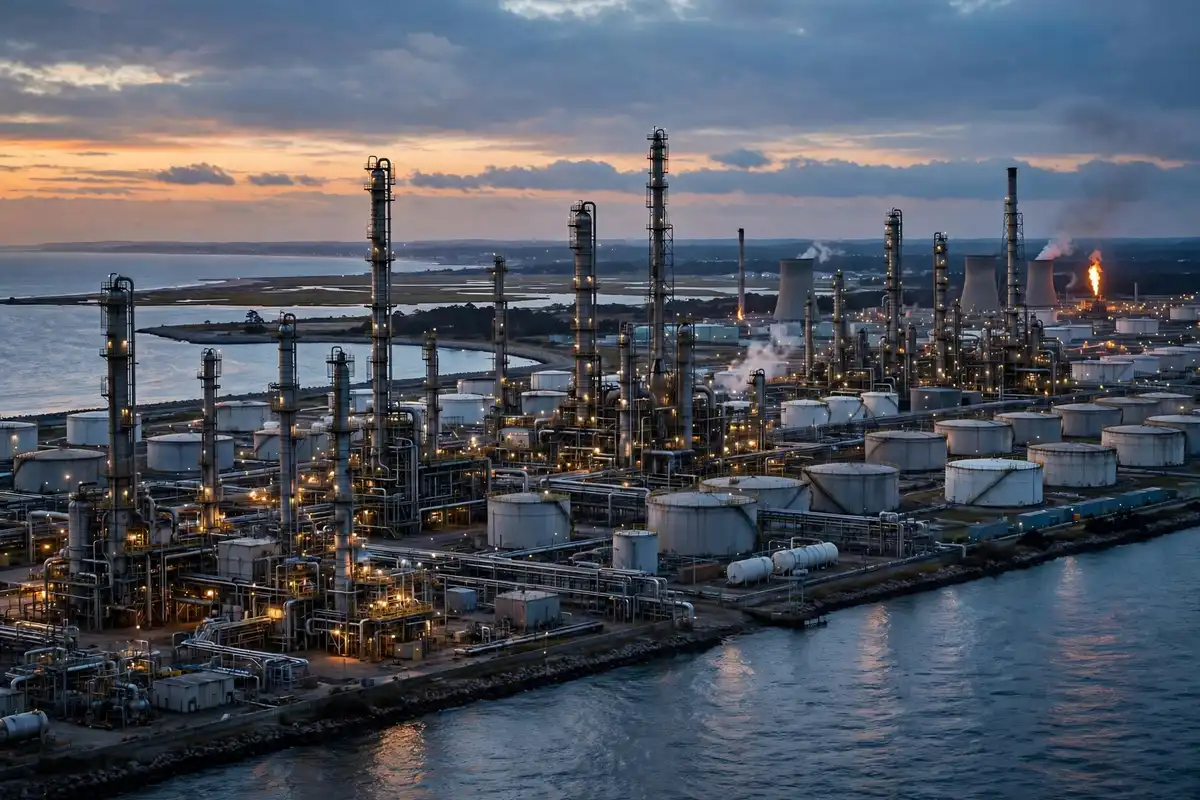
The Strait of Hormuz matters because of its sheer scale. Roughly a fifth of the world's petroleum liquids transit the narrow waterway between Iran and Oman, and there is no practical alternative route for most Gulf crude. When a tanker is attacked there, or even reported attacked, traders do not wait for a confirmed attribution before repricing risk. They price in the possibility that the next tanker, or the next week's shipments, could be disrupted, that insurance costs could rise, and that shipping companies could reroute or pause transits. That risk premium is visible in Friday's prices: oil rose even though no major supply facility was reported shut and no production figure was revised down. The market was buying insurance against escalation, not reacting to a barrel already lost.
Friday's attack did not happen in isolation. On Thursday, Yemen's Houthi movement said it had attacked several sites in Saudi Arabia, including its largest oil refinery at Ras Tanura, the Rabigh refinery and a production facility at Abqaiq owned by the state company Saudi Aramco, while a Saudi-led coalition said it had intercepted a cruise missile launched by the Houthis towards the kingdom's western region. Those claims, like the Hormuz reports, carry their own verification problems: Houthi claims of strikes on Saudi energy infrastructure have in the past been overstated or denied, and Saudi statements have sometimes confirmed interceptions without confirming damage. What is not in doubt is the direction of travel. The region's energy infrastructure is being targeted, threatened or caught in the crossfire with increasing frequency, and each incident, confirmed or claimed, adds to the premium traders demand for holding oil through the weekend.
Analysts quoted by Reuters framed Friday's move in those terms. Saul Kavonic, head of energy research at MST Marquee, said continued kinetic action around the Strait of Hormuz, amid doubts about a viable diplomatic pathway, was keeping oil prices elevated in expectation of an escalation in coming weeks. That is a careful formulation, and it is worth unpacking. Kavonic is not saying that a wider war is certain, or that supplies have already been cut. He is saying that the market's expectation has shifted: with attacks continuing and diplomacy uncertain, traders are willing to pay more today for oil delivered later, because they judge the risk of disruption to be higher than it was a month ago. The monthly gain itself tells the same story. Four consecutive monthly gains do not happen because of a single day's news; they happen when the market's baseline assumption about risk has moved and stayed moved.
Ole Hansen, head of commodity strategy at Saxo Bank, speaking at a media briefing in Singapore on Thursday, pointed to two political dates that could add further volatility in the next couple of weeks: Israel's parliamentary election and the United States midterm congressional vote. Hansen said the heightened uncertainty made it difficult to forecast prices, but he expected crude to trade in a higher range of $70 to $90 a barrel, compared with a pre-war level of $60 to $70, even after the conflict ends, because of the risk of renewed hostilities and the need to replenish inventories. That forecast is a useful anchor for readers trying to make sense of Friday's numbers. A Brent price near $117 is well above even Hansen's higher post-war range, which suggests the market is currently pricing in a substantial war and disruption premium on top of the longer-term shift he describes. If the conflict de-escalates, that premium could unwind quickly. If it escalates, the premium could grow further. The range itself is not a prediction of where prices will settle on any given day; it is a statement about where the market's centre of gravity may have moved.
Diplomacy, meanwhile, is proceeding in parallel with the attacks, though without any announced breakthrough. United States President Donald Trump said on Thursday that Vice President JD Vance had reached out to Iran to help the country obtain medical supplies, after United States media reported that Vance had written to Tehran's top security official in an effort to revive peace talks. Qatari mediators returned to Tehran on Friday as part of coordinated efforts to reach a deal between the United States and Iran, according to an official briefed on the talks who spoke to Reuters. Neither development, on its own, amounts to a ceasefire or a nuclear agreement, and neither has been presented as such. But the fact that mediation is active, and that a humanitarian channel is being discussed, is part of why the market has not priced in a full closure of the strait. Traders are balancing two risks at once: the risk that diplomacy fails and the conflict widens, and the risk that diplomacy succeeds and the premium unwinds.
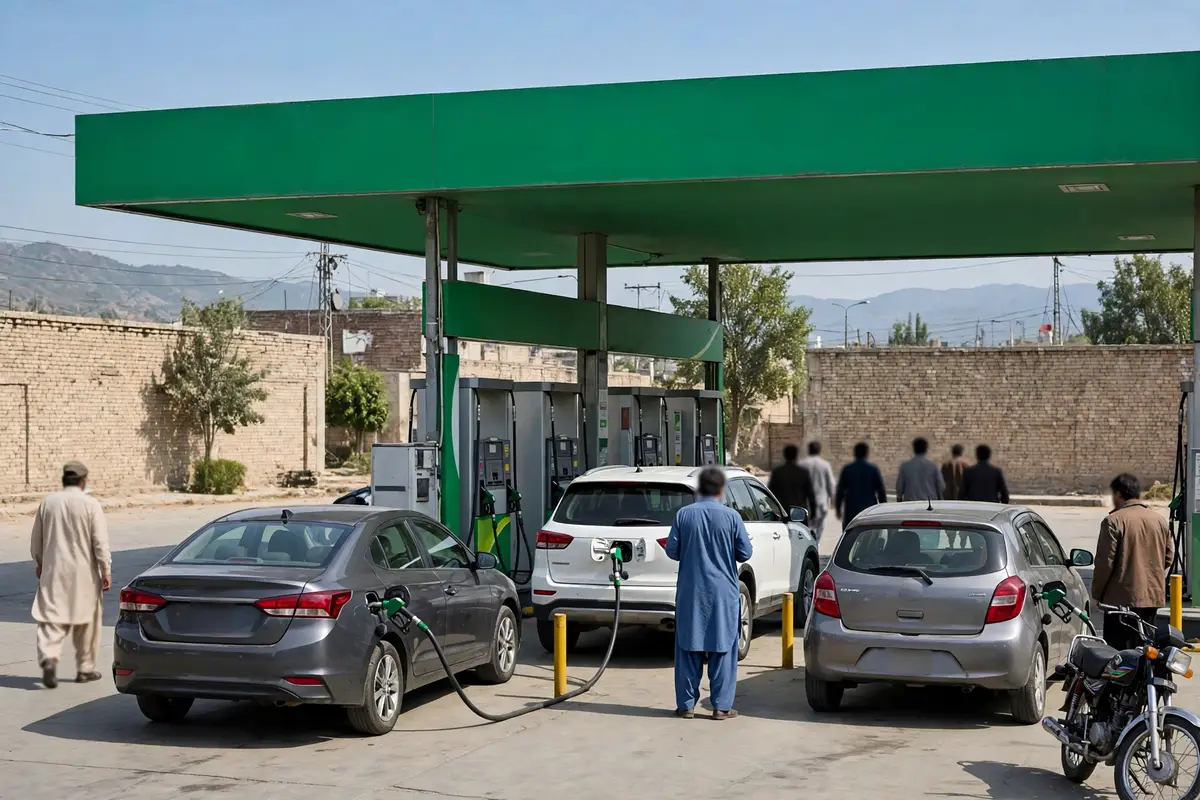
For Pakistan, the oil market's direction reaches households through a mechanism that is now familiar: the daily fuel-price revision. Pakistan moved to a daily revision system in October 2026, and the prices that matter at the pump are set from international benchmarks, the exchange rate, taxes and levies, not directly from any single day's Brent close. The daily revision for Friday, 30 October, published before Friday's late trading, left petrol unchanged at Rs377.91 per litre and raised high-speed diesel by Re0.85 to Rs400.67, the third straight daily diesel rise. No new Pakistani fuel price has been announced in response to Friday's oil move, and this article claims none. Readers should therefore not read Friday's Brent price as tomorrow's pump price. What Friday's move does is raise the pressure on the next revisions: if Brent stays near $117, the import cost component of the daily calculation rises, and the government and regulator will face the same choice they have faced all month between passing costs through, absorbing them through levies, or finding a middle path. The levy position already shows the tension, with an Rs80 petroleum levy plus an Rs5 climate levy in the current price build-up, and political demands, including a Jamaat-e-Islami demand for levy abolition, running against the fiscal arithmetic.
The distinction between the world price and the pump price is also why the monthly gain matters more than any single day's jump. A one-day rise of two percent is noise in a war market; a monthly rise of thirteen percent, compounding a fourth straight monthly gain, is a sustained increase in the cost of every barrel Pakistan imports. Pakistan imports most of its crude and refined products, and its import bill, its trade deficit and its inflation outlook are all sensitive to sustained oil prices in a way that a single spike is not. The same logic applies to freight, to food transport costs and to the diesel that powers agriculture, trucking and industry. A sustained Brent price above $110, if it holds, will show up first in the daily fuel revisions, then in transport fares and freight charges, and then, with a lag, in the prices of goods that travel by road. None of that is automatic or immediate, and the daily revision system means the pass-through is visible day by day rather than in a single monthly shock. But the direction is clear, and it is upward while the war premium persists.
There is also a wider energy story that Friday's prices only partly capture. The Houthi claims against Ras Tanura, Rabigh and Abqaiq, if any part of them is confirmed, would matter not because a single refinery's output was lost for a day, but because they would show that the conflict's geography has widened from the Gulf waterway to the Saudi energy heartland on the other side of the peninsula. Saudi Aramco's facilities are among the world's most important oil-processing assets, and Abqaiq in particular has been attacked before, in 2019, with a sharp but temporary effect on global supply. The market's memory of that episode is part of why claims of attacks on Saudi facilities move prices even before damage is confirmed. Traders remember that a facility can be repaired, but that the days of lost output, and the insurance and security costs that follow, are real.
What should readers watch for next? First, any UKMTO update on Friday's tanker: its name, its flag, the extent of damage, and whether any crew were injured. Those details, when they arrive, will determine whether Friday's incident was a limited harassment attack or something more serious. Second, any Saudi or Aramco statement on the Houthi claims, confirming or denying damage at Ras Tanura, Rabigh or Abqaiq. Third, the next Brent and WTI closes, and whether the December contract's expiry on Friday produces any additional volatility as positions roll into January. Fourth, any statement from the Qatari mediation or from Washington or Tehran on the talks that Vance's outreach is said to have revived. And fifth, for Pakistani readers, the next daily fuel revision, which will be the first concrete test of whether Friday's world prices are feeding into domestic pump prices.

Until those pieces arrive, the responsible summary is a narrow one, and this article has kept to it. On Friday, 30 October, oil rose toward a fourth monthly gain, with Brent near $117 and WTI near $104, after UKMTO reported a tanker hit by explosive devices attached by a small boat in the Strait of Hormuz, with the attacker not immediately identified. The rise extends a month of gains driven by the war's supply risks, by attacks and claims against Gulf and Saudi energy targets, and by a market that, in the analysts' words, is pricing in a higher likelihood of escalation while diplomacy continues in parallel. No new Pakistani fuel price follows automatically from Friday's trading, and none is claimed here. TaazaPulse will update this story when UKMTO, Saudi Aramco or the mediators release further confirmed information, and when the next daily fuel revision is published.
Prices in this article are Reuters market reporting for 30 October 2026, quoted at the times stated in that reporting; early and later readings differ because trading continued through the day. The Friday tanker incident is reported from UKMTO via Reuters; the attacker has not been identified in that reporting. Earlier Hormuz reports are covered in TaazaPulse's separate 29 October article and are not merged with Friday's incident here.
Sources
This report is based on reporting, official statements and documents from:
- The Express Tribune — Oil set for fourth monthly gain as Hormuz tanker attack highlights supply risks (30 Oct 2026, via sentinel queue)
- Reuters — Oil set for fourth monthly gain as Hormuz tanker attack highlights supply risks (30 Oct 2026; UKMTO, MST Marquee, Saxo Bank)
- TaazaPulse — Daily fuel revision for Fri 30 Oct 2026 (petrol Rs377.91, diesel Rs400.67) — prior published article, for Pakistan pump-price context only
- Photos: editorial illustrations for this story (tanker, refinery, petrol station, trading screen) — not photographs of the attacked tanker
Frequently Asked Questions
What happened to oil prices on 30 October 2026?
Oil rose on Friday and was set for a fourth consecutive monthly gain. Brent December futures, expiring Friday, reached $117.15 a barrel in later trading, up $2.27, after an early reading of $116.08. WTI reached $103.79. For the month, Brent was on course for about a 13 percent gain and WTI about 15 percent, in Reuters' later update.
What triggered Friday's rise?
UKMTO reported that a tanker in the Strait of Hormuz was hit by explosive devices attached by a small boat. It was not immediately clear who was behind the attack, and the tanker was not named in the reporting. Traders repriced supply risk: the strait carries roughly a fifth of world petroleum transit, and there is no practical alternative route for most Gulf crude.
Is this the same as Thursday's Hormuz tanker reports?
No. Thursday's reports, covered separately by TaazaPulse, involved a vessel on fire near Khasab, an Iranian Revolutionary Guard Corps Navy claim via Tasnim that three tankers had struck naval mines, and a United States Central Command rejection of the mine claims. Friday's UKMTO report of explosive devices attached by a small boat is a distinct incident, and the two should not be merged.
What did analysts say about the outlook?
Saul Kavonic of MST Marquee said continued kinetic action around Hormuz, amid doubts about a viable diplomatic pathway, was keeping prices elevated in expectation of escalation in coming weeks. Ole Hansen of Saxo Bank pointed to volatility around Israel's parliamentary election and the United States midterms, and expected crude in a higher $70 to $90 range versus a pre-war $60 to $70, even after the conflict ends, on renewed-hostilities risk and inventory rebuilding.
Is diplomacy happening at the same time?
Yes, in parallel. President Donald Trump said on Thursday that Vice President JD Vance had reached out to Iran over medical supplies, after United States media reported Vance had written to Tehran's top security official to revive peace talks. Qatari mediators returned to Tehran on Friday as part of coordinated efforts toward a deal, according to an official briefed on the talks. Neither development has been presented as a ceasefire or agreement.
Does Friday's Brent price change Pakistan's petrol price tomorrow?
Not automatically. Pakistan's pump prices come from the daily revision system, which uses international benchmarks, the exchange rate, taxes and levies. The 30 October revision, published before Friday's late trading, left petrol at Rs377.91 per litre and raised diesel by Re0.85 to Rs400.67. No new Pakistani price has been announced from Friday's trading, and this article claims none; the next daily revision will be the first concrete test.