Rawalpindi Families Return to Firewood as LPG Prices Soar and Piped Gas Runs Six Hours a Day

In Rawalpindi, the evening meal is increasingly cooked the way it was a generation ago: over wood. Low- and middle-income households in the city have begun switching back to firewood, coal and kerosene for cooking, because the two modern fuels they relied on have both failed them at once. Piped gas now reaches homes for only about six hours a day, and the liquefied petroleum gas cylinders that were supposed to fill the gap have become so expensive that refilling one can cost more than many families can spare in a week. The shift was reported on 1 November by The Express Tribune, whose account of Rawalpindi's kitchens has since been carried by the IANS wire and republished internationally — and it arrives just as winter, the season when gas demand always peaks, is about to begin.
This is not a story about a single price rise. It is a story about a chain of failures that has pushed a city backwards, one fuel at a time. First the piped supply was rationed to a few hours a day. Then the cylinder that replaced it priced itself out of reach. Then the substitute for the substitute — firewood, coal and sawdust — started rising in price too, because tens of thousands of households arrived at the same market at the same time. And behind all of it sits a national gas shortage that has now also frozen new gas connections indefinitely, shut commercial supply to tandoors and hotels in the reporting, and set up a nationwide LPG marketers' strike for 16 November. Rawalpindi's kitchens are where that national crisis is most visible, because cooking cannot wait for a policy committee.
It is worth being precise about what this article is — and what it is not. It is not a report of a new government announcement made on 1 November. No ministry announced the firewood switch; households made it, and reporters documented it. The figures below come from the 1 November Tribune-based reporting, from Dawn's earlier twin-cities reporting on 26 October, from the regulator's own November price notification, and from the LPG marketers' strike reporting that TaazaPulse published earlier today. Where the reporting gives a range rather than a single number, this article keeps the range. Where it is silent — how many households have switched, whether the government has a winter fuel plan — that silence is stated, not filled in.
Six hours of gas, in three windows
The starting point is the piped supply. According to the Tribune-based reporting carried on 1 November, Sui gas now reaches Rawalpindi households in three two-hour windows a day — six hours in total — with load management running to 18 to 20 hours a day. Dawn's reporting from 26 October described the same pattern in the twin cities of Rawalpindi and Islamabad: gas in three narrow windows, 7am to 9am, noon to 2pm, and 6pm to 9pm, with residents telling the newspaper that uninterrupted outages from 9pm until dawn had become routine. One resident quoted by Dawn, Mohammad Sajjad, described the three windows; another, Abdul Rasheed, said the shortage had persisted for over a month and that complaints to the relevant department had brought no response.
Six hours sounds like a ration. In practice it is a timetable that does not match how families cook. The evening meal, the main cooked meal of the day for most households, falls exactly in the gap: the 6pm to 9pm window ends before the night's cooking is done for many families, and the overnight outage then runs until morning. The reporting describes the adaptation that followed: a two-fuel household. Cylinders are used for daytime cooking, when gas is also partly available, and firewood takes the evening meal, because that is when the piped supply is gone and the cylinder is too expensive to burn all day. Nobody in the reporting describes this as a choice made freely. It is described as what is left when the alternatives are withdrawn or priced out.
The pattern matters beyond Rawalpindi because it is not new to the twin cities. Dawn's 26 October report already described Islamabad and Rawalpindi residents abandoning conventional cooking fuels for wood and coal, with LPG then selling at around Rs600 per kilogram against the regulator's October ceiling of Rs279 per kilogram. What is new in the 1 November reporting is the detail on what the switch now costs — and the fact that it is spreading from the poorest households to salaried, urban families who had left solid fuel behind years ago. The Pakistan Daily's version of the story makes the same point explicitly: rural areas have used wood for decades, so what is new here is the return of an urban, salaried population to a fuel they had left behind.
What firewood costs now — and what the cylinder costs
Firewood was supposed to be the cheap escape. It is getting less cheap by the week, because demand has arrived suddenly and supply has not kept up. The 1 November reporting puts dry firewood at Rs1,500 to Rs1,800 a maund on the open market, ordinary firewood at Rs1,300 to Rs1,400, coal at Rs800 to Rs1,000 a maund, low-smoke coal at Rs1,000, and sawdust at Rs700. A maund is the traditional 40-kilogram unit still used in these markets, so a household buying dry firewood by the maund is paying roughly Rs37 to Rs45 a kilogram before it has lit a single fire — and then paying again in time, smoke and effort. Earlier October reporting put firewood at Rs1,400 to Rs1,600 a maund before the latest Rs200 to Rs300 rise, which gives a sense of the direction: the substitute fuel is inflating as fast as people adopt it.
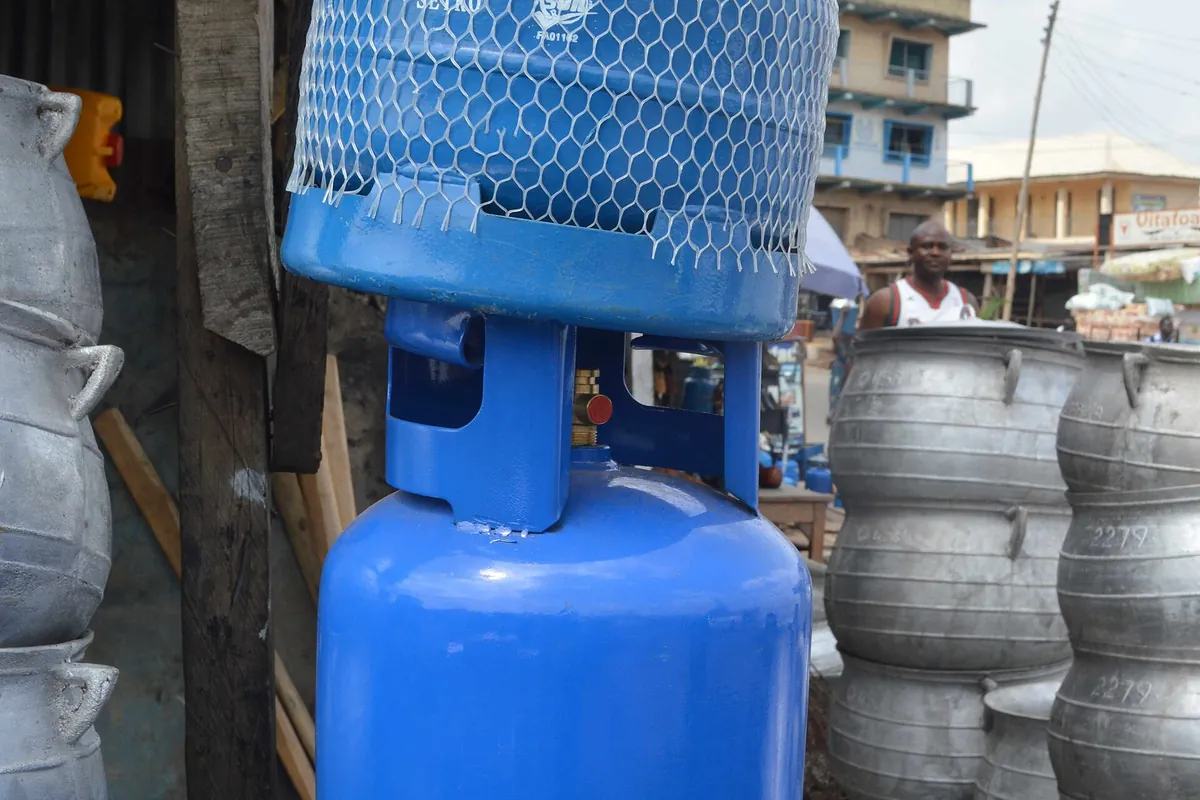
Set those figures against the cylinder they are replacing, and the squeeze becomes clear. A domestic cylinder refill has risen from Rs3,000 to Rs5,000, according to the 1 November reporting, while a commercial refill has risen to between Rs14,000 and Rs25,000. A new domestic cylinder now costs Rs13,500, against Rs10,000 before, with used cylinders at Rs8,000 to Rs10,000. The reporting also cites government employees spending Rs10,000 to Rs12,000 a month on LPG alone — a figure that, for a salaried household, turns cooking fuel from a utility bill into a budget item that competes with food itself. None of this is the official price. It is the market price, and the gap between the two is the heart of the crisis.
The official price, set by the Oil and Gas Regulatory Authority (OGRA), is far lower — and that is precisely the problem. For November, OGRA notified LPG at Rs294.07 per kilogram, up Rs14.73 (5.27 percent) from October's Rs279.34, with the standard 11.8-kilogram domestic cylinder at Rs3,470.09, up from Rs3,296.23, and the 45.4-kilogram commercial cylinder at Rs13,351, up Rs669. The notification, effective 1 November, cites a 6.47 percent rise in the Saudi Aramco contract price as the driver. But the notified price is not the price households pay. In the open market, LPG has been reported at up to Rs630 per kilogram — more than double the official rate — with company franchises charging up to Rs400 per kilogram. A cylinder that officially costs Rs3,470 is therefore refilled in practice for around Rs5,000, and in some neighbourhoods for far more. When the official price and the market price diverge by hundreds of rupees, the notification stops describing reality, and households stop planning around it.
That divergence is not a Rawalpindi quirk. October reporting described the same pattern across the country: LPG at Rs600 per kilogram in the twin cities, Rs500 to Rs550 in Karachi, Rs450 to Rs500 in Peshawar, and up to Rs750 per kilogram in northern areas. The November notification lifts the official rate by Rs14.73, but it does not close a gap measured in hundreds. This is why the firewood story and the LPG price story are the same story. Households did not abandon gas because they prefer wood. They abandoned it because the cylinder that was meant to replace piped gas now costs, per refill, roughly what the firewood for several weeks costs — and because the piped gas that was meant to be the cheap option is only there for six hours a day.
Why the gas ran short: imports, borders and a war
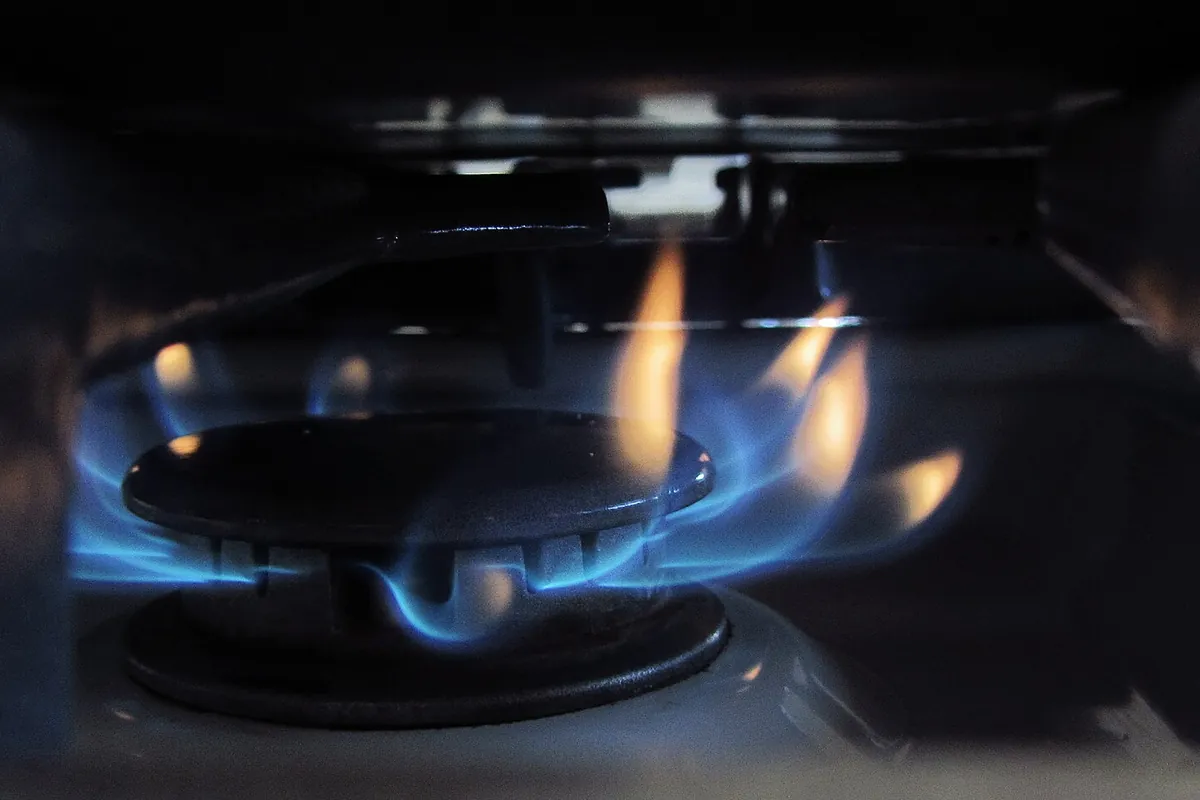
The shortage has a supply chain behind it, and the reporting traces it in unusual detail. Pakistan's LPG comes from two sources: domestic production and imports, and the import leg has been hit from two directions. Distributors say at least 70 percent of Pakistan's LPG imports came from Iran, with about 30 percent produced locally, according to the LPG Distributors Association's Irfan Khokhar, quoted in the strike reporting. When the crossings with Iran at Gabd-Rimdan and Taftan closed — Reuters reported on 23 October that the closures had halted LPG imports and left tankers stranded — the largest import route shut. Traders put the Iranian flow at roughly 7,000 metric tonnes a day. Pakistan's total LPG consumption is around 1.3 million tonnes a year, of which only about 225,000 tonnes come from Gulf imports, mostly through the private sector. When the land route closed, Gulf imports could not scale up fast enough to fill the hole, and the market did what markets do when supply falls: it rationed by price.
The second direction is the imported natural gas that feeds the piped network. Sui Northern Gas Pipelines (SNGPL) attributes the disruption to interrupted supplies of regasified liquefied natural gas (RLNG), which the utility links to the US-Iran conflict, according to reporting on 1 November. That disruption is now cited as the reason for the most consequential administrative decision in the crisis: the indefinite extension of the ban on new gas connections. Bloom Pakistan reported on 1 November that SNGPL has extended the ban on new domestic gas connections indefinitely, and that the suspension has also been extended to commercial connections, including tandoors, hotels and other businesses, since the beginning of this month. Sui officials told the outlet that the Ministry of Petroleum imposed the suspension and that restoring new connections would be possible only after the Iran-US conflict ends. The Pakistan Daily's companion report, citing ARY News, adds that thousands of consumers who paid urgent processing fees are still waiting, that commercial supply to tandoors and hotels has been halted, and that no refund mechanism has been announced.
The tandoor detail is the one that turns a household story into a food-price story. The tandoor is where a large share of urban Pakistan buys its bread. A tandoor without gas either closes, switches to wood and raises its prices, or both. The 1 November reporting already links the fuel switch to food prices in Faisalabad, where residents complain that wheat and other essentials are selling well above official rates despite government price-control claims, and that price-control magistrates and the Punjab Enforcement and Regulatory Authority (PERA) Force have failed to stop profiteering. The connection is not spelled out as a proven chain — the reporting does not claim that tandoor gas cuts caused a measured bread-price rise — but the direction is consistent: when cooking fuel gets expensive, cooked food gets expensive, and the households least able to absorb it are the ones already buying firewood.
There is also a longer history that makes the current freeze less surprising. Pakistan restricted new gas connections for four years from 2021, as domestic production declined, and only lifted the ban in October 2025 for RLNG-based connections. The current extension therefore does not invent a policy; it returns to one, this time without an end date. That history matters for households waiting on a connection, because it suggests the freeze is not a weeks-long pause. No criterion for lifting it has been published in the reporting, and no volume figure for the RLNG shortfall has been given. Applicants are waiting without a date, a number, or a refund policy — the three things a waiting household would most want to know.
The health cost, the winter ahead, and what happens next
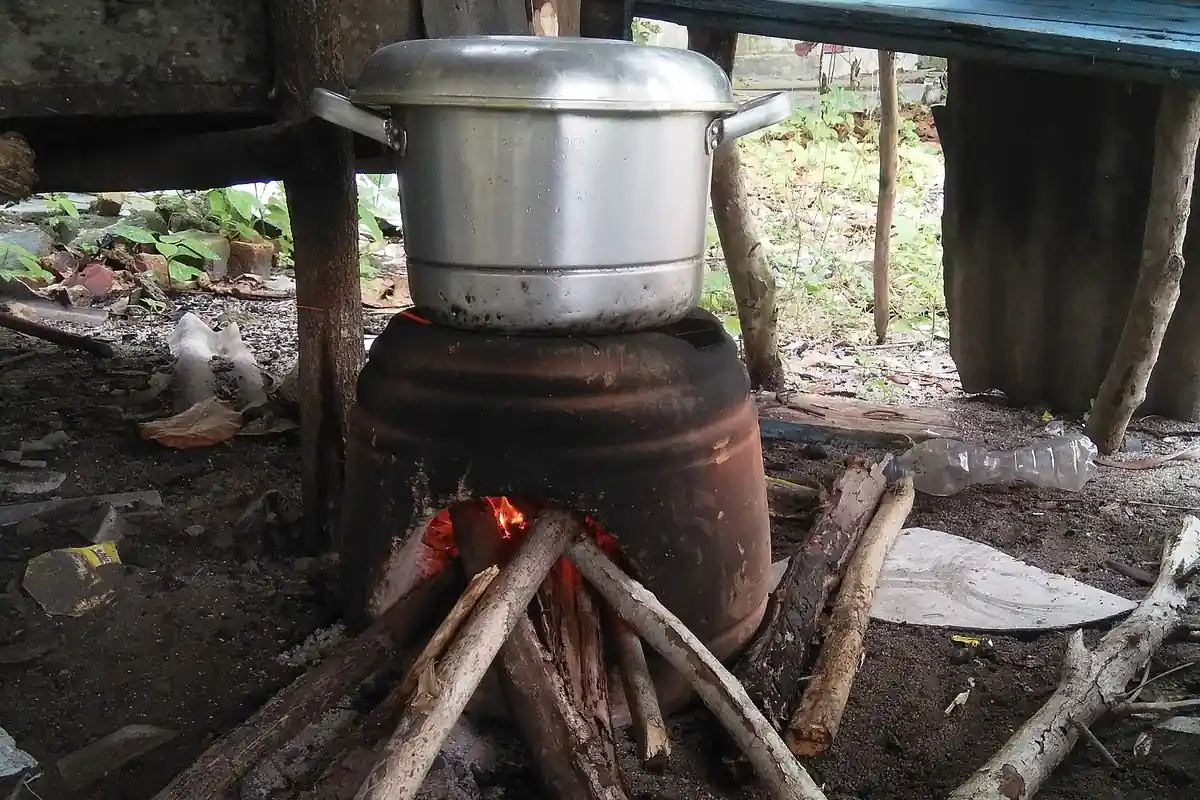
The switch to wood carries a cost that does not appear on any bill. The 1 November reporting flags it directly: indoor wood smoke is among the larger causes of respiratory illness in South Asia, and the people most exposed are women and children in small kitchens. That is not a speculative warning about a distant risk. It is the immediate consequence of moving cooking from a clean-burning gas flame to an open wood fire inside a home, repeated across a city, every evening, through a winter. Rawalpindi and Islamabad already record hazardous air quality through the winter inversion, when cold air traps pollution close to the ground, and the reporting notes plainly that tens of thousands of additional wood fires will not improve it. The fuel crisis is therefore also, quietly, a public-health and air-quality crisis — one that will not show up in any price notification.
Winter is what makes the timing dangerous. Gas demand always rises as temperatures fall, in the north first, and the reporting notes that demand for both LPG and wood fuel is likely to intensify as cold weather deepens. Households that switched to wood in October did so before the coldest months. If piped supply stays at six hours, if cylinder prices stay near Rs5,000 a refill, and if the marketers' strike goes ahead on 16 November, the winter kitchen will be squeezed from every side at once. The strike itself is conditional: the Pakistan LPG Marketers Association has said it will halt sales nationwide from 16 November if its demands — that the private sector not be sidelined in the new LPG policy, and that deregulation not be reversed — are not met. TaazaPulse reported the strike announcement earlier today, with its full background, and the association's letter to Petroleum Minister Ali Pervaiz Malik. What the strike would mean for a household already cooking on wood is straightforward: the cylinder fallback gets thinner, and the firewood market gets more crowded.
What has not been published is as important as what has. The 1 November reporting states plainly that no provincial or federal plan for winter fuel support has been published, and no estimate exists of how many households have made the switch. There is also, as of this article, no reported government response to the firewood switch itself — no relief package, no emergency supply measure, no statement addressing Rawalpindi's kitchens specifically. The government's visible moves so far have been procedural: an eight-member ministerial committee, given one month, to review the LPG reform package that the marketers are protesting. The committee's deadline runs past the strike date, which is presumably the point of the strike threat: to force the timetable shorter.
For households, the practical picture is therefore unglamorous and worth stating plainly. Piped gas, where it exists, comes in three windows — morning, midday and early evening — and is gone overnight. The official cylinder price for November is Rs3,470 for a domestic refill, but the market refill is around Rs5,000 in Rawalpindi and higher elsewhere. Firewood, the fallback, costs Rs1,500 to Rs1,800 a maund dry, and rising. New gas connections are frozen indefinitely, so a household without a connection cannot buy its way into the piped network. And the next decision point is 16 November, when the marketers' strike either happens or is averted by negotiation. None of those facts is a reason to hoard — hoarding itself deepens shortages, as the October distributor shutdown showed — but all of them are reasons to watch two signals: any government statement on the marketers' demands, and any movement in the open-market cylinder price. Those two things will decide whether Rawalpindi's winter is cooked on gas or on wood.
The wider lesson of the week is that Pakistan's gas crisis no longer presents as one crisis. It presents as four at once: a piped-gas ration, a cylinder market priced far above the official rate, a connection freeze with no end date, and a strike deadline two weeks away. They share one cause — a supply system built on imports that a war has disrupted, and on domestic production that has declined for years — and they share one consequence, visible every evening in Rawalpindi: a family that had a gas stove, a cylinder, and a connection to a network, cooking dinner over wood because every modern option failed at the same time. TaazaPulse will update this story when the government responds to the marketers' demands, when the strike deadline is confirmed, postponed or withdrawn, when OGRA or SNGPL publishes a winter supply measure, or when new reporting gives a credible estimate of how many households have switched. Until then, the honest summary is the one the reporting gives: the gas comes for six hours, the cylinder costs too much, and the woodpile is growing.
Sources
This report is based on reporting, official statements and documents from:
- NewKerala (IANS, Express Tribune reporting) — Rawalpindi households turn to firewood as LPG prices surge (1 Nov 2026)
- The Pakistan Daily (Express Tribune reporting) — Rawalpindi Families Return to Firewood Cooking (1 Nov 2026)
- Nation Press (Dawn reporting) — Pakistan's twin cities hit by gas crisis (26 Oct 2026)
- The News — Govt raises LPG price 5.27pc for November (1 Nov 2026, print 1446128)
- Bloom Pakistan — Pakistan extends ban on new domestic gas connections (1 Nov 2026)
- The Pakistan Daily (ARY News reporting) — SNGPL freezes new gas connections indefinitely (1 Nov 2026)
- TechJuice (Dawn reporting) — LPG cylinder now costs double the official price as shortage hits Pakistan (1 Nov 2026)
- The Times of India via Google News — Pakistan gas crisis: Families return to firewood as LPG prices soar ahead of winter (sentinel queue 2a5a404f614b238f, 1 Nov 2026; headline that triggered the run — body not fetched, no claim from it beyond its title/date)
- Photos: real file photographs (Wikimedia Commons) — stacked firewood pile, household cooking-gas cylinder in a market, gas stove burner flame, traditional wood-burning stove Bangka Island; file photos, not Rawalpindi households
Frequently Asked Questions
Why are Rawalpindi families switching back to firewood?
Because both modern fuels have failed at once, according to The Express Tribune's 1 November reporting. Piped gas reaches homes for only about six hours a day, in three two-hour windows, with outages from 9pm until dawn routine — and the cylinder that was supposed to fill the gap now costs around Rs5,000 a domestic refill, against an official November price of Rs3,470. Firewood, at Rs1,500 to Rs1,800 a maund for dry wood, is the fallback that remains.
How many hours a day does piped gas actually run in Rawalpindi?
About six hours, in three windows of two hours each. Dawn's 26 October reporting gave the windows as 7am to 9am, noon to 2pm, and 6pm to 9pm, and the 1 November reporting describes the same pattern with load management of 18 to 20 hours a day. The evening meal falls largely in the overnight gap, which is why households report using firewood for the evening meal even when they still use a cylinder during the day.
What do firewood, coal and sawdust cost now?
Dry firewood is Rs1,500 to Rs1,800 a maund on the open market, ordinary firewood Rs1,300 to Rs1,400, coal Rs800 to Rs1,000, low-smoke coal Rs1,000, and sawdust Rs700, according to the 1 November reporting. A maund is the traditional 40-kilogram unit. Firewood prices have already risen by Rs200 to Rs300 a maund from October levels of Rs1,400 to Rs1,600, because demand arrived suddenly as households switched.
What does a gas cylinder cost now — official price versus market price?
The official OGRA price for November is Rs294.07 per kilogram, with a standard 11.8-kilogram domestic cylinder at Rs3,470.09 and a 45.4-kilogram commercial cylinder at Rs13,351, effective 1 November. The market price is far higher: a domestic refill in Rawalpindi is reported at Rs5,000, open-market LPG at up to Rs630 per kilogram, and company franchises at up to Rs400 per kilogram. A new domestic cylinder itself now costs Rs13,500, against Rs10,000 before.
Are new gas connections really frozen, and what about tandoors?
Yes, according to 1 November reporting from Bloom Pakistan and ARY News via The Pakistan Daily: SNGPL has extended its ban on new gas connections indefinitely, covering domestic and commercial applicants including tandoors and hotels, since the beginning of November. The Ministry of Petroleum imposed the suspension, Sui officials link restoration to an end of the Iran-US conflict, and no refund mechanism for applicants who paid urgent fees, and no criterion for lifting the ban, has been published.
What happens next — will the 16 November LPG strike make this worse?
It could. The Pakistan LPG Marketers Association has announced a conditional nationwide strike from 16 November if its demands on the new LPG policy are not met, which would thin the cylinder fallback further and push more households toward firewood. The decision points before then are any government response to the marketers' demands, movement in the open-market cylinder price, and any winter fuel support measure — none of which had been published when this article was written. TaazaPulse will update this story on any of those developments.