2026 ED138: Rubin Observatory Finds a Possible Sixth Dwarf Planet Beyond Pluto
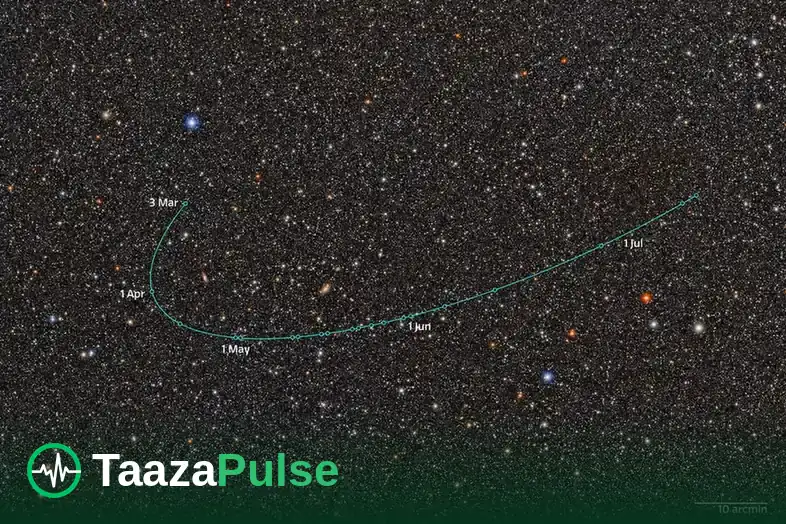
The Solar System may be about to gain a member. Astronomers working with data from the Vera C. Rubin Observatory in Chile have found a previously unknown world, designated 2026 ED138, orbiting beyond Pluto at roughly 46 times the Earth–Sun distance — and at an estimated 600 to 1,500 kilometres across, it is large enough that its own gravity should have pulled it into a sphere, the defining test of a dwarf planet. If the International Astronomical Union confirms it, ED138 will join Pluto, Ceres, Eris, Haumea and Makemake as only the sixth recognised dwarf planet, and the first added to the list in nearly two decades. The discovery was announced through the IAU's Minor Planet Center on 27 October and presented this week at the American Astronomical Society's planetary sciences meeting in Spokane.
The find belongs to Matthew Holman of the Center for Astrophysics | Harvard & Smithsonian, who leads the Rubin data-processing group hunting for distant moving objects. On the evening of 13 October, Holman ran the observatory's early data through search software he co-developed with Kevin Napier, designed to sift billions of individual detections for the faint, slow signatures of worlds in the outer dark. ED138 was in the output. "My first reaction was one of excited disbelief," Holman said in the observatory's release. "Something this large really shouldn't have been missed in previous surveys, and I immediately started checking whether I or the code had done something wrong."
A ten-year orbit, assembled in days
Neither Holman nor the code had done anything wrong — and the proof came from the archive. Mario Jurić, the University of Washington astronomer who leads Rubin's solar system work, re-ran the search and located 20 more observations of the same object stretching back to 4 March 2026: the Simonyi Survey Telescope had, without anyone noticing, photographed ED138 30 times across 20 nights between March and July. Then the team turned to older sky surveys. Using the Asteroid Institute's ADAM Precovery service, they found the object again in archival images from the Dark Energy Camera on the Blanco telescope in Chile, extending its recorded arc back a full decade to 2016. Ten years of positions is what turns a smudge into a world: with an orbit that well measured, astronomers can say where ED138 is, where it has been, and what family it belongs to.
That family is the hot-classical trans-Neptunian objects. ED138's orbit is tilted about 25 degrees to the plane of the planets — far too steep for a body that formed quietly where it now sits. The standard explanation is violence in the young Solar System: a close encounter with the migrating Neptune, billions of years ago, threw the young world onto its tilted path, where it has circled undisturbed ever since. In that sense ED138 is less a new neighbour than a fossil — a surviving witness of the era when the giant planets were still rearranging the outer dark.
Its name, for now, is bookkeeping rather than poetry. "2026 ED138" is a provisional designation issued by the Minor Planet Center: the year of discovery, followed by letter codes that encode the half-month in which the object was first reported and the sequence of its announcement. Only when a body's orbit is beyond dispute does it earn a permanent number, and only numbered worlds receive proper names — the route Pluto, Eris and Makemake all travelled before it. ED138, in other words, currently has a catalogue entry where its name will one day be, which is the normal first chapter of every outer Solar System discovery story.

How big, and why it matters
The size estimate — somewhere between 600 and 1,500 kilometres in diameter — comes from the object's distance, its brightness and an assumed reflectivity, and the honest width of that range is why ED138 is still a candidate rather than a confirmed dwarf planet. For icy bodies, the threshold at which self-gravity forces a round shape sits around 600 kilometres; ED138 is at or above it across the whole plausible range, which is why the discovery team and outside astronomers alike are speaking of a probable sixth dwarf planet. Infrared observations, which measure the heat a body emits rather than the sunlight it reflects, will narrow the size properly, and the IAU's formal recognition process typically takes months of accumulated data.
Even at the bottom of the range, ED138 would rank among the largest known bodies in the region beyond Neptune — and its discovery carries a second implication the team is keen to stress. The object hid from every previous survey because of where it sits: close to the plane of the Milky Way, where the sky is so crowded with stars that a slow-moving point of light drowns in the glare, and in the southern sky that northern telescopes survey poorly. Rubin, perched on Cerro Pachón in Chile with the largest camera ever built for astronomy — 3,200 megapixels — is the first instrument designed to stare through exactly that kind of crowd, night after night, and notice what moves. "If confirmed, ED138 would join a very small family of worlds," Holman said. "But its detection hints there may be others hiding in regions we've barely searched — and they're now within reach."
The telescope that found it is just getting started
Context makes the discovery more remarkable still: ED138 was found in commissioning data, gathered before Rubin's ten-year Legacy Survey of Space and Time formally began in June 2026. In April, working only with early data, the Rubin team had already submitted more than 11,000 new asteroids to the Minor Planet Center, including about 380 trans-Neptunian objects — a harvest that would be a career's work for older surveys. The full survey will revisit the entire southern sky every few nights for a decade, and its moving-object pipeline is expected to multiply the catalogue of outer Solar System bodies several times over. Jurić notes that the same system that discovered ED138 also recovered it in decade-old images automatically: "The ability of this system to both discover and precover objects continues to transform how we determine their orbits."
The dwarf planet club it may join
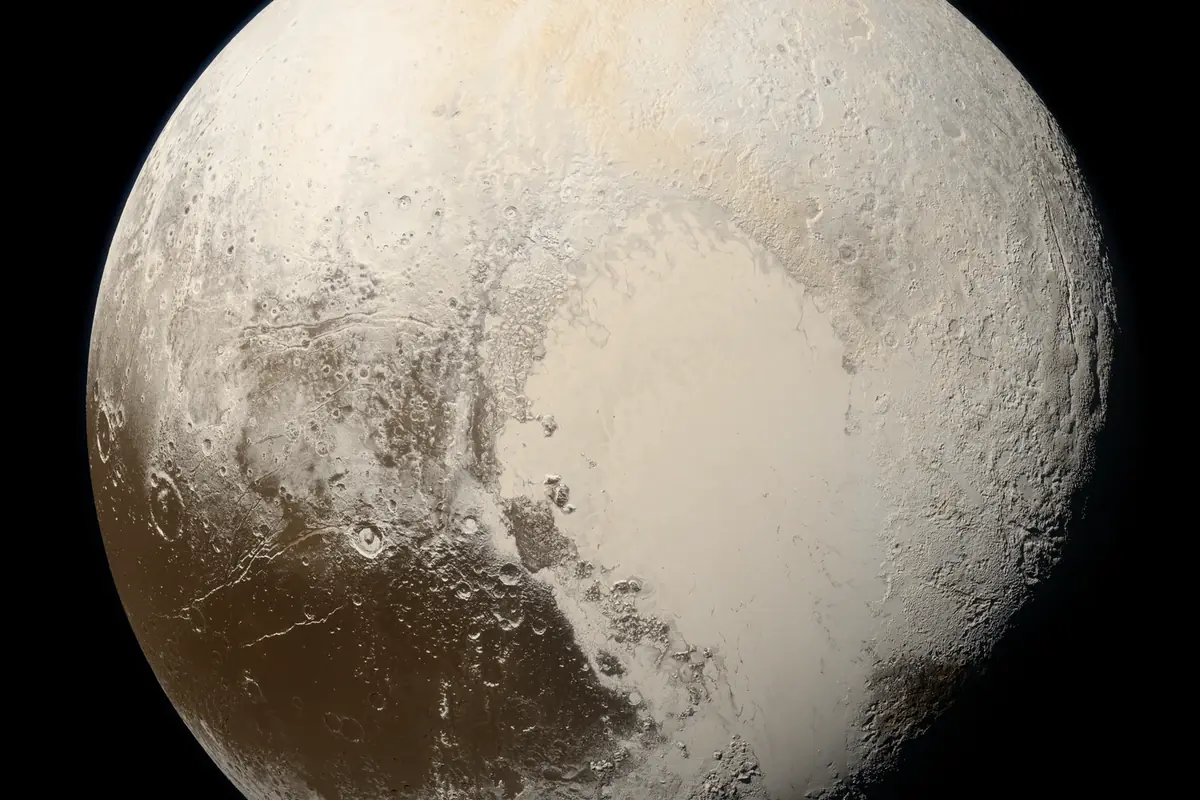
The category ED138 seeks to enter is young, small and famously contentious. The IAU created the dwarf planet class in 2006, in the same vote that reclassified Pluto — a decision forced by the discovery of Eris, a body initially reported as possibly larger than Pluto itself, which made "planet" a title astronomers either had to extend to a growing crowd of icy worlds or redefine. They redefined it. The five recognised members span the Solar System's extremes: Ceres, in the asteroid belt between Mars and Jupiter, is the only dwarf planet in the inner system; Pluto, the largest known trans-Neptunian object, carries five moons and a thin nitrogen atmosphere; Eris, the most massive, is also the most distant of the five; Haumea is a fast-spinning world stretched into an egg shape; and Makemake, like ED138 may prove to be, is a red-tinged world of frozen methane. No new member has been admitted since the original list was settled — a two-decade pause explained less by a shortage of candidates than by how hard they are to find and measure from Earth. Dozens of known trans-Neptunian objects sit in the candidate penumbra; what distinguishes ED138 is that it surfaced in the first sweep of an instrument built to clear that penumbra out.
What happens next
The path from candidate to confirmed dwarf planet runs through telescopes that see heat rather than light. Infrared observatories measure a distant world's thermal glow, which — combined with its reflected sunlight — pins down both its true size and its surface reflectivity, the two numbers currently entangled in ED138's wide 600–1,500 km range. The discovery team expects that process to take months rather than weeks, and the IAU's formal recognition, if the size holds up, would follow the accumulation of that data. Meanwhile Rubin itself will keep photographing the object as part of its survey rhythm, refining the orbit with every pass — each new observation also a test of the pipeline that found it, which astronomers expect to deliver thousands more trans-Neptunian objects across the survey's ten years, and plausibly further dwarf planet candidates among them.
For the public, the discovery reopens a familiar and beloved argument. Pluto's 2006 demotion remains the most contested reclassification in modern science, and every candidate like ED138 revives the question of how many round worlds the Sun actually has. The answer, on current evidence, is: more than five, fewer than science fiction hopes, and — for the first time in the twenty years since the dwarf planet category was created — rising. Somewhere beyond Pluto, a ball of ice and rock somewhere between the size of a large asteroid and a small moon has been circling in the dark all along. It simply took the biggest camera humanity has ever built to notice it moving.

TaazaPulse's international desk covers science alongside world affairs; recent reports include the fossil study that settled the Nanotyrannus debate and the launch of Google's Gemini 4 Carbon. This story will be updated when infrared measurements narrow ED138's size or the IAU rules on its status.
Sources
This report is based on reporting, official statements and documents from:
Frequently Asked Questions
What is 2026 ED138?
2026 ED138 is a newly discovered trans-Neptunian object — a world orbiting the Sun beyond Pluto — announced by the IAU Minor Planet Center on 27 October 2026 from Vera C. Rubin Observatory data. It is a strong candidate to become the sixth recognised dwarf planet.
How big is ED138?
Its diameter is estimated at 600 to 1,500 kilometres. The range is wide because the estimate depends on the object's unknown surface reflectivity; infrared observations will narrow it.
Who discovered ED138?
Matthew Holman of the Center for Astrophysics | Harvard & Smithsonian found it on 13 October 2026 in Rubin data, using search software co-developed with Kevin Napier. Mario Jurić then found 20 further observations, and archival Dark Energy Camera images extended its record back to 2016.
Is ED138 officially a dwarf planet?
Not yet. It is a candidate: at its estimated size its gravity should have made it round, the key test, but IAU recognition requires more data and typically takes months.
How far away is ED138?
It is currently about 46 astronomical units from the Sun — 46 times the Earth–Sun distance. Pluto, by comparison, averages about 40 AU.
Why was ED138 not discovered before?
It lies close to the plane of the Milky Way, where dense star fields hide slow-moving objects, in the southern sky. Rubin's wide, deep and repeated imaging was designed to find exactly such objects — and found this one in data collected before its main survey began.