Spain's Transport Minister Refuses to Resign Over Second Major Train Crash
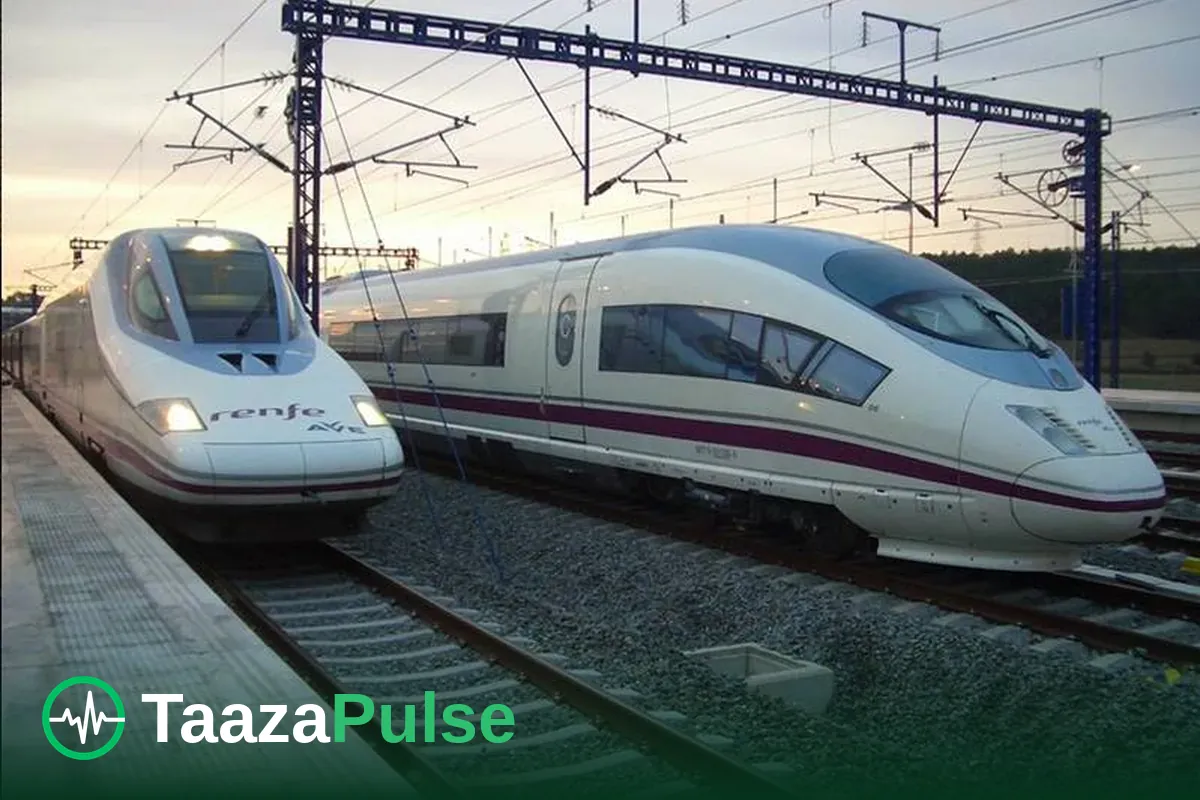
Spain's transport minister refused on Friday to resign over the second mass-casualty train crash on his watch this year, rejecting calls from across the political spectrum and from rail workers' unions as the death toll from Wednesday's collision near Urda rose to at least 69. Óscar Puente, the minister for transport and sustainable mobility, told a press conference that his duty was to establish what happened and fix it, not to debate his own future in office. “My duty now is not to focus on discussing whether I will remain in office, but on solving the problem, determining exactly what happened and providing clear explanations,” he said. Prime Minister Pedro Sánchez, who on Friday vowed to find out what caused the crash, has personally conveyed his confidence in Puente, and the prime minister's office has ruled out his departure for now. The refusal sets up a political fight that will run all the way to Spain's general election on 29 November, with railway safety now at the centre of a campaign that Sánchez had called early hoping to fight on housing.
The crash that triggered the crisis happened on Wednesday morning near the town of Urda, in the province of Toledo in central Spain, on the Madrid–Seville high-speed line. A Renfe-operated high-speed train smashed into a stationary Iryo-operated train, killing at least 69 people. A preliminary report released on Thursday by the Independent Authority for the Technical Investigation of Accidents and Incidents (AITAT) said the moving train was travelling at between 160 and 200 kilometres per hour when the collision occurred. Authorities were still working on Friday to identify the victims. The disaster followed another collision involving the same rail companies on the same line in January, at Adamuz near Córdoba, which left 46 dead. Together, the two crashes have killed 115 people in nine months — a figure that explains why Puente's refusal to resign has become a national argument rather than a one-day story. TaazaPulse covered the Urda crash itself in our full report on Wednesday's disaster; this article covers what has happened since: the minister's refusal, the prime minister's backing, and the investigations now under way.
What happened at Urda, as officials describe it
The sequence of events that led to the collision, as described by Puente himself and by the preliminary findings, began with a technical failure, not a derailment or a storm. At about 8:30 on Wednesday morning, a computer malfunction knocked out the LZB automatic train control system along a stretch of roughly 69 kilometres of track, halting every train in that section — six trains in total. The LZB system is the automatic safety system used on the Madrid–Seville line, and the rules for moving through such a gap require trains to proceed at line-of-sight speed, about 25 miles per hour. Instead, according to Puente, the central control centre in Madrid, run by Adif, the state agency that manages Spain's rail infrastructure, took over the section and authorised the resumption of normal traffic. A Renfe train was authorised to proceed even though a stationary Iryo train was ahead of it on the same line, and the two trains collided at 8:53am.
Puente has been blunt about where he believes the failure lies, and that bluntness is itself part of the controversy. He called the control centre's decision to let the train proceed “inexplicable” and said the train's engineers were not to blame. “I am not attributing responsibility to anyone, I am just stating the facts,” he said, while making clear that he regards the authorisation as a break in protocol by control centre operators rather than a failure of his own management. That distinction — between a technical account delivered hours after the crash and a formal finding of responsibility — matters, because investigators have not released their findings, no one has been charged, and the technical and judicial investigations remain open. What Puente described on Wednesday was the government's preliminary account, not a conclusion. The LZB system that failed was, according to public documents, behind schedule for an upgrade, a detail that investigators will have to weigh alongside the control centre's instructions when they establish the definitive chain of responsibility.
Why lawmakers and unions want him gone
The criticism of Puente has come from across the political spectrum, and it has two distinct strands. The first is about the crash itself: lawmakers condemned him for attributing Wednesday's disaster to a break in protocol by control centre operators rather than accepting responsibility as the minister in charge of the railway system. Rail workers' unions went further, calling for his immediate dismissal, and the CSIF union demanded both his resignation and respect for the presumption of innocence of the Adif worker involved in managing railway traffic that morning. The second strand is about January. Relatives of the Adamuz victims were incensed that Puente refused to resign after that collision too, and one victims' association representative accused him of dismissing demands for his resignation by saying that he had not personally welded the rail — a reference to the Adamuz investigation's focus on a possible defect in a welded rail joint and prior warnings concerning the track's condition. The final official investigation into Adamuz has yet to establish the cause.
The anger has spilled onto the streets as well as into parliament. On Wednesday evening, the state broadcaster RTVE showed images of dozens of people gathering in front of the transport ministry demanding Puente's resignation, and a police charge against the protesters was reported by El País. Puente provoked further anger last week when he appeared in a television comedy sketch joking about Renfe breakdowns; the Adamuz victims' association condemned the appearance as insensitive and renewed its demand for his resignation. That episode, trivial on its own, now reads very differently: a minister joking about the railway's reliability days before the railway produced its second mass-casualty disaster of the year. It is the kind of detail that turns a policy argument into a character argument, and it is one reason the resignation demands have not faded since Wednesday.
Sánchez stands by his minister — for now
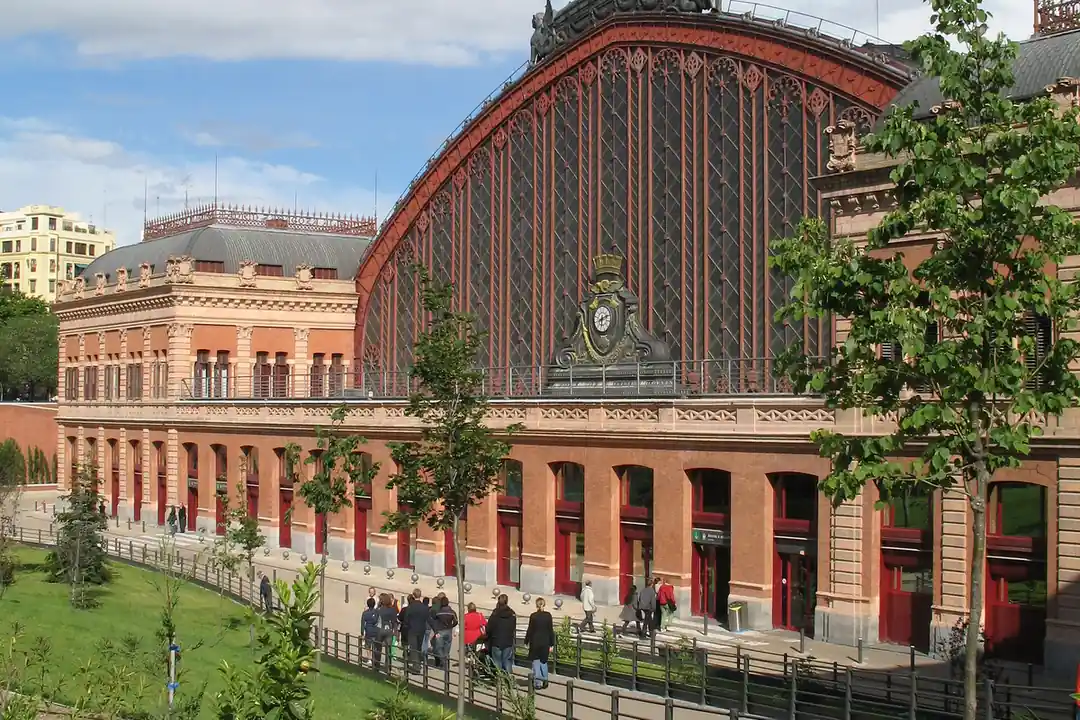
Against that pressure, the prime minister's office has closed ranks. According to sources in the presidency cited by Spanish media, Sánchez has personally conveyed his confidence to Puente and considers that he must continue leading the government's response to the emergency. The minister's entourage likewise rules out his resignation, and Puente himself avoided raising the possibility of his departure during his first public appearance after the disaster, on Wednesday at Madrid's Atocha station, when he said he was not thinking about himself but about the victims and clarifying what happened. On Thursday, Sánchez and Puente took part together in a meeting of the Integrated Operational Coordination Centre (Cecopi) in Toledo and later travelled to Adif's H24 control centre at Atocha station, where they remained for more than two hours. The executive's position, as reported, is that the Urda accident has no relation to Puente's management — the assessment Moncloa uses to justify his continuity.
But that position is not uncontested even inside the governing party. Sources within the PSOE consulted by the Europa Press agency described it as “unacceptable” that Spain has recorded two deadly railway accidents in barely nine months, and the calls for explanations and for the assumption of responsibilities extend from the opposition to the railway unions and into sectors of the PSOE itself. Puente, 57, is one of Sánchez's closest allies and has earned a reputation as the prime minister's attack dog through his vitriolic parliamentary speeches and online attacks. That closeness cuts both ways: it explains why Sánchez is standing by him, and it explains why the opposition treats Puente's survival as a test of the prime minister's own judgement. Sánchez declared three days of national mourning from the crash site on Wednesday, and on Friday he vowed to find out what caused the accident — but the question of whether backing Puente helps or hurts him will be answered by voters on 29 November, not by press conferences.
The Adamuz parallel Puente cannot escape
Every argument about Urda eventually runs into Adamuz, because the two disasters share a line, the same companies, and the same minister — and because Puente's response to the first is now being quoted back at him after the second. In a recent interview with The Times, Puente defended his decision to remain in office after Adamuz, saying: “I decided to remain in office because I don't feel that I bear any responsibility for the accident. I believe political responsibility arises if, through action or omission, you have contributed to causing the harm.” He characterised the Adamuz accident as “tremendously complex from a technical point of view and very difficult to foresee”. That is a coherent philosophy of ministerial responsibility, and it is the one he is applying again now: responsibility follows causation, not the calendar. Its weakness, his critics argue, is that it leaves no room for the idea that a minister owns a system even when he did not personally cause a particular failure — and after two disasters, the system itself is what is on trial.
The Adamuz case also shows why the Urda investigation will take time, and why early claims should be treated carefully. Investigators examining Adamuz focused on a possible defect in a welded rail joint and on prior warnings about the track's condition, yet the final official investigation has still not established the cause, ten months on. The Urda investigation faces a similar problem: the known facts — a failed safety system, a control centre order, a train at speed, a stationary train ahead — describe a chain, but the investigation must still establish which link broke first, whether the rules were clear, whether the upgrade delay mattered, and whether anyone's individual decision crossed from error into culpability. Puente's own account, delivered within hours, answered the first of those questions and left the rest open. The AITAT preliminary report has added the speed. Everything else — the definitive chain of responsibility, the judicial findings, the question of charges — is still to come, and it will arrive in a political climate where the minister has already told the country he is not going anywhere.
An election fought on railway safety
The timing of the Urda crash could hardly be worse for Sánchez. The prime minister called the election early amid protests over Spain's housing crisis, hoping to mobilise left-wing voters angered by evictions. The new disaster threatens to shift the campaign onto ground where his government carries direct responsibility: railway safety. Spain's high-speed rail network was once the pride of a young democracy and a symbol of modernisation; it has become associated, in the space of nine months, with deaths, delays, breakdowns and controversy. During the eight-year tenure of Sánchez's Socialist-led government, Spain has also suffered a succession of other deadly disasters and national emergencies, including the Valencia floods of 2024, which claimed 233 lives, a mass migrant crossing into the Spanish territory of Ceuta in July in which more than 100 people were reported dead, and a still-unexplained nationwide power blackout last year. The opposition will now try to fold Urda into that longer story. Sánchez's camp will try to keep it as a technical tragedy with a technical investigation.
What happens next will be decided in three places at once. The first is the investigation: the technical inquiry by AITAT and the judicial inquiry must establish what failed, in what order, and whether the delayed LZB upgrade or the control centre's order was decisive. The second is parliament, where the opposition will press for Puente's dismissal and where even voices inside the PSOE are calling the record of two disasters in nine months unacceptable. The third is the campaign trail, where the victims' families, the unions and the protesters outside the transport ministry will keep asking the question Puente has so far refused to answer on its own terms: not whether he welded a rail or ordered a train to move, but whether a minister can preside over 115 deaths on his railway in nine months and still say the matter is not about him. Puente's answer, given on Friday, is that his duty is to solve the problem, determine exactly what happened and provide clear explanations. The country will judge whether that answer is enough — and the election on 29 November is now, in part, the venue where that judgement will be delivered.
TaazaPulse will follow the AITAT investigation, the judicial proceedings and the political fallout, and will update this report as the official findings emerge. Readers following the wider story can read our full report on the Urda crash and our coverage of the postponed Copa del Rey matches that followed the disaster.
Sources
This report is based on reporting, official statements and documents from:
- Dawn — Spanish transport minister refuses to resign over second major train crash on his watch (30 Oct 2026, queue 22ed7990538b3de6)
- Devdiscourse (Reuters syndication) — Spanish minister refuses to resign over second major train crash on his watch (30 Oct 2026)
- Demócrata — Moncloa closes ranks with Óscar Puente, who refuses to resign (30 Oct 2026)
- The Times — Why the Spain train tragedy will transform next month's elections
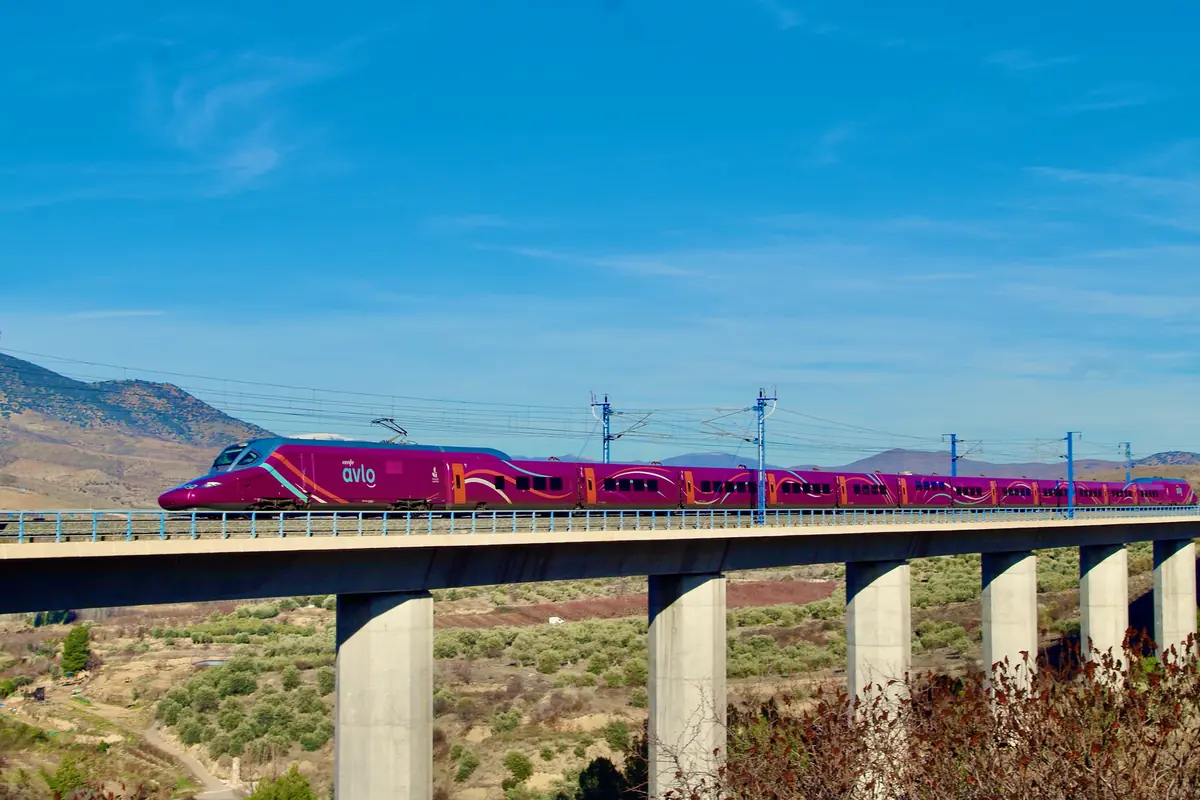
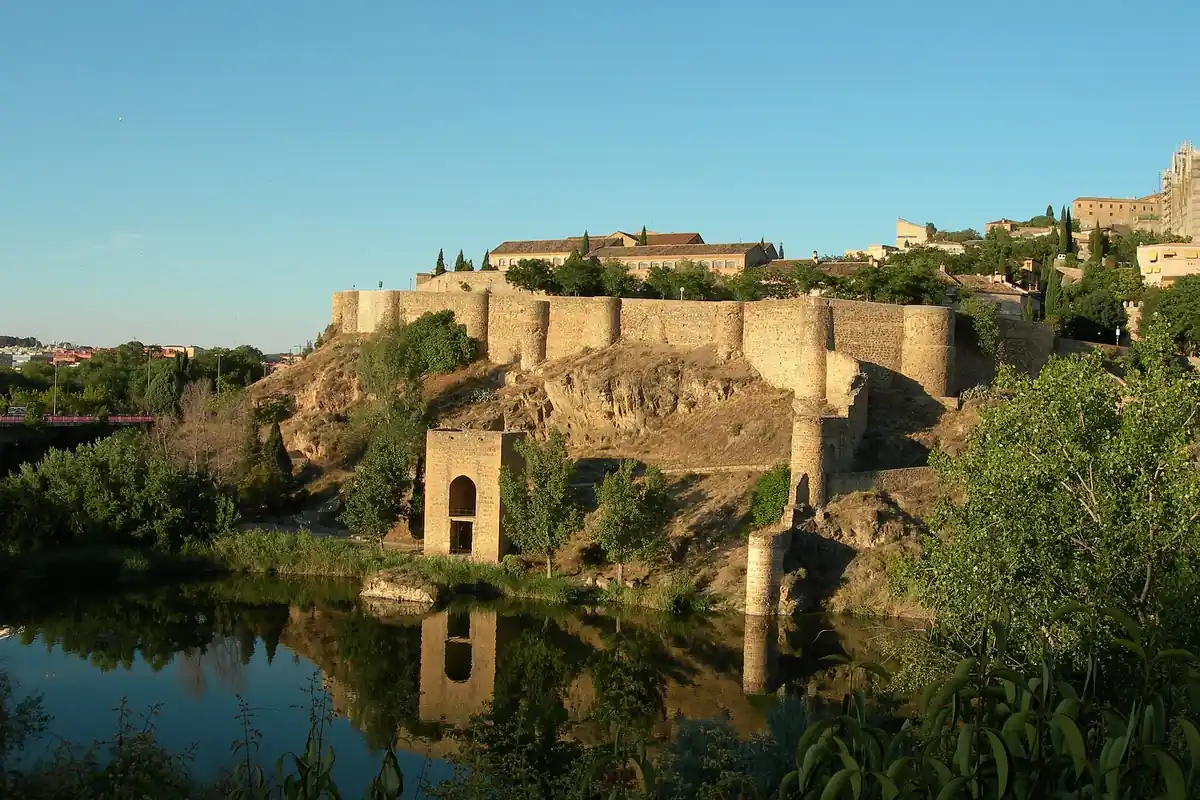
- Photos: real file photographs (Wikimedia Commons) — Renfe AVE trains, Madrid Atocha station, Renfe Avlo on a viaduct, Toledo city; file photos, not crash photos
Frequently Asked Questions
What did Spain's transport minister say on Friday 30 October 2026?
Transport Minister Óscar Puente rejected calls for his resignation over the Urda train crash, saying: “My duty now is not to focus on discussing whether I will remain in office, but on solving the problem, determining exactly what happened and providing clear explanations.” He had already avoided raising the possibility of departure at his first appearance after the disaster, on Wednesday at Madrid's Atocha station, saying he was not thinking about himself but about the victims and clarifying what happened.
What happened in the Urda crash, and how many people died?
On Wednesday 28 October 2026, a Renfe-operated high-speed train smashed into a stationary Iryo-operated train near the town of Urda in Toledo province, on the Madrid-Seville high-speed line. At least 69 people were killed, and authorities were still working on Friday to identify the victims. A preliminary report released on Thursday by the Independent Authority for the Technical Investigation of Accidents and Incidents (AITAT) said the moving train was travelling at between 160 and 200 kilometres per hour when the collision occurred.
What does the preliminary account say caused the crash?
According to the account given by Puente, a computer malfunction at about 8:30am knocked out the LZB automatic train control system along roughly 69 kilometres of track, halting six trains. The Adif control centre in Madrid then authorised the resumption of normal traffic, and a Renfe train was allowed to proceed even though a stationary Iryo train was ahead of it; the trains collided at 8:53am. Puente called the control centre's decision “inexplicable” and said the train's engineers were not to blame. This is the government's preliminary account, not a formal finding: the technical and judicial investigations remain open, no one has been charged, and the definitive chain of responsibility has not been established. Public documents also show the failed LZB system was behind schedule for an upgrade.
Why is this the second crash on Puente's watch?
On 18 January 2026, two high-speed trains collided at Adamuz near Córdoba, on the same Madrid-Seville line and involving the same rail companies, killing 46 people. Together with Urda's toll of at least 69, the two disasters have killed 115 people in nine months. Investigators examining Adamuz focused on a possible defect in a welded rail joint and prior warnings concerning the track's condition, but the final official investigation has yet to establish the cause.
Who is demanding Puente's resignation, and who is backing him?
Lawmakers from across the political spectrum condemned Puente for attributing the crash to a break in protocol by control centre operators rather than accepting responsibility, and rail workers' unions called for his immediate dismissal; the CSIF union also demanded respect for the presumption of innocence of the Adif worker involved in traffic management that morning. Protesters gathered outside the transport ministry on Wednesday evening, with a police charge reported by El País. On the other side, Prime Minister Pedro Sánchez has personally conveyed his confidence in Puente, and the prime minister's office maintains that the Urda accident has no relation to Puente's management. Even inside the governing PSOE, however, sources described it as “unacceptable” that Spain has recorded two deadly railway accidents in barely nine months.
How does the crash affect Spain's 29 November election?
Sánchez called the general election early amid protests over Spain's housing crisis, hoping to mobilise left-wing voters. The Urda crash threatens to shift the campaign onto railway safety, an issue on which his government carries direct responsibility, and the opposition is expected to fold Urda into a longer record that includes the Valencia floods of 2024 (233 dead), a mass migrant crossing at Ceuta in July (more than 100 reported dead) and a still-unexplained nationwide power blackout last year. Puente's own defence, given in a recent interview, is that political responsibility arises only if, through action or omission, you have contributed to causing the harm, and that he does not feel he bears responsibility for the accident — a philosophy voters will now test at the ballot box.