Four Italian Personnel Killed as EUFOR Helicopter Crashes in Bosnia
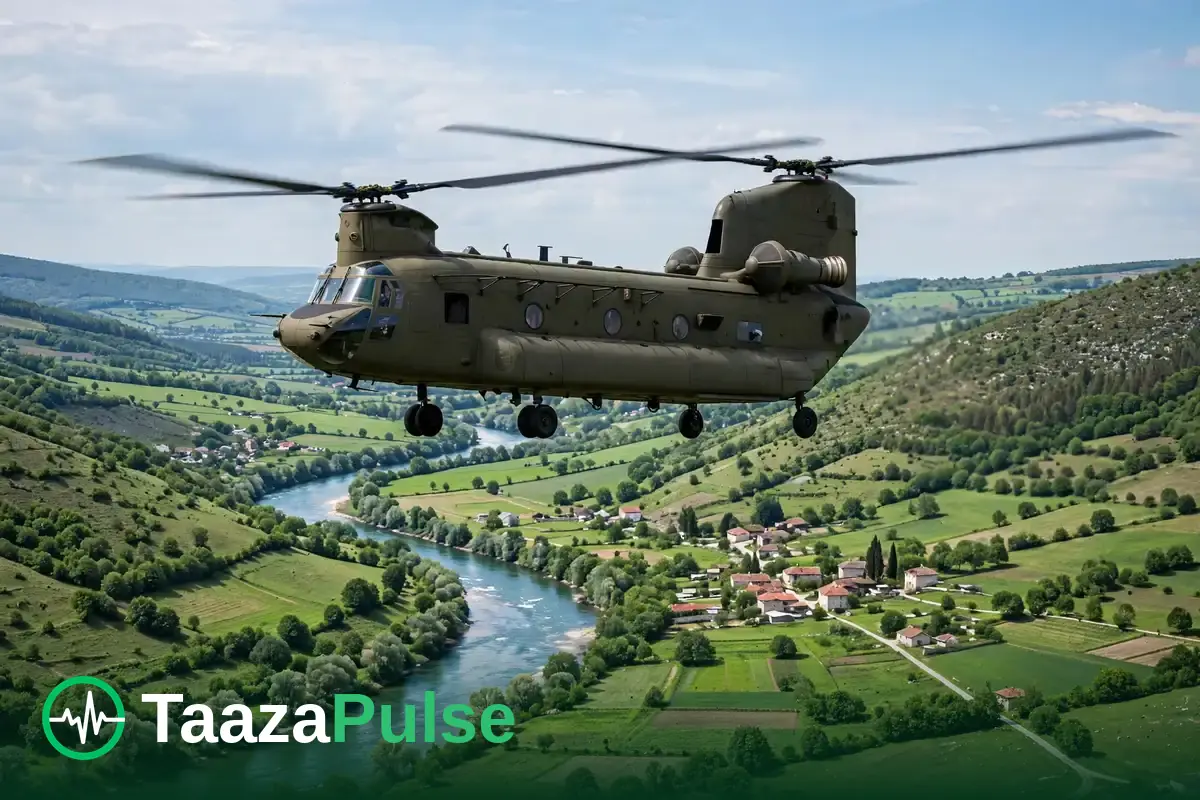
Four Italian personnel serving with the European Union's peacekeeping force in Bosnia and Herzegovina were killed and 11 others were injured when an Italian Army CH-47 Chinook helicopter crashed in the north of the country on Thursday, 29 October 2026, Italy's Ministry of Defence said. The helicopter, deployed with the European Union Force (EUFOR) Operation Althea, went down near the village of Gorice in the Brcko District, about 180 kilometres north of the capital, Sarajevo, during what EUFOR described as a routine training mission.
The crash is one of the deadliest single incidents for EUFOR personnel in recent years, and it has opened an investigation that will have to answer a difficult question: how a heavy-lift transport helicopter, flying a routine training sortie in peacetime conditions, came down with 15 people on board. At the time of publication, no cause has been announced, and neither the Italian defence ministry nor EUFOR has suggested a cause. That restraint matters. In the first hours after a military aviation accident, speculation about mechanical failure, weather or human error routinely outruns the evidence, and the official statements so far have deliberately avoided it.
What is confirmed is the human toll. Italy's defence ministry said 15 people were on board. Two of those killed were members of the Italian Army and two belonged to the Italian Red Cross's Volunteer Military Corps, the military corps that provides medical and support personnel alongside the armed forces. All 11 injured personnel were receiving treatment, the ministry said, and none was in a life-threatening condition. EUFOR said separately that the injured were in stable condition.
Three people died at the scene, and a fourth died later from his injuries at a hospital in Brcko, according to Salih Ibrahimbegovic, a spokesman for the hospital in Brcko, speaking to the AFP news agency. Of the 11 injured, nine were receiving treatment in Brcko and two had been transferred to a medical facility in Tuzla for further care, according to EUFOR and local reporting of its statement. No civilians were hurt, EUFOR said, and no civilian infrastructure, property or vehicles were damaged.
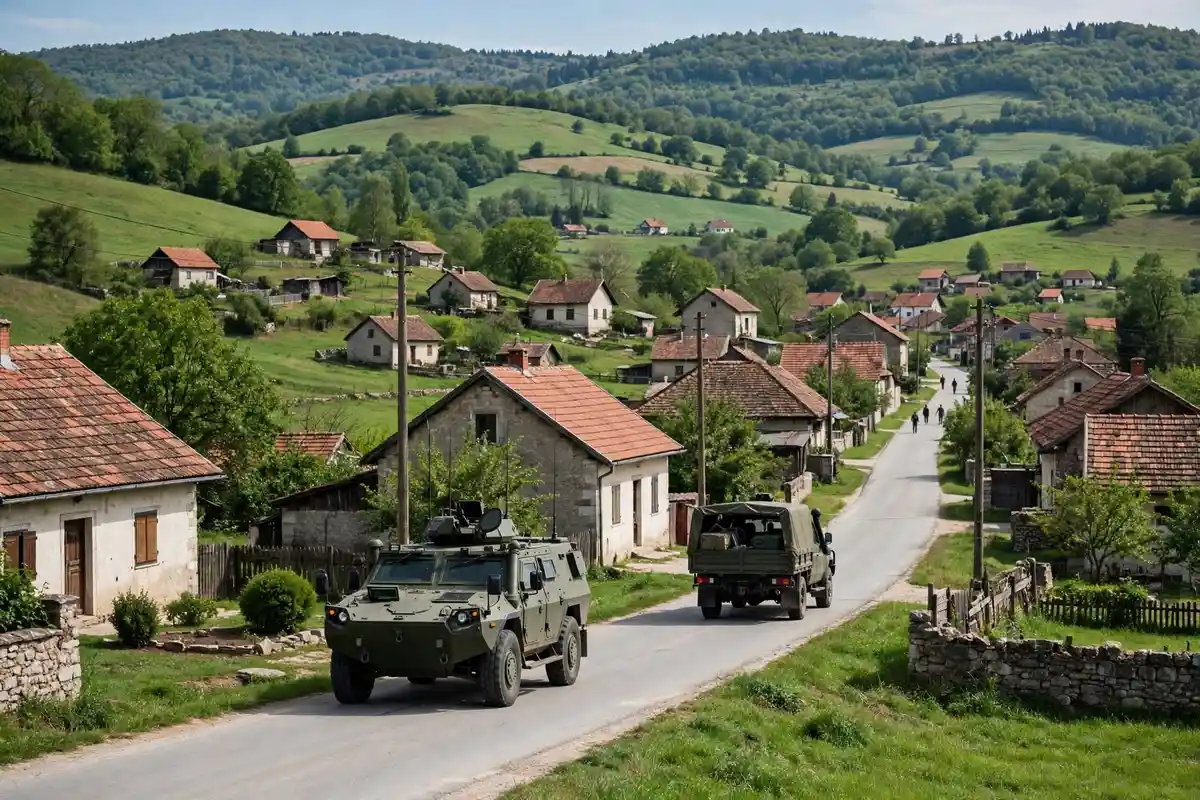
Italian Defence Minister Guido Crosetto confirmed the identities of the four people killed after their families had been notified. The two Italian Army personnel were Sergeant Simone Ruggia and Sergeant Claudio Marchesi, both serving with the Army Aviation branch. The other two victims were Lieutenant Franco Adriano Zecchillo and Sergeant Laura Procacci, members of the Italian Red Cross Volunteer Military Corps. The defence ministry's statement, carried by Reuters, did not give further biographical details, and this article adds none. The naming of the dead, once families had been informed, is the normal sequence in Italian military casualty announcements, and it allows the units, the Red Cross corps and the families' home communities to begin the formal process of mourning and repatriation.
The aircraft was a CH-47 Chinook operated by Italian Army Aviation. Aviation reporting identified the type as an ICH-47F, the Italian Army's configuration of Boeing's CH-47F Chinook heavy-lift helicopter, a tandem-rotor transport aircraft used to move troops, equipment and supplies. The Chinook family has been in military service for decades and is flown by a large number of armed forces, including Italy's, in transport, disaster-relief and peacekeeping roles. Nothing in the official statements so far links the aircraft type itself to the crash, and readers should not draw that link from the type alone. Twin-rotor helicopters, like all military aircraft, are subject to maintenance and airworthiness regimes, and the investigation will examine the aircraft's history, its flight data where available, and the conditions of the flight.
EUFOR said the aircraft crashed during a routine training mission and announced what it called a thorough and complete investigation. That wording is significant because two investigations will in practice run in parallel: EUFOR's own inquiry into an accident involving its force, and the Italian military's investigation into the loss of its aircraft and personnel. The Italian defence ministry said inquiries were under way to establish the circumstances of the accident. No timetable for findings has been given, and military aviation investigations of this kind typically take months, not days, before a formal report is published. Families and the public should therefore expect a period in which the confirmed facts remain those in this article, with further detail arriving only when investigators are ready to release it.
Operation Althea is the European Union's military operation in Bosnia and Herzegovina, run by EUFOR, which oversees the implementation of the Dayton Peace Agreement that ended the Bosnian war in the 1990s. The force's presence is a reminder of how Bosnia's post-war settlement still rests, more than thirty years on, on an international military guarantee. EUFOR troops patrol, train and support the country's own armed forces, and their work is usually quiet and unremarkable. That is precisely why a training accident of this scale stands out: the mission's daily business is deterrence and reassurance, not combat, and its casualties in recent years have more often come from accidents than from hostile action.
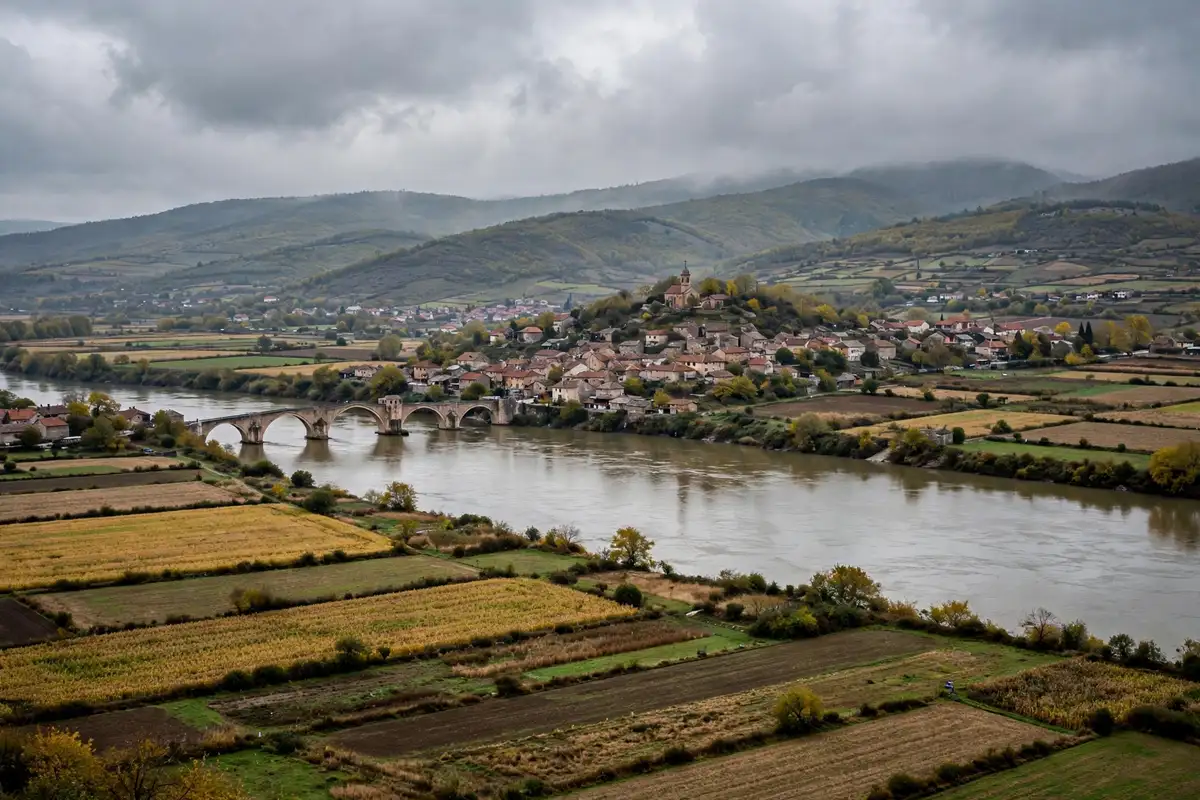
Brcko District, where the helicopter came down, is itself a product of that settlement. The district, in the north-east of the country, is a self-governing area that belongs to neither of Bosnia's two entities, the Federation of Bosnia and Herzegovina nor Republika Srpska, and it sits on the Sava river close to the border with Croatia. Gorice, the village named by the ANSA news agency and other reporting as the crash location, lies in that district. The area is flat, agricultural country, very different from the mountainous terrain of central Bosnia, and the crash site's proximity to a village, without civilian casualties or damage, is one of the few fortunate elements of an otherwise grim account. EUFOR's statement that no civilian property was damaged suggests the aircraft came down away from houses and roads, though the exact crash-site geography has not been published in detail.
For Italy, the loss touches two institutions at once. The Army Aviation branch flies some of the Italian armed forces' most demanding missions, from overseas deployments to domestic disaster relief, and the Red Cross Volunteer Military Corps is a distinctive Italian institution: uniformed volunteers who serve alongside the military, providing medical care, logistics and support in operations and emergencies. That two of the dead wore the Red Cross corps uniform, rather than army uniform, underlines how peacekeeping deployments draw on a wider military family than the regular forces alone. The ministry's statement grouped all four together as Italian personnel on the same mission, and that is the right way to read the loss: a single crew and passenger group, on a single flight, lost together.
There are several things this article deliberately does not claim. It does not claim a cause, because none has been released. It does not claim a flight path, altitude or weather conditions at the time of the crash, because none has been published in the official statements. It does not claim that the helicopter was carrying a particular cargo or was on a particular training task beyond EUFOR's description of a routine training mission. And it does not repeat unverified social-media claims about the crash, which circulated quickly after the first reports. Readers who encounter such claims should treat them as unconfirmed until EUFOR or the Italian defence ministry confirms them.
The next steps are formal and, for the families, painfully slow. The injured will continue to receive treatment in Brcko and Tuzla, and the Italian authorities will arrange the repatriation of the dead. EUFOR and the Italian military will preserve the crash site and the wreckage for investigation, and the investigation will seek to establish the sequence of events in the aircraft's final minutes. Only when that work is complete will it be possible to say whether the crash was caused by a technical failure, by conditions on the day, by a human factor, or by a combination of factors, as aviation accidents so often are.
Understanding what a training mission means in this context helps to explain why the investigation will be so detailed. Peacekeeping aviation units fly training sorties to keep crews current, to rehearse the movement of personnel and equipment, and to practise the procedures they would use in a real emergency, such as medical evacuation or the reinforcement of a remote post. A routine sortie is, by definition, one that is planned, briefed and flown under normal procedures, without the urgency or the threat that characterise a combat mission. When such a flight ends in a crash, investigators look first at the ordinary factors that can still go wrong: the aircraft's mechanical state, the crew's actions, the weather and visibility on the route, and the terrain. None of those factors has been singled out in this case, and the investigation's job is to work through them systematically rather than to settle on the first plausible explanation.
The investigation process itself is worth describing, because it explains why confirmed information will arrive slowly. Military aviation investigators typically secure the crash site, document the wreckage in place, recover any flight recorders and maintenance records, interview witnesses and survivors where they are able to speak, and examine the aircraft's recent maintenance history. In a multinational force, that work involves coordination between the force headquarters, the contributing nation's military authorities and, where relevant, civilian investigators in the host country. In this case, the Italian military, EUFOR and the Bosnian authorities all have a legitimate interest in the findings, and the formal report, when it comes, will need to satisfy all of them. That coordination takes time, and interim statements are usually limited to what can be confirmed without prejudicing the inquiry.
Italy has a long history of service in the Balkans, and that history is part of the background to Thursday's loss, even though it does not explain the crash itself. Italian troops served in Bosnia in the 1990s under NATO and later under the European Union, and Italy has remained a contributor to EUFOR Althea. For the families of the dead and injured, the loss will be felt in the units and communities where these service personnel lived and worked, and in the Red Cross corps, whose volunteers balance civilian lives with military service. The public record at this stage does not include statements from the families, and this article does not seek to add to their burden by speculating about their circumstances.
There is also a broader point about risk in peacekeeping that Thursday's crash illustrates. Peacekeeping is often described as low-risk work, and in comparison with active combat it is. But it still involves flying, driving, patrolling and operating heavy equipment in unfamiliar terrain, often far from the hospitals and workshops that support the same activities at home. Training accidents, road accidents and illness have historically accounted for a significant share of peacekeeping casualties, precisely because the work is continuous, routine and conducted in conditions that are less controlled than a home base. A crash on a training flight is therefore not a contradiction in terms: it is a reminder that routine military work carries its own risks, and that those risks are managed, not eliminated, by training and maintenance.
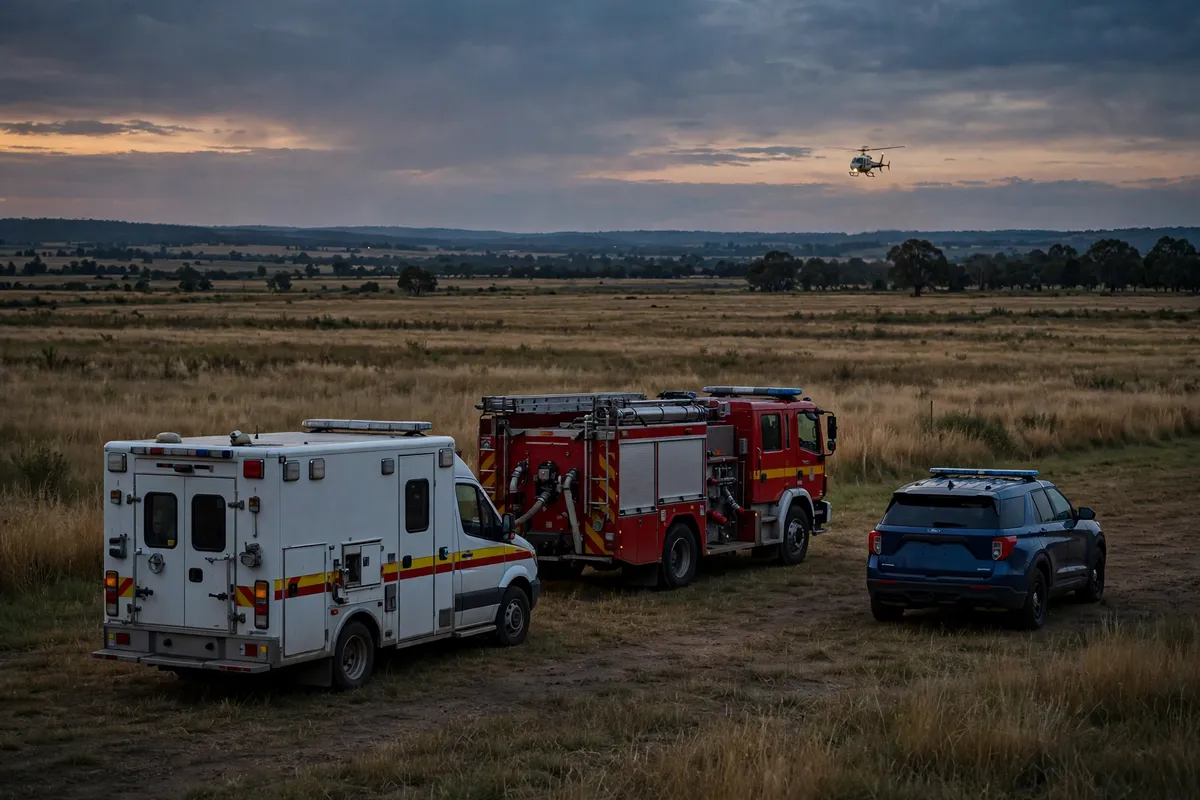
What can be said now is simpler, and it is enough. On Thursday evening, a routine training flight in northern Bosnia ended in the deaths of four Italian service personnel and the injury of eleven more. The dead have been named. The injured are stable. No civilian was harmed. And an investigation is under way that will, in time, have to explain how a peacetime training mission turned into a fatal accident. TaazaPulse will update this story when EUFOR or Italy's Ministry of Defence releases further confirmed information, including any findings from the investigation.
Figures, names and the sequence of events in this article are taken from statements by Italy's Ministry of Defence and EUFOR, as reported by Reuters, AFP and ANSA. Where this article notes that a detail has not been released, that reflects the official statements available at publication.
Sources
This report is based on reporting, official statements and documents from:
- The Express Tribune — Four killed, 11 injured in Italian military helicopter crash in Bosnia, Herzegovina (30 Oct 2026, via sentinel queue)
- Reuters — Four killed in crash of Italian helicopter on EU mission in Bosnia (29 Oct 2026; Italy Ministry of Defence, EUFOR, ANSA)
- AFP via Brussels Signal — EU military helicopter crash in Bosnia kills Italian personnel (Brcko hospital spokesman)
- Photos: editorial illustrations for this story (Chinook-type helicopter, patrol vehicles, river town, emergency vehicles) — not photographs of the crash site or the victims
Frequently Asked Questions
What happened in Bosnia on 29 October 2026?
An Italian Army CH-47 Chinook helicopter serving with EUFOR Operation Althea crashed near the village of Gorice in the Brcko District, about 180 kilometres north of Sarajevo, during a routine training mission on Thursday, 29 October. Four Italian personnel were killed and 11 others were injured. Italy's Ministry of Defence confirmed the toll, and EUFOR confirmed the crash and the training-mission context.
Who were the four people killed?
Two were members of the Italian Army: Sergeant Simone Ruggia and Sergeant Claudio Marchesi, both of Army Aviation. Two were members of the Italian Red Cross Volunteer Military Corps: Lieutenant Franco Adriano Zecchillo and Sergeant Laura Procacci. Defence Minister Guido Crosetto confirmed their identities after their families had been notified. All 15 people on board were Italian nationals.
What happened to the 11 injured personnel?
All 11 were receiving treatment and none was in a life-threatening condition, according to Italy's defence ministry. EUFOR said the injured were in stable condition. Nine were treated in Brcko and two were transferred to a medical facility in Tuzla, according to EUFOR and local reporting of its statement.
Was anyone on the ground hurt?
No. EUFOR said no civilians were hurt and no civilian infrastructure, property or vehicles were damaged. Three people died at the scene and a fourth died later from his injuries at a hospital in Brcko, according to the Brcko hospital spokesman speaking to AFP.
What caused the crash?
No cause has been released. Italy's defence ministry said inquiries were under way to establish the circumstances, and EUFOR announced a thorough and complete investigation. This article claims no cause, flight path, altitude or weather conditions, because none has been published in the official statements. Military aviation investigations typically take months before a formal report.
What is EUFOR Operation Althea?
Operation Althea is the European Union's military operation in Bosnia and Herzegovina, run by the European Union Force (EUFOR), which oversees the implementation of the Dayton Peace Agreement that ended the Bosnian war in the 1990s. Its troops patrol, train and support Bosnia's own armed forces, and its daily work is usually deterrence and reassurance rather than combat.