Four of a Family Killed in Bagh House Explosion; Police Say Cause Still Under Investigation

Four members of one family were killed and a teenage girl was injured when an explosion tore through a house in Pandi village in Dhirkot, in Azad Kashmir's Bagh district, on Thursday evening — and a day later, the one fact that matters most about the blast is still officially unconfirmed: what caused it. ARY News headlined the incident as a gas-cylinder explosion. The district administration's own account points to a grenade. The district police, the most authoritative voice so far, say an investigation is under way to determine the nature and cause of the explosion, and have rejected as baseless the claim circulating on social media that the house was deliberately targeted by security forces. This report sets out what is confirmed, what is claimed, and what is still unknown — because in a case where the first headline and the official statement do not agree, the distinction is the story.
According to a Bagh police statement reported by Kashmir English, the explosion was reported at around 7 pm on Thursday 29 October 2026 at the house of Shakdar in Pandi village, Dhirkot. The police official, citing eyewitnesses, said two women, one young boy and one girl died in the incident. A 15-year-old girl, identified by police as Aniqa Shakdar, was injured and shifted to the District Headquarters Hospital in Bagh, where she was receiving treatment. Kashgil News, a Kashmir-focused outlet, puts the time slightly more broadly, between 7 pm and 8 pm on Thursday evening, and reports that the four family members died on the spot while the injured girl sustained severe injuries. The police statement itself did not name the dead; it said only that an investigation is being conducted to determine the nature and cause of the explosion, and that those found involved in the incident would be brought to justice.
The family who died
Kashgil News has named the four dead as members of a single household: Shazia Shafqat, the wife of Shafqat, aged approximately 40 to 42; Shafqat's mother, aged approximately 80; Haris Shafqat, a son aged approximately 11; and Malaika Shafqat, a daughter aged approximately 8. The same report names the injured girl as Aniqa Shafqat, aged approximately 17 to 18 — older than the 15 years given in the police statement — and says she was taken first to the District Headquarters Hospital in Bagh. Readers should note the spelling difference between the two accounts: the police statement gives the family name as Shakdar, while Kashgil News gives it as Shafqat. That kind of variation is common in first-day reporting from a remote area, where names reach newsrooms by phone and through more than one local source, and it is one reason this report attributes each detail to the outlet that published it rather than presenting a single smoothed version. What the accounts agree on is the shape of the loss: a mother, a grandmother and two children from one house, and one surviving girl whose account may prove central to establishing what happened inside that house.
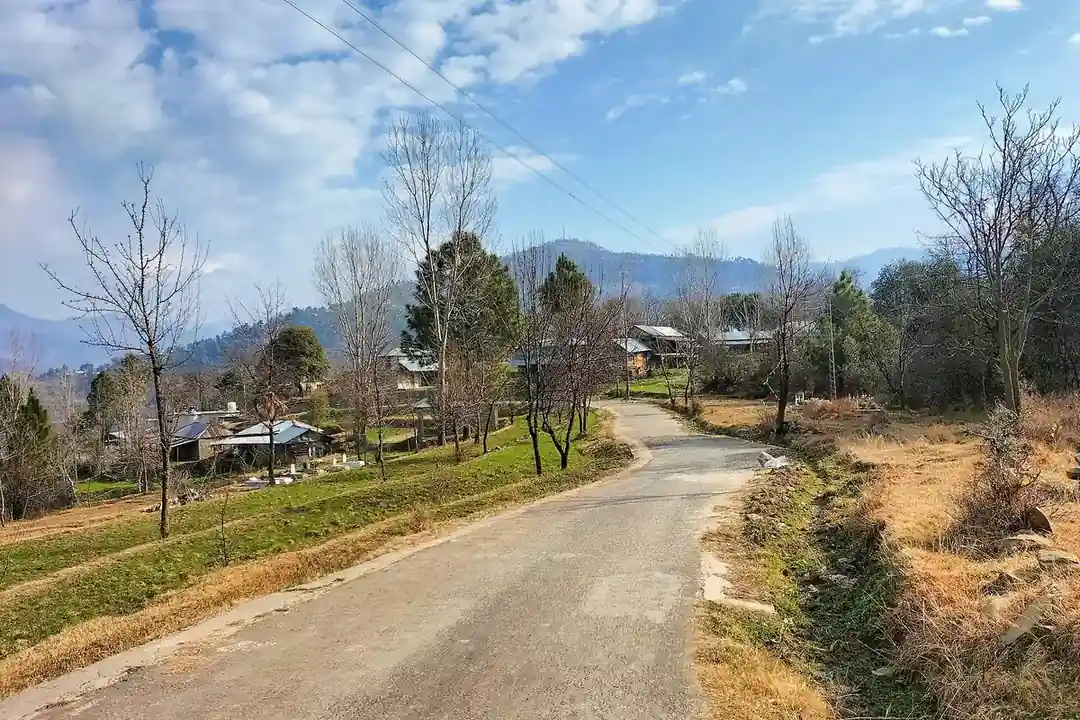
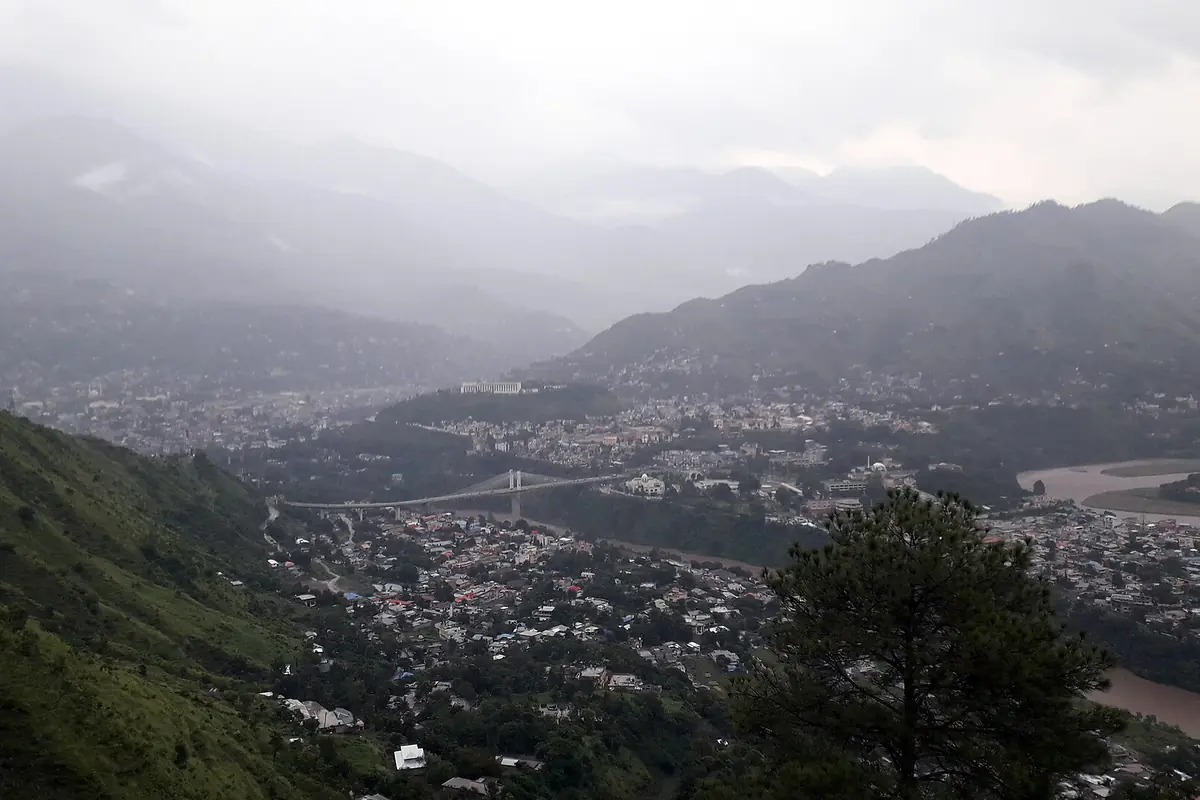
The house belonged to Shafqat, who lives abroad, according to the account given to the media by Bagh Deputy Commissioner Mumtaz Kazmi and reported by Kashgil News. Pandi is a village some distance from Bagh city, in the south of the district, and the deputy commissioner noted that the village's remoteness is itself part of the story: security force contingents were dispatched to the scene, but distance slows everything — the arrival of investigators, the collection of evidence, and the flow of confirmed information back out. In the first hours, that vacuum was filled by competing claims, and each claim has since hardened into a different headline in a different outlet.
Three versions of one blast
The first version is the one most readers in Pakistan will have seen: ARY News reported the incident on Friday afternoon as a gas-cylinder explosion at a house in Bagh, in which four people were killed. The Tribune International carried the same framing, describing four family members killed in a gas-cylinder explosion at an Azad Kashmir home, with a teenage girl critically injured. That framing is understandable — a woman was cooking in the kitchen at the time, and a gas cylinder was present in the house — but it is not, on the evidence published so far, confirmed. A senior local administration official, quoted by Terror Monitor, said it was too early to determine the exact cause of the explosion, and cautioned that the available information did not conclusively establish whether the explosion had been caused by a gas cylinder. The cooking and the cylinder are facts of the scene; the leap from them to a cause is exactly what the official warned against.
The second version comes from the district administration itself. Deputy Commissioner Mumtaz Kazmi told local media that a hand grenade exploded inside the house in Pandi village, killing four women and injuring a girl — an account Terror Monitor also carried, attributing it to Kazmi directly. Kashgil News likewise reports Kazmi as saying that a grenade incident occurred at the residence. Kazmi added what he described as preliminary suspicion: that terrorists had been present in the area around Chatra Topi over the past few days, reportedly engaging in gunfire and the use of grenades, and that a comprehensive investigation into the incident is under way. Note the careful wording even here: the grenade account is what the deputy commissioner told the media, and the terrorist presence is described as preliminary suspicion, not as a finding. Neither has been confirmed by a completed investigation, and the police statement — the document that will ultimately carry legal weight — pointedly commits to neither version, saying only that the nature and cause are being determined.
The third version is the allegation. Abid Shaheen, a core member of the Jammu Kashmir Joint Awami Action Committee (JAAC), told Kashgil News that it had not been confirmed whether the blast was a drone strike or a grenade attack carried out by the forces, that the area is under the control of the forces, and that the house was deliberately targeted by them. He also claimed that mobile services were unavailable in the area because of a jammer, and that the injured girl had previously been wounded by shelling from the forces during earlier acts of resistance. Terror Monitor, summarising the same dispute, states plainly that the JAAC allegation has not been independently verified, and that the authorities have not publicly confirmed that the explosion resulted from a security operation. A local administration official told Terror Monitor that police and Rangers personnel had been stationed at a checkpoint approximately three kilometres from the site. The allegation and the denial now travel together in every report of the incident, and neither should be repeated without the other.
The injured girl and the hospital trail
One person may be able to resolve the dispute, and she is in hospital. The injured girl was first brought to the District Headquarters Hospital in Bagh, where she was stabilised, and has since been transferred to Muzaffarabad for further diagnostic procedures, including a CT scan, according to the deputy commissioner's account. The senior administration official quoted by Terror Monitor said further details were expected to emerge after the injured girl regained consciousness and could provide additional information about the incident — a sentence that also tells readers something important about the state of the evidence: at the time of the first reports, investigators did not yet have a first-hand account from inside the house. Her medical condition, beyond the transfer for a scan, has not been publicly detailed, and no outlet has yet published her account of what happened. Until that account, or a forensic finding, is public, every version of the cause — gas cylinder, grenade, or deliberate attack — remains an unverified claim, and responsible reporting must keep it labelled as one.
The allegation and the police reply
The Bagh police statement, as reported by Kashmir English, did not confine itself to the blast. It rejected what it called propaganda being spread by members of the proscribed Joint Awami Action Committee on social media, terming the facts being circulated baseless and fabricated, and said those found involved in the incident would be brought to justice. That rejection is itself part of the record: it is the police position, reported as such, and it is the reason this report describes the JAAC claim as an allegation rather than a finding. The JAAC is the protest movement that has led months of agitation in Azad Kashmir over economic relief, political accountability and control over local resources, and its claims carry weight with its supporters precisely because they arrive through its own channels. But a claim's circulation is not its verification, and in a case involving the deaths of children, the gap between circulation and verification is where misinformation does its damage. Readers who encounter a confident version of this story on social media — in either direction — should ask the same question this report asks: confirmed by whom, and on what evidence?
Why Bagh is on edge
The blast did not happen in a calm district. Southern Bagh and Rawalakot have been the centre of JAAC sit-ins and demonstrations, part of a protest week scheduled to culminate on 1 November, according to Kashmir Times reporting on the wider unrest. Days before the Pandi blast, a six-year-old boy, Shayan Azhar, was killed in firing near the Khalabat police post in southern Bagh on 25 October — itself an incident with sharply contested accounts. JAAC's Abid Shaheen alleged that security personnel had been firing at unarmed protesters and that the child was killed during that operation; Deputy Commissioner Kazmi maintained that approximately 100 armed individuals were present in the forest near Chitra Topi and had opened fire on a police post, and that the bullet that killed the child came from the direction of the forest, away from the police post. Kashmir Times notes that the competing accounts could not be independently verified. That unresolved death is the backdrop against which the Pandi blast is being read locally: a community already grieving a child, already divided over who fired a fatal shot, now grieving a family of four — and primed to believe the worst of whichever side it already distrusts. It is also why the police investigation into Pandi matters beyond one village: its findings will land in a district where trust in official accounts is already low, and where an inconclusive result may satisfy no one.
Gas cylinders in Pakistani homes: what is known, and what is not
It is worth separating two questions that the headlines have merged. The first is whether a gas cylinder can kill a family like this. The answer, tragically, is yes: household gas explosions are a recurring cause of death in Pakistan, where liquefied petroleum gas cylinders are used daily in kitchens, often with ageing regulators and rubber hoses, in rooms with limited ventilation. Only two days before the Pandi blast, an oxygen cylinder explosion inside an ambulance in Tharparkar, Sindh, killed at least nine people, including a pregnant woman — a different kind of cylinder, a different setting, but the same grim reminder that pressurised gas and a confined space are a lethal combination. The second question is whether a gas cylinder caused this particular blast. On that question, the published evidence does not yet allow an answer, and the one official who addressed it directly said so. General safety advice — checking regulators and hoses, keeping cylinders upright and ventilated, never striking a match or switching on a light when gas is smelled, and having cylinders inspected rather than refilled informally — is worth repeating in any week when a cylinder is even suspected. But advice is not evidence, and it would be wrong to let the familiarity of gas-cylinder accidents turn a suspicion into a verdict for Pandi.
Investigators, when they complete their work, will have several lines of evidence that news reports do not: the condition of the cylinder and its fittings, the pattern of damage to the room, any residue or fragments recovered from the scene, and the medical findings on the victims and the survivor. A gas explosion and a grenade blast leave different signatures, and forensic examination is designed to tell them apart. That is why the most informative sentence in the first day's coverage may be the least dramatic one — the police statement's promise of an investigation to determine the nature and cause. The families of the dead, and the public, are entitled to that determination rather than to the fastest headline.
What happens next
Four things are now awaited. First, the injured girl's condition and, when she is able, her account of the evening — the only first-hand testimony from inside the house. Second, the findings of the police investigation, including whether the deputy commissioner's grenade account or the gas-cylinder account survives forensic examination. Third, any response from the Azad Kashmir government beyond the district level; so far, the public record consists of the district police statement and the deputy commissioner's media briefing, and no statement from Muzaffarabad has been reported. Fourth, the reaction in Pandi and the wider Bagh district, where a protest movement is already mobilised and where the next few days — the protest week's culmination on 1 November — will test whether grief hardens into further confrontation. TaazaPulse will update this report as confirmed details are released, and will correct it if any detail here is superseded by the investigation. What will not change is the standard applied here: a death toll confirmed by police and reported by multiple outlets is a fact; a cause that the police themselves say is under investigation is not, and no headline — including the one that first brought this story to national attention — should be allowed to settle it prematurely.
Sources
This report is based on reporting, official statements and documents from:
- ARY News — Four killed in gas cylinder explosion at house in Bagh, AJK (30 Oct 2026, queue 2e8a9102ec8526aa; headline framing NOT adopted — cause disputed, see article)
- Kashmir English — Four killed in explosion at house in Bagh: Police (district police statement, 29 Oct 2026: reported ~7 pm, Pandi village Dhirkot, cause under investigation, JAAC claims rejected)
- Kashgil News — Explosion in Bagh: 4 Members of the Same Family Killed, One Girl Injured (30 Oct 2026: victims named, DC Kazmi grenade account, injured girl to Muzaffarabad for CT scan)
- Terror Monitor — Four Women Killed in Explosion at House in Pakistan-Administered Kashmir (29-30 Oct 2026: DC grenade account vs senior official 'too early', JAAC allegation unverified)
- The Tribune International — Four family members killed in gas cylinder explosion at AJK home, teenage girl critically injured (30 Oct 2026, gas-cylinder framing)
- Kashmir Times — Protests in PaJK Escalate Amid Child's Killing and Shutdowns (context: protest week, 25 Oct Shayan Azhar killing, contested accounts)
- Wikimedia Commons — Kharal Abbasian village, Bagh District; Kot Tarhala village road; Muzaffarabad city; Rawalakot town (image credits; all file photos, none the blast site)
Frequently Asked Questions
What happened in Pandi village on Thursday evening?
According to a Bagh police statement reported by Kashmir English, an explosion was reported at around 7 pm on Thursday 29 October 2026 at the house of Shakdar in Pandi village, Dhirkot, in Bagh district. Four people died — two women, one young boy and one girl, according to the police account — and a teenage girl was injured and taken to the District Headquarters Hospital in Bagh. Kashgil News puts the time between 7 pm and 8 pm and reports that the four family members died on the spot. The police say an investigation is under way to determine the nature and cause of the explosion.
Who were the four people who died?
Kashgil News has named the dead as members of a single household: Shazia Shafqat, the wife of Shafqat, aged approximately 40 to 42; Shafqat's mother, aged approximately 80; Haris Shafqat, a son aged approximately 11; and Malaika Shafqat, a daughter aged approximately 8. The police statement itself did not name the dead, giving only their composition — two women, one young boy and one girl. Note also that the police statement gives the family name as Shakdar while Kashgil News gives it as Shafqat; this report attributes each spelling to its source rather than silently choosing one.
Who was injured, and where is she being treated?
The injured girl is identified by police as Aniqa Shakdar, aged 15; Kashgil News gives her name as Aniqa Shafqat and her age as approximately 17 to 18. She was first taken to the District Headquarters Hospital in Bagh, where she was stabilised, and has since been transferred to Muzaffarabad for further diagnostic procedures, including a CT scan, according to Bagh Deputy Commissioner Mumtaz Kazmi. A senior administration official said further details were expected after she regained consciousness and could describe what happened inside the house.
Was the blast caused by a gas cylinder?
That has not been confirmed. ARY News headlined the incident as a gas-cylinder explosion, and The Tribune International used the same framing. But a senior local administration official told Terror Monitor it was too early to determine the exact cause, and cautioned that the available information did not conclusively establish whether a gas cylinder caused the explosion — even though a woman was cooking in the kitchen at the time and a gas cylinder was present in the house. Until the police investigation reports a finding, the gas cylinder should be treated as one unconfirmed possibility, not as the established cause.
What do the police and the district administration say caused it?
They do not agree with each other yet, and the police statement commits to neither version. Bagh Deputy Commissioner Mumtaz Kazmi told local media that a hand grenade exploded inside the house, and cited preliminary suspicion that terrorists had been present around Chatra Topi in recent days, engaging in gunfire and grenades. The district police statement, reported by Kashmir English, says only that an investigation is being conducted to determine the nature and cause of the explosion, and that those found involved will be brought to justice. The grenade account is therefore the deputy commissioner's account, not a completed finding.
What has the JAAC alleged, and what happens next?
Abid Shaheen, a core member of the Jammu Kashmir Joint Awami Action Committee, alleged that the house was deliberately targeted by the forces, while conceding it was unconfirmed whether the blast was a drone strike or a grenade attack. The allegation has not been independently verified, and the Bagh police statement rejected JAAC claims circulating on social media as baseless and fabricated. What happens next depends on the investigation: the injured girl's account, forensic examination of the scene, and a formal police finding on the cause. TaazaPulse will update this report as confirmed details are released.