Five Drones Shot Down as Security Forces Foil Kharan Check-Post Attack

Security forces in Balochistan shot down five drones before they could reach their target on Thursday, 29 October 2026, foiling an attempted attack on a security check-post in the Albat area of Kharan district, according to security sources quoted in mainstream reporting on Friday, 30 October. No loss of life and no damage to property was reported in the incident. The drones were destroyed before they reached the check-post, the sources said, and combing and clearance operations were under way afterwards to trace anyone who helped plan or launch the attempt.
The attempted attack was aimed at a single, fixed target: a security check-post in Albat, a locality in Kharan district in western Balochistan. According to the security sources, the attackers directed five drones — described in the reporting as low-grade machines, and in some accounts as quadcopters — at the post. Security personnel at the post responded promptly, the sources said, and destroyed all five in the air before any of them could strike the installation. That sequence — detection, response and interception before impact — is the whole of what is confirmed about the engagement itself. No footage, flight path, launch point or payload detail has been published in the mainstream reporting used here, and this article claims none of those details.
The attribution given in the reporting also comes from the security sources, and it should be read in exactly those terms. The sources linked the attempt to Fitna al-Hindustan, the label Pakistan's security establishment uses for Baloch separatist militants it describes as an Indian proxy. The Express Tribune's report, which cites state media, and The News, which cites security sources, both carry that attribution. What has not been published is a statement from the military's media wing, the ISPR, about this specific incident, and no militant group has been shown in the mainstream reporting to have claimed the attempt. Readers should therefore treat the Fitna al-Hindustan link as the security sources' account, not as an independently verified claim of responsibility, and should be wary of social-media posts that present a different group's involvement as established fact.
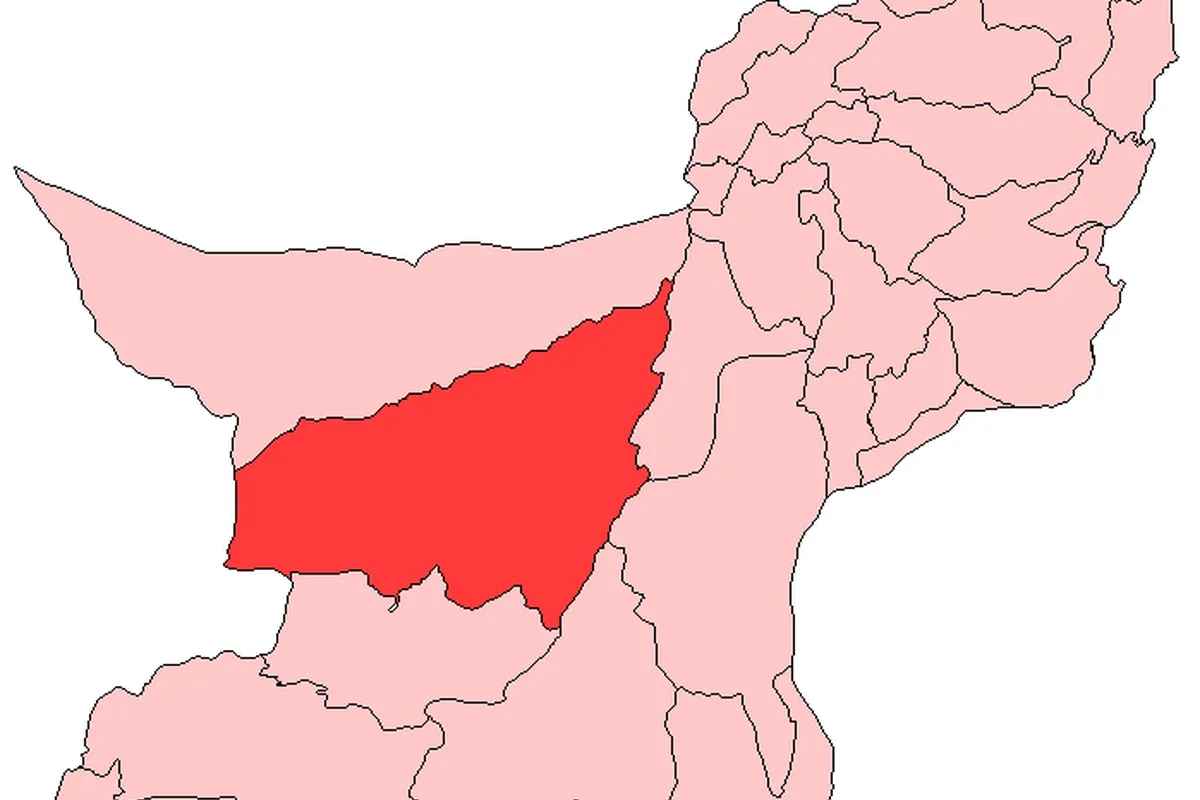
Kharan itself explains part of why this incident matters beyond its own outcome. Kharan is a large, sparsely populated district in western Balochistan, a region of desert plains and mountain ranges where distances between settlements are long and where security posts guard roads, installations and the approaches to the province's interior. A check-post in such country is not a symbolic target: it is one of the few fixed points of state presence on a long stretch of road, and an attack on it, even a failed one, is a test of whether that presence can be struck from the air as well as from the ground. The fact that all five drones were stopped before reaching the post is, on the reporting available, a defensive success; the fact that five were sent at once is a measure of how the threat itself has changed.
That change is the wider story here. For years, attacks on security posts in Balochistan and in Khyber Pakhtunkhwa followed a familiar pattern: gunmen, roadside bombs, or suicide attackers approaching on the ground. Drones add a dimension that ground defences were not built for. A small commercial-style quadcopter is cheap, quiet at a distance, hard to see against the sky, and can be flown from well outside a post's perimeter. Even a low-grade machine, carrying a small explosive or simply intended to crash into a building, forces a post to watch the sky as well as the road — and to be able to shoot down something small, fast and expendable before it arrives. The Kharan attempt, with five machines directed at one post, suggests the attackers were counting on at least one getting through by weight of numbers, and the outcome suggests the post's defences were ready for exactly that calculation.
The incident does not stand alone in recent reporting. Last month, according to the same security-source reporting, Pakistan shot down eight drones that had entered the country's airspace from Afghanistan, with the armed forces' air defence system detecting all eight in time and intercepting them. That earlier episode was a cross-border intrusion detected by air defence; the Kharan attempt was a direct attack on a named post inside Balochistan. The two are different in kind, and they should not be merged into a single story, but together they show that drone interceptions have become a recurring item in Pakistan's security reporting within the space of a few weeks, rather than a one-off curiosity.
Balochistan's broader security picture gives the Kharan attempt its context — and its limits. According to the Pakistan Institute for Conflict and Security Studies, as cited in recent analysis of the province, Balochistan recorded 131 terrorist attacks in September 2026, accounting for 58.2 percent of the national total of 225 attacks that month. That figure describes a province carrying well over half of the country's recorded attacks in a single month, and it helps explain why a foiled attack in Kharan is reported as news at all: in a province where attacks are frequent, the interception of an attack is itself a notable event, and a new method of attack is a warning about what the next attempt may look like. At the same time, the September figure is a count of attacks across the whole province, and it does not by itself explain the Kharan attempt, which was one incident in one district on one day.
The province has also seen, in the same recent reporting, clearance operations and targeted actions alongside the drone story: operations in Gwadar, and the elimination of nine terrorists in Kachhi and Wadh, are cited in the same analysis as evidence of the scale of the confrontation. Those operations are a reminder that the security contest in Balochistan is not a single front. Ground operations, checkpoints, air defence and intelligence work all run at once, and a drone attempt on a check-post is one move inside a much larger pattern of attacks and counter-operations. None of that background, however, changes the narrow facts of the Kharan incident itself, and this article keeps the two apart: the background explains why the incident matters, but it does not fill in details about the incident that the reporting has not provided.
There is also a longer history behind the drone threat that is worth stating plainly, because it shows this is not a technology that arrived in Balochistan overnight. In 2025, drone attacks became a serious challenge for police in Bannu and surrounding districts of Khyber Pakhtunkhwa, where terrorists used commercially available quadcopters against security personnel and installations. The lesson of Bannu was that a weapon once associated with state armies had become available to militant groups through ordinary commercial channels, and that defending against it required new equipment, new training and new rules for when to open fire on something in the sky. What happened in Kharan suggests that lesson has now travelled to Balochistan as well, and that the posts there are being equipped — or are learning — to meet it.
What the Kharan interception does not prove is almost as important as what it does. It does not prove that the group behind the attempt has developed sophisticated drone warfare, a coordinated swarm capability, or advanced navigation systems. The reporting describes five low-grade drones, and the analysis that has followed the incident has been careful to say that the available information does not establish whether the machines were coordinated, what payloads they carried, or whether they used anything beyond ordinary commercial guidance. A reader who is told that five drones were sent at a post should not be led to imagine a military-grade drone fleet: the machines described are the kind that can be bought, modified and flown by a small cell, and their danger lies in their number and their expendability, not in their sophistication.
Nor does the incident, by itself, establish a new phase of the conflict or a change in who is fighting it. The attribution to Fitna al-Hindustan comes from security sources, and the wider contest in Balochistan involves several groups, state operations and a long-running insurgency whose details are contested. Pakistan launched Operation Ghazab lil-Haq in February 2026, months after the two countries agreed to a ceasefire in October 2025 following clashes along several border points, according to the background carried in the same reporting — a reminder that the security environment in which the Kharan attempt happened is shaped by cross-border tensions as well as by the province's own insurgency. But a single foiled attack, reported through security sources, is not evidence of a strategic shift, and this article does not present it as one.
For the people who live near a check-post like the one in Albat, the practical meaning of the incident is more immediate than any strategic reading. A check-post is part of daily life in much of Balochistan: it controls movement on a road, it is a place where travellers are stopped and questioned, and it is also a place where the families of personnel live and work nearby. An attack that is stopped before it reaches the post is, for those families, the difference between a normal day and a tragedy, and the reporting's emphasis on "no loss of life or property" is not a formality — it is the outcome that matters most to the people closest to the incident. The clearance operations that followed, described in the reporting as continuing, are also part of that daily reality: after an attempt, the area around a post is searched, movement may be restricted, and the search for facilitators continues until the security forces are satisfied that no further attempt is imminent.
What happens next will be determined less by this one incident than by whether it is repeated, and in what form. If further drone attempts follow in Kharan or elsewhere in Balochistan, the pattern will tell security planners whether the Kharan attempt was an experiment by a single cell or the start of a sustained tactic, and whether the defences that stopped five drones can stop ten, or drones flown at night, or drones flown from a different direction. If no further attempt follows, the incident will stand as a single foiled attack in a province where foiled attacks are, unfortunately, common enough to be reported and then overtaken by the next incident. Either way, the honest position for readers today is to hold the confirmed facts — five drones, one check-post in Albat, Kharan, all intercepted, no casualties, no damage, attribution from security sources — and to wait for further reporting before drawing larger conclusions.
That discipline matters because drone incidents are unusually easy to exaggerate. A photograph of wreckage, a video clip of a drone in the sky, or a claim posted online can make a small incident look like a large one, and a large incident look like a turning point. The mainstream reporting of the Kharan attempt has, to its credit, stayed close to what the security sources actually said: the number of drones, the target, the outcome, and the absence of casualties or damage. This article has stayed within those same limits. Where the reporting is silent — on the launch point, the payload, the exact time of the attempt, and any official ISPR statement — this article is silent too, rather than filling the gaps with speculation dressed up as detail.
Until further information is released, the responsible summary of this story is a short one. On 29 October 2026, terrorists directed five drones at a security check-post in the Albat area of Kharan district, Balochistan. Security forces shot down all five before they could reach the post. No one was killed or injured, and no property was damaged. Security sources linked the attempt to Fitna al-Hindustan, and clearance operations continued afterwards. That is what is confirmed, and that is what this article reports — no more, and no less.
All incident details in this article are taken from security-source reporting published on 30 October 2026 by The Express Tribune (citing state media), The News (citing security sources) and the Islamabad Post, with background from the Pakistan Institute for Conflict and Security Studies via recent analysis. Attribution to Fitna al-Hindustan is the security sources' account; no ISPR statement on this specific incident and no independently verified claim of responsibility had been published in the reporting used here.
Sources
This report is based on reporting, official statements and documents from:
- The Express Tribune — Security forces foil drone attack attempt in Balochistan's Kharan district: state media (30 Oct 2026, via sentinel queue)
- The News — Security forces foil drone attack by India-backed militants in Balochistan: sources (30 Oct 2026; five drones, Albat area, Kharan)
- Islamabad Post — Security forces shoot down five drones in Balochistan: sources (30 Oct 2026)
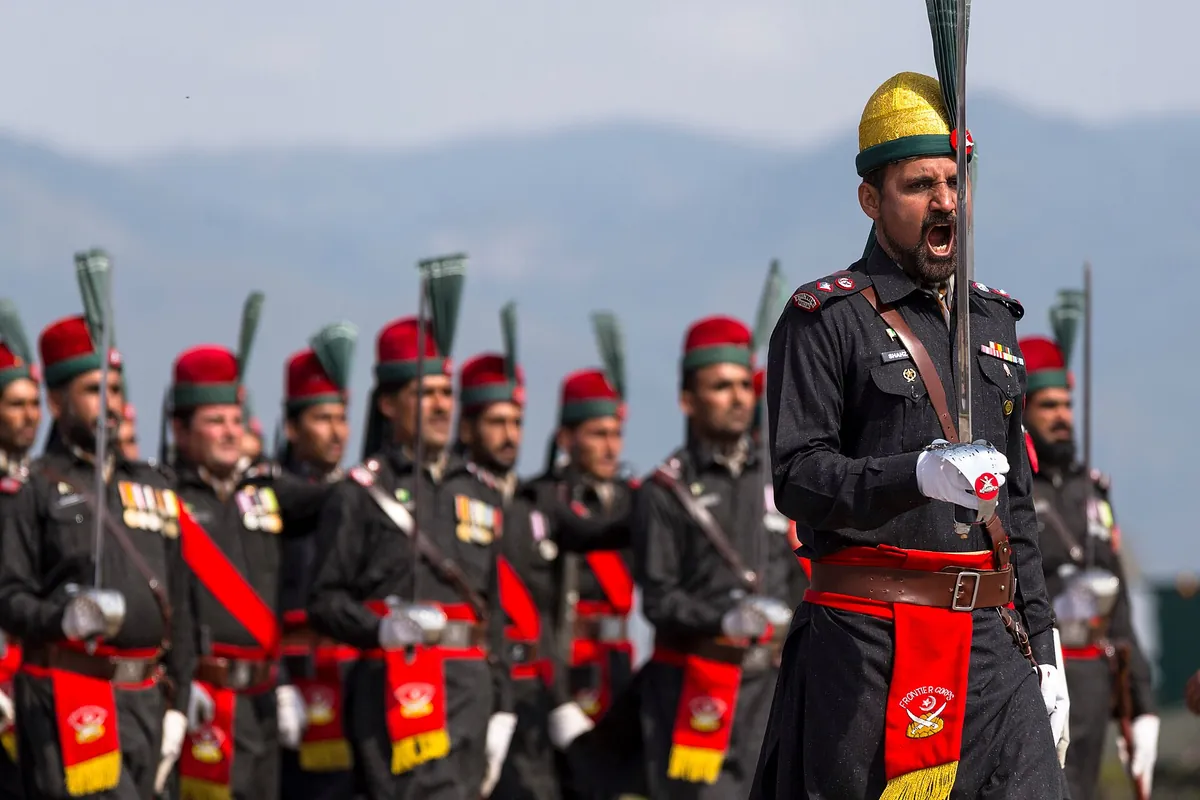
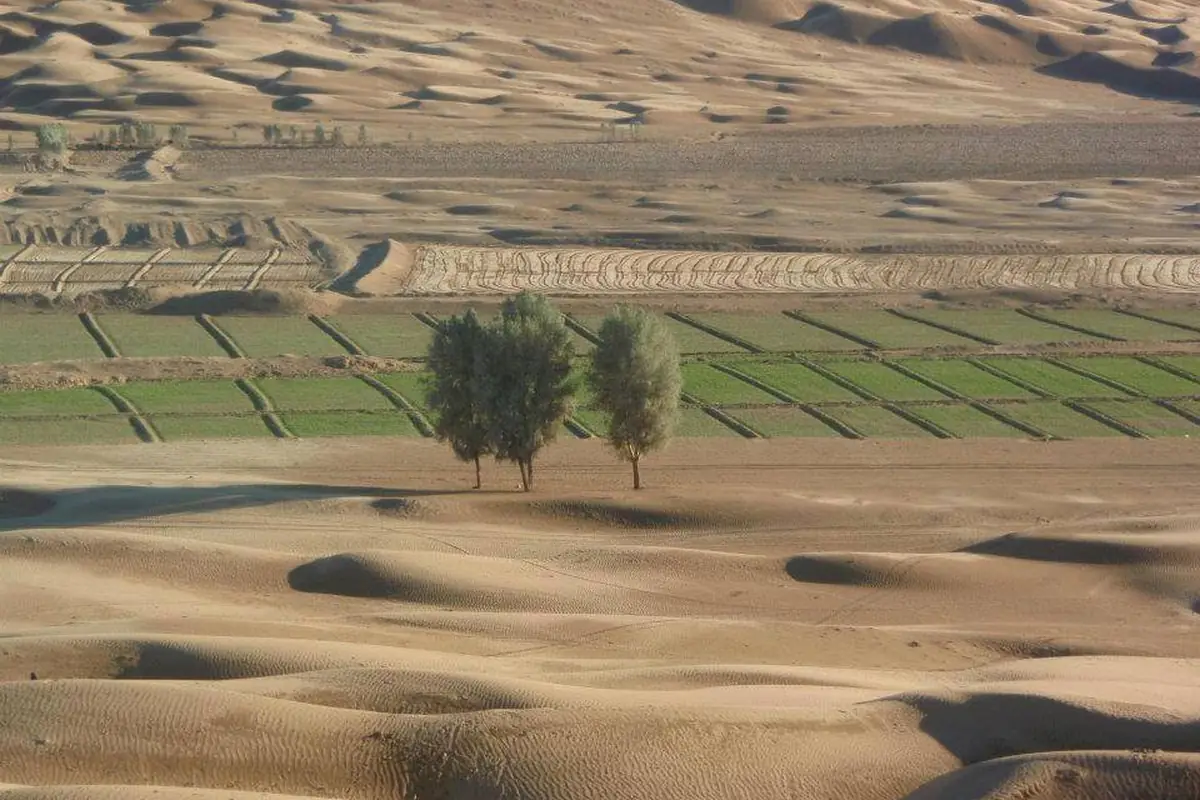
- Photos: real file photographs (Wikimedia Commons) — quadcopter in flight, Kharan district map, Frontier Corps parade 2016, Nushki desert strip; none is a photograph of the Kharan incident itself
Frequently Asked Questions
What happened in Kharan on 29 October 2026?
Terrorists directed five drones at a security check-post in the Albat area of Kharan district, Balochistan. Security forces shot down all five drones before they could reach the post, according to security sources quoted in mainstream reporting published on 30 October. No one was killed or injured, and no property was damaged. Combing and clearance operations were under way afterwards to trace anyone who helped plan or launch the attempt.
Where is Albat, and why does Kharan matter?
Albat is a locality in Kharan district, a large and sparsely populated district in western Balochistan, a region of desert plains and mountain ranges where security posts guard roads and installations across long distances. A check-post there is one of the few fixed points of state presence on a stretch of road, so an attack on it — even a failed one — is a test of whether that presence can be struck from the air as well as from the ground.
Who was behind the attempted attack?
Security sources linked the attempt to Fitna al-Hindustan, the label Pakistan's security establishment uses for Baloch separatist militants it describes as an Indian proxy. That attribution is the security sources' account: no statement from the military's media wing, the ISPR, about this specific incident had been published in the mainstream reporting used here, and no militant group had been shown to have claimed the attempt. It should not be treated as an independently verified claim of responsibility.
Was anyone hurt, or anything damaged?
No. The security sources were explicit on this point, and it is repeated across the mainstream reporting: no loss of life and no damage to property was reported. All five drones were destroyed before reaching the check-post, so the attack never struck its target. That outcome — interception before impact — is the central confirmed fact of the incident.
Is this the first time drones have been used like this in Pakistan?
No. In 2025, drone attacks became a serious challenge for police in Bannu and surrounding districts of Khyber Pakhtunkhwa, where terrorists used commercially available quadcopters against security personnel and installations. And last month, according to the same security-source reporting, Pakistan shot down eight drones that had entered the country's airspace from Afghanistan. The Kharan attempt is part of a pattern that has been building for over a year, not a weapon appearing from nowhere.
What is still not known about the Kharan attempt?
Several things: the launch point of the drones, what payloads — if any — they carried, the exact time of the attempt, and whether the five machines were coordinated or simply flown together. The reporting also does not establish that the group behind the attempt has sophisticated drone warfare or swarm capabilities; the machines are described as low-grade. This article claims none of those details, and readers should treat online posts that supply them as speculation until mainstream or official reporting confirms them.