Gujranwala Bride-Murder Accused Reported Killed in CCD Encounter: What Is Confirmed — and What Is Not

The man accused of shooting dead a newlywed bride in Gujranwala on her walima night has himself been reported killed in an encounter with Punjab's Crime Control Department (CCD), a week after a murder that shocked Pakistan. Daily Pakistan reported on Saturday 31 October 2026 that the Gujranwala man accused of killing the newlywed bride was killed in a CCD encounter, and Geo News has also carried the development as a police-encounter killing of the accused in the bride-murder case. The accused is identified in reporting only by his first name, Sarfraz, and he had been the principal nominated suspect in the killing of 21-year-old Saba Tufail, who was shot on Saturday 24 October as she returned home with her husband from her walima reception.
TaazaPulse is reporting the encounter death as reported by those two outlets, and with an important qualification that readers should hold alongside the headline. The encounter itself — that the accused was killed in a CCD encounter — is the new fact carried by Daily Pakistan and Geo News on 31 October. The detailed circumstances of that encounter, however, have not been confirmed in any source readable in full this run: the place and time of the encounter, the sequence of events, who opened fire, whether any accomplice fled from the scene, and the text of any CCD statement have not been independently verified, and this article does not fill those gaps with guesses. What follows is therefore two things kept deliberately apart: the verified record of the original killing and the investigation that followed it, and the encounter report itself, attributed to the outlets carrying it, with everything still unknown labelled as unknown. This article will be updated when the CCD or another official source releases a statement with the encounter's details.
What is confirmed, and what is not yet confirmed
Confirmed by the reporting available this run: Saba Tufail, a newlywed bride from Gujranwala, was shot dead on the night of Saturday 24 October 2026 while returning from her walima reception, and police registered a murder case in which Sarfraz was named as the principal accused alongside two others. Confirmed as a new development on Saturday 31 October: Daily Pakistan's headline reports that the man accused of killing the newlywed bride was killed in a CCD encounter, and Geo News's coverage of the case describes the suspect as targeted in a police encounter, with its report keywords recording the accused as killed in the encounter. Those two mainstream reports, arriving independently on the same day, are the basis for this article's central claim, and the claim is stated in those terms — reported killed — rather than as an independently witnessed fact.
Not yet confirmed: where in Gujranwala the encounter took place, at what time, whether the accused was being taken for a recovery or was intercepted, whether police or accomplices fired the fatal shots, whether a weapon was recovered, where the body was taken, and what the CCD's own version of events says. Readers who see those details circulating on social media today should treat them as unconfirmed unless and until they appear in a CCD statement or in full mainstream reporting. The same caution applies to the remaining accused: nothing in the encounter report, as carried so far, settles the position of the other people named in the original case, and their cases continue on the evidence and the court process, not on the encounter.
The walima night: what happened on 24 October
Saba Tufail, reported to be 21 years old and from New Gulshan Colony in Gujranwala, married on Friday 23 October, and her walima reception was held the following day, Saturday 24 October, at a banquet hall in Shalimar Town along GT Road. As the couple travelled home by car after the reception, two men on a motorcycle intercepted their vehicle near Samanabad Chungi — reported in some accounts as Chungi No 10 — in the Gulshan Colony area, within the jurisdiction of Aroop police station. According to police accounts carried in the reporting, one of the men, identified as Sarfraz, approached the car, confronted Saba, and opened fire at close range. She was taken to Gujranwala Teaching Hospital, where she died during treatment from a bullet wound to the chest.
The complaint that became the case was filed by the victim's brother, Ijaz Ahmed, and the Gujranwala Crime Control Department registered the case. Three people were nominated in it: Sarfraz as the principal accused, his cousin Aroob, and an unidentified alleged accomplice. The reported charges included provisions relating to murder, abetment and common intention under the Pakistan Penal Code. Police and Punjab Forensic Science Agency personnel examined the scene and collected evidence, doctors conducted an autopsy before the body was released to the family, and investigators examined closed-circuit television footage that reportedly showed two motorcycle riders waiting along the road before stopping the couple's car. Every one of those steps is part of the reported record of the original case; none of it is a court finding, and the allegations against the named people remain allegations unless and until a court decides them.
The alleged motive: a rejected proposal
The motive alleged in the complaint, as carried across the reporting, is that Sarfraz had wanted to marry Saba and that his family had approached hers with a marriage proposal about three years earlier, which was rejected — with the family's account, as reported by police, adding that the two families belonged to different communities. Saba and Sarfraz were reported to have worked at the same factory three years earlier, and investigators' preliminary account, as reported, was that Sarfraz met Saba through Aroob, that Saba and Aroob knew each other through their factory employment and visited each other's homes, and that the proposal was sent through that connection and declined. One police account carried in the reporting quoted the attacker as telling Saba, at the car, that she was his love and that she had challenged his honour by marrying another man.
That framing — a killing presented by the accused, in the police account, as a matter of honour — is why the case was widely treated from the first day as a possible honour killing, and why it travelled so far beyond Gujranwala. But the distinction matters and this article keeps it: the rejected-proposal account is the complaint's and the investigators' preliminary version, reported by the press, not a judicial finding. A court has not determined the motive, the roles of the individual nominated people, or any individual's criminal responsibility, and the reporting of the last week has been careful to say so. The one fact no account disputes is the human core of it: a 21-year-old woman, married one day, was shot dead on her way home from her own walima, and her family has been appealing for justice ever since.
The week in between: raids, CCTV and an arrest
Between the killing on 24 October and the encounter report on 31 October, the investigation moved in public steps. Police said from the start that the suspected attackers were at large and that efforts were under way to arrest them, with forensic and CCTV evidence being used in the search. Geo News subsequently reported the arrest of the slain bride's friend in the case, in a report titled around the friend's alleged complicity, and later video reporting described disclosures attributed to the investigation — including that the friend, who worked with the victim and attended her wedding and was related to the principal suspect, was alleged to have tipped off the shooter from inside the marriage hall with live updates, and that the attack was pre-planned.
Those later claims should be read with the same care as everything else in this case. They come from video-report descriptions of the investigation, not from a charge sheet or a court record published in full, and the precise role attributed to the friend — like the motive itself — is an allegation being tested by the investigation, not a verdict. What the week does establish is the direction of travel: this was not a case that went quiet. The CCD held the investigation, raids and searches were reported, an arrest connected with the case was reported, and the crackdown was described as extending to stopping suspects from fleeing abroad. By Saturday 31 October, the case's centre of gravity shifted from the search for the principal accused to the report of his death.
The encounter report: what the two outlets say
Daily Pakistan's report of Saturday 31 October, published in the morning Pakistan time, carries the development in its headline: the Gujranwala man accused of killing the newlywed bride was killed in a CCD encounter. Geo News's case coverage the same morning carries it in matching terms: a man accused of killing a bride on her wedding day was targeted in a police encounter, with the report's own keywords recording the accused as killed in the encounter. The two reports agree on the essentials — the accused in the Saba Tufail case, a police encounter, and his death — and disagree on nothing visible at headline level. That agreement is the reason this article reports the death at all; a single headline, without a second mainstream outlet, would not have met TaazaPulse's bar for a death in police custody or action, where the stakes of getting it wrong are highest.
The CCD, the Crime Control Department, is the Punjab police department that had registered and was investigating the original murder case, and it is the department named in the encounter report. In Punjab policing, an "encounter" is the term used for an armed confrontation between police and suspects, and CCD encounter reports routinely describe suspects opening fire first and police returning fire. Whether that pattern describes this encounter, or whether the fatal shots came from accomplices during an attempted rescue — a version that appears in other CCD encounter reports in Gujranwala — is not stated in any readable source for this case, and this article does not choose between those versions. Until the CCD issues its account, the honest statement is the short one: the accused has been reported killed in a CCD encounter, and the circumstances are awaited.
Why encounter deaths are contested in Punjab
The caution in this article is not abstract. Deaths in CCD operations in Punjab have been the subject of sustained public scrutiny, and readers deserve to know why an encounter report is treated differently from an ordinary arrest report. The Human Rights Commission of Pakistan (HRCP), in a fact-finding report on CCD operations, called for an urgent high-level judicial inquiry into deaths resulting from CCD operations, alleging a deliberate policy of staged police encounters leading to extrajudicial killings. Based on press accounts, the HRCP report cited at least 670 CCD-led encounters across Punjab over eight months in 2025, resulting in the deaths of 924 suspects, against only two police officials killed in the same period, and noted that CCD press releases and first information reports followed a nearly identical narrative pattern — suspects firing first, police acting in self-defence, those killed described as hardened criminals.
The HRCP's recommendations, as reported, included an immediate province-wide moratorium on encounter operations until legal safeguards and independent oversight were in place, investigation of every encounter-related death by the Federal Investigation Agency under the supervision of the National Commission for Human Rights, an independent civilian police oversight commission, and compensation for the families of those killed. Punjab police, for their part, have rebuffed claims of fake encounters, and a police report filed in the Lahore High Court in January said the establishment of the CCD had led to a significant decline in serious crime across the province. Neither side of that debate is evidence about what happened in Gujranwala on 31 October — the HRCP figures concern 2025 operations, and the police rebuttal is a general defence of the department — but together they explain why this article attributes the encounter, withholds its circumstances, and will update on an official account rather than on rumour.
What happens next
Five questions now decide what this case becomes. First, the CCD's own statement: its account of where, when and how the encounter happened, and whether it names any other person present, will either confirm the headline version or complicate it. Second, the formal record that follows any death in police action — the post-mortem and the departmental record — will establish the medical facts that headlines cannot. Third, the position of the other nominated people: the arrest reported during the week concerned the friend, and the unidentified alleged accomplice from the original complaint remains, on the published record, unaccounted for in any confirmed report; their cases are unaffected in law by the principal accused's reported death and will proceed, or not, on their own evidence. Fourth, the family's voice: Saba's family, who filed the original complaint and appealed for justice, have lost the prospect of seeing the principal accused tried in court, and their reaction, when reported, will be part of the story. Fifth, the court record: with the principal accused reported dead, the murder trial that the family sought will not take place against him, and the legal focus moves to the surviving accused and to whatever inquiry, if any, examines the encounter itself.
For Gujranwala, the case leaves a wound that an encounter report does not close. A young woman's wedding week became a murder investigation, and a murder investigation has now become an encounter death, with the middle of the story — a trial, with evidence tested in open court — removed from it. That is the shape of too many cases in Punjab, and it is why the distinction this article has kept throughout matters: allegations reported, facts verified, and the gap between them labelled. Saba Tufail was 21, married on 23 October, and killed on her walima night on 24 October. Sarfraz, the man accused of killing her, has been reported killed in a CCD encounter on 31 October. Everything beyond those sentences — the encounter's circumstances, the full roles of the others named, and the motive as a court would find it — remains, at the time of writing, unproven, and TaazaPulse will update this article as soon as an official or fully reported account supplies it.
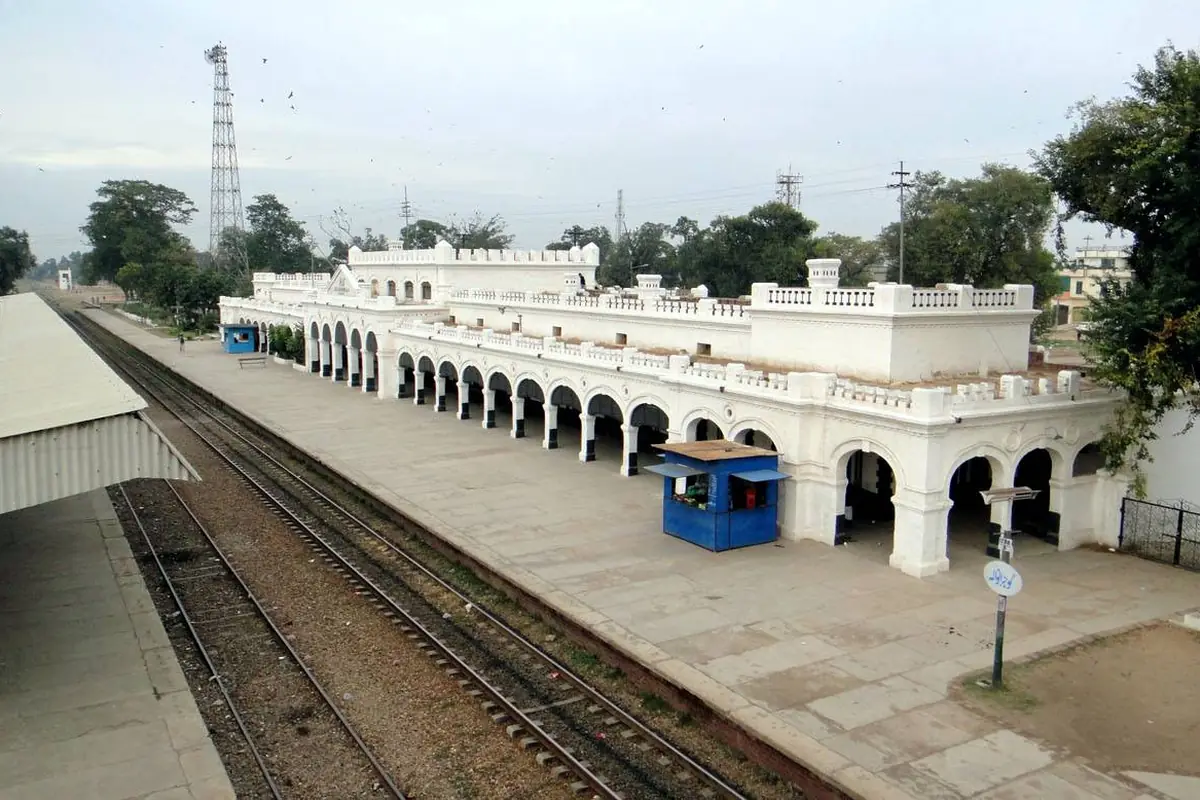
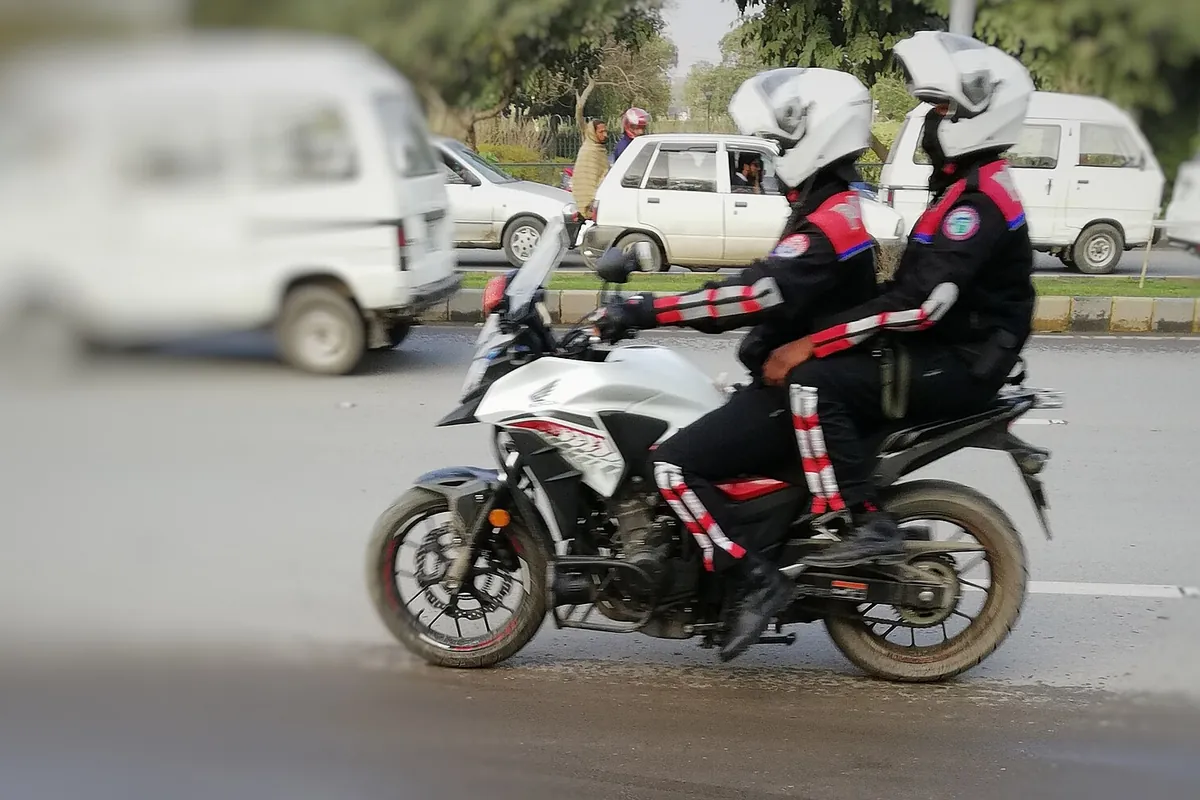
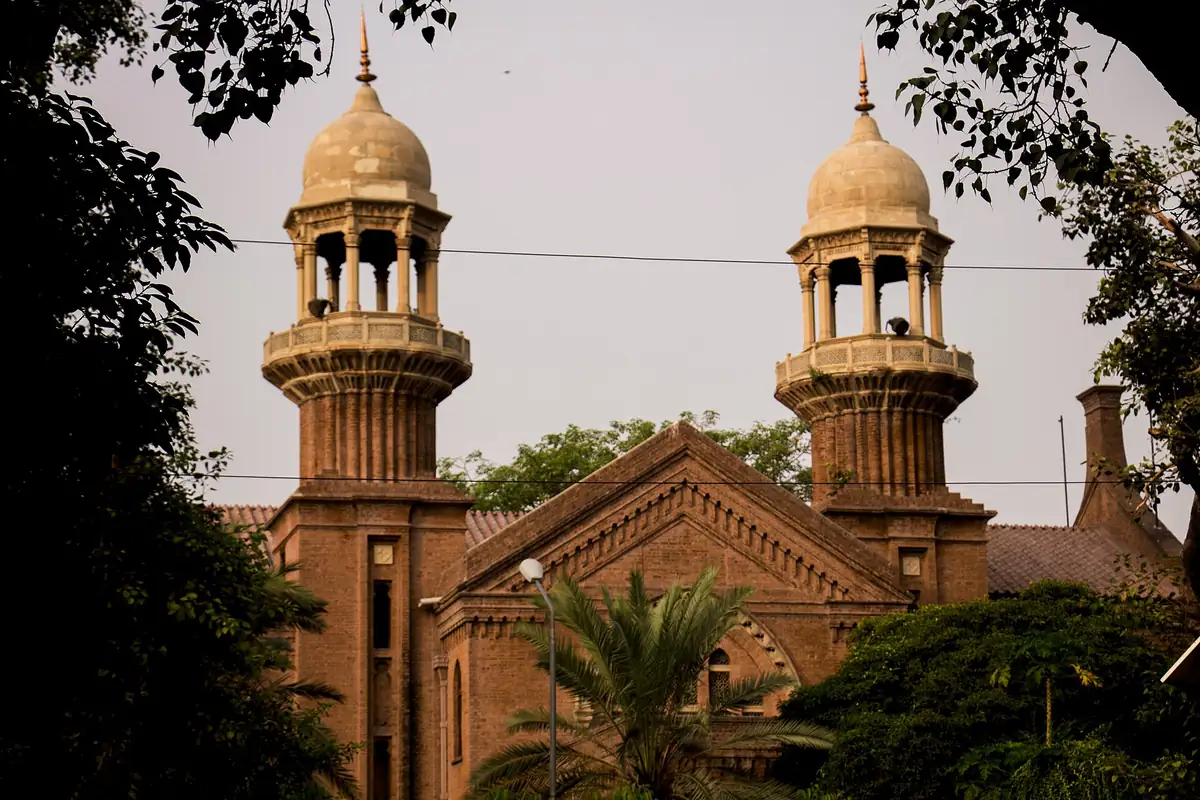
The photographs in this article are file photos from Wikimedia Commons — a Gujranwala flyover (Faraz Ishfaq Shah, CC BY-SA 4.0), Gujranwala railway station's main building (Tipoo Fawwad, CC BY-SA 4.0), Dolphin Force patrollers of the Punjab police (S.M. Samee, CC BY-SA 4.0), and the Lahore High Court building (MariyamAftab, CC BY-SA 4.0) — and are not photographs of Saba Tufail, of the accused, of the walima, or of the encounter.
Sources: Daily Pakistan — Gujranwala man accused of killing newlywed bride killed in CCD encounter (31 October 2026); Geo News — Bride's wedding-day killing: suspect targeted in police encounter (31 October 2026); Geo News — Gujranwala walima murder case: slain bride's friend arrested for alleged complicity; Dawn and The Express Tribune reporting of the 24 October killing, as summarised in subsequent coverage; The Daily Jagran — Pakistan newlywed shot dead after rejected marriage proposal (26 October 2026); NewsNexus24 — Gujranwala bride killed after walima; police hunt fleeing suspects (26 October 2026); HRCP fact-finding on CCD encounter deaths, via The Free Library.
Frequently Asked Questions
Who was Saba Tufail, and what happened on 24 October 2026?
Saba Tufail was a 21-year-old newlywed from New Gulshan Colony, Gujranwala. She married on Friday 23 October 2026, and her walima reception was held the next day, Saturday 24 October, at a banquet hall in Shalimar Town along GT Road. As she travelled home by car with her husband after the reception, two men on a motorcycle intercepted the vehicle near Samanabad Chungi, and one of them allegedly opened fire at close range. She was taken to Gujranwala Teaching Hospital, where she died during treatment.
Who is the accused reported killed in the encounter?
The accused is identified in reporting only by his first name, Sarfraz. He was the principal nominated suspect in Saba Tufail's killing, named in the case registered by the Gujranwala Crime Control Department on the complaint of the victim's brother, Ijaz Ahmed. Daily Pakistan and Geo News reported on Saturday 31 October 2026 that he was killed in a CCD encounter. He is described throughout as the accused, because no court tried or convicted him.
What does 'killed in a CCD encounter' mean?
In Punjab policing, an 'encounter' is the term used for an armed confrontation between police and suspects. The CCD is the Punjab police's Crime Control Department, which had registered and was investigating the original murder case. Encounter reports in Punjab routinely describe suspects opening fire first and police returning fire, but that pattern has not been confirmed for this encounter in any readable source, so this article does not present it as what happened here.
What is NOT yet confirmed about the encounter?
The place and time of the encounter, the sequence of events, who fired the fatal shots, whether any accomplice fled from the scene, whether a weapon was recovered, where the body was taken, and the text of any CCD statement. Daily Pakistan's article body could not be read in full this run, and no second full-text mainstream account of the encounter's circumstances was found. Those details should be treated as unconfirmed until the CCD or a mainstream outlet publishes them, and this article will be updated when that happens.
What happened to the other people named in the original case?
Three people were nominated in the original case: Sarfraz, his cousin Aroob, and an unidentified alleged accomplice. Geo News reported during the week that the victim's friend had been arrested for alleged complicity, with investigation claims — not court findings — that she had tipped off the shooter from inside the marriage hall. The unidentified alleged accomplice remains unaccounted for in any confirmed report. The surviving accused's cases are unaffected in law by the principal accused's reported death.
Why do police encounter deaths in Punjab draw scrutiny?
The Human Rights Commission of Pakistan, in a fact-finding report on CCD operations, called for a judicial inquiry into encounter deaths, citing — from press accounts — at least 670 CCD-led encounters across Punjab over eight months in 2025, with 924 suspects killed against two police officials killed, and a repeated narrative pattern in CCD statements. Punjab police have rebuffed claims of fake encounters and said the CCD's creation led to a decline in serious crime. That debate concerns CCD operations generally, not the facts of the Gujranwala encounter, which are still awaited.