Court Grants Bail to Iqrar-ul-Hassan — What Changed After Two Refusals?
A Karachi court has granted bail to television anchorperson and Awam Raj Party chief Syed Iqrar-ul-Hassan in the National Cyber Crime Investigation Agency (NCCIA) case over his alleged social media posts, Dawn reported on Saturday 31 October 2026, with his lawyer confirming the order. A detailed report of the hearing says the court directed him to submit surety bonds worth Rs200,000 and ordered his release, with his actual release subject to those bonds being furnished. The grant reverses the direction of a case that had gone against him twice in the previous nine days: a judicial magistrate refused him post-arrest bail on 22 October, and a sessions court dismissed his second bail application on 29 October. The allegations against him have not been proven, and bail is not a verdict on them; it is a decision that he need not remain in custody while the case proceeds.
TaazaPulse is reporting the grant in the terms the reporting supports, and no further. Dawn's headline, carried on 31 October, states that a court granted bail to the anchorperson and that his lawyer confirmed it. ARY News had carried the same development earlier on Saturday, reporting that a court had approved bail for Iqrar-ul-Hassan in the NCCIA case. A fuller report, published by Social Diary on 31 October, names the forum as the Karachi City Court, says the application came before Judicial Magistrate East Gul Reza Memon — spelt Gulraiz Memon in earlier Dawn-based reporting of the same magistrate's orders — and says Hassan was produced before the court through a video link because of security and administrative concerns, with arguments heard from both sides before the bail request was approved. That report is the source for the Rs200,000 surety figure and for the video-link detail in this article. The full text of the court's order has not been published in the reporting seen for this article, and this article therefore does not attribute any reasoning, or any bail condition beyond the surety bonds, to the court.
What the court decided on Saturday
The practical effect of Saturday's order is straightforward, and it is worth stating it without embellishment. Hassan, who has been in judicial custody in Karachi since 19 October, is to be released once surety bonds of Rs200,000 are submitted. Until those bonds are furnished, the order's release direction is not yet executed, and readers should not treat headlines saying he has been "released" as proof that he has already walked out of Central Jail Karachi. That distinction — bail granted versus bail bonds filed and release effected — is routine in criminal procedure, and it is the reason this article says he was "granted bail" and "ordered to be released" rather than simply "released". If the bonds are filed in the ordinary course, his custody in this case ends and he will face the remaining proceedings as a person on bail, not as a person in jail.
His lawyer, Barrister Mian Ali Ashfaq, is named in the reporting as confirming the grant, consistent with his role throughout the case. Ashfaq had argued, at the earlier hearings, that the video at the centre of the case had already become a matter of public debate and that the authorities had not established an offence under the Prevention of Electronic Crimes Act (PECA). The Social Diary report repeats that line of argument in its account of the case. Whether the court accepted that argument, or granted bail on narrower grounds — such as the stage the investigation has reached, the absence of a need for further custody, or the time already spent in judicial remand — is not stated in the reporting available, and this article does not guess. Bail orders at this stage frequently turn on custody, not on the merits of the prosecution case, and a grant says nothing, by itself, about whether the charges will ultimately be proved.
One procedural question deserves a plain answer, because readers who followed the case will ask it immediately: how can a magistrate grant bail on 31 October after a sessions court dismissed a bail application on 29 October? The reporting seen for this article does not explain the procedural route in terms — it does not say whether Saturday's application was a fresh application before the magistrate, an application filed after a change in circumstances, or an order of a different forum reported in shorthand as a city-court order. Dawn's headline says only that a court granted bail and that the lawyer confirmed it. This article therefore reports the outcome, which is confirmed by two mainstream outlets and a detailed third report, and does not invent a procedural explanation for it. The sessions court's 29 October dismissal remains part of the record, and Saturday's grant is the latest order in the sequence, not a rewriting of the earlier ones.
Two refusals in nine days: how the case reached this point
Hassan's first bail refusal came on Thursday 22 October, from Judicial Magistrate East. The magistrate, identified in Dawn-based reporting as Judicial Magistrate-I Gulraiz Memon, rejected his post-arrest bail application in the NCCIA's PECA case. The order, as quoted in that reporting, said Hassan's release at that stage would pose a "real risk of obstruction" to the investigation, citing concerns about the remote deletion of accounts and interference with electronic logs through third parties. It also said the disputed video went beyond legitimate criticism or commentary and amounted to glorification of convicts sentenced by competent courts, an assessment the magistrate treated as attracting Section 9 of PECA, concerning glorification of an offence, and as providing the predicate for the Section 10 cyberterrorism charge. Those were bail-stage assessments, not findings of guilt, and the defence disputed the cyberterrorism charge at the hearing. Hassan's lawyer said at the time that the defence would challenge the ruling before the Sindh High Court after receiving the detailed judgment.
Before that challenge reached a hearing, the defence pursued a second bail application, this time before the sessions court. On 26 October, the sessions court issued notices to the investigating officer and the prosecutor, directing them to appear with the complete case file on 28 October. Arguments were heard, and on Thursday 29 October, District and Sessions Judge (East) Arshad Murtaza dismissed the application. The News reported the dismissal in these terms: "I do not find any merit in the present bail application and dismiss the same accordingly." That was Hassan's second refusal, and TaazaPulse reported it in full on 29 October as the rejection of Iqrar-ul-Hassan's bail plea by the sessions court. After the 29 October dismissal, his lawyer again said the defence would approach the Sindh High Court, this time after obtaining the detailed judgment of the sessions court. Saturday's grant, two days later, is therefore a sharp turn: a case that appeared to be heading to the High Court for a challenge to a refusal has instead produced a bail grant from a Karachi court, and the High Court challenge, if it was filed, is now overtaken by events in a way the reporting does not yet spell out.
The sequence matters because it shows how bail litigation actually moves. A refusal is not a final word on liberty, and a grant is not a final word on guilt. Courts revisit custody as the investigation develops, as the accused spends more time in jail, and as the prosecution's need for custody changes. Hassan spent the period from 19 October in judicial custody, and by 31 October he had been in jail for twelve days. Nothing in the reporting says the prosecution consented to Saturday's grant, and nothing says it opposed it either. Readers should therefore not read Saturday's order as either side "winning" the case; it is a custody order, and the case itself continues.
The case so far: arrest, remand and the FIR
The case began, on the prosecution's account, with a source report. The News reported that the NCCIA launched an inquiry after receiving a source report on 10 October from a credible source, to the effect that Hassan, through his personal accounts on X, Instagram and Facebook, was "intentionally disseminating false, fabricated, anti-state and defamatory content with the object of instigating the general public against the state, its institutions and its functionaries." On that basis, the NCCIA's Cybercrime Reporting Centre in Karachi registered FIR No. 101/2026 on 10 October, under Sections 9, 10, 20, 24 and 26-A of PECA 2016. Section 9 concerns glorification of an offence, Section 10 concerns cyberterrorism, Section 20 concerns offences against the dignity of a natural person, Section 24 concerns cyberstalking, and Section 26-A concerns punishment for false and fake information. Those are the provisions as described in the reporting; the FIR itself has not been published in full in the sources used for this article, and the specific posts relied on by the prosecution are described only in general terms — allegedly false and misleading videos and social media posts, said to be capable of provoking public anger against state institutions and their officials.
Hassan was arrested at his home in Lahore's Defence Housing Authority on the night of 12 October, in a raid by the NCCIA, and was then transferred to Karachi, arriving at around 1am according to the reporting. He was produced before a Karachi court and remanded, and on 16 October a sessions court dismissed his challenge to the physical remand order. On 19 October, the judicial magistrate refused the NCCIA's request for a further extension of physical remand and sent Hassan to jail on judicial remand, directing the agency to submit the challan, or charge sheet, within 14 days. That direction is part of why the custody question kept returning to court: once physical remand ends, the question for a bail court is whether there is still a reason to keep the accused in jail while the investigation and any trial proceed. The 14-day challan direction, counted from 19 October, would fall around 2 November, and no challan has been reported as filed in the sources used for this article. Whether a challan is filed, and what it charges, will be the next substantive step in the case, and it is not a step this article can pre-empt.
What the prosecution alleges, and what the defence answers
Stripped to its essentials, the prosecution's case, as reported, is that Hassan used his official social media accounts to circulate content that was false, defamatory and anti-state, and that the content was intended to instigate the public against the state, its institutions and its functionaries. The NCCIA has said further investigation was required, including forensic examination of digital devices and social media records, and the prosecution argued at the earlier bail hearings that the investigation was still under way. The magistrate's 22 October order gave that argument weight, in the form of the obstruction concern: electronic evidence, the order suggested, could be deleted remotely or interfered with through third parties if Hassan were released at that stage. That concern is a familiar one in cybercrime bail hearings, where the evidence is not a physical object in a police store but data held on accounts and devices that can, in principle, be altered from a distance.
The defence's answer, as reported, has been consistent from the first hearing. Barrister Mian Ali Ashfaq argued that the video discussed by his client had already become a matter of public debate, and that the authorities had not established a PECA offence. The point, in plain terms, is a double one: first, that commentary on a matter already in public discussion is not, without more, the dissemination of false information; and second, that the prosecution's characterisation of the content — as glorification, as cyberterrorism, as defamation — does not, on the material before the court, meet the legal tests for those offences. The defence also disputed the cyberterrorism charge specifically at the earlier bail hearing. None of that has been decided by a trial court. Bail courts do not decide whether the offences are made out; they decide whether the accused should be in custody while that question is decided, and they do so on a lower, provisional assessment of the material. Saturday's grant should therefore not be quoted, by either side, as a finding that the content was lawful or unlawful.
That caution applies with equal force to the language used about Hassan himself. He is a well-known television anchor, best known nationally as the host of the investigative programme Sar-e-Aam, and he is also the chief of his own political party, the Awam Raj Party (also rendered Awam Raj Tehreek in some reporting). His public profile is part of why the case has attracted so much attention, but it does not change the legal position: he is an accused person, not a convict, and he is entitled to the presumption of innocence unless and until a trial court decides otherwise. This article describes the prosecution's claims as allegations throughout, for that reason, and it does not repeat any disputed post or video as if its contents were established facts.
What bail does not decide
It is easy, in a high-profile case, to treat a bail order as a verdict, and this section exists to prevent that misreading. Bail does not acquit Hassan. It does not quash FIR No. 101/2026. It does not decide whether any post of his was false, defamatory or anti-state, and it does not bind the trial court on any of those questions. What it does is release him from custody, on the surety reported, while the case proceeds. He will still have to answer the case, attend court as directed, and face a trial if a challan is filed and charges are framed. If the prosecution believes the grant was wrong, it may have remedies against the order itself, including approaching a higher court; no such step has been reported in the sources used for this article, and this article does not predict whether one will be taken.
Equally, the grant does not, by itself, restore anything else. It does not decide the status of Hassan's social media accounts, which were part of the investigation, and it does not say anything about any other proceedings that may exist against him. The reporting seen for this article concerns a single NCCIA case, FIR No. 101/2026, and this article is confined to that case. Readers who see claims on social media that Saturday's order "clears" Hassan, or that it "proves" the case was baseless, should treat those claims as commentary, not as the order's effect. The order's effect, on the reporting available, is custody only: from judicial custody, on furnishing Rs200,000 in surety bonds, to liberty pending the case.

What happens next
The immediate next step is administrative, not dramatic: the furnishing of the surety bonds and Hassan's release from Central Jail Karachi. Once that is done, the case returns to its ordinary track. The NCCIA's challan direction, with its 14-day period from 19 October, is the next date to watch, and the filing or non-filing of a challan will tell readers more about the prosecution's case than any bail order can. If a challan is filed, the court will consider whether to take cognisance and frame charges, and the defence will have the opportunity to contest the charges at that stage. If no challan is filed within the period directed, the defence may have further arguments available to it, but those arguments, and the court's response to them, are for the court, not for speculation here.
Beyond the challan, the case will also test the broader questions that have surrounded it since 12 October: how PECA's provisions on glorification, cyberterrorism, dignity, cyberstalking and false information apply to political and journalistic commentary on social media, and where the line falls between criticism of institutions — which is lawful — and the dissemination of false information intended to instigate the public, which the prosecution says this case concerns. Those questions are not answered by a bail order, and they will not be answered quickly. They will be answered, if at all, through the trial process, with evidence tested in court, or through a higher court's consideration of the case if either side takes it there. TaazaPulse will update this story when the challan is filed, when the next hearing takes place, or when either side makes a statement that changes the position.
For now, the verified position is this. On 31 October 2026, a Karachi court granted bail to Syed Iqrar-ul-Hassan in the NCCIA's PECA case, his lawyer confirmed the grant, and the reported terms are surety bonds of Rs200,000, with release subject to those bonds. That follows the refusal of post-arrest bail on 22 October and the dismissal of a second bail application on 29 October, and it follows an arrest on 12 October, a transfer to Karachi, and twelve days in judicial custody. The case, FIR No. 101/2026, continues, the allegations remain unproven, and the next substantive step is the prosecution's challan. Everything else — the court's reasoning, any condition beyond the surety, and any response from the prosecution — is, at the time of writing, not in the published reporting, and this article has not filled those gaps.
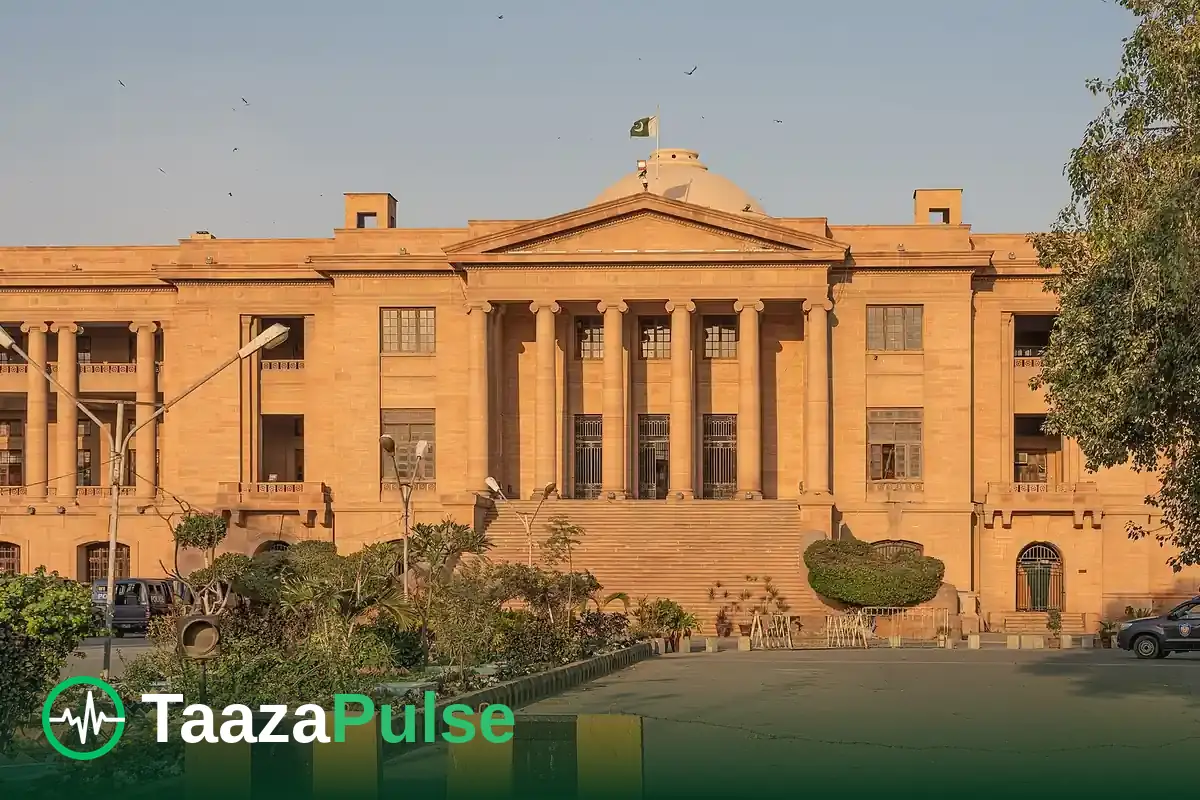
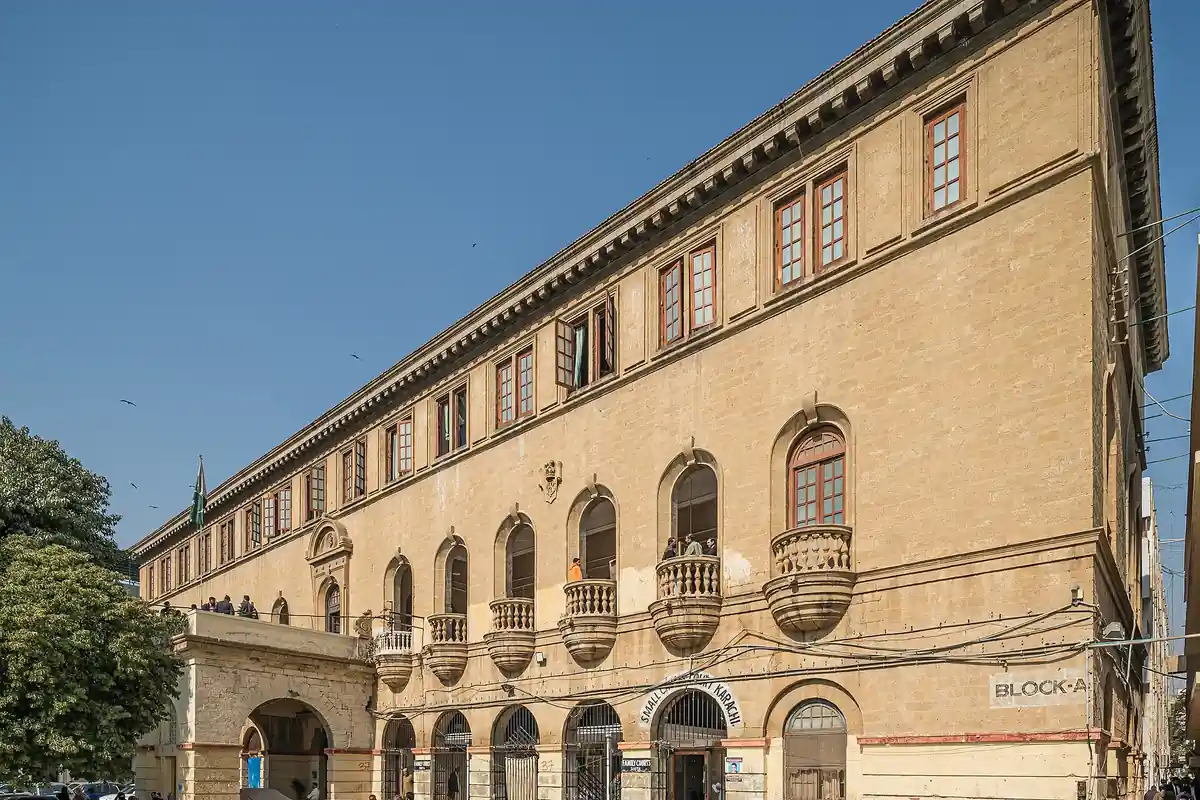
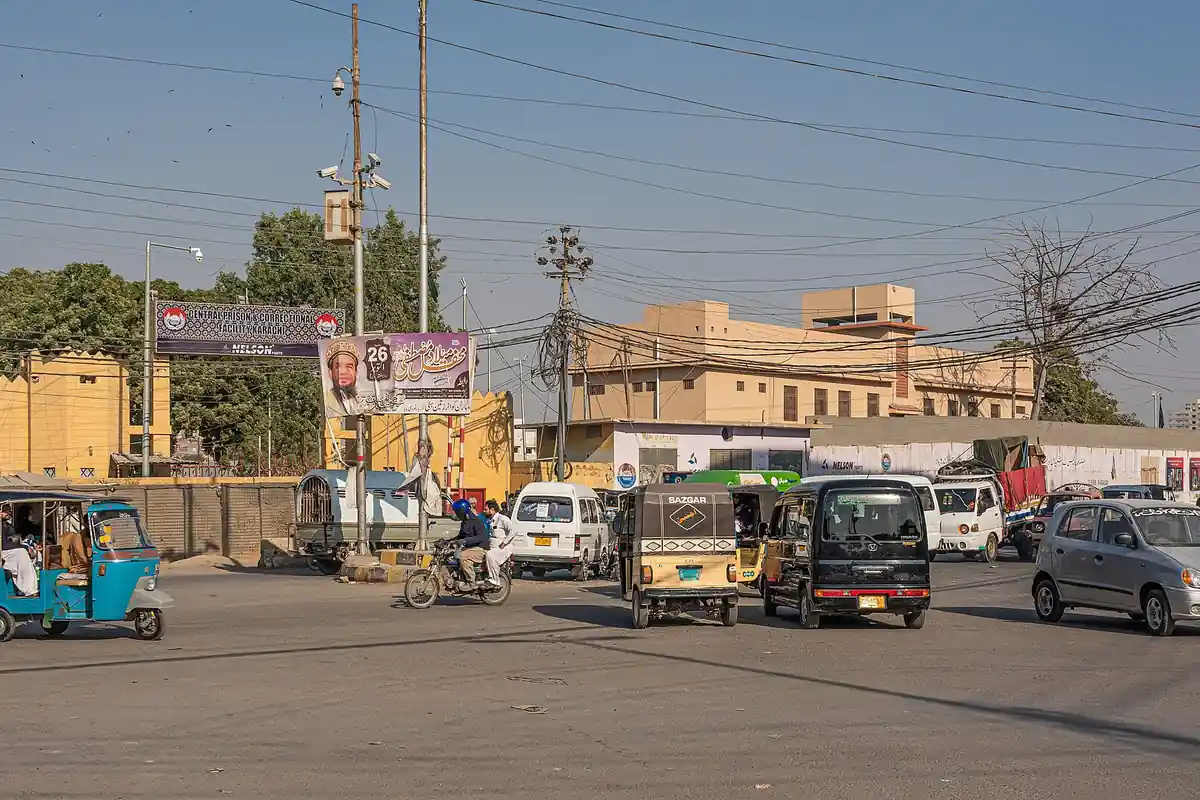
The photographs in this article are file photos from Wikimedia Commons — the Sindh High Court building in Karachi, the Karachi City Courts complex, and Central Prison Karachi, all photographed by A.Savin under the Free Art Licence, and a courtroom gavel (Joe Gratz, CC0) — and are not photographs of the 31 October hearing, of Iqrar-ul-Hassan, or of his release.
Sources: Dawn — Court grants bail to anchorperson Iqrarul Hassan, lawyer confirms (31 October 2026); ARY News — Court approves bail for Iqrar-ul-Hassan in NCCIA case (31 October 2026, headline and report as carried on 31 October); Social Diary — Syed Iqrar-ul-Hassan granted bail in Karachi: Karachi City Court, Judicial Magistrate East, Rs200,000 surety, video-link production (31 October 2026); The News — Iqrar's second bail plea dismissed in anti-state content case (29 October 2026); Journalism Pakistan — Court again denies Iqrarul Hassan bail in PECA case (29 October 2026); Journalism Pakistan — Karachi magistrate denies Iqrarul Hassan bail in PECA case (22 October 2026); TaazaPulse — Iqrar-ul-Hassan's bail plea rejected by the sessions court (29 October 2026).
Frequently Asked Questions
Has Iqrar-ul-Hassan been granted bail?
Yes, on Saturday 31 October 2026. Dawn reported that a court granted bail to the anchorperson and that his lawyer confirmed the order, ARY News reported the same day that a court approved bail in the NCCIA case, and a detailed report names the Karachi City Court and Judicial Magistrate East, with surety bonds of Rs200,000. His release is subject to those bonds being furnished.
Which court granted bail, and on what terms?
Dawn's headline says a court granted bail and the lawyer confirmed it, without naming the forum in the headline. The detailed Social Diary report names the Karachi City Court, says the application came before Judicial Magistrate East Gul Reza Memon, and says Hassan was produced by video link. The reported terms are surety bonds of Rs200,000; no other bail condition and no court reasoning appears in the reporting seen, and this article does not invent either.
Why is this a reversal?
Because bail had been refused twice before: Judicial Magistrate East refused post-arrest bail on 22 October, citing a risk of obstruction to the investigation, and District and Sessions Judge (East) Arshad Murtaza dismissed a second bail application on 29 October, finding no merit in it. Saturday's grant, two days after the sessions dismissal, is the latest order in that sequence, and the reporting does not explain the procedural route between the two.
What is Iqrar-ul-Hassan accused of?
The NCCIA's Cybercrime Reporting Centre in Karachi registered FIR No. 101/2026 on 10 October under Sections 9, 10, 20, 24 and 26-A of the Prevention of Electronic Crimes Act, 2016 — glorification of an offence, cyberterrorism, offences against dignity, cyberstalking, and false and fake information. The prosecution alleges he used his social media accounts to disseminate false, defamatory and anti-state content intended to instigate the public against the state and its institutions. These are allegations, not findings of guilt.
Does bail mean he has been cleared?
No. Bail is a custody decision, not an acquittal and not a quashing of the FIR. It means he need not remain in jail while the case proceeds. The case continues: the magistrate directed on 19 October that the NCCIA submit its challan within 14 days, and whether charges are framed will depend on that challan and on the court's consideration of it.
What happens next in the case?
First, the surety bonds of Rs200,000 must be furnished and his release from Central Jail Karachi effected. Then the prosecution's challan is the next substantive step, followed by the court's decision on cognisance and charges if a challan is filed. If the prosecution believes the grant was wrong, it may seek a remedy against the order in a higher court, but no such step has been reported so far.