Mohsin Naqvi Tells Senate There Is 'No Room for Respect' Left for Fazlur Rehman
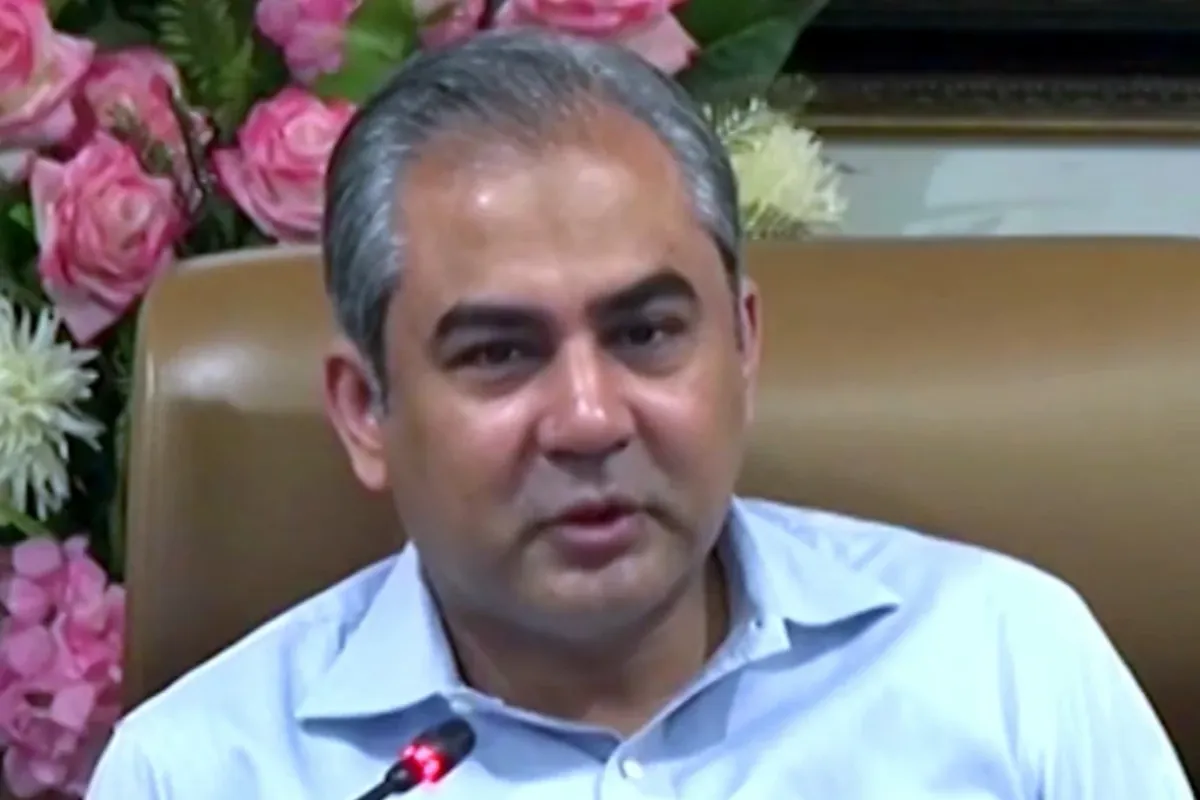
The government's war of words with Maulana Fazlur Rehman escalated on Thursday, 29 October 2026, when Interior Minister Mohsin Naqvi rose in the Senate to answer the JUI-F chief's National Assembly speech of a day earlier — and told the House, in remarks reported by ARY News, that after what the Maulana had said, no room for respect remained. Naqvi said he had held Fazlur Rehman in high regard, but accused him of turning against the state after being denied a share in power, alleged that Islam was being used for business and politics, and defended his own presence at the Tehran meeting that started the row. The speech triggered protests from JUI-F benches, a heated clash involving Senator Kamran Murtaza, and the second front-page parliamentary confrontation between the government and the Maulana in a single day.
Naqvi's intervention made Thursday a two-chamber pincer movement. Hours earlier, in the National Assembly, Defence Minister Khawaja Asif had answered the same Wednesday speech, insisting that no defence pact was discussed in Tehran and that the talks were not his ministry's mandate. The Senate speech went further and hit harder: where Asif argued mandates and diplomacy, Naqvi questioned motives — and named the grievance he believes sits underneath the Maulana's criticism, the settlement imposed on Khyber Pakhtunkhwa earlier this month, in which JUI-F received no share.
What Naqvi said: 'no room for respect remains'
According to Capital News Point's report of the session, Naqvi said he had held Fazlur Rehman in high regard, but his respect for the veteran politician had diminished following his recent remarks about state institutions; ARY News, carrying the exchange on its breaking banner, rendered the line more bluntly — that after what the Maulana has said, there is no longer room for respect. Naqvi argued that political differences were a normal part of politics, but did not justify what he described as inappropriate statements about the state and its institutions, and he urged politicians to exercise responsibility when commenting on them.
The interior minister's central charge was about consistency. The state, he said, is welcomed and praised as long as people benefit from it, but criticised by the same voices when they do not receive their desired share in power or government. Anyone who criticised others, he added, should also have the courage to hear a response — a line he returned to when JUI-F senators protested during the speech. Political criticism, he said, had to be accompanied by a willingness to hear opposing views, and political disagreements should be distinguished from statements concerning state institutions.
Naqvi also alleged that some people used Islam for political and personal interests — a charge the forwarded television coverage summarised as using Islam for business and politics. And he made a specific claim about governor's rule: some of the same individuals who now denounced it, he said, had previously approached him asking for governor's rule to be imposed to resolve their own political difficulties. He did not name who had made such a request. The allegation lands in a charged context: emergency and governor's rule have been in force in Khyber Pakhtunkhwa since 11 October, and Fazlur Rehman has been among the settlement's sharpest critics — a sequence TaazaPulse has covered in its reporting on the KP emergency.
Uproar on the floor: the Murtaza clash
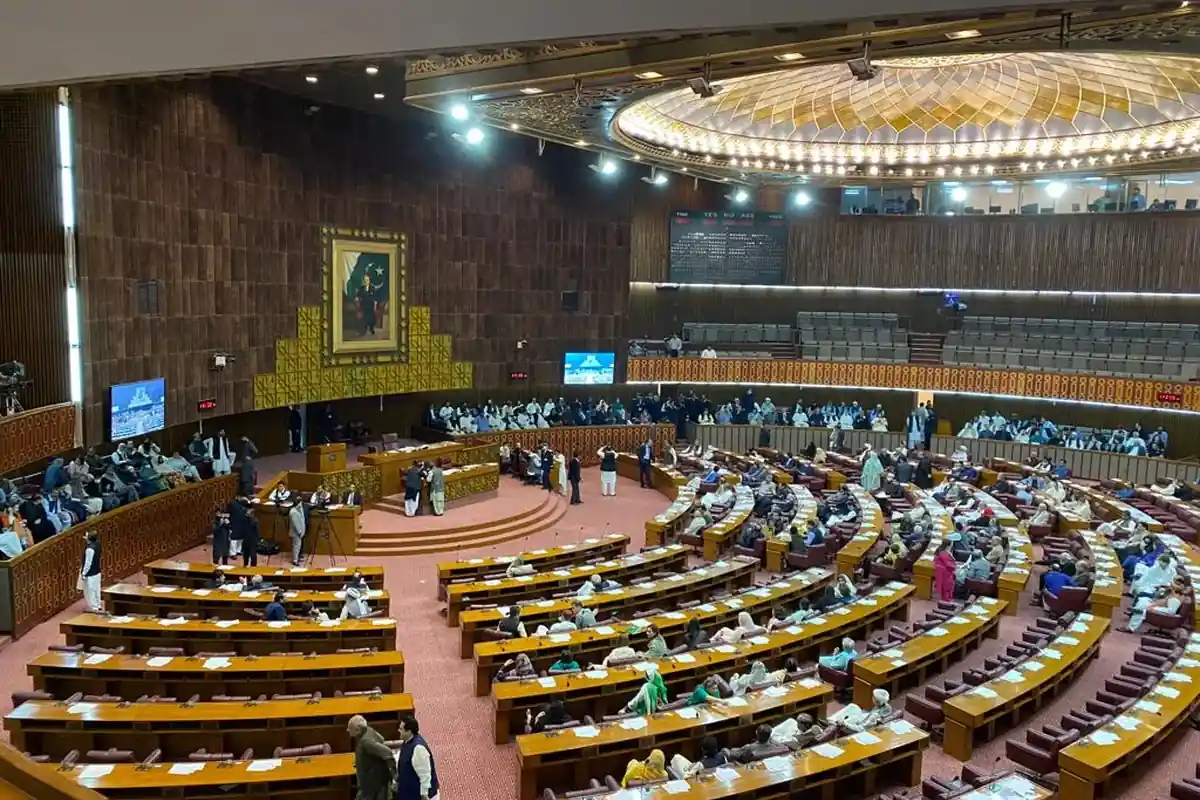
The speech did not proceed uninterrupted. JUI-F Senator Kamran Murtaza protested during the address, triggering an uproar in the House, Dawn News reported, as JUI-F members staged a strong protest while Naqvi spoke. Responding to the protest, Naqvi said the senator would have to listen to his speech, and repeated that those who criticised others should have the courage to hear the response. Murtaza, according to Capital News Point, told the interior minister to watch his language.
The temperature rose further when PML-N Senator Abid Sher Ali lost his temper, addressing Murtaza with remarks that included the words that he should be ashamed of himself, and a reference to alleged abusive remarks about mothers. The two senators exchanged further heated words before Minister of State for Interior Talal Chaudhry intervened and asked Sher Ali to return to his seat. The chair repeatedly asked opposition members to allow the minister to finish, according to 92 News HD's account of the session. Naqvi, resuming, urged the protesting lawmakers to have the courage to listen: parliamentary proceedings, he said, could not function if one side insisted on expressing its views while refusing to hear the other.
The in-chamber protest was, at the time of publication, JUI-F's visible answer to the speech. Television coverage also carried a reply by JUI-F secretary general Maulana Abdul Ghafoor Haideri to the remarks of the interior minister and his cabinet colleagues, though no detailed text of a formal party statement had appeared in the sources available to TaazaPulse. Fazlur Rehman himself had not, in those sources, publicly responded to Naqvi's Senate speech — his own Wednesday address, and his party's record of opposition to the KP settlement, remain his side's stated position.
The Tehran defence: 'the prime minister assigned me a task'
On the question that opened the dispute, Naqvi gave the Senate the same answer Asif had given the National Assembly, in his own words. He did not travel to Iran simply out of personal interest, he said. Prime Minister Shehbaz Sharif had assigned him a specific task, which was why he had accompanied the prime minister on the visits. He rejected the suggestion that the visit was connected to a defence agreement, describing Fazlur Rehman's position on the matter as incorrect — matching Asif's categorical statement in the lower house that no defence pact was discussed in Tehran and that Field Marshal Asim Munir travelled there with a message of peace.
The Tehran meeting brought together Saudi Defence Minister Prince Khalid bin Salman, Field Marshal Munir and Turkish intelligence chief Ibrahim Kalin, with Iranian Foreign Minister Abbas Araghchi and Supreme National Security Council Secretary Mohsen Rezaei on the Iranian side; the participants agreed to continue dialogue. It was Fazl's characterisation of that gathering — a defence agreement being negotiated while Pakistan's defence and foreign ministers sat in parliament — that the government has now answered in both houses on the same day.
What Fazl said on Wednesday
The speech being answered was delivered in the National Assembly on Wednesday, 28 October. Fazlur Rehman questioned why, if a defence agreement was being signed in Iran and a high-level meeting being held, the defence minister and the foreign minister were sitting in Pakistan, and asked whether the Interior Ministry also had duties there — pointing directly at Naqvi's presence at the gathering. He then turned Khawaja Asif's own famous parliamentary taunt back on him — "koi sharam hoti hai, koi haya hoti hai", roughly "have some shame, show some modesty" — to laughter and desk-thumping in the House, as TaazaPulse reported in its coverage of Asif's reply.
Fazl's address ranged wider than the Tehran question. According to reports of the proceedings, he reminded the government that Pakistan does not belong to any one general but to all its citizens; he criticised the imposition of governor's rule and emergency measures in Khyber Pakhtunkhwa and questioned their constitutional justification; he discussed his own past efforts to facilitate dialogue between the government and the PTI, including negotiations concerning Imran Khan; he warned of political resistance if negotiations failed; and he proposed a new Charter of Democracy, echoing the 2006 charter, to protect constitutional supremacy and democratic institutions. It was the combination — the institutions remarks, the Tehran challenge and the KP critique, delivered together — that drew Thursday's coordinated response.
The Asif chapter, and the longer fuse
The first reply came in the National Assembly. Asif argued the Tehran talks concerned neither a defence pact nor Pakistan's defence affairs, credited Munir's diplomacy with the Makkah Joint Agreement and an agreement with Qatar, and counterattacked Fazl's own record — asking what he had achieved for Kashmir during his decade chairing the Kashmir Committee besides, in Asif's phrase, free rides, and alleging that JUI-F was the only political party making money in the name of religion. Fazl has consistently rejected such criticism of his record. Readers can follow that exchange in full in our companion report on Asif's reply, linked below.
Thursday's speeches were an escalation, but not the start. On Friday, 16 October, speaking to journalists in Lahore, Naqvi had claimed — without naming anyone — that "the head of a party is extremely upset over being denied a role in the new setup in KP and not getting the governorship", as Dawn reported on its front page the next day. Observers took the unnamed leader to be Fazlur Rehman. Naqvi alleged on that occasion that the politician had remained dependent on the establishment for decades to advance his political career, and had even relied on the establishment to arrange air tickets for members of his party. Minister of State Talal Chaudhry added his own criticism of Fazl over the KP power-sharing question in the same period, saying he had not expected such a position from the Maulana. The News, in an editorial assessment of that earlier exchange, noted the government's reading of events: that Fazl's harsh statements began as governor's rule was imposed, and that he had said matters had already been settled — a claim the editorial questioned, since he had not said so before.
Why this fight matters
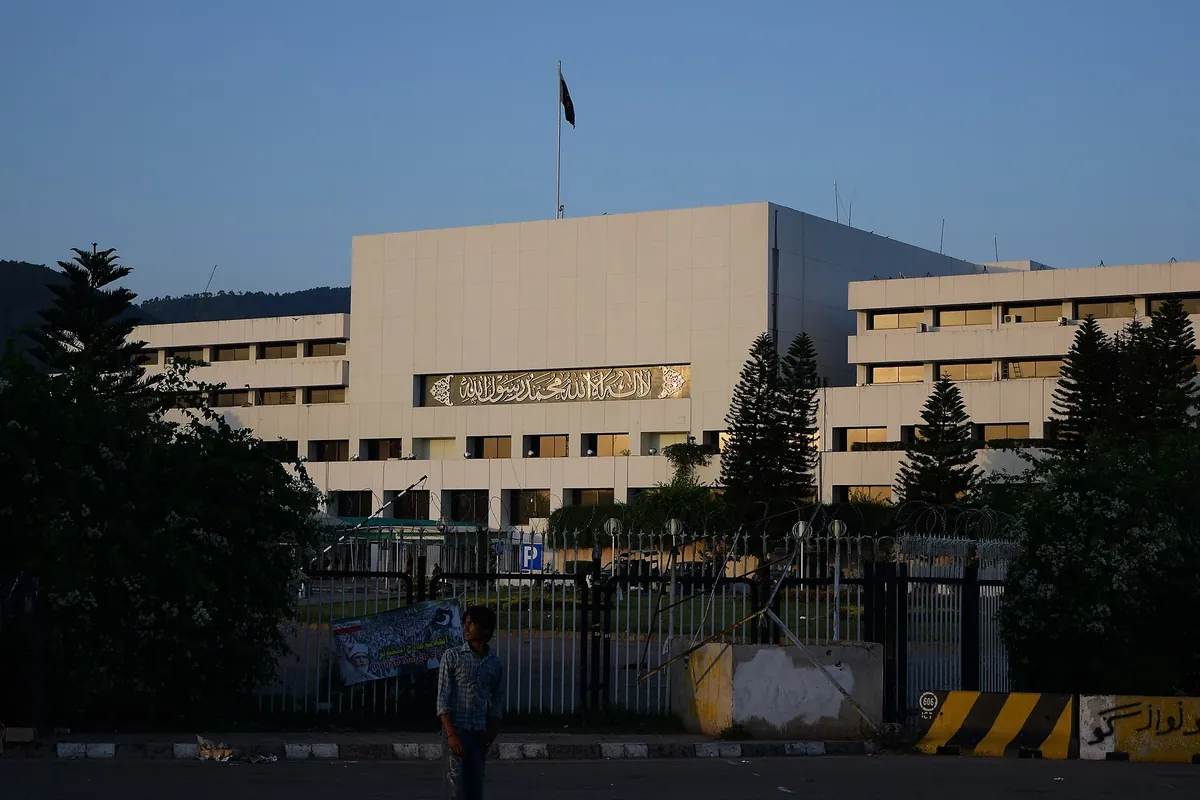
JUI-F is not a marginal voice in this argument. The party commands a durable vote bank and street presence in Khyber Pakhtunkhwa and northern Balochistan, a network of seminaries, and a long history as a coalition partner and kingmaker — Fazlur Rehman has himself observed, in remarks quoted in The News' assessment, that no government can be formed without JUI-F, and even if formed, cannot run. The government's KP settlement — emergency, governor's rule, a detained chief minister and a parliament whose approval is still being fought over — directly rearranged power in the province where JUI-F is strongest, and did so, on Naqvi's own account, over the party's expectation of a share.
Three threads are now braided into one confrontation. The first is Khyber Pakhtunkhwa: who governs it, on what constitutional basis, and with whose consent. The second is Tehran: who speaks for Pakistan in its most sensitive regional diplomacy, and whether the civilian ministers responsible must be in the room. The third is the oldest question in Pakistani politics — the boundary between legitimate criticism of state institutions and remarks the government of the day treats as beyond the line. Naqvi's speech addressed all three, and framed the government's position in a single sentence of method: political differences are legitimate; statements about institutions carry a responsibility; and those who speak must be ready to hear the answer.
Fazlur Rehman's stated position, across his Wednesday speech and his party's record, answers each thread in the opposite direction: that constitutional criticism is a parliamentarian's duty, that the KP settlement bypassed democratic consultation, and that the remedy lies in negotiation and a new democratic charter rather than confrontation. Between those two positions there is, at present, no visible bridge — and the institutions question, once raised on the floor of both houses in a single day, does not subside on its own.
What happens next
The immediate markers are procedural and political. Watch for a formal JUI-F response — a party statement, a press conference by Fazlur Rehman, or a reply on the floor when the National Assembly next sits; for the continuation of the Senate proceedings, where Thursday's session ended in uproar; and for the KP emergency's own track through parliament and the courts, where approval and legal challenge remain pending. Whether the government chooses to lower the temperature — some of Thursday's language, including the exchange over respect, was the kind that hardens positions — or whether Fazl answers in kind, will decide whether this remains a parliamentary war of words or becomes a wider political confrontation in the province where both sides have the most at stake.
TaazaPulse will report the JUI-F response and any further proceedings as they are confirmed. This report is based on Capital News Point's account of the Senate session, ARY News' breaking coverage, 92 News HD and Dawn News reporting of the proceedings, The AZB's report of the National Assembly exchange, Dawn's front-page report of 17 October, and The News' editorial assessment of the dispute.
Sources
This report is based on reporting, official statements and documents from:
- ARY News
- Capital News Point
- 92 News HD
- Dawn News
- Dawn
- The AZB
- The News
Frequently Asked Questions
What did Mohsin Naqvi say about Fazlur Rehman in the Senate?
Naqvi said he had held Fazlur Rehman in high regard, but that after the Maulana's remarks about state institutions his respect had ended — ARY News reported the line as there being 'no room for respect' left. He said the state is praised while people benefit from it and criticised when they are denied a share in power, and that anyone who criticises others should have the courage to hear a response.
What had Fazlur Rehman said a day earlier?
In his National Assembly speech on Wednesday, 28 October 2026, Fazlur Rehman questioned why a defence agreement was being discussed in Tehran while the defence and foreign ministers sat in Pakistan, asked why the interior minister was present, and repeated Khawaja Asif's own taunt 'koi sharam hoti hai, koi haya hoti hai' at him. He also criticised governor's rule in Khyber Pakhtunkhwa, said Pakistan belongs to all its citizens and not to any one general, and proposed a new Charter of Democracy.
What happened in the Senate during Naqvi's speech?
JUI-F Senator Kamran Murtaza protested during the address and told the interior minister to watch his language, as JUI-F members staged a strong protest. PML-N Senator Abid Sher Ali exchanged heated remarks with Murtaza before Minister of State for Interior Talal Chaudhry intervened and asked Sher Ali to return to his seat. The chair repeatedly asked opposition members to let the minister finish.
What did Naqvi say about his Tehran visit?
Naqvi said he did not travel to Iran out of personal interest: Prime Minister Shehbaz Sharif had assigned him a specific task, and he accompanied the prime minister on the visits. He rejected the suggestion that the visit was connected to a defence agreement, calling Fazlur Rehman's position on the matter incorrect — the same assurance Khawaja Asif gave the National Assembly.
What did Naqvi allege about governor's rule and the use of Islam?
Naqvi alleged that some people use Islam for political and personal interests — television coverage summarised the charge as using Islam for business and politics. He also claimed that some of the same individuals who now denounce governor's rule had previously approached him asking for governor's rule to be imposed to resolve their own political difficulties. He named no one in that claim.
How has JUI-F responded, and what happens next?
JUI-F's immediate response was on the floor: its senators protested during the speech, and television coverage carried a reply by the party's secretary general, Maulana Abdul Ghafoor Haideri. No detailed formal party statement had appeared in the sources available at publication, and Fazlur Rehman had not publicly answered the Senate speech. The next markers are a formal JUI-F statement, any reply by Fazl in the National Assembly, and the Khyber Pakhtunkhwa emergency's progress through parliament and the courts.