Khawaja Asif Hits Back at Fazlur Rehman Over Tehran Meeting: 'No Defence Pact Was Discussed'
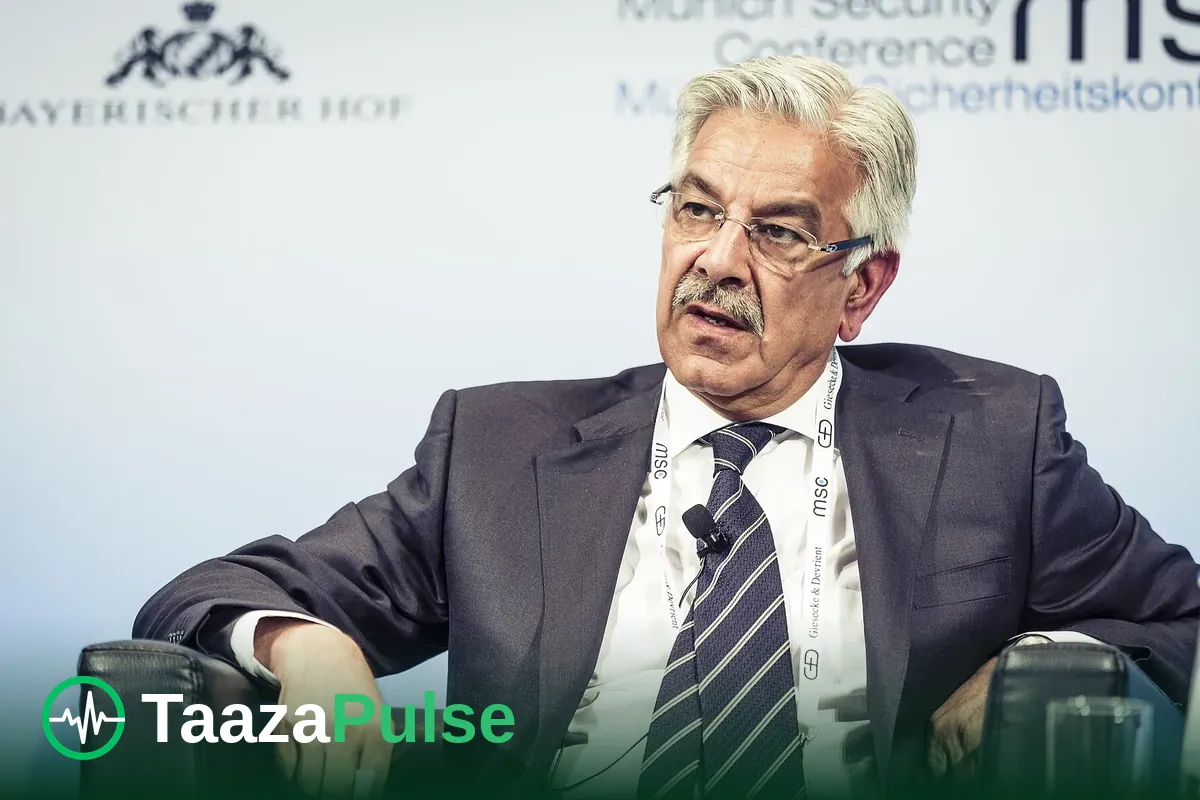
Defence Minister Khawaja Asif has hit back at Jamiat Ulema-i-Islam-Fazl chief Maulana Fazlur Rehman over his absence from a recent regional meeting in Tehran, telling the National Assembly on Thursday, 29 October 2026, that no defence pact was discussed at the gathering and that the talks did not fall within his ministry's mandate. The exchange, which turned on a phrase Asif himself once made famous in the House, laid bare a disagreement that goes well beyond one meeting: who speaks for Pakistan in its most sensitive regional diplomacy, and whether a defence minister must be in the room whenever defence is in the air.
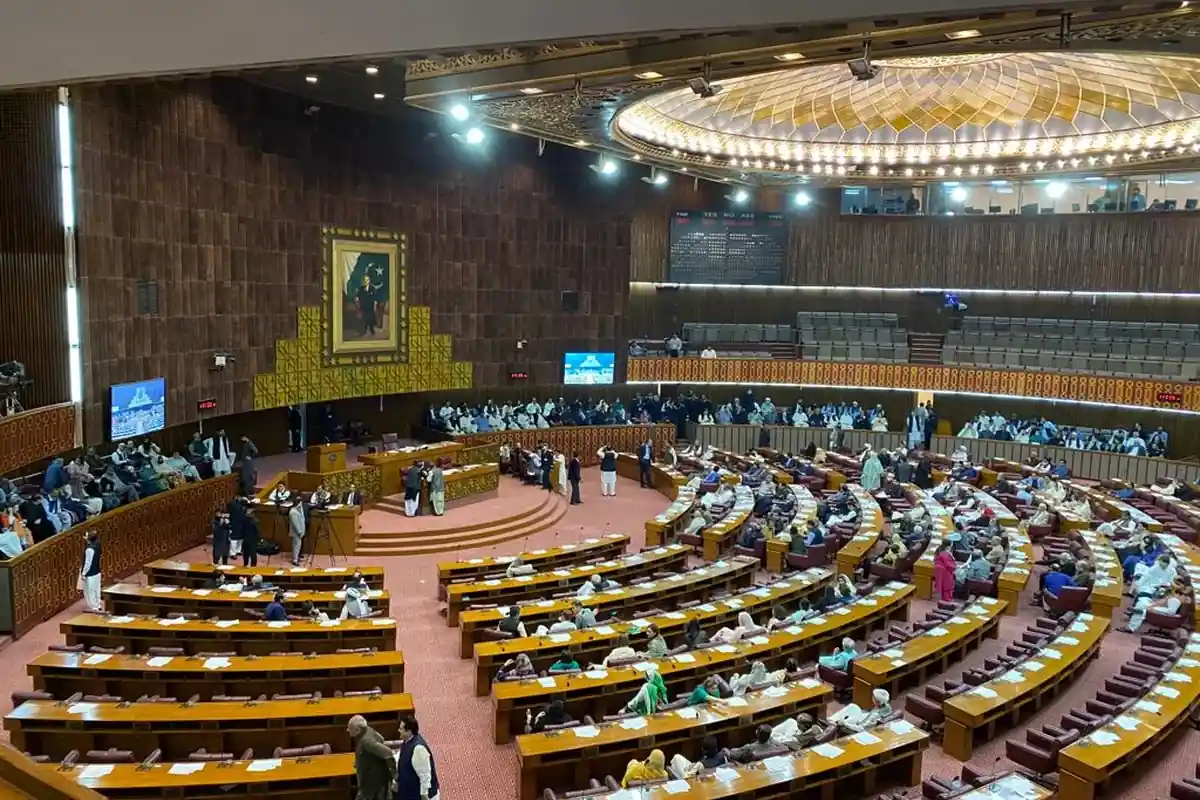
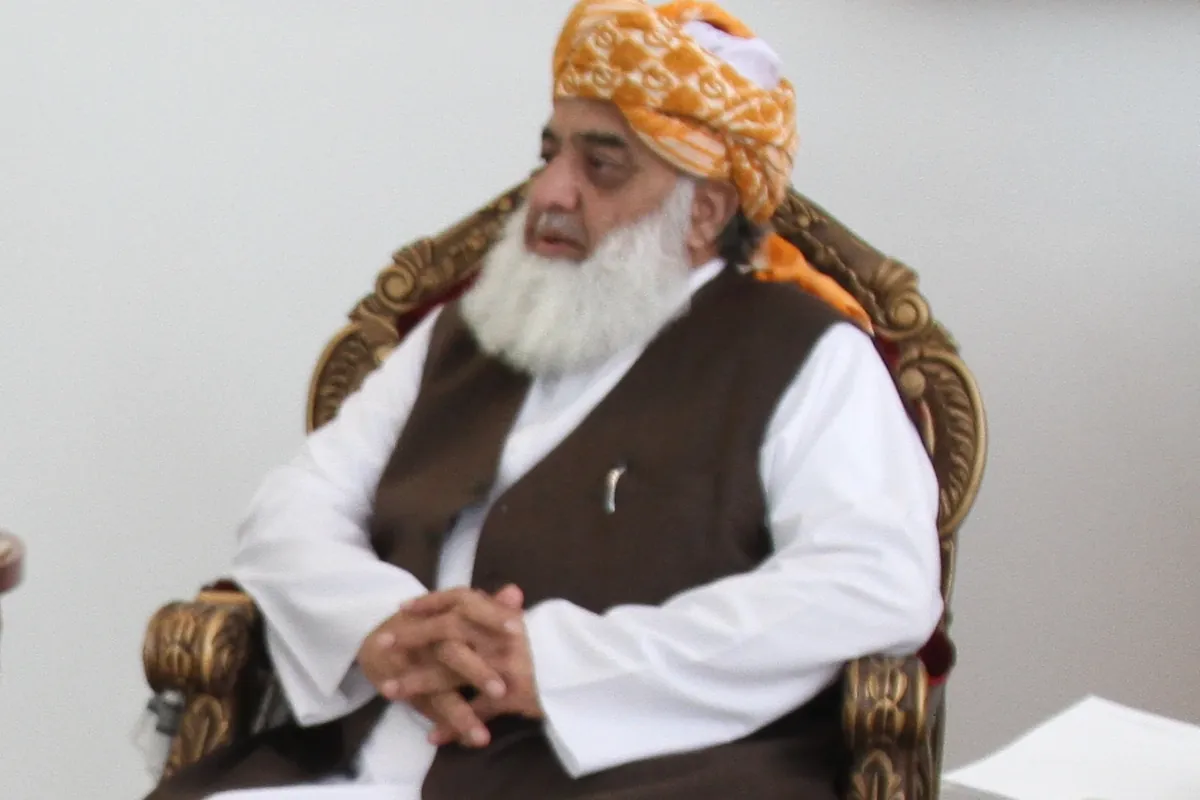
Asif was responding to criticism Fazlur Rehman had levelled a day earlier, in his own National Assembly speech on Wednesday, when the JUI-F chief questioned why the defence minister had not attended the Tehran meeting despite holding the defence portfolio, and why the interior minister's presence had been required there instead. Fazl turned Asif's own well-known parliamentary taunt back on him, repeating the words "koi sharam hoti hai, koi haya hoti hai" — roughly, "have some shame, show some modesty" — to laughter and desk-thumping in the House. On Thursday, Asif answered him directly, and in kind.
What Asif said: no pact, not his ministry's mandate
Asif's central argument, as reported by The AZB and Daily The Destination, was straightforward. The Tehran discussions did not concern a new defence pact involving Pakistan, he said, and they were not focused on Pakistan's defence affairs. His ministry was therefore not responsible for the engagement, and his absence from it was not an oversight, a snub, or a sign of being sidelined. The meeting, he said, was about something else entirely: an effort to keep channels of dialogue open between regional powers at a moment of acute tension, and the person carrying that effort was not a minister at all.
"The Field Marshal made diplomatic efforts for establishing peace in the region," Asif told the House, referring to Chief of Defence Forces and Chief of Army Staff Field Marshal Syed Asim Munir, who travelled to Tehran for the meeting. "Field Marshal's diplomatic efforts led to the Makkah Joint Agreement and an agreement with Qatar," he added, crediting Munir's diplomacy with two recent agreements. The point was deliberate and pointed: the diplomacy Fazl was questioning had already produced results, Asif argued, and it had done so through a channel that did not run through the Defence Ministry's desk.
Asif also drew a line between the Tehran meeting and the defence agreements he has actually handled. Pakistan has signed two defence agreements since the military conflict with India last year, he said — the Makkah defence pact and the Badr Memorandum of Understanding — and he had been involved in those agreements in his capacity as defence minister. The contrast was the core of his defence: when a defence agreement is being signed, the defence minister is there; when no defence agreement is being signed, his absence is not a mystery to be explained but a matter of mandate. The Tehran meeting, on his account, belonged to the second category.
Fazl's charge: where was the defence minister?
Fazlur Rehman's challenge, delivered on Wednesday, started from a simple question of institutional logic. A defence agreement, as he characterised it, was being discussed in Iran, and a high-level meeting was being held — yet the defence minister and the foreign minister were sitting in Pakistan. "The defense agreement is being signed in Iran, a meeting is being held, but the Defense Minister and the Foreign Minister are sitting here in Pakistan; does the Interior Ministry have duties there too?" he asked, according to The Inquirer, pointing to Interior Minister Mohsin Naqvi's presence at the gathering.
The question was framed as a matter of constitutional propriety as much as of diplomacy. If the subject was defence, Fazl argued, then the minister responsible for defence ought to be present, and the presence of an interior minister at a defence discussion required explanation. His use of Asif's own phrase — "koi sharam hoti hai, koi haya hoti hai" — was the rhetorical flourish that made the speech travel. Asif had used those words years earlier in the House against members of the Pakistan Tehreek-i-Insaf, and they have since become one of his most quoted parliamentary lines. Fazl's decision to throw them back at him, in the same chamber, was understood by everyone present as a deliberate piece of theatre, and it drew laughter and desk-thumping from the benches.
Fazl also urged Asif to maintain his dignity and self-respect, turning the minister's previously used remarks against him once more, and he broadened his speech beyond the Tehran question. According to reports of the proceedings, his address ranged over the government's handling of Khyber Pakhtunkhwa — where emergency and governor's rule are in force — over constitutional matters, and over the state of relations between the government and the opposition. The Tehran absence was the sharpest line in the speech, but it was not the only one, and the wider critique is part of why Asif's reply on Thursday was as combative as it was.
Who was in the room in Tehran
The meeting itself, as described in the reporting of the exchange, brought together a striking combination of regional figures. On the Saudi side was Defence Minister Prince Khalid bin Salman. Pakistan was represented by Field Marshal Munir. Türkiye's intelligence chief, Ibrahim Kalin, also participated. On the Iranian side were Foreign Minister Abbas Araghchi and Supreme National Security Council Secretary Mohsen Rezaei. The participants, according to the reports, agreed to continue dialogue aimed at strengthening cooperation among the four regional countries, particularly on regional peace and security.
That composition is itself part of the story. Saudi Arabia and Iran are long-standing regional rivals, and a format that brings Riyadh's defence minister, Ankara's intelligence chief, Tehran's foreign minister and Pakistan's military chief into the same room is not routine diplomacy. Iranian Foreign Ministry spokesman Esmaeil Baghaei had previously said that Munir proposed holding the Tehran meeting during his visit to Iran, according to The AZB — a detail that, if accurate, places the initiative for the gathering with the Pakistani military chief rather than with any civilian ministry. It is consistent with Asif's account of the meeting as a peace mission carried by Munir, and it helps explain why the Defence Ministry's absence from the table did not, on Asif's telling, mean Pakistan was absent from the room.
What the meeting did not produce, on the available reporting, is as important as what it did. No defence pact was signed, no agreement text has been published, and no date for a next round has been announced. The participants agreed to keep talking. In a region where the alternative to talking is escalation, that is a result of a kind — but it is also a deliberately modest one, and it leaves the central question of the exchange unresolved in one respect: Fazl's premise, that a defence agreement was being signed in Tehran, and Asif's rebuttal, that no such agreement was under discussion, cannot both be right, and the public record so far contains no document that settles the point either way. What is on the record is Asif's categorical statement in the House that no pact was being negotiated, and Fazl's equally public doubt.
Munir's peace role, as Asif described it
Asif's reply leaned heavily on the record of the Field Marshal's recent diplomacy. He said Munir had assumed a role promoting peace and dialogue following last year's military conflict between Pakistan and India, and that the objective of the Tehran engagement was to help establish lasting peace in the region. According to Asif, Munir had attended as a messenger of peace and had helped lay the groundwork for the discussions — language that casts the military chief not as a substitute for civilian diplomacy but as its instrument in a setting where a uniformed interlocutor could open doors a minister could not.
Asif also said Munir had played a role in preventing a wider confrontation, and suggested that discussions could lead to progress towards peace in the coming days or weeks, referring in particular to tensions involving Saudi Arabia and Yemen. The AZB's report of the speech notes that Asif urged Fazl to take a broader view of Pakistan's diplomatic and security role, and described the criticism of his absence as misplaced, calling for recognition of Pakistan's and the Field Marshal's international contributions regardless of domestic political differences. That appeal — to judge the diplomacy by its outcomes rather than by its seating plan — was the emotional core of Asif's reply, and it was aimed as much at the wider House as at Fazl himself.
The Makkah Joint Agreement and the agreement with Qatar, which Asif credited to Munir's efforts, are the two reference points he chose to make that case. The Makkah pact binds Pakistan, Saudi Arabia and Türkiye in mutual defence, and it is the agreement Asif said he had himself been involved in as defence minister. The distinction he was drawing is therefore a precise one: he is not absent from Pakistan's defence diplomacy, he argued — he was at the table for the Makkah agreement and for the Badr Memorandum of Understanding — but the Tehran meeting was a different kind of engagement, a dialogue rather than a negotiation, and it belonged to a different channel.
The counterattack: Kashmir, and money in the name of religion
Asif did not confine himself to defending his absence. He turned on Fazl's own record, asking what the JUI-F chief had done for the Kashmir cause during his decade-long tenure as chairman of the Kashmir Committee. "What did Maulana do for the Kashmir cause besides free rides?" he asked, according to Daily The Destination — a jibe that accused Fazl of enjoying the perquisites of a high-profile parliamentary role without delivering results for the cause it existed to serve. He went further, alleging that JUI-F was the only political party making money in the name of religion.
The charge is a familiar one in Pakistani politics, where the Kashmir Committee chairmanship has long been a coveted and criticised post, and where Fazl's long tenure in it has been a regular target for opponents who argue that the committee produced travel and protocol rather than progress. Fazl, for his part, has consistently rejected such criticism, presenting his party as a principled religious and political force and his diplomacy — including his recent mediation efforts between the government and the PTI over the long march — as evidence of a substantive political role. In his Wednesday speech, Fazl described how, during the long march crisis, PTI leaders had contacted him and asked him to help end the political deadlock, and how he had held detailed discussions with Prime Minister Shehbaz Sharif and other political leaders to avoid clashes and bloodshed, only to be told later, through Deputy Prime Minister and Foreign Minister Ishaq Dar, that the cabinet had not agreed to the proposed procedure.
That history matters to the exchange because it is the context in which Fazl sees himself: not as a bystander to Pakistan's crises but as a mediator in them, and therefore entitled to ask hard questions of ministers. Asif's counterattack was designed to deny him exactly that standing — to recast the questioner as a man whose own record does not bear scrutiny. The House, which laughed at Fazl's borrowed phrase on Wednesday, heard a very different kind of laughter on Thursday: the sound of a minister who had decided that the best defence was an attack on his critic's credibility.
The Charter of Democracy, and the wider argument
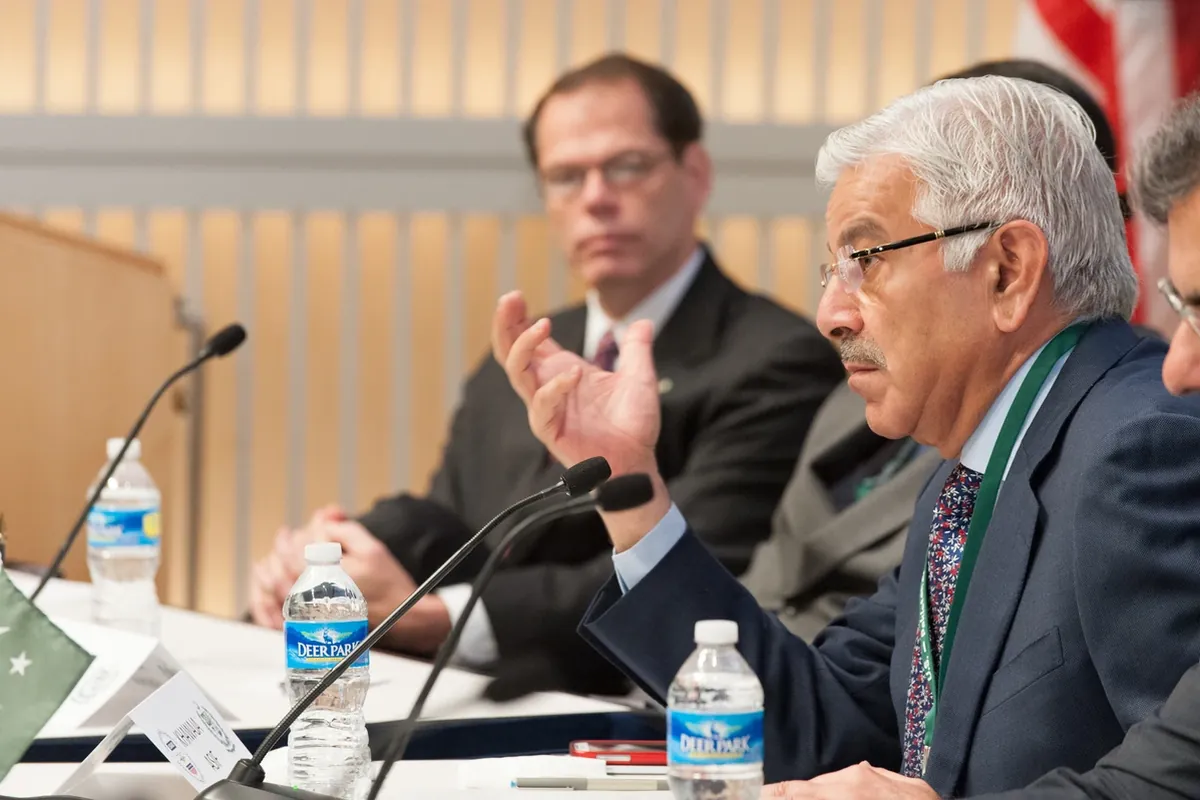
Beyond the personal exchange, Fazl's Wednesday speech contained a proposal that outlasts the news cycle. He called on the government and the opposition to engage in dialogue and develop a new "Charter of Democracy" to address Pakistan's political challenges — a deliberate echo of the 2006 Charter of Democracy signed by Benazir Bhutto and Nawaz Sharif, which sought to set ground rules for democratic competition after years of military rule. Fazl's version, as reported, was framed as a response to the present moment: a province under emergency and governor's rule, a former chief minister in detention, and a political system in which, in his telling, constitutional norms are being stretched.
Asif's reply did not take up the Charter proposal directly. His focus was narrower: the Tehran meeting, the mandate question, and Fazl's record. But the juxtaposition is instructive. Fazl was arguing, in effect, that Pakistan's political class needs new rules for how it conducts its disagreements; Asif was demonstrating, in the same chamber a day later, how the old rules work — a sharp exchange, a borrowed phrase, a counter-jibe, and a disagreement about a meeting in Tehran that neither side has fully documented in public. Whether the Charter idea gains any traction will depend on whether either side treats it as more than a speech line, and on whether the government, which has so far not responded to it in substance, sees any advantage in a fresh round of cross-party talks while Khyber Pakhtunkhwa remains under emergency.
The KP question is the thread that connects the two speeches to the rest of the week's politics. Fazl has been one of the most vocal critics of the emergency and governor's rule imposed in the province on 11 October, and his Wednesday speech criticised the government over its handling of the province. Asif, as a senior minister of that government, is a natural target for that criticism, and the Tehran exchange gave him a forum in which to answer it indirectly — by questioning Fazl's standing rather than defending the emergency itself. Readers following the KP story on TaazaPulse will recognise the pattern: the province's politics now surface in almost every national debate, because the emergency has made the province the test case for the government's wider claim that extraordinary measures are justified by an extraordinary security situation.
Why the mandate argument matters
Strip away the theatre, and the exchange raises a genuine constitutional and institutional question. In Pakistan's system, foreign policy is formally the preserve of the civilian government, but the military chief has long played a central role in relations with key partners — Saudi Arabia, China, the United States, and now, it appears, in a four-way dialogue with Iran. When a meeting of the kind held in Tehran takes place, and the defence minister is not present, two readings are available. One is Asif's: the meeting was not a defence negotiation, it was a peace dialogue, and the right person to carry it was the Field Marshal, whose relationships across the region made the conversation possible. The other is Fazl's: if defence is on the agenda in any form, the minister responsible for defence should be in the room, and his absence signals either a breakdown in civilian control or a deliberate sidelining of the civilian government.
Neither reading can be proved from the public record alone, because the contents of the Tehran discussions have not been published. What can be said is that Asif's account is internally consistent: he has been present for the defence agreements he cites, and he has now stated categorically, on the floor of the House, that no defence pact was discussed in Tehran. A ministerial statement of that kind, made in Parliament, carries weight — it can be tested against future disclosures, and it puts the minister's credibility behind the claim. Fazl's doubt, meanwhile, is the legitimate function of an opposition leader: to ask, in public, whether the government's account of its own diplomacy is complete, and to force a minister to answer on the record. Both men, in their different ways, did their jobs this week. The House, and the public, are left to judge which account is more convincing — and to wait for the next round of the dialogue, if it comes, to provide the evidence that would settle it.
What happens next
Three things will determine whether this exchange is remembered as a parliamentary spat or as a marker in Pakistan's regional diplomacy. The first is whether the Tehran dialogue continues in the same format, as the participants agreed it should, and whether a next round produces anything more concrete than an agreement to keep talking. The second is whether any document or statement emerges from any of the four capitals that confirms or contradicts Asif's assurance that no defence pact was discussed — a disclosure that would either vindicate the minister or vindicate his critic. The third is domestic: whether Fazl's call for a new Charter of Democracy finds any taker in a government that is currently managing an emergency in one province, a court battle over that emergency, and a parliament in which exchanges like this week's are becoming the norm rather than the exception.
For now, the facts as reported are these. On Wednesday, Maulana Fazlur Rehman questioned in the National Assembly why Defence Minister Khawaja Asif had not attended the Tehran meeting, and why the interior minister had been present instead, borrowing Asif's own phrase about shame and modesty to make the point. On Thursday, Asif replied that no defence pact was discussed in Tehran, that the talks were not his ministry's mandate, and that Field Marshal Asim Munir had travelled with a message of peace, with the Makkah Joint Agreement and an agreement with Qatar to show for that diplomacy. He also questioned Fazl's record on Kashmir and accused his party of profiting from religion. The participants in Tehran — Saudi Arabia's defence minister, Pakistan's Field Marshal, Türkiye's intelligence chief, and Iran's foreign minister and security council secretary — agreed to continue their dialogue. What that dialogue will produce, and whether the defence minister will be at the table when it does, remains to be seen.
TaazaPulse will follow the next round of the Tehran dialogue, and any response to Fazl's Charter of Democracy proposal, as they develop. Sources for this report: The AZB, Daily The Destination, The Inquirer, and 92 News HD's coverage of the National Assembly proceedings.
Sources
This report is based on reporting, official statements and documents from:
- The AZB
- Daily The Destination
- The Inquirer
- 92 News HD
Frequently Asked Questions
Who questioned Khawaja Asif, and when?
JUI-F chief Maulana Fazlur Rehman questioned Asif in the National Assembly on Wednesday, 28 October 2026, asking why the defence minister had not attended the Tehran meeting and why the interior minister had been present instead. Asif replied in the House on Thursday, 29 October.
What did Asif say about the Tehran meeting?
Asif said no defence pact was discussed in Tehran and the talks were not focused on Pakistan's defence affairs, so the engagement did not fall within the Defence Ministry's mandate. He said Field Marshal Syed Asim Munir travelled to Tehran with a message of peace and helped lay the groundwork for the discussions.
Who attended the Tehran meeting?
According to reports of the exchange, Saudi Defence Minister Prince Khalid bin Salman, Pakistan's Field Marshal Asim Munir and Turkish intelligence chief Ibrahim Kalin participated, with Iranian Foreign Minister Abbas Araghchi and Supreme National Security Council Secretary Mohsen Rezaei on the Iranian side. The participants agreed to continue dialogue.
Which agreements did Asif credit to Munir's diplomacy?
Asif credited Munir's diplomatic efforts with the Makkah Joint Agreement and an agreement with Qatar. He said he had himself been involved, as defence minister, in the Makkah defence pact and the Badr Memorandum of Understanding — agreements he distinguished from the Tehran dialogue.
What did Asif say about Fazlur Rehman's own record?
Asif asked what Fazl had done for the Kashmir cause during his decade-long tenure as chairman of the Kashmir Committee, besides what he called free rides, and alleged that JUI-F was the only political party making money in the name of religion. Fazl has consistently rejected such criticism of his record.
What is Fazl's Charter of Democracy proposal, and what happens next?
In his Wednesday speech Fazl called on the government and opposition to develop a new Charter of Democracy to address Pakistan's political challenges, echoing the 2006 charter. No government response in substance has been reported. The next markers are whether the Tehran dialogue continues in the same format and whether any disclosure confirms or contradicts Asif's assurance that no pact was discussed.