Pakistan, Singapore Discuss Possible Resumption of Direct Flights, Says Ishaq Dar
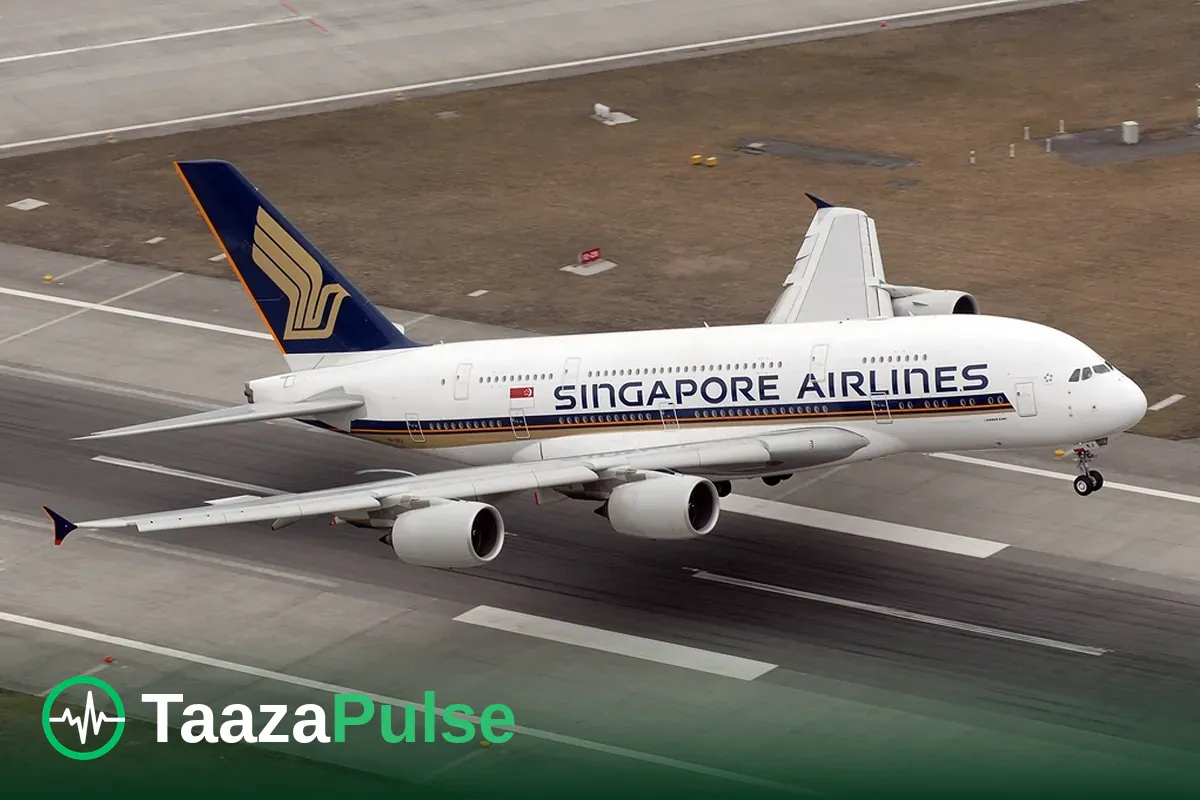
Pakistan and Singapore have discussed the possible resumption of direct flights between the two countries, Deputy Prime Minister and Foreign Minister Ishaq Dar said on Friday, putting air connectivity back on the bilateral agenda for the first time in years. The discussion took place during the Islamabad visit of Singapore's Foreign Minister, Dr Vivian Balakrishnan, who met Dar for delegation-level and restricted talks before the two men addressed a joint press conference. According to Dawn's account of the press conference, the ministers discussed restarting direct flights to make business travel easier and to bring the two countries' people into closer direct contact. No airline, route, frequency or start date was announced, and no timeline was offered — the discussion, as reported, is about a possibility, not a schedule. That distinction matters, because it is the difference between a diplomatic opening and a booking page, and readers should treat anything beyond it — a named carrier, a launch month, a fare — as unconfirmed until either foreign ministry or an airline says it officially.
The flights discussion did not happen in isolation. It sat inside a much wider set of talks that covered trade, investment, connectivity and skills development, along with business-to-business exchanges, people-to-people contacts and cooperation at multilateral forums. The two sides also discussed reopening the Trade and Investment Office at Pakistan's High Commission in Singapore and encouraging exchanges between business delegations and chambers of commerce — the practical plumbing that makes a flight route commercially viable, rather than merely symbolic. Balakrishnan's visit is the first by a Singaporean foreign minister to Pakistan in more than two decades, and it coincides with the 60th anniversary of diplomatic relations between the two countries, a milestone both sides have used this year to argue that the relationship has room to grow well beyond where it stands today. Pakistan was among the first countries to recognise Singapore after its independence in 1965, and formal diplomatic relations were established on 17 August 1966 — a history that gives the current push a ready-made anniversary frame, but also underlines how long the two countries have gone without the kind of high-level attention this visit represents.
For travellers and businesses, the practical question is what a direct service would change. A non-stop flight between Pakistan and Singapore would cut out the connecting stop that journeys between the two countries currently require, shortening a trip that today runs through a Gulf or regional hub. For business travellers, that means a day trip becomes plausible and a two-day trip becomes comfortable; for exporters and importers, it means cargo and samples move faster and meetings can be arranged at shorter notice; for families and students, it means a cheaper and simpler journey, since every connection adds both a fare and a failure point. The ministers framed the idea in exactly those terms — business trips and direct contact between citizens — rather than as a tourism project. That framing is consistent with the rest of the visit's agenda, which was dominated by trade, investment, digital economy, financial technology, infrastructure, logistics and small and medium-sized businesses, and by the student-visa discussion that Dar mentioned at the press conference. A flight route, in this telling, is infrastructure for everything else the two sides want to do together, not a standalone announcement.

What was agreed, and what was not
It is worth being precise about what Friday produced and what it did not, because the gap between the two is where speculation usually enters. What was agreed, or at least discussed in terms that both sides could report publicly: the possible resumption of direct flights; the reopening of the Trade and Investment Office at Pakistan's High Commission in Singapore; exchanges between business delegations and chambers of commerce; expanded cooperation in artificial intelligence, digital technologies, higher education, research, climate, agriculture and human-resource development; and continued engagement through ASEAN — where Pakistan is the bloc's oldest sectoral dialogue partner — and the Shanghai Cooperation Organisation. What was also concrete: the exchange of a memorandum of understanding on disaster-management cooperation between Pakistan's National Disaster Management Authority and Singapore's Civil Defence Force, a framework for sharing training, urban search-and-rescue expertise and emergency-response practices. What was not announced: any airline, any pair of cities, any frequency, any start date, any fare, or any formal air-services agreement. None of that appears in the official or mainstream coverage of the visit available so far, and this article claims none of it.
The visit's other meetings help explain why the flights discussion carried weight. Balakrishnan also called on Prime Minister Shehbaz Sharif in Islamabad, where the two leaders agreed to strengthen trade, investment and economic cooperation and discussed regional and global developments. At the joint press briefing with Dar, Balakrishnan highlighted the 60th anniversary of diplomatic relations and recalled that Pakistan was among the first countries to recognise Singapore's independence, while noting that significant room remained to increase trade and investment. He invited Shehbaz Sharif to visit Singapore on behalf of his prime minister, and the invitation was accepted. The two sides also discussed maritime security and freedom of navigation through key sea routes, agricultural cooperation, educational links and artificial intelligence, and Balakrishnan appreciated Pakistan's diplomatic role in reducing regional tensions. Dar, for his part, voiced concern over maritime supply-chain security, the humanitarian situation in Gaza and settlement expansion in the West Bank, and stressed the importance of resolving the Jammu and Kashmir dispute under United Nations Security Council resolutions. The flights item, in that company, reads less like a favour exchanged between two ministers and more like one element of a deliberate attempt to widen a relationship that has been cordial but thin.
The timing is also shaped by what comes next in the region. Singapore assumes the chairmanship of the Association of Southeast Asian Nations in 2027, and Dar explicitly backed that chairmanship during the talks, noting Pakistan's position as ASEAN's oldest sectoral dialogue partner. For Pakistan, deeper engagement with ASEAN runs through Singapore in two ways: Singapore will help set the bloc's agenda during its chairmanship year, and Singapore is the region's financial and logistics hub, which makes it the natural gateway for Pakistani businesses looking south-east. A direct air link would reinforce both of those roles in a visible way — a chairmanship year with no direct flight between the chair country and a dialogue partner would be an odd gap, and closing it before or during 2027 would be a neat piece of symbolism with practical benefits. None of that has been stated as a deadline by either side, and it would be wrong to present 2027 as a target date. But the chairmanship gives the flights discussion a calendar context that a routine bilateral meeting would not have, and it is reasonable to expect the subject to resurface as the chairmanship year approaches.
Direct links are not new — but they have been absent
The word both sides used, resumption, is itself informative: it implies something that existed before and stopped, rather than something being invented from scratch. The historical record bears that out. In November 2005, Singapore Airlines announced it would restart a three-times-weekly service to Karachi and Lahore from 1 February 2006, operating a circular routing from Singapore to Lahore, on to Karachi, and back to Singapore, with departures on Mondays, Wednesdays and Saturdays. The airline said at the time that the service would support growth in the bilateral trade relationship by facilitating commercial and tourism inflows, and would open an important route between Pakistan and the rest of South-East Asia, the South-West Pacific and North America through the Singapore Changi Airport hub. That service is the most recent well-documented direct link between the two countries, and its history shows both the opportunity and the fragility of the route: a direct service was commercially worth launching, was launched, and then did not survive as a permanent fixture. Any new service would face the same underlying test — whether enough business, student, family and cargo traffic exists to fill aircraft regularly, not just in a launch month.
That test is where the rest of Friday's agenda becomes relevant. A flight route does not survive on goodwill; it survives on loads. The Trade and Investment Office reopening, the business-delegation exchanges, the student-visa discussion and the skills and education cooperation all point in the same direction: building the traffic that would make a route viable before, or alongside, the route itself. Singapore is one of the world's most connected aviation hubs, and Changi Airport's value to a Pakistani traveller is not only Singapore itself but the onward connections it offers across South-East Asia and the Pacific. Conversely, for Singaporean businesses, a direct service to Pakistan would lower the cost of exploring a market of more than 240 million people that has historically been reached through Gulf hubs. The ministers' emphasis on business trips and direct contact suggests they understand the route as a tool for trade rather than a trophy for the visit — which is also why the absence of a named airline or date should not be read as failure. Diplomatic discussions routinely precede commercial decisions by months, and the commercial decision, when it comes, will be made by an airline on the basis of demand, aircraft availability and bilateral air-services arrangements, not by a press conference.
What to watch next
For readers who want to know when they might actually be able to book, the honest answer is that there is nothing to book yet, and the milestones to watch are specific. First, any follow-up statement from either foreign ministry naming an airline or a negotiating track for air services. Second, any announcement from Pakistan's Civil Aviation Authority or Singapore's civil aviation authorities about talks on air-services arrangements, which are the formal agreements that govern how many flights an airline from each country may operate. Third, any schedule filing or announcement from an airline itself — Singapore Airlines, Pakistan International Airlines, or another carrier — naming cities, frequencies and a start date. Fourth, the reopening of the Trade and Investment Office in Singapore, which would signal that the economic track of the visit is moving from discussion to staffing. Until at least one of those appears, reports of a launch date or a fare should be treated as rumour. TaazaPulse will update this story when any of those milestones is confirmed, and readers can follow the wider visit in our full report on the Balakrishnan-Dar talks, which covers the trade, investment and disaster-management items agreed on Friday.
There is a domestic angle worth noting too. Pakistan's own aviation story this year has included airport expansion — Prime Minister Shehbaz Sharif has pressed ahead with Karachi and Lahore airport expansion and e-gates, covered separately by TaazaPulse — and any new international service would land in that context of upgraded gateways. A direct Singapore service would most plausibly touch Karachi, Lahore or Islamabad, the country's three largest international gateways, but that is inference from airport capacity, not information from the talks, and this article does not present it as the plan. The same caution applies to the question of which airline would operate the route: Singapore Airlines has the historical precedent from 2006, and Pakistan International Airlines is the national carrier, but neither has announced anything in connection with Friday's discussion, and naming either as the operator would be speculation. The story, for now, is a door reopened at ministerial level — significant, because the door had been closed for years, but still only a door.
Friday's discussion also fits a pattern in Pakistan's recent diplomacy of using high-level visits to convert long-standing but under-used relationships into practical cooperation. The Singapore visit produced a disaster-management memorandum, a trade-office reopening, a student-visa discussion and a flights discussion — four items that, taken together, describe a relationship being rebuilt across government, business, education and travel at the same time. Whether that rebuilding sticks will depend on follow-through in the months ahead, and on whether the commercial case for a flight route can be made to an airline's satisfaction. But the fact that direct flights were raised at all, at a joint press conference, by the deputy prime minister himself, and reported as a headline item by Business Recorder and Dawn, marks a change in the public record. For years the absence of a direct service was simply a fact of travel between the two countries; now it is a subject of negotiation. That is a modest but real shift, and it is the reason this discussion, with no date and no airline attached, is still news.
The 60-year frame
It is tempting to treat anniversary diplomacy as decoration, but the 60-year frame mattered to how both sides talked on Friday. The two countries exchanged letters of felicitation earlier in the anniversary year — Prime Minister Shehbaz Sharif with Singapore's Prime Minister Lawrence Wong, and Dar with Balakrishnan — in which Shehbaz said the friendship had grown steadily over six decades, anchored in mutual respect and the spirit of the Commonwealth, and spanning trade and investment, education, culture and people-to-people exchange. Wong, in his message, said both countries had enjoyed warm and friendly relations built on mutual respect, and that there was scope to expand cooperation in trade facilitation, the digital economy, people-to-people exchanges and capacity building. Dar, writing to Balakrishnan, said the milestone offered a timely opportunity to inject renewed energy into bilateral ties and expressed keenness to deepen trade and investment cooperation, particularly in high-growth sectors such as the digital economy, climate, fintech and innovation — and it was Dar who formally invited Balakrishnan to Islamabad, the invitation that produced Friday's visit. The flights discussion, then, is not an isolated idea dropped into a press conference; it is the transport expression of an anniversary-year push that both governments have been building toward for months.
That context also explains why the story should not be over-read. Anniversary years generate ambitious language, and not every item discussed in an anniversary visit becomes a finished project. The disaster-management memorandum is signed; the flights discussion is not. The trade office is to be reopened; no date for its reopening was given. The prime ministerial visit to Singapore has been invited and accepted; no date for it was given either. Readers should hold all of Friday's items to the same standard: signed and exchanged means done, discussed means in progress, and anything beyond that is expectation. The direct-flights item sits firmly in the middle category, and its value lies in what it signals about intent — that both governments now regard the absence of a direct service as a problem worth solving, rather than a fact worth accepting. If that intent survives the anniversary year and turns into an airline announcement, this article will be the record of where it started. If it fades, the record will still show that the discussion happened, and when, and who raised it, which is the point of reporting it carefully now.
Sources
This report is based on reporting, official statements and documents from:
- Business Recorder — Pakistan, Singapore discuss possible resumption of direct flights: Ishaq Dar (30 Oct 2026, queue 815d27266a89553a)
- Dawn via Beflaz syndication — Dar-Balakrishnan joint press conference, Islamabad (30 Oct 2026)
- 365news — Shehbaz meeting, NDMA-SCDF MoU, student visas, accepted invitation for Shehbaz to visit Singapore
- MoFA / anniversary letters coverage — diplomatic relations established 17 Aug 1966
- Travel Daily News (Nov 2005) — Singapore Airlines 3x-weekly SIN-Lahore-Karachi circular service from 1 Feb 2006
- Photos: real file photographs (Wikimedia Commons) — Singapore Airlines A380 taking off, Jewel Changi Rain Vortex, airplane window sunset, Islamabad skyline; file photos, not a new service
Frequently Asked Questions
What exactly did Pakistan and Singapore discuss about flights?
According to Dawn's account of Friday's joint press conference in Islamabad, Deputy Prime Minister Ishaq Dar and Singapore's Foreign Minister Vivian Balakrishnan discussed the possible resumption of direct flights between the two countries, to facilitate business trips and direct contact between citizens. Business Recorder carried the same item as its headline. The discussion is about a possibility — it is not an announcement of a service.
Which airline will operate the flights, and when will they start?
Neither has been announced. No airline, route city, frequency, start date or fare appears in the official or mainstream coverage of the visit, and this article claims none. The milestones to watch are a follow-up foreign-ministry statement naming an airline or negotiating track, civil-aviation talks on air-services arrangements, and a schedule announcement from an airline itself. Until one of those appears, any launch date or fare circulating online should be treated as rumour.
Which cities would a direct service connect?
That has not been stated either. Karachi, Lahore and Islamabad are Pakistan's three largest international gateways, and Singapore Airlines' 2006 service touched Karachi and Lahore, but no city pair has been named for a new service and this article does not present any as the plan. Any report naming cities is speculation until an airline or ministry confirms it.
Have Pakistan and Singapore had direct flights before?
Yes — the word 'resumption' points to real history. In November 2005 Singapore Airlines announced it would restart a three-times-weekly service to Karachi and Lahore from 1 February 2006, operating a circular routing from Singapore to Lahore, on to Karachi, and back to Singapore, with departures on Mondays, Wednesdays and Saturdays. The airline said the service would support bilateral trade growth and open routes between Pakistan and South-East Asia, the South-West Pacific and North America via Changi Airport.
Why does a direct flight matter beyond convenience?
Because the ministers framed it as infrastructure for everything else on the visit's agenda: trade, investment, the reopening of the Trade and Investment Office at Pakistan's High Commission in Singapore, business-delegation exchanges, student visas, and skills and education cooperation. A route survives on loads, and the rest of Friday's agenda is about building the business, student, family and cargo traffic that would fill aircraft regularly — not just in a launch month.
What else did the visit produce?
The concrete outcome was the exchange of a disaster-management memorandum of understanding between Pakistan's National Disaster Management Authority and Singapore's Civil Defence Force, covering training, urban search-and-rescue expertise and emergency-response practices. Balakrishnan also met Prime Minister Shehbaz Sharif, who accepted an invitation to visit Singapore, and the two sides discussed trade, investment, digital economy, fintech, infrastructure, logistics, small businesses, maritime security, artificial intelligence, agriculture and education. Our full report on the visit is at the Singapore talks article linked below.