Waseem Akhtar Visits Jamia Binoria in Karachi, Meets Mufti Noman Naeem
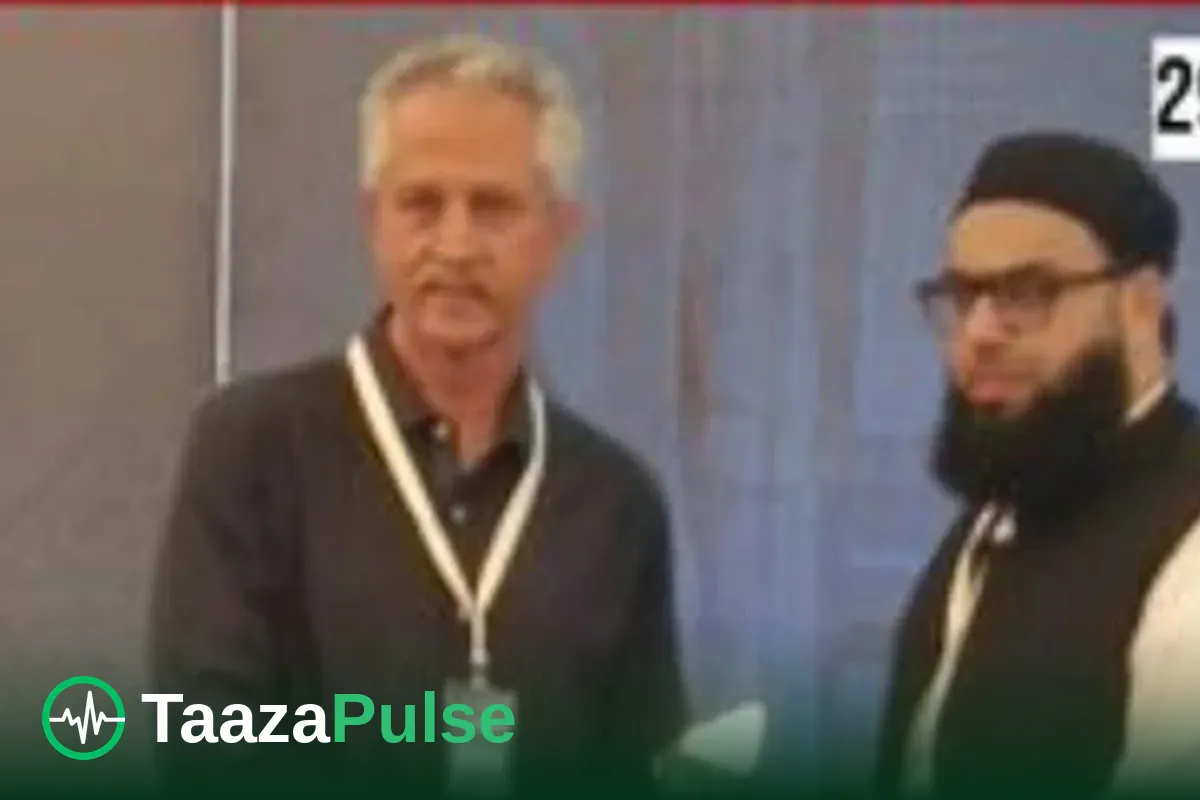
Muttahida Qaumi Movement-Pakistan (MQM-P) leader and former Karachi mayor Waseem Akhtar visited Jamia Binoria Aalamia, the well-known seminary in Karachi's SITE Town, on Thursday, 29 October 2026, where he took part in a session of the seminary's Literature Club and met its chancellor, Mufti Muhammad Noman Naeem. According to the report of the visit, Akhtar praised the role of religious seminaries — deeni madaris — in Pakistani society and appreciated the educational services they provide.
The visit was reported by Karachi's CityNews021, which published a photograph of Akhtar standing alongside Mufti Noman Naeem at the seminary during the visit. In the photograph, the former mayor — wearing a visitor's accreditation around his neck — is seen with the Binoria chancellor during the programme. No official handout from the MQM-P's central media cell and no statement from the seminary about the visit had been published by the time this report was filed, and the account below rests on the CityNews021 report for the events of the day, with background drawn from the published record of both the visitor and the institution. TaazaPulse's wider politics coverage follows Karachi's parties and institutions through the same verified-first approach.
A literary session at a seminary
The centrepiece of the visit was Akhtar's participation in a session of Jamia Binoria's Literature Club — the forum through which the seminary's students and faculty hold debates and literary discussions. A politician better known for press conferences on Karachi's water, roads and municipal finances sitting in a madrasa's literary session is an unusual picture, but it fits the way Jamia Binoria has presented itself for decades: as an educational institution that hosts public figures, diplomats and delegations and puts its students' academic life in front of them.
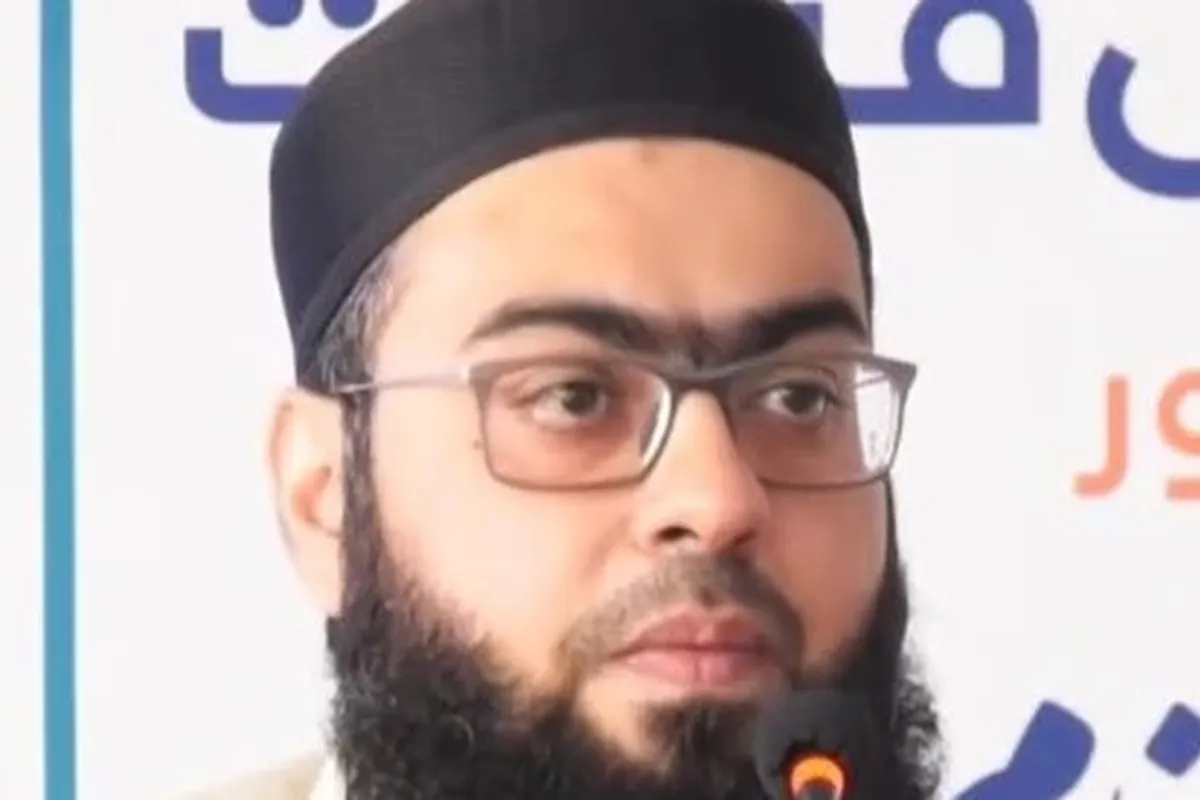
During the visit, Akhtar met Mufti Muhammad Noman Naeem, the seminary's chancellor (mohtamim), who has headed Jamia Binoria since June 2020. The meeting covered the seminary's work and its place in the city's educational landscape, according to the report. The former mayor toured the institution's academic side — Binoria runs, alongside its religious curriculum, a library, school and college sections, and departments for foreign students — and his participation in the Literature Club's proceedings gave the visit a deliberately educational, rather than ceremonial, shape.
What he said: praise for the madaris, in paraphrase
CityNews021's report states that Waseem Akhtar praised the role of religious seminaries and their educational services during the visit. No verbatim transcript of his remarks at the seminary has been published, and TaazaPulse will not put quotation marks around words it cannot verify; the accurate summary of the report is that the MQM-P leader spoke appreciatively of what madaris do — teaching large numbers of students, many of them from families that cannot afford fee-charging schools, and providing religious as well as general education — and commended Jamia Binoria's own services in that field.
The emphasis matters because of who was speaking. Akhtar's party built its politics in Karachi's urban, largely middle-class neighbourhoods, and his own recent public speeches have concentrated on civic questions: an empowered local government system, the rights of urban Sindh, the distribution of resources under the NFC Award, and criticism of the Pakistan Peoples Party's governance of the province. At an MQM-P gathering in North Karachi on 25 October, reported by Tashakur News, he argued that administrative reform and a fair distribution of resources were preconditions for solving public problems, and said his party had learned from the mistakes of its past. A visit centred on education — at an institution that teaches thousands of students outside the state school system — sits naturally inside that civic frame.
The visitor: Waseem Akhtar's long Karachi career
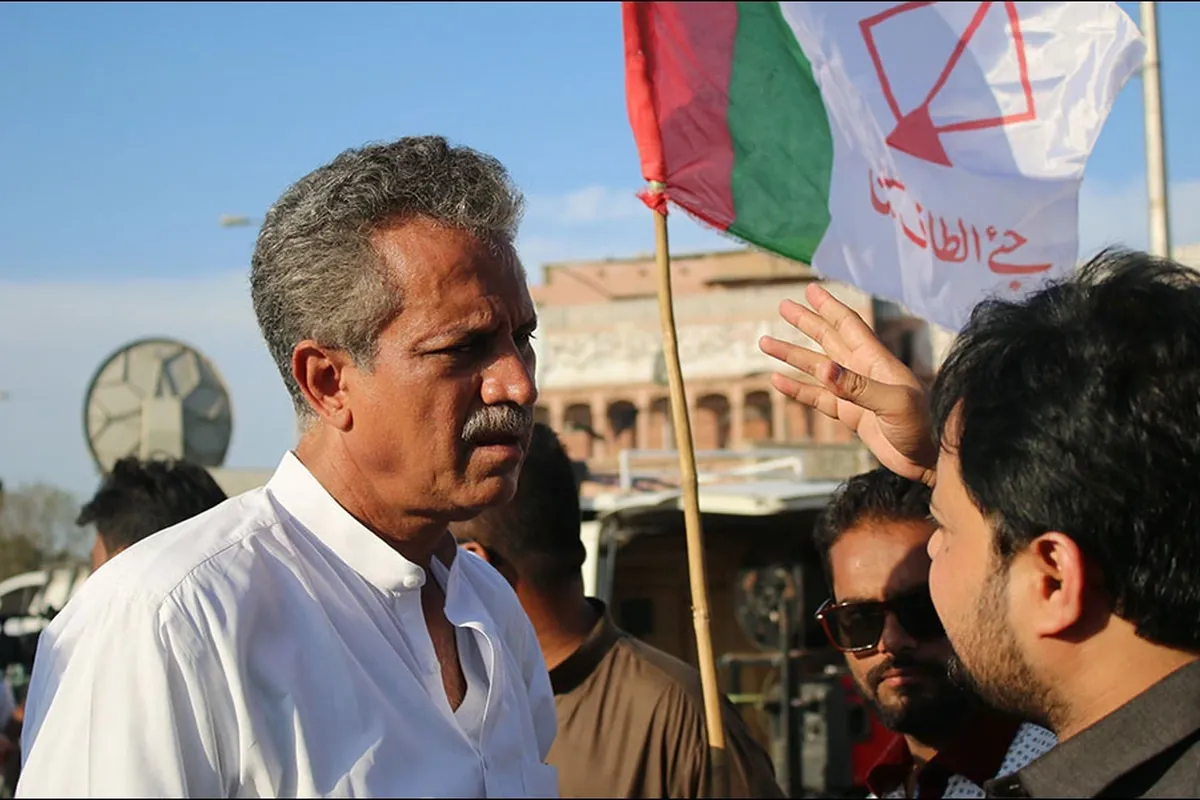
Waseem Akhtar, born on 25 November 1955, is one of the MQM's longest-serving public figures. His defining office was the mayoralty of Karachi: elected in August 2016 while he was in custody — a first in the city's history — he took oath as the city's 28th mayor on 30 August 2016 and served until August 2020, through a term in which he repeatedly complained that the local government law left the mayor with authority over only a fraction of the metropolis and a ceiling on the projects he could approve. That complaint — Karachi governed from the province, its mayor under-powered — has remained the spine of his politics ever since.
Since leaving the mayor's office he has remained a senior leader of the MQM-Pakistan — he serves as a deputy convener of the party — and a regular voice in Karachi's political argument. The MQM-P has been part of the PML-N-led coalition government at the centre since February 2024, and Akhtar's interventions, like the North Karachi address this week, move between the party's federal position and its Karachi grievances: census and delimitation disputes, the state of the city's infrastructure, and the demand for a local government system with real powers. His visit to Binoria is best read as part of the same continuous constituency politics — the former mayor remaining present, in person, across the city's institutions.
The host institution: Jamia Binoria Aalamia
Jamia Binoria Aalamia is a Deobandi (Hanafi) seminary in Karachi's SITE industrial area, founded in 1398 AH (1978–79) by Mufti Muhammad Naeem, a graduate of the Binori Town seminary who built Binoria into one of Pakistan's best-known madaris. It is affiliated with the Wifaq ul Madaris Al-Arabia, the country's largest board of seminaries, and is frequently described as one of the most modern madrassas in Pakistan — a reputation built on its founder's decision to teach contemporary subjects, including computer science and English, alongside the classical dars-e-nizami curriculum, and to let students complete matriculation, intermediate and even bachelor's-level qualifications alongside their religious studies.
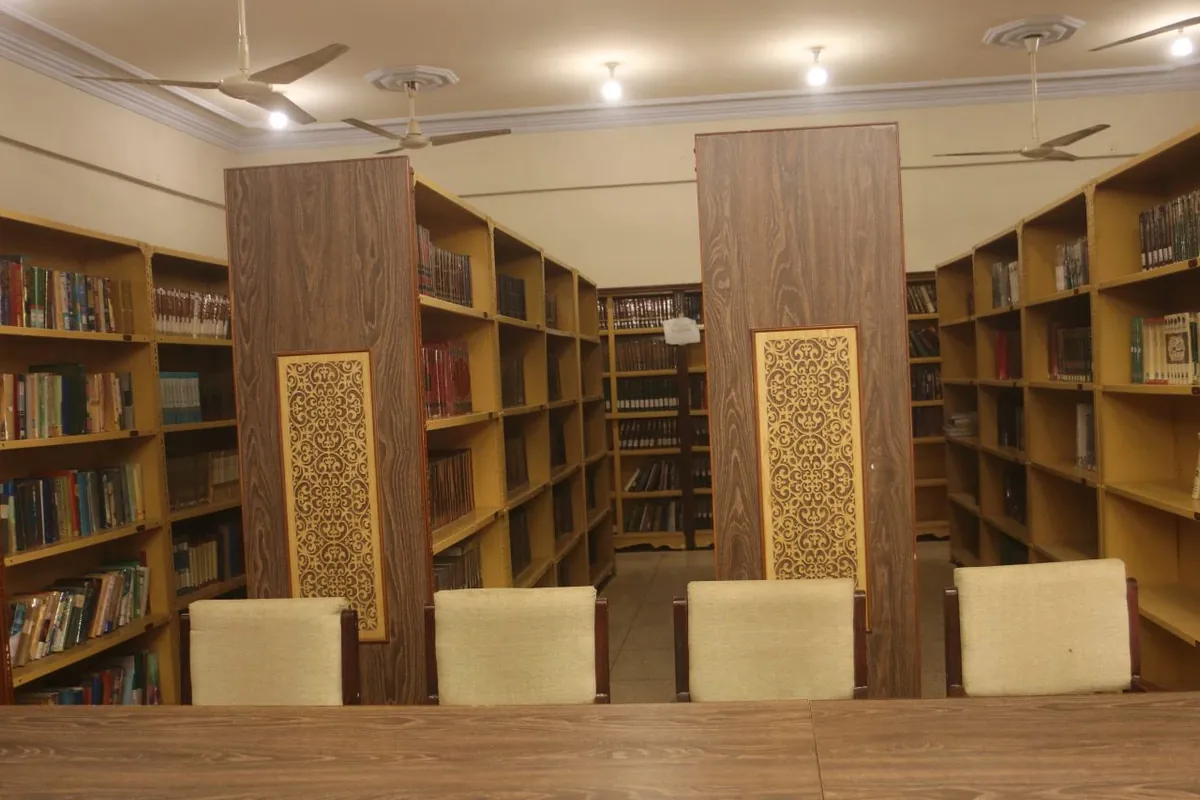
The scale is considerable. The institution's urban campus covers about 12 acres; its total enrolment is put at around 8,000 students, and foreign students have long been a hallmark — in 2019, Mufti Naeem said students from 53 countries were studying at Binoria, and the seminary runs a dedicated department for foreign students as well as a department for women students (banat), including ifta courses whose women graduates are styled muftia. Its own organisation describes 63 departments, a third of them educational and the rest welfare and social services — orphan support, community welfare and relief work running alongside the classrooms and the library where its Literature Club meets.
A seminary that kept its doors open — and its politics at arm's length
Mufti Muhammad Naeem, who died of a heart attack on 20 June 2020 at the age of 62, set the institution's public style. He opened Binoria's doors to government officials, diplomats, media professionals and public figures so they could see its academic work directly, and the seminary received positive international coverage as a result. At the same time, he was emphatic that a madrasa's students were not a political resource: in 2019, after federal ministers called on him, he publicly urged all seminaries not to use their students for political objectives — no participation in sit-ins or rallies — warning that it would damage the name of madaris everywhere. His son, Mufti Muhammad Noman Naeem, who succeeded him as chancellor on 23 June 2020, has repeated the same institutional philosophy: in an interview with Synergyzer, he traced public suspicion of madrasa education to a colonial-era hierarchy of knowledge and argued for modernised teaching, reformed curricula and transparency as the way to make religious education socially respected and academically credible. Noman Naeem himself studied at Binoria before taking a master's in Islamic studies at the Federal Urdu University and a doctorate in education.
That is the setting in which a senior Karachi politician's presence in a Binoria literary session should be understood. The visit produced no policy announcement, no joint declaration and no reported political negotiation; its content, so far as the record shows, was educational — a debate attended, a chancellor met, and an institution's services praised. In Karachi, where seminaries educate a significant share of the city's children and where every major party maintains relations with religious institutions of every school of thought, such visits are a normal grammar of public life. What gives this one its modest news value is the pairing: a former mayor whose career was made in municipal politics, engaging an institution his party's traditional rhetoric rarely placed at the centre of its story — and doing so through a literature club, on the seminary's own terms of education first.
No reaction from other political or religious parties to the visit had been reported by the time of publication, and neither the MQM-P nor Jamia Binoria had issued a fuller account of the discussion. If either side publishes its version — or a transcript of the former mayor's remarks — TaazaPulse will update this report. For Karachi readers following the city's institutional politics, the same desk is tracking the airport expansion approved for Karachi and Lahore and the Iqrar-ul-Hassan bail case in the city's courts.
Sources for this report: CityNews021's report and photograph of the visit (29 October 2026); the Jamia Binoria entry on Wikipedia and the seminary's official website for the institution's history, scale and departments; Dunya News (24 June 2020) on Mufti Noman Naeem's appointment as mohtamim; Anadolu Agency's obituary of Mufti Muhammad Naeem (20 June 2020); Mufti Noman Naeem's interview with Synergyzer; and Tashakur News' report of Waseem Akhtar's 25 October 2026 address.
Sources
This report is based on reporting, official statements and documents from:
- CityNews021
- Wikipedia — Jamia Binoria
- Jamia Binoria (official website)
- Dunya News
- Anadolu Agency
- Synergyzer
- Tashakur News
Frequently Asked Questions
What did Waseem Akhtar do at Jamia Binoria?
On Thursday, 29 October 2026, MQM-Pakistan leader and former Karachi mayor Waseem Akhtar visited Jamia Binoria Aalamia in Karachi's SITE Town. He took part in a session of the seminary's Literature Club, met its chancellor, Mufti Muhammad Noman Naeem, and praised the role of religious seminaries and their educational services, according to CityNews021's report of the visit, which also published a photograph of the two men together at the seminary.
What did Waseem Akhtar say about madrasas during the visit?
According to the CityNews021 report, he praised the role of deeni madaris (religious seminaries) and appreciated their educational services — the teaching they provide to large numbers of students, including many from families outside the fee-charging school system. No verbatim transcript of his remarks has been published, so his comments are reported here in paraphrase, as the report itself presents them.
Who is Mufti Muhammad Noman Naeem?
Mufti Muhammad Noman Naeem is the chancellor (mohtamim) of Jamia Binoria Aalamia. The son of the seminary's founder, Mufti Muhammad Naeem, he succeeded his father on 23 June 2020, three days after Mufti Naeem's death. He studied at Binoria itself, took a master's in Islamic studies at the Federal Urdu University and holds a doctorate in education; he has argued publicly for modernised teaching methods, reformed curricula and transparency in madrasa education.
What is Jamia Binoria, and where is it?
Jamia Binoria Aalamia is a Deobandi (Hanafi) seminary in the SITE industrial area of Karachi, founded in 1398 AH (1978-79) by Mufti Muhammad Naeem and affiliated with Wifaq ul Madaris Al-Arabia. Often described as one of Pakistan's most modern madrasas, it teaches modern subjects such as computer science and English alongside the classical curriculum on a roughly 12-acre campus, with total enrolment put at around 8,000 students, including foreign students and a department for women students.
Who is Waseem Akhtar?
Waseem Akhtar (born 25 November 1955) is a senior leader of the Muttahida Qaumi Movement-Pakistan (MQM-P), where he serves as a deputy convener, and a former mayor of Karachi. Elected in August 2016 while in custody, he took oath as the city's 28th mayor on 30 August 2016 and served until August 2020. He remains an active voice in Karachi's politics, campaigning for an empowered local government system and the rights of urban Sindh.
Why do Karachi politicians visit seminaries like Jamia Binoria?
Seminaries are major civic and educational institutions in Karachi, teaching a significant share of the city's children, and leaders of every major party maintain relations with religious institutions across schools of thought. Jamia Binoria in particular has a decades-old tradition of receiving officials, diplomats and public figures — set by its founder, who nonetheless insisted that madrasa students must never be used for political activity. Visits of this kind are generally constituency and community engagement; this one was framed around education, through the seminary's Literature Club.