Pakistan's $2.25 Billion Battery Plant in Rawalpindi: What Is Confirmed, What Is Projected, and What Is Still a Gamble
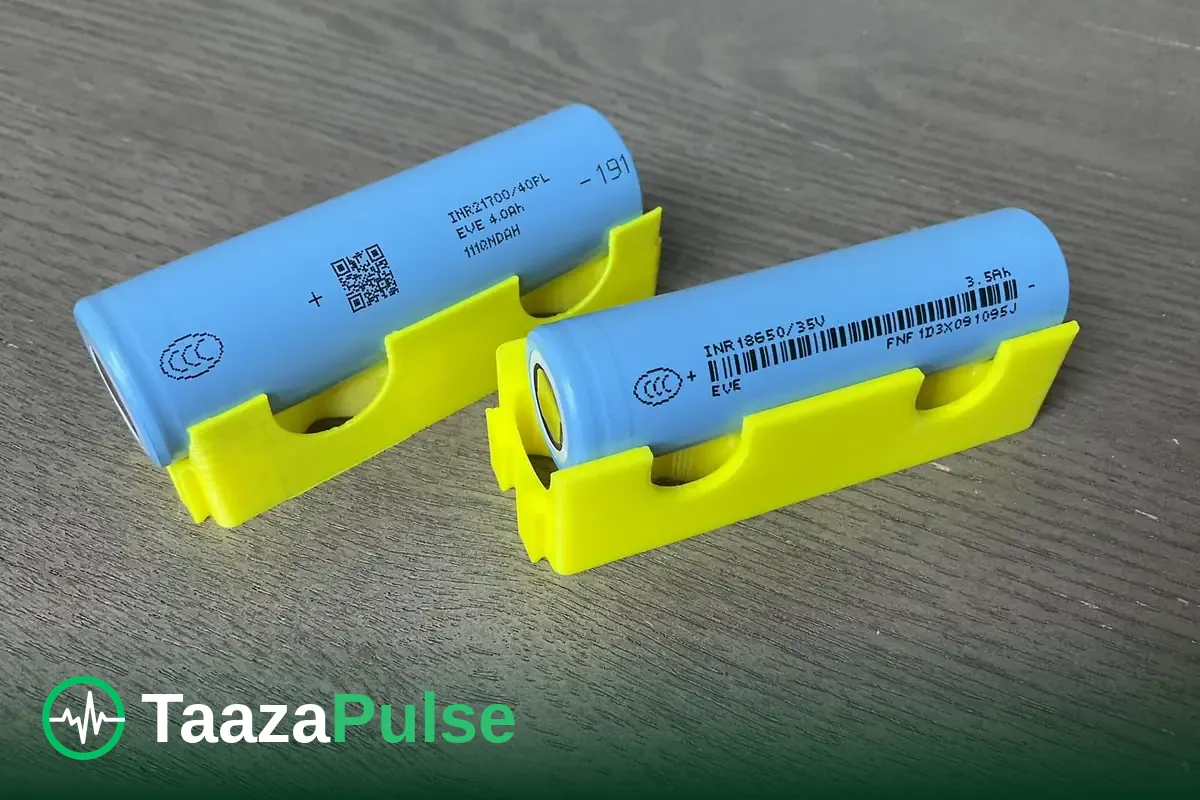
Pakistan's $2.25 billion battery gamble is back in the headlines. A 1 November analysis in The Friday Times, headlined "Pakistan's Battery Bet: The Economics Behind A $2.25 Billion Industrial Gamble", has put the economics of the country's planned lithium-ion battery plant back in focus — and it is worth being precise about what is actually new. Nothing in the reporting so far shows a fresh government approval, a new investment, or a production start on 1 November. The plant itself was disclosed a week earlier, on 26 October, when Engineering Development Board chief executive Hamad Ali Mansoor told Arab News that a military-owned company had signed a $2.25 billion agreement with Chinese partners and local investors to build a lithium-ion battery factory at Heavy Industries Taxila in Rawalpindi district. The building, he said, is ready. The machines are installed. What is missing is the policy that would let production begin.
That distinction — a finished building waiting on a policy — is the whole story. Pakistan does not yet manufacture lithium-ion cells at any meaningful scale. It assembles batteries, it makes lead-acid batteries, and it imports the lithium-ion cells and packs that go into electric vehicles, solar systems and backup power. The Rawalpindi project promises to change that in one step: a first factory starting at 200 to 300 megawatts of annual output and scaling to more than 1,000 megawatts, as part of a national plan that envisages four large factories. Whether it becomes a foundation for a new industry or an expensive building waiting for demand depends on questions the announcement itself leaves open — who exactly is investing, what the policy will actually say, and whether the demand projections behind the $2.25 billion figure survive contact with Pakistan's economy.
This article sets out what is confirmed, what is projected, and what is still unknown, based on the 26–27 October reporting of the announcement in Arab News, carried by The News, and corroborated by Bloom Pakistan, PakWheels and other outlets that week. Where a figure is a projection rather than a fact, it is labelled as one. Where the reporting disagrees or is silent, that silence is stated rather than filled in.
What is confirmed: a $2.25 billion deal, a ready building, no policy yet
The confirmed core is short, and it is important not to inflate it. Margalla Heavy Industries Limited (MHIL), a military-owned company based at Heavy Industries Taxila, has signed an agreement with Chinese partners and local investors to set up a $2.25 billion lithium-ion battery manufacturing plant in Rawalpindi. The agreement was signed in July 2026, according to Mansoor, the Engineering Development Board chief executive who disclosed it. The Chinese partner is described by Mansoor only as one of the "top-tier manufacturers in China". The local private-sector investor is not named either, and neither side's share of the $2.25 billion has been disclosed. Arab News reached out to MHIL's general manager for digital media, Muhammad Ameen, who was not immediately available for comment at the time of publication.
Three physical facts were stated by Mansoor and have been repeated across the coverage. First, feasibility studies for the project have been completed. Second, the factory building is ready and machinery has been installed. Third, production could begin within six to eight months after the government approves the policy for the sector. That conditional timeline matters: six to eight months from policy approval is not six to eight months from today, and no policy approval has been reported as of 1 November. The plant is therefore best described as built but not yet in production — a distinction some of the week's looser coverage blurred, and one this article keeps throughout.
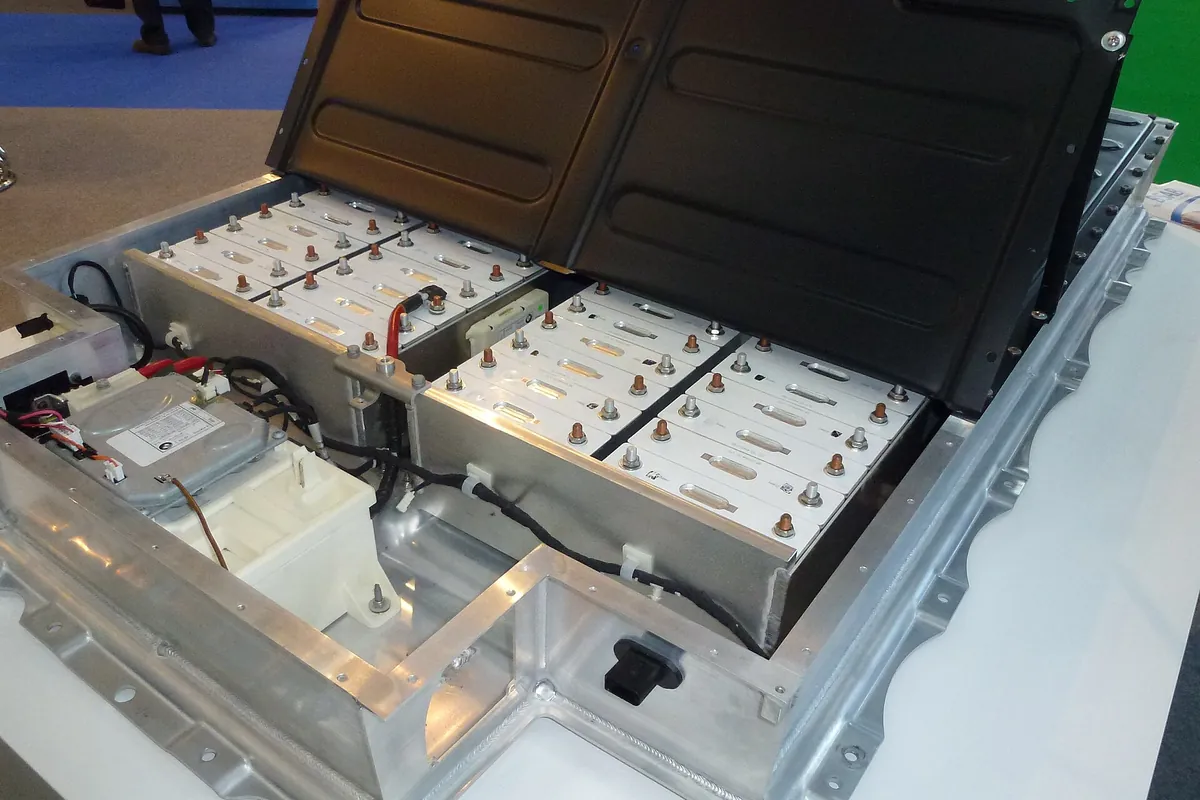
MHIL itself is not a newcomer to manufacturing, though batteries at this scale would be a step change. The company, part of the Heavy Industries Taxila complex, manufactures defence equipment including battle tanks and armoured vehicles, as well as unmanned drones, protective gear, compact battery energy storage systems, and electric buses and two-wheelers. That existing base is part of the case for the project: the company already works with heavy engineering, power systems and vehicle platforms. It is also part of the question mark. Building armoured vehicles and energy storage systems is not the same as running a lithium-ion cell plant at gigawatt scale, where yield rates, chemistry control and supply-chain management decide whether a factory makes money. The Chinese partner's identity — and what technology, offtake or operating role it brings — is therefore one of the most consequential undisclosed facts in the whole announcement.
The gamble in numbers: 200 megawatts now, 100,000 by 2030
The numbers attached to the project fall into two very different categories: the factory's own planned capacity, and the national demand forecast used to justify it. The factory figures are concrete. Initial production is planned at around 200 to 300 megawatts a year, rising to more than 1,000 megawatts a year. The demand figures are projections, and they are much larger. Mansoor told Arab News that Pakistan's demand for battery energy storage systems could reach 100,000 megawatts by June 2030 if the economy grows by 5 percent or more a year. If growth stays below 3 percent, he put demand at around 80,000 megawatts. Meeting that demand, he said, would require four to five large battery factories, each costing roughly $1 billion to $1.25 billion.
Read those two sets of figures together and the scale of the bet becomes clear. Even at its full planned capacity of more than 1,000 megawatts, the Rawalpindi plant would cover only a small fraction of the projected 2030 demand — which is exactly why the policy envisages four factories rather than one. The plan, as described in the coverage, is for four major facilities: three in Punjab, in the Lahore, Faisalabad and Rawalpindi divisions, and one in Karachi. The Rawalpindi plant is the first and most advanced of the four, but the national ambition is several times larger than any single factory. That is also why the $2.25 billion figure needs context. If completed at that investment, the Rawalpindi plant would rank among Pakistan's largest industrial investments — PakWheels noted that it would exceed the roughly $2 billion reported cost of the China Power Hub power project, which began operations in 2019. It is a national-scale bet, not a routine factory opening.
The demand projection itself deserves scrutiny, because everything else hangs on it. A forecast of 100,000 megawatts of battery storage demand by June 2030 rests on three drivers: electric vehicle adoption, solar power growth, and grid-scale storage. All three are real trends in Pakistan, but all three are also policy-dependent. Electric vehicle sales depend on the auto policy and its tax incentives. Solar adoption depends on net-metering rules, import duties and the price of panels. Grid storage depends on whether the power sector actually buys storage at scale, rather than simply announcing it. Mansoor's own framing acknowledges the sensitivity: the same forecast falls by a fifth, to 80,000 megawatts, if economic growth disappoints. A factory built for the high case can still survive the low case, but a four-factory programme built for the high case would face a very different market if growth stalls. The Friday Times headline calls this an "industrial gamble" for a reason: the investment is being committed before the demand, the policy and the pricing are settled.
Why Pakistan imports its batteries today
To understand why a domestic cell plant matters, it helps to see the starting point. Pakistan currently assembles around 3,000 to 4,000 megawatts of batteries, according to PakWheels' summary of the sector, but it does not manufacture lithium-ion cells. It does manufacture lead-acid batteries domestically — the older technology used in cars, UPS systems and many solar installations. Lithium-ion is a different industry: different chemistry, different precision manufacturing, and a supply chain that runs through lithium, nickel, cobalt, graphite and specialised separators and electrolytes, most of which Pakistan does not currently produce.
The import bill shows the gap. Data compiled by the Pakistan Solar Association, cited in trade coverage this week, put Pakistan's lithium-ion battery imports at roughly 5.39 gigawatt-hours between January 2025 and May 2026, valued at around $256.94 million. That covers solar storage, household backup, industrial use and electric vehicles, and it is growing with solar adoption. Every imported pack carries a double cost: the price of the cells themselves, and the foreign-exchange cost of buying a finished product whose most valuable component Pakistan cannot yet make. Local cell production would not eliminate imports overnight — raw materials and many components would still be imported — but it would move a larger share of the value chain inside Pakistan, and it would give local assemblers a domestic supplier instead of a distant one.
There is also a parallel track worth noting, because it shows the limits of the current story. Pakistan has stepped up efforts to find domestic lithium resources, with the Oil and Gas Development Company Limited signing an agreement with the Pakistan Institute of Nuclear Science and Technology to analyse more than 2,000 underground water samples from selected wells. An initial pilot study reported a lithium concentration of 291 milligrams per litre in water from the Wahid Bakhsh-01 well in Sindh. That is a preliminary finding, not a proven reserve: it does not establish how much lithium is commercially recoverable, or whether extraction would be economic. It is mentioned here only to prevent a misunderstanding — the Rawalpindi plant is a manufacturing project, not a mining project, and its raw materials will initially come from abroad regardless of what the exploration programme eventually finds.
The two policies standing between the building and production
Two separate policies are blocking the timeline, and confusing them is easy. The first is the lithium battery manufacturing policy itself. The government's National Lithium-Ion Battery Manufacturing Policy 2026–2031 aims to support local production, attract investment and build an export-oriented battery industry. It was drafted and sent to the Ministry of Industries and Production in March 2026, and it was still awaiting approval in the latest reports. Until it is approved, the Rawalpindi plant cannot start commercial production on the terms its investors expect — whatever those terms are, they have not been published. The policy is also the framework for the other three planned factories, so its delay holds up the whole programme, not just one plant.
The second policy is the Automotive and Auto Parts Manufacturing Policy 2026–2031, the wider auto policy. Prime Minister Shehbaz Sharif approved it recently, according to the coverage, but it still needs cabinet approval, International Monetary Fund approval over its proposed tax incentives, and approval from the Economic Coordination Committee. The IMF question is not a formality: tax incentives for the electric vehicle industry have revenue implications, and the Fund's view on them will shape what the final policy can offer. For the battery plant, the auto policy matters because electric vehicles are one of its two main intended markets, alongside energy storage. A battery factory without a settled auto policy is selling into a market whose rules are still being written.
That sequencing — building first, policy second — is unusual enough to be the real gamble in the Friday Times framing. Normally an investor waits for the incentive framework before committing $2.25 billion. Here the building and machinery are already in place, which suggests the investors are confident the policy will come, or that the project makes sense even on less generous terms. Either way, the government now faces a different kind of pressure: a finished, high-profile factory waiting for its signature. Delay costs the project time; a rushed policy costs the treasury revenue if the incentives are too generous, or the industry its competitiveness if they are too thin. The next policy announcement, whenever it comes, will therefore be read as closely as the original investment announcement was.
What it would — and would not — change for prices
The most popular question about the plant is also the one with the least certain answer: will it make electric vehicles cheaper in Pakistan? The honest answer is that it could, eventually, but the reporting gives no price promise and no timetable. The logic is straightforward. The battery is the single most expensive component of an electric vehicle, accounting for a substantial share of its cost, and Pakistan currently depends on imported cells and packs, which adds cost at every step. Local production at scale should reduce logistics costs, import duties on finished packs and currency exposure, and give local assemblers more bargaining power. That is the theory behind every country's battery industrial policy.
The practice is slower. PakWheels, examining the same announcement, noted that the only locally assembled passenger electric vehicle on sale in Pakistan so far is the Honri, priced at Rs36 lakh — a reminder of how far the market has to go before electric cars are mass-market purchases. A cell plant does not by itself cut that price: the cells still need to go into packs, the packs into vehicles, and the vehicles need charging infrastructure, financing and aftersales networks. It also does not solve the affordability problem for the other market, household and grid storage, where the buyer is often a solar household or a distribution company weighing storage against other grid investments. The plant's first customers, in other words, may well be storage buyers rather than car buyers, and the coverage does not say which sector MHIL will supply first. MHIL has not stated its initial market priorities, and this article does not guess them.
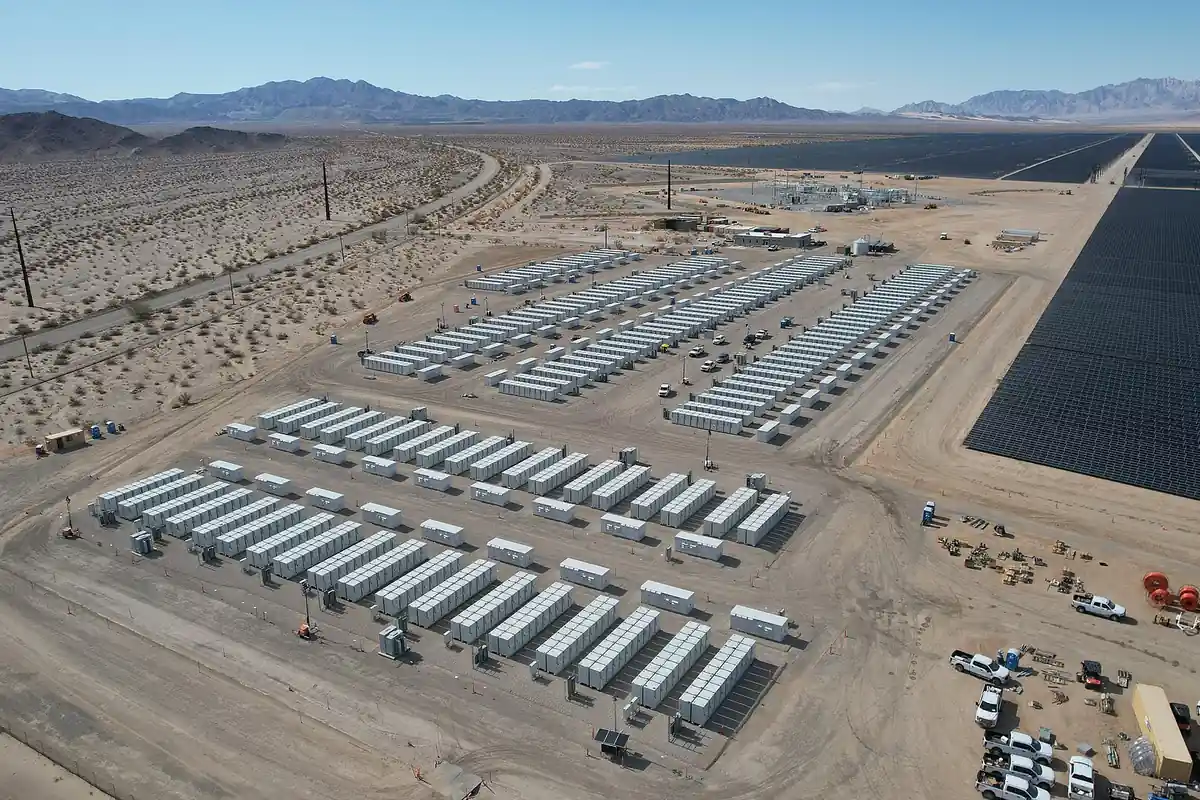
What local production would change sooner is the supply side. A domestic cell source reduces dependence on imported packs for solar and backup systems, where demand is already visible in the import figures, and it creates industrial employment and technical capability that Pakistan currently buys from abroad. It also gives the government a domestic anchor for its storage ambitions: a country that wants tens of thousands of megawatts of battery storage by 2030 cannot credibly plan that future entirely on imported cells. The plant's strategic value, in that sense, does not depend on electric vehicle prices falling in year one. It depends on whether Pakistan builds the rest of the ecosystem — pack assembly, recycling, testing, skilled labour — around the first cell factory, or whether the factory remains an island.
The open questions that will decide whether the bet pays off
Five questions remain unanswered in the public record, and each of them could change the assessment. First, who are the investors? The Chinese partner is described only as a top-tier manufacturer, and the local investor is unnamed. Without names, outsiders cannot judge the technology being transferred, the partners' track records, or how the $2.25 billion is split between equity, debt and equipment. Second, what does the battery policy actually offer? Tariffs, tax holidays, local-content requirements and export obligations would all shape whether the plant competes on cost or survives on protection — and none of those details are public yet.
Third, where will the raw materials come from, and at what price? Lithium-ion cell manufacturing is hostage to global commodity prices in a way that assembly is not. A plant that cannot secure affordable lithium, nickel and graphite at stable prices will struggle regardless of its machinery. Fourth, who will buy the output? The coverage cites no offtake agreements, no anchor customer and no export contract. A factory with 1,000 megawatts of capacity needs buyers before it needs headlines. Fifth, what happens if the demand forecast is wrong? The 100,000-megawatt figure assumes sustained high growth and rapid electric vehicle and solar adoption. If growth averages below 3 percent, the forecast itself falls to 80,000 megawatts — still large, but a different market for a four-factory programme.
None of these questions makes the project a failure, and none of them is a reason to dismiss it. They are the normal unknowns of a large industrial investment at the announcement stage, and they are listed here precisely because the week's coverage sometimes presented the $2.25 billion as if it were already an operating industry. It is not. It is an agreement, a building and a set of projections, awaiting a policy. The difference between those two things is the difference between a headline and an industry.
What to watch next
Four developments will tell observers whether the gamble is paying off. The first is the battery manufacturing policy itself: its approval, its incentive structure, and whether it covers all four planned factories or only the first. The second is the naming of the partners and the disclosure of the investment structure — the moment the project stops being an anonymous $2.25 billion and becomes a verifiable joint venture. The third is the auto policy's passage through cabinet, the IMF and the Economic Coordination Committee, which will set the rules for the electric vehicle market the plant hopes to serve. The fourth is the production clock: once the policy is approved, the six-to-eight-month window Mansoor described starts running, and the first commercial output — its volume, its customers and its price — will be the first hard evidence against the projections.
Until then, the fairest summary is this: Pakistan has a finished battery factory building, installed machinery, a signed $2.25 billion agreement with unnamed partners, and a demand forecast that justifies several such factories if growth holds. It does not yet have a battery policy, a production start date, or a single locally manufactured lithium-ion cell in commercial output. The Friday Times is right to call it a bet. The stakes are national — energy independence, industrial capability and electric vehicle affordability — and the outcome will be decided less by the size of the headline figure than by the policy, the partners and the market that follow it. TaazaPulse will update this report when the battery policy is approved, when the partners are named, or when production begins.
Sources
This report is based on reporting, official statements and documents from:
- Arab News via The News — Govt plans $2.25bn battery gigafactory as demand projected to hit 100,000MW in four years (27 Oct 2026)
- Bloom Pakistan — Pakistan Plans $2.25 Billion Lithium-Ion Battery Plant in Rawalpindi (27 Oct 2026)
- The Asian Mirror — Pakistan Plans $2.25 Billion Lithium-Ion Battery Plant in Rawalpindi (Oct 2026, Arab News reporting)
- PakWheels Blog — Could Pakistan's $2.25 Billion Battery Plant Make EVs Cheaper? (Oct 2026)
- NewzTodays — Pakistan to Set Up $2.25B Lithium-Ion Battery Plant in Rawalpindi (27 Oct 2026)
- The Friday Times via Google News — Pakistan's Battery Bet: The Economics Behind A $2.25 Billion Industrial Gamble (sentinel queue 8173de56b0e98d9b, 1 Nov 2026; headline that triggered the run — body not fetched, no claim from it beyond its title/date)
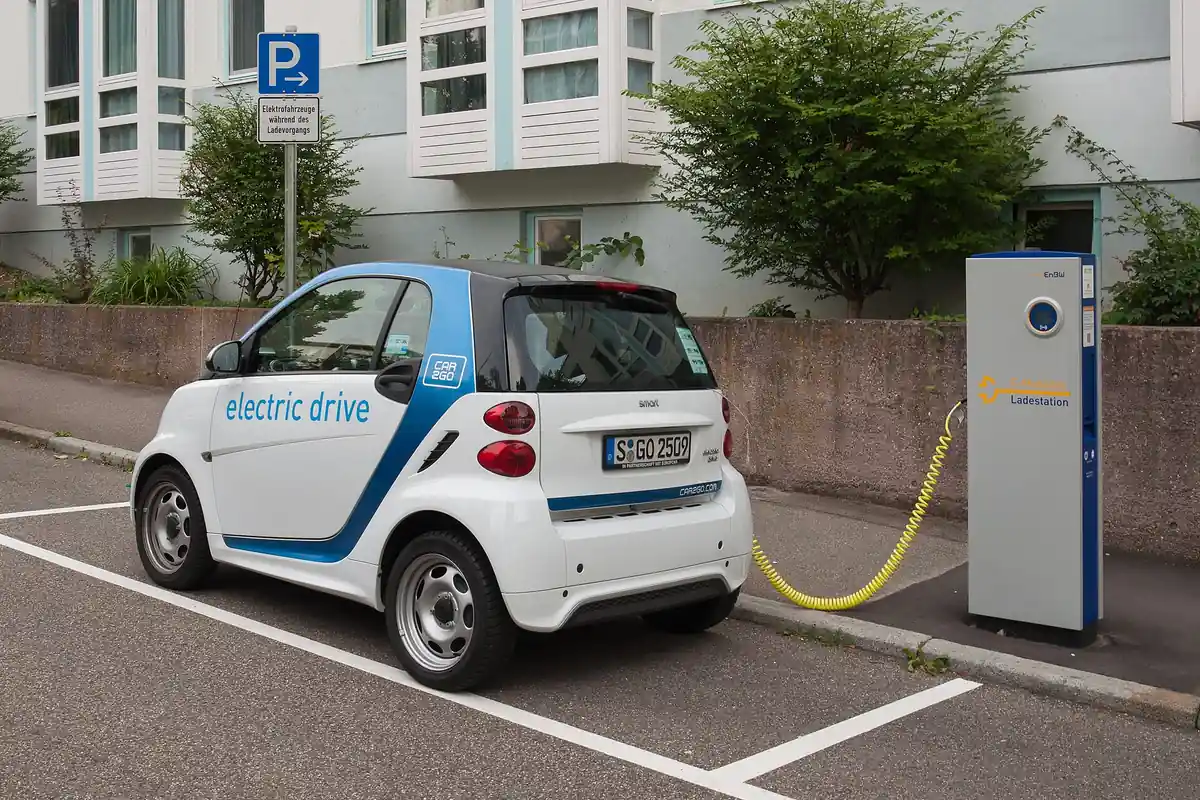
- Photos: real file photographs (Wikimedia Commons) — 18650/21700 lithium-ion cells, BMW i3 battery pack, Car2Go charging station Stuttgart 2013, Desert Sunlight battery energy storage system; file photos, not the Rawalpindi/Taxila plant
Frequently Asked Questions
What is Pakistan's $2.25 billion battery plant?
It is a planned lithium-ion battery manufacturing plant at Heavy Industries Taxila in Rawalpindi district, being set up by the military-owned Margalla Heavy Industries Limited (MHIL) with Chinese partners and a local private-sector investor. The agreement, worth a reported $2.25 billion, was signed in July 2026 and disclosed by Engineering Development Board chief executive Hamad Ali Mansoor on 26 October 2026. It would be Pakistan's first major lithium-ion cell manufacturing plant.
Has production started at the Rawalpindi battery plant?
No. According to Mansoor, the factory building is ready and machinery has been installed, and feasibility studies are complete — but commercial production can only begin six to eight months after the government approves the lithium battery manufacturing policy, which was sent to the Ministry of Industries in March 2026 and was still awaiting approval in the latest reports. As of 1 November 2026 there is no reported policy approval or production start.
How much battery capacity will the plant produce?
Initial production is planned at around 200 to 300 megawatts a year, rising to a planned annual capacity of more than 1,000 megawatts. Those figures are the plant's planned output as reported by Mansoor; they are reported in megawatts in the coverage, and they are plans, not installed or operating capacity.
Who are the Chinese and local investors in the battery plant?
They have not been publicly named. Mansoor described the Chinese partner only as one of the 'top-tier manufacturers in China' and did not name the local private-sector investor either, nor disclose how the $2.25 billion is split between the partners. MHIL's general manager for digital media was not immediately available for comment when Arab News reported the deal.
What policies are still blocking the battery plant?
Two. The National Lithium-Ion Battery Manufacturing Policy 2026–2031, which would set the framework for the plant and three further planned factories in Lahore, Faisalabad and Karachi, has been pending since March 2026. Separately, the Automotive and Auto Parts Manufacturing Policy 2026–2031, approved by Prime Minister Shehbaz Sharif, still needs cabinet approval, International Monetary Fund approval over its proposed tax incentives, and approval from the Economic Coordination Committee.
Will the battery plant make electric vehicles cheaper in Pakistan?
Possibly, eventually — but no price cut or timetable has been promised in the reporting. The battery is the most expensive part of an electric vehicle, so local cell production should in theory reduce import and logistics costs, but cells still have to be assembled into packs and vehicles, and Pakistan's electric vehicle market is still small: PakWheels notes the only locally assembled passenger electric vehicle on sale so far is the Honri, priced at Rs36 lakh. The plant's first customers may well be solar and grid storage buyers rather than car buyers.