Sazgar Opens First Overseas Assembly Plant in the Philippines
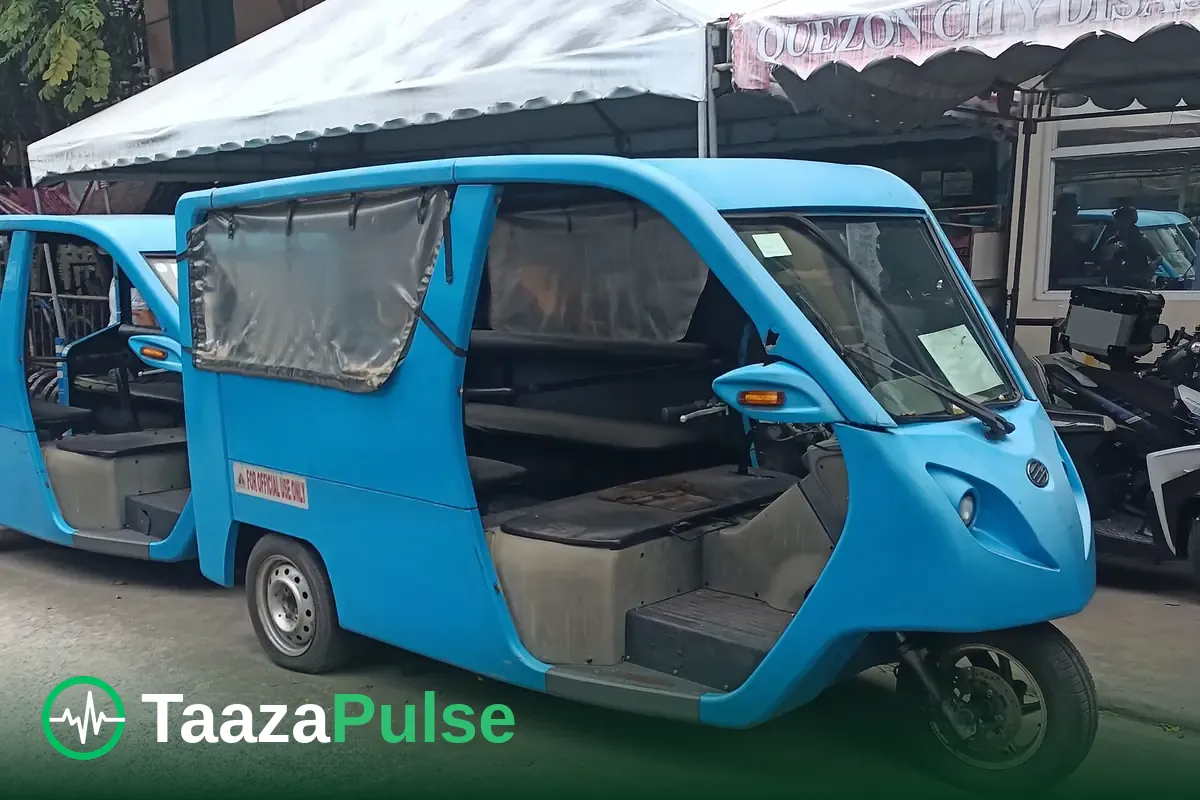
Pakistan's Sazgar Engineering Works has opened its first factory outside Pakistan, and it did so with the president of the host country doing the honours. On Thursday 29 October 2026, Philippine President Ferdinand R. Marcos Jr. inaugurated the manufacturing and assembly plant of Sazgar Philippines Incorporated (SPI) in Biñan City, Laguna, at the Laguna International Industrial Park. The plant assembles three-wheeled vehicles — the tricycles that carry much of the Philippines — and it is designed to build approximately 12,000 of them a year, in electric and petrol versions. For a Lahore company founded in 1991, whose name in Pakistan is tied to three-wheelers, this is the moment a domestic manufacturer becomes, in a small but real way, a regional one: Sazgar itself describes the Philippines, in the President's words, as its first home outside Pakistan and its hub for all of Southeast Asia.
The inauguration matters beyond one factory because of what the plant is designed to become. Its initial production mix is projected at 60 percent electric units and 40 percent internal-combustion-engine units, with the electric share expected to rise as demand grows. It has qualified under the Philippines' Strategic Investment Priority Plan, which the President presented as the test of a serious investment: at least a quarter of the value of every unit must be added locally, and the Board of Investments projects even more. And the company is 60 percent Filipino-owned. That ownership structure is the point Marcos returned to again and again in his speech — "not just companies that sell to Filipinos, but companies that make things with Filipinos" — and it is what separates this plant from a simple export outpost. Components and completely knocked-down kits still arrive from Pakistan for assembly in Laguna, BusinessWorld reports, and finished units are tested on mechanical systems, electrical components, brakes and lighting before release. But the direction of travel, stated plainly at the inauguration, is toward a Filipino supply chain: batteries, glass, seat foam, upholstery, rubber and lubricants sourced locally, until, in the President's account of the company's expectation, all parts could be manufactured locally within about a year.
Why a tricycle plant should be inaugurated by a president becomes clearer once the vehicle is understood. Marcos opened his speech with the line every Filipino recognises: ask how someone got home last night and the answer, 90 percent of the time, is "Nag-tricycle ako" — I took a tricycle. The tricycle takes children to school, vendors to market and workers to the highway; it is, in his phrase, how most of the country gets from the barangay to the rest of the world. A factory that builds that vehicle, and builds more and more of it electric, therefore sits at the intersection of industrial policy, energy policy and household economics all at once. An electric three-wheeler running 100 to 210 kilometres on a single charge, Marcos said, can cover a full day of trips without a litre of petrol. Urban tricycles travel about 90 kilometres a day and provincial ones 110 to 120 kilometres, distances a single charge covers, with a full charge taking six to eight hours plugged in. "Lower fuel costs mean more money to bring home to our families," he said — and for the country, every vehicle that runs on electricity means a little less dependence on imported fuel.
What the plant is, in numbers
The figures announced at the inauguration are specific, and they are worth stating exactly as they were given, because the gaps around them matter too. The plant is designed to assemble approximately 12,000 three-wheeled vehicles a year, covering both electric and internal-combustion-engine models. Its initial mix is 60 percent electric and 40 percent petrol, shifting toward electric as demand grows. At least 25 percent of the value of each unit is local, under the Strategic Investment Priority Plan, with the Board of Investments projecting more. The company is 60 percent Filipino-owned. BusinessMirror reports that the plant directly employs 3,000 workers, a figure no other source in this report independently confirms, and it is recorded here as BusinessMirror's figure. The plant's location is Biñan City in Laguna province, at the Laguna International Industrial Park, and Sazgar Philippines' president and chief executive officer is Muhammad Fahim. Pakistan's ambassador to the Philippines, Asima Rabbani, attended the inauguration alongside Transport Secretary Vince Dizon and other senior officials.
Two clarifications are worth making because headlines can mislead. First, although some coverage headlines call this a car plant, the facility assembles three-wheeled vehicles — tricycles — not passenger cars; Bloom Pakistan's own report describes Sazgar introducing passenger vehicles, commercial vehicles and electric vehicles to the Philippine market in general terms, but the plant inaugurated on 29 October is a three-wheeler assembly plant, and every account of the ceremony describes it that way. Second, the 12,000 figure is a designed annual assembly capacity, not a sales or export figure: nothing announced at the inauguration says how many units will be sold in the Philippines, exported elsewhere in Southeast Asia, or built in the plant's first year. Those are the numbers to watch for, not to assume.
The local-content challenge Marcos set in public
The most pointed passage of the President's speech was not celebration but a challenge, delivered to the company in front of its own workers. "At present, many of your parts still come from abroad," Marcos said. "I ask you to grow your Filipino supply chain year after year." The company anticipates being able to produce all parts locally within about a year, he added, and the government would work with it to make that happen. BusinessWorld's account matches the speech: the President urged Sazgar Philippines to increase its use of locally made components, and said the government would support the effort.
That challenge is the real test of the project, and it is a demanding one. Local content is easy to promise at an inauguration and hard to build in a supply chain: batteries, glass, seat foam, upholstery, rubber and lubricants each need a supplier able to meet quality, volume and price, and each needs workers trained to make and fit them. The Strategic Investment Priority Plan qualification suggests the project already clears a local-value bar — a quarter of each unit's value — but the jump from a quarter to all parts within about a year is steep, and the President's own framing concedes the starting point is dependence on imported parts. Readers should therefore treat the one-year localisation expectation as exactly what it is: the company's anticipation, reported by the President, not a delivered result. If, a year from now, the plant's suppliers are visibly Filipino and its parts visibly local, the inauguration's biggest promise will have been kept; if not, the gap between the speech and the supply chain will be the story.
Why the Philippines wants this plant
For the Philippine government, the Sazgar plant is a piece of a larger strategy it has been building in public: a domestic electric-vehicle industry, built under the Electric Vehicle Industry Development Act (EVIDA) and the government's comprehensive roadmap for the EV industry, aimed at a 50 percent EV share of the national fleet by 2040. Marcos tied the plant directly to that target, saying the country is pushing to build more EVs at home so that cleaner, modern transport is within reach of every Filipino. Government agencies have been directed to prioritise buying EVs or to consider them when renting vehicles, and the Department of Energy continues to expand the charging ecosystem through accreditation and regulation of charging stations and their providers — more than 420 accredited charging providers had been reported as of August 2026, according to the President's speech. BusinessMirror also links the plant to the Public Utility Vehicle Modernization Program, the long-running effort to replace ageing public transport.
The logic is straightforward. The Philippines imports its fuel, so every electric tricycle on the road trims the import bill slightly; it also imports many of its vehicles, so assembling them at home with a growing local supply chain keeps more of each vehicle's value inside the country. Tricycles are the ideal starting point because they are numerous, their daily mileage fits a single charge, and their drivers feel fuel costs immediately in their take-home pay. A 12,000-unit plant will not transform a national fleet on its own, but as a first plant — and as a hub, in the President's words, for the ASEAN region — it is a foothold: a factory, a workforce and a supplier base that can grow if the demand and the localisation follow.
What it means for Pakistan
From the Pakistani side, the story is about an exporter becoming an investor. Bloom Pakistan, the Pakistani outlet that covered the inauguration, described it as a major development for Pakistan's automobile industry and a step toward expanding Pakistani automotive exports into Southeast Asia, with the support and facilitation of the Pakistani embassy in Manila. Ambassador Asima Rabbani congratulated Sazgar Engineering, describing the plant as an important milestone for the country's industrial export sector, and said it would help Pakistani products reach more international markets while creating new opportunities for trade and economic cooperation, strengthening economic and commercial ties between Pakistan and the Philippines. BusinessWorld adds, in the ambassador's account, that Pakistani investors have also put millions of dollars into trucking and pharmaceutical ventures in the Philippines — a reminder that Sazgar is not arriving in a vacuum but joining a small, existing Pakistani business presence.
The significance for Pakistan's industry is best stated carefully. This is Sazgar's first plant outside Pakistan, not a claim that no Pakistani company has ever manufactured abroad, and the plant's immediate output serves the Philippine market, with Southeast Asian exports a stated future ambition rather than a current flow. Sazgar Philippines' chief executive, Muhammad Fahim, said the company plans to support the Philippine government's EV programme through local manufacturing, workforce development, partnerships with Philippine suppliers and future exports to Southeast Asian markets, according to BusinessWorld. That sequence — manufacture locally first, build suppliers, then export regionally — is the company's own stated order, and it is the order against which its progress can fairly be judged. For Pakistan's wider industrial debate, the plant also offers a contrast worth noting at home: a moment when a Pakistani manufacturer is welcomed abroad with presidential attention, at the same time as Punjab is launching its own large industrial programme, PIVOT, the province's Rs1.995 trillion industrial and export plan, and Pakistan is deepening energy and industrial cooperation with Saudi Arabia, as in the Pakistan-Saudi energy and petroleum agreement reached the same week. Industrial policy, in other words, is being argued on several fronts at once — and Sazgar's Laguna plant is now one of its exhibits.
The driver, the vehicle, and the charging question
It is easy, in a story about investment plans and local-content percentages, to lose sight of the person the vehicle is for: the tricycle driver, who buys fuel by the litre and earns by the trip. The electric case for that driver rests on three numbers from the inauguration — 100 to 210 kilometres of range, a 90 to 120 kilometre working day, and a six-to-eight-hour overnight charge — and on one absence: no petrol. If those numbers hold in daily use, the electric tricycle pays for itself in running costs; if range falls short in practice, or charging proves awkward for drivers without a fixed overnight plug, adoption will be slower than the inauguration's optimism suggests. The charging network is therefore part of the story, not a footnote: the energy department's expanding accredited network, and the government's direction to its own agencies to buy or rent electric, are the demand-side policies that make a driver's switch practical. The plant also sits in a country where the public-utility modernisation programme is already pushing operators toward newer, cleaner vehicles, which gives electric tricycles a policy tailwind that a purely private purchase would lack.
None of this guarantees the plant's success. Three-wheeler assembly at 12,000 units a year is a modest scale beside a car factory, and the business must survive on thin margins, local supplier quality and the pace of EV adoption among drivers who cannot afford a mistake. What the inauguration does guarantee is attention: a presidential visit, a televised speech, a stated localisation timetable and a 2040 fleet target all put the plant under a spotlight that will make its progress unusually visible. The next verifiable milestones are clear enough to list: the first production and sales figures from Biñan; the first named Filipino suppliers beyond the categories listed at the inauguration; any announcement of exports to a Southeast Asian market; and, in about a year, evidence for or against the expectation of fully local parts. TaazaPulse will report those milestones as they are announced and verified, not before.
What is not yet known
An honest report must say what the inauguration did not say. No investment figure for the plant was announced in the sources for this report, and none is claimed here; no land area, construction timeline or number of models was published; no retail price for any Sazgar three-wheeler in the Philippines was announced; and no date was given for the first export to another Southeast Asian country. The 3,000 direct jobs figure comes from BusinessMirror alone and is attributed as such. The expectation of fully local parts within about a year is the company's anticipation as reported by the President, not a commitment with a published penalty or a dated plan. And the 12,000-unit figure is designed annual capacity, not a production result. These are not criticisms of the project — inaugurations announce beginnings, not balance sheets — but they are the boundaries of what can responsibly be reported today, and this article stays inside them.
What can be said, on the strength of an official presidential speech and concordant reporting in BusinessWorld, BusinessMirror and Bloom Pakistan, is this: a Lahore company with more than three decades of building vehicles in Pakistan has opened its first factory abroad, in Biñan City, Laguna; the Philippine president inaugurated it on 29 October 2026 and set it a public challenge to localise its supply chain; and the plant is designed to assemble about 12,000 three-wheelers a year, mostly electric at first and increasingly so. For Pakistan, it is a small factory with a large symbolic weight — proof that a Pakistani manufacturer can build, hire and sell beyond its home market. For the Philippines, it is one more factory in a national bet that the vehicle carrying millions of Filipinos to school, to market and to the highway should, more and more, run on electricity — and should, more and more, be made by Filipinos. The test of both stories is the same, and it will be measured not in speeches but in vehicles leaving the plant, parts made in Laguna, and drivers taking more money home.
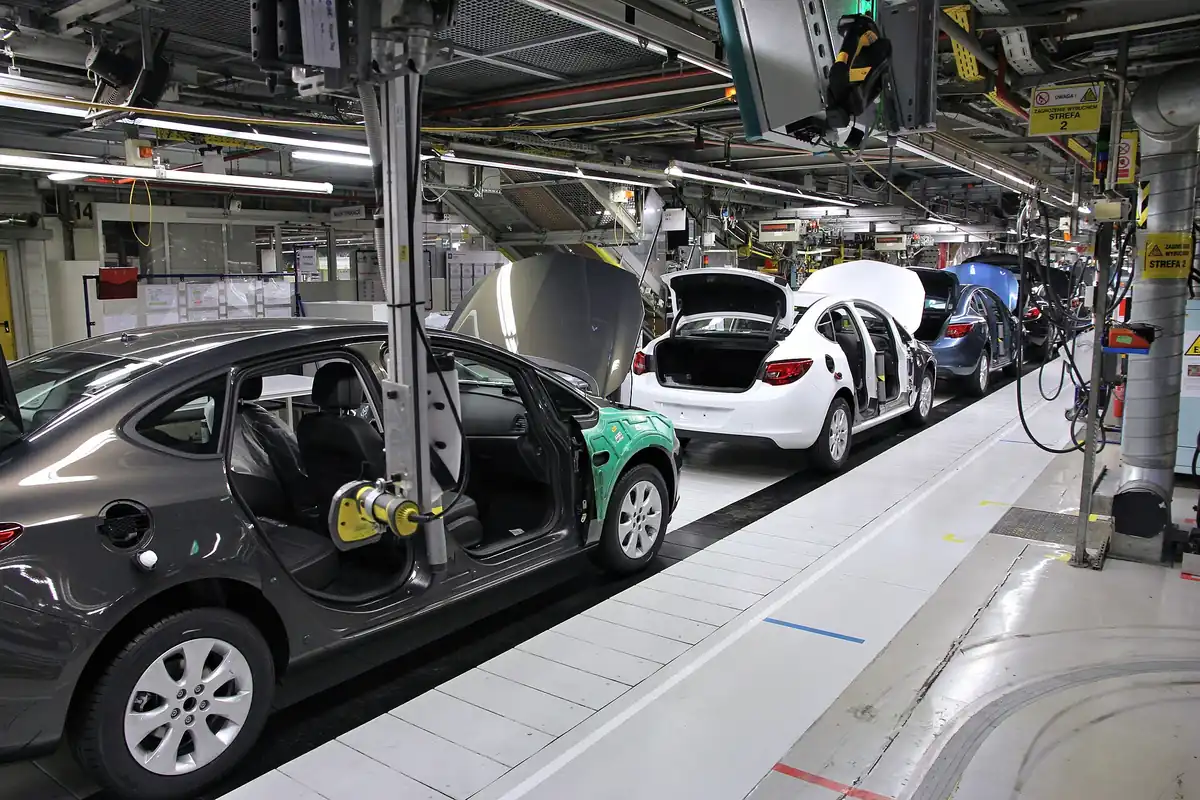
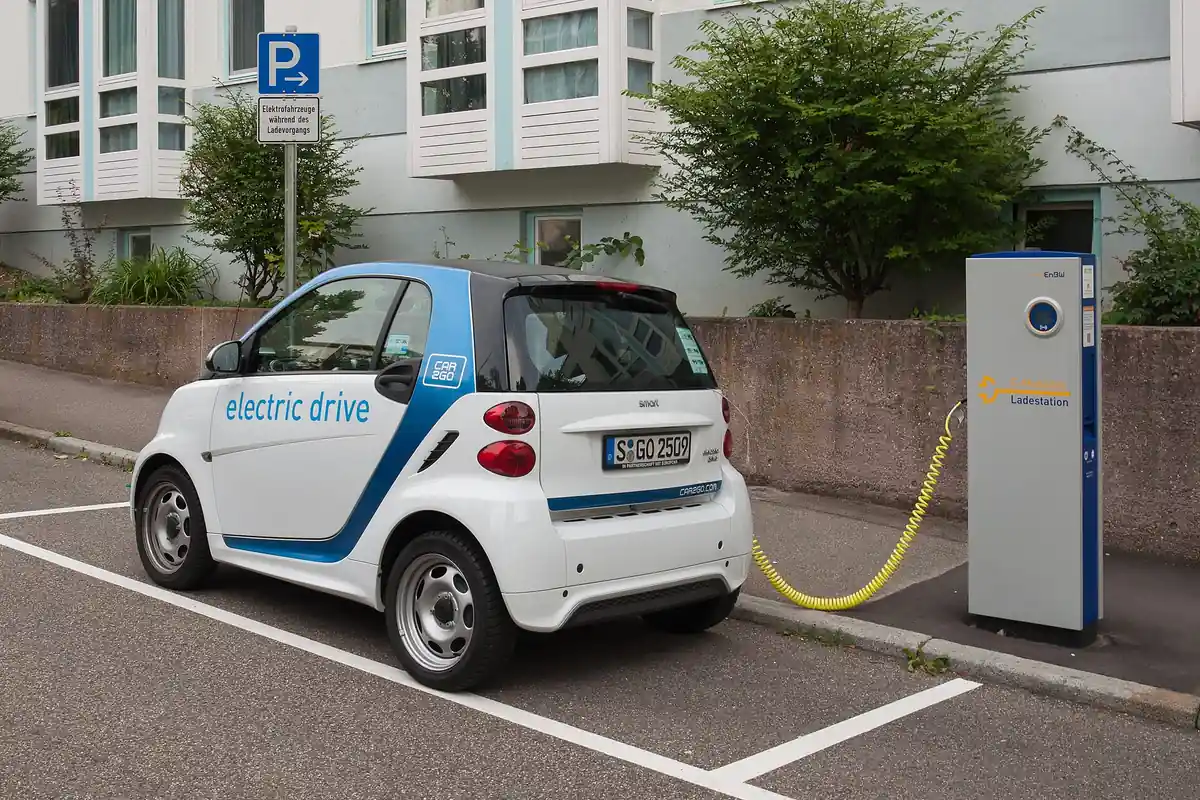
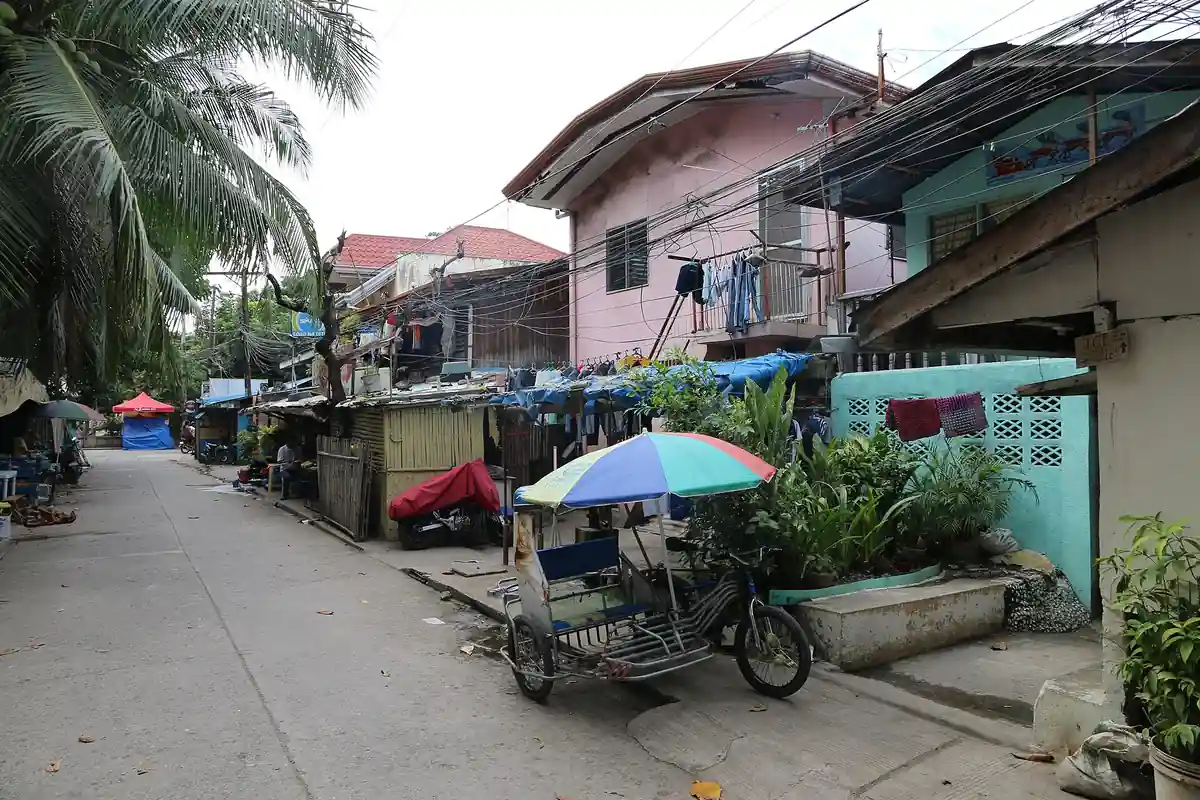
What this article does not claim: any investment amount, plant cost, land area, model count, retail price or first-export date, because none was announced in the sources for this report. The 3,000 direct jobs figure is BusinessMirror's, attributed in the text. The expectation of fully local parts within about a year is the company's anticipation as reported by President Marcos, not a delivered result. The 12,000 figure is designed annual assembly capacity, not a sales or production result. The photographs in this article are file photos — an electric three-wheeler in Quezon City, a generic assembly line, an electric car charging, and a tricycle in Talisay, Cebu — and are not photographs of the Biñan plant or its inauguration.
Sources
This report is based on reporting, official statements and documents from:
- Office of the President of the Philippines — Speech by President Ferdinand R. Marcos Jr. during his visit to the Manufacturing and Assembly Plant of Sazgar Philippines, Inc., Biñan City, Laguna (29 Oct 2026)
- BusinessWorld — Marcos urges EV maker to obtain more parts from local companies (29 Oct 2026)
- BusinessMirror — PHL EV transition gains momentum (29 Oct 2026)
- Bloom Pakistan — Sazgar Opens Car Assembly Plant in Philippines (30 Oct 2026)
- Wikimedia Commons — BEMAC electric three-wheeler, Quezon City; Opel Gliwice assembly line; Car2Go charging station, Stuttgart; tricycle in Talisay, Cebu (image credits)
Frequently Asked Questions
What exactly did Sazgar open in the Philippines?
A manufacturing and assembly plant for three-wheeled vehicles — tricycles — in Biñan City, Laguna, at the Laguna International Industrial Park, inaugurated by President Ferdinand R. Marcos Jr. on Thursday 29 October 2026. It belongs to Sazgar Philippines Incorporated, a subsidiary of Lahore-based Sazgar Engineering Works Ltd., and it is Sazgar's first manufacturing plant outside Pakistan, intended as its hub for Southeast Asia.
How many vehicles will the plant build, and are they electric?
The plant is designed to assemble approximately 12,000 three-wheeled vehicles a year, covering both electric and internal-combustion-engine models. Its initial production mix is projected at 60 percent electric units and 40 percent petrol units, with the electric share expected to rise as demand grows. The 12,000 figure is designed annual capacity, not a sales or first-year production result.
Who owns the plant, and how much of it is Filipino?
The company is 60 percent Filipino-owned, according to President Marcos's inauguration speech and BusinessWorld's report. That ownership is central to the project's pitch: it qualified under the Philippines' Strategic Investment Priority Plan because at least a quarter of the value of every unit is added locally, and the Board of Investments projects even more local value.
Will the plant really use 100 percent local parts within a year?
That is the company's anticipation as reported by President Marcos, not a delivered result. At the inauguration he said many parts still come from abroad, asked the company to grow its Filipino supply chain year after year, and said it anticipates producing all parts locally within about a year, with government support. Batteries, glass, seat foam, upholstery, rubber and lubricants are the supplier categories named. Whether that timetable holds is the first milestone to watch.
What does an electric tricycle mean for a Filipino driver?
Range and running costs. The President said an electric three-wheeler runs 100 to 210 kilometres on a single charge — enough for a full day, since urban tricycles travel about 90 kilometres a day and provincial ones 110 to 120 kilometres — with a full charge taking six to eight hours plugged in. With no petrol to buy, he said, lower fuel costs mean more money for drivers to take home, and less national dependence on imported fuel.
What does this mean for Pakistan?
It is a Pakistani manufacturer's first factory abroad, welcomed at presidential level, and a milestone for Pakistan's industrial exports, in Ambassador Asima Rabbani's words. Sazgar Philippines chief executive Muhammad Fahim said the company plans local manufacturing, workforce development, partnerships with Philippine suppliers and future exports to Southeast Asian markets. No investment figure, retail price or first-export date was announced, and none is claimed in this report.