Pakistan-Bound LNG Tanker Al Mayeda Attacked Near Hormuz Despite Reported Iranian Clearance
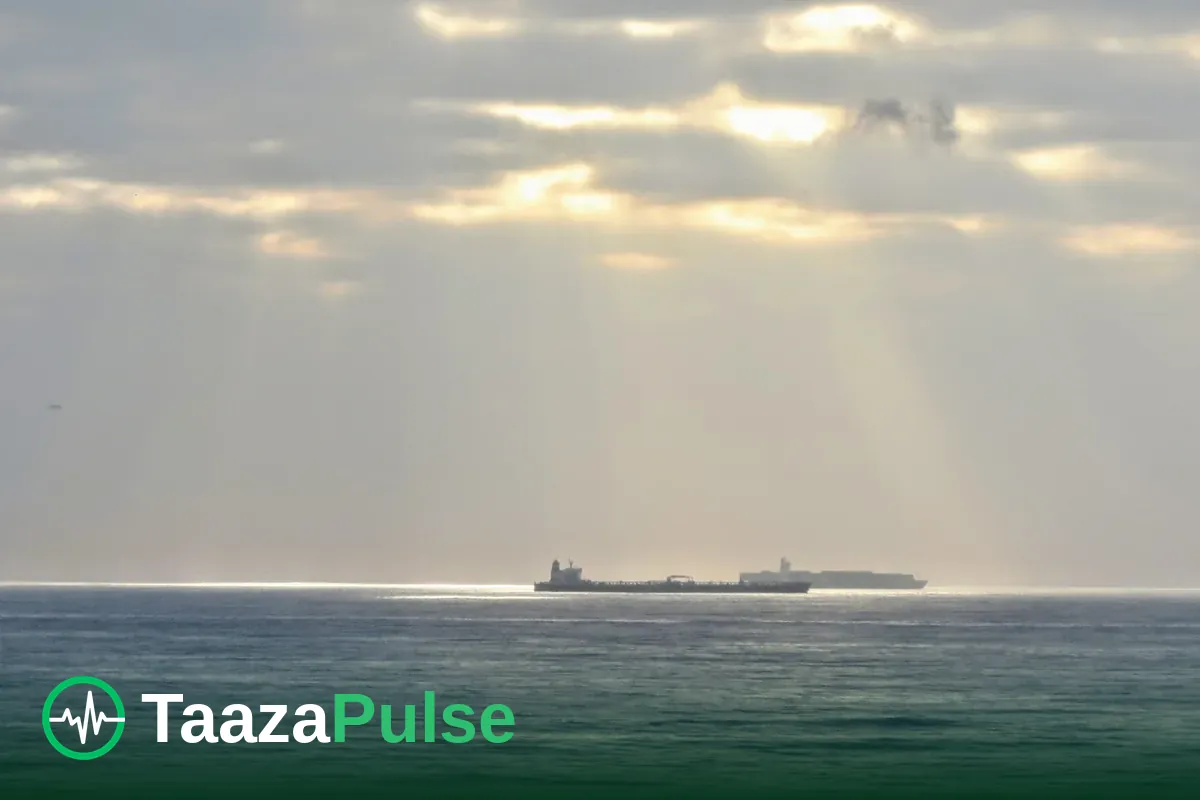
A liquefied natural gas carrier bound for Pakistan was attacked near the Strait of Hormuz on Friday evening despite having received clearance for its passage from Iranian authorities only hours earlier, according to a Bloomberg report reproduced by several outlets on 1 November. The vessel, the Marshall Islands-flagged LNG carrier Al Mayeda, was carrying Qatari gas intended for Pakistan when it was struck in Gulf waters near one of the world's most important energy chokepoints. No crew member was injured, the vessel's owner says the ship remains safe and operational, and Qatar has condemned the attack and opened an investigation — but who struck the ship, with what, and whether its cargo will still reach Pakistan remain unanswered questions at the time of writing.
The incident matters far beyond one ship because of what it represents. For weeks, Pakistan has been negotiating the safe passage of Qatari LNG shipments through the Strait of Hormuz with Iran, and several earlier cargoes crossed successfully under arrangements made with Tehran. If even a cargo cleared hours beforehand can be hit, the diplomatic route that has kept some gas flowing to Pakistan is no longer a guarantee — and with winter approaching, with Pakistan's gas system already under strain, and with replacement gas on the spot market reportedly costing more than three times pre-war levels, the attack lands on a country that can ill afford to lose a shipment. This article sets out what is confirmed, what is only reported, and what is still unknown, because in a fast-moving maritime incident the difference between those three categories is the story.
What happened to Al Mayeda
According to Bloomberg's reporting, Pakistan had negotiated safe passage with Iranian officials for Al Mayeda before it was targeted on Friday 30 October. People familiar with the discussions said Iranian authorities had approved the vessel's passage just hours before the attack. The tanker was carrying Qatari LNG intended for Pakistan when it came under fire near the Strait of Hormuz. The circumstances of the attack and the identity of those responsible have not been established in the reporting.
The vessel's owner has now confirmed the core fact of the incident in its own words. Qatar Gas Transport Company, known as Nakilat, said in a statement published through the Qatar Stock Exchange on Sunday 1 November that Al Mayeda was struck by "unidentified objects" while sailing in Gulf waters on Friday evening, 30 October. No crew member was injured and no environmental damage was reported, the company said. The vessel is in a "safe condition, operational", and the impact of the incident is still being assessed. Nakilat said it remains in direct coordination with the vessel, its crew and the relevant maritime security authorities in the region, and that it is continuing to closely monitor the situation. Notably, Nakilat's statement did not describe the objects that struck the hull, did not name who launched them, and did not give the vessel's exact location.
Two further details come from other reporting and should be read with their sourcing attached. India's Union Minister for Ports, Shipping and Waterways, Sarbananda Sonowal, confirmed that the vessel was struck in a projectile attack and reported that all 25 crew members, including six Indian nationals, were safe. A UKMTO-based account put the strike about 40 nautical miles off Iran's Lavan Island on Friday evening and reported a fire aboard, with the crew reported safe. That location and fire detail comes from that account, not from Nakilat's statement, which gives no location — readers should not treat the two as a single confirmed account until a maritime authority publishes its own advisory.
What happened to the ship after the strike is also reported, not confirmed by the owner. Vessel-tracking information cited in the Bloomberg-based reporting indicated that Al Mayeda reversed course following the attack and headed back towards the Persian Gulf while its condition and the damage were assessed. Whether the cargo will resume its journey to Pakistan, be transferred to another vessel, or be replaced by a fresh purchase is not settled in the reporting consulted for this article. Nakilat's description of the ship as safe and operational does not, by itself, answer the cargo question, and no statement from the company or from any Pakistani authority about the cargo's onward movement had appeared in the reporting consulted at the time of writing.
The clearance puzzle: cleared hours before, attacked anyway
The most striking element of this incident is not the attack itself — shipping in and around the Strait of Hormuz has been attacked repeatedly in recent weeks — but the clearance that preceded it. Bloomberg's account is precise on the sequence: Pakistan negotiated safe passage with Iranian officials for this specific carrier, and Iranian authorities approved the passage just hours before the attack. Several earlier shipments had crossed the waterway successfully following arrangements with Tehran, which is why this cargo was travelling under an arrangement that had, until now, worked.
That sequence raises an obvious question, and it is important to state plainly what it does and does not answer. The clearance story does not identify the attacker. An Iranian approval for passage is not, in the reporting, evidence that Iran carried out the attack, nor is it evidence that Iran failed to prevent it — the reporting establishes neither, because the attacker is unidentified and the circumstances of the strike are not established. Some fast-moving headlines and social posts have been read as blaming Iran for the attack; the underlying reporting does not do that. The honest formulation is narrower and more troubling: a vessel travelling under a negotiated clearance was still struck, by someone unknown, and the clearance did not protect it.
A second qualification matters. The clearance arrangement itself is reported on the basis of people familiar with the discussions, not on the basis of a public statement by the Pakistani or Iranian authorities. One account of the incident notes expressly that Pakistani and Iranian authorities had not publicly confirmed those arrangements. That does not make the Bloomberg account unreliable — it is reproduced across multiple outlets and is consistent with the pattern of earlier successful transits — but it does mean the clearance claim rests on sourced reporting rather than on an official document, and this article reports it in exactly that form. If either government publishes its own account of the arrangement, that account will supersede the sourced version here.
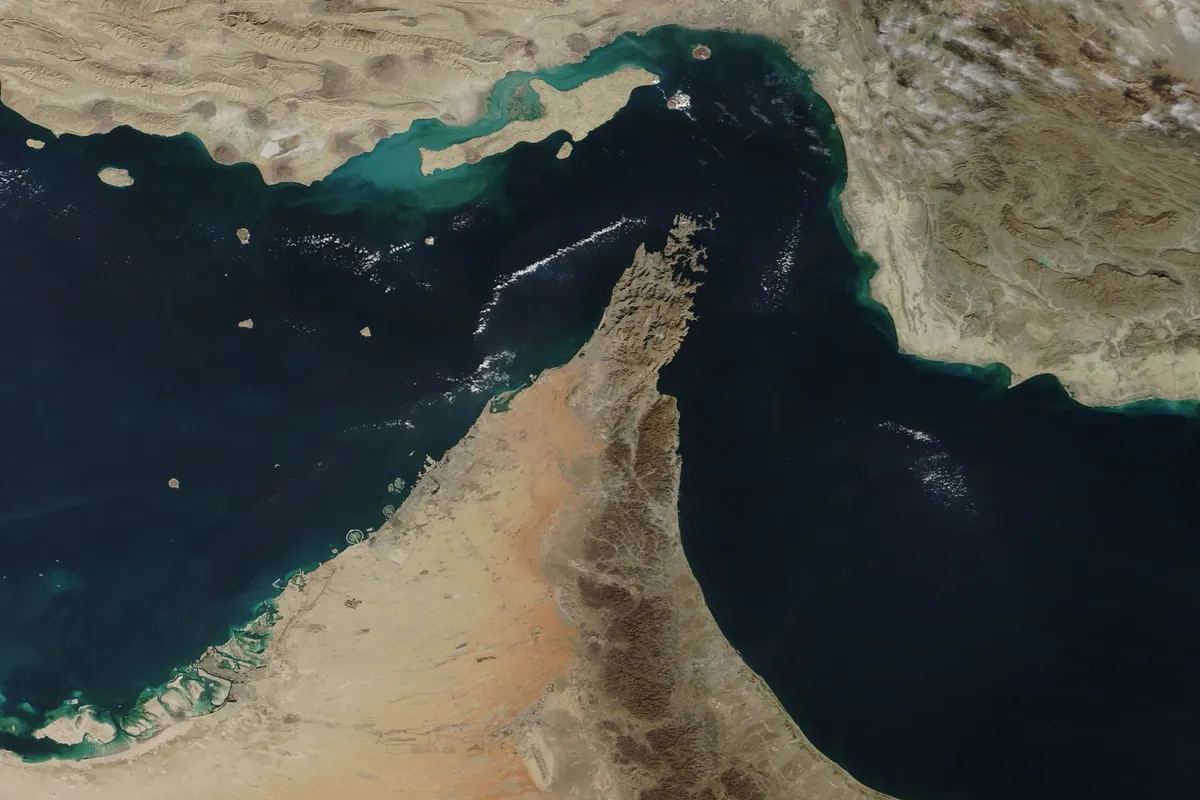
Why would a clearance be needed at all? Because the Strait of Hormuz is not, at present, a normal shipping lane. It is the exit route for Gulf crude and LNG cargoes and one of the world's most important energy chokepoints, and it runs through a war zone: the United States-Iran war has disrupted shipping through the strait and overland trade alike, and commercial traffic through it has run well below pre-war levels. LNG shipments through the strait remained at approximately 30 percent of pre-war volumes during October, according to Bloomberg's reporting. In that environment, a negotiated passage is not a formality — it is the mechanism by which cargoes have kept moving at all. The Al Mayeda attack is the first reported case in this sequence in which the mechanism appears to have failed for a Pakistan-bound cargo.
Qatar's condemnation, and the wider Gulf reaction
Qatar's response came on Sunday, and it was unusually sharp. The Ministry of Foreign Affairs said the State of Qatar expressed its strong condemnation and denunciation of the attack that targeted Al Mayeda while it was sailing in the Arabian Gulf. Doha called the attack a dangerous act that threatens the safety of maritime navigation and the security of global energy supplies. The ministry said the relevant authorities have begun the necessary investigations to determine the circumstances of the incident and identify those responsible, and it affirmed that Qatar reserves its right to take all necessary measures, in accordance with international law and the UN Charter, to protect its assets and safeguard its vessels and their crews.
The Qatari statement went further than condemnation. It warned against the dangers of what it called reckless and irresponsible actions, and the grave repercussions they may have on regional security and stability, as well as on the global economy — particularly the potential environmental risks resulting from the targeting of energy carriers, and the serious consequences for the marine environment and the water security of the countries in the region. That last point is not boilerplate: an LNG carrier is not an oil tanker, and a strike on a gas carrier in a shallow, enclosed gulf raises environmental and water-security questions that go beyond the value of one cargo. Qatar's framing treats the attack as an assault on the shipping system itself, not merely on one ship.
Other Gulf voices followed the same line. Kuwait's Foreign Ministry issued its own statement strongly condemning the attack, expressing full solidarity with Qatar, and stressing that international law, freedom of navigation and the safety of ships and crews must be respected. At the Gulf Cooperation Council level, Secretary-General Jasem Albudaiwi described the targeting of energy tankers as a dangerous escalation that undermines regional security and affirmed the council's support for Qatar's measures. None of these statements named an attacker or announced findings from the investigation; the investigation Qatar announced is, at the time of writing, the announced process for determining what happened and who is responsible, and its outcome is not yet known.
Separately, the International Maritime Organization's Secretary-General, Arsenio Dominguez, warned in reporting published on 1 November that the Strait of Hormuz remains unsafe and urged ships to avoid transiting until their safety can be assured, with about 6,000 seafarers still stranded in the Persian Gulf. That warning followed reports of 24 attacks on vessels in the waterway over roughly two weeks. The IMO warning is a measure of how far the shipping situation has deteriorated: when the United Nations' own maritime agency advises avoidance of one of the world's great trade arteries, the Al Mayeda incident is not an outlier but a symptom.
What this means for Pakistan's gas supply
For Pakistan, the immediate question is practical: does this cargo still arrive, and if it does not, what replaces it? Bloomberg reported that if the shipment fails to reach Pakistan, the country may have to purchase replacement LNG from the international spot market, where prices have reportedly climbed to more than three times their pre-war levels. That is a reported consequence, not a confirmed purchase — no replacement purchase has been announced in the reporting consulted — but it explains why a single cargo matters. A replacement bought at spot prices in a war market would cost far more than a contracted Qatari cargo, and the cost would land on a gas system already struggling to meet winter demand.
The timing could hardly be worse. Pakistan's gas crisis is already a daily reality for households, not an abstraction. TaazaPulse reported on 1 November that families in Rawalpindi are returning to firewood as LPG prices soar ahead of winter, and that the Pakistan LPG Marketers Association has announced a nationwide strike from 16 November over a draft LPG policy it says excludes the private sector. The official November LPG price is already higher — Rs294,075 per tonne, or Rs3,470 for a standard 11.8-kilogram cylinder — while open-market prices reach up to Rs630 per kilogram. Those are different fuels and different markets from imported LNG, and this article does not conflate them, but they describe the same underlying condition: a country entering winter with every form of cooking and heating fuel either short, expensive, or both. Losing an LNG cargo into that market is not a marginal event.
It is equally important to state what has not happened. No official Pakistani statement on a supply disruption from this incident had appeared in the reports consulted for this article, and no Pakistani authority has confirmed a replacement purchase, a cargo transfer, or a change to gas supply schedules. Readers should therefore treat the supply impact as a risk, clearly identified by Bloomberg's reporting, rather than as an announced shortage. The verified position is this: one Pakistan-bound cargo was struck, its owner says the ship is safe and operational, its cargo's onward journey is unresolved, and replacement gas — if needed — would be bought in a market where prices have reportedly more than tripled since before the war.
A strait under attack: the wider pattern
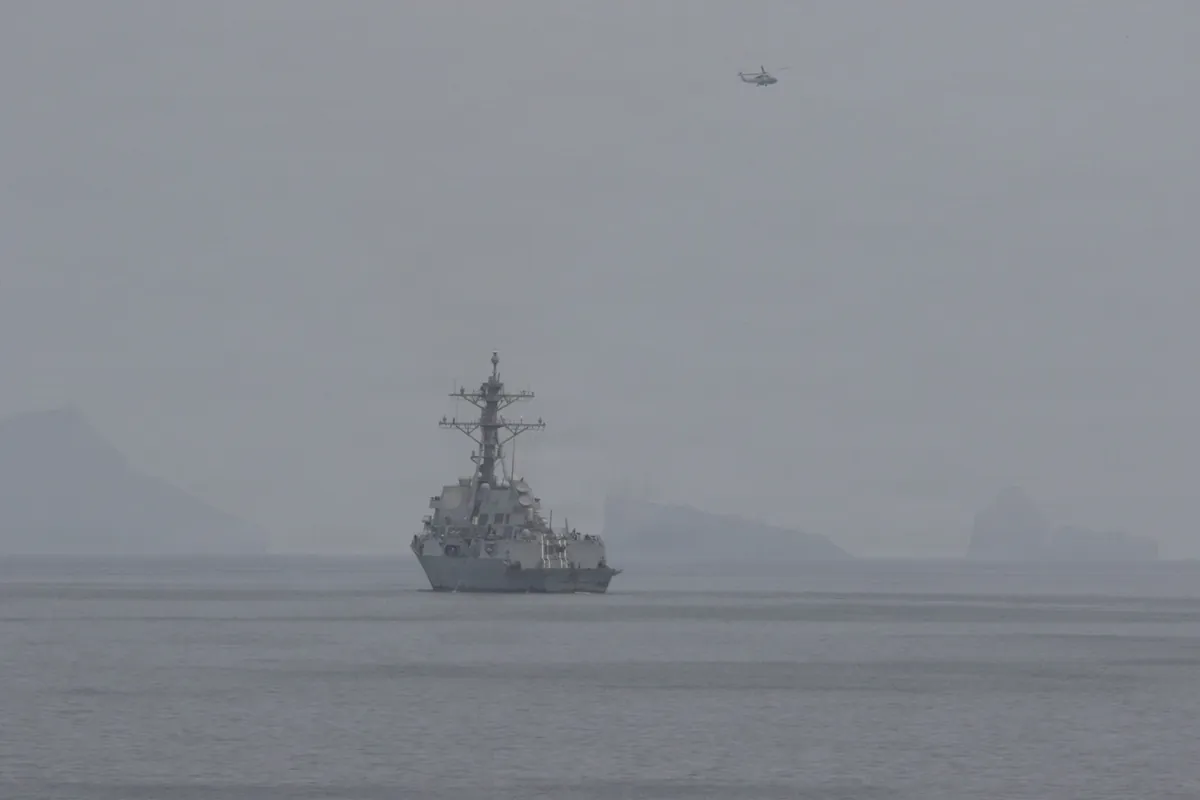
Al Mayeda was not the first vessel attacked in these waters in recent days, and that pattern is part of why the incident has drawn such a sharp reaction. TaazaPulse reported on 29 October that the United Kingdom Maritime Trade Operations agency had reported a vessel on fire about 9 nautical miles north of Khasab, Oman, and that Iran's Revolutionary Guard Navy, via Tasnim, had claimed three oil tankers exploded or caught fire after striking naval mines on an unauthorised southern route over the preceding 24 hours. The United States Central Command rejected the mine claims, saying the routes had been cleared and thousands of vessels were using them safely, and the Associated Press could not immediately verify the Iranian claim. No tanker was named in that episode, no casualties were published, and no confirmed link was established between the UKMTO sighting and the three tankers. The Al Mayeda case is different in one crucial respect: this time the vessel is named, its owner has confirmed the strike, and its destination — Pakistan — is known.
The scale of the wider disruption is also now measurable. One account of the Sunday oil-market reopening, citing UKMTO data, put reported attacks on commercial ships in and around the Strait of Hormuz at more than 30 in October, the highest monthly total since the United States-Iran war began. Oil prices rose after the reports: Brent traded above $116 a barrel in morning trading on 1 November according to Reuters-derived reporting, with the American benchmark above $103. Those market movements are a reaction to the shipping risk, not a Pakistani price announcement, and this article does not treat them as one — Pakistan's domestic fuel prices are set under their own mechanism — but they show how quickly a Hormuz incident transmits into global energy costs, which is precisely the channel through which a lost LNG cargo would become expensive for Pakistan.
Against that background, diplomatic efforts to reopen the strait continued even as the attack was reported. Indirect talks in Doha ran into a third day on Sunday, with Qatar trying to negotiate the release of more than $6 billion in Iranian assets, a step that could lead to the reopening of the strait and the restart of negotiations on Iran's nuclear programme. Iran's foreign minister, Abbas Araghchi, said in an interview that Iran had offered to open the strait within two days of the United States acting to lift the blockade on oil ships, stop blocking the release of Iranian assets and end sanctions on Iranian oil exports, and that he hoped the United States would choose diplomacy over other paths. Gulf officials were reported as braced for the worst as they waited for Washington's response. The Al Mayeda attack sits inside those talks, not apart from them: it is a reminder, delivered in the middle of a negotiation about reopening the waterway, that the waterway is still being attacked.
What is confirmed, what is reported, and what is unknown
Because this story will be updated as the investigation and the vessel's assessment proceed, it is worth separating the three tiers of knowledge clearly. Confirmed by the vessel's owner and by Qatar's foreign ministry: Al Mayeda, a Nakilat LNG carrier, was struck by unidentified objects in Gulf waters on the evening of Friday 30 October; no crew member was injured; no environmental damage was reported; the vessel is safe and operational; the damage is being assessed; Qatar has condemned the attack and begun an investigation. Confirmed by a minister of a third country: all 25 crew members, including six Indian nationals, are safe, and the strike was a projectile attack, according to India's shipping minister.
Reported by Bloomberg on the basis of people familiar with the discussions, and reproduced across multiple outlets: the cargo was Qatari LNG bound for Pakistan; Pakistan had negotiated safe passage with Iranian officials; Iranian authorities approved the passage hours before the attack; the vessel reversed course towards the Persian Gulf after being struck; replacement LNG, if needed, would come from a spot market where prices have reportedly more than tripled since before the war; LNG shipments through Hormuz ran at about 30 percent of pre-war volumes in October. Reported by a UKMTO-based account: the strike occurred about 40 nautical miles off Iran's Lavan Island and started a fire aboard. None of the official statements consulted gives the exact location, so that detail remains single-sourced.
Unknown, and not claimed anywhere in this article: who attacked the vessel; what weapon or object struck it; whether the attack was aimed at this vessel specifically or at Hormuz traffic generally; whether the clearance arrangement failed, was bypassed, or was irrelevant to the attacker; whether the cargo will reach Pakistan, be transferred, or be replaced; what Qatar's investigation will find; and what, if anything, Pakistan's government will say about the incident or about gas supply. Any report that fills one of those gaps with a name, a weapon, or a motive before an official finding is published should be treated as speculation, however confidently it is phrased.
What to watch next
Four developments will decide how significant this incident becomes. The first is Qatar's investigation: whether it identifies the attacker, the weapon, and the launch point, or whether — as with several recent Hormuz incidents — attribution remains unresolved. The second is the vessel's assessment: Nakilat says the impact is still being assessed, and that assessment will determine whether Al Mayeda can resume its voyage, needs repair, or must transfer its cargo. The third is the cargo decision itself: a resumed voyage, a transfer, or a spot-market replacement each carries a different cost and a different timeline for Pakistan's gas supply, and none has been announced. The fourth is the diplomatic track: whether the Doha talks produce a reopening of the strait, which would change the risk for every subsequent cargo, or whether the attack hardens positions and leaves the waterway as dangerous as the IMO warning describes.
For households in Pakistan, the honest advice at this stage is to watch for two signals rather than to react to the headline alone. The first is any statement from Pakistan's petroleum authorities about this cargo or about LNG supply generally — its absence so far is itself information, and its arrival would be the first authoritative word on whether supply is affected. The second is the open-market and official gas price picture in the coming days: a lost cargo bought back at spot prices would eventually show up in costs, while a cargo that resumes its voyage would leave the picture unchanged. Until one of those signals appears, the story is what it is: a named ship, a confirmed strike, a safe crew, an unresolved cargo, and a clearance that did not protect it.
TaazaPulse will update this story if Nakilat publishes its damage assessment, if Qatar's investigation names an attacker or a cause, if Pakistan's authorities comment on the cargo or on supply, if the vessel resumes its voyage or its cargo is transferred or replaced, or if the Doha talks produce a change in the strait's status. Until then, the verified position stands: on the evening of Friday 30 October, the Pakistan-bound LNG carrier Al Mayeda was struck near the Strait of Hormuz despite reported Iranian clearance granted hours earlier; all 25 crew members are safe; the vessel is safe and operational according to its owner; Qatar has condemned the attack and opened an investigation; and the attacker, the weapon, and the cargo's fate remain unknown.
What is confirmed in this article is limited to what the reporting establishes: Nakilat's Qatar Stock Exchange statement of Sunday 1 November 2026 (Al Mayeda struck by unidentified objects on Friday evening 30 October in Gulf waters; no crew injured; no environmental damage; vessel safe and operational; impact being assessed; coordination with the vessel, crew and maritime security authorities); Qatar's Ministry of Foreign Affairs statement of Sunday 1 November 2026 via QNA (strong condemnation and denunciation; dangerous act threatening maritime navigation and global energy supplies; investigation begun; right reserved to take all necessary measures under international law and the UN Charter; warnings on regional security, the global economy, the marine environment and regional water security); Kuwait's Foreign Ministry condemnation and solidarity statement and the GCC Secretary-General's statement (targeting of energy tankers a dangerous escalation); India's shipping minister Sarbananda Sonowal's confirmation (projectile attack; all 25 crew safe, including six Indian nationals); Bloomberg's reporting as reproduced by Bloom Pakistan, Binance News and other outlets on 1 November 2026 (Pakistan negotiated safe passage with Iranian officials for the Marshall Islands-flagged Al Mayeda; approval hours before the attack; Qatari LNG bound for Pakistan; vessel reversed course towards the Persian Gulf per vessel-tracking information; replacement spot LNG reportedly more than three times pre-war prices; Hormuz LNG shipments approximately 30 percent of pre-war volumes in October); the UKMTO-based account of a strike about 40 nautical miles off Iran's Lavan Island with a fire aboard (single-sourced location and fire detail, not in Nakilat's statement); the IMO Secretary-General's warning as reported on 1 November 2026 (strait remains unsafe; about 6,000 seafarers stranded; 24 attacks reported over roughly two weeks); and the Doha talks reporting (third day on Sunday; more than $6 billion in Iranian assets; Foreign Minister Abbas Araghchi's two-day reopening offer). The clearance arrangement is reported on the basis of people familiar with the discussions; Pakistani and Iranian authorities had not publicly confirmed it in the reporting consulted, and no attacker, weapon, motive, cargo decision, replacement purchase or Pakistani official supply statement is claimed, because none appeared in that reporting. The photographs are file photographs, not photographs of Al Mayeda, of the attack, or of any person named in this article.
Sources
This report is based on reporting, official statements and documents from:
- Bloom Pakistan (Bloomberg reporting) — Pakistan LNG tanker attacked near Hormuz despite Iran approval (1 Nov 2026)
- SupplyChainBrain (Bloomberg reporting) — Pakistan LNG cargo attacked near Hormuz had Iranian approval (1 Nov 2026)
- Fana News (QNA) — Kuwait strongly condemns attack on Qatari LNG carrier Al Mayeda (1 Nov 2026)
- Fana News (QNA) — GCC Secretary-General condemns attack on Qatari LNG carrier Al Mayeda (1 Nov 2026)
- NewsNexus24 — Attack on Pakistan-bound LNG tanker raises winter supply risks (1 Nov 2026)
Frequently Asked Questions
What happened to the LNG tanker Al Mayeda?
On the evening of Friday 30 October 2026, the Marshall Islands-flagged LNG carrier Al Mayeda, owned by Qatar Gas Transport Company (Nakilat) and carrying Qatari gas bound for Pakistan, was struck by unidentified objects in Gulf waters near the Strait of Hormuz. Nakilat confirmed the strike on Sunday 1 November, saying no crew member was injured, no environmental damage was reported, and the vessel is safe and operational while the impact is assessed.
Was the tanker attacked despite Iranian clearance?
Yes, according to Bloomberg's reporting: Pakistan had negotiated safe passage with Iranian officials for Al Mayeda, and people familiar with the discussions said Iranian authorities approved the passage just hours before the attack. The clearance arrangement is reported on that sourced basis — Pakistani and Iranian authorities had not publicly confirmed it in the reporting consulted — and several earlier shipments had crossed successfully under similar arrangements.
Does the clearance mean Iran attacked the tanker?
No. The reporting does not attribute the attack to Iran or to anyone else: the attacker, the weapon and the circumstances are not established, and Nakilat describes the vessel only as struck by unidentified objects. An approval for passage is not evidence of who carried out the attack, and this article does not make that claim. Some fast-moving headlines have been read that way; the underlying reporting does not support it.
Are the crew safe, and where is the ship now?
All 25 crew members, including six Indian nationals, are safe, according to India's shipping minister Sarbananda Sonowal, who described the strike as a projectile attack. Nakilat says the vessel is safe and operational. Vessel-tracking information cited in the Bloomberg-based reporting indicated Al Mayeda reversed course towards the Persian Gulf after the strike, but whether its cargo will resume its journey to Pakistan, be transferred or be replaced is not settled in the reporting.
What has Qatar said about the attack?
Qatar's Ministry of Foreign Affairs said on Sunday 1 November that it strongly condemns and denounces the attack, calling it a dangerous act that threatens maritime navigation and global energy supplies. It said investigations have begun to establish the circumstances and identify those responsible, and that Qatar reserves its right to take all necessary measures under international law and the UN Charter. Kuwait condemned the attack and expressed full solidarity with Qatar, and the Gulf Cooperation Council's Secretary-General called the targeting of energy tankers a dangerous escalation.
What does this mean for Pakistan's gas supply this winter?
It creates a risk, not yet an announced shortage. Bloomberg reported that if the shipment fails to reach Pakistan, replacement LNG may have to be bought on the spot market, where prices have reportedly climbed to more than three times pre-war levels. No replacement purchase and no Pakistani official statement on supply had appeared in the reporting consulted, so the verified position is: one Pakistan-bound cargo struck, its cargo's fate unresolved, in a winter market where gas is already short and expensive.