At Least 15 Killed as Drone Strikes Hit Ethiopia Displacement Camp
At least 15 people, many of them children, were killed when a series of drone strikes hit a camp for displaced civilians in Ethiopia's Amhara region on Thursday, 29 October 2026, according to rescue sources speaking to Reuters and camp residents speaking to the Ethiopian outlet Addis Standard. The camp, known as Hayiq Jari 2 Turk, sits in the South Wollo Zone of Amhara, roughly 400 kilometres north-east of the capital, Addis Ababa, and is home to more than 1,700 people who fled earlier violence. The dead included children, pregnant women and students, the sources said, and the injured were taken to hospitals in the nearby town of Hayk and, for the most serious cases, to Dessie. No authority has yet said who carried out the strikes or why this camp was hit, and the exact death toll remains disputed between the first reports — a disagreement this article states openly rather than resolving by picking one number.
The first reports reached the outside world on Friday, 30 October, a day after the strikes, because the camp is in a conflict zone where independent access is limited and information travels through residents, rescue workers and local officials rather than through official statements. That is also why the numbers differ: one rescue source told Reuters that at least 15 people died, while Addis Standard, speaking to camp residents, reported 16 dead and 22 injured. The conflict-monitoring organisation ACLED put the possible toll higher still, estimating between 16 and 23 dead. The gap between 15 and 23 is not a rounding error to be smoothed over; it reflects how casualties are counted in the hours after an attack — bodies buried at the camp, people who die later in hospital, and people still being treated are recorded at different moments by different people. Until an independent count is published, the honest figure is a range, and the floor of that range — at least 15 dead — is the one every major account agrees on.
What happened at Hayiq Jari 2
Hayiq Jari 2 Turk is a camp for internally displaced people — Ethiopians driven from their homes by fighting, not refugees from another country. Its residents, Addis Standard reported, were mostly displaced from parts of the neighbouring Oromia region, including Kelem Wollega, East Wollega, West Wollega, Horo Guduru Wollega and West Shewa. The camp's population is put at more than 1,700 people by Reuters' sources and at more than 1,800 by Addis Standard. Either way, it is a large settlement of shelters, not a small cluster of tents: families living in makeshift housing, with children attending school nearby and, by the accounts of the day, returning from it when the strikes began.
Witnesses described repeated strikes, not a single explosion. A community representative involved in the burials told Reuters there were around five explosions, after which residents began collecting bodies. A witness who spoke to Addis Standard said the camp was struck at least five times, at intervals of about 15 minutes, while displaced people were inside their shelters. Witnesses who spoke to Agence France-Presse described four successive strikes. The difference between four and five strikes matters less than what the accounts agree on: the camp was hit more than once, over a sustained period, while people were sheltering in place, and residents had no warning that a displacement camp would be attacked. "We never expected a drone to attack the camp," one witness told Addis Standard — a sentence that captures the shock of an attack on a place whose residents had already fled violence once.
The burials began quickly, as they do when there is no morgue and no refrigeration. The Reuters source said residents helped bury 13 people at the camp itself, and that two more of the injured later died at a hospital in Hayk, a town about 17 kilometres away — which is how the Reuters toll of at least 15 is composed. Addis Standard's account is consistent in structure and slightly higher in total: 16 dead and 22 injured, with the injured taken to Hayiq Hospital and the serious cases referred on to Dessie Hospital. One report said 15 victims were buried together in a single grave because there were not enough individual burial spaces. Survivors, Reuters reported, were sheltering in a school in Hayk after the attack. A local official told Reuters that the authorities were aware of the incident and were helping to get medical treatment to 36 people who had been injured — a higher injured figure than Addis Standard's 22, which may reflect people treated at different facilities or counted at a later stage, and which this article reports as a separate claim rather than merging into a single number.
The death toll: why the reports differ
Readers encountering three different death tolls for the same attack are entitled to ask which one is right, and the answer, for now, is that no single verified count exists. The three figures in circulation come from three different kinds of source, and each has its own limits. Reuters' "at least 15" rests on two sources involved in the rescue operation: a community representative who helped with the burials and a resident of Hayk who was sheltering survivors. It is a floor, not a ceiling — "at least" is doing real work in that sentence, because more of the injured could still die and more bodies could still be found. Addis Standard's "16 dead, 22 injured" rests on camp residents and witnesses, including a witness who said 14 bodies had been buried at the camp and two more victims died while receiving medical treatment. Its detail — three pregnant women, an eight-year-old girl and students among the dead — is the most specific victim breakdown published, and it is attributed to residents, not to an official register.
ACLED's estimate of 16 to 23 dead is a different kind of figure again: it is an analytical estimate from an organisation that tracks armed conflict, built by cross-checking multiple reports, and it carries the widest range precisely because it is trying to capture the uncertainty rather than hide it. The French news agency AFP's early reporting, carried by several outlets, described at least 14 people killed, including children and pregnant women, with witnesses saying 14 had been buried at the displacement centre and two more died in medical care — a total that, added up, matches Addis Standard's 16. Taken together, the reports converge on a core fact — roughly 15 or 16 people dead, including children — and diverge on the edges, where hospital deaths and later counts push the total up. This article will update the figure if an official or independently verified count is published, and it will not quietly replace one number with another without saying so.
Who lived in the camp, and what life there was like
The people of Hayiq Jari 2 were already among Ethiopia's most vulnerable before Thursday. They had been displaced from Oromia, a region that has itself seen years of fighting between federal forces and the Oromo Liberation Army, and they were living in a camp in Amhara — a region now in the grip of its own armed conflict. Addis Standard reported on 6 October 2026 that displaced people in camps in Debre Birhan and other Amhara locations were facing worsening shortages of food, medicine, healthcare and other essential services, as humanitarian organisations scaled back or withdrew operations amid funding constraints. That reporting is about the general condition of Amhara's camps, not a claim about a specific delivery to Hayiq Jari 2, but it explains why an attack on a camp is also an attack on a population with almost no buffer: no savings, no alternative shelter, and a humanitarian system already stretched thin.
The victims' profile, as reported by residents, makes the same point in human terms. Among the dead were three pregnant women, an eight-year-old girl and students, according to Addis Standard, and five children, according to Reuters' two sources. The dead also included elderly people and women, the same outlet reported. No list of names has been published, and this article does not invent one. In a camp where families are registered by aid agencies rather than by a civil registry, and where the dead were buried within hours by their neighbours, a full named list may never emerge — which is itself a measure of how far these deaths sit from the world's attention.
The wider conflict: Amhara, Tigray and the October drone campaign
The Hayiq Jari 2 strikes did not happen in isolation. They are part of a wider escalation of drone warfare by Ethiopia's federal forces across three regions — Amhara, Tigray and Oromia — where the government is fighting armed groups, and where October 2026 has brought a succession of civilian-casualty strikes. Reuters noted that the strikes highlight continuing clashes in the area despite a lull in the heavy fighting that erupted last month between an alliance of rebels from the northern Tigray region and the government in Addis Ababa. Both Reuters sources said there had been no fighting in the Hayiq area when the strike took place, but that members of the Amhara Fano National Movement — part of the rebel alliance spearheaded by fighters from Tigray — had been nearby. That proximity, reported as a fact about the area and not as a justification, is the closest any account has come to explaining why the camp might have been in a strike zone, and it does not establish that the camp itself was a target.
The same week brought other strikes that put Hayiq Jari 2 in a grim pattern. On Friday morning, 30 October, a drone struck civilians in Rama town in Central Tigray who had gathered to collect sorghum from a private truck carrying grain belonging to local traders — a truck that had itself been hit by a drone the previous evening. Local sources told Addis Standard that at least 11 or 12 civilians were killed there, with a hospital source confirming 11 deaths and hearing of two more victims. Earlier in October, strikes in Medebay Terer in Tigray killed seven civilians, including an eight-year-old girl, and injured six others across two locations, and on 23 October a drone strike in western Oromia killed two local government employees, Bashana Lammesa and Addisu Tamasgen, in Ababo Guduru Woreda. None of these strikes has produced an official casualty statement from the federal government, and the pattern — repeated drone attacks on civilian gatherings and settlements in three regions within a single month — is what has drawn the attention of conflict monitors even where individual incidents have not drawn international headlines.
The political geography matters for understanding why verification is so hard. Amhara is home to roughly 500,000 internally displaced people, according to one recent report, following escalating clashes involving the Oromo Liberation Army and the Fano militia movement, and the federal government has repeatedly launched drone operations across the region. Journalists and independent monitors have limited access to the strike zones, and the federal government rarely comments on individual drone operations. That combination — a high-tempo air campaign, restricted access, and official silence — is why the first accounts of Hayiq Jari 2 came from the people who buried the dead, and why the toll is still expressed as a range.
What the authorities have — and have not — said
As of Friday's reporting, no Ethiopian federal authority had publicly confirmed the Hayiq Jari 2 strikes, the death toll, or the identity of the operator. A spokesperson for Prime Minister Abiy Ahmed did not immediately respond to Reuters' requests for comment, and the Ethiopian army's spokesperson had not responded to AFP's questions at the time of its reporting. The only official voice in the first accounts is a local official, quoted by Reuters, who said the authorities were aware of the incident and were helping to get medical treatment to the injured. That is a humanitarian response, not an account of the strikes, and it leaves the central questions — who ordered them, what was targeted, and whether the camp was struck deliberately or in error — entirely unanswered.
The absence of an official account does not make the residents' accounts unreliable, but it does set a limit on what can be claimed. This article therefore does not attribute the strikes to the Ethiopian federal army as a proven fact, even though federal forces are the actor conducting drone operations in the region and other October strikes have been described in those terms by local sources. Attribution in a war zone requires either an admission, a verified military statement, or evidence that ties a specific weapon to a specific operator, and none of those is in the public record for Hayiq Jari 2. Readers should treat any report that states the operator as certain with the same caution this article applies to its own toll: the claim may turn out to be right, but it is not yet proven.
What happens next for the survivors
The immediate needs of the survivors are stark and practical: medical care for the injured, shelter for people whose shelters were destroyed, and food and water for a camp population that was already short of all three. The injured were taken to Hayiq Hospital, with serious cases referred to Dessie Hospital, and survivors were sheltering in a school in Hayk, according to Reuters. Whether they can return to the camp, and whether the camp is safe to return to, depends on a question no one has answered: whether the strikes were a one-off event or the start of a pattern in that area. If drones return, a camp of more than 1,700 people in open shelters has no protection to offer.
The longer question is accountability. Drone strikes on civilian settlements, if the camp was not a military objective, would raise serious questions under the laws of war, which require armed forces to distinguish between combatants and civilians and to avoid attacks where civilian harm would be excessive relative to any military advantage. Establishing what happened at Hayiq Jari 2 would require access for independent investigators, preservation of strike-site evidence, and a credible official inquiry — none of which has been announced. In the meantime, the record rests on the people who were there: the witness who counted the explosions, the neighbours who buried the dead, and the residents now sheltering in a school in Hayk. Their accounts, cross-checked across Reuters, Addis Standard, AFP and ACLED, are the basis of this report, and they are enough to establish the central fact even while the toll and the attribution remain open: on Thursday, a camp full of people who had already fled one war was struck from the air, and at least 15 of them did not survive it. TaazaPulse will update this story when an official statement, a verified casualty count, or an independent investigation is published.
Figures and accounts in this article are taken from Reuters reporting via SRN News, Addis Standard's camp-resident reporting, Agence France-Presse witness accounts, and the ACLED conflict estimate, all published 30 October 2026, with the strikes themselves on Thursday, 29 October 2026. Where the sources differ — on the death toll (15, 16, or an estimated 16–23), on the number of strikes (four or five), and on the injured count (22 or 36 receiving treatment) — this article reports the difference rather than smoothing it over. No operator, target or motive is claimed, because none has been officially confirmed; the Ethiopian army and the prime minister's office had not responded to reporters' questions at the time of publication.
Sources
This report is based on reporting, official statements and documents from:
- Tribune — At least 16 civilians killed in drone attack on displacement camp in Ethiopia (30 Oct 2026, queue df1773bb31ac402f)
- Reuters via SRN News — Strikes on camp in Ethiopia kill at least 15, sources say (30 Oct 2026)
- Addis Standard — Drone strike kills 16, injures 22 at Hayiq Jari 2 IDP camp in Amhara region (30 Oct 2026)
- Addis Standard — At least a dozen civilians killed in yet another army drone strike in Tigray's Rama town (30 Oct 2026, context)
- AFP via NewsCentral / Chennai Online — Ethiopia drone strikes kill 14-16 in Amhara (30 Oct 2026)
- ACLED estimate via NewsCentral / Chennai Online — 16-23 dead estimated (30 Oct 2026)
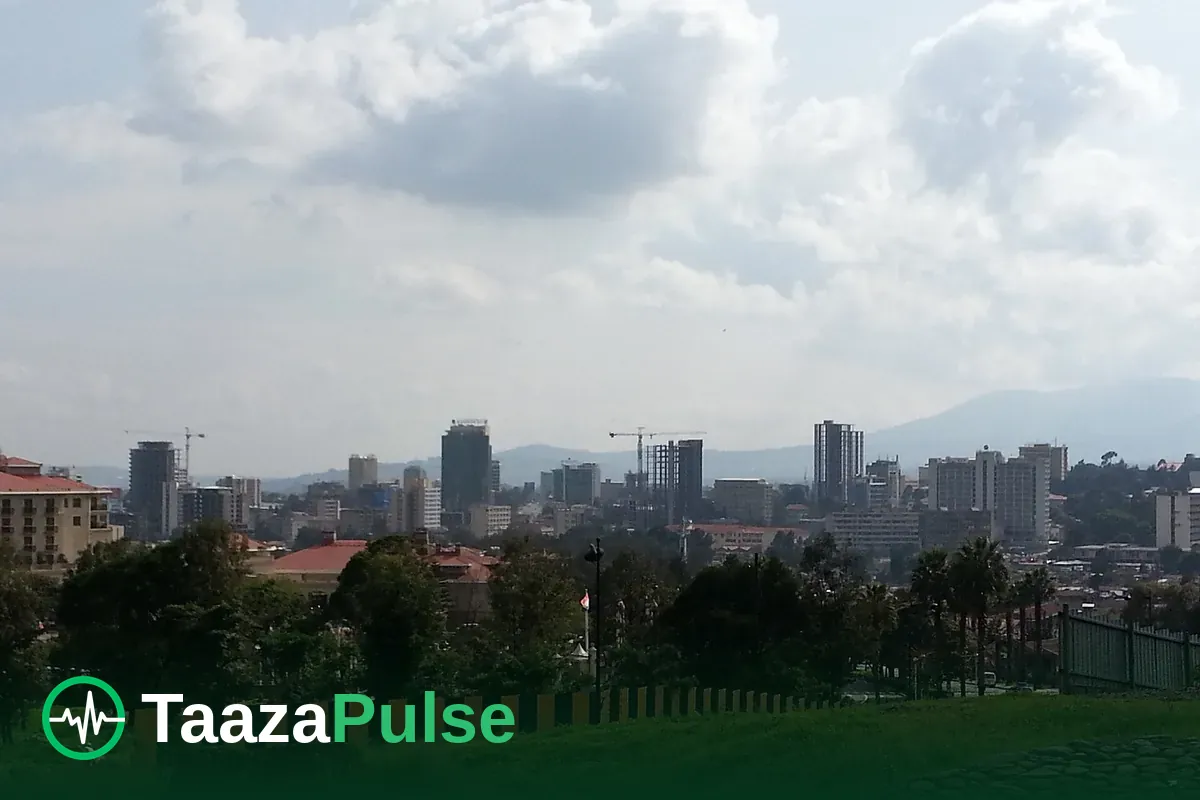
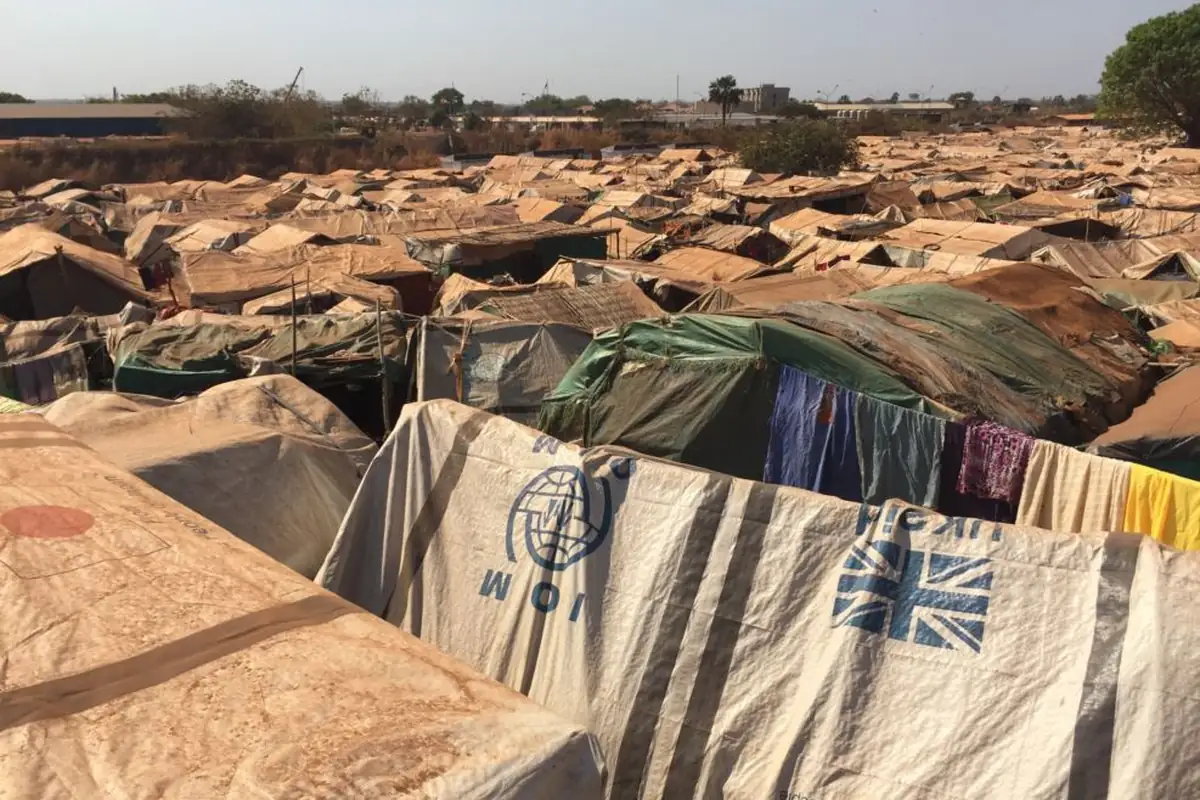
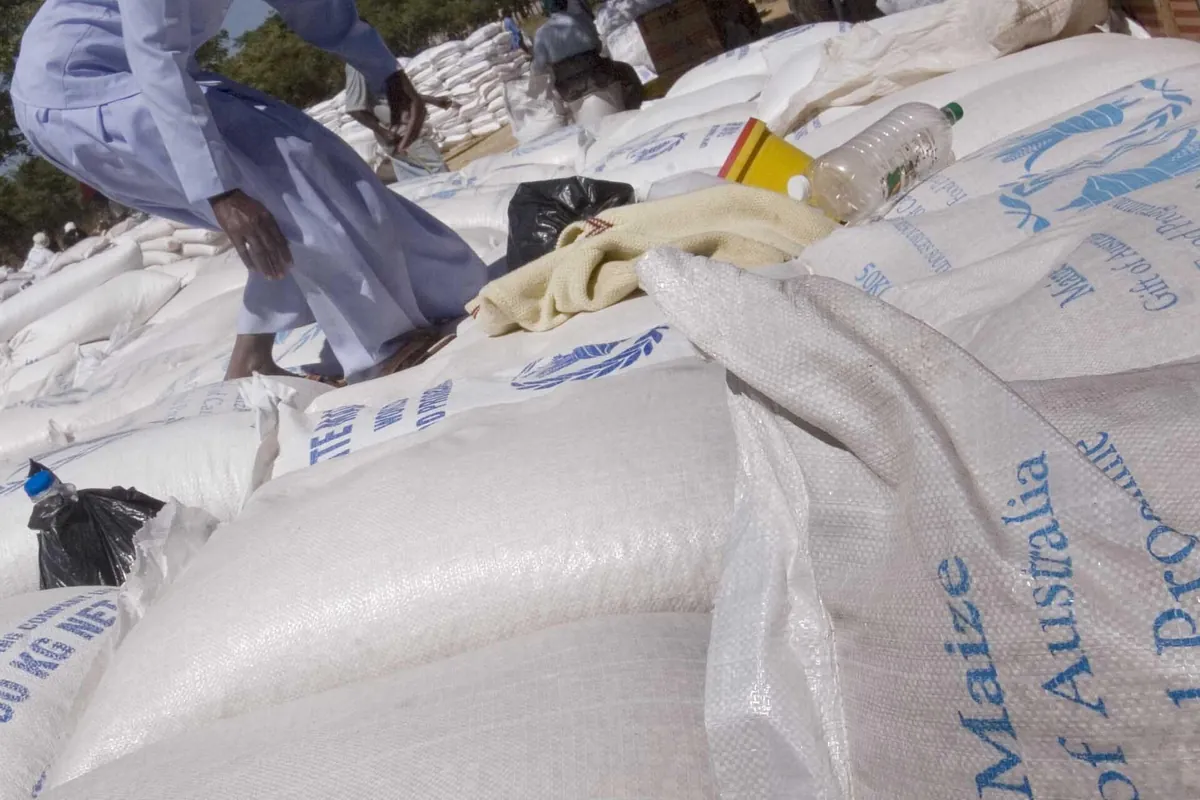
- Photos: real file photographs (Wikimedia Commons) — Addis Ababa skyline, Simien Mountains landscape, generic displacement-camp tents, food-aid sacks; file photos, not the camp or the strikes
Frequently Asked Questions
What happened at the Hayiq Jari 2 displacement camp in Ethiopia?
A series of drone strikes hit the Hayiq Jari 2 Turk camp for internally displaced people in the South Wollo Zone of Ethiopia's Amhara region on Thursday, 29 October 2026. Witnesses described four or five strikes over a sustained period while residents were inside their shelters. At least 15 people were killed, including children, pregnant women and students, and dozens were injured. The strikes were first reported on Friday, 30 October, because the camp is in a conflict zone with limited independent access.
How many people were killed, and why do the reports differ?
Reuters, citing two sources involved in the rescue operation, reported at least 15 dead: 13 people buried at the camp and two more who died later at a hospital in Hayk. Addis Standard, speaking to camp residents, reported 16 dead and 22 injured. The conflict monitor ACLED estimated between 16 and 23 dead. The figures differ because bodies buried at the camp, people who die later in hospital, and people still being treated are counted at different moments by different people. This article uses 15 as the agreed floor and reports the higher figures as separate claims, not as a single settled toll.
Who lived in the Hayiq Jari 2 camp?
More than 1,700 people lived in the camp according to Reuters' sources, and more than 1,800 according to Addis Standard. They were internally displaced Ethiopians, mostly from parts of the neighbouring Oromia region, including Kelem Wollega, East and West Wollega, Horo Guduru Wollega and West Shewa. They had already fled earlier violence, and Addis Standard reported on 6 October 2026 that displaced people in Amhara's camps were facing worsening shortages of food, medicine and healthcare as humanitarian organisations scaled back operations.
Who carried out the drone strikes?
That has not been officially confirmed. No Ethiopian federal authority had publicly confirmed the strikes, the death toll or the operator at the time of Friday's reporting: a spokesperson for Prime Minister Abiy Ahmed did not immediately respond to Reuters, and the army's spokesperson had not responded to AFP. Federal forces are conducting drone operations across Amhara, Tigray and Oromia, and Reuters' sources said there had been no fighting in the Hayiq area when the strike took place but that members of the Fano movement had been nearby. Proximity is not proof of targeting, and this article does not attribute the strikes to any actor as a proven fact.
Were there other drone strikes in Ethiopia the same week?
Yes. On Friday morning, 30 October, a drone struck civilians in Rama town in Central Tigray who had gathered to collect sorghum from a truck hit by a drone the previous evening; local sources put the dead at 11 or 12. Earlier in October, strikes in Medebay Terer in Tigray killed seven civilians including an eight-year-old girl, and on 23 October a strike in western Oromia killed two local government employees. The Hayiq Jari 2 attack is part of a wider October pattern of drone strikes on civilian settlements across Amhara, Tigray and Oromia, none of which has produced an official federal casualty statement.
What happens to the survivors now?
The injured were taken to Hayiq Hospital, with serious cases referred to Dessie Hospital, and survivors were sheltering in a school in the nearby town of Hayk, according to Reuters. Their immediate needs are medical care, replacement shelter, food and water — in a camp population that was already short of all three. Whether they can safely return depends on whether the strikes were a one-off or the start of a pattern in the area, and no official inquiry or independent investigation into the strikes had been announced at the time of publication.