A Filipino Woman Named Abigail Accepts Islam in a Viral Video — What the Clip Shows, and What Remains Unverified

A short video circulating on social media since Friday shows a young Filipino woman — identified in the posts sharing the clip only by the name Abigail — reciting the Shahada, the Islamic declaration of faith, and embracing Islam. The footage, credited on its own end card to an account called Revert Stories, was carried into Pakistani feeds on Saturday 31 October 2026 by Discover Pakistan, whose Facebook post carried the Urdu headline: “Ek aur dil Islam ke noor se munawwar ho gaya — Filipina khatoon ne apni marzi se Islam qabool kar liya” (“Another heart has been lit by the light of Islam — a Filipino woman has accepted Islam of her own free will”). Within roughly two hours, that post alone had drawn close to 700 reactions, with comments and shares climbing.
This report is written the way TaazaPulse writes every viral story: it describes exactly what the video shows, attributes every claim to the posts that carry it, and states plainly what has not been verified — because, as of publication, no mainstream news outlet has independently confirmed the woman's full identity, the place where the clip was filmed, or the date it was recorded. What is on the screen, however, can be described precisely, and it is the screen that has moved thousands of viewers.
What the video actually shows
The clip opens with Abigail seated indoors, wearing glasses and a grey button-up shirt over a dark top, her long dark hair loose. She raises her right index finger — the gesture that accompanies the testimony of faith — and recites the Shahada in Arabic. A second woman, dressed in a black niqab, is beside her through the clip: she embraces Abigail, then helps her put on a light beige hijab. The two are later seen seated together at a table inside what appears to be a mosque or prayer hall — red patterned prayer carpets and a green board are visible in the background — where the woman in the niqab guides Abigail through papers laid out on the table, pointing to the text as Abigail follows along and smiles. The video closes with the two women posing together for a photograph, followed by an end card for “Revert Stories” inviting viewers to follow the account on X (@RevertStoriesx).
That sequence — the recitation, the embrace, the hijab, the papers, the photograph — is the whole of the verified record. The posts carrying the clip describe the moment as voluntary and joyful, and nothing visible in the footage contradicts that description. But the footage is also all there is: it arrives without a surname, a city, a date stamp or a statement from Abigail herself.

How the clip travelled
The fullest copy of the video TaazaPulse could trace was posted on Threads by the account @ubed_ullah3 late on Friday 30 October, and it is from that post that the frame-by-frame description above is taken. From there the story moved the way such stories now move: a still from the clip — Abigail mid-recitation, finger raised — was paired with the Urdu headline and shared on Saturday by Pakistani pages, among them Awal Pakistan on Instagram and the Facebook page World NewsPk, before Discover Pakistan's post carried it to a far larger audience on Saturday afternoon, Pakistan time. Discover Pakistan's caption, in English, begins: “A video is going viral on social media, in which a woman named Abigail from the Philip[pines]…” — and it is that post, shared with TaazaPulse by a reader, that prompted this report.
The pattern is familiar. Short shahada clips are a genre of their own on Muslim social media — the end card on this one belongs to an account, Revert Stories, whose entire output is such moments — and the most affecting of them routinely cross languages and continents within hours, gathering audiences far larger than the small rooms in which they were filmed. This one reached Pakistani timelines within a day of surfacing.
What has not been verified
Three things about this story remain unknown, and readers should hold them apart from what the video shows. First, identity: “Abigail” is the only name given in any post carrying the clip; no surname, hometown or background has been published, and TaazaPulse will not guess at them. Second, place and date: the posts describe her as Filipino and the setting looks like a mosque or prayer hall, but no post names the mosque, the city or the country the filming happened in — Filipino Muslims and Filipino workers live across the Gulf, Malaysia and beyond, as well as in the Philippines itself — and the date on a post is the date it was uploaded, not necessarily the day it was filmed. Third, independent confirmation: no Philippine or international news organisation has, at the time of writing, reported the event or interviewed the woman.
There is a recent reason for care. Only a week earlier, on 24 October, a different video said to show several women embracing Islam in the Philippines circulated on the same platforms; the news page Fetch Pakistan, sharing it, warned readers explicitly that the number of women, the location and the date had not been independently verified and that the claim should be treated as unconfirmed. That was a separate clip, of a group rather than one woman, and nothing in this report rests on it — but it is the standing lesson of the genre: the emotion in the footage is real to the people in it, while the captions wrapped around it are only as reliable as the accounts that wrote them. TaazaPulse has therefore reported this story as what it is — a viral video, described exactly, with its gaps named.
One more detail points the same way. The Urdu headline laid over Abigail's photograph is word-for-word the same on every Pakistani page that shared the still — a sign that the pages copied the post from one another rather than confirming anything themselves. Copying is how a clip becomes “viral”; it is not corroboration, and the distinction matters most exactly when a story is heart-warming, because good news is the kind nobody stops to check. TaazaPulse's check is on the record in this section, and the story above is written so that nothing in it depends on the parts that could not be checked.

Islam in the Philippines: the background
The Philippines is a majority-Catholic country, and Islam — which reached its southern islands through trade centuries before Spanish colonisation — is today practised mainly in Mindanao, including the Bangsamoro Autonomous Region, with long-established communities elsewhere, including in the capital. Manila's Golden Mosque and Cultural Centre in Quiapo, photographed above, has served the capital's Muslims since the 1970s. Converts — known in the Philippines as Balik Islam, “those who return to Islam” — are a recognised and growing part of that community, and Filipino converts' shahada moments are among the most-shared clips in the genre this video belongs to. It is against that background, and not as an isolated curiosity, that a clip like Abigail's should be read. TaazaPulse's own recent Philippines coverage has been of a different kind — a Lahore engineering firm's first overseas plant, opened this week in Laguna province — a reminder of how many threads, commercial as well as spiritual, now run between Pakistan and the Philippines; that story is linked below.
What the Shahada is
The words Abigail is seen reciting are the Shahada: “There is no god but Allah, and Muhammad is the Messenger of Allah.” In Islamic practice, declaring the Shahada sincerely, before witnesses, is the act by which a person enters the faith — which is why the raised index finger, symbolising the oneness of God, is the image these videos always hold on, and why the woman beside a new convert typically responds as the woman in this clip does: with an embrace, a hijab offered as a gift, and the first pages of learning opened on the table. What follows for Abigail — study, a Muslim name if she chooses one, a community to pray with — is the part of the story no camera has yet recorded, and this report does not invent it.
What happens next
If Abigail, the women with her, or the account that filmed the clip publish more — a name, a place, her own account of why she chose Islam — this report will be updated and the update marked. Until then, the verified position is this. A video credited to Revert Stories, circulating since 30 October 2026 and shared widely on 31 October by Discover Pakistan and other pages, shows a Filipino woman identified as Abigail reciting the Shahada and being helped into a beige hijab by a woman in a black niqab, in what appears to be a mosque or prayer hall. Her full identity, the location and the filming date have not been independently confirmed by any mainstream source, and no part of this report claims otherwise. Readers can read this story in Urdu here, browse the TaazaPulse international desk, or read our report on the Pakistani firm that opened its first overseas plant in the Philippines this week.
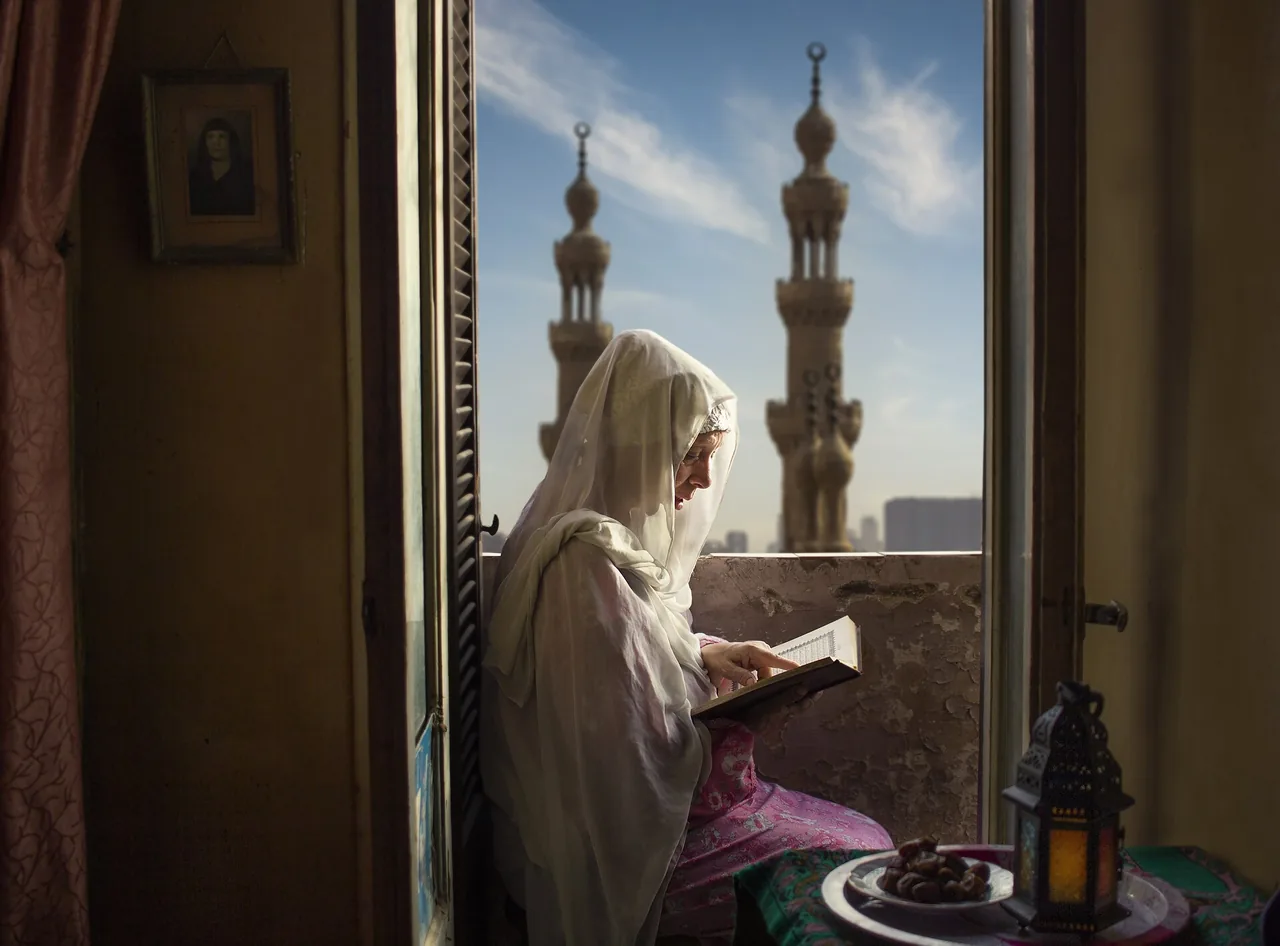
Image note: the featured photograph and the first in-body image are stills from the viral video itself (end card: Revert Stories), circulated via Discover Pakistan's Facebook post — they show Abigail as the posts identify her. The remaining photographs are Wikimedia Commons file photos: the Manila Golden Mosque and Cultural Centre in Quiapo, Manila, and a woman reading the Quran in Cairo, Egypt. They are not photographs of the event in the video.
Sources
This report is based on reporting, official statements and documents from:
- Threads — @ubed_ullah3 post carrying the full clip: Abigail recites the Shahada, is embraced and helped into a beige hijab; end card credits Revert Stories (posted late 30 Oct 2026)
- Discover Pakistan — Facebook post sharing the video into Pakistani feeds: 'a woman named Abigail from the Philippines' (31 Oct 2026; post screenshot supplied by a reader)
- Awal Pakistan — Instagram reel carrying the same still and the same Urdu headline (31 Oct 2026)
- Fetch Pakistan — earlier, separate Philippines shahada video shared with an explicit unverified warning (24 Oct 2026); context only
- Photos: stills from the viral video itself (via Discover Pakistan's post; the page's logo and text band cropped out) + Wikimedia Commons file photos — Manila Golden Mosque, Quiapo, and a woman reading the Quran in Cairo; file photos, not the event
Frequently Asked Questions
Is the Abigail video verified?
Partly. The video itself is real footage circulating since 30 October 2026, and its fullest copy — a Threads post by @ubed_ullah3 — shows a woman identified as Abigail reciting the Shahada and being helped into a hijab; the clip's end card credits an account called Revert Stories. What has NOT been verified by any mainstream source is everything around the footage: her full name, where and when it was filmed, and her own account of the event. This article reports the two halves separately and labels them.
Who is Abigail?
Only a first name is public. The posts sharing the video — including Discover Pakistan's Facebook post of 31 October 2026 — call her Abigail and describe her as a Filipino woman (a woman from the Philippines). No surname, hometown, age or background has been published in any source TaazaPulse could find, and this article does not guess at them.
Where and when was the video filmed?
Unknown. The setting appears to be a mosque or prayer hall — red patterned prayer carpets and a green board are visible — but no post names the mosque, city or country, and the upload dates (30–31 October 2026) are when the clip surfaced, not proof of when it was recorded. She is described as Filipino; the filming could have taken place in the Philippines or anywhere with a Filipino community.
What exactly does she do in the video?
Seated indoors, wearing glasses and a grey button-up shirt, she raises her right index finger and recites the Shahada in Arabic. A woman in a black niqab embraces her, helps her put on a light beige hijab, and then sits with her at a table going through papers, pointing to the text as Abigail follows along. The clip ends with the two women posing for a photograph and an end card for Revert Stories.
What is the Shahada?
The Shahada is the Islamic declaration of faith: 'There is no god but Allah, and Muhammad is the Messenger of Allah.' Declaring it sincerely before witnesses is the act by which a person enters Islam. The raised index finger seen in the video symbolises the oneness of God, which is why it is the image these moments are remembered by.
Has any official or mainstream source confirmed the story?
Not at the time of publication. The story rests on the video itself and the social-media posts carrying it (Revert Stories via Threads; Discover Pakistan, Awal Pakistan and World NewsPk sharing the still with an identical Urdu headline). A week earlier a different Philippines shahada video was shared with an explicit 'unverified' warning by Fetch Pakistan. If Abigail or the account that filmed the clip publish more, TaazaPulse will update this report and mark the update.