Hegseth Fires Pentagon's Chief Planner Brett Sylvia as Iran Decision Looms
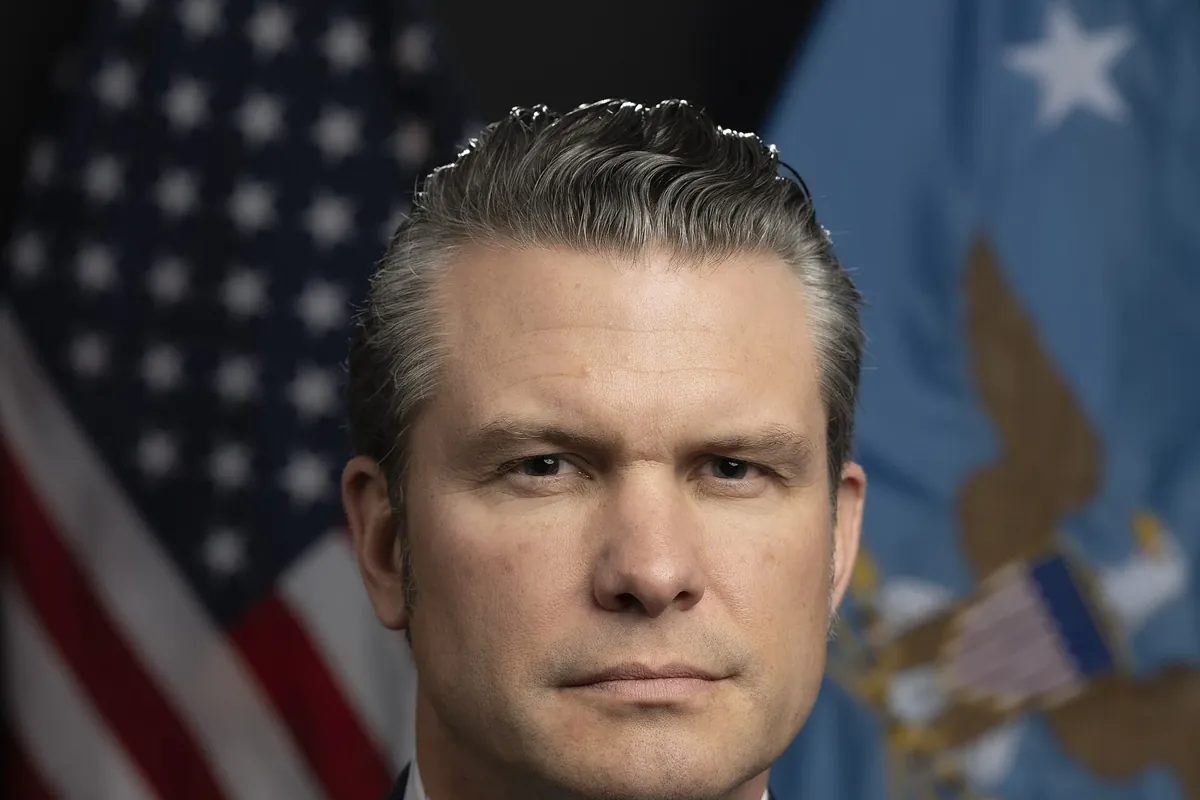
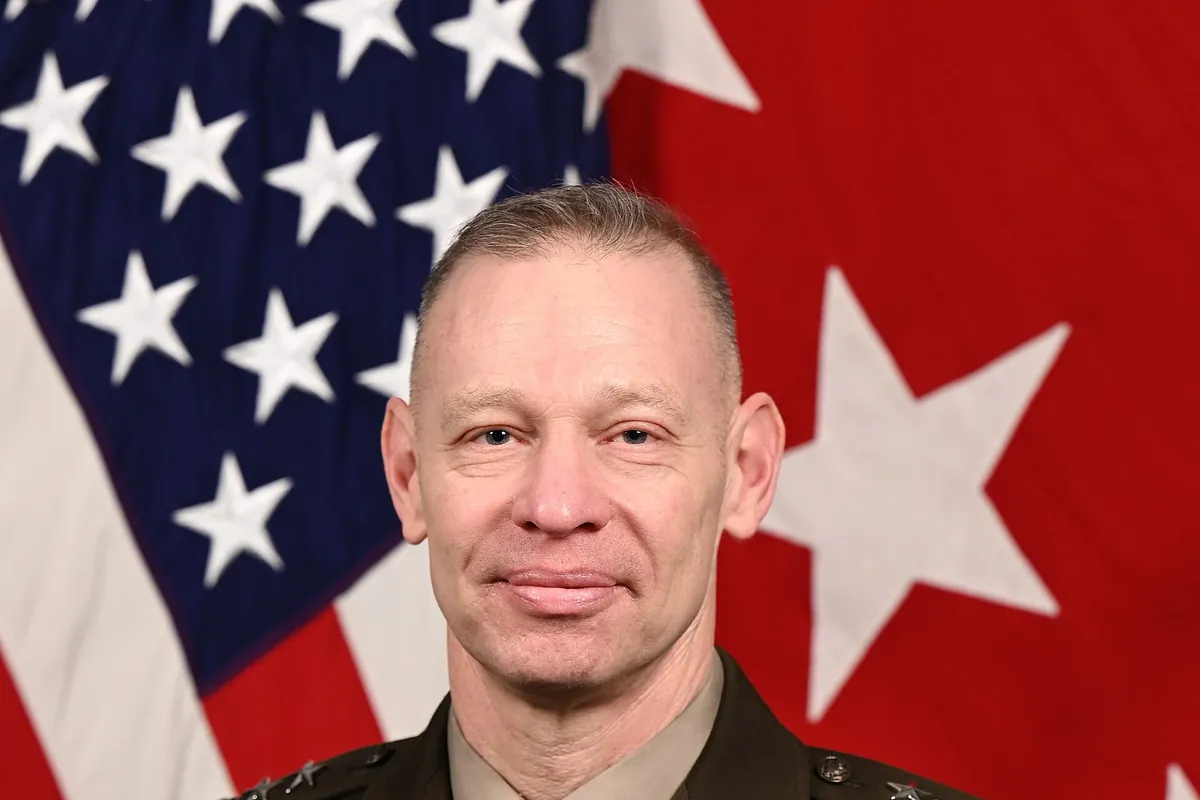
US Defence Secretary Pete Hegseth has fired the Pentagon's chief planner, Lieutenant General Brett Sylvia, the director for strategy, plans and policy on the Joint Staff — a role known simply as the J5 — as President Donald Trump weighs renewed military action against Iran. The abrupt dismissal was flagged on X by the international news account Mario Nawfal and then confirmed in reporting by CNN and the Associated Press on Thursday, making it the latest in a long line of senior-officer departures from the Pentagon under Hegseth.
Sylvia held one of the most consequential planning jobs in the US military: the J5 advises the chairman of the Joint Chiefs of Staff on strategy and plans for American military engagement around the world, the office through which options for contingencies — including a strike campaign against Iran — are developed and refined. A spokesman for Joint Chiefs Chairman General Dan Caine confirmed the ouster to CNN. It is unclear who will take over Sylvia's responsibilities.
What is reported about the reason
The circumstances of the firing are disputed even within the first day's reporting, and TaazaPulse reports them as attributed claims, not established fact. CNN, citing a defence official, reported that Sylvia was dismissed for alleged "misconduct" and is the subject of an investigation into allegedly leaking classified information. The Associated Press, in its account, reported that he was fired on Wednesday with no reason given. Sylvia has not commented publicly; CNN said it had reached out to him directly.
One detail from CNN's reporting captures the abruptness. In an initial statement, Caine's spokesperson said the chairman and the Joint Staff extended their "deepest gratitude" to Sylvia for his 32 years of service. The spokesperson later revised that statement, telling CNN: "Upon further review, we determined that the statement did not appropriately reflect the full circumstances" around his departure. Thank-you statements are not usually withdrawn; the revision suggests the departure was neither routine nor amicable.
The Iran timing
The firing lands at a sensitive moment in Washington's Iran file. According to the AP's reporting, Trump is weighing renewed strikes against Iran after the US midterm elections; Mario Nawfal's post, citing The Atlantic, framed the dismissal as coming days before an Iran strike window opens. The J5 is precisely the officer whose directorate would plan such a campaign, and Sylvia is, by CNN's account, the second J5 to be forced out within a year — an unusual churn rate for the military's top strategy job.
The regional stakes are direct. The US-Israeli war on Iran earlier this year and the fragile calm that followed have kept Gulf shipping, energy markets and Pakistan's own diplomacy on edge. Pakistan has played an active mediatory role — the Foreign Office has briefed partners on Islamabad's efforts to facilitate dialogue between Washington and Tehran — and Pakistan's envoy told the UN Security Council only this week that the Iran nuclear file has sharply deteriorated and requires restraint. A change of the Pentagon's chief planner, amid open discussion of renewed strikes, is therefore a development with consequences well beyond one officer's career.
A pattern at the top of the Pentagon
Sylvia's exit is not an isolated personnel move. Since Hegseth took office, the Trump administration has enacted significant cuts at the top of the military ranks, and a series of senior officers have left the Pentagon — through firings, early departures and forced reshuffles. Supporters of the defence secretary describe a deliberate effort to reshape a top-heavy command culture; critics describe institutional knowledge being discarded at the moment of maximum regional danger. The Sylvia case now adds a new element to that debate: an allegation — officially unconfirmed and publicly unexplained — serious enough for the Joint Staff to walk back its own farewell statement within hours.
What the J5 actually does
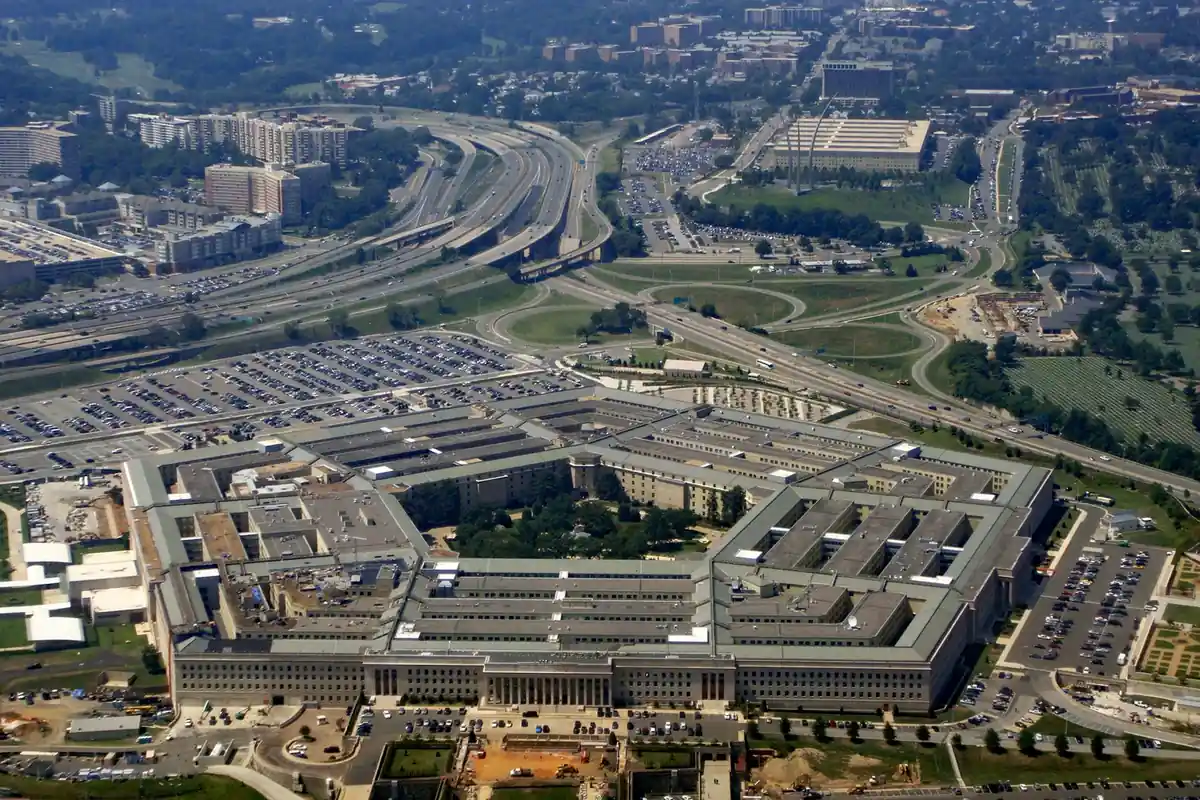
For readers outside Washington's alphabet of staff codes: the Joint Staff's directorates divide the chairman's advisory work. J1 handles personnel, J2 intelligence, J3 operations — and J5 strategy, plans and policy. The J5 directorate develops the long-range plans and policy options that turn political decisions into military ones: how forces would be postured, what a campaign would require, and what its second- and third-order effects might be. When a president "weighs" strikes, the weighing is done substantially on J5 paper. Removing the J5 in the middle of that process means the advice channel itself is being rebuilt while the decision is live.
The second J5 forced out in a year
CNN's reporting places Sylvia's fall in a still more unusual frame: he is the second officer to be forced out of the J5 job within a year. The strategy directorship is not a political appointment that turns over with news cycles; it is a professional military post whose continuity is meant to outlast arguments between administrations. Two removals in twelve months means the Pentagon's long-range planning for every live contingency — Iran first among them — has been restarted twice, under two different planners, in the middle of the most volatile year in the region since the US-Israeli war on Iran.
The timing compounds the question. The AP reports the president is weighing renewed strikes after the midterm elections — a political calendar now fused to a military one. Strike options are not improvised in a weekend: target sets, force posture, escalation ladders and regional fall-out assessments are J5 products, built over months. Whoever inherits the directorate inherits a live file, a reported investigation into its previous holder, and a chairman's office that has already shown it will revise its public statements about the affair within hours.
Why this matters beyond Washington
For Pakistan and the Gulf, the personnel story is a policy signal. Islamabad has invested heavily in the diplomatic track — its envoys have briefed the Security Council on the "sharply deteriorated" nuclear file this week while the Foreign Office pursues back-channel facilitation between Washington and Tehran, and Pakistan's deputy prime minister was in Istanbul days ago for talks centred on the same file. A Washington that is simultaneously changing its chief military planner and debating renewed strikes is a Washington whose intentions regional capitals must read through personnel moves, because formal policy statements have not settled the question. Energy markets price the same uncertainty: every report of strike preparations moves oil, and with it the import bills of countries like Pakistan.
Reaction, and what to watch
The story moved first on X, where Mario Nawfal's post — written for his large international audience and citing The Atlantic — was among the earliest public reports, hours ahead of fuller wire coverage; CNN and AP then independently confirmed the dismissal with their own sourcing, which is the sequence that moved this from a social-media claim to a verified story. In Washington, the firing adds to a running argument about the state of civil-military relations in the second Trump term: how many senior officers a defence secretary can remove, and on what stated grounds, before the removals themselves become the story. Two watch-items will decide where this goes: the naming of a successor or acting J5, which will signal whether the directorate's Iran work continues uninterrupted, and any first statement from Sylvia himself, who has so far said nothing in public.
What happens next
No successor has been named, and the Pentagon has not said whether an acting J5 has been installed. The reported leak investigation — if it proceeds — will determine whether Sylvia's departure becomes a legal case or remains a personnel story. For the region, the operative question is unchanged but sharper: whether the administration's internal debate over Iran produces a decision for or against renewed strikes, and who, in a reshaped Joint Staff, writes the options paper that lands on the president's desk. TaazaPulse will follow the appointment and any official statement from Sylvia or the Pentagon.
A statement, revised within hours
The most telling document in the affair may be the shortest one. Military public-affairs practice treats a departing senior officer's service with formulaic respect: thanks, a recital of years served, good wishes. Caine's office issued exactly that — gratitude for 32 years of service — and then, on reflection, took it back, telling CNN the words "did not appropriately reflect the full circumstances." News organisations do not get such revisions often, because institutions do not make them often. Read plainly, the sequence says the firing was decided faster than the explanation for it, and that when the explanation was reviewed at a higher level, courtesy was judged to be the wrong message. For Sylvia, who has not spoken publicly, the practical effect is a cloud: an allegation reported by one network, no reason given by another wire, and an employer unwilling even to thank him on the record. Until the Pentagon or Sylvia himself puts a version on record, that cloud — not any established fact — is what this story consists of, and it is why TaazaPulse has attributed every element of it.
Sources
This report is based on reporting, official statements and documents from:
- CNN
- Associated Press
- The Atlantic
Frequently Asked Questions
Who is Lieutenant General Brett Sylvia?
Sylvia was the director for strategy, plans and policy on the US Joint Staff — the J5 — advising the chairman of the Joint Chiefs on military strategy worldwide. CNN reported he had served 32 years in uniform before Defence Secretary Pete Hegseth fired him this week.
What does the J5 do?
The J5 directorate develops the strategy, long-range plans and policy options that turn presidential decisions into military ones — including the planning for contingencies such as strikes on Iran. It is one of the most senior planning posts in the Pentagon.
Why was Sylvia fired?
No official reason has been given. CNN cited a defence official alleging misconduct and an investigation into allegedly leaking classified information; the Associated Press reported he was fired on Wednesday with no reason stated. Sylvia has not commented, and TaazaPulse reports both accounts as attributed claims.
What happened to the Joint Staff's farewell statement?
Chairman Dan Caine's spokesman initially thanked Sylvia for 32 years of service, then revised the statement, telling CNN it 'did not appropriately reflect the full circumstances' of his departure — an unusual public walk-back.
What is the connection with Iran?
The AP reported that President Trump is weighing renewed strikes on Iran after the US midterm elections; Mario Nawfal's widely shared post, citing The Atlantic, framed the firing as coming days before an Iran strike window opens. The J5 is the office that would plan such a campaign, and CNN noted Sylvia is the second J5 forced out within a year.
Who will replace him?
No successor has been announced. CNN reported it is unclear who will take over the J5's responsibilities.