Israel's Election Ends in Deadlock as Netanyahu's Bloc Leads Without a Majority
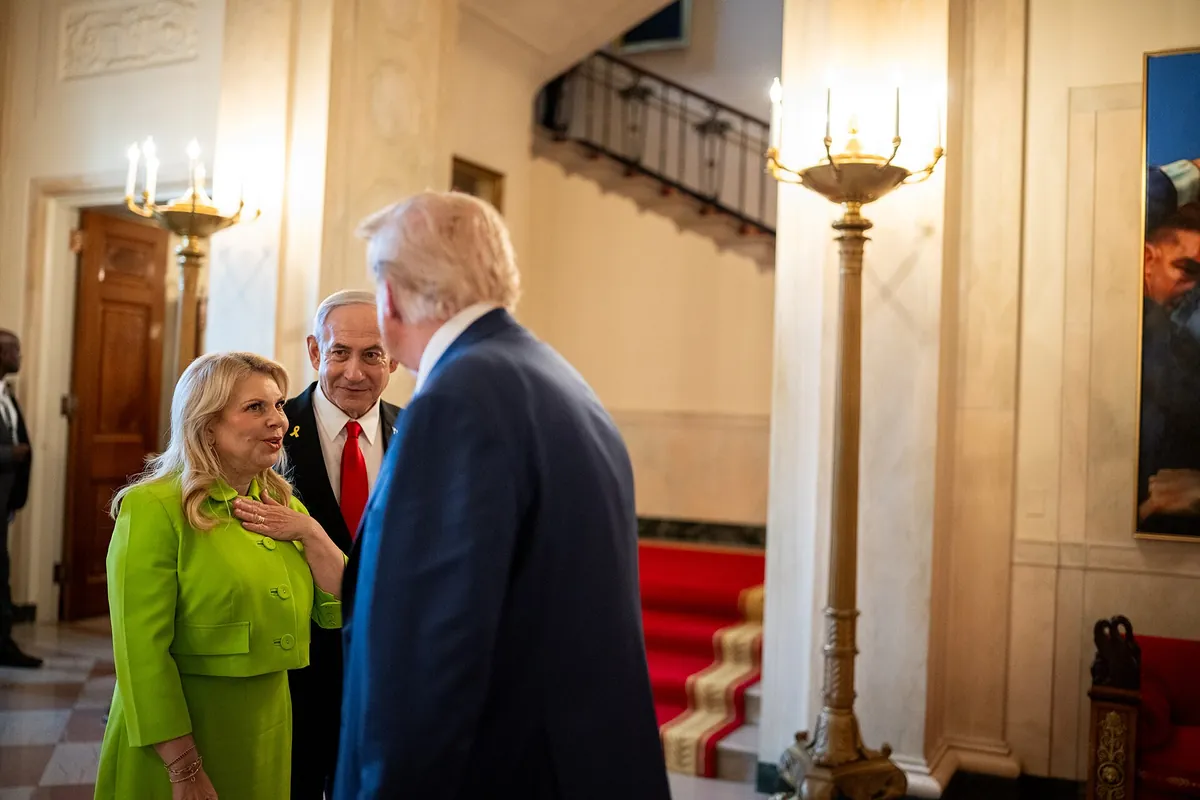
Israelis have delivered a verdict that settles almost nothing. In the country's first general election since the October 7, 2023 attacks and the war in Gaza that followed, Prime Minister Benjamin Netanyahu's right-wing bloc has emerged ahead on the partial official count — but short of the 61 seats needed to govern alone. The rival camp led by former military chief Gadi Eisenkot finished close behind, and the parties representing Israel's Arab citizens nearly doubled their strength, leaving them holding the balance in a parliament split three ways.
The election, held on Tuesday, drew a turnout of about 77.7 per cent — the highest in decades — as voters passed judgment on three years dominated by war, the hostage crisis, a judicial overhaul battle and a cost-of-living squeeze. With most votes counted by Thursday morning, Israel's Central Elections Committee put Netanyahu's Likud clearly in first place among individual parties, while the arithmetic of blocs pointed to weeks of coalition bargaining, presidential consultations and possibly a fresh mandate drama before anyone forms a government.
The count, in numbers
According to the Central Elections Committee's running tally, reported by Israeli media on Thursday morning after some 5,278,597 votes had been counted, Likud leads with 1,085,162 votes, or 20.65 per cent. Netanyahu's wider camp — Likud together with the ultra-Orthodox Shas and United Torah Judaism parties and the far-right Otzma Yehudit and Religious Zionism–Zehut lists — stands at 2,200,822 votes, or 41.88 per cent, which Israeli media project at 53 of the Knesset's 120 seats.
The camp led by Gadi Eisenkot — his Yashar ("Straight") party alongside the B'Yachad party of former prime minister Naftali Bennett, the Democrats and Yisrael Beiteinu — holds 1,978,268 votes, or 37.64 per cent, translating to a projected 48 seats. Yashar alone won 849,121 votes (16.16 per cent), making Eisenkot's new party the second-largest single list in the count.
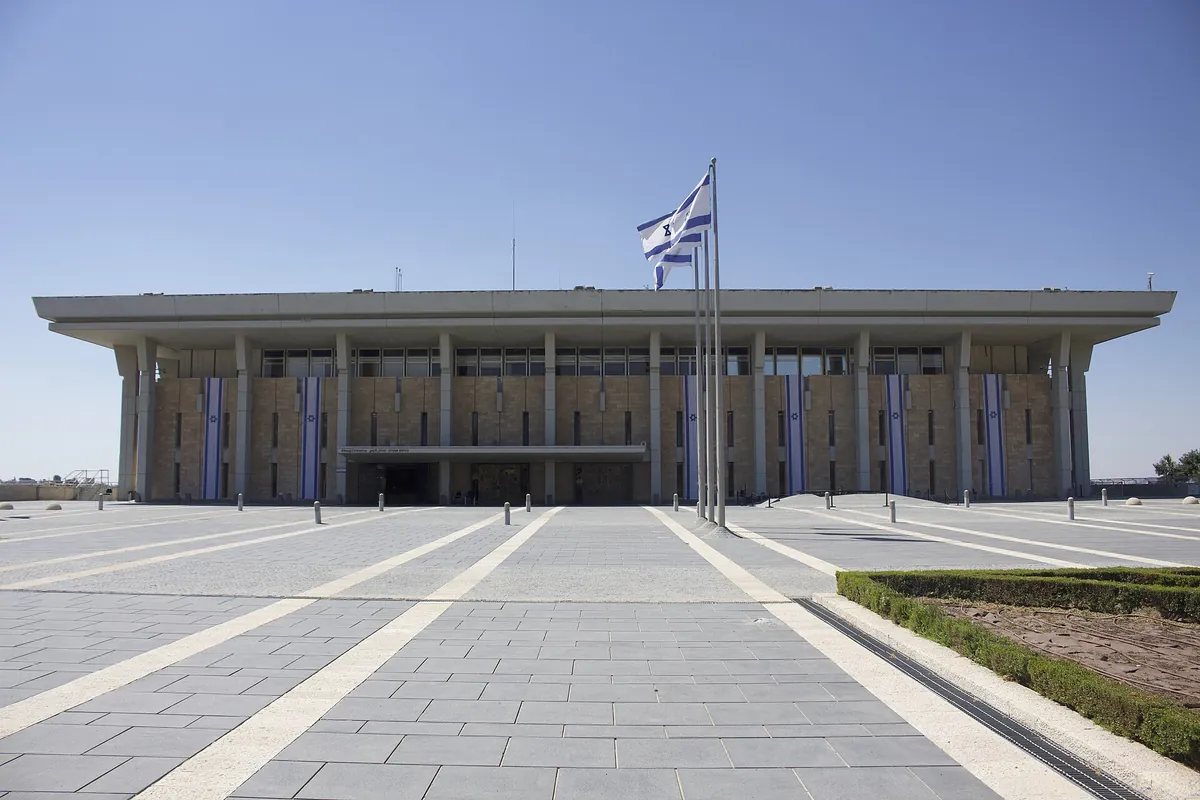
The remaining projected bloc — the Arab parties, principally Mansour Abbas's Ra'am (United Arab List) and the Hadash–Ta'al alliance — is headed for about 19 seats, up from 10 in the 2022 election. Israeli media including the Times of Israel and the Jerusalem Post note that Abbas took the unusual step of publicly celebrating the Arab parties' showing as the ballots were counted, having urged Arab citizens to turn out in large numbers. Israel's electoral threshold is 3.25 per cent, and final official results were expected later on Thursday, after which the formal government-formation process begins.
Netanyahu: "Likud is the largest party"
Netanyahu, Israel's longest-serving prime minister, claimed vindication in the result. "Likud is the largest party in Israel," he declared, adding that "the right-wing bloc has a clear, decisive majority among the Zionist and Jewish public" — a formulation that pointedly excludes the Arab parties from his arithmetic and frames his 53-seat camp as a majority of the Jewish vote. He told supporters his bloc intends to form the next government and has argued, in comments reported across Israeli media, that the outcome gives him the first claim on the mandate from President Isaac Herzog.
US President Donald Trump, who publicly endorsed Netanyahu in the campaign's final days, also claimed a share of the credit, telling reporters his intervention had helped the Israeli leader. Trump had urged Israelis to back Netanyahu and warned of consequences in relations if they did not — an extraordinary level of American involvement that opposition figures criticised during the campaign but which Netanyahu's camp appears to regard as an asset rather than a liability.
Eisenkot vows the fight is not over
Eisenkot, a former Israel Defense Forces chief of staff who entered politics after the death of his youngest son in combat in Gaza, refused to concede the larger contest. "The public has voted for change," he said. "The public voted against Netanyahu." His argument rests on the combined strength of his own camp and the Arab parties: together they hold more seats than Netanyahu's bloc, and Eisenkot's supporters argue that a majority of Israelis voted for parties that oppose the prime minister.
Yair Lapid, whose Yesh Atid party was the largest in the outgoing opposition, conceded what he called a "total collapse" for his party, in one of the night's starkest reversals. The results also reshaped the right: Netanyahu's coalition partners in the outgoing government performed strongly enough to keep his bloc intact, while the question of whether the ultra-Orthodox parties' demands — above all on military draft exemptions for Haredi men — can be reconciled with Eisenkot's camp has effectively ruled out the grand-coalition shortcuts some analysts had floated.
The Arab parties hold the balance
The story beneath the headline deadlock is the surge of the Arab parties. From 10 seats in 2022 to a projected 19, the Ra'am and Hadash–Ta'al lists have become the parliament's third force, powered by high turnout in Arab towns and by Abbas's argument that political participation delivers budgets and influence. Their rise complicates every coalition equation. An Eisenkot-led government would still fall short of 61 seats even with every one of his camp's projected seats, and would need at least the outside support of Arab lawmakers — a step his camp has historically approached with deep caution, and which Abbas himself has in the past shown willingness to consider in exchange for policy commitments for Arab communities.
Netanyahu, for his part, has built his campaign message on refusing exactly that arithmetic: his "majority among the Zionist and Jewish public" line is designed to delegitimise in advance any government propped up by Arab parties. That framing now collides with a parliament in which neither camp can govern without either the other's defectors or the Arab parties' tolerance.
Inside the two camps
The shape of the result is clearest party by party. Netanyahu's bloc is the outgoing coalition reassembled: Likud at its head, the ultra-Orthodox Shas and United Torah Judaism parties delivering their disciplined electorates, and the far-right Otzma Yehudit of Itamar Ben-Gvir alongside the Religious Zionism–Zehut list — partners whose price for support, on past form, will be portfolios, budgets and policy commitments on settlements and security. Eisenkot's camp is a newer construction: his own Yashar, launched on his personal standing as a former chief of staff and bereaved father; B'Yachad, the vehicle of former prime minister Naftali Bennett, returning from his spell out of parliament; the Democrats, the merged centre-left list; and Avigdor Lieberman's Yisrael Beiteinu, drawing right-leaning secular voters who oppose both Netanyahu and the ultra-Orthodox parties' draft exemptions. The camp's internal tensions — Bennett's right-wing past against the Democrats' base — are precisely what the Arab parties' surge may force it to resolve.
The road to this election ran through the crisis that broke the last government: the long fight over exempting ultra-Orthodox men from military service, which split the coalition in June when the Haredi parties' demands collided with a public, post-war insistence on shared burden, and which remains the single most explosive file awaiting the next government. The vote was in any case due by October 2026, at the end of the Knesset's term — but the manner of the government's fall ensured the campaign was fought on conscription and competence as much as on security.
Why this election mattered
The vote was Israel's first since Hamas's October 7, 2023 attack killed about 1,200 people in Israel and triggered the devastating war in Gaza, in which tens of thousands of Palestinians were killed, according to Gaza's health authorities — a toll Israel disputes in part while rarely offering its own comprehensive civilian count. The year, as Le Monde noted in its election coverage, began with the return of the remains of the last hostage held in Gaza, closing the most painful chapter of the war for Israeli families even as its political reckoning continued.
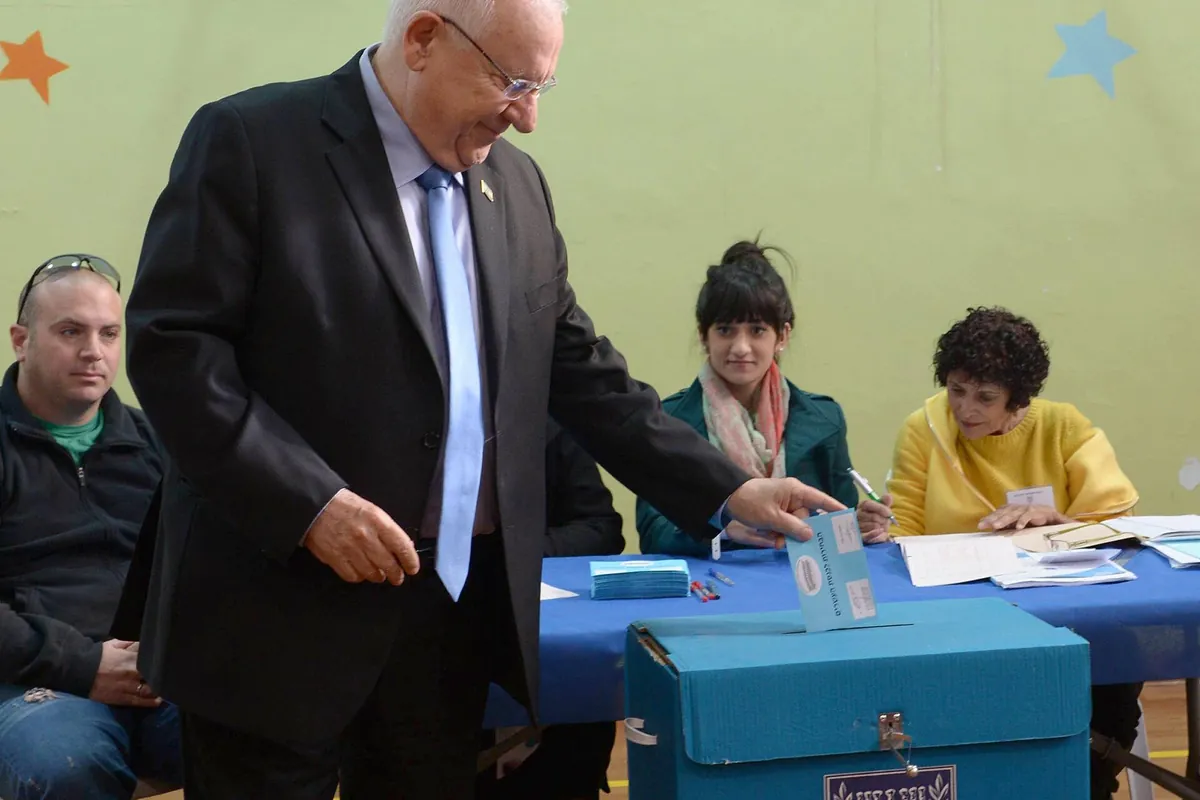
The election was widely treated as a referendum on Netanyahu's handling of October 7 and its aftermath: the failures of intelligence and defence on the day, the long campaign in Gaza, the ceasefire that followed, and the unanswered demand from many Israelis for a state commission of inquiry. Dov Waxman's assessment, quoted by Al Jazeera, was that Netanyahu had campaigned above all on shifting blame for October 7 away from himself. Reuters' analysis reached a similar destination from the opposite direction: Netanyahu "won by not losing".
"What Netanyahu really tried to do, and very effectively, is to survive," Shira Citrinowicz of the Israel Democracy Institute told Reuters. "Survive politically, survive public criticism over the Oct. 7 massacre, the war in Gaza and corruption." Netanyahu also remains on trial on corruption charges he denies, a case that has run in parallel with the war and the campaign and which his critics say shapes his coalition choices; he and his supporters describe the prosecution as a politically motivated attempt to remove him by legal means.
What happens next
Under Israel's system, once the Central Elections Committee certifies the final results, President Herzog will hold consultations with each party and then assign the mandate to form a government to the candidate he judges most likely to succeed — conventionally, though not always, the leader of the largest bloc. That candidate gets 28 days, with a possible 14-day extension, to assemble 61 seats. If he fails, the mandate can pass to another candidate or return to the Knesset, and if no government emerges, Israel faces yet another election — a scenario the country lived through repeatedly between 2019 and 2022.
For the region, the stakes of the bargaining are concrete. The Gaza ceasefire's next phase, Israel's posture toward Iran and its proxies, settlement policy in the occupied West Bank and the draft-exemption crisis that brought down the previous coalition all sit on the table that the next government will inherit. For now, Israel has a largest party, a leading bloc, an emboldened third force — and no government. TaazaPulse will update this report as final results are certified and the presidential consultations begin. Readers following the wider region can also read our explainer on Pakistan's own debate over how petrol prices are set, and more world coverage is on our International desk page.
Sources
This report is based on reporting, official statements and documents from:
- Central Elections Committee count via Times of Israel
- Jerusalem Post
- Reuters
- Al Jazeera
- Le Monde
Frequently Asked Questions
Who won the Israeli election of 2026?
No bloc won outright. On the Central Elections Committee's partial count, Prime Minister Benjamin Netanyahu's right-wing bloc leads with a projected 53 of 120 Knesset seats, ahead of Gadi Eisenkot's camp on 48, with the Arab parties on a projected 19. Likud is the largest single party, but 61 seats are needed to form a government, so coalition bargaining will decide who governs.
How many seats does Netanyahu's bloc have?
Israeli media project 53 seats for Netanyahu's camp — Likud together with Shas, United Torah Judaism, Otzma Yehudit and Religious Zionism–Zehut — based on the committee's count of more than 5.27 million votes, in which the bloc took 41.88 per cent. That is eight seats short of the 61 needed for a majority.
Who is Gadi Eisenkot?
Gadi Eisenkot is a former chief of staff of the Israel Defense Forces who founded the Yashar party. His youngest son was killed in combat in Gaza, and he campaigned against Netanyahu's handling of the war and its aftermath. Yashar won about 16.16 per cent of the counted vote, making it the second-largest single party.
Why do the Arab parties matter so much in this result?
The Arab parties — principally Ra'am and Hadash–Ta'al — are projected to jump from 10 seats in 2022 to about 19. Neither big camp can reach 61 without their support or tolerance, which makes them the parliament's kingmakers, even though Netanyahu has argued his bloc holds a majority 'among the Zionist and Jewish public'.
What happens next in forming an Israeli government?
Once results are certified, President Isaac Herzog consults each party and assigns the mandate to form a government to the candidate he judges most likely to succeed. That candidate has 28 days, with a possible 14-day extension, to assemble 61 seats. If the attempt fails, the mandate can pass to another candidate — or Israel can face another election.
What did Donald Trump say about the Israeli election?
President Trump publicly endorsed Netanyahu in the campaign's final days and, after the vote, claimed his intervention had helped the Israeli leader. Netanyahu's camp treated the endorsement as an asset; opposition figures had criticised the level of American involvement in an Israeli election.