Pakistan's Climate Defences Under Scrutiny Amid Lancet Warning
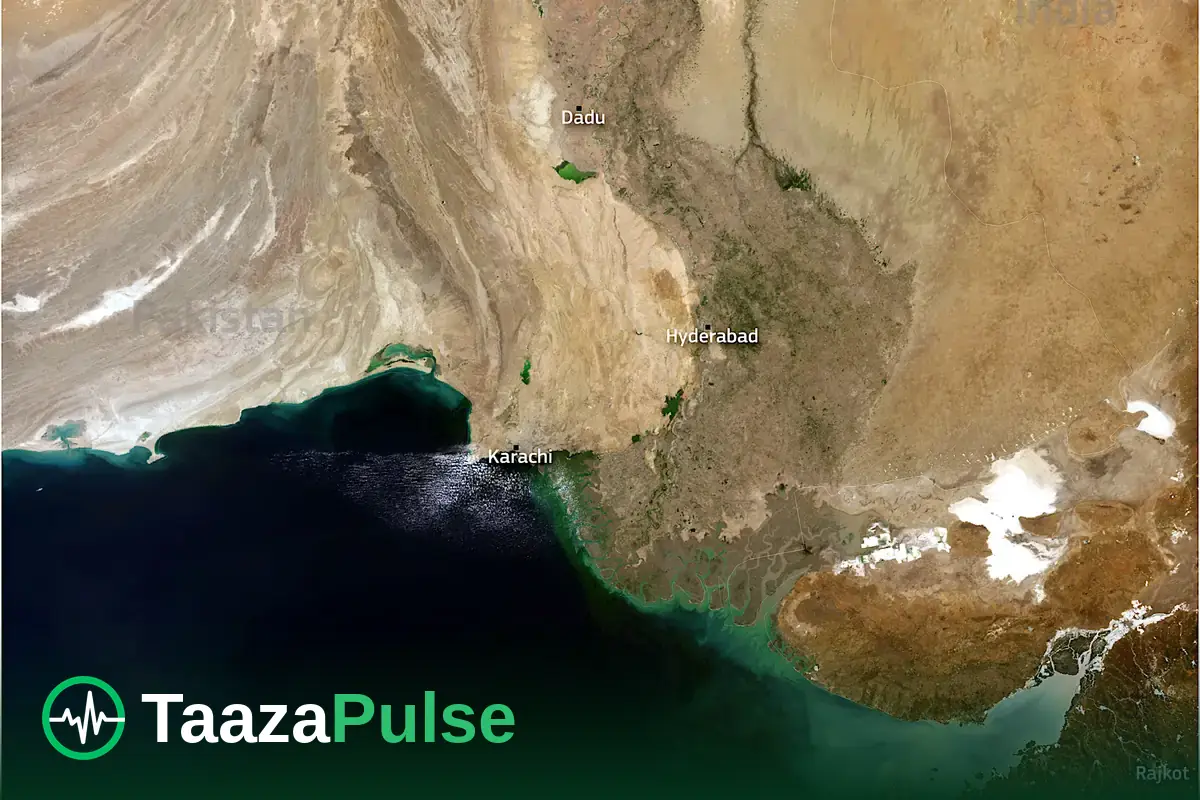
Health and environmental experts in Pakistan have called for urgent measures to address the country's growing climate-related health risks, after a major international report warned that rising heat deaths, floods, droughts and economic losses are outpacing global efforts to combat climate change. The warning comes in the 2026 Lancet Countdown report, published in Dawn on Friday 30 October 2026, and it puts Pakistan's own disaster readiness — described by former health officials as "too little, too late" — under direct scrutiny.
The report, launched at the British Library in London, calls for climate change to be formally recognised as a "global health emergency". Its authors — 146 researchers from more than 100 institutions across more than 30 countries, working in strategic collaboration with the World Health Organization — argue that the health harms of climate change are not only growing but, in many cases, accelerating faster than the world's response to them. The report tracks 54 indicators linking climate change and health, and its verdict on the decade since the Paris Agreement entered into force is blunt: the response is falling behind.
The headline numbers explain why. Average annual heat-related deaths worldwide have risen by nearly 36 per cent since the Paris Agreement, compared with the previous decade. In 2023 alone, heat was linked to a record 710,000 deaths globally — the highest single-year figure the Lancet Countdown series has ever recorded — with more than 70 per cent of that toll attributed to human-caused climate change. Heat also carried a heavy economic price: the report estimates 573 billion potential work hours were lost to heat in 2025, costed at about $1.07 trillion.
What the report's authors want next is a formal declaration. They are urging the World Health Organization and the United Nations to recognise climate change as a global health emergency, on the argument that the scale of the threat now requires coordinated emergency management rather than slow, voluntary action. That matters because an emergency framing changes how governments organise: it brings stronger accountability, preventive public health measures and a claim on emergency funding, rather than leaving health as an afterthought inside climate negotiations. It is important to be precise about the status, though — the declaration is a call from the report's authors, not yet a formal WHO declaration, and whether governments take it up will be tested at the COP31 climate summit, which opens in Antalya, Turkey, on 9 November 2026.
The longer view in the report is just as stark. The past 11 years have been the hottest on record. Across 2016 to 2023, the report estimates, heat was linked to more than 540,000 deaths a year on average — nearly 3 million deaths in total over the period. The comparison the authors draw is deliberate: the decade since the Paris Agreement entered into force in 2016 is measurably deadlier, in per-year terms, than the decade that preceded it. Heat mortality has accelerated, not slowed, since the world's most ambitious climate commitment was signed.
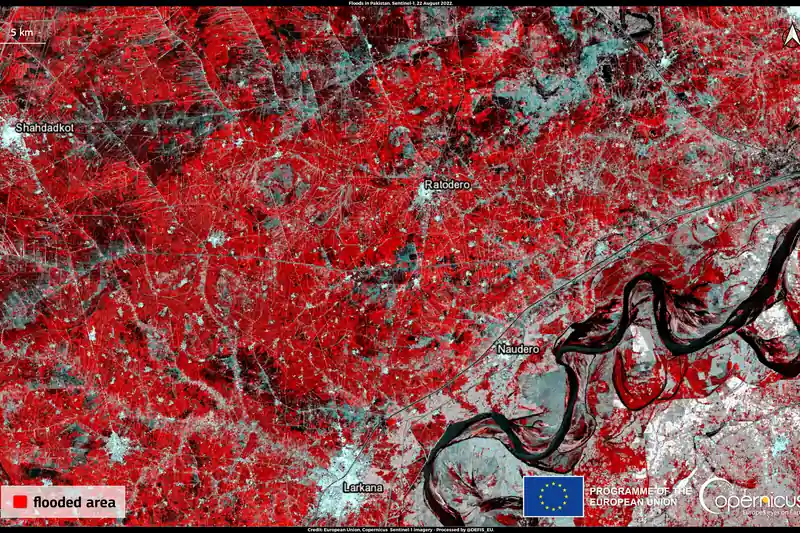
For Pakistan, the warning lands on ground that is already scorched. Former Punjab health minister Professor Dr Javed Akram told Dawn that the warning was particularly urgent for Pakistan, where the devastating 2022 floods displaced communities, damaged health care infrastructure, disrupted access to essential medicines and increased the risk of waterborne diseases and malnutrition. Extreme heat, he added, further threatens the people least able to protect themselves: children, older adults, outdoor workers and people living with chronic illnesses. It is a picture of a health system being hit from two directions at once — by sudden disasters and by the slow, grinding pressure of hotter summers.
Mr Akram's criticism of Pakistan's own record was direct. Disaster management policies, he said, have historically been reactive rather than proactive, with preparations beginning only after disasters strike. His prescription was specific: Pakistan must strengthen heat-health action plans, establish effective early-warning systems, climate-proof hospitals, improve disease surveillance, and expand access to safe water and sanitation. He also urged federal and provincial governments to allocate dedicated funding for climate-resilient health care, and called on international partners to provide predictable, grant-based climate finance — money that arrives before disasters, not as loans after them.
Former special assistant to the prime minister on health Dr Zafar Mirza went further, warning that climate change has already become a growing public health emergency inside Pakistan, whether or not the world declares one. "Extreme heat, flash floods, cloud bursts and worsening air quality cause illness and death, while disrupting healthcare, contaminating water, undermining nutrition and deepening poverty and psychological distress," he told Dawn. His list of what Pakistan needs matches Mr Akram's but widens it: climate-resilient health facilities, stronger disease surveillance, early-warning systems, and coordinated action across health, climate, water, energy and finance — a recognition that a heatwave is not only a health ministry problem, since it is also a water problem, a power problem and a labour problem at the same time.
A third voice added a complaint of a different kind. Dr Muhammad Irfan Khan, professor of environmental science and former dean at the International Islamic University, expressed concern that the Lancet Countdown's launch statement did not mention Pakistan at all, despite the country's exposure to climate-related disasters. "Pakistan's experience should inform global priorities, research and investment," he said, citing Germanwatch's Climate Risk Index 2025, which ranked Pakistan as the country most affected by extreme weather in 2022. His point was about visibility as much as money: international institutions, he urged, must give greater visibility to vulnerable countries and ensure that affected communities help shape climate responses, rather than merely appearing in them as victims.
The report is not only a catalogue of failure, and its authors are careful to record where the response is working. Global investment in clean energy grew by more than 7 per cent in 2025, reaching a record $2.1 trillion — 82 per cent more than was invested in fossil fuel energy sources. Renewables grew from 5.5 per cent of global electricity generation in 2016 to 13.5 per cent in 2023, and cleaner air is now preventing an estimated 323,000 deaths a year in 70 countries where air pollution from fossil fuels has fallen. Clean energy jobs grew 2.3 per cent in 2024, almost twice the rate of direct fossil fuel employment. But the report pairs every gain with its limit: fossil fuels still account for more than 80 per cent of global energy supply, and the air pollution they cause is blamed for about 2.7 million deaths worldwide each year.
Beyond heat, the report tracks harms that reach Pakistan through other routes. Drought, wildfire smoke and the expanding climatic suitability for mosquito-borne diseases such as dengue and Zika are all moving in the wrong direction, and the authors warn that communities with limited access to cooling, health care and reliable infrastructure face the most severe consequences. For Pakistan, where dengue already surges after the monsoon and where the 2022 floods showed how quickly a health system can be overwhelmed, those are not distant risks — they are the next season's caseload arriving on top of this one's.
What happens next will be decided less in journals than in negotiating rooms. COP31 opens in Antalya on 9 November, and the Lancet Countdown has deliberately timed its release for the weeks before it, as it has done in previous years. Three questions will show whether the emergency call lands: whether governments put health at the centre of climate decisions rather than treating it as a side event; whether climate finance for vulnerable countries becomes predictable and grant-based, as Mr Akram urged, instead of arriving as loans after disasters; and whether the declaration itself gains formal backing from the WHO and the UN. None of those outcomes is guaranteed by a report, however alarming its numbers.
For ordinary Pakistanis, the practical meaning of the report is in the demands its own experts made. A heat-health action plan is not an abstraction: it is the difference between a city that opens cooling spaces, adjusts outdoor working hours and warns hospitals before a heatwave, and one that counts the dead afterwards. An early-warning system is the difference between a community that evacuates before a flood and one that is rescued from rooftops. Climate-proofing a hospital means it still has power, clean water and medicines when the weather turns. Those are the defences the Dawn headline says are under scrutiny — and, on the evidence of the country's own former health officials, they are the defences that remain, in their words, too little and too late.
Sources
This report is based on reporting, official statements and documents from:
- Dawn — Pakistan's climate defences under scrutiny amid Lancet warning (30 Oct 2026)
- WHO — Climate change is a growing health emergency, Lancet Countdown warns (28 Oct 2026)
- The Lancet via SciMex — Call to declare a global health emergency as drought and heat deaths rise (Oct 2026)
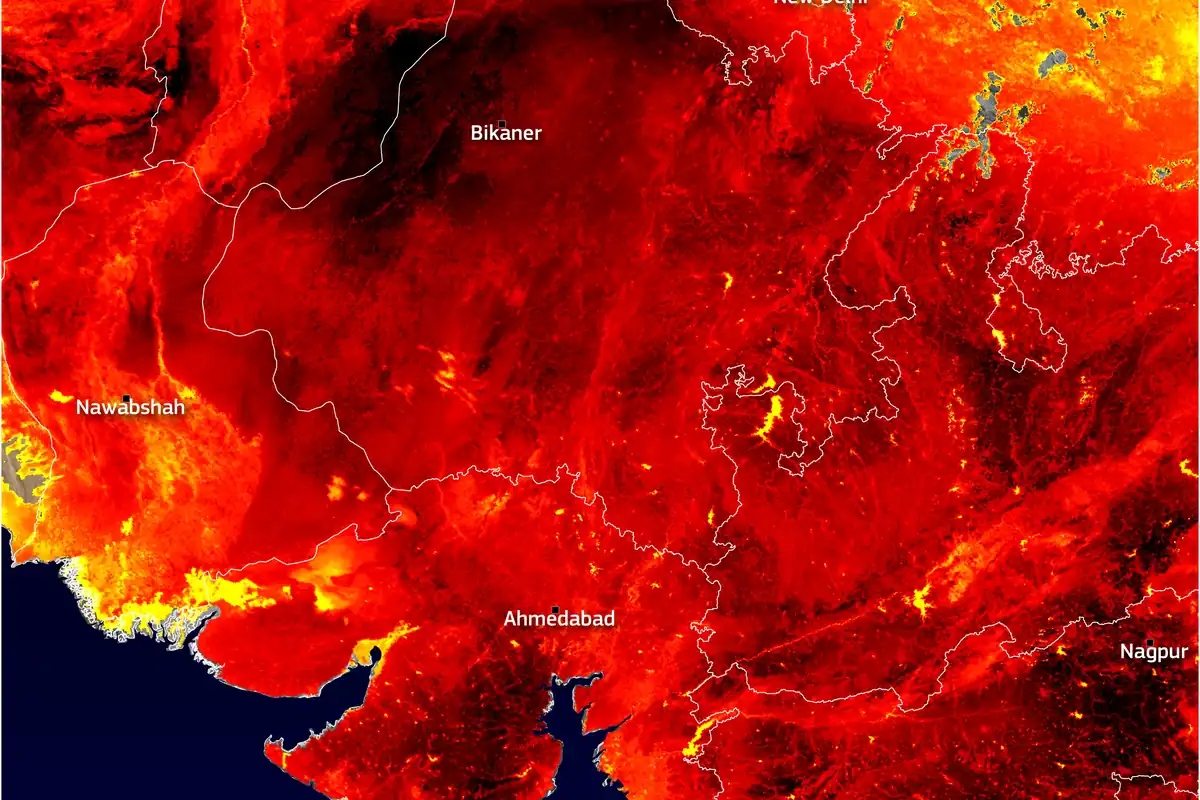
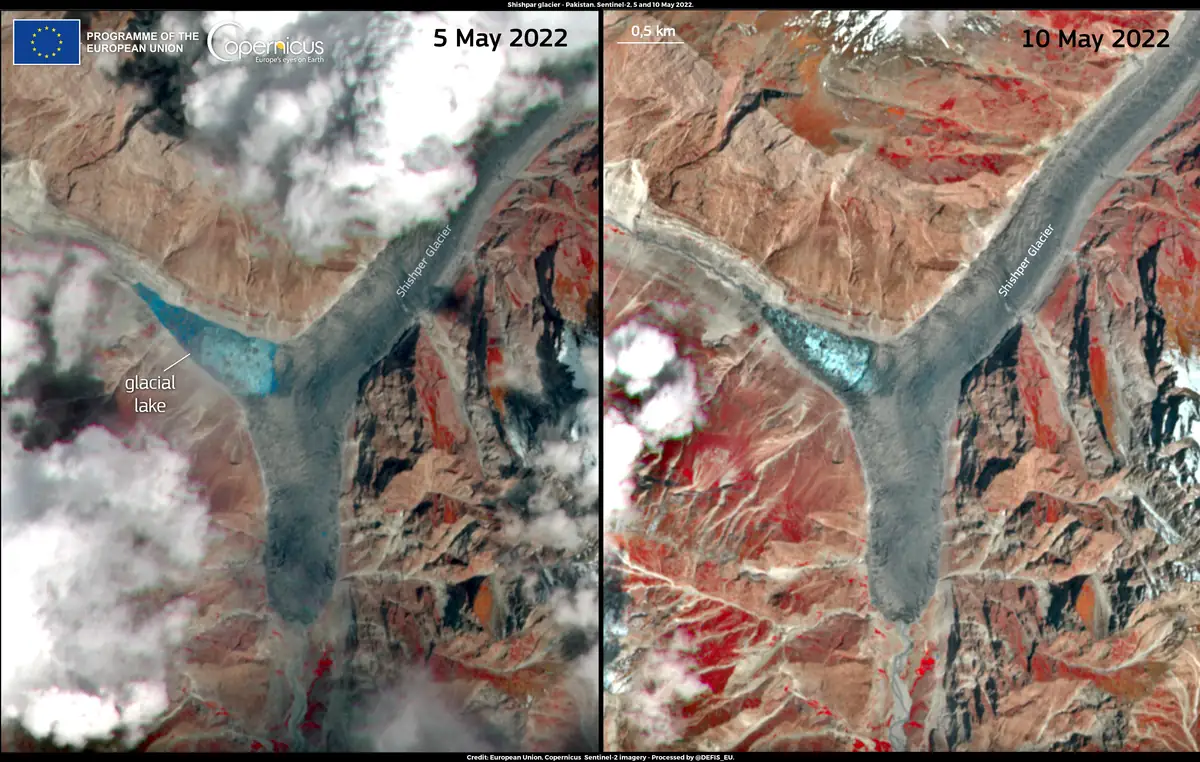
- Copernicus EU — Sentinel imagery of the April 2022 South Asia heatwave, August 2022 Sindh floods and Shishpar glacier lake (image credits)
Frequently Asked Questions
What is the Lancet Countdown report?
The Lancet Countdown on Health and Climate Change is an annual report by an international research collaboration led by University College London, produced in strategic collaboration with the World Health Organization. The 2026 edition — its 10th annual report — brings together 146 researchers from more than 100 institutions across more than 30 countries and tracks 54 indicators linking climate change and health, from heat deaths to clean-energy jobs.
What does calling climate change a 'global health emergency' actually do?
It is, for now, a call from the report's authors, not a formal declaration — they are urging the WHO and the United Nations to recognise climate change as a global health emergency. The practical argument is that an emergency framing brings coordinated emergency management, stronger accountability and preventive public health measures, rather than leaving health as a side issue inside climate negotiations. Whether governments adopt it will be tested at COP31, which opens in Antalya, Turkey, on 9 November 2026.
How did heat deaths rise by 36 per cent?
The report compares two decades: average annual heat-related deaths in the years after the Paris Agreement entered into force (2016–2023) were nearly 36 per cent higher than in the previous decade (2006–2015). In 2023 alone, heat was linked to a record 710,000 deaths worldwide, with more than 70 per cent attributed to human-caused climate change. Across 2016–2023 the average was more than 540,000 heat-linked deaths a year — nearly 3 million in total.
Why does this report matter so much for Pakistan?
Pakistan combines extreme exposure with fragile defences. The 2022 floods — which displaced communities, damaged hospitals and disrupted medicines — are the country's most recent large-scale example, and Germanwatch's Climate Risk Index 2025 ranked Pakistan as the country most affected by extreme weather in 2022. Heat threatens children, older adults, outdoor workers and people with chronic illnesses most, and the country's former health officials say preparations still begin only after disasters strike.
What are Pakistan's experts actually asking for?
The demands from Dawn's interviews are concrete: heat-health action plans, effective early-warning systems, climate-proof hospitals, stronger disease surveillance, and expanded access to safe water and sanitation — plus dedicated government funding for climate-resilient health care and predictable, grant-based climate finance from international partners. Dr Zafar Mirza adds coordinated action across health, climate, water, energy and finance, because a heatwave is all of those problems at once.
What happens next?
COP31 opens in Antalya on 9 November 2026, and the Lancet Countdown timed this report for the weeks before it. Watch three things: whether health moves to the centre of climate decisions, whether finance for vulnerable countries becomes predictable and grant-based rather than loans after disasters, and whether the WHO and UN formally back the global health emergency call. TaazaPulse will update this story as those decisions land.