Ganges Water Treaty Runs Out in December 2026 — and Bangladesh Wants a New Deal, Not a Renewal
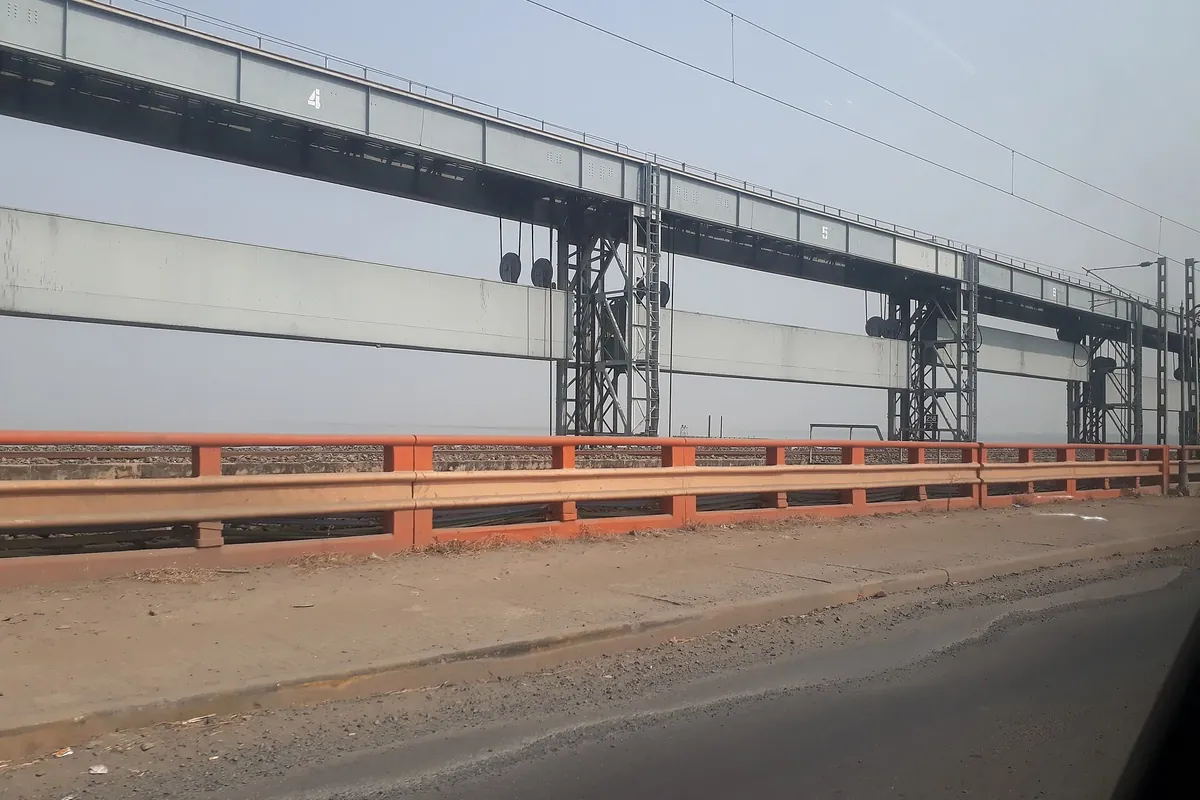
The Ganges Water Sharing Treaty between India and Bangladesh, signed in 1996 for thirty years, expires on 12 December 2026 — and Dhaka has now said plainly that it does not want a simple renewal. Bangladesh's Water Resources Minister, Shahid Uddin Chowdhury Annee, has called for a brand-new treaty built around a guarantee clause that would protect Bangladesh's minimum share of the river's dry-season flow, a protection the current agreement famously lacks. With the treaty's final year now running, the future of the Ganges at the Farakka Barrage has become one of South Asia's most consequential — and least watched — negotiations.
The minister's position has been set out twice in recent weeks. At a river dialogue in Dhaka on 24 September 2026, reported by The Business Standard, Annee said the existing treaty offers downstream farmers no firm assurance of water in the lean season, and that any successor arrangement must correct that. He repeated the demand in an interview with the Indian wire service ANI published on 8 October 2026: Bangladesh wants a new treaty, with a guarantee clause on the model of the 1977 Ganges arrangement, under which India had guaranteed a large protected share of flows for Bangladesh. Between those two statements, the outline of Dhaka's negotiating position has become clear — and it is not the position of a country preparing to sign a routine extension.
India's public response, so far, has been procedural rather than substantive. MEA spokesperson Randhir Jaiswal told briefings in New Delhi on 29 September and again on 9 October 2026 that all river and water issues between the two countries are discussed through the Joint Rivers Commission, the standing bilateral body for transboundary rivers. Read carefully, that is neither acceptance nor rejection of the guarantee demand: it is an insistence that the conversation happen inside the existing machinery. The machinery, notably, has been moving — officials of the two countries held four days of technical-level meetings beginning on 20 May 2026 on the treaty's future, and Bangladesh's Foreign Minister Khalilur Rahman told his parliament in August 2026 that a dedicated team has been formed to handle the file.
What the 1996 treaty actually does
The Ganges Water Sharing Treaty was signed on 12 December 1996 by the prime ministers of India and Bangladesh, ending decades of dispute over the Farakka Barrage, which India built on the Ganges just upstream of the Bangladesh border to divert water into the Bhagirathi-Hooghly channel and flush silt from Kolkata port. The treaty governs one specific thing: how the flow of the Ganges measured at Farakka is shared between the two countries during the dry season, from 1 January to 31 May each year, in ten-day periods.
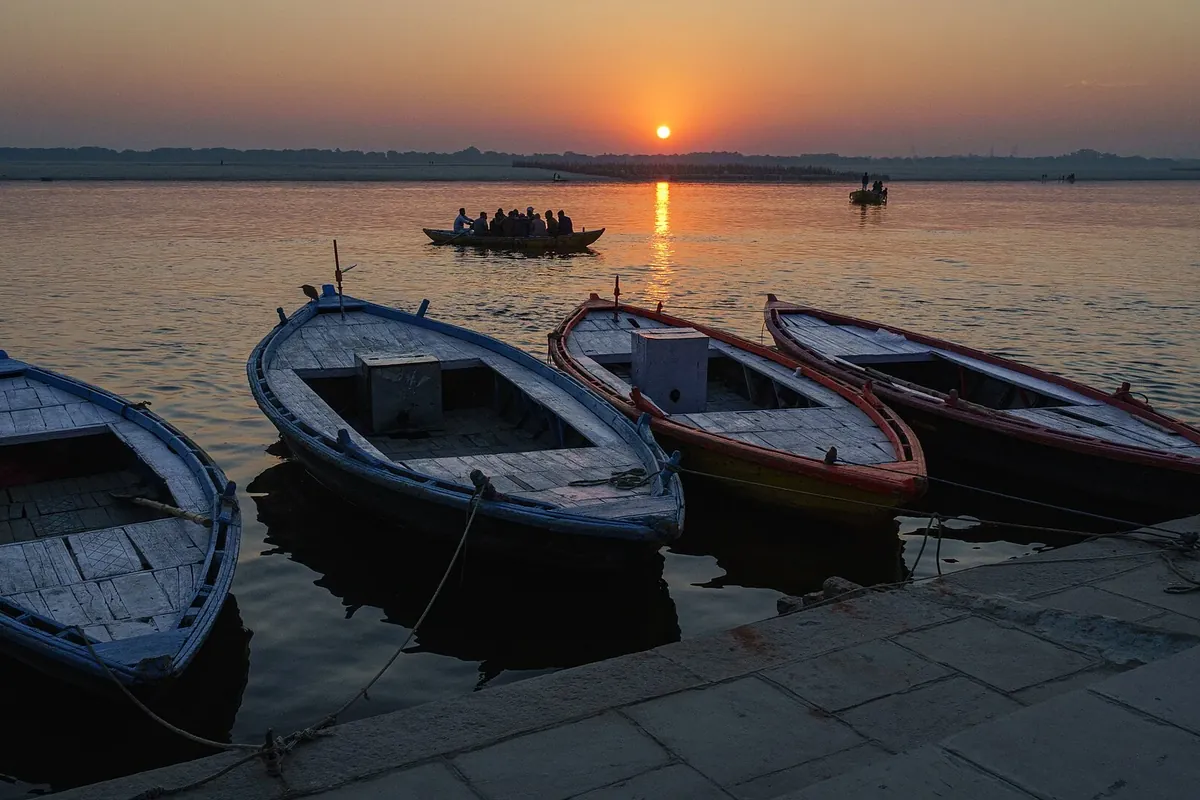
The formula is flow-dependent. When the flow at Farakka is 70,000 cusecs or less, the two countries split it equally. Between 70,000 and 75,000 cusecs, Bangladesh receives 35,000 cusecs and India the balance. Above 75,000 cusecs, India takes 40,000 cusecs and Bangladesh receives the rest. Each country is also assured 35,000 cusecs in one ten-day period in March and April, the driest stretch. On paper it is an elegant schedule. In practice, as flows in the lean season have thinned, the schedule's weakness has become the whole argument: when there is less water than the formula assumes, somebody's share shrinks — and the treaty says nothing firm about whose, or by how much it may not shrink. There is no guarantee clause. There is also no provision for ecological flows — water reserved for the river itself — and nothing that anticipates a changing climate.
Why Bangladesh wants a guarantee, not a renewal
The guarantee clause Dhaka is asking for is not a new invention; it is a return to an older one. The five-year Ganges agreement of 1977 contained a guarantee under which Bangladesh was assured around 80 per cent of its scheduled share even in the driest periods — a floor beneath which its allocation could not fall. When the long-term treaty was negotiated in 1996, that floor disappeared. Bangladeshi officials and water experts have argued ever since that the omission is the treaty's central flaw: in the driest years, actual flows at Farakka have fallen so low that the sharing formula delivers Bangladesh far less than its farmers and its southwestern districts plan around.
The stakes downstream are concrete. The Ganges' dry-season flow feeds irrigation across southwestern Bangladesh, holds back salinity pushing inland from the Bay of Bengal, sustains navigation and fisheries, and supplies the Gorai offtake, the distributary that carries Ganges water into the southwest. Bangladeshi experts cited in the current debate — among them Manjur A. Chowdhury, a former member of the National River Conservation Commission — argue that a successor treaty must go further than 1996 in at least three ways: a guarantee clause protecting a minimum Bangladeshi share, recognised ecological flows, and provisions that account for climate change, which is altering both the river's lean-season flow and the salinity frontier it holds back. Those are negotiating demands, not agreed text — but they define the gap a negotiation would have to close.
India's side of the river
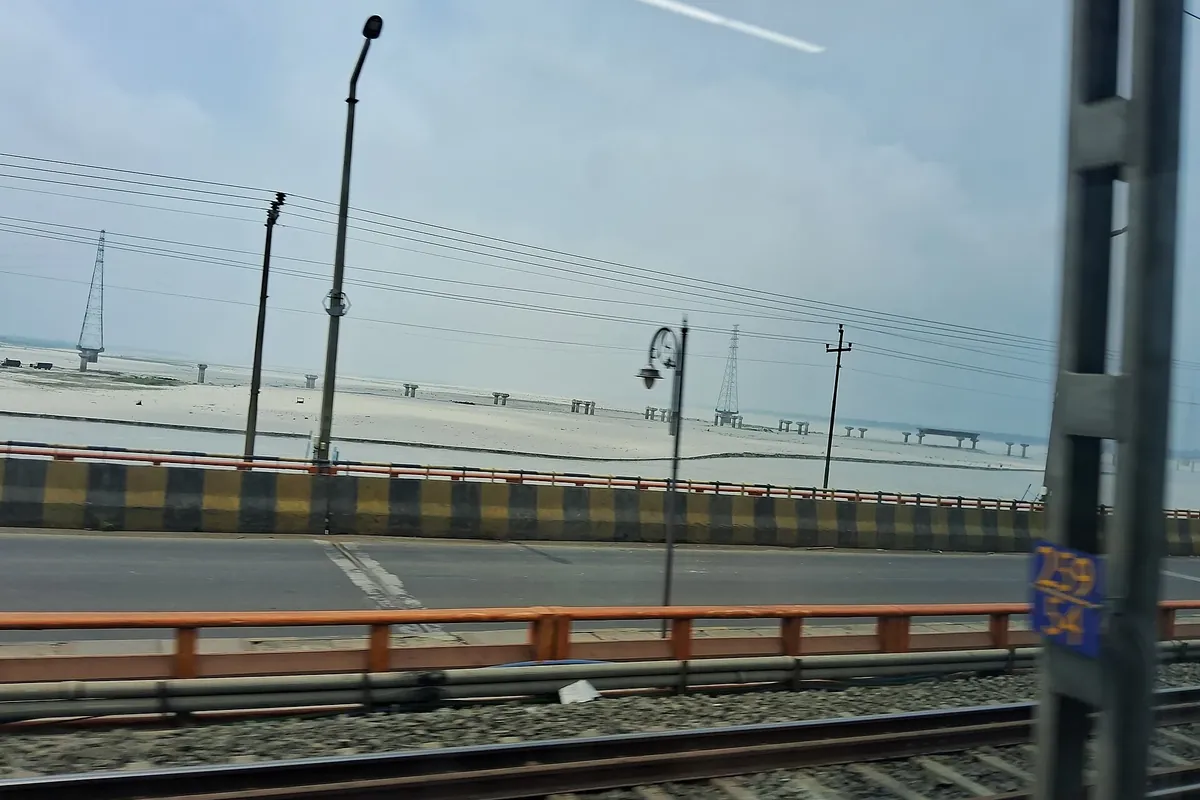
India's equities in the Ganges are different but no less real. Farakka's diversions keep the Bhagirathi-Hooghly navigable and Kolkata port functioning; upstream, the river system serves irrigation and cities across some of India's most populous states. New Delhi's consistent public line — delivered through the MEA at the 29 September and 9 October briefings — is that river issues belong in the Joint Rivers Commission, where the two countries manage more than fifty shared rivers. India has not publicly engaged with the guarantee-clause demand itself. That silence is worth reporting precisely: the question Bangladesh has put on the table is whether the post-2026 regime will contain a floor for the downstream country, and India has so far answered a different question — where the talks will happen.
The wider relationship frames all of this. Water has been the most durable irritant between the two neighbours for half a century, surviving changes of government on both sides because rivers do not renegotiate. The Teesta river dispute — a separate, long-stalled sharing arrangement — hangs over the Ganges file as a reminder of how easily water talks can stall for a decade. Both capitals know the calendar: the treaty runs out on 12 December 2026, and a lapse without a successor would leave dry-season sharing at Farakka to goodwill and ad-hoc arrangement in the very months — January to May 2027 — when the river is at its lowest.
What happens next
The process, as far as the public record shows, has three moving parts. The technical track is alive: the four days of technical-level meetings that began on 20 May 2026 addressed the treaty's future, and the Joint Rivers Commission remains the forum India points to. The political track is set out by Dhaka: a minister publicly committed to a new treaty with a guarantee clause, a foreign minister telling parliament a team is in place, and experts filling in the technical wishlist — guarantee, ecological flows, climate provisions. And the clock is the third part: whatever is to replace the 1996 treaty must be negotiated, agreed and in force around the day the old one dies, or the two countries enter the 2027 dry season with the rules unwritten.
For Pakistan's readers, the Ganges negotiation is worth watching for a structural reason: this region's rivers are governed by treaties written in another era's hydrology — the Indus Waters Treaty of 1960 being the closest example — and every renegotiation anywhere in South Asia tests the same questions. What is a fair share when the flow itself is shrinking? Does a downstream country get a floor, or a fraction? And can a treaty written for thirty years of one climate hold in the next thirty years of another? Dhaka has begun answering those questions out loud. New Delhi's answer, beyond the forum, is still to come. TaazaPulse's international desk will follow the talks as they develop — and the background to South Asia's river politics runs through our coverage of Pakistan's diplomacy at the United Nations and the regional questions behind it.
Readers following the economics of water and agriculture in the region can also start with our explainers on the dollar rate in Pakistan and how petrol prices are decided — the two household numbers that, like a river's flow, are set by forces far upstream of the family that depends on them.
The stakes in one season
Strip the diplomacy away and the negotiation is about a single season. Between January and May, the Ganges falls to its annual low while the rabi crops of two countries stand in the ground; every cusec at Farakka is simultaneously irrigation in West Bengal, salinity defence in Khulna, navigation depth in two river systems and drinking water in cities that do not appear in the treaty text. The 1996 formula was written for the flows of its time. The flows have changed; the cropping calendars have not. That mismatch — hydrology moving one way, agriculture standing still — is the quiet engine under every statement both capitals have made this autumn, and it is why a technical file about ten-day sharing periods now leads the region's diplomacy.
Sources
This report is based on reporting, official statements and documents from:
- The Business Standard (Bangladesh)
- ANI
- India Ministry of External Affairs briefings
- Asia Daily
Frequently Asked Questions
When does the Ganges Water Sharing Treaty expire?
The treaty was signed on 12 December 1996 for a thirty-year term, so it expires on 12 December 2026. It governs how India and Bangladesh share the Ganges' dry-season flow (1 January to 31 May) measured at the Farakka Barrage.
What is Bangladesh asking for in a new treaty?
Bangladesh's Water Resources Minister Shahid Uddin Chowdhury Annee has called for a new treaty rather than a renewal, built around a guarantee clause that would protect a minimum Bangladeshi share of dry-season flow, as the 1977 arrangement did with an assurance of around 80 per cent of the scheduled share. Bangladeshi experts also seek recognised ecological flows and climate-change provisions.
How does the 1996 treaty share the water?
In ten-day periods during the dry season: at flows of 70,000 cusecs or less at Farakka, the two countries split the flow equally; between 70,000 and 75,000 cusecs, Bangladesh receives 35,000 cusecs and India the balance; above 75,000 cusecs, India takes 40,000 cusecs and Bangladesh the rest. Each side is also assured 35,000 cusecs in one ten-day period in March and April. The treaty contains no guarantee clause setting a floor beneath Bangladesh's share.
What has India said about a new Ganges treaty?
India's Ministry of External Affairs, through spokesperson Randhir Jaiswal at briefings on 29 September and 9 October 2026, has said that all river and water issues between the two countries are discussed through the Joint Rivers Commission. India has not publicly engaged with the guarantee-clause demand itself. Technical-level officials of the two countries held four days of meetings beginning on 20 May 2026.
Why does the Ganges flow matter so much to Bangladesh?
Dry-season Ganges water feeds irrigation across southwestern Bangladesh, holds back salinity advancing from the Bay of Bengal, sustains navigation and fisheries, and supplies the Gorai offtake. In the driest years, flows at Farakka have fallen well below the levels the 1996 formula assumes, which is the core of Dhaka's case for a guaranteed minimum.
What happens if no new treaty is agreed by December 2026?
The 1996 treaty's sharing schedule would lapse with no successor in force, leaving dry-season sharing at Farakka to ad-hoc arrangement just as the January–May 2027 lean season begins. Both governments are publicly committed to the Joint Rivers Commission process, and Bangladesh's foreign minister told parliament in August 2026 that a dedicated team has been formed for the file.