Taliban Regime Not Doing Enough to Stop Attacks on Pakistan, Rubio Says at G20
United States Secretary of State Marco Rubio said on Saturday 31 October 2026, at the G20 Foreign Ministers' meeting in Atlanta, Georgia, that Pakistan is concerned about terrorist attacks sponsored from Afghan territory — and that, in Pakistan's view, the Taliban authorities in Kabul have not done enough to constrain those attacks. The remarks, reported by The News Pakistan in a story queued overnight, put Washington's voice, in careful terms, behind a complaint Islamabad has made repeatedly and publicly: that attacks inside Pakistan are planned, directed and launched from across the Afghan border, and that the Taliban regime's response so far has not stopped them.
Rubio's exact framing matters, and this article keeps it intact rather than flattening it into a headline. He did not present the "not done enough" judgement as his own verdict alone. He relayed Pakistan's position, said Washington had heard Islamabad's concerns, and said the United States did not want Pakistan to be targeted by terrorism. The distinction is important because it defines what the United States has — and has not — committed itself to: an offer of a productive role, if one exists, not a new policy announcement, a deadline, or a threat of action against Kabul.
"Pakistan is concerned about terrorist attacks that are being sponsored from the territory of Afghanistan," Rubio said at the G20 meeting, according to reporting of his press conference. "They think that the Taliban has not done enough to constrain those attacks, and they've taken action against it," he added, referring to Pakistan. "If there's a productive role for us to play, we would play it." He also said the United States opposed terrorism regardless of where it originated or whom it targeted, while acknowledging that Washington did not have a particularly close relationship with the Taliban.
That is the whole of the new American statement, and it should not be inflated beyond it. Rubio did not name a specific attack, did not announce sanctions, mediation or military steps, and did not say the United States had agreed to act as a mediator between Pakistan and Afghanistan. What he did was publicly validate, at a gathering of the world's major economies, that Pakistan's central grievance is understood in Washington — and leave open the possibility of an American role without defining it.
Pakistan's own statement on the same day
Rubio's remarks landed on the same day Pakistan's own government issued a sharp statement on the dispute. On 31 October, Pakistan's Ministry of Information and Broadcasting said the Taliban leadership continued to blame Islamabad while ignoring what Pakistan described as the central issue behind strained relations: terrorist sanctuaries in Afghanistan and the failure to prevent attacks originating from Afghan territory.
The ministry's statement, reported by Dawn and summarised in multiple 31 October reports, followed criticism from Afghan Taliban spokesperson Zabihullah Mujahid. Speaking to Taliban-affiliated Hurriyat Radio on Saturday, Mujahid said Kabul had repeatedly sought to resolve differences through dialogue but had failed to achieve a breakthrough, and claimed Pakistan did not want to resolve the conflict through talks and lacked the readiness for a peaceful resolution. He also said messages had been exchanged between Kabul and Islamabad through the mediation of several countries, but the efforts had failed to ease tensions. He did not identify the countries involved or provide details of the exchanges.
Islamabad rejected that account in blunt terms. The ministry said the Taliban leadership's approach reflected what it called a misleading approach and a reluctance to address the root causes of deteriorating bilateral relations. It said the Taliban leadership continued to blame Islamabad's policies while overlooking its responsibility to prevent militant activities from being carried out from Afghan soil.
"Pakistan's position is clear: terrorism is a red line, and there can be no compromise on the security of its citizens," the statement said. It warned that Pakistan would not tolerate militant safe havens across its borders that threaten national security or allow its citizens to remain vulnerable to attacks originating from Afghanistan. The statement reaffirmed Pakistan's right to take all necessary measures, in accordance with international law, to eliminate security threats regardless of their source, and said responsibility for addressing these concerns rested with the Afghan Taliban government. It added that Pakistan's resolve to protect its people should not be mistaken for weakness.
"Pakistan's security will not be held hostage to the Afghan Taliban's inaction, evasions or misplaced priorities," the statement said, in the ministry's summary of its position. "Blame games, hollow assurances and questioning Pakistan's policies will neither resolve this crisis nor absolve Kabul of its responsibilities," it added. The ministry maintained that Kabul's continued failure to act remained a fundamental barrier to normal bilateral relations.
Read together, the two 31 October statements — Rubio's in Atlanta and the ministry's in Islamabad — tell a single story from two directions. Pakistan is arguing that the obstacle to normal relations is not a lack of dialogue, but a lack of action against sanctuaries. The United States, through its secretary of state, is publicly acknowledging that Pakistan holds that view and that Washington has heard it. Neither statement, on its own, changes the facts on the ground. Together, they raise the diplomatic cost to Kabul of leaving those facts unchanged.
Why this dispute has sharpened in October
The Rubio remarks did not arrive in a vacuum. Pakistan-Afghanistan relations have deteriorated sharply through September and October 2026, driven largely by Islamabad's allegations that the banned Tehreek-e-Taliban Pakistan (TTP) and other terrorist groups use Afghan territory to plan and launch attacks inside Pakistan. Pakistan has repeatedly called on the Taliban authorities to take verifiable action against these groups — not verbal assurances, but action that can be checked: arrests, dismantled networks, and an end to cross-border movement by fighters.
In September, Pakistan conducted calibrated airstrikes in border areas after suffering terrorist attacks in Khyber Pakhtunkhwa, according to reporting of the period. That was followed by cross-border drone incursions, which Pakistan said it shot down, alongside additional rounds of retaliatory strikes. Clashes continued into October along the border in Kurram and Angoor Adda in Lower South Waziristan, amid firing that Pakistan attributed to the Afghan side.
The most recent border incident before Rubio spoke was at Angoor Adda. On Tuesday 27 October, Afghan forces opened fire on Pakistani border posts and residential areas in the Angoor Adda area, according to sources cited in reporting, killing one local resident and injuring five members of a single family, with shops damaged. The incident was the trigger for a further round of public statements: Khyber Pakhtunkhwa Governor Faisal Karim Kundi said on 28 October that Pakistan would not tolerate attacks after the Angoor Adda firing, telling the Afghan Taliban, in his words, to have no illusions about Pakistan's tolerance for such attacks. That statement, made on the governor's X account and reported on 28 October, is part of the same cluster of warnings that culminated in the ministry's 31 October statement.
Attacks on security forces inside Pakistan have continued through this period as well, including in the border districts of Khyber Pakhtunkhwa. TaazaPulse has reported, for example, on a police post attack in Bajaur in which a policeman was martyred — the kind of incident, in Pakistan's account, that is sustained by sanctuaries and facilitation across the border. The government argues that fencing, border management and military operations inside Pakistan cannot by themselves end a threat whose planning and refuge lie on the other side of the frontier. Its demand, repeated by Deputy Prime Minister and Foreign Minister Ishaq Dar at an Islamabad conference on Pakistan's counterterrorism landscape, is deliberately narrow: "Please do not allow your soil to be used against any country, particularly Pakistan, for terrorism." Dar said Pakistan had exhausted sustained diplomatic efforts to persuade the Taliban authorities, but had yet to see results on that central demand, and warned that if the Afghan government did not take action against terrorists, it would one day have to face the consequences itself.
What Pakistan is actually asking Kabul to do
Strip away the rhetoric, and Pakistan's ask has three parts, all of them visible in the statements of the past fortnight. First, stop the use of Afghan soil for attacks against Pakistan — not in words, but by acting against the groups Pakistan names, above all the TTP. Second, give verifiable guarantees: a mechanism, agreed in writing or demonstrated in practice, by which Pakistan can check that action has been taken, rather than relying on assurances that are repeated and then, in Islamabad's view, not honoured. Third, stop shifting the blame: Pakistan's ministry said on 31 October that blaming Pakistan's security institutions does not relieve the Taliban leadership of its duty to stop Afghan soil from being used for terrorism against Pakistan.
That second point — verifiability — is the sticking point in every round of talks. At the Foreign Office's weekly briefing on 17 October, spokesperson Sajjad Haider Khan said Pakistan's talks with Afghanistan would not be unconditional, and that Pakistan's single demand was a verifiable mechanism to ensure the complete cessation of terrorist activities emanating from Afghan soil. The briefing also made clear Pakistan's openness to sincere mediation, while denying that a Russian mediation initiative was under discussion. The 5 October Moscow Format consultations had ended without a joint communique, the first time since 2017 that the format failed to produce one, after the Taliban objected to language linking Afghanistan with terrorism — language it had accepted in the previous round.
Pakistan's argument also rests on findings it attributes to the international community's own monitoring. Islamabad has repeatedly cited United Nations monitoring reports concerning the presence of the TTP in Afghanistan and its links with Al-Qaeda, and has argued that the problem is not confined to Pakistan: a group that finds safe haven to attack Pakistan today, Dar argued, can use the same safe haven to threaten others tomorrow. The UN Security Council's Analytical Support and Sanctions Monitoring Team, in its 37th report, found that Afghanistan's de facto authorities continued to provide a "permissive environment" for several armed groups, notably the TTP, and observed that the TTP was given more freedom and backing by the Taliban and that its attacks on Pakistan rose as a result. The Taliban's standard response — blanket denial that any terrorist group operates on Afghan soil — has been rejected by the UN monitoring team itself, which has noted that the Taliban's claim does not match intelligence shared by multiple member states.
None of this means the picture is one-sided. The Taliban authorities have their own grievances, and Mujahid's 31 October remarks reflect them: Kabul says it has sought dialogue repeatedly, that messages have passed through mediators, and that Pakistan lacks readiness for a peaceful resolution. The Taliban have also, in the past, said they are in control of the entire country and rejected claims that foreign terrorist organisations operate on Afghan soil. What is missing, from Pakistan's side, is not engagement — Pakistan points to four foreign ministerial visits, defence and intelligence-level missions, special representative visits, secretary-level meetings, Joint Coordination Committee meetings, hundreds of border flag meetings, protest notes and demarches, as well as religious scholars' and tribal delegations to Kabul and mediation through Doha, Istanbul, Riyadh and Ürümqi — but a result on the one demand that matters to Islamabad.
What Rubio's offer of a "productive role" could mean — and what it does not
Rubio's sentence — "If there's a productive role for us to play, we would play it" — is deliberately conditional, and it should be read that way. It does not promise mediation, and it does not say the United States has been asked to mediate. It says Washington is open to a role if a productive one exists. That could, in principle, mean quiet diplomacy, conveying messages, or using American leverage with either side. It could also mean nothing more than the public statement itself: a signal to Kabul that the United States is listening to Pakistan, and a signal to Islamabad that its concerns are registered at the highest level of American diplomacy.
There are reasons to be cautious about reading more into it. The United States does not have a close relationship with the Taliban regime — Rubio acknowledged that himself — and Washington's leverage in Kabul is limited since the 2021 withdrawal. The United States also has its own, separate concerns about Afghanistan, including the presence of Al-Qaeda and Islamic State-Khorasan, and the detention of American citizens, which Rubio has previously raised in stark terms, including designating Afghanistan as a state sponsor of wrongful detention. A "productive role" in the Pakistan-Afghanistan dispute would have to be reconciled with those separate American interests, and with the fact that the United States is simultaneously managing a crowded G20 agenda in Atlanta, from the Russia-Ukraine war to Iran and global trade.
There is also a domestic American context that should not be overlooked. Rubio was speaking as host of the G20 Foreign Ministers' meeting in Atlanta, in a wide-ranging press conference that covered Iran, Russia-Ukraine peace negotiations, the possible attendance of Ukraine's president at a later G20 summit, and India's role in the Quad. The Pakistan-Afghanistan remarks were one part of that briefing, not its headline subject. That context does not diminish them — a secretary of state does not raise a bilateral dispute at a G20 press conference by accident — but it does mean the remarks should not be treated as a dedicated American initiative on Pakistan-Afghanistan. They are a public acknowledgement, made in passing at a multilateral meeting, that Pakistan's grievance is on Washington's radar.
For Pakistan, the value of the remarks is therefore diplomatic rather than operational, at least for now. They give Islamabad a quotable American acknowledgement to use in its own messaging, they put Kabul on notice that its position is being discussed beyond the region, and they create a hook for follow-up diplomacy: if Pakistan wants an American role, it can now point to Rubio's own words as an invitation to define one. For Kabul, the remarks are a warning that its denial strategy — that no terrorist groups operate from Afghan soil — is not being accepted in Washington any more than it is in Islamabad.
The G20 setting: why Atlanta matters
The venue matters because it frames the dispute as a matter of international, not just regional, concern. The G20 Foreign Ministers' meeting in Atlanta brought together the foreign ministers of the world's major economies, and Rubio, as host, used his press conference to set out American positions across a range of crises. Raising Pakistan's concerns about Afghan-sponsored terrorism in that setting, even briefly, moves the issue out of the bilateral channel — where Pakistan and Afghanistan have been talking, and failing to agree, for months — and into a forum where other major powers, including China, Russia and the Gulf states, are also present and also have stakes in Afghan stability.
That multilateral framing cuts both ways. Russia and China have both moved towards accommodating Kabul — Moscow removed the Taliban from its list of banned terrorist organisations in 2025 and formally recognised its government — while the security concern that confronts the region, particularly Pakistan, remains unresolved. The Moscow Format's failure to agree a joint statement on 5 October exposed that contradiction: engagement is increasingly treated as an achievement in itself, despite the absence of verifiable counterterrorism commitments from the Taliban regime. Rubio's remarks, by contrast, tie engagement to action: the question is not whether to talk to Kabul, but whether talking produces constraints on attacks.
Pakistan's own diplomacy continues on parallel tracks. Islamabad has been in active diplomatic conversation with other partners through the same period — including, for example, foreign ministers' talks with Singapore in Islamabad marking 60 years of relations — and it has sought to keep its message consistent across capitals: terrorism is a red line, normal relations require action against sanctuaries, and Pakistan reserves the right to protect its citizens under international law. The Rubio remarks fit that messaging strategy, but they do not replace the bilateral work that still has to happen between Islamabad and Kabul, whether directly or through mediators.
What to watch next
Three things will show whether Rubio's remarks amount to more than a press-conference line. First, Kabul's response: whether the Taliban authorities answer Rubio directly, repeat their denial, or offer any concrete step on sanctuaries. A response that addresses the substance — naming groups, announcing arrests, or accepting a verification mechanism — would be a change. A response that repeats the claim that Pakistan lacks readiness for talks would confirm that the two sides are still talking past each other.
Second, Islamabad's follow-up: whether the Foreign Office, in its next weekly briefing, treats Rubio's remarks as an opening and defines what productive American role it would welcome — for example, conveying messages, supporting a verification mechanism, or backing a regional format that includes counterterrorism guarantees. If Pakistan's diplomats quote Rubio back to Washington and ask for specifics, the remarks will have become a diplomatic track. If they simply repeat them as praise, they will remain a talking point.
Third, the border itself: whether the firing at Angoor Adda and elsewhere stops, whether any new incident occurs, and whether the pattern of attacks inside Pakistan that Islamabad attributes to Afghan soil changes. Diplomacy is ultimately judged by that test, not by press conferences. Pakistan's ministry said on 31 October that its security would not be held hostage to Kabul's inaction. The coming days will show whether Kabul heard that warning, whether Washington follows its own acknowledgement with any action, and whether the cycle of statements, firing and retaliation that defined October gives way to something different.
For now, the verified position is this. On 31 October 2026, at the G20 Foreign Ministers' meeting in Atlanta, US Secretary of State Marco Rubio publicly relayed Pakistan's view that the Taliban regime has not done enough to constrain terrorist attacks originating from Afghan territory, said Washington had heard Pakistan's concerns and did not want Pakistan to be targeted by terrorism, and said the United States would play a productive role if one existed. On the same day, Pakistan's Ministry of Information and Broadcasting issued its own statement warning Kabul that terrorism is a red line, that shifting blame would not absolve the Taliban leadership of its responsibilities, and that Pakistan reserved the right to take all necessary measures under international law to protect its citizens. The Taliban spokesperson, for his part, said Kabul had sought dialogue repeatedly and that Pakistan lacked readiness for a peaceful resolution. No new American policy, deadline or mediation has been announced, and no Kabul concession has been reported. The dispute, in other words, has gained an American voice — but not yet an American solution.
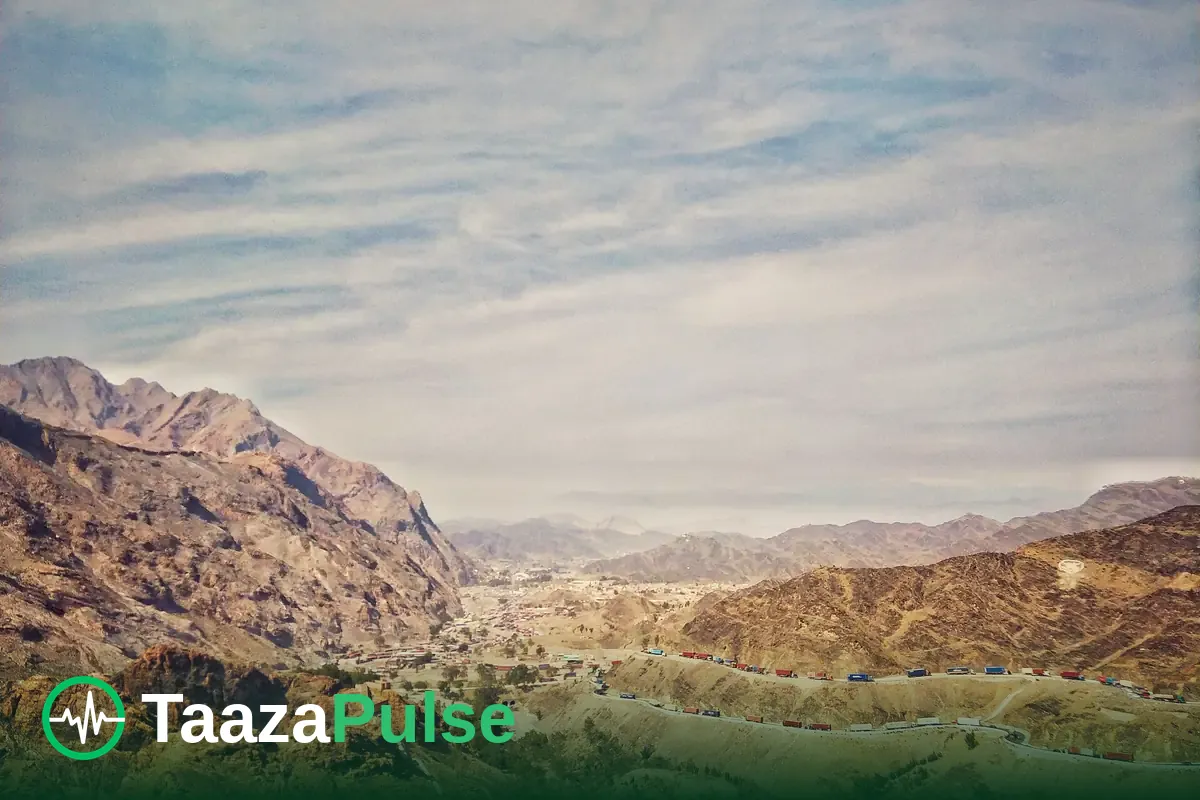
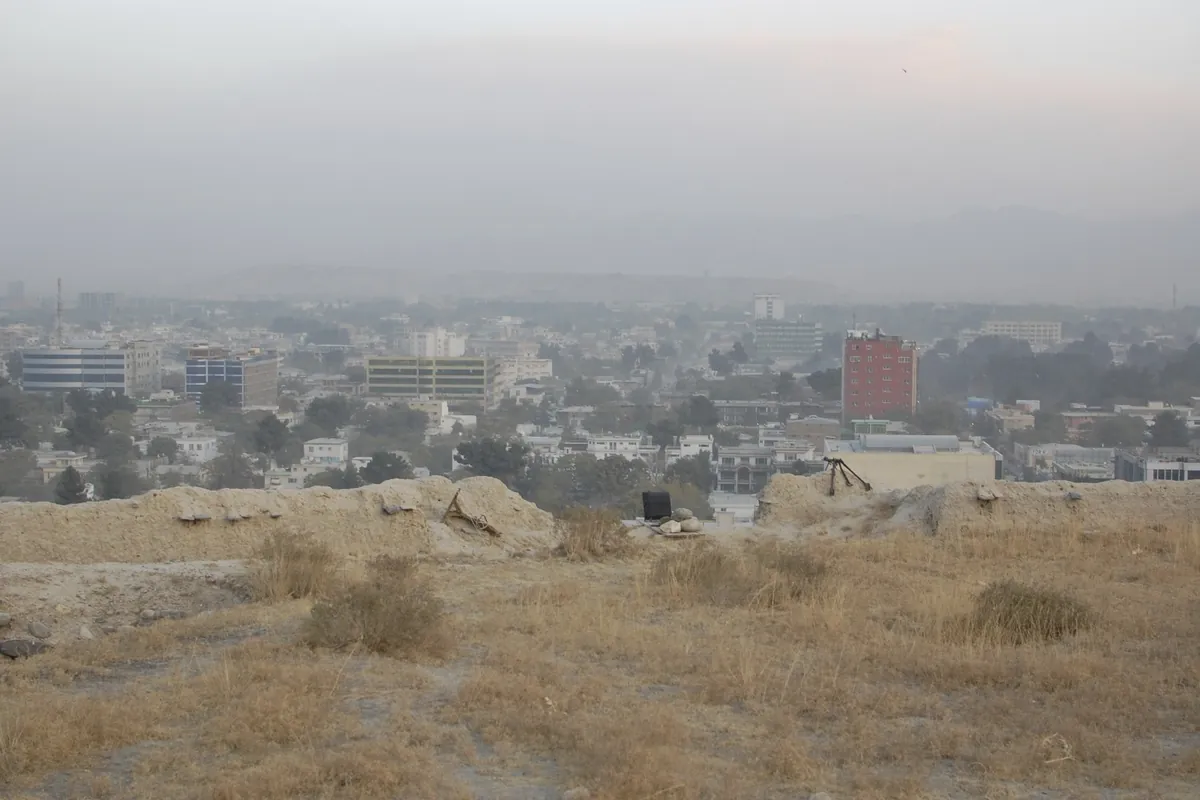
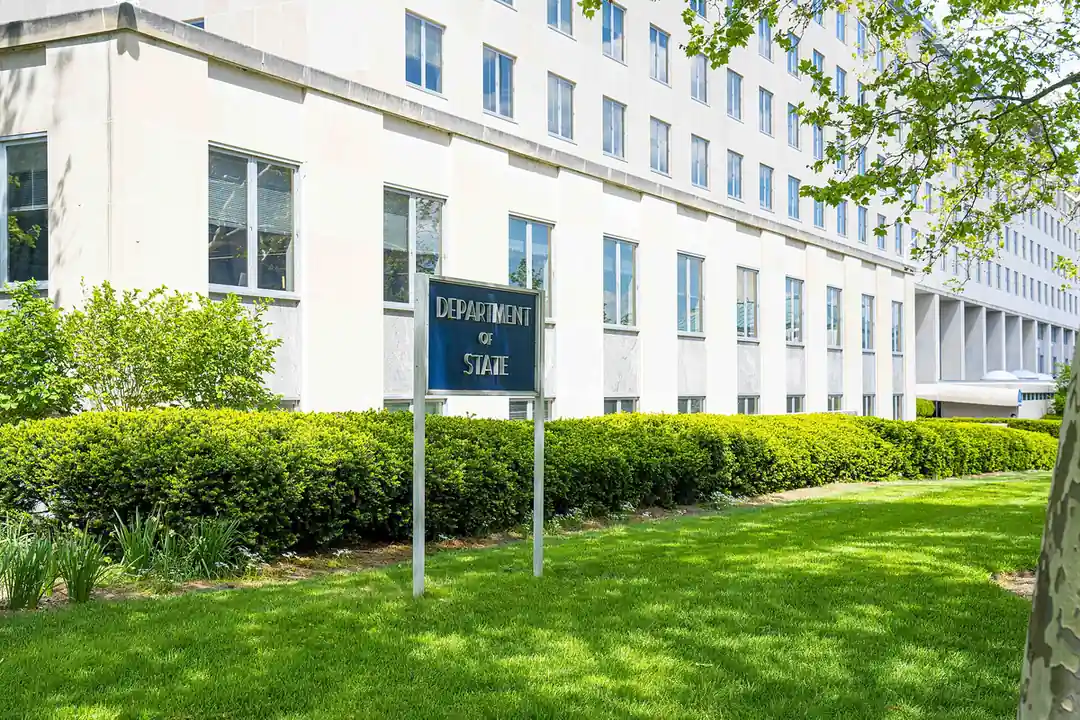
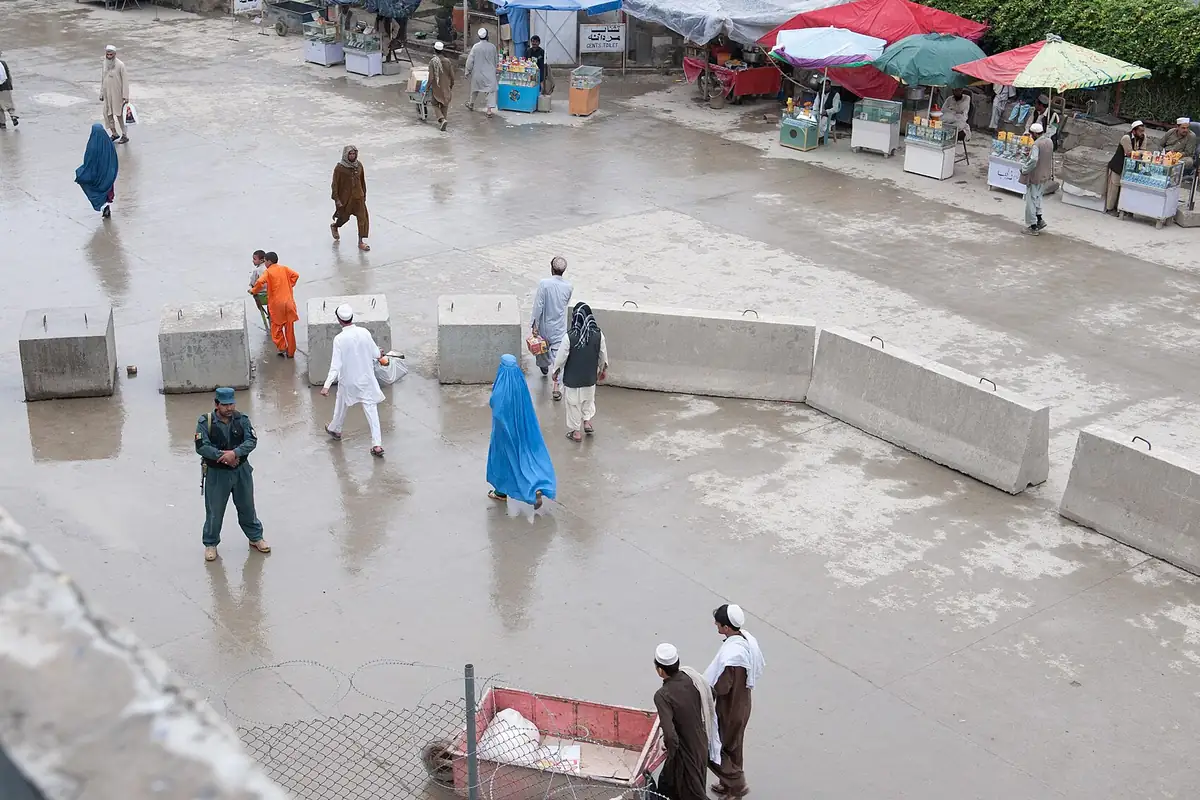
The photographs in this article are file photos from Wikimedia Commons — the road towards Torkham on the Pakistan-Afghanistan border (Maximusopti, CC BY-SA 4.0), the Kabul skyline (Jim Kelly, CC BY 2.0), the Harry S. Truman Building of the US Department of State in Washington (US Department of State, public domain), and the Torkham Gate customs area in Nangarhar province (US Army, public domain) — and are not photographs of the 31 October G20 press conference, of Marco Rubio, or of any border incident.
Sources: The News Pakistan — Taliban regime not doing enough to stop attacks on Pakistan from Afghan soil: Rubio (31 October 2026, headline as queued by the TaazaPulse sentinel); Pakistan TV — Pakistan warns Taliban over terrorism as Rubio says Kabul failed to curb attacks (31 October 2026), reporting Rubio's G20 Atlanta press conference remarks and Pakistan's 31 October Ministry of Information statement; Daily The Destination — Pakistan warns Kabul: no compromise on national security (31 October 2026), on the ministry's statement; Beflaz, from Dawn — Pakistan slams Afghan Taliban for 'shifting blame' and 'persistent refusal' to address terrorism (31 October 2026), on the ministry's statement, Mujahid's Hurriyat Radio remarks, and the September-October border escalation including Angoor Adda; TaazaPulse watermark records for the 28 October Kundi statement, the 17 October Foreign Office briefing, and the 27 October Angoor Adda firing (1 killed, 5 of one family injured).
Frequently Asked Questions
What exactly did Marco Rubio say about Pakistan and Afghanistan?
At the G20 Foreign Ministers' meeting in Atlanta on 31 October 2026, US Secretary of State Marco Rubio said: "Pakistan is concerned about terrorist attacks that are being sponsored from the territory of Afghanistan." He added, relaying Pakistan's position: "They think that the Taliban has not done enough to constrain those attacks, and they've taken action against it." He said Washington had heard Pakistan's concerns and did not want Pakistan to be targeted by terrorism, and that the United States opposed terrorism regardless of where it originated or whom it targeted.
Did Rubio announce that the US will mediate between Pakistan and Afghanistan?
No. His offer was deliberately conditional: "If there's a productive role for us to play, we would play it." He did not say the United States had been asked to mediate, did not announce sanctions, a deadline or any military step, and did not name a specific attack. The remarks are a public acknowledgement that Pakistan's grievance is understood in Washington, not a new American policy or a dedicated mediation initiative.
What did Pakistan's government say on the same day?
On 31 October 2026, Pakistan's Ministry of Information and Broadcasting said the Taliban leadership continued to blame Islamabad while ignoring what Pakistan described as the central issue: terrorist sanctuaries in Afghanistan and the failure to prevent attacks originating from Afghan territory. It said terrorism is a red line, that Pakistan would not tolerate militant safe havens across its borders, and that Pakistan reserved the right to take all necessary measures under international law to protect its citizens. It added that Pakistan's security would not be held hostage to the Taliban government's inaction, evasions or misplaced priorities.
What is Kabul's response, according to the reporting?
Afghan Taliban spokesperson Zabihullah Mujahid, speaking to Hurriyat Radio on 31 October, said Kabul had repeatedly sought to resolve differences through dialogue but had failed to achieve a breakthrough, claimed Pakistan did not want to resolve the conflict through talks and lacked readiness for a peaceful resolution, and said messages had been exchanged through the mediation of several countries without easing tensions. He did not identify those countries or give details of the exchanges. The Taliban authorities have also previously denied that foreign terrorist organisations operate on Afghan soil.
Why has this dispute sharpened in September and October 2026?
Pakistan alleges that the banned Tehreek-e-Taliban Pakistan (TTP) and other groups use Afghan territory to plan and launch attacks inside Pakistan, and has demanded verifiable action — not verbal assurances. In September, Pakistan conducted calibrated airstrikes in border areas after terrorist attacks in Khyber Pakhtunkhwa, followed by cross-border drone incursions and retaliatory strikes. Clashes continued into October in Kurram and Angoor Adda; on 27 October, Afghan forces opened fire on Pakistani border posts and residential areas at Angoor Adda, killing one local resident and injuring five members of a single family, according to sources cited in reporting.
What should readers watch for next?
Three things. First, Kabul's response to Rubio: whether the Taliban authorities answer him directly, repeat their denial, or offer any concrete step on sanctuaries. Second, Islamabad's follow-up: whether the Foreign Office, at its next weekly briefing, defines what productive American role it would welcome. Third, the border itself: whether firing at Angoor Adda and elsewhere stops, whether any new incident occurs, and whether the pattern of attacks inside Pakistan that Islamabad attributes to Afghan soil changes. Until one of those moves, the verified position is a US acknowledgement — not yet an American solution.