Surveillance Drone Crashes Into Lahore CTD Headquarters
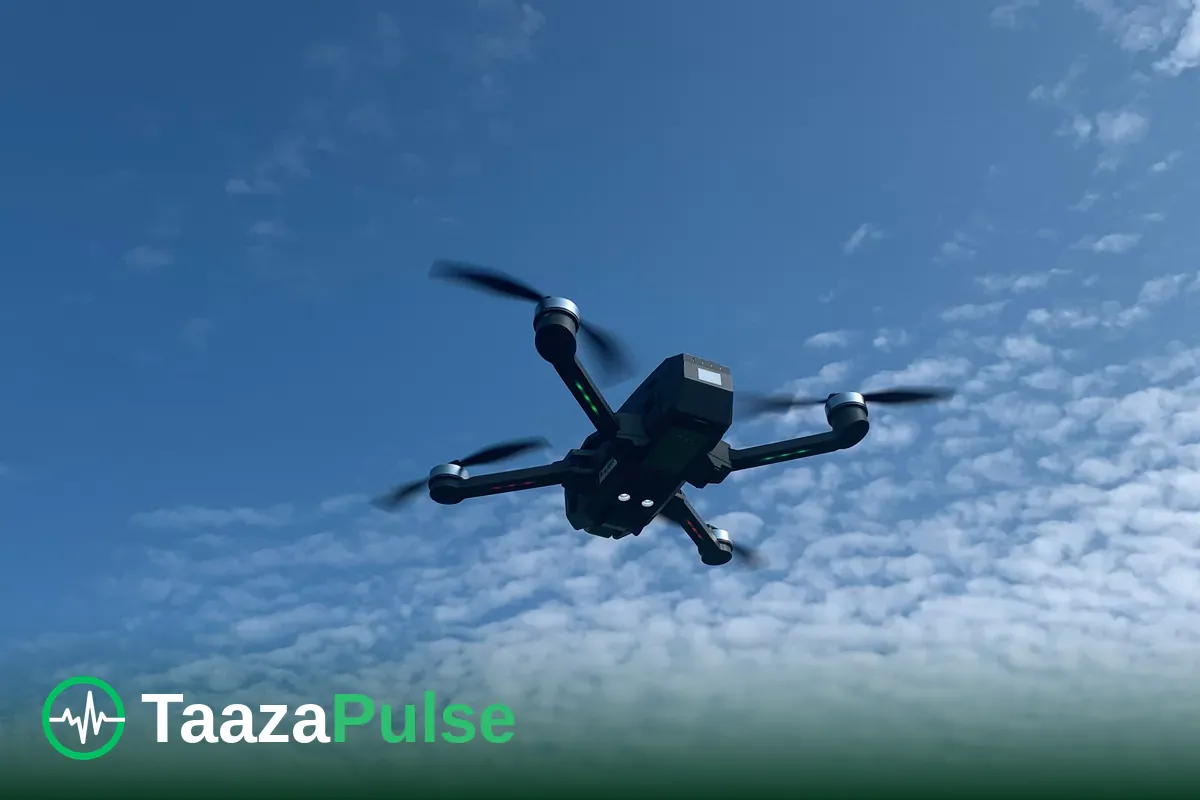
A surveillance drone crashed into the outer wall of the Counter Terrorism Department (CTD) headquarters in Lahore in the early hours of Sunday 1 November 2026, causing panic inside one of Punjab's most sensitive security facilities and triggering a police investigation into who sent it and what it was looking at. According to police accounts carried by multiple mainstream outlets, the drone approached the headquarters from the Jallo Mor direction at around 12:30am, struck the building's outer wall and fell inside or beside the compound, where the headquarters' own security team took it into custody. Geo News reported on Sunday afternoon that police suspect the facility was being surveyed, and Capital News Point's fuller account says the drone was reportedly being used to conduct reconnaissance of the internal areas of the CTD headquarters. No injuries were reported in any of the accounts seen for this article, and the Bomb Disposal Squad, called in as a precaution, inspected the device and declared it safe.
The incident matters because of where it happened. The CTD is the Punjab Police's specialist counter-terrorism arm: it investigates terrorism cases, holds suspects and case material, and runs operations against militant networks across the province. Its Lahore headquarters is therefore exactly the kind of building whose layout, routines and security arrangements an outside observer would want to map — and exactly the kind of building whose security team is trained to treat an unexplained drone overhead as a threat rather than a curiosity. That a drone reached the building itself, rather than being spotted and stopped at a distance, is the detail that has turned a late-night crash into a Sunday security story, and it is the detail investigators will now have to explain: how far the drone travelled, from where it was launched, and whether anyone was watching its camera feed live when it went down.
What is known so far comes from a consistent set of police-sourced details repeated across the coverage. The drone came from the Jallo Mor direction, on Lahore's eastern side, and hit the outer wall of the headquarters at about 12:30am. It is described in the reporting as a sophisticated surveillance drone — a machine built to watch, not to carry a payload. When the CTD headquarters security team recovered it, its cameras were still attached and its battery indicator lights were still operational, which is why the first response was to secure the device intact rather than to destroy it. The Bomb Disposal Squad then checked it and declared it safe, ruling out, on the evidence so far, the most alarming possibility: that the drone was carrying explosives. Police, as quoted in the reporting, say unidentified suspects sent the drone towards the headquarters with alleged terrorist intentions — an allegation, not yet a proven finding, and this article reports it as the police position, not as an established fact.
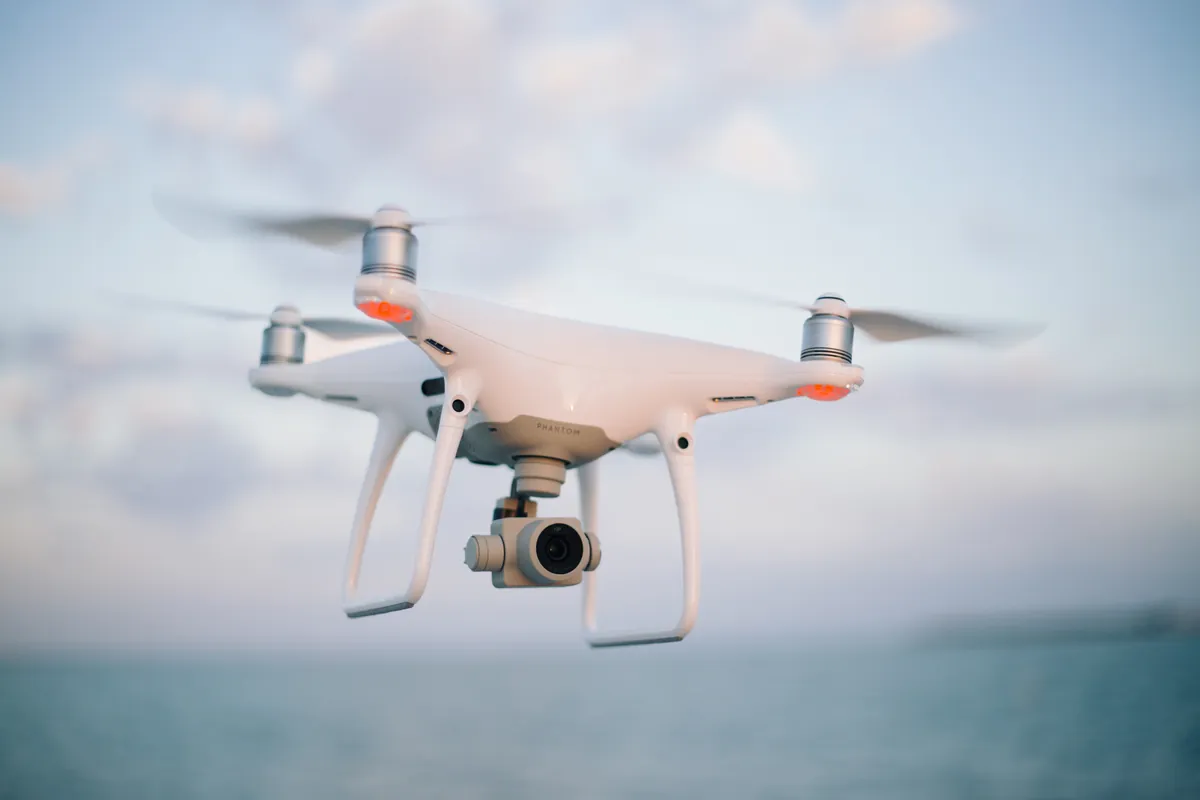
The legal step has already begun. The CTD headquarters security team has submitted an application to Harbanspura Police Station for legal action in the matter, according to the reporting, and authorities say investigations are under way from all angles. That phrasing matters: it signals that police are not treating this as a single-track inquiry. A drone investigation of this kind typically runs on several tracks at once, and readers should expect the same here even though no official has yet spelled out the plan in public. One track is the machine itself: its make and model, its camera and any stored footage or flight log, and whether it was being flown by remote control from nearby or following a pre-programmed route. A second track is the flight path: working backwards from the Jallo Mor approach direction, through CCTV and any other surveillance along the route, to a launch point. A third track is the people: who bought, built or modified a machine of this kind, and who had a reason to point it at the CTD headquarters on this particular night. None of those answers is public yet, and this article claims none of them.
What investigators have in their favour is that the drone survived the crash in working condition. A surveillance drone that is still powered when it is recovered is a far richer source of evidence than a wreck: its camera may hold images, its memory may hold a flight record, and its radio link may point back towards its operator's position. What works against them is the hour. At 12:30am, streets are quiet, witnesses are few, and a small machine flying low over a walled compound is easy to miss until it hits something. The Jallo Mor direction gives investigators a corridor to work with, but a corridor is not a launch site, and the distance between the two is where this investigation will be won or lost. Police have not yet said whether any suspect has been identified, detained or questioned, and no arrest has been reported in the accounts seen — readers should treat any claim of an arrest in this case, circulating on social media or elsewhere, as unverified unless a police statement or a mainstream outlet confirms it.
There is also a question the reporting so far leaves open, and it is the most important one for Lahore's residents: was this a one-off, or part of a pattern? Drones over sensitive sites in Pakistan are not new. Earlier this year, The News reported security forces shooting down a drone in Lahore's Manawan area that police sources described as a surveillance device carrying no explosives, and intelligence agencies took that machine into custody for examination — a sequence strikingly similar to Sunday's, down to the surveillance description and the forensic examination that followed. Only two days before the CTD incident, on 30 October, security forces in Balochistan's Kharan district shot down five hostile quadcopters that security sources said were being used in an attempted attack on a security checkpoint, before they could reach their target. And just a day before that, on 30 October, KP Police briefed reporters on linking surveillance drones and anti-drone systems to the Safe City command centre in Peshawar, including anti-drone guns for remote and sensitive postings. None of that proves a connection between these incidents — they involve different places, different machines and, in Kharan's case, a very different kind of threat — but together they explain why police and security institutions across the country are now thinking about drones as a routine part of their security problem rather than as a novelty.
The CTD crash also lands in a wider debate that has been building quietly in Pakistan about who may fly a drone, where, and under what rules. Small camera drones are now cheap, widely sold and easy to fly, and they are used every day for entirely ordinary purposes: wedding photography, real-estate videos, farming surveys, journalism and hobby flying. That everyday availability is precisely what makes a hostile or careless flight hard to spot in advance — a surveillance drone over a city at night looks, from the ground, like any other drone, until its target becomes clear. Pakistan's aviation and security authorities have, over recent years, tightened attention on drone flights near airports, military sites and other sensitive installations, and incidents like Sunday's tend to produce fresh calls for stricter enforcement. What form that takes here — whether new restrictions, new detection equipment at sensitive buildings, or simply a reminder that flying over a security headquarters invites a police case — will depend on what the investigation finds about this particular machine and its operator.
For the CTD itself, the incident is embarrassing as well as alarming. A counter-terrorism headquarters is supposed to be among the hardest buildings in a city to approach unnoticed, and a drone that reaches its outer wall has, by definition, got closer than it should have. That does not mean the building's security failed in any broader sense — the drone was detected, recovered and checked, and no harm resulted — but it does raise practical questions that the headquarters' own security review will now have to answer. Were counter-drone measures in place at the building, and did they detect the approach? Was the drone spotted before it struck the wall, or only after the crash? And does a building of this importance need detection and jamming equipment of the kind KP Police described for Peshawar's Safe City network, where radar with a range of about five kilometres is linked to automatic alerts? Those questions are fair to ask, and they are also questions only the police and the CTD can answer from their own records; speculation about the building's defences, from outside, would add heat without light, and this article does not engage in it.
It is equally important to say what Sunday's incident was not, on the evidence available. It was not, so far as any reporting shows, an attack that caused damage or casualties: the drone hit a wall and was declared safe, and no explosion, injury or structural damage has been reported. It was not, on the evidence available, a confirmed cross-border incident: no official has attributed the drone to any foreign actor, and the police description speaks of unidentified suspects, not of a named state or group. And it was not, as far as the public record shows, a CTD operation gone wrong: nothing in the reporting suggests the drone belonged to the police or to any Pakistani agency, and the decision to seek legal action at Harbanspura Police Station points the other way. Keeping those distinctions clear matters, because drone stories attract rumour quickly — a crashed machine, a sensitive building and a midnight hour are an ideal combination for speculation, and speculation in a counter-terrorism context can do real damage before the facts catch up.
What happens next will probably be quiet rather than dramatic, and readers should not expect a running public commentary from the investigators. Drone inquiries tend to surface in stages: first the forensic examination of the machine and its camera, then the tracing of the flight path and any launch site, then — if those tracks lead somewhere — arrests or a formal police statement. If the tracks lead nowhere, the public may hear little more than that the investigation continues, which is itself a possible outcome and not necessarily a sign that nothing is being done. The application at Harbanspura Police Station is the formal starting point for any prosecution that follows, and any future police statement, court proceeding or recovery of further equipment would be the natural next chapters of this story. TaazaPulse will update this article if police issue a statement naming a suspect, a launch point, or a motive — and will say so plainly if they do not.
For Lahore, the practical takeaway is narrower than the headlines suggest. One drone, one wall, one midnight flight: that is the verified core of this story, and everything beyond it — who flew it, why, and whether it was part of anything larger — is still under investigation. The panic reported inside the headquarters on the night is understandable: a machine built to watch, arriving unannounced over a counter-terrorism building, is a genuinely frightening thing to find. But panic is not evidence, and the sober facts — a sophisticated surveillance drone, a 12:30am approach from Jallo Mor, a crash into an outer wall, a safe declaration by the Bomb Disposal Squad, and an investigation now open at Harbanspura — are enough, on their own, to justify the attention this incident is getting. The rest is work for the investigators, and the job of the rest of us is to wait for what they can prove.
Sources and honesty note: the time (around 12:30am), the Jallo Mor approach direction, the outer-wall impact, the still-operational cameras and battery lights, the Bomb Disposal Squad's safe declaration, the Harbanspura Police Station application and the police allegation of terrorist intent are reported by Capital News Point (1 November 2026) from police accounts, and the core incident — a surveillance drone crashing into the CTD headquarters' outer wall, with police suspecting the facility was being surveyed — is confirmed by Geo News (1 November 2026) and by ARY News, Samaa TV, Capital TV and Bol News coverage the same day. The ARY News body itself was not directly fetched for this article (its site follows the same policy-block pattern as prior runs and was not retried or bypassed); the story is verified through the confirming record, not from the headline alone. The Kharan incident (30 October 2026) and the KP Police Safe City drone briefing (30 October 2026) are as reported in TaazaPulse's own coverage of those events. No operator, origin, model, flight duration, damage figure or arrest is claimed, because none appears in the reporting seen. The photographs are generic drone, surveillance-camera and police-patrol file photos, captioned as such, and none is a photograph of the Lahore drone, the CTD headquarters or any named person.
Sources
This report is based on reporting, official statements and documents from:
- ARY News via Google News — Surveillance drone crashes with CTD headquarters in Lahore (1 Nov 2026; sentinel queue 63f50158ef808b2a; headline only, body not directly fetchable this run)
- Capital News Point — Mystery Drone Reaches Lahore CTD Headquarters, Investigation Launched (1 Nov 2026; police accounts: ~12:30am, Jallo Mor direction, outer-wall impact, cameras + battery lights still operational, Bomb Disposal Squad safe declaration, alleged terrorist intentions, Harbanspura Police Station application)
- Geo News via Scoop — Drone 'used for surveillance' crashes into CTD headquarters in Lahore (1 Nov 2026, 12:12 PM; outer-wall impact, police suspect facility was being surveyed)
- Samaa TV — Surveillance Drone Crashes Into Lahore CTD Headquarters (1 Nov 2026)
- ARY News — Surveillance Drone Crashes Into CTD Headquarters in Lahore (1 Nov 2026)
- Photos: real file photographs (Wikimedia Commons) — quadcopter in flight (featured), camera drone in flight; reused TaazaPulse file photos — CCTV cameras, Punjab police patrol; generic illustrations, not the Lahore drone, the CTD headquarters or any named person
Frequently Asked Questions
What exactly happened at the CTD headquarters in Lahore?
In the early hours of Sunday 1 November 2026, at around 12:30am, a surveillance drone approached the Counter Terrorism Department headquarters in Lahore from the Jallo Mor direction and crashed after hitting the building's outer wall. The headquarters' security team recovered the drone, whose cameras were still attached and whose battery indicator lights were still operational. The Bomb Disposal Squad inspected it and declared it safe, and no injuries were reported in the accounts seen.
Was the drone carrying explosives?
No — on the evidence so far. The Bomb Disposal Squad was called as a precaution, inspected the recovered drone and declared it safe. Nothing in the reporting seen says explosives were found on the machine, and police describe it as a surveillance drone, built to watch rather than to carry a payload. That safe declaration is one of the few points on which the reporting is unambiguous.
Who sent the drone, and why?
That is not yet known. Police say unidentified suspects sent the drone towards the headquarters with alleged terrorist intentions, and say investigations are under way from all angles — but no suspect has been named, no arrest has been reported, and no origin or motive has been officially confirmed. The 'terrorist intentions' line is a police allegation reported as such, not a proven finding, and this article does not attribute the drone to any foreign actor, group or agency.
What is the CTD, and why does its headquarters matter?
The Counter Terrorism Department is the Punjab Police's specialist counter-terrorism arm: it investigates terrorism cases and runs operations against militant networks across the province. Its Lahore headquarters therefore holds case material and operational information that an outside observer would want to map, which is why police suspect the drone was conducting reconnaissance of the facility's internal areas — and why a drone reaching its outer wall is treated as a serious security incident even though no one was hurt.
Is this connected to the other recent drone incidents in Pakistan?
No connection has been established. Two days earlier, on 30 October 2026, security forces in Kharan, Balochistan, shot down five hostile quadcopters aimed at a security checkpoint, and the same week KP Police briefed reporters on linking surveillance drones and anti-drone systems to Peshawar's Safe City network. Those incidents involve different places, machines and threats, and nothing in the reporting links them to the Lahore crash — though together they explain why drones over sensitive sites are now treated as a routine security problem, not a novelty.
What happens next in the investigation?
The formal starting point is the CTD headquarters security team's application to Harbanspura Police Station for legal action. Investigators will now examine the machine itself — its make, camera, stored footage and any flight log — trace its flight path backwards from the Jallo Mor approach direction, and try to identify a launch point and operator. Any future police statement naming a suspect, launch point or motive would be the next chapter of this story; if the tracks lead nowhere, the public may hear little more than that the investigation continues.