Hackers Turned Europe's Supermarket Freezers Up to 50°C — Overnight, in Seven Countries
QUICK ANSWER. Yes, it really happened. Overnight on 1–2 November 2026, suspected hackers remotely tampered with the refrigeration controllers of supermarkets in seven European countries — Belgium, Luxembourg, Sweden, Ireland, the Netherlands, Estonia and Finland — switching freezer units into defrost mode and pushing some temperatures to 50°C. Around 60 stores were hit in Belgium alone, 13 SuperValu stores in Ireland, and Swedish chains ICA and Coop confirmed attacks. A viral Facebook post by Pakistani commentator Rauf Klasra reported the story to Pakistani audiences and got almost all of it right — except one detail: the "13 stores" were in Ireland, not Belgium. This is the full verified account.
1. The night Europe's freezers were turned into heaters
It began, as these attacks now seem to begin, in the middle of the night — the hours when a supermarket has machines, alarms and nobody watching them.
According to Sabcobel, the Belgian refrigeration company that maintains Delhaize's cooling systems, the tampering started around midnight on the night of Sunday 1 November into Monday 2 November. Its technicians were mobilised from about 1 a.m. At roughly 3 a.m., alarms began sounding at the De Laet & Van Haver butcher chain in Belgium. At about 4 a.m., Delhaize — Belgium's best-known supermarket group — sent a text message to its store managers warning of a sudden temperature rise. In Sweden, the attack on one Stockholm ICA franchise store struck at 2 a.m. and was only noticed hours later.
What staff found on Monday morning, across at least seven countries, was the same scene with local variations: refrigeration and freezer units that had stopped cooling and started warming. The attackers had not smashed anything. They had simply logged in — from outside, over the internet — and changed the settings. Sabcobel's chief executive Stefan Molans said the intruders had systematically switched the units' evaporators into defrost mode, the setting a freezer uses briefly to melt ice off its own coils. Left there for hours, a freezer becomes a slow oven.
Stores pulled chilled and frozen food from sale immediately. In Sweden, frozen goods were loaded into shopping carts and wheeled out to be thrown away. Shoppers at Belgian stores found cordoned-off aisles and apology notices: "Due to cyberattacks, there will be no products on the refrigerated or freezer shelves." Carrefour Belgium's spokesman Mich Vergauwen was blunt: "It's a cyber-attack, there is no other reason." Ahold Delhaize, more cautiously, called it an overnight "IT incident" — and then disconnected the cooling systems of its stores from the internet altogether.
No one has claimed responsibility. Reuters could not establish who was behind Monday's attacks, or whether they were linked to the attack on France three weeks earlier. Belgium's federal prosecutor has opened a criminal investigation.
2. Country by country: where the cold chain broke
Belgium was hit hardest. A Delhaize spokesperson said about forty of its stores, in both Flanders and Wallonia, were affected — worst hit were the small formats: Shop & Go stores beside Q8 petrol stations, Delhaize Proxy shops and motorway stores. Carrefour counted fifteen of its 700 Belgian stores affected shortly after 9 a.m. Colruyt Group said five Spar shops run under its franchise system had their fridge systems attacked. An IKEA branch in Mons was also hit. Inside Belgian freezers, temperatures climbed to about 15°C — frozen food must be held at −18°C or colder — and at the De Laet butcher's, fridges reached 18°C. The chain's founder, Luc De Laet, woken at 3:30 a.m., estimated €15,000 (about $16,800) of ruined meat at his store south of Antwerp alone. Belgian media put the food thrown away across the country at roughly €100,000. "It's very scary," De Laet told Reuters. "They are hacking the system that is doing the registration of the temperature, and they can program it at a distance."
Sweden produced the number that travelled the world: 50 degrees. The ICA Kvantum store in Sjöbo, in the far south, posted on Facebook that its fridges and freezers had been "hacked" overnight and set to 50°C (122°F). Engla Ingwall, sales manager at an ICA franchise store in Stockholm, told Reuters during a visit to the emptied store: "Everything is destroyed… There has been a cyberattack and all our freezers reached 50 degrees (Celsius)." ICA's head office confirmed a "limited number of stores" were affected. Coop, Sweden's other big grocer, said seven of its roughly 800 stores were hit by unauthorised tampering with their refrigeration systems. The Times reported some Swedish units at 50–55°C. Sweden's National Cyber Security Centre is investigating.
Ireland is where the "13 stores" figure belongs. Wholesaler Musgrave said the incident affected systems in 13 of its SuperValu stores, forcing it to remove some chilled and frozen products from sale. Reporting by Irish broadcaster RTÉ added that a specific model of refrigerator used in some SuperValu stores appeared to have been targeted. Musgrave later said the incident was resolved, all stores were operating normally and shelves were being restocked. "Our monitoring systems alerted us to the issue and we took immediate action," it said.
Luxembourg was affected through Ahold Delhaize: the group said the overnight incident hit freezers in several stores in Belgium and a few in Luxembourg, while stressing that distribution centres ran normally and deliveries were not disrupted. Estonia's Selver chain was also hit — technology supplier Kitman Coldtech told public broadcaster ERR that temperatures there were likewise set to 50°C. The Netherlands and Finland complete the list of seven countries in The Times' count. Italy's cyber agency also logged same-night tampering at Coop stores in Palermo and Catania, according to Italian reporting, though those cases have not been tied to the main wave by wire services.
3. The viral post, checked line by line
By Tuesday morning in Pakistan, the story had reached hundreds of thousands of people through a Facebook post by commentator Rauf Klasra, under the headline "Cyber attacks in Europe — supermarket fridges and cooling systems destroyed." Because TaazaPulse checks what it amplifies, here is that post against the record:
| The post claimed | Verdict | What the record shows |
|---|---|---|
| Cyber attacks broke supermarket fridges across Europe | Confirmed | Reuters, BBC, The Guardian and The Times all report the 2 November wave across seven countries. |
| Stores in Sweden, Belgium and Luxembourg were hit | Confirmed — and wider | Those three, plus Ireland, the Netherlands, Estonia and Finland. |
| 13 stores' cooling systems failed in Belgium | Wrong country | The 13 stores were SuperValu stores in Ireland (Musgrave/RTÉ). Belgium's real toll was about 60 stores: ~40 Delhaize, 15 Carrefour, 5 Spar, plus an IKEA. |
| Some Swedish freezers reached 50 degrees | Confirmed | ICA Sjöbo and a Stockholm ICA franchise both report 50°C; some units were reported at 50–55°C. |
| European officials fear food supply disruption | Confirmed | EU Agriculture Commissioner Christophe Hansen called the attacks "a deliberate attempt to disrupt our food supply chain." |
| France's supermarket fridges were hacked last month too | Confirmed | 12 October 2026: up to ~700 French stores hit; damage estimated in the tens of millions of euros. |
| Israel has alerted its supermarkets and food companies | Confirmed | Israel's National Cyber Directorate issued a precautionary warning on 2 November; it said no attack on Israel had been detected. |
One post, six claims: five confirmed outright, one with the right number pinned to the wrong country. That is a better strike rate than most viral news — but the Belgian figure matters, because the truth is bigger than the post suggested, not smaller.
4. How do you hack a fridge?
The uncomfortable answer is: the same way you log into any badly protected web page.
Modern supermarkets do not have a man with a wrench watching each freezer. They have refrigeration controllers — small industrial computers, very often made by the Danish firm Danfoss (its AK-SC and AK-SM series) — that run the compressors, log temperatures and let engineers adjust settings remotely over the internet. That convenience is the vulnerability. At least some of the units hit on Monday used Danfoss technology that was also targeted in France, and Danfoss says it has been working with customers to implement fixes.
Security researchers had mapped this door long before anyone walked through it. Claroty's Team82 had disclosed multiple flaws in Danfoss controllers, including one (catalogued as CVE-2025-41450) that could grant access to the device's web management interface, and another (CVE-2025-41451) allowing remote code execution. On 2 November, researchers at security firm Previdian reported watching an IP address fire repeated login attempts at their decoy Danfoss systems using factory-default credentials that are publicly documented. Censys' ARC research team noted the European attacks matched the French ones "in both timing, targeting, and execution — early morning temperature adjustments meant employees were least likely to be able to immediately respond."
And once inside, the attacker does not need malware at all. In the French attack, investigators found defrost cycles stretched from one hour to eight — while the built-in alarms, which report through the same compromised controller, stayed silent. The machine that takes the temperature is also the machine that reports it; corrupt the witness, and nobody knows the food is cooking. As SentinelOne researcher Tom Hegel told Reuters: "An attacker who logs into an exposed control panel leaves almost nothing behind… A teenager and an intelligence service would look much the same from the defender's side." Hegel noted that the absence of any ransom demand points away from extortion and towards sabotage.
5. France was the warning — and the pattern is older than France
Three weeks before Monday's wave, on the night of 11–12 October 2026, attackers remotely seized refrigeration controllers at up to 700 French supermarkets and independent stores — E.Leclerc, Intermarché and Cooperative U among them. Temperatures were driven from as low as −27°C to well above 50°C. Fires were reported. Police put the losses in the tens of millions of euros, and France's cyber security agency CERT-FR confirmed compromises of controllers from several manufacturers, including Danfoss and Copeland/Dixell. Ahold, Delhaize's parent, separately reported a cybersecurity incident to Dutch police in October after detecting suspicious activity.
Go further back and the pattern stretches across 2026. In May, an attack on an Israeli food processor's industrial refrigeration plant reprogrammed controllers, pinned motorised valves open and destroyed three compressors — an incident the response firm Profero attributed to an Iranian state-directed group. In August, fridges at several US military bases suffered outages that NPR's sources believe were cyber-related, though the Pentagon has not officially said so. And in Britain on Monday, the National Cyber Security Centre warned retailers to update the software on fridge temperature controllers "with urgency" — while British meat suppliers were already counting losses from the same wave.
6. What officials are doing now
The political reaction was unusually direct. EU Commissioner for Agriculture and Food Christophe Hansen said: "They are a deliberate attempt to disrupt our food supply chain and undermine consumers' confidence in it — a warning that we must take seriously. The repeated occurrence of these cyberattacks is deeply concerning." The European Commission said the incidents show digital threats becoming increasingly disruptive. Belgium's Centre for Cybersecurity spokesperson Katrien Eggers admitted attribution may never come: "It is not known who is behind this attack, and it may never be determined," adding that AI tools now make exploiting such weaknesses easier. Belgium's federal prosecutor is investigating; Sweden's cyber centre is investigating; France's investigation from October continues.
The practical response, so far, is unglamorous and effective-looking: Delhaize has disconnected its store cooling systems from the internet — the digital equivalent of pulling the plug on the problem — while technicians reset units by hand. And Israel, though untouched, moved within a day: its National Cyber Directorate urged supermarkets, food companies and logistics centres to inspect their refrigeration systems, remove direct internet exposure, replace default passwords, update outdated systems, switch on multi-factor authentication for remote access and fit independent temperature alarms — and to report inspection results and suspicious activity to its 119 hotline. The directorate was explicit that the warning was precautionary: no attempted attack in Israel had been detected.
7. What this means for Pakistan
Pakistan's supermarkets, dairy and meat chains, pharmaceutical distributors and cold stores run on the same class of imported, internet-connected refrigeration controllers as Europe's — the technology is global even when the security habits are local. The European lesson is not that hackers are magicians; it is that a freezer controller left on the open internet, with its factory password unchanged and its alarms reporting only to itself, is an unlocked door with the keys labelled.
Three transferable lessons stand out. First, the fix list Israel issued within 24 hours — no direct internet exposure, no default passwords, updates, multi-factor access, independent temperature sensors — costs little and closes the exact hole used in France and again this week. Second, food safety rules already assume the cold chain breaks by accident; Europe has now shown it can be broken on purpose, at scale, in one night, across seven countries at once. Third, attribution may never arrive — which means defence cannot wait for proof of who is coming. Pakistan has no public record of a similar attack on its food cold chain; the value of Europe's bad week is that the warning arrived before the incident, not after.
8. The bottom line
The viral post was, in its essentials, true — rarer than it should be, and worth saying plainly. Overnight on 2 November, someone reached into the freezers of seven European countries and turned the cold off: about sixty Belgian stores, Swedish freezers at 50°C, thirteen Irish SuperValu stores (not Belgian ones), food in the bins, a criminal investigation in Brussels, an EU commissioner talking about deliberate attacks on the food supply, and Israel warning its own food industry the same day. Three weeks after France, the fridge has become what security researchers now openly call it: a new battleground. The investigation continues; this story will be updated as the official findings land.
Sources
This report is based on reporting, official statements and documents from:
- Reuters — "New Cyberattack on Supermarket Fridges Sweeps Across Europe", 2 November 2026 (Marie Mannes, Helen Reid, Louise Rasmussen).
- BBC News — "Shop freezers in six European countries hit by suspected cyber-attack", 2 November 2026.
- The Guardian — reporting on the European supermarket fridge attacks, 2 November 2026.
- The Times — "British meat suppliers hit as supermarket fridge hackers strike again", 3 November 2026.
- Decipher — "Second Wave of Suspected Cyberattacks Hits European Supermarket Freezers", 2 November 2026 (Censys ARC and Claroty Team82 technical analysis).
- NOS and RTÉ reporting — Delhaize stores in Luxembourg; 13 SuperValu stores in Ireland (Musgrave statement), 2 November 2026.
- i24NEWS via Jewish Breaking News — Israel National Cyber Directorate warning to supermarkets and food companies, 2 November 2026.
- NPR via KNKX — "Why the freezer section is the new battleground in cyber security", 2 November 2026 (pattern reporting: Israel May 2026, US bases August 2026).
- Cooling Post — "Cyber attacker targets refrigeration plant" (Israeli food processor, May 2026 incident), 5 August 2026.
- Le Monde reporting on the French attack of 11–12 October 2026 (defrost cycles stretched from one hour to eight), via RAD Data Communications release, 22 October 2026.
- Rauf Klasra Official, Facebook post, 3 November 2026 — the post Haris forwarded; its claims are checked line by line in this article.
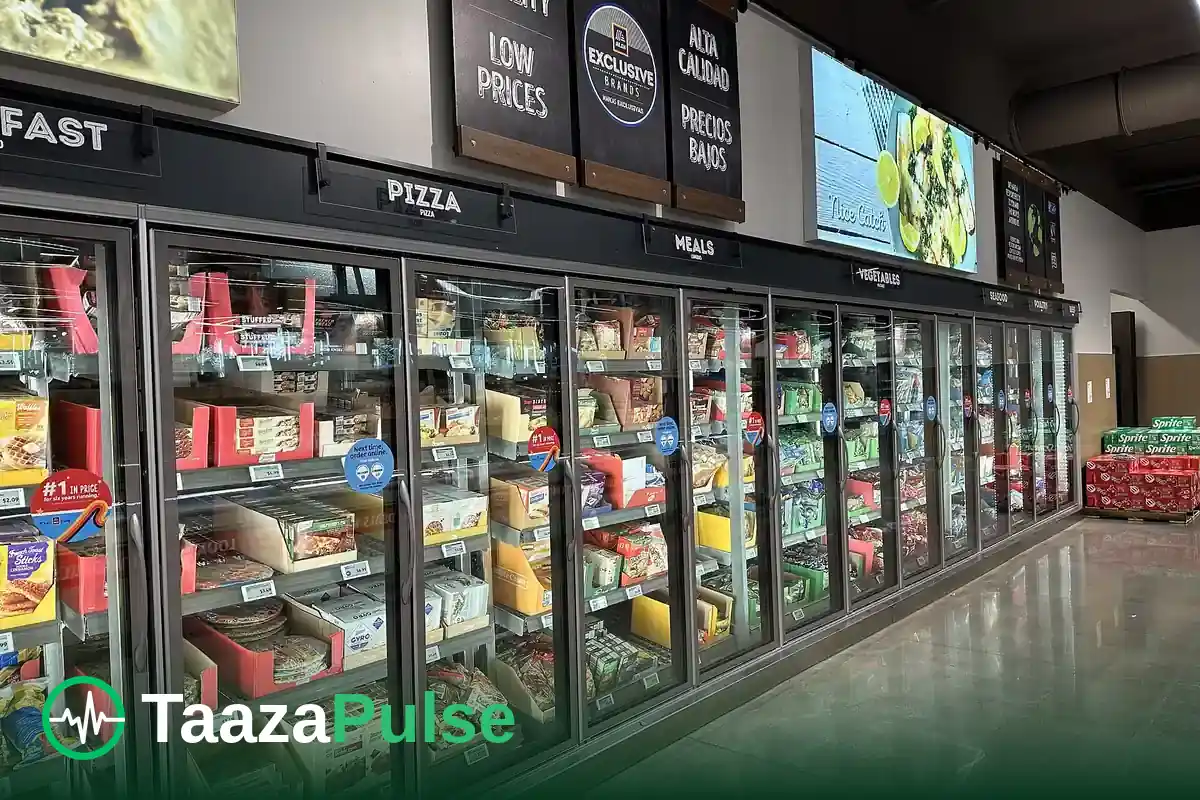
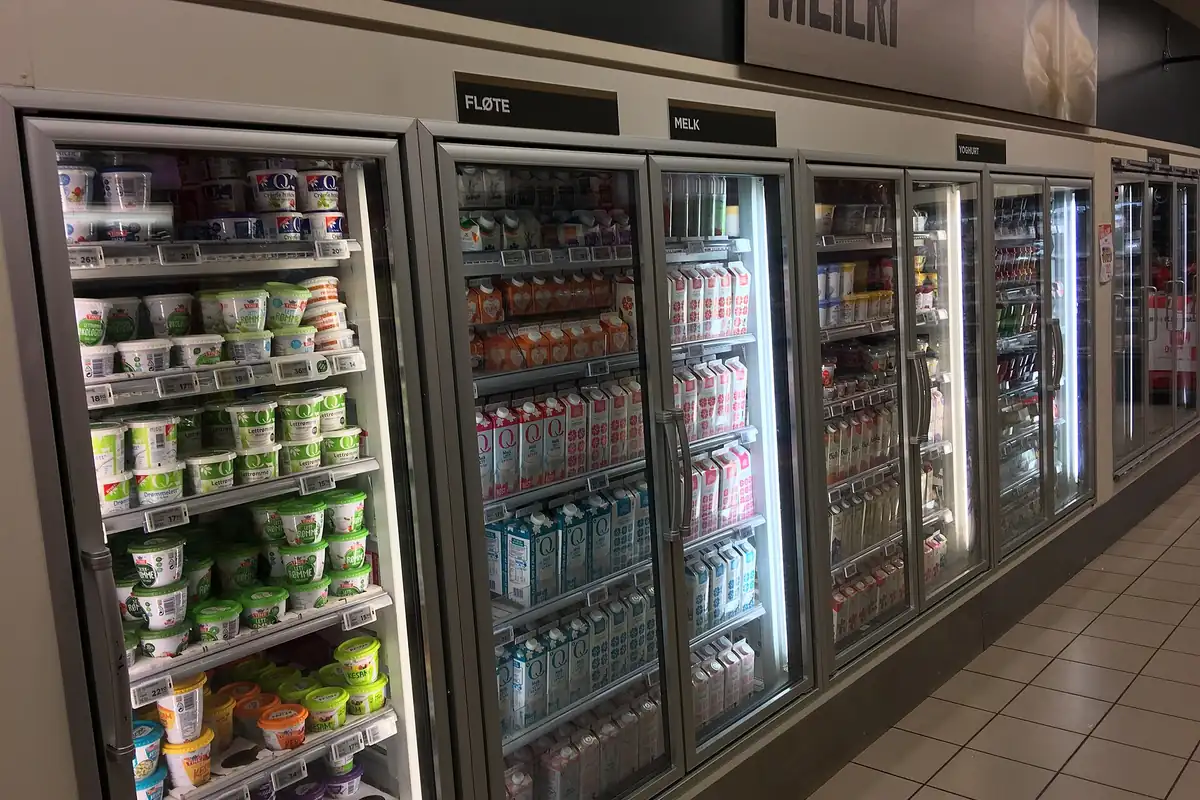
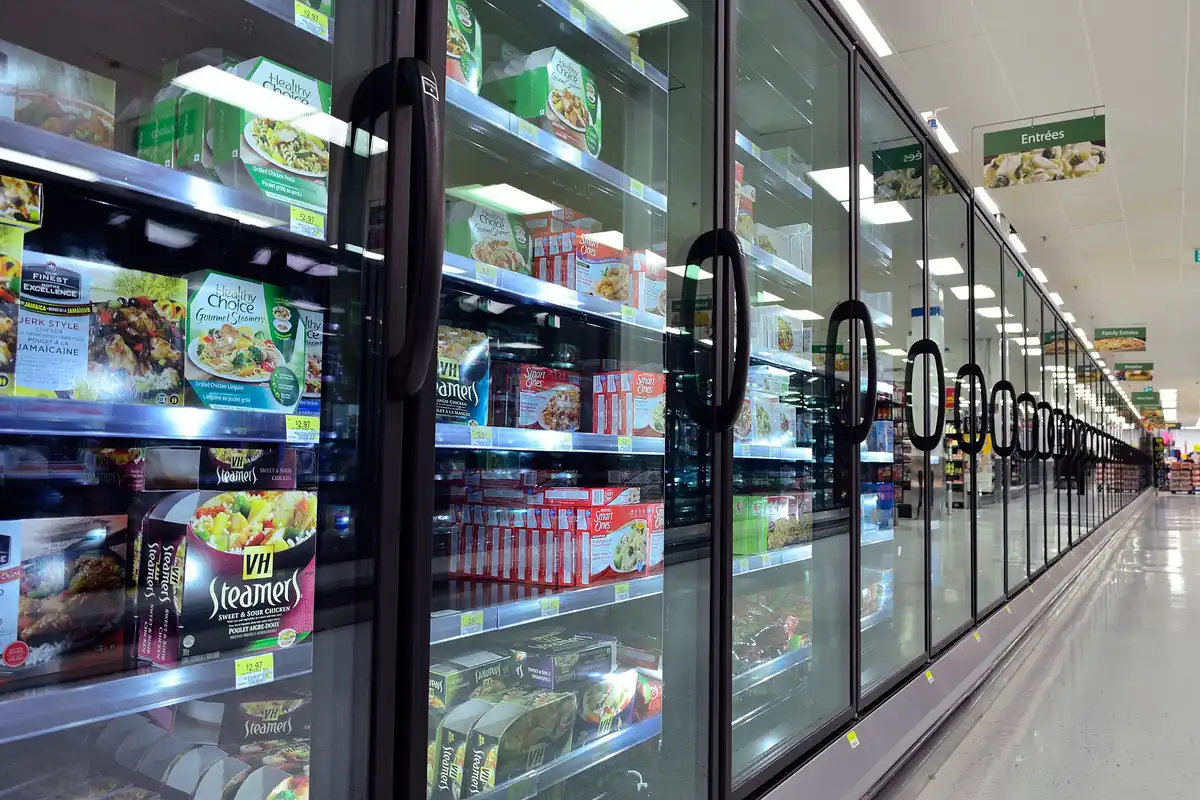
- Images: supermarket freezer aisle — Phillip Pessar via Wikimedia Commons (CC BY 2.0); dairy chillers at Meny, Bergen — Wolfmann via Wikimedia Commons (CC BY-SA 4.0); frozen-food aisle — Raysonho via Wikimedia Commons (CC0); drinks chillers at Spar, Tjøme — Wolfmann via Wikimedia Commons (CC BY-SA 4.0). All file photos, not the attacked stores.
Frequently Asked Questions
What happened to Europe's supermarket fridges on 2 November 2026?
Overnight on 1–2 November 2026, suspected hackers remotely tampered with internet-connected refrigeration controllers at supermarkets in seven European countries — Belgium, Luxembourg, Sweden, Ireland, the Netherlands, Estonia and Finland. Evaporators were switched into defrost mode and temperature settings raised, so fridges and freezers warmed for hours before staff arrived. Large quantities of chilled and frozen food had to be thrown away. Belgium's federal prosecutor has opened a criminal investigation; no one has claimed responsibility.
Which supermarket chains were hit?
In Belgium: about 40 Delhaize stores, 15 Carrefour stores and 5 Spar shops under Colruyt's franchise system, plus an IKEA branch in Mons. In Sweden: ICA (including the Sjöbo and Stockholm stores that reported 50°C freezers) and 7 Coop stores. In Ireland: 13 SuperValu stores operated by Musgrave. Luxembourg stores of Ahold Delhaize and Estonia's Selver chain were also affected, with further reports from the Netherlands and Finland.
Did freezers really reach 50 degrees Celsius?
Yes. The ICA Kvantum store in Sjöbo, Sweden, said its fridges and freezers were hacked and set to 50°C, and an ICA franchise sales manager in Stockholm told Reuters all her store's freezers reached 50 degrees. The Times reported some Swedish units at 50–55°C. In Belgium, freezer interiors reached about 15°C and one butcher's fridges 18°C — far above the −18°C frozen food requires.
Were 13 stores hit in Belgium, as a viral post claimed?
No — the number is real but the country is wrong. The 13 stores were SuperValu stores in Ireland, according to their operator Musgrave and Irish broadcaster RTÉ. Belgium's toll was much higher: roughly 60 stores across Delhaize, Carrefour and Spar, plus an IKEA. The viral post's other claims — the seven-country attack, the 50°C Swedish freezers, the earlier French attack and Israel's alert to its food industry — check out against Reuters, BBC and The Times reporting.
How can a fridge be hacked?
Supermarket refrigeration is run by small industrial controllers (very often Danfoss AK-SC/AK-SM units) that are connected to the internet so engineers can monitor and adjust them remotely. Researchers had already disclosed serious flaws in such controllers (including CVE-2025-41450 and CVE-2025-41451), and on 2 November security firm Previdian observed login attempts against Danfoss systems using publicly documented factory-default credentials. Once inside, an attacker can stretch defrost cycles and silence alarms — in France, defrost cycles were stretched from one hour to eight while alarms stayed quiet.
Who is behind the attacks?
Nobody knows yet, and nobody has claimed responsibility. Belgium's Centre for Cybersecurity says the perpetrator may never be identified. SentinelOne researcher Tom Hegel notes the absence of ransom demands points to sabotage rather than extortion, and that an attacker who logs into an exposed control panel leaves almost no trace. EU Agriculture Commissioner Christophe Hansen called the attacks 'a deliberate attempt to disrupt our food supply chain.'
Was France really attacked the same way last month?
Yes. On the night of 11–12 October 2026, attackers seized refrigeration controllers at up to about 700 French supermarkets and independent stores (including E.Leclerc, Intermarché and Cooperative U), driving temperatures from as low as −27°C to above 50°C. Fires were reported and losses were estimated in the tens of millions of euros. France's CERT-FR confirmed compromises of controllers from several manufacturers, including Danfoss.
Could the same thing happen in Pakistan?
The same class of internet-connected refrigeration controllers is used by supermarkets, dairy and meat chains, pharmaceutical distributors and cold stores worldwide, including in Pakistan. The risk is not the device itself but how it is installed: exposed directly to the internet, with factory passwords unchanged and alarms that report only through the controller itself. Israel's National Cyber Directorate issued exactly that fix list within a day of the European attack — remove direct internet exposure, change default passwords, update systems, require multi-factor authentication and fit independent temperature alarms. There is no public record of a similar attack on Pakistan's food cold chain so far.