Stock-Up Warnings Explained: Three Viral Videos, One Big Claim — and What Governments Actually Said
QUICK ANSWER. No government has announced a lockdown, predicted a blackout, or set a date for one. The viral videos are built from real guidance — Britain's new 3-day "Be Ready" campaign, the EU's 72-hour strategy from March 2025, a Pentagon programme for military bases — with the dates stripped off and the numbers inflated. The real household advice, worldwide, is 3 to 10 days of supplies. This article checks every claim, step by step.
1. The hook: three videos, one claim — what millions were told this week
In the last week of October 2026, the same message reached millions of people in three languages, through three very different doors.
- Video 1 — the Urdu creator video. A roughly two-minute video by the creator "Ibne Kazi" claims a lockdown "bigger than COVID" is coming, in which there will be no electricity. Its evidence: Britain's defence minister supposedly told citizens on TV to keep three days of stock because the power grid could be attacked; the EU told citizens to gather 72 hours of supplies; and the Pentagon "yesterday" told its military bases to prepare 90 days of supplies. Its reasons: cyber warfare, AI infiltrating systems (with cases in Japan), and geomagnetic storms like the one that broke the telegraph system in 1859. Its caption advises keeping a month of cash and 10 to 15 days of food.
- Video 2 — the American TV segment. NewsNation (1M+ views) asked survival expert Mykel Hawke, a Special Forces veteran, "Could you go 90 days without power?" Hawke said the US is effectively at war with Iran, that another attack will probably come after the US midterm elections, that the Pentagon has discussed attacking civilian infrastructure in Iran — and that Iran would reply against US infrastructure, which is "why Britain and the bases are preparing." He then gave an eight-pillars survival list, including 10 gallons of water per person per day.
- Video 3 — the Pakistani TV segment. Suno News HD (~290K views) ran a segment titled "Hold on to 10 days of food — something big is coming, alert issued." Its anchor asked why the UK and Europe keep alerting citizens, raised a possible Korea war (China with the North, America with the South), claimed America is making "doomsday" preparations underground, and asked why our region is silent. Its analyst blamed the loss of Russian oil and gas for Europe's advice — and concluded that Pakistanis should prepare too.
Three videos, one claim: something is coming, and the governments know it. Sections 2 to 4 below test that claim against the record. The short version: the ingredients are largely real. The recipe is not.
2. The timeline that exposes the trick
The caption of the first video says "in the last 15 days many big countries issued these instructions." That simultaneity is the core distortion — because when the dates are put back, the "wave" dissolves into years of routine policy, plus exactly two genuinely new items.
- 1943 — Sweden mails its first crisis booklet to households. The tradition continues in 1952, 1961, 2018 and November 2024.
- 2016 — Germany's 10-day household supply figure originates in the federal civil-defence concept.
- May 2024 — The UK launches its GOV.UK "Prepare" website with the same three-day message Be Ready now carries. Norway raises its household standard from three days to one week.
- 30 October 2024 — Former Finnish President Sauli Niinistö presents his "Safer Together" report to Ursula von der Leyen, proposing an EU-wide 72-hour household self-sufficiency target — the document that set Europe's entire preparedness policy in motion.
- November 2024 — Sweden mails "In Case of Crisis or War" to 5.2 million households; Finland publishes its preparedness guide.
- 26 March 2025 — The EU adopts the Preparedness Union Strategy: minimum 72-hour household self-sufficiency across 27 member states.
- 28 April 2025 — The Iberian blackout leaves Spain and Portugal dark for around 10 hours — proof a modern grid can fail with no attacker involved.
- 20 November 2025 — France publishes its survival guide "Tous responsables", built around a 72-hour kit. The Netherlands mails its "Denk vooruit" booklet to 8.5 million households across late 2025; Poland begins delivering its Safety Guide in December 2025.
- 30 September 2026 — US Defence Secretary Pete Hegseth announces FORTRESS at Quantico.
- 22 October 2026 — NEW ITEM #1. The UK launches "Be Ready", asking every household to manage for three days.
- 25 October 2026 — NEW ITEM #2. Fox News Digital reports, from unpublished internal documents, that FORTRESS aims for bases to operate 90 days without outside support.
- 26 October – 1 November 2026 — Norway's annual preparedness week runs — its dates were fixed in a planning document dated 16 January 2026, ten months earlier.
- 27 October 2026 — UK Security Minister Dan Jarvis tells MPs Be Ready "is not a response to any specific or imminent threat." French local authorities re-share the standard 72-hour kit advice.
- 28 October 2026 — Newsweek publishes a map of "33 countries" whose governments advise keeping emergency supplies — one visual, with the dates removed, that fused two dozen old items into a single apparent warning.
- 30 October 2026 — A Pentagon official, Dale Marks, speaks the 90-day figure aloud on the record (Section 3.3).
- 2 November 2026 — Japan's new Disaster Management Agency launches and issues its own stockpiling request — for earthquakes only (Section 7).
Fact-checkers who examined the pattern — Amuse, AOP3D ("Stockpile Panic Debunked: Check the Dates", 30 October) and the specialist site Prepared States — converge on one sentence: the advice is real; the word "suddenly" is fake. Two fresh anchors in one week, a scheduled Norwegian week and a pre-announced Japanese launch misread as signals, and a date-less map did the rest. Amplifiers then added numbers no official had used — one US podcast told listeners the UK figure was "30 days".
The public effect was measurable. After Be Ready launched, UK retailers reported torches up 284%, radios up 92% and power banks up 106% (Maplin, via Press Association), and tinned goods up 40% in one weekend (Iceland). A survey of 1,000 UK adults found "emergency survival kit" searches up 979% in launch week, 63% expecting a major disruption within 12 months — while 61% simultaneously said the advice was causing needless panic, and stocked up anyway.
3. Claim by claim: the scorecard
3.1 "A lockdown bigger than COVID is coming" — not supported by any source
No government document, press release or official statement found in this research announces a coming lockdown, predicts a blackout for any date, or warns that one is expected. The officials behind the real campaigns say the opposite, on the record: Jarvis's denial of any specific or imminent threat (27 October), the British Red Cross's statement that the guidance does not signal an imminent catastrophe, and Japan's minister explicitly denying any foreshadowing basis for his request (30 October). The videos' headline claim is their weakest.
3.2 The UK: "the defence minister said on TV, keep 3 days of stock" — partly true
The campaign is real and recent. On 22 October 2026 the Cabinet Office launched "Be Ready", the first stage of a three-year campaign, announced to Parliament in a written statement (HCWS409) by Security Minister Dan Jarvis: households should be self-sufficient for three days, with bottled water and non-perishable food stored at home. The TV detail also checks out: Defence Secretary Wes Streeting promoted the campaign on BBC Question Time (22 October) and Newsnight (23 October), and wrote in The Telegraph (24 October) that hostile states could be positioned to attack by 2030.
Where the video misleads is the motive. Be Ready is an all-hazards campaign — its own page opens with severe weather, floods, wildfires, burst pipes and power cuts alongside cyber attacks. It is not a warning that a grid attack is expected, and the advice itself is not new: the May 2024 "Prepare" website carried essentially the same message.
3.3 The Pentagon's 90 days — a real programme; the figure has firmed up; still not "yesterday", and not for households
FORTRESS — Federal Operations for Resilience, Troop Resources, Energy, Supply, and Survivability — was announced by Hegseth on 30 September 2026 with a same-day memo calling it an "insurance policy". Its five pillars: energy independence for installations; supply-chain resilience; a strategic defence reserve; installation hardening and cyber resilience; and space/spectrum resilience. Hegseth: "Every major military installation in America is going to generate its own power independent of the civilian grid… our bases stay lit." A FORTRESS Program Office was ordered within 30 days under Under Secretary Michael Duffey. About 500 installations are being assessed. There is no deadline and no published price tag; one specialist magazine estimated "tens of billions, if not hundreds of billions" — a journalist's estimate, not an official figure — and full compliance could take decades.
The 90-day figure has moved since the first reports. Fox News Digital (25 October) sourced it to unpublished internal documents. The fact-checker Snopes rated the claim "Mostly True" (26 October), noting the Pentagon had not explicitly confirmed the figure. Then, on 30 October, Assistant Secretary Dale Marks said on the record (Breaking Defense) that the goal is to power bases "30, 60, or even 90 days without a single watt of outside power" and that the Pentagon is "mandating a 90-day sovereign stockpile of critical parts, fuels, propellants, ammunitions on site." The number is no longer only in leaked documents — but a published blanket 90-day operating requirement still does not exist, and Snopes' "Mostly True" stands.
Context the videos omit: the standing Army baseline (Directive 2020-03) is just 14 days of energy and water — 90 days is more than six times that — and the programme largely merges pre-existing schemes, including the Army's Janus nuclear microreactor programme (August 2026: up to $2.2 billion in awards to build reactors at five bases, starting 2028). Engineers note that "90 days off-grid" cannot run on batteries, which store hours, not months; it requires on-site generation with stored fuel, or a reactor. And the decisive point for households: FORTRESS sets targets for military bases. No US authority — no authority anywhere — has told citizens to prepare for 90 days.
3.4 The EU's 72 hours — verified, but dated March 2025
The Preparedness Union Strategy of 26 March 2025 set a minimum of 72 hours of household self-sufficiency across the EU's 27 states. Commissioner Hadja Lahbib launched it with the line: "450 million citizens. 450 million reasons to be better prepared." Its threat list is deliberately broad — natural disasters, pandemics, cyber attacks, geopolitical crises, armed conflict — a framework for all of them, not a warning about one. Nothing new was announced at EU level in October or November 2026.
3.5 Hawke's Iran claims — real reporting underneath, his own prediction on top
Checked against the record, the NewsNation expert's case is half sourced. CNN reported on 15 October 2026 that the Pentagon has prepared new strike packages aimed at "a lot of energy infrastructure" in Iran, including possible use of the GBU-43/B MOAB against nuclear sites such as Pickaxe Mountain near Natanz; the White House said "all options on the table". The Hill reported on 25 October that CENTCOM had drafted offensive options — one path resuming strikes on military and political sites, another expanding to energy facilities and civilian infrastructure — awaiting presidential approval. Iran's threatened asymmetric reply is also documented: senior Iranian officials told Reuters (23 October) of plans to cut Gulf undersea internet cables and hit US-linked data centres if the war resumes.
But "an attack will come after the elections" is Hawke's inference, not a reported decision — the underlying reporting is split on whether any strike would come before or after the 3 November midterms, and no official has announced an operation or a date. His claim that Britain's Be Ready exists because of an expected Iranian reply is his own construction: the UK campaign is a three-year all-hazards programme whose minister denied any specific-threat basis on the record. And his practical numbers inflate the official ones: his 10 gallons of water per person per day is ten times Ready.gov's figure of one gallon — survival-instructor planning, not any government's household guidance.
3.6 Suno News: doomsday bunkers, Korea, and Europe's gas — old facilities, a real tension spike, a talk-show cause
- "Doomsday preparations underground": America's continuity-of-government bunkers are real — and Cold War relics documented for decades. Raven Rock Mountain Complex ("Site R", the "underground Pentagon") was built in 1951; Mount Weather is FEMA's long-standing civilian continuity centre. No new doomsday plan or bunker programme was reported in October or November 2026. The word "doomsday" entered this story through prepper-media headlines about FORTRESS (27 October), not from any government document.
- Korea: the tension is real — North Korea fired about 10 short-range ballistic missiles on 29 October 2026, a DMZ landmine blast on 21 September wounded three South Korean soldiers, and on 2 November Pyongyang condemned a US–South Korea nuclear-integration exercise. But there has been no mobilisation, no evacuation and no war warning, and Seoul confirmed on 2 November that Pyongyang's threatened loudspeaker broadcasts had not even begun. "China with the North, America with the South" is evergreen speculation laid over a real news week.
- Europe's motive: the analyst's energy story is one strand of the background (Section 4), not the stated reason. Governments' own documents cite all-hazards disruption risk; Denmark's agency explicitly excluded war from its reasoning, and Japan's request is earthquake-only. "Europe is preparing because America cut its gas" is a causal claim no document supports.
The Suno analyst's strongest point deserves separating from the framing: Pakistan has no equivalent household guidance at all. Section 9 returns to that.
3.7 The scorecard
| # | Claim (source video) | Verdict |
|---|---|---|
| 1 | A lockdown bigger than COVID is coming; the world is warning (Video 1) | Unverified / false framing — no source; officials deny any imminent threat |
| 2 | UK defence minister said on TV: keep 3 days of stock, grid could be attacked (Video 1) | Partly true — Be Ready real (22 Oct 2026), Streeting did promote it on BBC TV; reasons are all-hazards, not a grid-attack warning |
| 3 | EU told citizens to gather 72 hours of supplies (Video 1) | Verified, dated — real strategy from 26 March 2025, not grid-specific |
| 4 | Pentagon "yesterday" ordered bases to prepare 90 days (Video 1) | Partly true, refined — FORTRESS real (30 Sept 2026); 90 days reported 25 Oct, spoken by Dale Marks 30 Oct as a range + stockpile mandate; no published blanket requirement; Snopes: "Mostly True" |
| 5 | Cyber warfare can shut down a power grid (Video 1) | Verified — Ukraine 2015 and 2016 are documented cases |
| 6 | AI cases in Japan show AI infiltrating systems (Video 1) | Partly true — a real AI-enabled attack wave hit Japanese companies in Oct 2026; no verified AI attack on any power grid, anywhere |
| 7 | The 1859 storm broke the telegraph system (Video 1) | Verified — the Carrington Event, 1–2 September 1859 |
| 8 | Attack on Iran after the elections; Britain preparing because Iran will reply (Video 2) | Opinion over real reporting — strike options incl. energy/civilian infrastructure reported by CNN/The Hill; timing and motive are the expert's inference; 10-gallon water figure is 10× the official US figure |
| 9 | America is making new "doomsday" preparations underground (Video 3) | Misleading — the bunkers are 1951-era Cold War facilities; no new programme reported |
| 10 | Korea war is coming — China with the North, US with the South (Video 3) | Speculation — real tension spike (missiles, DMZ blast), no mobilisation or war warning |
| 11 | Europe's stock-up advice is because Russian gas was cut off (Video 3) | One strand, not the stated reason — official documents cite all-hazards risk; Denmark excluded war explicitly |
4. The background nobody told you: why governments really are doing this
Strip away the viral framing and a genuine, documented shift remains — with a paper trail stretching back years, not days.
Step 1 — The 2022 rupture. Russia's full-scale invasion of Ukraine (24 February 2022) ended Europe's post-Cold War assumption that infrastructure war was history. The Nord Stream pipeline explosions followed in September 2022. From October 2022, Russia ran a systematic missile and drone campaign against Ukraine's power grid — the first sustained attempt in modern war to break a country by breaking its electricity. The 2022 energy shock — gas prices, inflation, governments subsidising bills — is the experience the Suno analyst cites, and it genuinely changed official thinking.
Step 2 — The hybrid-warfare file. Baltic Sea undersea infrastructure has suffered 11 disruptions since 2023: the Balticconnector pipeline and a telecom cable (October 2023), the C-Lion1 cable (November 2024), the Estlink 2 power cable and four more cables (25 December 2024, tanker Eagle S detained). NATO responded with its Baltic Sentry mission (January 2025). EU digital chief Henna Virkkunen said in January 2025: "It can't really be by accident if these are happening many times a year." Investigative honesty requires the other half: individual cases are legally harder — Sweden found no conclusive evidence in one cable case, and a Finnish court dismissed the case against Eagle S's captain. Governments treat the pattern as a campaign; courts need proof case by case.
Step 3 — The policy machinery. NATO's 2016 Warsaw Summit set seven baseline requirements for national resilience — continuity of government, resilient energy, food and water, civil communications, transport among them — and its Resilience Committee was created in May 2022, weeks after the invasion. The Niinistö report (30 October 2024) proposed the EU-wide 72-hour target, an EU stockpiling strategy and an anti-sabotage network; the EU Preparedness Union Strategy (26 March 2025) is its direct implementation. FORTRESS is the American military version of the same doctrine shift.
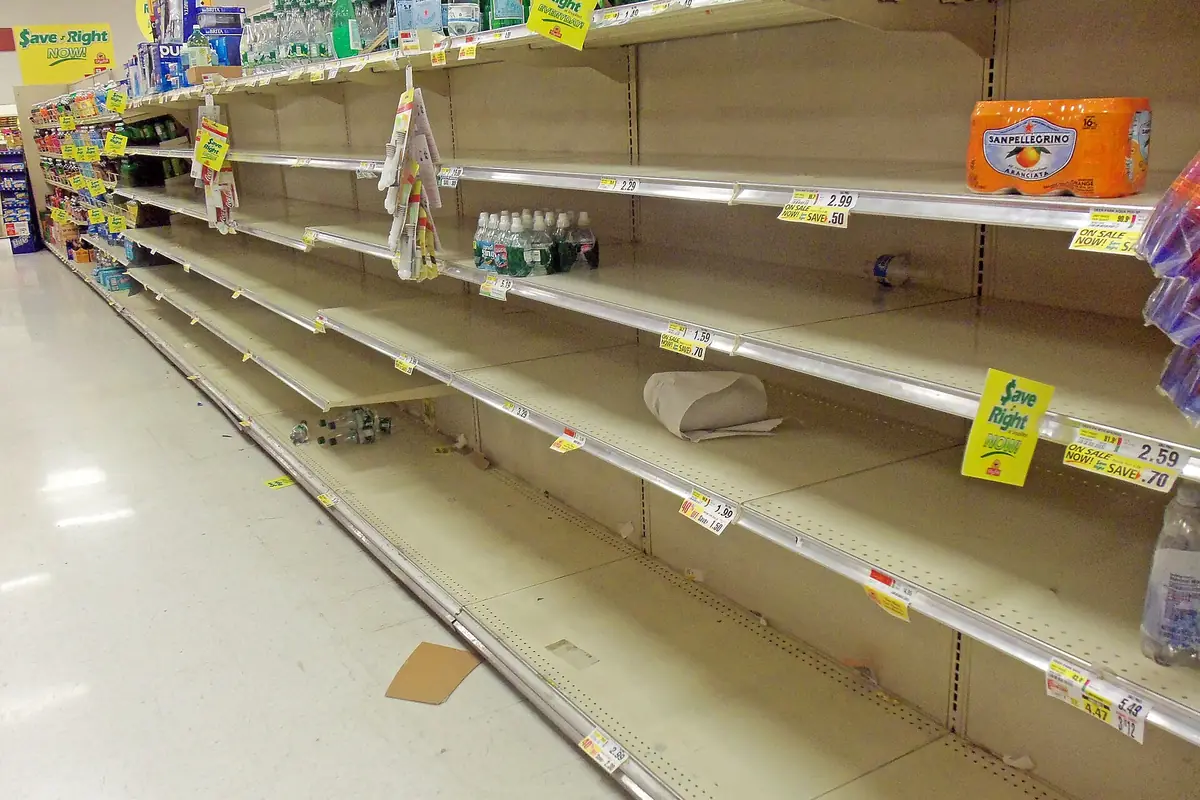
Step 4 — The accident that proved the point. On 28 April 2025, an overvoltage cascade lost 31 GW of load across Spain and Portugal; the peninsula was dark for around 10 hours, eight deaths were linked to candles, generator fumes and fires, shops went cash-only, and shelves of water and torches emptied within hours. No attacker was involved. That is now the strongest argument governments use: the grid can fail on an ordinary Monday without anyone attacking it.
Step 5 — The 72-hour logic. Every campaign uses the same arithmetic: in the first two or three days of a big disruption, emergency services are at their most stretched. Households that can feed and light themselves free responders to reach the people who cannot. Household advice is simply the cheapest, most visible layer of a doctrine that also includes cable-protection fleets, stockpiling strategy and base hardening. Every government's own documents frame it as long-term resilience policy against a menu of hazards. No document found in this research predicts or references a specific coming event.
5. The real risks, graded honestly
Risk 1 — A state hacker already inside the grid: documented, latent, never yet used
The most serious verified item in this entire story is not in any of the three videos. US agencies assess with high confidence that Volt Typhoon, a Chinese state-sponsored group, has pre-positioned inside the IT networks of US critical-infrastructure organisations — including energy — to enable disruptive effects in a possible future conflict (joint advisory AA24-038A, CISA/NSA/FBI and Five Eyes partners, 7 February 2024). In some victim networks, footholds were maintained for at least five years. The tradecraft is quiet: valid accounts, built-in system tools, and traffic hidden through a botnet of compromised home routers, which the FBI dismantled in a court-authorised operation announced 31 January 2024. FBI Director Christopher Wray: "China's hackers are targeting American civilian critical infrastructure, pre-positioning to cause real-world harm… in the event of conflict." Britain's NCSC assessed the same pattern is likely a threat to UK critical infrastructure too.
The discipline matters as much as the fact: no Volt Typhoon-caused outage has ever occurred. This is a weapon placed, not a weapon fired — which is precisely why governments plan in years rather than warn about weeks. (A separate April 2026 advisory covers Iranian-affiliated actors exploiting industrial controllers, with confirmed disruption; the two campaigns must not be merged.)
Risk 2 — Cyber attack on a grid in wartime: proven possible, proven limited
On 23 December 2015, attackers who had spent months inside three Ukrainian distribution companies remotely opened breakers, cutting power to about 230,000 customers for one to six hours, wiped control computers to slow recovery, and flooded phone lines so customers could not report the outage. The attack was attributed to Sandworm, a unit of Russian military intelligence. On 17 December 2016, the Industroyer malware cut about 20% of Kyiv's power for roughly an hour. A successor attempt in April 2022 was caught before it could cause an outage. The lessons cut both ways: a determined state hacker can switch off parts of a grid — that is history, not speculation — but both successful attacks lasted hours, and Ukraine's far longer blackouts since 2022 have been caused by missiles and drones hitting physical equipment. No cyber attack has ever frozen a whole country for weeks.
Risk 3 — AI-enabled hacking: real and rising, not a grid weapon
Japan's October 2026 wave is documented: the Macnica Security Research Center counted at least 81 reported attacks since July 2026, and on 28 October the Japanese government said an official website for power and gas trading information had been hacked — a website, not a grid. Investigators at GMO Cybersecurity by Ierae found the AI penetration-testing tool ARTEX on attacker infrastructure aimed at roughly 20 Japanese companies. The wider record agrees: Anthropic's disclosure of campaign GTG-1002 (13 November 2025) described a Chinese state-sponsored group using an AI agent to perform 80–90% of the tactical work in intrusions against about 30 entities — tech companies, financial institutions, chemical manufacturers, government agencies. Energy, utilities and power grids are not among its listed targets. Google's threat-intelligence group concluded that AI is so far delivering productivity gains to attackers, "not a new class of grid weapon". Stated plainly: as of 2 November 2026 there is no credible report of an AI-enabled attack on a power grid, anywhere. The video's version is a prediction dressed as a report.
Risk 4 — Space weather: the oldest risk, the best measured, and unschedulable
The video's history is accurate. On 1 September 1859, astronomer Richard Carrington watched a white-light flare erupt on the Sun; the ejection that followed crossed to Earth in 17.6 hours and triggered the strongest geomagnetic storm on record — the Carrington Event. Telegraph systems across Europe and North America failed; operators received shocks; pylons sparked; some operators sent messages with their batteries disconnected, powered by the storm's own currents. The telegraph was the electrical age, and the storm overwhelmed it.
How likely is a repeat? There is no single number: published estimates for a Carrington-class storm run from roughly 0.5% to 12% per decade, depending on method (Riley 2012 ≈12%; Moriña et al. 2019 ≈0.5–1.9%). The UK National Risk Register rates severe space weather at 5–25% likelihood within five years with "Significant" impact, and complete failure of the national transmission system at 1–5% likelihood with "Catastrophic" impact — tens of billions of pounds. Lloyd's and the Cambridge Centre for Risk Studies (March 2025) modelled a severe solar storm at $2.4 trillion in global losses over five years. Regulators plan against a "1-in-100-year" benchmark event (NERC standard TPL-007) — engineering, not prophecy.
And the historical record itself is the calmest fact available: in all of recorded history, solar storms have cut power exactly twice — Quebec, March 1989 (six million people, nine hours) and Malmö, Sweden, October 2003 (about one hour). The May 2024 "Gannon" storm, the first G5 since 2003 and less than half Carrington's strength, caused grid irregularities and GPS failures — an estimated $500M+ loss to US farmers from failed precision-agriculture GPS alone — but no blackout, because operators had hours of warning and acted on it. No agency on Earth forecasts a Carrington-level storm for a particular week. None has done so now.

6. Japan today: the earthquake truth behind the newest "urgent" headline
The freshest item in the viral lists is real, and its real reason is the opposite of war. On 2 November 2026, Japan's new Disaster Management Agency formally launched, and Minister Goshi Hosono issued an "urgent request": households should stock at least three days of food and water, ideally a week. The stated basis is entirely seismic — the Nankai Trough megaquake risk (an estimated 60–90% probability within 30 years), a possible Tokyo earthquake, and Mt Fuji. On 30 October, Hosono had explicitly denied the request was based on any specific foreshadowing of war or disaster. The word "urgent" then travelled the world's feeds as a doomsday signal — a perfect miniature of how this whole wave was built.
7. What governments actually advise: the real lists
Forget the retellings. Here is what the official lists actually say — and the pattern across all of them.
- United Kingdom — "Be Ready" (3 days). Bottled water at 3 litres per person per day for drinking (a family of four needs 36 litres for three days); non-perishable food needing no fridge and no cooking; hand sanitiser and wet wipes; a torch with spare batteries — "torches are safer than candles", which are not recommended; blankets and warm clothing; a battery or wind-up FM radio, with station frequencies written down; a charged power bank; cash in a mix of coins and notes; printed copies of ID and important documents; a written list of important phone numbers; a first aid kit; essential medication (with repeat prescriptions requested in advance); baby formula and nappies; pet food and water. The campaign's own framing: "Being ready for 3 days helps you manage while support reaches those in need."
- Germany — BBK (10 days, per person). The most precise list in the world: 2 litres of liquid a day (20 litres for 10 days); 3.3–3.5 kg of grain products, bread and potatoes; 4 kg of vegetables and legumes; 2.5 kg of fruit; about 2.6 kg of milk and dairy; 1.5 kg of meat, fish and eggs; 0.4 kg of fats and oils — roughly 13.8 kg of food per person, built by the "living stockpile" method: buy a little extra of what you normally eat, use the oldest first, replace as you go.
- Sweden — "In case of crisis or war" (at least one week). Manage a week without power, heating, tap water, payment systems or open shops: at least 3 litres of water per person per day plus knowing how to purify water; energy-rich food that keeps at room temperature; blankets and a sleeping bag; a torch — Sweden, unlike the UK, also lists candles and matches; a battery, solar or crank radio; a power bank; cash in small notes (the Riksbank suggests roughly SEK 1,000 per adult for about a week); first aid, medicines and hygiene products; and a written evacuation list.
- United States — Ready.gov ("several days"). Water at 1 gallon per person per day; several days of non-perishable food; a battery or hand-crank radio plus a NOAA Weather Radio; flashlight and extra batteries; first aid kit; whistle; dust masks; moist towelettes and garbage bags; a wrench to turn off utilities; a manual can opener (the item every guide flags as forgotten); local maps; phone chargers and a backup battery — plus, in the additional list, prescription medicines, documents in a waterproof container, cash, and a change of clothing per person. The American Red Cross advises two weeks of supplies for sheltering at home.
- The pattern everywhere: water at 3 litres to 1 gallon per person per day; food you already eat, rotated; light without flames where possible; a battery or crank radio; a power bank; cash in small denominations; paper copies of documents and phone numbers; medicines; a can opener. Horizons: 3 days (UK, EU, Finland, Denmark, Netherlands, France, Poland, Lithuania) · 1 week (Sweden, Norway, Switzerland) · 10 days (Germany) · "several days" to two weeks (USA). No government anywhere asks households for 90 days — that number belongs to military bases alone.
8. The step-by-step household guide: 10 steps, at official size
Built from the official lists above — gradually, calmly, and with nothing in it that requires believing a lockdown is coming.
- Step 1 — Water first. Store drinking water before anything else. Work on three litres per person per day (the British and Swedish figure) for three days; keep clean, lidded containers as well, so water can be collected and stored if a supply returns briefly.
- Step 2 — Food that needs nothing. Choose food that requires no fridge and no cooking: tinned meat, fish and vegetables, dried fruit and nuts, biscuits, long-life milk. Build to three days first; if you want the German standard, build towards ten days over time, adding one or two extra items to each normal shop — Sweden's booklet tells people to do it exactly this way — and rotate stock so nothing expires.
- Step 3 — Light and power. A torch for each part of the home, spare batteries, and a charged power bank for phones. In a blackout, a phone is a lifeline only while its battery lasts; a basic power bank, kept charged, stretches that from hours to days.
- Step 4 — Information that works without the internet. A battery or wind-up FM radio appears on the British, Swedish and American lists alike for one reason: when power and mobile networks fail, broadcast radio is the channel that keeps working. Write down the frequencies of news stations you trust. (Survival-TV advice to buy shortwave sets and gallons of extra water goes beyond every official list — the radio on the checklist is an ordinary FM set.)
- Step 5 — Cash, in small notes. Card machines and cashpoints die with the power — as Spain and Portugal re-learned in April 2025, and as the European Central Bank's September 2025 study Keep Calm and Carry Cash documents, pointing to national guidance of roughly €70–€100 per person. The principle transfers anywhere: keep some cash, in small denominations, separate from your wallet.
- Step 6 — Medicines and first aid. Keep essential prescription medicines topped up — Sweden's booklet suggests holding about a month's supply of regular medicines where possible — plus a basic first aid kit. Anyone who depends on powered medical equipment should register that need where a register exists; in Britain this is the Priority Services Register.
- Step 7 — Documents and numbers on paper. Copies of identity documents in a waterproof pouch, and important phone numbers written down: family contacts, your doctor, insurers, utility emergency lines, and your medication list with doses. A dead phone takes its contact list with it.
- Step 8 — A family plan. Agree in advance: where to meet if you cannot get home, who to contact outside the area, how to turn off water, gas and electricity, and what elderly relatives or neighbours will need. Finland's and Poland's guides both treat this conversation as part of the kit.
- Step 9 — Cooking and warmth alternatives. If your home cooks only on electricity, a small camping stove with fuel — used safely, with ventilation — is the standard backup in European guides. Warm bedding and blankets are on the British checklist for a winter outage: a cold house, not a dark one, is the first discomfort of a long power cut.
- Step 10 — Maintain it. Check the kit every few months: rotate food before it expires, recharge the power bank, replace batteries, update medicines and the paper phone list. Preparedness that quietly expires in a cupboard is not preparedness.
9. Pakistan: we have already lived the blackout — and we have no Be Ready
For Pakistani readers, the most relevant fact in this whole story is not in any of the three videos. Pakistan has already experienced a nationwide blackout — not from an enemy, not from a solar storm, but from its own grid failing on an ordinary winter morning.
On 23 January 2023, at 7:34 AM, a frequency drop cascaded through the national grid. Around 220 million people — Karachi, Lahore, Islamabad, Peshawar, Quetta — lost electricity. The national grid was fully restored only at 03:22 on 24 January; the K-Electric system at 05:08. It was Pakistan's second major countrywide breakdown in two years, after January 2021.
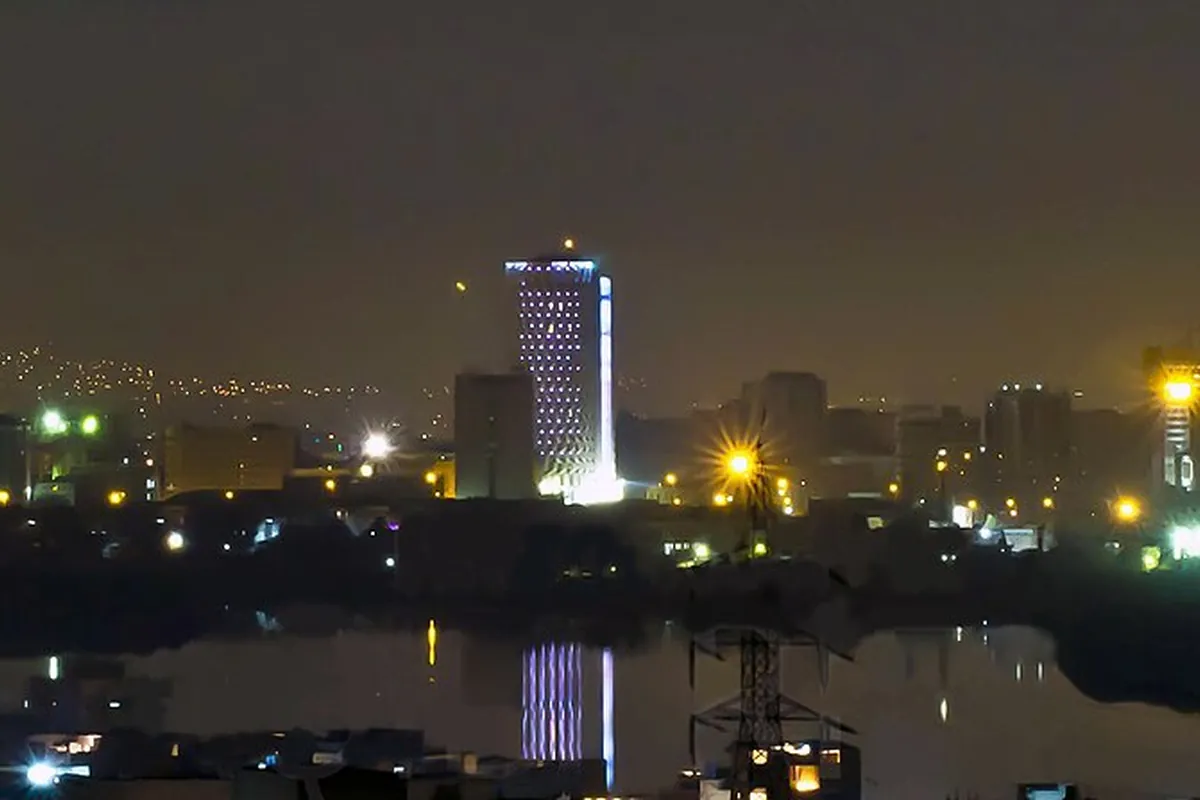
The NEPRA inquiry report (14 March 2023) held NTDC, CPGCL, Port Qasim Electric Power Company and K-Electric jointly responsible. Its findings were about coordination and equipment, not sabotage: wind injection in the south combined with hydel curtailment in the north created an imbalance; out-of-step protection devices did not operate; roughly 14,301 MW of load was lost; black-start attempts at hydel stations and KAPCO failed; and the national control centre had no SCADA system to see its own grid. The parallel cabinet committee found poor coordination, no unity of command, and a Lahore converter station that had suffered some 300 commutation failures in two years without action. Accountability arrived late and small: in December 2025, NEPRA fined the National Grid Company and CPPA Rs 25 million each — noting, pointedly, that black-start tests were run only after legal proceedings had begun. No new nationwide blackout has been found in 2024, 2025 or 2026; the standing pattern remains load-shedding.
Pakistan has no equivalent of Be Ready. NDMA and NEOC guidance is hazard-specific — monsoon flood warnings have advised riverside families to keep emergency kits of food, drinking water and medical supplies for three to five days — but there is no standing all-hazards household campaign. That gap, raised by the Suno News analyst, is the one genuinely new policy question in this entire story.
Pakistani homes, though, do not start from zero. Load-shedding culture means UPS and inverter batteries, rechargeable fans and lights, generators, rooftop solar, overhead water tanks and gas cylinders are already normal. What is genuinely different in a 2023-type grid-down event:
- Duration and totality. UPS batteries sized for two to four hours die — and cannot recharge, because there is no grid window to recharge in.
- Water becomes the binding constraint. Municipal supply and building pumps stop; stored tank water runs out within about a day.
- Payments, ATMs and mobile networks degrade. Cash matters in a way it never does in routine load-shedding.
- Fuel. A generator is useless if petrol pumps cannot pump — pumps need power too.
- The cold chain. Medicines and food spoil beyond the usual few hours.
- No restoration estimate. In 2023, even the regulator argued afterwards about whether restoration took four hours or forty-eight.
The proportionate lesson is Section 8, read through local experience: water stored, food that needs no cooking, a torch and a charged power bank, cash in small notes, medicines in hand, family numbers on paper. In January 2023, none of that required a war. It required only a frequency drop at 7:34 in the morning.
10. The bottom line
- The videos' headline is not true. No lockdown has been announced; no blackout has been predicted; officials in three countries deny any imminent or specific threat, on the record.
- The evidence is mostly real — and mostly old, re-framed or over-stated. Britain's campaign is from 22 October 2026 and covers all emergencies. The EU's 72 hours are from March 2025. The Pentagon's 90 days are a military programme announced in September, spoken aloud by an official on 30 October — for bases, not households.
- The background is a doctrine shift, not a countdown. Since 2022, governments have rebuilt civil resilience — NATO baselines, the Niinistö report, EU strategy, cable-protection fleets, FORTRESS — against a menu of hazards that includes war in frontline states and excludes it entirely in others.
- The real risks are documented and graded. A state hacker group sits pre-positioned inside Western energy networks (Volt Typhoon) and has never fired. Cyber attacks have cut power for hours, never weeks. AI is accelerating hacking but has never touched a grid. Solar storms have cut power twice in recorded history.
- The newest "urgent" headline is about earthquakes. Japan's 2 November request is seismic policy, with the minister on record denying any war basis.
- The advice is worth taking at its official size. Three days of water, food, light, cash and medicines — built gradually — is what dozens of governments recommend, and it matches Pakistan's own lived experience of January 2023.
A final proof of how this mechanism works arrived on the day this article was written. On 2 November 2026, Russia's and Ukraine's emergency-alert apps were hacked and fake warnings pushed to citizens — one fake message claimed nuclear-armed drones had been launched and told people to stock three weeks of food. Both governments confirmed the hacks. The fear is the weapon; the dates are the defence. Precaution is not panic — but precaution based on checked facts is worth more than precaution based on a video that removed them.
Fact-check note: the three videos' claims are attributed to the videos throughout, and commentators' opinions (Mykel Hawke; the Suno News analyst) are labelled as opinions. Every other factual statement in this article is drawn from the sources above, checked on 2 November 2026. Where a claim could not be fully confirmed — notably the published status of the Pentagon's 90-day requirement — the article says so.
اردو میں پڑھیں: یہی مکمل رپورٹ اردو میں دستیاب ہے
Sources
This report is based on reporting, official statements and documents from:
- House of Commons, Written Statement HCWS409 by Dan Jarvis, Security Minister, 22 October 2026.
- Cabinet Office, "Be Ready" campaign and checklist, gov.uk/beready, launched 22 October 2026.
- BBC Newsnight / BBC Question Time, Wes Streeting campaign appearances, 22–23 October 2026; The Telegraph, 24 October 2026.
- Snopes via NCIJ Network, "What we know about Pentagon's FORTRESS initiative", 26 October 2026.
- Fox News Digital, FORTRESS "90 days" report from internal documents, 25 October 2026.
- Breaking Defense, Dale Marks remarks at the Tampa Installation Innovation conference, 30 October 2026.
- The War Zone, Army Janus Program microreactor awards, 26 October 2026.
- CNN, Pentagon Iran strike packages reporting, 15 October 2026; The Hill, CENTCOM options reporting, 25 October 2026; Reuters, Iranian officials on retaliation plans, 23 October 2026.
- European Commission, Preparedness Union Strategy press release, 26 March 2025.
- European Parliament briefing (EPRS), Niinistö "Safer Together" report, November 2024.
- Newsweek, "33 countries" household stockpiling map, 28 October 2026.
- CISA/NSA/FBI + Five Eyes partners, advisory AA24-038A on Volt Typhoon, 7 February 2024; FBI Director Christopher Wray remarks, 31 January 2024; UK NCSC assessment, 7 February 2024.
- CISA/FBI/NSA/EPA/DOE joint advisory AA26-097A (Iranian-affiliated actors), 7 April 2026, updated 22 July 2026.
- UK National Risk Register, 2025 edition; National Audit Office, "The UK's resilience to severe space weather", HC 1737, 20 March 2026.
- Lloyd's / Cambridge Centre for Risk Studies, solar-storm systemic-risk scenario, March 2025; Lloyd's / AER (2013).
- Riley (2012), Space Weather; Moriña et al. (2019), Scientific Reports; NERC standard TPL-007.
- Anthropic, GTG-1002 campaign disclosure, 13 November 2025; Google GTIG, AI Threat Tracker, November 2025.
- Insurance Journal (Bloomberg), "Japan's Cyberattack Surge Tests Its Push to Strengthen Defenses", 30 October 2026; Macnica Security Research Center reporting, October 2026.
- Seoul Economic Daily, Japan Disaster Management Agency launch and Minister Hosono's request, 2 November 2026.
- German Federal Office of Civil Protection (BBK), household stockpile guidance; Swedish Agency for Civil Defence (MSB/MCF), "In case of crisis or war", November 2024 edition.
- FEMA/DHS, Ready.gov "Build a Kit", updated 1 July 2026; American Red Cross shelter-in-place guidance; European Central Bank, "Keep Calm and Carry Cash", September 2025.
- Wikipedia / ENTSO-E expert panel, 2025 Iberian Peninsula blackout, 28 April 2025; APNIC/TeleGeography summary of Baltic cable incidents, October 2026; NATO, Baltic Sentry mission, January 2025.
- NEPRA Inquiry Committee Report on the 23 January 2023 blackout, 14 March 2023 (reported by The Nation, 1 April 2023); TechJuice, NEPRA fines on NGC and CPPA, 9 December 2025; Wikipedia, "2023 Pakistan blackout".
- AOP3D Debunks, "Stockpile Panic Debunked: Check the Dates", 30 October 2026; Amuse fact-check newsletter, late October 2026; Press Association retailer figures via BBC Newsnight, 27 October 2026.
- Daily Itlaeaam, hacked Russian and Ukrainian alert apps, 2 November 2026; Federation of American Scientists, continuity-of-government facilities (Raven Rock, Mount Weather); Reuters/AP, North Korea missile launches and DMZ incident, 29 October – 2 November 2026.
- Images: transmission towers at sunset — Kkiefuik via Wikimedia Commons (CC BY 4.0); supermarket shelves emptied before Hurricane Sandy — Daniel Case via Wikimedia Commons (CC BY-SA 3.0); aurora borealis — Stephan Sprinz via Wikimedia Commons (CC BY 4.0); Karachi skyline at night — Deejawwad via Wikimedia Commons (CC BY-SA 3.0)
Frequently Asked Questions
Has any government announced a blackout or an "energy lockdown"?
No. As of 2 November 2026, no government or agency has announced a lockdown, predicted a blackout, or set any date for one. UK Security Minister Dan Jarvis told MPs on 27 October 2026 that the Be Ready campaign is not a response to any specific or imminent threat; Japan's disaster minister said the same about his request on 30 October; and the Pentagon describes FORTRESS as an insurance policy.
What exactly did the UK government tell people to keep at home?
Under "Be Ready" (launched 22 October 2026), households should be self-sufficient for three days: bottled water (3 litres per person per day for drinking), non-perishable food needing no fridge or cooking, a torch (candles are not recommended), a battery or wind-up FM radio, a charged power bank, cash in coins and small notes, printed document copies, a written list of important phone numbers, a first aid kit and essential medicines — gathered gradually, not panic-bought.
Is the EU's 72-hour rule new?
No. It comes from the Preparedness Union Strategy of 26 March 2025, implementing the 72-hour target proposed by former Finnish President Sauli Niinistö's "Safer Together" report of 30 October 2024. It returned to social media in late October 2026 because French local authorities re-shared the kit advice and Newsweek published a 33-country map of similar guidance with the dates removed.
Did the Pentagon order its bases to stock 90 days of supplies?
Partly, and only for bases. Defence Secretary Pete Hegseth announced FORTRESS on 30 September 2026 to make major installations independent of the civilian grid. The 90-day figure was reported by Fox News Digital on 25 October from unpublished documents; Snopes rated the claim "Mostly True"; and on 30 October Assistant Secretary Dale Marks said on record that bases should run "30, 60, or even 90 days" without outside power, with a mandated "90-day sovereign stockpile" of parts, fuel and ammunition. No published blanket requirement exists, there is no deadline — and no household anywhere has been asked for 90 days.
What is Volt Typhoon, and should I worry about it?
Volt Typhoon is a Chinese state-sponsored hacking group that US agencies assess, with high confidence, has pre-positioned inside US critical-infrastructure networks — including energy — for at least five years in some cases, to enable disruption in a possible future conflict (advisory AA24-038A, February 2024). No outage has ever resulted from it. It is a reason governments invest in grid defence over years — not a warning of an attack on any date.
Can a solar storm really knock out a power grid?
Yes — twice in recorded history: Quebec in March 1989 (six million people, nine hours) and Malmö, Sweden, in October 2003 (about one hour). Estimates of a Carrington-level (1859-scale) storm run from roughly 0.5% to 12% per decade depending on the study, and the May 2024 G5 storm — the strongest in two decades — caused GPS and grid irregularities but no blackout. No agency forecasts such a storm for any specific date.
Why did all of this go viral in the last week of October 2026?
Because two genuinely new items — the UK's Be Ready launch (22 October) and Fox News' FORTRESS report (25 October) — landed in the same week as Norway's pre-scheduled preparedness week and just before Japan's pre-announced agency launch, and Newsweek's 28 October "33 countries" map stripped the dates off guidance spanning 1943 to 2026. Each retelling then inflated the numbers: official 3 days became "30 days" on a podcast, a month of cash in a caption, 10 gallons of water on TV, and a bases-only 90-day figure retold as a household horizon.
What should a household in Pakistan keep, realistically?
The same basics every official guide lists, sized to Pakistan's lived experience: drinking water for at least three days, food that needs no cooking, a torch and spare batteries, a charged power bank, cash in small notes (ATMs and card machines stop in a blackout), essential medicines, document copies and family phone numbers on paper — and a realistic view of the UPS battery, which cannot recharge while the grid is down. Pakistan's nationwide blackout of 23 January 2023 left around 220 million people without power for most of a day with no attack taking place, and Pakistan still has no standing household guidance of this kind.