Tucker Carlson Claims Netanyahu Is Pushing Trump Toward a Nuclear Strike on Iran, and Warns of World War Three
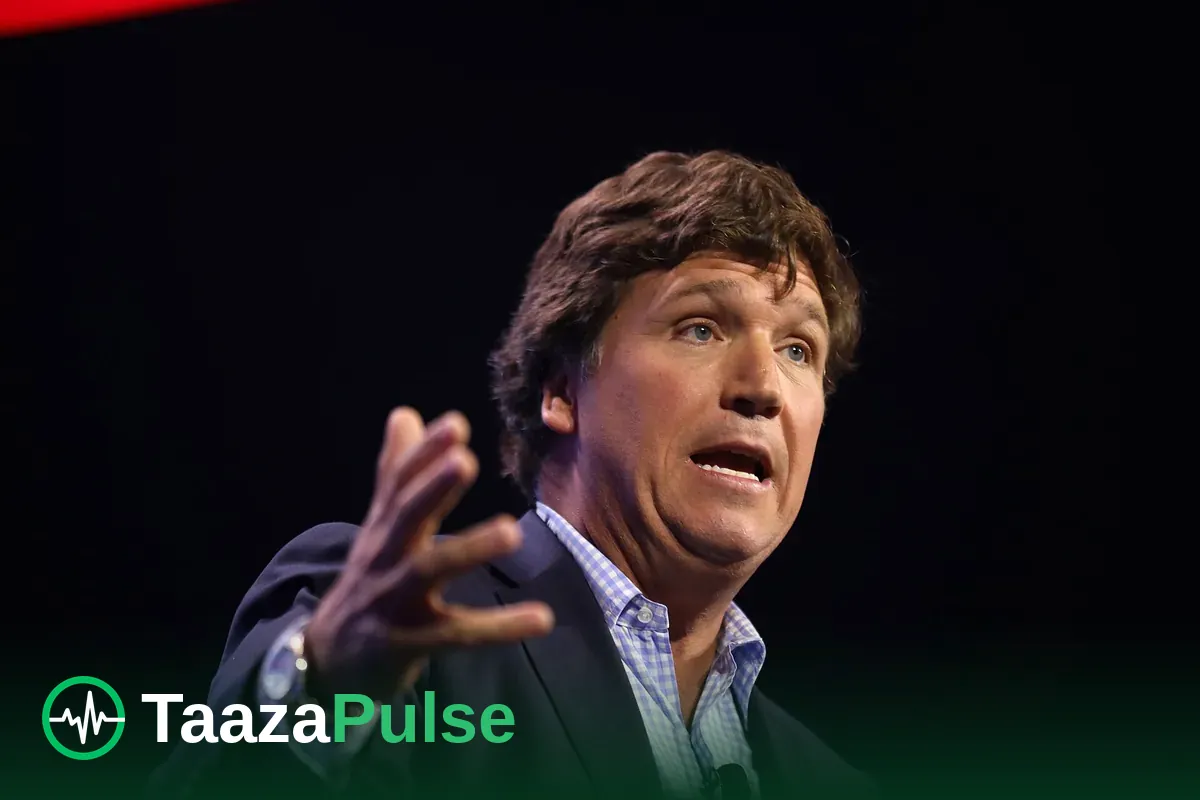
One of the most explosive claims of the Iran war so far was not made by a government, a general or an intelligence agency. It was made in a long post on X by Tucker Carlson, the American political commentator, who wrote late on Sunday that the Trump administration "may be within days of launching a nuclear strike on Iran" — and that the pressure to do it is coming from Israeli Prime Minister Benjamin Netanyahu. The post was read more than 7.8 million times within hours, was reported by Al Jazeera and wire-fed coverage around the world, and was amplified in Pakistan by senior journalist Hamid Mir, who quoted the part of Carlson's warning that names Pakistan directly. This article sets out exactly what Carlson claimed, what Mir said, what is independently confirmed, and what is not — because the distinction matters. No government has confirmed that a nuclear strike is planned, being prepared or even under discussion, and President Donald Trump has previously said, on the record, that he would not use nuclear weapons against Iran.
Carlson's post, published late on Sunday night US time (early Monday in Pakistan), is written as a warning rather than a report: its author argues that a decision is approaching and urges the public to speak before it is taken. Almost every factual building block in it is attributed to unnamed observers or to Israeli intelligence claims that Carlson himself flags with words like "supposedly". None of the officials he names has confirmed his account. What follows is therefore a record of a claim — a loud one, from a commentator with a large audience and a history of access to the Trump movement — not a record of an announced policy.
The claim, in Carlson's own words
Carlson opened with the allegation in full. "Under pressure from Israeli prime minister Benjamin Netanyahu, the Trump administration may be within days of launching a nuclear strike on Iran," he wrote. "The target would be Pickax Mountain in central Iran, where Israeli intelligence claims the Iranian government has restarted its nuclear enrichment program. No conventional weapon in the American arsenal can penetrate 300 feet of solid granite to destroy the tunnels where enrichment is supposedly taking place. The only military option is a nuclear strike. Netanyahu has been pushing hard for one. 'Bibi calls Trump about it every day,' says an informed observer."
He then argued that Netanyahu's motive is political survival. After last week's Israeli election — whose final results, reported by this site, left Netanyahu's bloc short of a majority — Carlson claimed the Israeli leader is "cornered and desperate": unable to form a government unless Trump brokers a deal giving him 61 Knesset seats, and otherwise facing investigations and possibly jail. "Netanyahu must stay close to Trump," Carlson wrote. "He needs this war." TaazaPulse has reported the election arithmetic itself — a Netanyahu bloc stuck at 53 seats — but the claim that this is driving a push for a nuclear strike is Carlson's, and no Israeli official has confirmed it.
The post names senior American officials as aligned with the alleged push. Carlson claimed that pressure has been applied to allies including Secretary of Defense Pete Hegseth and CENTCOM commander Brad Cooper, describing both as opposing a negotiated settlement and pushing to restart major combat operations; that Secretary of State Marco Rubio and CIA director John Ratcliffe are "also following Netanyahu's lead", as are Democratic Party leaders; and that Barack Obama said in a recent meeting that he opposes the Iran peace deal currently being drafted in Doha. None of these assertions was accompanied by documents or on-record sourcing, and none of the named officials has publicly confirmed any of it.
Two further claims frame the timetable. Carlson wrote that "since February, the administration has quietly rewritten America's nuclear doctrine to make first use of so-called 'battlefield nukes' easier and therefore more likely" — a significant allegation about US policy that he did not source. And he put a date on the decision: "Close observers say Trump is likely to decide by next weekend whether or not to use nuclear weapons. That would be November 7, six days from now. To his credit, he's hesitating. At the moment, Trump is listening to his vice president, JD Vance, and to his envoy and friend Steve Witkoff, both of whom argue a deal with Iran can be made."
Hamid Mir amplifies the warning — and Pakistan hears its own name
In Pakistan, the post travelled fastest through one of the country's best-known journalists. Hamid Mir, posting on X on Monday morning, headed Carlson's text with the words "Warning from @TuckerCarlson" and quoted its most consequential paragraph — the one about precedent — in full. Mir added no separate claim of his own; his intervention was to carry the warning to a Pakistani audience, in a country that appears in it by name.
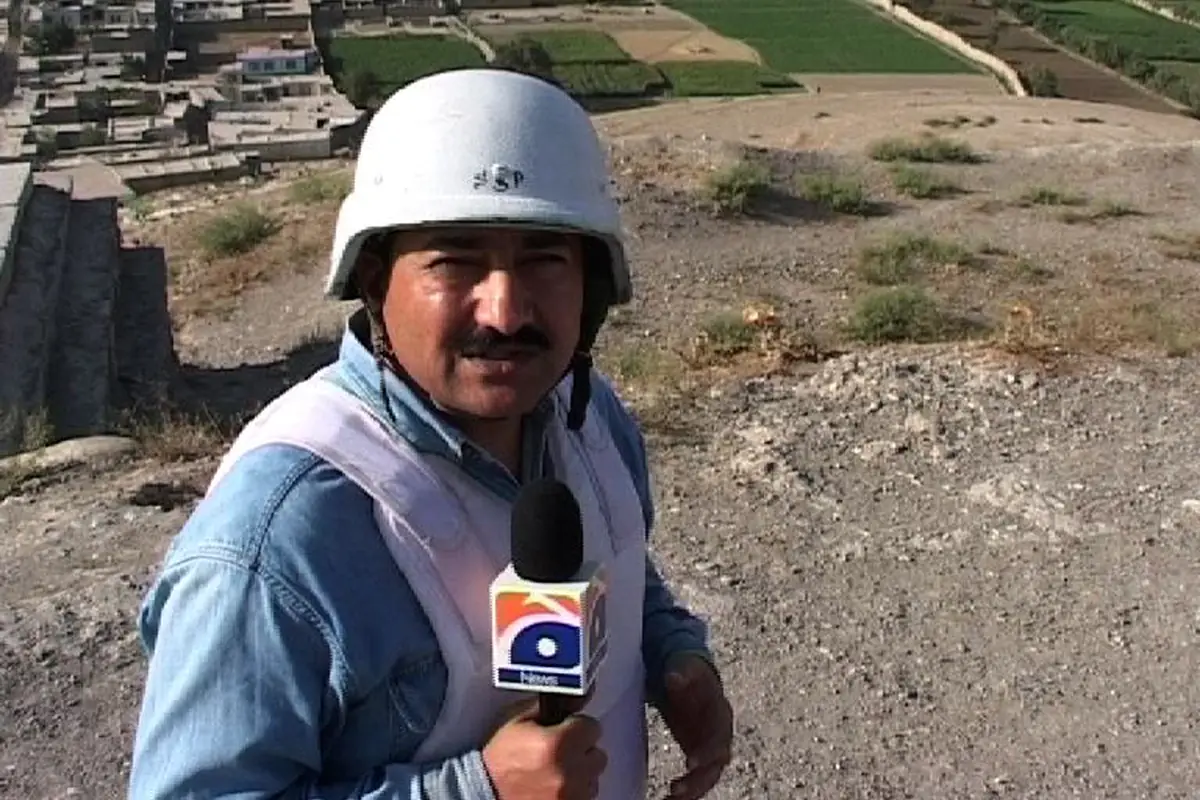
The paragraph Mir chose is the one in which Carlson argues that the first use of a nuclear weapon by the United States since 1945 would not stay contained to Iran: "No country other than the United States has ever used a nuclear weapon in war... An American nuclear attack on Iran would set a new precedent. The Russians have already told at least two other governments that an American nuclear strike on Iran would free them to use nuclear weapons against Ukraine. Pakistan and India would be tempted to do the same against each other, as would North Korea against Seoul. After the first nuclear strike, World War Three is inevitable. That war would be short and final."
For Pakistani readers, the sentence about their own country is the story. Pakistan and India are both nuclear-armed, fought a short and sharp conflict in May 2025, and manage their deterrence on the assumption that the 1945 taboo on nuclear use holds everywhere. Carlson's argument — again, his argument, attributed to unnamed channels for its Russian element — is that a single American strike would weaken that assumption in every nuclear capital at once. In Pakistan, the warning ricocheted across social media within hours, in places with anxious, half-joking captions about stockpiling food. The anxiety is understandable; the underlying claim, it bears repeating, remains unverified.
Pickax Mountain: the buried site at the centre of the claim
The alleged target is real, even if the alleged plan is unconfirmed. Pickax Mountain — also spelled Pickaxe, and known in Persian as Kuh-e Kolang Gaz La — is a vast underground complex being built into a granite mountain near the Natanz nuclear site in Iran's Isfahan province. Construction has been under way since 2020. Its halls are believed to lie at least 100 metres underground — the "300 feet of solid granite" in Carlson's post — deeper than the Fordow facility that American bunker-busting bombs struck earlier in the war, which is why Carlson argues no conventional weapon could destroy it.
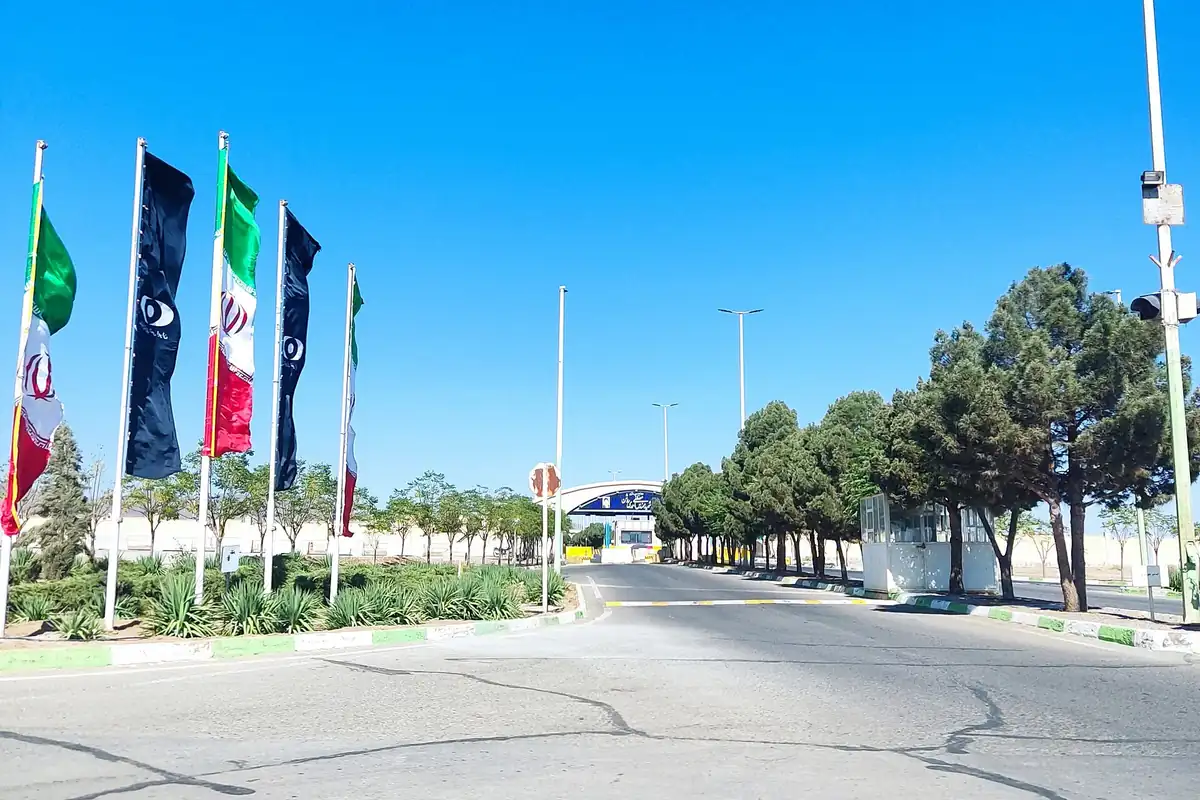
What is happening inside Pickax Mountain is disputed. Israeli intelligence, as relayed by Carlson, claims Iran has restarted uranium enrichment in its tunnels; reporting over the past year has said Israel believes nuclear material was moved there. Iran denies any nuclear work at the site. And independent satellite analysis published in October assessed that the complex's tunnel entrances were still blocked and that the site was neither operational nor undergoing major construction — evidence that sits awkwardly beside the claim of a restarted enrichment programme, and which readers should weigh alongside it. The site has not been struck in previous rounds of the war, which hit Natanz, Fordow and Isfahan, and Trump himself has previously named it as unfinished business, telling reporters the United States could "look at Pickax Mountain" because "you have to take care of that".
The stakes Carlson describes: tankers, fallout and a hundred million people
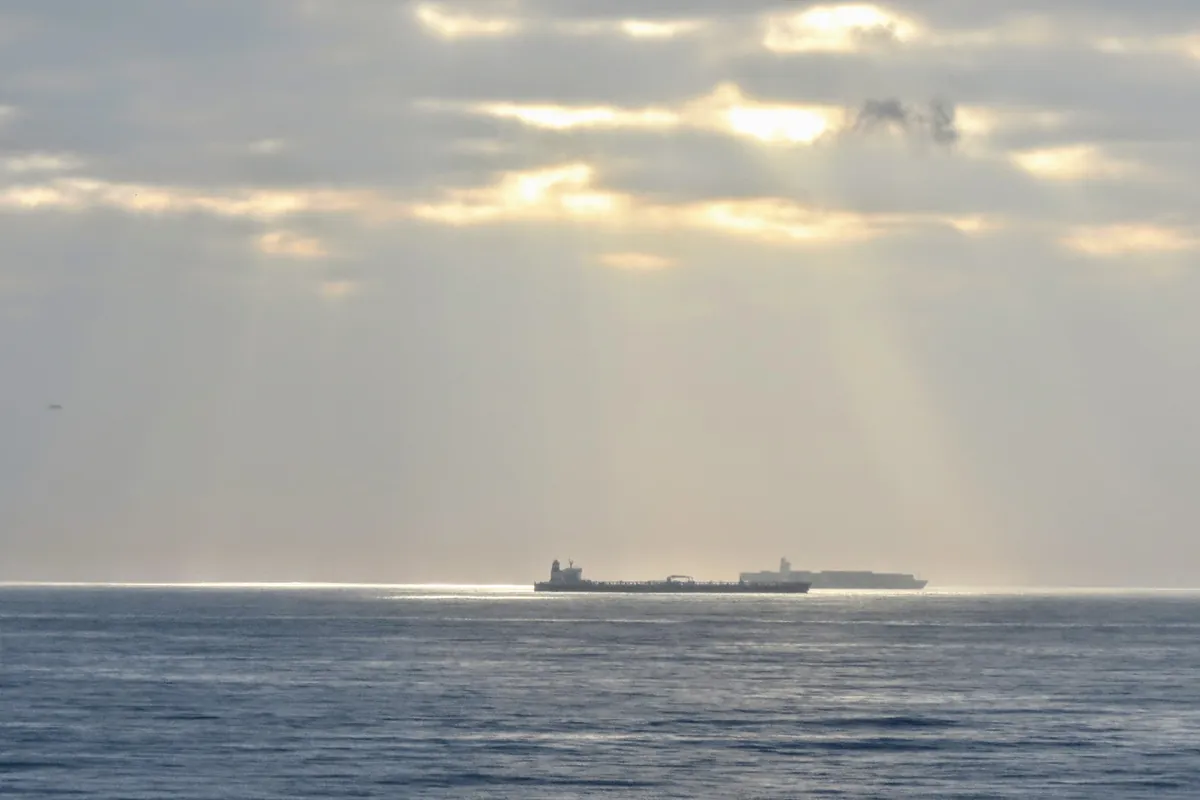
The middle of Carlson's post is about consequences beyond the target. "The rest of America's longtime allies in the Middle East are terrified," he wrote, claiming that on 27 September Netanyahu flew secretly to Abu Dhabi to enlist the United Arab Emirates in lobbying for a final attack on Iran, and that "the Emiratis refused". That trip, unlike much of the post, is independently documented: Reuters reported the secret Abu Dhabi visit at the time. Carlson described Gulf economies already teetering after months of war, some 850 supertankers carrying the region's oil, and — in a figure consistent with a Reuters review of shipping data — 11 of them badly damaged in the Strait of Hormuz in October alone. TaazaPulse's own coverage of the strait, including the attack on the Pakistan-bound LNG carrier Al Mayeda last week, records the same pattern of mounting risk to Gulf shipping.
His starkest consequence is environmental. "Fallout from a ground explosion at Pickax Mountain would contaminate the Persian Gulf," he wrote, "poisoning the water supply for 100 million people." The Gulf's desalination plants supply drinking water to tens of millions across the littoral states, which is why a radiological event anywhere near its shores alarms the region's governments — and why the Gulf states have spent the war pressing for de-escalation and a negotiated end to it, a track that remains live in Doha, where Qatari-mediated talks on an Iran settlement were in their third consecutive day on Sunday.
What officials have said — and what they have not
Against the scale of the claim, the official record is mostly silence, and one significant contradiction. Neither the White House nor Netanyahu's office has responded directly to Carlson's post. Axios reported a tense call between Trump and Netanyahu on Saturday about Iran — with Netanyahu pressing for action and Trump preferring to give negotiations more time — and reported that both offices declined to comment on it. Asked about strike reports last week, a White House official told Voice of America that the administration does not comment on "sensitive military plans that may or may not exist" and that Trump "keeps all options on the table" to ensure Iran never obtains a nuclear weapon.
The contradiction is Trump's own. In an interview with Newsmax on 16 October, asked about using nuclear weapons against Iran, the president ruled it out explicitly: "No, I wouldn't use nuclear. We don't have to." He has instead suggested that remaining Iranian facilities could be handled with the largest conventional bomb in the US inventory. Iranian officials, for their part, deny that any enrichment is taking place at Pickax Mountain. Nothing in the public record — no statement, no visible military preparation reported by wire services, no confirmation from any named official — currently corroborates Carlson's central assertion that a nuclear strike is days away. Fact-checkers reviewing the post have reached the same conclusion: the claim that Carlson made these statements is true; the statements themselves are unverified.
What happens next
Three clocks are now running. The first is Carlson's: he says a decision comes by 7 November, with Trump hesitating between the alleged strike camp and the Vance-Witkoff negotiating track — a claim that will be testable within the week. The second is diplomatic: the Doha process, where an Iran settlement is being drafted and where, on Carlson's own account, even Barack Obama has been drawn into the argument. A deal announced from Doha would undercut the strike narrative more completely than any denial. The third is political in Jerusalem, where Netanyahu's coalition arithmetic — a bloc of 53 seats against the 61 he needs — continues regardless of events in Iran.
Carlson closed his post by widening the lens. Iranians, he wrote, are "famously frustrating to negotiate with", their government "more radical since Ayatollah Ali Khamenei and his family were killed in February" — a death Iranian state media confirmed during the February war — while people who have spoken to Iranian decision-makers describe a consensus in Tehran that more war is bad for everyone and a deal is worth making. "One group that hasn't been consulted so far is the global population — the hundreds of millions of people who will be killed along with their children if Trump is pushed by Netanyahu into launching a nuclear strike next week," he wrote. "Now would be the time for them to speak up." That is advocacy, plainly labelled by its own framing — and it is how this story should be read: as a prominent commentator's warning about a decision he says is coming, amplified by a prominent Pakistani journalist because of what it would mean for this region, and confirmed, so far, by no one in a position to make it.
Sources
This report is based on reporting, official statements and documents from:
- Tucker Carlson on X — the post making the claim (2 November 2026)
- Hamid Mir on X — 'Warning from @TuckerCarlson', quoting the precedent paragraph (2 November 2026)
- Al Jazeera — Tucker Carlson claims Netanyahu is pushing Trump to launch a nuclear strike on Iran (2 November 2026)
- The Business Standard (Anadolu) — Tucker Carlson claims Trump could be days away from nuclear strike on Iran (2 November 2026)
- MEAWW — Fact check: is Tucker Carlson's claim that Trump is considering a nuclear strike on Iran true? (2 November 2026)
- Cryptopolitan — US nuclear strike on Iran within days? Big claim surfaces (2 November 2026)
- Images: Tucker Carlson — Gage Skidmore via Wikimedia Commons (CC BY-SA 2.0); Hamid Mir reporting in Afghanistan — Wikimedia Commons (CC BY-SA 4.0); Natanz complex entrance, 2022 — Parsa 2au via Wikimedia Commons (CC BY-SA 4.0); tankers at sea — file photo
Frequently Asked Questions
What did Tucker Carlson claim about a nuclear strike on Iran?
In a long post on X late on Sunday 1 November 2026, American commentator Tucker Carlson claimed that, under pressure from Israeli Prime Minister Benjamin Netanyahu, the Trump administration "may be within days of launching a nuclear strike on Iran". He named the alleged target as Pickax Mountain in central Iran, argued that no conventional American weapon can penetrate its 300 feet of granite so "the only military option is a nuclear strike", and quoted an unnamed "informed observer" as saying Netanyahu "calls Trump about it every day". The post was viewed more than 7.8 million times and reported worldwide, including by Al Jazeera. It remains an unverified claim: Carlson cited unnamed observers, and no government has confirmed it.
What is Pickax Mountain?
Pickax Mountain (also spelled Pickaxe; Persian: Kuh-e Kolang Gaz La) is a large underground complex being built into a granite mountain near Iran's Natanz nuclear site in Isfahan province, under construction since 2020. Its halls are believed to lie at least 100 metres underground, deeper than the Fordow facility struck earlier in the war. Carlson, relaying Israeli intelligence claims, said Iran has restarted uranium enrichment there; Iran denies any nuclear work at the site, and independent satellite analysis published in October 2026 found its tunnel entrances still blocked and assessed that it was neither operational nor undergoing major construction.
Has any government confirmed that a nuclear strike on Iran is being planned?
No. Neither the White House nor Netanyahu's office has responded directly to Carlson's post, and both declined to comment to Axios on a reported tense Trump-Netanyahu call about Iran on Saturday. A White House official told Voice of America on 29 October that the administration does not comment on "sensitive military plans that may or may not exist" and that President Trump "keeps all options on the table". Trump himself ruled out nuclear use in a Newsmax interview on 16 October: "No, I wouldn't use nuclear. We don't have to." Fact-checkers reviewing Carlson's post have likewise concluded that the allegation is unverified.
What did Hamid Mir say about Carlson's post?
Senior Pakistani journalist Hamid Mir shared Carlson's post on X on Monday 2 November under the heading "Warning from @TuckerCarlson", quoting in full the paragraph in which Carlson argues that an American nuclear attack on Iran would set a precedent: freeing Russia to use nuclear weapons against Ukraine, tempting Pakistan and India to do the same against each other and North Korea against Seoul, after which "World War Three is inevitable". Mir added no separate claim of his own; he carried the warning to a Pakistani audience, in the country named in that paragraph.
Why does Carlson's warning mention Pakistan and India?
Because his central argument is about precedent. The United States is the only country ever to have used nuclear weapons in war (in 1945), and Carlson argues that an American first use against Iran would lower the nuclear threshold everywhere: he says Russia has already told at least two governments it would feel free to use nuclear weapons against Ukraine, and that Pakistan and India "would be tempted to do the same against each other". Pakistan and India are both nuclear-armed and fought a short conflict in May 2025, which is why the warning — amplified by Hamid Mir — resonated strongly in Pakistan. The Russian element of the claim is attributed by Carlson to unnamed channels and is unverified.
When does Carlson say Trump will decide, and what happens next?
Carlson wrote that "close observers say Trump is likely to decide by next weekend whether or not to use nuclear weapons. That would be November 7." He said Trump is hesitating and currently listening to Vice President JD Vance and envoy Steve Witkoff, who argue a deal with Iran can be made. Qatari-mediated talks on an Iran settlement were in their third consecutive day in Doha on Sunday 1 November. Whether any decision follows Carlson's timetable is unconfirmed — the date, like the alleged plan itself, comes from his unnamed sources.