Pakistan Cuts Petrol by Rs3.40 and Diesel by Rs7.76 per Litre from 3 November 2026
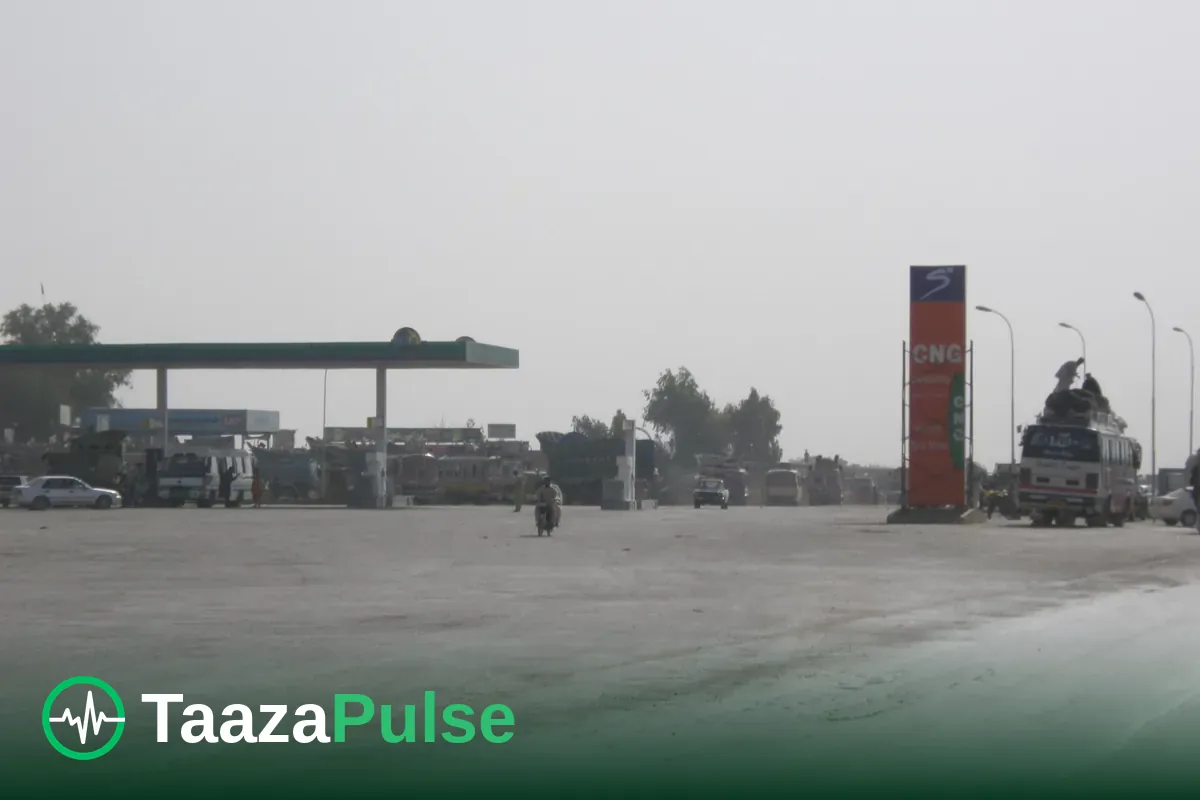
Petrol is cheaper in Pakistan from Tuesday, 3 November 2026, and diesel is cheaper by more than twice as much. Under the notification issued on Monday, 2 November, the price of petrol falls by Rs3.40 per litre, from Rs377.91 to Rs374.51, while high-speed diesel falls by Rs7.76 per litre, from Rs402.96 to Rs395.20. The revised prices take effect from 3 November, under the federal government's daily petroleum pricing mechanism, and they replace the rates that had been in force for the 31 October to 2 November window.
That single sentence is the whole announcement, and it is worth holding onto it before the commentary around it, because fuel prices in Pakistan in 2026 have become a story in which several different numbers circulate at once. There is the notified price, which is what this article reports. There is the formula behind the price, which changed on 30 October. There is a separate Rs15 figure that was reported on 2 November in connection with refineries sharing a burden to avert a petrol hike. And there is an older, much larger cut from June 2026, when petrol fell by Rs74 a litre after a US-Iran peace deal, which keeps resurfacing in search results and can easily be mistaken for today's news. None of those is today's cut. Today's cut is Rs3.40 on petrol and Rs7.76 on diesel, for 3 November, and the rest of this article keeps those three things apart: what changed, why the market moved, what the new formula does and does not do, and what it means in rupees for an ordinary tank, a truck and a farm.
The new prices, in full
The table below is the complete notification as reported by multiple outlets on the night of 2 November, with identical figures in each. The agreement across independent reports is the reason TaazaPulse is confident in publishing these numbers: Pakistan Today, Bloom Pakistan and The Tribune International all report the same previous prices, the same cuts and the same new prices, and KhabarWire's price file lists the same notified ex-depot rates for 3 November.
Petrol: Rs377.91 per litre before, cut by Rs3.40, now Rs374.51 per litre. High-speed diesel: Rs402.96 per litre before, cut by Rs7.76, now Rs395.20 per litre. In percentage terms, petrol falls by about 0.9 per cent and diesel by about 1.9 per cent. The diesel cut is therefore larger in rupees and larger in proportion, which matters because diesel, not petrol, is the fuel that moves almost everything in the country — trucks, buses, tractors, tube wells and generators all run on it, so a diesel cut travels further through the economy than a petrol cut of the same size.
For a driver, the arithmetic is simple. A 50-litre petrol tank costs Rs170 less to fill than it did under the previous notification: 50 litres multiplied by Rs3.40. A 50-litre diesel fill costs Rs388 less: 50 litres multiplied by Rs7.76. A motorcyclist with a 10-litre tank saves Rs34 on petrol. A bus or truck carrying hundreds of litres saves thousands of rupees on a single fill, which is why transport operators watch the diesel number more closely than the petrol number, and why a diesel cut is often described as relief for passengers and freight even before any fare or freight rate changes.
One qualification belongs in the same paragraph as the prices, not in a footnote. The published rates are notified ex-depot prices. That means they are the price at the depot, before the freight margin that varies by district, so what a driver actually pays at a particular pump can differ slightly from the notified figure. This is not a discrepancy in the reporting; it is how the notification system works, and it is the reason two honest reports can show the same notified price while two pumps in different districts show slightly different board prices.
Why prices fell: crude slid on Monday
The immediate trigger reported alongside the notification is the fall in international crude oil prices on Monday, 2 November. Bloom Pakistan reports that Brent crude fell around 6 per cent on Monday, following renewed hopes of diplomatic progress towards ending the US-Israeli war with Iran. Other market reporting on the same overnight move put the fall in December Brent futures at more than 7 per cent, to about $104.77 a barrel, with US crude down by a similar percentage, to about $96.46 a barrel. The exact percentage depends on which contract and which session is being quoted, but the direction does not: crude fell sharply on Monday, and Pakistan's daily pricing mechanism is designed to pass such a move to domestic pumps within a day, rather than storing it up for a fortnightly revision.
That design is itself part of the story. On 17 July 2026, the government replaced its weekly fuel price system with a daily pricing mechanism, precisely so that international movements would reach Pakistani pumps quickly, in both directions. Petroleum Minister Ali Pervaiz Malik has said the daily system is meant to pass the full impact to consumers immediately and transparently. The same mechanism that transmits a crude fall to pumps on Tuesday transmitted crude rises to pumps through the summer and autumn, when war, shipping disruption and the threat to the Strait of Hormuz pushed prices up. A daily system does not make fuel cheap; it makes fuel prices move sooner, up and down, and today's cut is the downward half of that bargain working as designed.
The geopolitical link in the headline — "amid US-Iran peace hopes" — needs the same care. The reports do not claim that a peace treaty has been signed, or that the Strait of Hormuz has reopened, or that the war is over. They claim that hopes of diplomatic progress, including discussions about reopening the Strait and resuming talks through mediators including Qatar and Pakistan, eased fears of supply disruption, and that easing showed up first in crude prices and then, through the daily mechanism, in Pakistan's notified rates. Hopes moving a market is a normal, documented mechanism: traders price the risk of disruption, and when the perceived risk falls, the price falls with it. It is not the same as a settlement, and readers should not treat today's cut as proof that the underlying conflict has ended.
What today's cut is not: the Rs15 figure, and the June Rs74 cut
Two other figures have been circulating in the same week, and both need to be kept separate from today's notification, because confusing them overstates today's relief by a large margin.
The first is Rs15. On 2 November, The Express Tribune reported that oil refineries would share a Rs15 billion burden with the government to ease fuel price pressure, leading to a Rs15 cut in the petrol price, and Arab News reported that refineries had agreed to absorb about $54 million monthly to avert a Rs15 petrol hike. Those reports describe a burden-sharing proposal around the new pricing formula — a way of preventing a rise, or funding relief — not the notification that was actually issued for 3 November. The notified cut for 3 November is Rs3.40 on petrol, not Rs15. Anyone quoting Rs15 as today's petrol cut is quoting a different, earlier-reported proposal, not the price on the board from Tuesday.
The second is Rs74. In June 2026, after a US-Iran peace deal eased oil costs, the prime minister announced that petrol would fall by Rs74 per litre, from Rs373 to Rs299, and diesel by Rs67, from Rs378 to Rs311, with the government saying it had used Rs129 billion in development-budget savings and austerity measures to shield consumers during that crisis. That was a real, much larger cut, in a different phase of the same conflict, when prices had spiked far higher. It is not today's cut, and today's prices — petrol Rs374.51, diesel Rs395.20 — are not a return to June's Rs299 and Rs311. The June cut is relevant only as a reminder of how far prices rose during the crisis and how large a government intervention can be when it chooses to absorb a shock directly, rather than letting the daily mechanism transmit it.
The new formula behind the board: 30 October, in brief
Today's cut arrives three days after a separate, larger change to how petrol is priced at all. On 30 October 2026, the Federal Cabinet approved a revised petrol pricing mechanism, on a summary from the Petroleum Division, and the Ministry of Energy (Petroleum Division) notified it the same day. Under that arrangement, which TaazaPulse reported in full on 1 November, the import price of petrol is set from the actual cost of the relevant Pakistan State Oil (PSO) cargo, falling back to the last available cargo's costs when the actual cost is unavailable. Refineries must calculate their ex-refinery petrol prices using the premiums, incidentals and customs duty that applied on 7 March 2026, before the war, for an initial period of 30 days. The difference between those two prices is surrendered by the refineries under the petroleum levy, and the government says the resulting benefit must reach consumers as a corresponding reduction in petrol prices.
Two figures from that decision are routinely confused with each other, and with today's cut. The first is around Rs49 per litre: the refining industry's estimate, voiced by Cnergyico PK Limited vice chairperson Usama Qureshi, of the additional burden the arrangement could impose on locally refined petrol. That is an industry estimate of cost borne by refineries, not a government notification, not a new tax and not a price increase for consumers. The second is Rs14.71 per litre: the reduction in the petroleum levy through which, according to The News' reporting of the decision, the government intends to provide relief to consumers. That is the intended channel of the benefit, not a confirmed cut in the pump price. Neither figure is today's notified cut. Today's cut is the daily revision for 3 November, calculated under the mechanism as it now stands; the 30-day formula is the background against which that revision was calculated, not a separate price announcement.
The industry's objection to the 30 October formula is also part of the background readers need. Refineries say they buy crude at prevailing international prices, and that pricing their locally refined petrol at pre-war levels limits their ability to recover feedstock and other costs. They say they have already absorbed more than Rs80 billion through compressed diesel margins, and they warn that repeated interventions make it harder to finance the approximately $6 billion refinery upgradation programme, under which four refineries have signed upgradation agreements with the Oil and Gas Regulatory Authority (OGRA) while the largest state-owned refinery has yet to sign. The government, for its part, presents the formula as consumer relief routed through the levy, and has required refineries to submit daily reports of domestic petrol sales, with payment receipts and challans, to the Petroleum Division and OGRA for verification. Whether the formula survives its 30-day window, which runs to around 29 November, and what replaces it, will matter more for December's prices than today's single-day cut.
What the cut means, sector by sector
For private motorists, today's cut is modest on petrol and noticeable on diesel, and that asymmetry is the point. A car driver filling 40 litres of petrol saves Rs136. A motorcycle rider saves a few dozen rupees. These are real savings, but they do not change the monthly budget of a household in the way a larger cut would, and they do not restore the prices of February 2026, when petrol cost about Rs253 a litre before the conflict pushed it above Rs415 by May. The honest description of today's petrol cut is "relief at the margin": welcome, correctly reported, and small relative to the rise that preceded it.
For public transport and freight, the diesel cut matters more. Diesel at Rs395.20, down Rs7.76, lowers the fuel cost of every bus, truck and van on the road. Whether passengers see lower fares depends on decisions by transporters and regulators, not on the notification itself, and freight rates are negotiated, not automatically reset by a fuel notification. But the direction is favourable, and a diesel cut that holds for several days under the daily mechanism would do more for fares and freight than a one-day cut that reverses tomorrow. That is why the duration of the cut matters as much as its size, and why readers should watch tomorrow's notification as closely as today's.
For agriculture, the diesel cut arrives in a season when diesel is not an abstraction. Tractors, tube wells and transport of produce to market all run on diesel, and growers in Sindh are simultaneously demanding a sugarcane price of Rs650 per maund and a wheat support price of Rs5,000 per maund, with a protest march announced for 4 November. A diesel cut does not settle the cane-price dispute, which is about what mills pay for the crop, not what tractors burn. But it does lower one input cost at the same time as growers are pressing the government on another, and in a week when the government is also being asked to show that relief reaches the farm, not just the pump, the timing will not go unnoticed.
For inflation, the effect is indirect and lagged. The October consumer price index rose 9.6 per cent year on year, according to the Pakistan Bureau of Statistics, as reported by Business Recorder and TradingView on 2 November. A single day's fuel cut does not change that figure, which is already history. What it can change, if it holds, is the transport component of the next reading, and the expectations of traders who set food prices partly on the basis of diesel costs. Economists therefore treat a fuel cut as a leading indicator for inflation, not as inflation relief itself: the relief shows up in the next index, if at all, and only to the extent that transporters pass it on rather than absorbing it as margin.
How long will these prices last?
Under the daily mechanism, the honest answer is: until the next notification. The Tribune International's report of the 3 November notification states that the new prices remain effective for one day, 3 November. That does not mean prices will necessarily rise tomorrow; it means they will be recalculated tomorrow, on the basis of the next day's international prices, premiums and other costs, and they could fall again, hold, or rise. Readers who fill up today are buying at today's notified rate. Readers who wait are betting, knowingly or not, on tomorrow's crude market and on the next OGRA publication.
That daily rhythm is worth getting used to, because it changes how fuel news should be read. Under the old fortnightly system, a single notification set the price for two weeks, and a cut or rise was a fortnight's news. Under the daily system, a cut is a day's news, and the story is the sequence: several days of cuts in a row mean the market is genuinely easing; a cut followed by a rise means the market moved and then moved back. Today's cut is one data point in that sequence. It follows a weekend in which petrol held at Rs377.91 and diesel at Rs402.96, and it follows Monday's crude slide. The next data point, tomorrow's notification, will tell readers whether the crude slide is holding or whether it was a one-day reaction to diplomatic headlines.
There is also a calendar point that matters for the formula, if not for today's price. The 30-day petrol pricing mechanism approved on 30 October runs to around 29 November unless it is extended, revised or allowed to lapse. If it lapses, the formula behind the daily calculation reverts, and the levy channel through which the government intends relief changes with it. If it is extended, the refinery burden-sharing arrangement continues, and the industry's complaint about policy certainty continues with it. Either way, the last week of November will be a more important fuel week than the first week, because it will decide the framework, not just the price.
What to watch next
Four things will show, within days, whether today's cut is the start of a run of relief or a one-day dip. The first is tomorrow's OGRA notification: does petrol hold near Rs374.51, fall further, or bounce back towards Rs377.91, and does diesel hold near Rs395.20? The second is crude itself: does Brent hold its Monday fall, or does diplomatic optimism fade and the price climb back, taking the next Pakistani notification with it? The third is the Strait of Hormuz: any concrete development on shipping through the waterway, as opposed to hopes of a development, would move crude more durably than a headline about talks. The fourth is the government's own next move on the 30-day formula: any signal before 29 November about extension or lapse will be read by refineries, traders and consumers as a signal about December's prices.
TaazaPulse will update this story when OGRA publishes the next daily notification, when any further Petroleum Division statement clarifies the duration or the breakup of today's prices, and when the government signals what happens to the 30-day mechanism as it approaches expiry. Until then, the verified position is this: petrol Rs374.51 per litre, down Rs3.40 from Rs377.91; high-speed diesel Rs395.20 per litre, down Rs7.76 from Rs402.96; both effective from 3 November 2026 under a notification issued on 2 November; the cut follows a sharp fall in international crude on Monday on renewed hopes of diplomatic progress towards ending the US-Israeli war with Iran; and it is distinct from the Rs15 burden-sharing proposal reported on 2 November, from the Rs49 industry burden estimate and the Rs14.71 intended levy relief under the 30 October formula, and from the Rs74 June cut that took petrol to Rs299.
What is confirmed in this article is limited to what the reporting establishes: the 3 November prices and cuts (petrol Rs374.51, down Rs3.40 from Rs377.91; diesel Rs395.20, down Rs7.76 from Rs402.96) as reported identically by Pakistan Today, Bloom Pakistan, The Tribune International and KhabarWire's price file, effective from 3 November 2026 under a notification issued on 2 November; the Brent crude fall of around 6 per cent on Monday, 2 November, on renewed hopes of diplomatic progress towards ending the US-Israeli war with Iran, as reported by Bloom Pakistan, with overnight futures falls of more than 7 per cent reported by Seoul Economic Daily; the daily pricing mechanism in place since 17 July 2026; the 30 October Cabinet-approved 30-day petrol pricing formula, the PSO cargo rule, the 7 March 2026 pre-war refinery rule, the around-Rs49 industry burden estimate and the Rs14.71 intended levy relief, as reported by TaazaPulse on 1 November from The News and TechJuice; the Rs15 refinery burden-sharing proposal reported on 2 November by The Express Tribune and Arab News, which is not today's notified cut; the June 2026 Rs74 petrol and Rs67 diesel cuts, from Rs373 to Rs299 and Rs378 to Rs311, as reported by Arab News; and the October consumer price index rise of 9.6 per cent year on year, as reported by Business Recorder. No new price beyond 3 November is claimed, because the daily mechanism recalculates prices each day, and no fare, freight or food-price change is claimed, because none has been announced in the reporting consulted.
Sources
This report is based on reporting, official statements and documents from:
- Pakistan Today — Petrol price cut by Rs 3.40, diesel by Rs 7.76 per litre in Pakistan (2 Nov 2026)
- Bloom Pakistan — Pakistan Cuts Petrol and Diesel Prices (2 Nov 2026)
- The Tribune International — Government cuts petrol price by Rs3.40 and diesel by Rs7.76 for November 3 (2 Nov 2026)
- KhabarWire — Petrol Rs374.51, diesel Rs395.20 for 3 November (3 Nov 2026)
- Seoul Economic Daily — Oil Prices Plunge on U.S.-Iran Talks Hopes (3 Nov 2026, overnight futures falls)
- Images: PSO station Hyderabad — Wikimedia Commons (CC BY 2.0); fuel nozzle — file photo; tanker Solomon Sea — file photo, not a PSO cargo; refinery — file photo, not a Pakistani refinery
Frequently Asked Questions
What are Pakistan's new petrol and diesel prices from 3 November 2026?
Petrol is Rs374.51 per litre, down Rs3.40 from Rs377.91, and high-speed diesel is Rs395.20 per litre, down Rs7.76 from Rs402.96. The revised prices take effect from Tuesday, 3 November 2026, under a notification issued on Monday, 2 November, by the Petroleum Division / Oil and Gas Regulatory Authority (OGRA), as reported identically by Pakistan Today, Bloom Pakistan, The Tribune International and KhabarWire's price file.
How long will the 3 November prices last?
Under the daily pricing mechanism in place since 17 July 2026, they are notified for one day — 3 November — and are recalculated the next day on the basis of the next day's international prices and costs. They could fall further, hold, or rise tomorrow. The Tribune International's report of the notification states the new prices remain effective for one day, 3 November. Today's cut is therefore one data point in a daily sequence, not a fortnight's price.
Is today's petrol cut Rs15 a litre, as some reports said on 2 November?
No. The Rs15 figure reported on 2 November by The Express Tribune and Arab News concerned a refinery burden-sharing proposal — refineries sharing a Rs15 billion burden, or about $54 million a month, to avert a Rs15 petrol hike — not the notification actually issued for 3 November. The notified cut for 3 November is Rs3.40 on petrol and Rs7.76 on diesel. Quoting Rs15 as today's pump cut confuses a proposal with a notification.
What do the Rs49 and Rs14.71 figures from the 30 October formula mean?
Neither is a pump price. Around Rs49 per litre is the refining industry's estimate of the extra burden the 30 October revised petrol pricing formula could impose on locally refined petrol, voiced by Cnergyico vice chairperson Usama Qureshi. Rs14.71 per litre is the reduction in the petroleum levy through which, according to The News' reporting, the government intends to provide relief to consumers. The formula itself sets petrol's import price from the actual PSO cargo cost and refinery prices at 7 March 2026 pre-war levels for 30 days, with the difference surrendered under the petroleum levy.
Why is the diesel cut bigger than the petrol cut, and why does it matter more?
Diesel falls by Rs7.76 (about 1.9 per cent) against petrol's Rs3.40 (about 0.9 per cent), so it is larger in both rupees and proportion. It matters more because diesel moves almost everything: trucks, buses, tractors, tube wells and generators. A diesel cut therefore travels further through the economy than a petrol cut of the same size, although no fare, freight or food-price change has been announced — transporters and regulators decide whether the saving reaches passengers and shoppers.
Will the pump price I pay match Rs374.51 and Rs395.20 exactly?
Not necessarily to the paisa. The published rates are notified ex-depot prices — the price at the depot, before the freight margin that varies by district. What a driver pays at a particular pump can therefore differ slightly from the notified figure. That is how the notification system works, not a discrepancy in the reporting, and it is why two pumps in different districts can show slightly different board prices under the same notification.